

Image of 1927 Bugatti Type 43, Note: These illustrations use artistic license and may differ from actual historical models.
Performance Metrics
Fundamental Metrics
Emotional Appeal
MMP Rating
| Engine Specifications | |
|---|---|
| Engine: | Straight 8 |
| Displacement: | 2.3 L |
| Horsepower: | 120 hp |
| Torque: | Not available |
| Compression Ratio: | Not available |
| Ignition System: | Magneto ignition |
| Cooling System: | Water-cooled |
| Performance Specifications | |
| 0-60 Time: | Not available |
| 1/4 Mile Time: | Not available |
| Top Speed: | 110 mph |
| Transmission and Drive | |
| Drive Type: | Rear-wheel drive |
| Transmission Type: | 4-speed manual |
| Fuel and Efficiency | |
| Fuel System Type: | Carburetor |
| MPG: | Not available |
| Dimensions and Brakes | |
| Brakes: | Cable-operated drum brakes |
| Wheelbase: | 2,700 mm |
| Weight: | 900 kg |
Note: Specifications for classic cars are given to the best of our ability, considering the limited and variant data available.
1927 Bugatti Type 43: The Supercharged Road Car
The 1927 Bugatti Type 43 brought Grand Prix engineering onto public roads, creating a sports car capable of approaching 100 mph at a time when most road cars were built for far more modest speeds. Developed by Automobiles Ettore Bugatti in Molsheim, then in the Alsace region, the Type 43 paired a supercharged eight-cylinder engine with elegant open coachwork. It is often described as one of the first production cars capable of 100 mph, a reputation that captures its remarkable blend of speed and sophistication.
The Type 43 arrived in the late 1920s, when racing technology was beginning to influence high-performance road cars. Its engine drew heavily on the successful Bugatti Type 35B Grand Prix car, but the Type 43 was designed for fast touring rather than competition alone. Around 160 examples are generally cited as having been built between 1927 and 1931, making the model rare even by the standards of collectible Bugattis.
Bugatti Type 43 Design and Coachwork
The Type 43 has the unmistakable presence of a classic Bugatti: a long, narrow bonnet, flowing front wings, a horseshoe-shaped radiator grille, and delicate wire wheels. Its low stance and sweeping lines give it a purposeful look, while the exposed mechanical details make clear that this was no ordinary touring car. The overall effect is both athletic and refined, with the engine’s long bonnet lending the car much of its visual drama.
Most Type 43s are associated with open two-seat roadster coachwork, the style that best suits the car’s sporting character. Bodywork could vary, and individual cars might receive different details or coachbuilder work. Bugatti’s own coachwork and bodies associated with firms such as Gangloff are among the names encountered in the model’s history. The roadster remains the most iconic configuration because it puts the driver close to the engine, the road, and the car’s distinctive sound.
Paint was not limited to a single standardized palette. Bugatti blue is the marque’s signature color, while combinations such as black with yellow accents are also strongly associated with the period and the Type 43’s sporting image. Original finishes and documented restoration history matter greatly to collectors, so a car’s specific colors are best assessed by its individual records rather than assumed from the model name.
A Sporting Cockpit for Fast Touring
The cockpit is compact and functional, with seating for two and a dashboard organized around the driver. Leather upholstery and carefully finished trim brought a degree of luxury to the car, though the Type 43’s interior was designed around control and driving rather than passenger pampering. Depending on the individual example and its restoration, materials and details can differ. The result is a close-fitting driving position that feels much more like a sporting machine than a grand touring limousine.
For its era, the Type 43’s most significant technical feature was its Roots-type supercharger, which forced more air into the engine and helped produce impressive power from a relatively compact displacement. It also had a four-speed manual gearbox and four-wheel mechanical drum brakes. These features demanded skill and attention, but they gave the car the hardware to make high-speed motoring possible in the 1920s.
Why the Type 43 Mattered
The Type 43 helped establish the idea that a road car could combine genuine Grand Prix-derived engineering with usable touring equipment. Its supercharged engine was closely related to the powerplant in the Type 35B, one of Bugatti’s celebrated racing cars. Adapting that sort of technology for the road made the Type 43 a striking example of competition engineering moving into private ownership.
Its reputation as an early 100-mph production car set it apart from most contemporaries. The achievement was not simply a matter of peak speed: the car brought together a high-revving engine, lightweight construction, an advanced chassis, and elegant coachwork. The Type 43 helped shape the later image of the high-performance road car, where speed and mechanical pedigree could coexist with style and everyday road equipment.
Type 43 Performance and Road Manners
The Type 43’s supercharged 2,262 cc straight-eight is commonly rated at about 120 horsepower. Depending on the car’s condition, gearing, bodywork, and period setup, top speed is generally quoted at around 100 mph. Published acceleration figures are less consistent than modern test data, but a 0-to-60-mph time of roughly 10 to 12 seconds is a reasonable period-car estimate rather than a guaranteed specification for every surviving example.
On a smooth road, the car feels quick, light, and eager. The supercharger gives the engine a distinctive surge as revs rise, while the straight-eight produces a mechanical note that is more urgent than subdued. The manual gearbox and direct controls keep the driver involved. There is no modern power assistance, electronic stability control, or effortless braking, so driving the Type 43 calls for anticipation and a measured hand.
Its vintage suspension and narrow tires mean that broken pavement and sharp bumps are felt directly. On winding roads, the relatively light chassis and responsive steering can make the car rewarding, but its age demands respect. Fast corners, wet surfaces, and uneven roads require careful inputs, especially by modern standards. The Type 43 can be exhilarating, but it is best enjoyed by a driver who understands prewar braking distances and the limits of period tires.
Owning and Maintaining a Type 43
Today, the Type 43 is primarily a collector car used for concours events, vintage rallies, historic tours, and occasional carefully chosen drives. It is not a practical daily driver. Its open bodywork, limited weather protection, period controls, and valuable components make it better suited to special outings than routine commuting.
Maintenance is specialized and costly. The supercharger, engine, gearbox, brakes, and chassis require knowledgeable care, and correct parts can be difficult to source. An average owner cannot assume that repairs will be as straightforward as they are on a common classic car. A Bugatti specialist and a well-documented service history are important, particularly because poor maintenance or incorrect restoration can compromise both reliability and value. Even a well-prepared car needs regular inspection and careful warm-up before spirited driving.
Rare Details and Common Misconceptions
The Type 43’s most famous claim is its association with the 100-mph road car. It is frequently called one of the first production cars to reach that speed, a distinction that reflects its exceptional performance for the period. It was not simply a racing car with lights added, however: it was conceived as a road-going sports car with touring use in mind, even if its pace and mechanical character were far beyond ordinary motoring.
There is no single celebrity ownership story that defines the model as a whole. Individual cars have their own histories, and documented ownership, competition appearances, and provenance can make a major difference to collector interest. A common criticism is that the Type 43 can be demanding and uncomfortable by modern expectations. It is noisy, exposed, and physically engaging to drive. Those qualities are part of its appeal to enthusiasts, but they also make it a specialized vintage car rather than an easygoing classic.
Bugatti Type 43 Value and Rarity
With roughly 160 cars believed to have been produced, the Type 43 is rare and seldom appears on the open market. Values depend heavily on originality, coachwork, restoration quality, provenance, and whether the car retains its correct engine and major components. As a broad 2026 collector-market estimate, a Type 43 might fall in the range of about $1.5 million to $3 million. Exceptional examples with compelling histories or unusually desirable specification can exceed that range, while condition and authenticity can pull a car below it.
The model has generally benefited from the long-term strength of the Bugatti name and the growing appreciation for important prewar performance cars. Its limited production and racing-derived engineering support collector demand. Individual auction results can still vary substantially, and the costs of maintaining a Type 43 are significant, so it is not a guaranteed short-term investment. For buyers, provenance and expert inspection are as important as the headline price.
A Road-Going Piece of Bugatti Racing History
The 1927 Bugatti Type 43 combined a supercharged straight-eight, Grand Prix-inspired engineering, and graceful roadster styling in a way few cars of its time could match. Its roughly 100-mph performance helped define the early high-speed sports car, while its rarity and distinctive character have made it a prized prewar collectible.
More than a fast old car, the Type 43 is a vivid link between Bugatti’s racing successes and the ambitions of road-going motoring. Its narrow cockpit, rising supercharger note, and unmistakable profile still deliver the thrill of a machine built to make speed feel extraordinary.
1927 Bugatti Type 43 Catalog of Parts
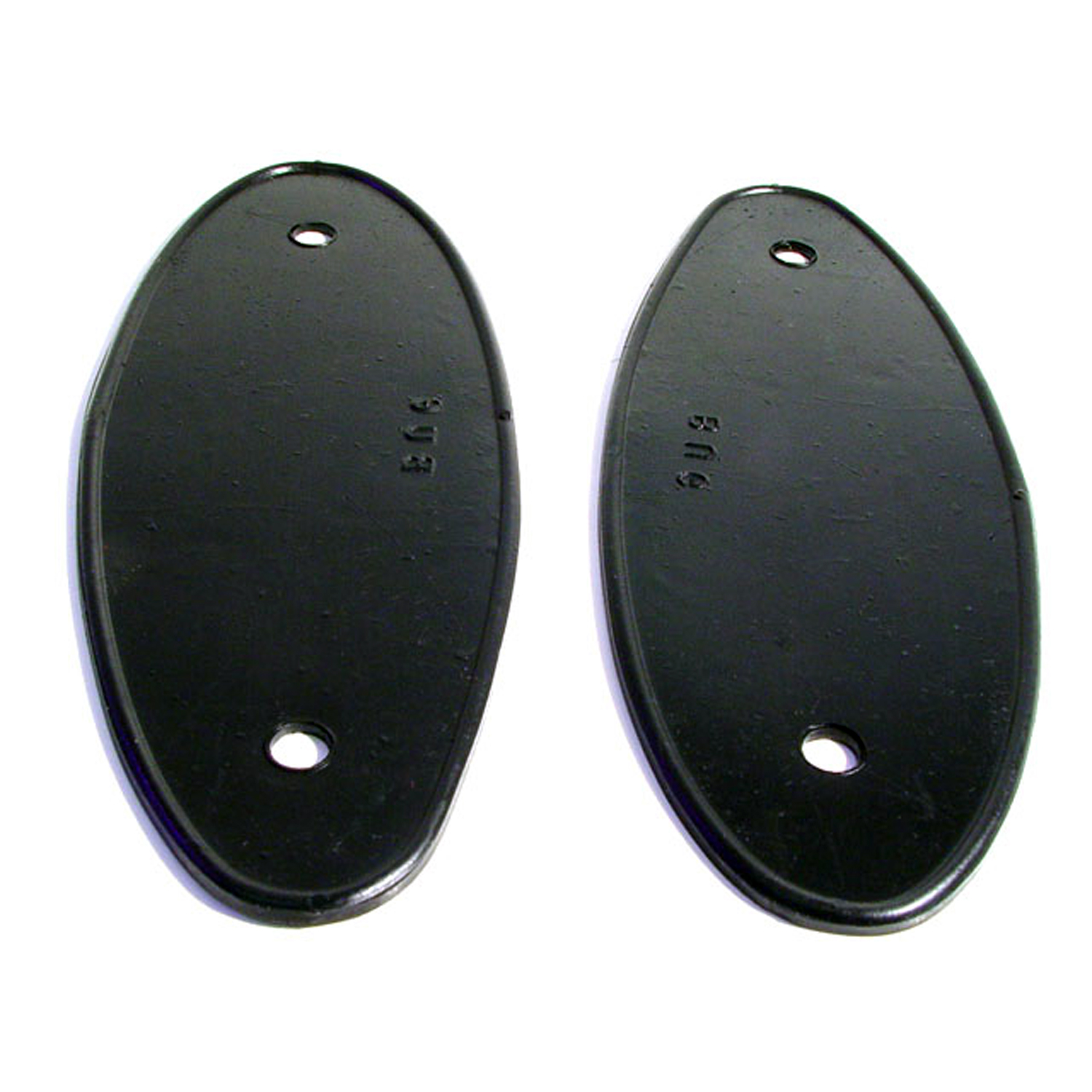 1927 Bugatti Type 43 Headlight Pads. 3" wide X 8-1/8" long. Pair-MP 337-AHeadlight Pads. 3" wide X 8-1/8" long. Pair
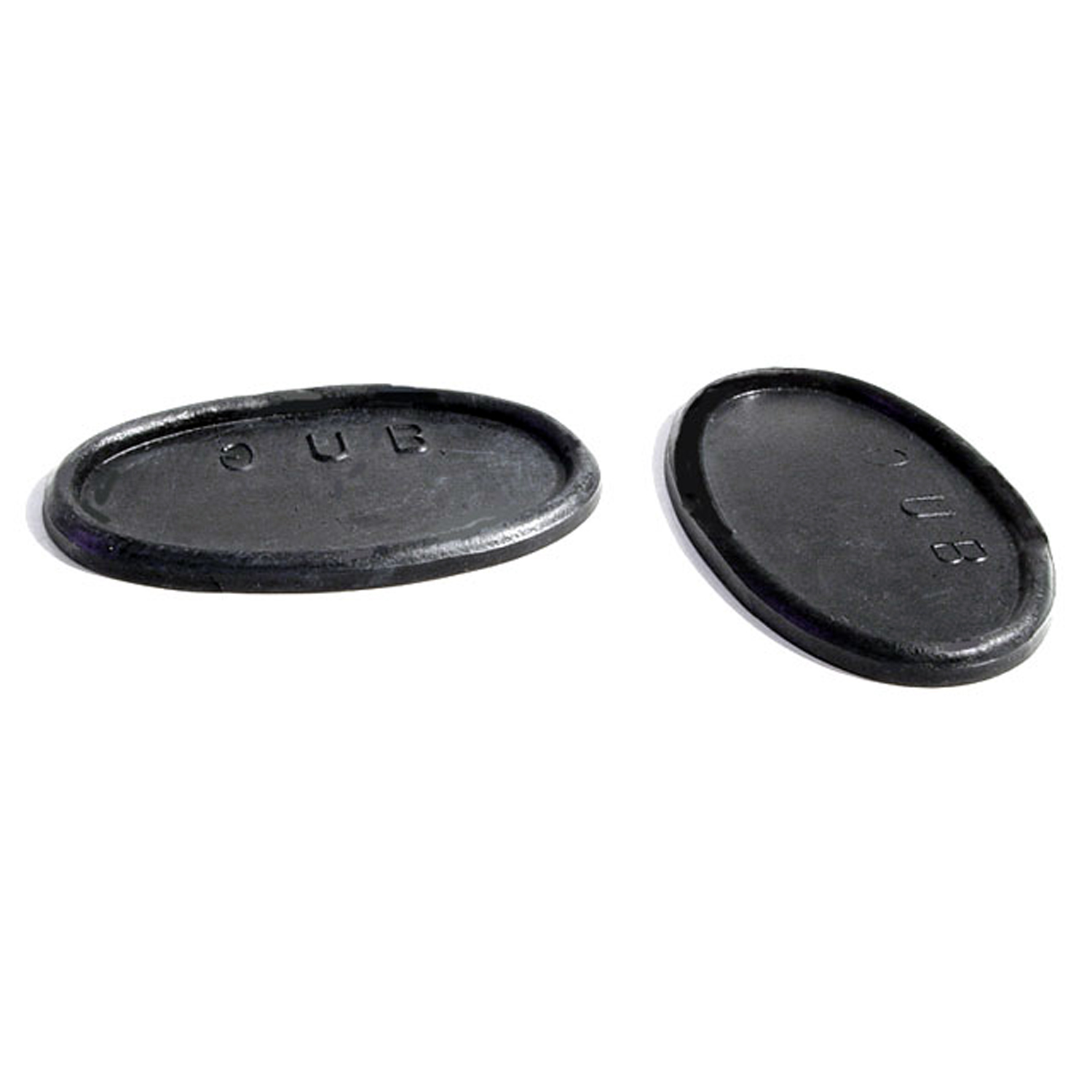 1927 Bugatti Type 43 Door Handle Pads. 1-3/8" wide X 2-1/4" long. Pair-MP 337-BDoor Handle Pads. 1-3/8" wide X 2-1/4" long. Pair
Why Choose Metro?
For over 100 years, Metro Moulded Parts has been the pinnacle of quality in classic car restoration parts. Our commitment to precision and authenticity in every component ensures a perfect fit and an OEM-level appearance.
- Expert Craftsmanship & Quality: Each part is a testament to our dedication to reliability and perfection, crafted from original designs and thoroughly tested.
- Advanced Technology: We use cutting-edge techniques to create flawless, long-lasting parts that surpass others in performance.
- SuperSoft Sponge – The Ultimate Door Seal: Not only are our door seals 30% softer than competitors', but they're also guaranteed to never leak. They effectively reduce wind and road noise, enhancing your classic car's comfort and driving experience.
- Proudly American: Our parts are a product of American craftsmanship, made in the USA with a spirit of excellence and heritage.
- Unrivaled Warranty: We back our products with a 30-year industry-leading warranty, a testament to our confidence in their quality.
Join us in preserving the legacy of classic cars with parts that are crafted for perfection, not just made.