

Image of 1927 Bugatti Type 43a, Note: These illustrations use artistic license and may differ from actual historical models.
Performance Metrics
Fundamental Metrics
Emotional Appeal
MMP Rating
| Engine Specifications | |
|---|---|
| Engine: | Straight 8 |
| Displacement: | 2.3L |
| Horsepower: | 120 HP |
| Torque: | Not available |
| Compression Ratio: | Not available |
| Ignition System: | Magneto ignition |
| Cooling System: | Water-cooled |
| Performance Specifications | |
| 0-60 Time: | Not available |
| 1/4 Mile Time: | Not available |
| Top Speed: | 110 mph |
| Transmission and Drive | |
| Drive Type: | Rear-wheel drive |
| Transmission Type: | 4-speed manual |
| Fuel and Efficiency | |
| Fuel System Type: | Carburetor |
| MPG: | Not available |
| Dimensions and Brakes | |
| Brakes: | Cable-operated drum brakes |
| Wheelbase: | 2,718 mm |
| Weight: | 900 kg |
Note: Specifications for classic cars are given to the best of our ability, considering the limited and variant data available.
1927 Bugatti Type 43A: A Grand Sport with Racing Blood
The 1927 Bugatti Type 43A brought Grand Prix engineering onto the open road, combining a supercharged eight-cylinder engine with the elegance of a hand-built sporting car. Built by Bugatti at Molsheim, the marque’s Alsace factory, it was made for drivers who wanted more than polished coachwork: the Type 43 offered genuinely formidable speed for its day.
The name can be a little confusing. The car is most commonly identified as the Bugatti Type 43, while “43A” also appears in specialist listings and descriptions. Historical records do not always use the suffix consistently, so it is wise to check a particular car’s chassis documentation rather than assume every Type 43A was a separate mechanical model.
Its most attention-grabbing claim is that the Type 43 was among the first production sports cars capable of exceeding 100 mph. That achievement reflected its close relationship to Bugatti’s racing cars, especially the celebrated Type 35 family, and made this road-going Bugatti one of the fastest and most exclusive cars of the late 1920s.
Roadster Lines and a Purposeful Cockpit
The Type 43 has the unmistakable Bugatti profile: a tall, horseshoe-shaped radiator, long bonnet, slim body, sweeping fenders and an upright windscreen. Its proportions look athletic rather than bulky, with the engine bay stretching forward and the driver seated close to the rear axle. Wire wheels, exposed running gear and a low stance reinforce its competition-car character.
Coachbuilders supplied different bodies, so no single interior or exterior specification applies to every car. The most familiar and visually striking form is the open two-seat roadster, though examples were also built as cabriolets, coupés and other coachbuilt touring bodies. Gangloff is closely associated with Bugatti bodywork, but surviving cars reflect a broader range of bespoke commissions and later changes.
Inside, the emphasis was on function and craftsmanship rather than modern comfort. A typical cockpit might feature leather upholstery, a wood-rimmed steering wheel, clear metal-faced instruments and carefully finished trim. Materials and details varied with the body and buyer, but the overall impression was intimate and hand-made. The driver sat amid the machinery, with a direct view of the long bonnet and the controls close at hand.
Bugatti did not offer a single mass-market color palette. Body colors were selected by customers or coachbuilders, and surviving cars appear in shades such as blue, black, red and green, often paired with contrasting details. Deep blue is especially evocative of French sporting cars, but originality and documented history matter more to collectors than any one supposedly “correct” color.
Race-Bred Engineering for the Road
At the heart of the Type 43 is a 2,262 cc, supercharged straight-eight, derived from the engine family used in Bugatti’s Grand Prix machinery. It produced approximately 120 horsepower, an impressive figure for a road car in the 1920s. A Roots-type supercharger helped the engine deliver strong power for its capacity, while a four-speed manual gearbox put that performance in the driver’s hands.
The chassis and engine carried the unmistakable influence of Bugatti’s racing program. The Type 43 was not simply a luxurious touring car with a large engine. Its compact, purposeful layout and high specific output brought competition technology to customers who could afford a bespoke sporting automobile. The result helped establish the template for the high-performance road car: racing-derived engineering, impressive speed and individual coachwork in one package.
Its significance is also tied to the Bugatti name itself. In the late 1920s, the marque was famous for success on circuits, especially with the Type 35. The Type 43 translated some of that prestige into a road-going machine, helping blur the distinction between a racing car and an exclusive sports car. Its influence can be seen in the continuing appeal of cars that combine competition pedigree with road usability.
Speed, Steering and the Supercharged Eight
Period specifications and later references generally put the Type 43’s top speed at roughly 110 mph, though the exact result depended on body style, gearing, condition and road conditions. There is no dependable standardized 0-to-60 mph figure for every example. Based on its power and period performance, an estimate in the region of 8 to 10 seconds is reasonable, but it should be treated as an approximation rather than a factory-certified figure.
The driving experience is mechanical and vivid. The supercharged eight produces a distinctive, urgent sound as engine speed rises, and the driver must work the manual gearbox rather than rely on modern convenience. Steering is direct, the controls require deliberate effort, and the car communicates plenty through its chassis. Its period drum brakes and narrow tires also demand more planning than a modern sports car, especially when slowing from high speed.
On smooth roads, the Type 43 feels agile and remarkably quick for its age. Its suspension and solid-axle layout are less forgiving over broken surfaces, where bumps can unsettle the car and pass straight through to the occupants. On a winding road, it rewards smooth inputs and a thoughtful pace. It is capable of impressive speed, but it is not a modern car with vintage styling: its driver must respect the brakes, tires and road conditions.
Owning a Type 43 Today
Today, a Type 43 is best suited to careful touring, vintage rallies, concours events and private collections. It can be driven, and many owners value using their cars, but regular commuting is impractical. The car is rare, valuable and mechanically demanding, while modern traffic, weather exposure and limited security make daily use an unlikely choice.
Maintenance is a specialist undertaking. The supercharged engine, vintage ignition and fuel systems, period gearbox and cable-operated drum brakes all require knowledgeable attention. Routine service is not beyond an experienced mechanic, but restoration or major repairs call for a shop familiar with prewar Bugattis. Parts can be difficult and expensive to source, and preserving correct components and bodywork is central to maintaining both value and historical integrity.
Reliability depends heavily on the individual car’s condition and maintenance history. A properly restored and regularly exercised example can be enjoyed on appropriate roads, but a neglected car may require substantial work before it is safe to drive. For most owners, a pre-purchase inspection by a marque specialist is essential.
Rare Details and Notable Claims
Production is generally estimated at about 160 Type 43 chassis, although published totals and the way variants are counted can differ. That makes the model rare even before accounting for the number of cars that have been lost, altered or rebuilt with replacement bodies over the decades.
The Type 43’s most notable performance claim is its ability to exceed 100 mph in production form, a striking benchmark for the period. It also carries a compelling lineage: its supercharged eight-cylinder concept drew on Bugatti’s racing experience, giving road owners a taste of the technology that made the marque famous on circuits.
There is no single celebrity-owner story that defines the model as a whole. Its strongest historical appeal is the combination of Bugatti’s racing reputation, individual coachbuilt bodies and exceptional speed. Common criticisms are practical ones: the ride is firm, the cockpit offers little protection from the weather, braking requires anticipation, and servicing is costly. Those are real compromises, but they are also part of what makes the Type 43 feel like a close relative of a competition car.
Collector Value and Availability
As a best estimate, a genuine, well-documented Type 43 or Type 43A might fall in the range of roughly US$1.5 million to US$3 million. Exceptional provenance, highly desirable coachwork, originality and outstanding condition can push a car beyond that range, while extensive restoration needs or uncertain history can reduce its appeal. Auction results vary, so buyers and sellers should compare recent sales of closely similar examples rather than rely on a single headline figure.
Availability is extremely limited. With about 160 chassis commonly cited for the Type 43, only a small number are likely to appear on the market in any given year. Prices for important prewar Bugattis have shown strong long-term collector appeal, though individual results can rise or fall with the wider market and the car’s condition. In the long run, rarity, provenance and quality of restoration are likely to matter more than short-term market swings.
A Bugatti Made for the Open Road
The 1927 Bugatti Type 43A stands out as a road car with genuine racing character: a supercharged straight-eight, a top speed of around 110 mph, striking coachbuilt style and a direct connection to Bugatti’s Grand Prix heritage. It is rare, demanding and costly to maintain, but it also represents a formative moment in the history of the high-performance sports car. The Type 43 did not merely look fast; it brought the speed and spirit of the circuit onto the open road.
1927 Bugatti Type 43a Catalog of Parts
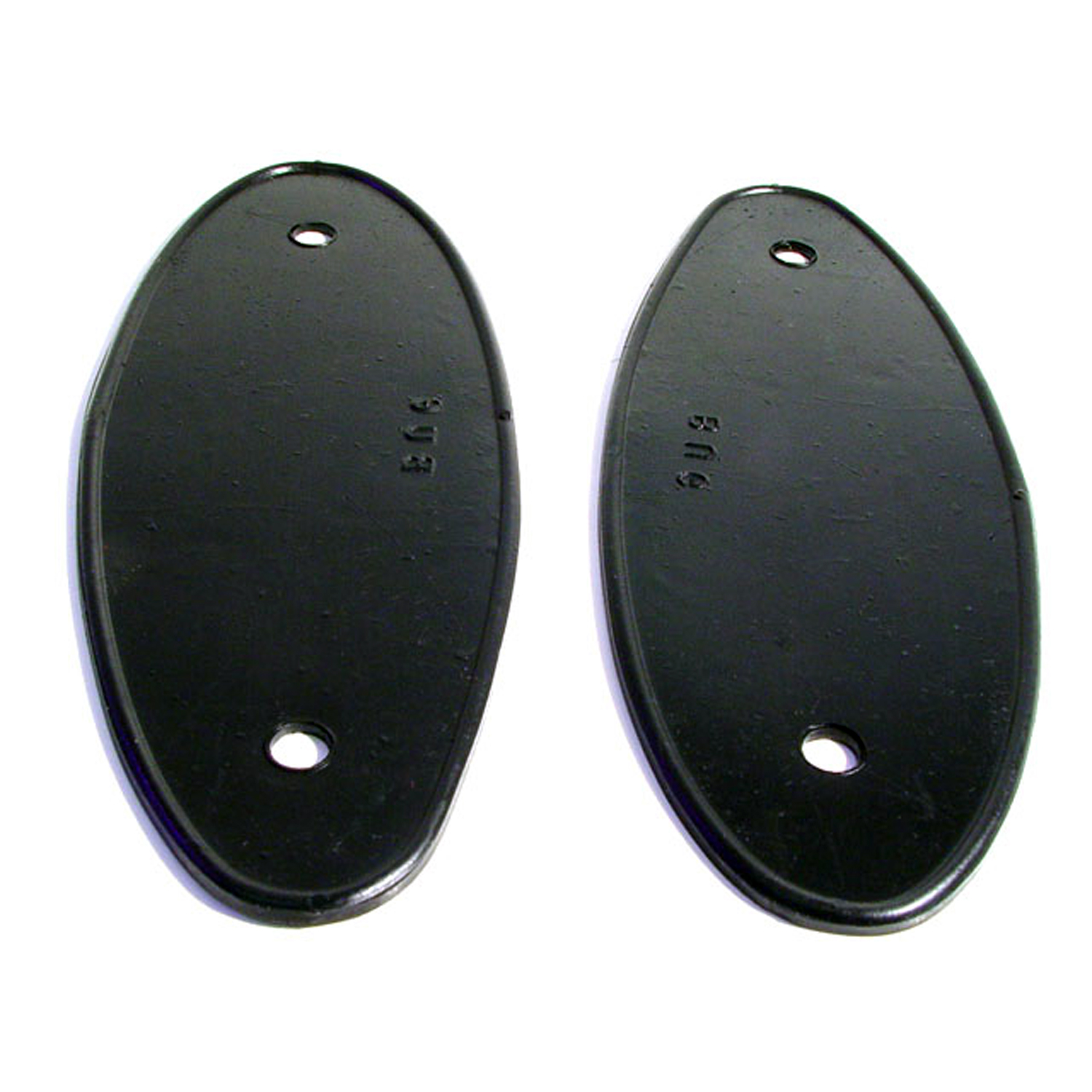 1927 Bugatti Type 43A Headlight Pads. 3" wide X 8-1/8" long. Pair-MP 337-AHeadlight Pads. 3" wide X 8-1/8" long. Pair
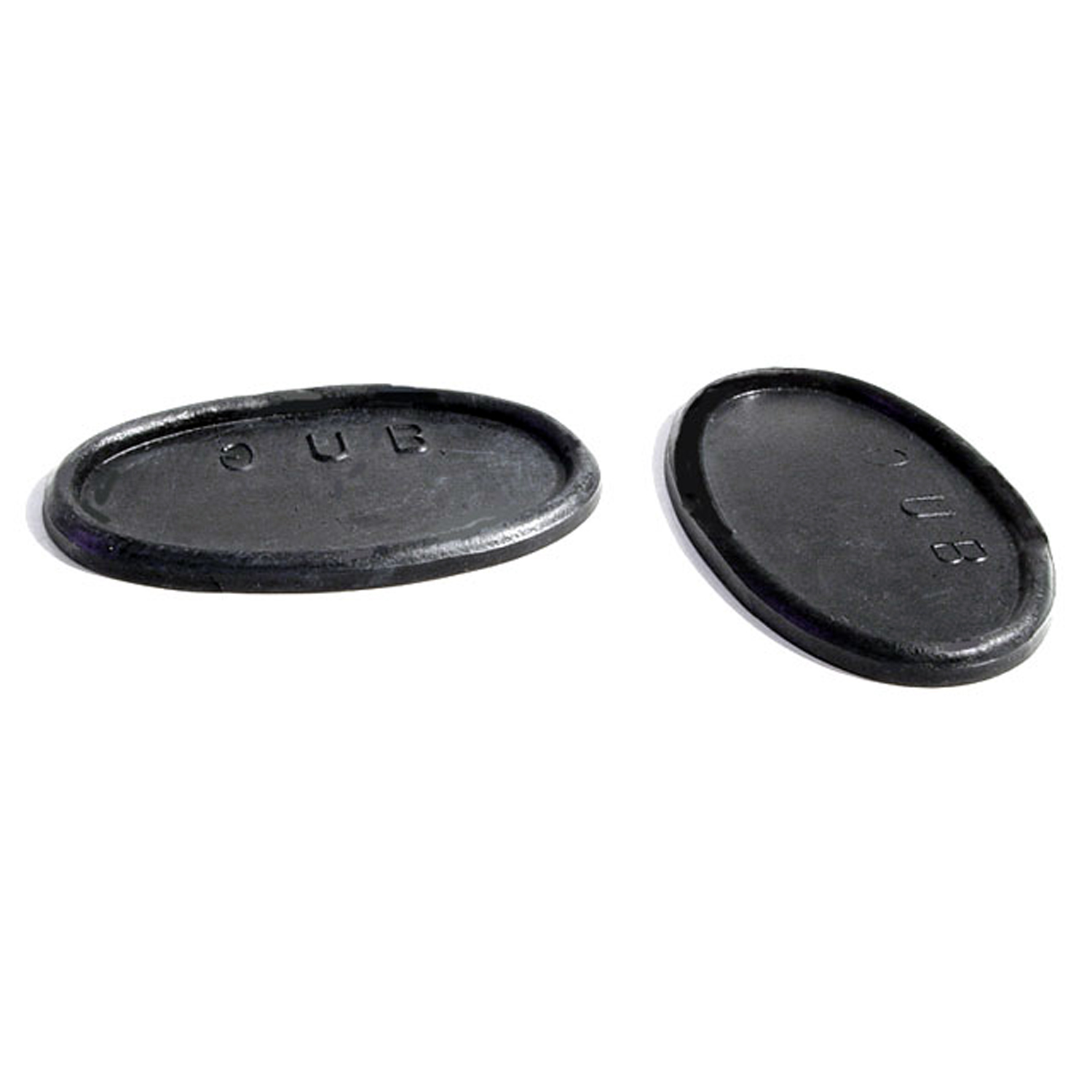 1927 Bugatti Type 43A Door Handle Pads. 1-3/8" wide X 2-1/4" long. Pair-MP 337-BDoor Handle Pads. 1-3/8" wide X 2-1/4" long. Pair
Why Choose Metro?
For over 100 years, Metro Moulded Parts has been the pinnacle of quality in classic car restoration parts. Our commitment to precision and authenticity in every component ensures a perfect fit and an OEM-level appearance.
- Expert Craftsmanship & Quality: Each part is a testament to our dedication to reliability and perfection, crafted from original designs and thoroughly tested.
- Advanced Technology: We use cutting-edge techniques to create flawless, long-lasting parts that surpass others in performance.
- SuperSoft Sponge – The Ultimate Door Seal: Not only are our door seals 30% softer than competitors', but they're also guaranteed to never leak. They effectively reduce wind and road noise, enhancing your classic car's comfort and driving experience.
- Proudly American: Our parts are a product of American craftsmanship, made in the USA with a spirit of excellence and heritage.
- Unrivaled Warranty: We back our products with a 30-year industry-leading warranty, a testament to our confidence in their quality.
Join us in preserving the legacy of classic cars with parts that are crafted for perfection, not just made.