

Image of 1927 Bugatti Type 44, Note: These illustrations use artistic license and may differ from actual historical models.
Performance Metrics
Fundamental Metrics
Emotional Appeal
MMP Rating
| Engine Specifications | |
|---|---|
| Engine: | Inline 8 |
| Displacement: | 3.0L |
| Horsepower: | Estimated 80 HP |
| Torque: | Not available |
| Compression Ratio: | Not available |
| Ignition System: | Magneto ignition |
| Cooling System: | Water-cooled |
| Performance Specifications | |
| 0-60 Time: | Not available |
| 1/4 Mile Time: | Not available |
| Top Speed: | 75 mph |
| Transmission and Drive | |
| Drive Type: | Rear-wheel drive |
| Transmission Type: | 4-speed manual |
| Fuel and Efficiency | |
| Fuel System Type: | Carburetor |
| MPG: | Not available |
| Dimensions and Brakes | |
| Brakes: | Mechanical drum brakes |
| Wheelbase: | 117.3 inches |
| Weight: | Estimated 2,200 lbs |
Note: Specifications for classic cars are given to the best of our ability, considering the limited and variant data available.
1927 Bugatti Type 44: A Grand Tourer with Racing Pedigree
The 1927 Bugatti Type 44 brought the marque’s celebrated straight-eight engineering to a more practical, road-going grand tourer. Built by Automobiles Ettore Bugatti in Molsheim, then in the Alsace region, it offered the mechanical character of a Bugatti in a chassis intended for comfortable touring rather than competition alone.
Introduced in 1927, the Type 44 arrived during a golden age of European coachbuilding, when buyers often chose a chassis and commissioned a specialist to create the body. One detail that helps explain its place in Bugatti history is its production: approximately 1,095 examples were built, making it one of the marque’s relatively more numerous models. “More numerous” is a relative term, of course. A century later, each surviving Type 44 remains a rare and significant motorcar.
Bugatti Type 44 Design and Coachbuilt Style
The Type 44’s long bonnet, upright horseshoe-shaped radiator and narrow, louvred engine covers give it the unmistakable outline of a vintage Bugatti. Its slim running boards, exposed wheels and tall stance look purposeful, while the graceful proportions leave room for an elegant touring body. Because many cars were bodied by outside coachbuilders, there is no single silhouette that represents every Type 44.
Body styles included open touring cars, roadsters, cabriolets, coupes and more enclosed saloon or sedan designs. Four-seat touring and cabriolet configurations suited the model’s grand-touring brief, while sporting roadsters emphasized its connection to Bugatti’s racing image. The exact bodywork, trim and fittings depended on the original customer’s choices and the coachbuilder’s craft.
There was no universal factory color palette. Owners could specify paint and upholstery to suit their tastes, and colors seen on surviving cars include dark blue, black, green and maroon. Bugatti blue is strongly associated with the marque, but it was not the only appropriate choice. Inside, the experience was shaped by the individual body: leather seats, quality carpeting and polished wood or metal details could feature, with finish and comfort varying from car to car.
Engineering Ahead of Its Touring Brief
At the Type 44’s heart was a 2,991 cc inline-eight with a single overhead camshaft and three valves per cylinder. Output is generally quoted at about 80 horsepower, a healthy figure for a substantial 1920s touring car. Power went to the rear wheels through a four-speed manual gearbox. The chassis used solid axles, leaf-spring suspension and mechanical drum brakes, reflecting the technology of its era.
That combination gave the Type 44 a distinctive balance. It was not simply a race car with a larger body: its engine and chassis were intended to make longer journeys rewarding, while retaining the direct, mechanical character associated with Bugatti. Its sophisticated overhead-cam straight-eight was a notable alternative to the more conventional engines found in many contemporaries.
Performance and Driving Experience
Performance figures vary with gearing, chassis condition and, especially, body weight and shape. A well-sorted Type 44 is often estimated to reach roughly 75 to 85 mph. Reliable period 0-to-60 mph figures are not widely available, so a precise number would be misleading; a broad estimate of around 20 seconds is more realistic than modern performance expectations suggest. Heavy enclosed bodies may be slower than lighter open ones.
On the road, the Type 44 rewards a deliberate driving style. Its long wheelbase and touring proportions can feel composed on sweeping roads, while narrow tires, solid axles and leaf springs transmit bumps more plainly than a modern suspension would. On a rough surface, the driver needs to read the road and allow the chassis to move beneath them. In windy conditions, an open-bodied car can be affected by crosswinds, and its mechanical brakes call for planning and generous stopping distance.
The engine is a central part of the experience: a rhythmic, hard-edged straight-eight note builds as the revs rise, accompanied by the sounds of the gearbox, tires and chassis. Steering and controls demand more physical input than a modern car, and operating the transmission smoothly takes practice. The reward is an unusually direct connection between driver and machine.
Why the Type 44 Matters
The Type 44 helped establish that Bugatti’s appeal extended beyond its famous competition cars. It translated the marque’s advanced engine design and sporting identity into a more usable touring package, at a time when coachbuilt luxury cars were important expressions of both engineering and personal style.
Its lasting significance lies in that blend of performance-minded mechanical design and individual coachwork. The Type 44 was not the model that set Bugatti’s greatest racing records, but it demonstrated how the company’s technical character could serve a road-going owner. Its elegant proportions and straight-eight layout still make it a reference point for collectors interested in the transition from early motoring to more sophisticated high-performance touring cars.
Ownership, Maintenance and Reliability
Today, the Type 44 is primarily a collector car, used for concours events, vintage tours, rallies and occasional pleasure drives. It is not a sensible daily driver by modern standards. Weather protection, braking performance, lighting, traffic compatibility and the care required by an irreplaceable historic vehicle all make regular commuting impractical.
Maintenance is best handled by a workshop experienced with prewar Bugattis and vintage machinery. The engine, gearbox, brakes and chassis require knowledgeable inspection, and parts or specialist work can be expensive. Repairs are not generally easy for an average owner: some routine tasks may be manageable for an experienced enthusiast, but rebuilding or correctly tuning the straight-eight calls for specialist skills. Reliability depends heavily on restoration quality, careful adjustment and regular use rather than long periods of storage.
Type 44 Facts and Common Misconceptions
The Type 44 is often mistaken for one of Bugatti’s competition models because of its family resemblance to the marque’s racers. Its purpose, however, was grand touring. It shared the period’s Bugatti engineering spirit without being primarily a record-breaking or race-winning machine. No universally recognized speed or endurance record defines the Type 44 in the way that major competition achievements define some other Bugattis.
Its coachbuilt nature is another point worth remembering. Two Type 44s may share their core mechanical identity yet look dramatically different, depending on their bodywork and subsequent history. Celebrity ownership stories can circulate around individual cars, but provenance should be checked against reliable documentation rather than assumed from a seller’s description.
Common criticisms are familiar to anyone considering a prewar car: the brakes and handling demand respect, the cabin can be noisy or exposed, and restoration costs are substantial. The Type 44’s relative touring comfort should not be confused with modern ease of use. It remains a historic machine that rewards patience and care.
Bugatti Type 44 Values and Rarity
About 1,095 Type 44s were produced, although the number surviving today is smaller and not always easy to establish. They appear on the market infrequently, and an individual car’s value depends greatly on its originality, documented history, mechanical condition, coachwork and quality of restoration.
As a broad 2026 estimate, a Type 44 might sell for roughly $350,000 to $900,000. A car needing major work could fall below that range, while an especially desirable, well-documented example with fine coachwork may exceed $1 million. These are indicative ranges, not a guaranteed valuation; specialist inspection and recent comparable sales matter.
Values for important prewar Bugattis have generally been resilient over the long term, though the market can rise or soften with economic conditions and collector tastes. Nominal prices may appreciate over time, but that does not guarantee an inflation-adjusted return once restoration, storage, insurance and maintenance are included.
A Touring Bugatti with Lasting Character
The 1927 Bugatti Type 44 combines a technically distinctive straight-eight engine, handsome coachbuilt styling and the engaging demands of a true vintage car. It was more usable than a dedicated racer, yet far from ordinary, and its many body styles make each example a little different.
For collectors, the Type 44 is not merely a beautiful survivor from the 1920s. It is a reminder that Bugatti’s legacy was built on more than competition victories: it also came from making road cars that turned every journey into an event.
1927 Bugatti Type 44 Catalog of Parts
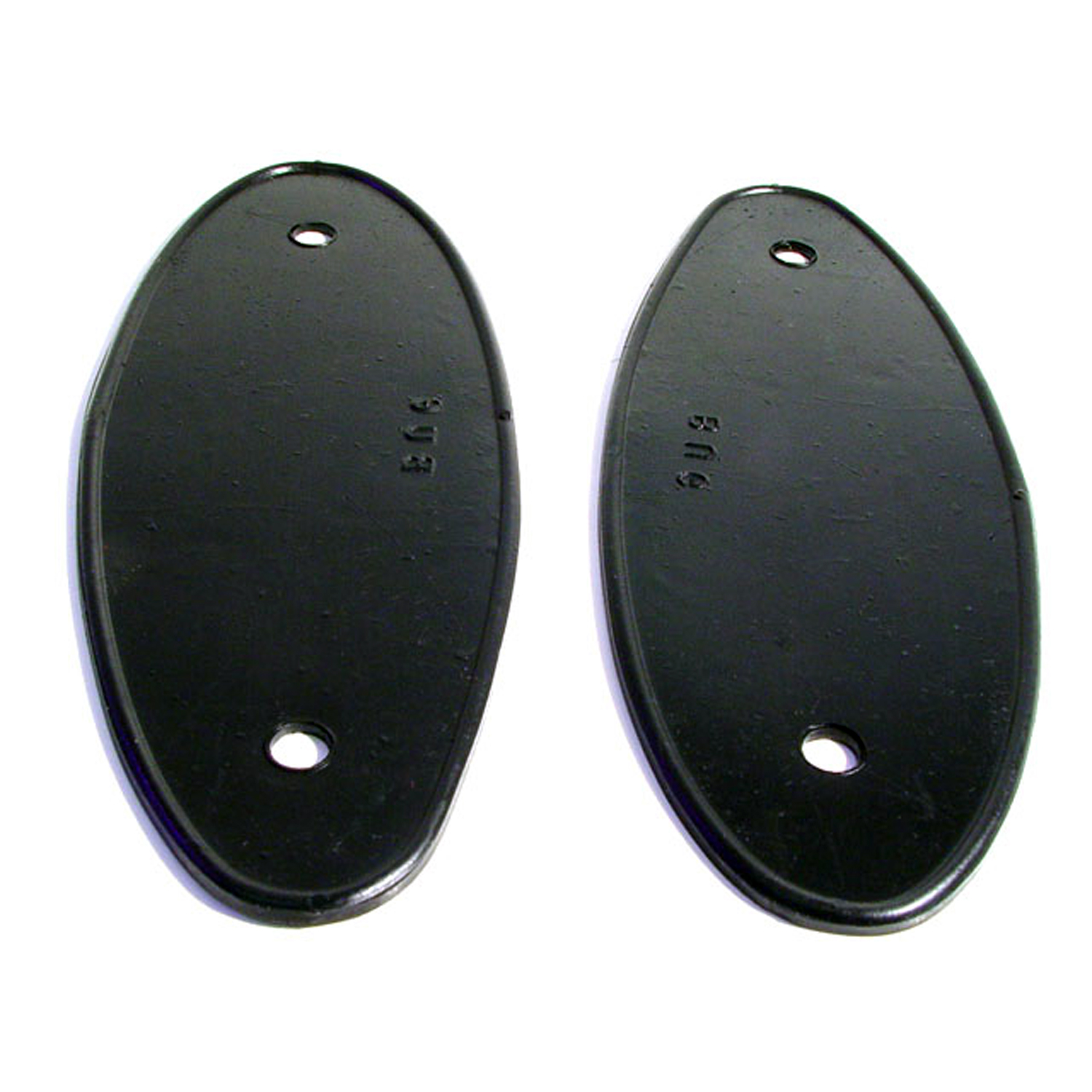 1927 Bugatti Type 44 Headlight Pads. 3" wide X 8-1/8" long. Pair-MP 337-AHeadlight Pads. 3" wide X 8-1/8" long. Pair
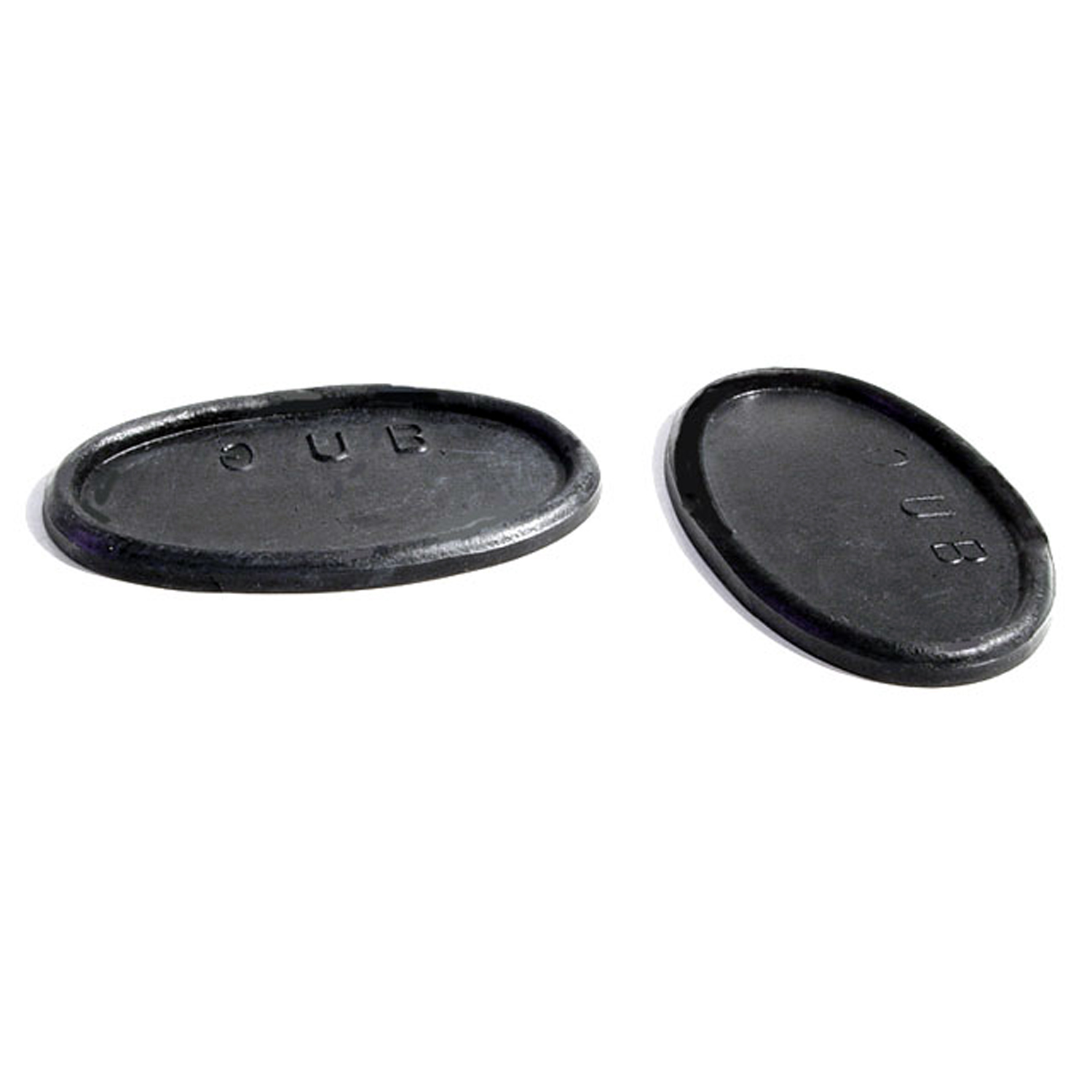 1927 Bugatti Type 44 Door Handle Pads. 1-3/8" wide X 2-1/4" long. Pair-MP 337-BDoor Handle Pads. 1-3/8" wide X 2-1/4" long. Pair
Why Choose Metro?
For over 100 years, Metro Moulded Parts has been the pinnacle of quality in classic car restoration parts. Our commitment to precision and authenticity in every component ensures a perfect fit and an OEM-level appearance.
- Expert Craftsmanship & Quality: Each part is a testament to our dedication to reliability and perfection, crafted from original designs and thoroughly tested.
- Advanced Technology: We use cutting-edge techniques to create flawless, long-lasting parts that surpass others in performance.
- SuperSoft Sponge – The Ultimate Door Seal: Not only are our door seals 30% softer than competitors', but they're also guaranteed to never leak. They effectively reduce wind and road noise, enhancing your classic car's comfort and driving experience.
- Proudly American: Our parts are a product of American craftsmanship, made in the USA with a spirit of excellence and heritage.
- Unrivaled Warranty: We back our products with a 30-year industry-leading warranty, a testament to our confidence in their quality.
Join us in preserving the legacy of classic cars with parts that are crafted for perfection, not just made.