

Image of 1928 Bugatti Type 40/40a, Note: These illustrations use artistic license and may differ from actual historical models.
Performance Metrics
Fundamental Metrics
Emotional Appeal
MMP Rating
| Engine Specifications | |
|---|---|
| Engine Options: | Inline 4 |
| Displacement Range: | 1.5L |
| Horsepower Range: | 40-50 HP |
| Torque: | Not available |
| Compression Ratio: | Not available |
| Ignition System: | Magneto ignition |
| Cooling System: | Water-cooled |
| Performance Specifications | |
| 0-60 Time: | Not available |
| 1/4 Mile Time: | Not available |
| Top Speed: | 75 mph |
| Transmission and Drive | |
| Drive Type: | Rear-wheel drive |
| Transmission Type: | 4-speed manual |
| Fuel and Efficiency | |
| Fuel System Type: | Carburetor |
| MPG: | Not available |
| Dimensions and Brakes | |
| Brakes: | Mechanical drum brakes |
| Wheelbase: | 2,800 mm |
| Weight: | 900 kg |
Note: Specifications for classic cars are given to the best of our ability, considering the limited and variant data available.
1928 Bugatti Type 40 and Type 40A: A Sporting Bugatti for the Road
The 1928 Bugatti Type 40 brought the marque’s racing-bred engineering into a compact car intended for ordinary roads, without giving up the elegance and mechanical character that made Bugatti famous. Built by Automobiles E. Bugatti in Molsheim, then part of France, the Type 40 was a comparatively accessible way to own a Bugatti. Its rarer, larger-engined sibling, the Type 40A, offered a little more capacity and power.
The Type 40 arrived in 1926, during a decade when European manufacturers were refining the fast, lightweight sports car. Bugatti had already established its reputation in competition, but the Type 40 was not simply a racer with road equipment. It was designed to be usable for touring, club events, and spirited driving. A useful distinction for shoppers and historians: “Type 40/40A” describes related but different versions, and surviving cars can vary substantially in bodywork and specification.
One appealing detail is that the Type 40 was a chassis-and-engine proposition as much as it was a single fixed design. Buyers could have a coachbuilder shape the car to their tastes, so two Type 40s may share their essential mechanical identity while looking remarkably different.
Bugatti Type 40 Styling and Coachwork
The Type 40’s long bonnet, upright radiator, exposed wheels, and narrow, purposeful proportions give it a distinctly pre-war sporting stance. Its horseshoe-shaped radiator became an unmistakable Bugatti signature, while the slim bodywork kept the car visually light. On open versions, the sweeping wings and running boards frame the wheels rather than hiding them, emphasizing the car’s mechanical layout.
Body styles included roadsters, tourers, cabriolets, coupés, and closed saloons. Open two-seat and touring bodies are among the most recognizable today, especially the sporting “Grand Sport” style. Closed coachwork could make the car more comfortable for longer journeys or poor weather, although it added weight and changed the character of the chassis. The exact body style and maker depend on the individual car, and later restorations can further complicate a car’s original specification.
Bugatti did not offer one universal paint palette for every Type 40. Owners could select colors through the factory or coachbuilder, and period cars appeared in a variety of solid and two-tone finishes. Deep blues, reds, greens, and restrained dark shades all suit the car’s lines. French racing blue is an evocative choice, but it should not be treated as the only correct or standard color for a road-going Type 40.
Type 40 Interior and Engineering
Inside, the Type 40 is more sporting than luxurious. Depending on the body and coachbuilder, the cabin might feature leather upholstery, a simple instrument panel, a large steering wheel, and exposed or plainly finished metal fittings. Fine materials and careful craftsmanship were available, but the experience remained hands-on: this was a vintage car for a driver who expected to manage the controls, not a modern grand tourer designed to isolate its occupants.
The Type 40 used a front-mounted, four-cylinder engine of about 1.5 litres, with single-overhead-camshaft architecture and Bugatti’s characteristic attention to mechanical detail. The Type 40A enlarged the displacement to roughly 1.6 litres and delivered more power. Both versions paired their engines with a four-speed manual gearbox. Period construction included a conventional ladder-style chassis, solid axles, leaf springs, and mechanical drum brakes, all familiar technologies of the era but requiring more driver involvement than modern systems.
Why the Bugatti Type 40 Matters
The Type 40’s importance is less about a single record or headline race victory and more about what it represented: a relatively practical road car carrying the engineering philosophy of a celebrated competition marque. Its overhead-cam engine, sporting chassis, and coachbuilt variety offered a distinctive alternative to more mass-produced cars of the late 1920s.
It also shows how the idea of a “sports car” was developing. The Type 40 could be ordered as an open, lively machine or dressed as a more enclosed touring car, giving owners a choice between sporting character and everyday comfort. It was not a mass-market car, nor did it displace Bugatti’s purpose-built racers. Instead, it helped establish the enduring appeal of the sporting road-going Bugatti: elegant, technically interesting, and individual.
Type 40 Performance and Driving Feel
Performance figures vary with engine condition, gearing, bodywork, and the particular version. A standard Type 40 is commonly credited with roughly 45 horsepower and a top speed in the neighborhood of 70 to 75 mph. The larger Type 40A, often quoted at about 50 horsepower, could approach 80 mph in favorable conditions. These are period-car estimates, not results from a modern standardized test.
There is no dependable factory 0-to-60 mph figure to quote for every Type 40. Given the modest power, tall gearing, and differing body weights, a rough estimate of around 20 to 25 seconds for a healthy example is more useful than a false claim of precision. A heavier saloon may be slower, while a light open car with favorable gearing may feel livelier.
On the road, the Type 40 rewards anticipation. The engine’s mechanical chatter and purposeful exhaust note are part of the experience, and the driver must coordinate the throttle, clutch, and gearbox rather than simply press a pedal and let modern electronics do the work. Many examples have unsynchronized gears, so shifting smoothly can require careful timing and, where appropriate, double-clutching. Buyers should verify the gearbox in the specific car.
The solid-axle suspension and narrow tires transmit more road texture than a modern car. Broken pavement and sharp bumps call for reduced speed, while a winding road suits the Bugatti’s relatively light, sporting character. It is not a contemporary high-grip sports car: steering effort, braking distances, and body movement all demand respect. In a well-maintained example, however, the controls feel direct and engaging, making a measured country-road drive far more rewarding than a hurried one.
Owning and Maintaining a Type 40
Today, the Type 40 is best thought of as a collector car for touring, rallies, club events, and concours displays, rather than a daily driver. Its road-going design makes it more adaptable than a dedicated racing Bugatti, but age, rarity, and the value of original components make routine commuting an unwise plan for most owners.
Maintenance is specialized. The engine, carburetion, ignition, mechanical brakes, gearbox, and cooling system all need regular attention, and correct parts or knowledgeable workmanship can be difficult and expensive to source. Repairs are not especially convenient for the average owner unfamiliar with vintage machinery. A skilled owner can perform basic inspections and service, but major engine or chassis work is best entrusted to a specialist familiar with early Bugattis.
Condition and authenticity matter enormously. Before purchase, a prospective owner should have the chassis identity, engine, gearbox, body history, and restoration records examined by marque experts. A beautiful restoration is not automatically an original configuration, and a car with documented history and sound mechanical work can be more valuable than one that merely shines in photographs.
Bugatti Type 40 Facts and Myths
The Type 40 is sometimes described as a “baby Bugatti” because it was smaller and less expensive than the marque’s grander models. That nickname captures its place in the range, but it should not suggest that the car was simple or ordinary. It still carried sophisticated engineering and the substantial ownership responsibilities associated with the Bugatti name.
The Type 40 was built for road use and sporting motoring, rather than as a record-breaking model. It is not generally associated with a famous outright speed record or a landmark endurance victory. Its appeal comes instead from the combination of Bugatti engineering, individualized coachwork, and the chance to experience a genuine pre-war sporting car.
Criticisms are familiar to anyone considering a car from the 1920s: limited weather protection in open versions, modest performance by modern standards, demanding controls, and costly specialist maintenance. The Type 40’s lightness and character are real strengths, but they do not make it effortless to own or drive.
Type 40 Production and Collector Values
Production totals are not perfectly consistent across published accounts, partly because Type 40 and Type 40A figures may be counted differently. A reasonable broad estimate is about 800 to 830 Type 40-family cars, with the Type 40A a much smaller subset, often estimated at only a few dozen. Either way, surviving examples are rare, and original chassis with well-documented histories are especially scarce.
As an indicative 2026 collector-market guide, a Type 40 in sound but less exceptional condition might fall roughly in the US$250,000 to US$450,000 range. Strong, correctly restored cars with desirable coachwork and convincing provenance can bring approximately US$450,000 to US$750,000 or more. A rare Type 40A, exceptional original car, or example with significant history may exceed those ranges. These are broad estimates rather than appraisals; auction results depend heavily on condition, authenticity, body style, and documentation.
Values for significant pre-war Bugattis have generally been supported by their scarcity and marque appeal, though the market is selective and prices can move unevenly. Restorations are expensive, and a high purchase price does not guarantee a profitable ownership experience. Buyers should prioritize a sound, well-documented car over speculation about future appreciation.
A Lasting Road-Going Bugatti
The 1928 Bugatti Type 40 and Type 40A combine compact dimensions, coachbuilt style, and sporting engineering in a package that feels distinctively of its era. Their performance is modest by modern standards, and ownership requires specialist care, but their character is precisely the point: a Type 40 asks its driver to participate.
More than a smaller entry in the Bugatti catalogue, the Type 40 is a reminder that the marque’s magic was not confined to race cars. It carried that spirit onto the open road, one carefully chosen gear and one unmistakable horseshoe radiator at a time.
1928 Bugatti Type 40/40a Catalog of Parts
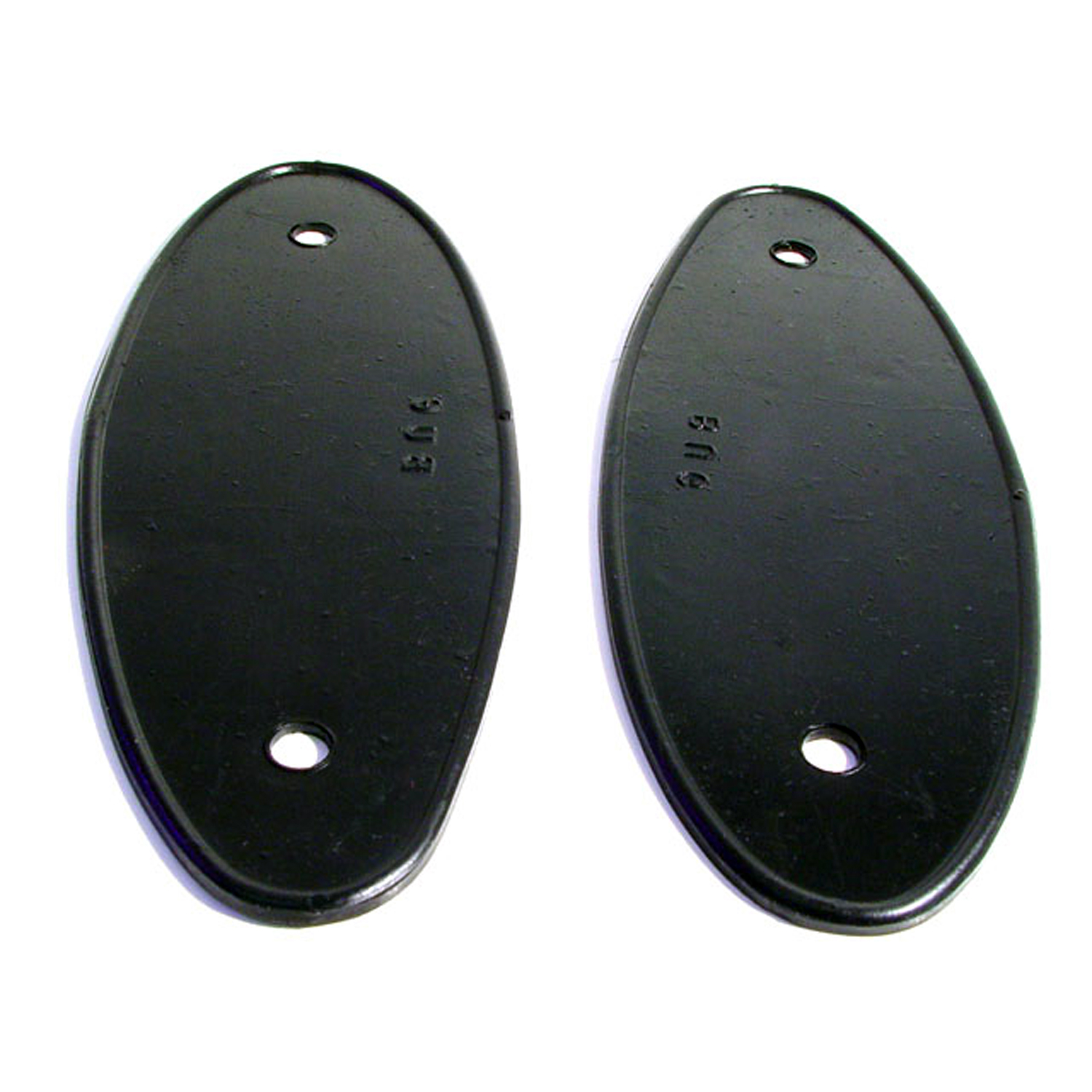 1928 Bugatti TYPE 40/40A Headlight Pads. 3" wide X 8-1/8" long. Pair-MP 337-AHeadlight Pads. 3" wide X 8-1/8" long. Pair
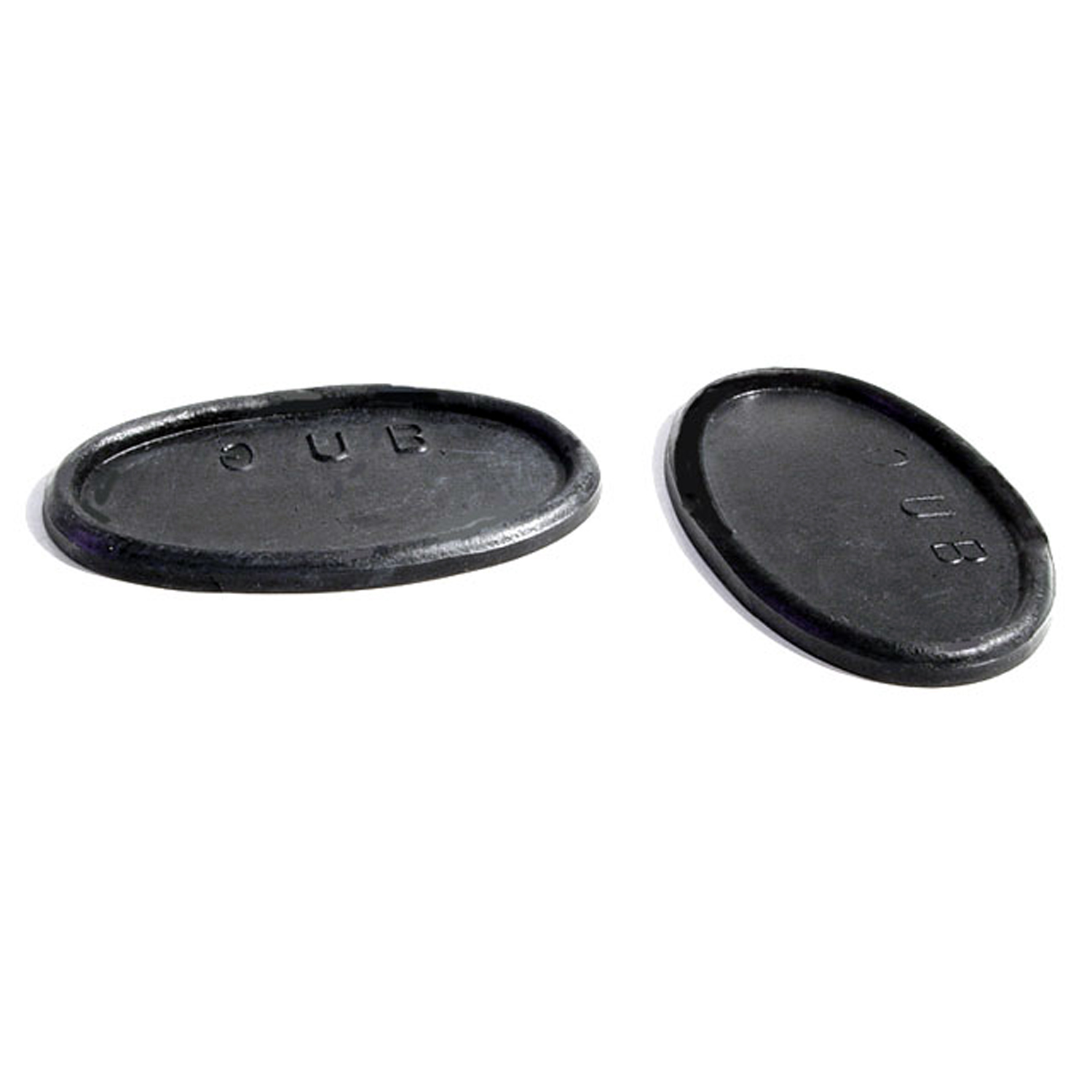 1928 Bugatti TYPE 40/40A Door Handle Pads. 1-3/8" wide X 2-1/4" long. Pair-MP 337-BDoor Handle Pads. 1-3/8" wide X 2-1/4" long. Pair
Why Choose Metro?
For over 100 years, Metro Moulded Parts has been the pinnacle of quality in classic car restoration parts. Our commitment to precision and authenticity in every component ensures a perfect fit and an OEM-level appearance.
- Expert Craftsmanship & Quality: Each part is a testament to our dedication to reliability and perfection, crafted from original designs and thoroughly tested.
- Advanced Technology: We use cutting-edge techniques to create flawless, long-lasting parts that surpass others in performance.
- SuperSoft Sponge – The Ultimate Door Seal: Not only are our door seals 30% softer than competitors', but they're also guaranteed to never leak. They effectively reduce wind and road noise, enhancing your classic car's comfort and driving experience.
- Proudly American: Our parts are a product of American craftsmanship, made in the USA with a spirit of excellence and heritage.
- Unrivaled Warranty: We back our products with a 30-year industry-leading warranty, a testament to our confidence in their quality.
Join us in preserving the legacy of classic cars with parts that are crafted for perfection, not just made.