

Image of 1928 Bugatti Type 41 Royale, Note: These illustrations use artistic license and may differ from actual historical models.
Performance Metrics
Fundamental Metrics
Emotional Appeal
MMP Rating
| Engine Specifications | |
|---|---|
| Engine: | Straight 8 |
| Displacement: | 12.7 liters |
| Horsepower: | Estimated 275-300 HP |
| Torque: | Not available |
| Compression Ratio: | Not available |
| Ignition System: | Magneto ignition |
| Cooling System: | Water-cooled |
| Performance Specifications | |
| 0-60 Time: | Not available |
| 1/4 Mile Time: | Not available |
| Top Speed: | 100-115 mph |
| Transmission and Drive | |
| Drive Type: | Rear-wheel drive |
| Transmission Type: | 3-speed manual |
| Fuel and Efficiency | |
| Fuel System Type: | Carburetor |
| MPG: | Not available |
| Dimensions and Brakes | |
| Brakes: | Mechanical drum brakes |
| Wheelbase: | 169.3 inches |
| Weight: | Estimated 7,000 lbs |
Note: Specifications for classic cars are given to the best of our ability, considering the limited and variant data available.
1928 Bugatti Type 41 Royale: The Car Built for Kings
The Bugatti Type 41 Royale was less a motorcar than a rolling declaration of ambition: enormous, exquisitely finished, and powered by an engine more at home in a locomotive than an ordinary road car. Conceived by Ettore Bugatti in France during the late 1920s, the Royale was intended to be the ultimate luxury automobile, a machine worthy of royalty and heads of state. Its scale was so extravagant that the Great Depression soon made its intended market almost vanish.
Bugatti planned to build 25 Royales, but only six complete cars were made. A memorable detail sits atop the radiator cap: an elephant sculpture created by Ettore’s brother, the sculptor Rembrandt Bugatti. It gives the car a mascot as distinctive as its monumental proportions.
Monumental Styling and Coachbuilt Luxury
The Royale’s exterior is defined by a long hood, sweeping fenders, a tall horseshoe-shaped radiator grille, and a wheelbase that makes even other luxury cars of the period look modest. The chassis was so large that each finished car became a collaboration between Bugatti and a coachbuilder. Rather than offering one standard body, the company supplied the engineering platform and commissioned bespoke coachwork to suit the owner.
Royale bodies included formal limousines, coupes, sedans, and open touring styles. Notable examples include the Coupé Napoléon, the Kellner Coupé, the Esders Roadster, the Binder Cabriolet, and the Weinberger Cabriolet. The Coupé Napoléon, with its imposing closed body and sweeping roofline, is among the best-known. Each car’s shape reflects its individual commission, so there was no single “most popular” body in the normal production-car sense.
Interiors were finished to the standards of bespoke coachbuilding. Depending on the car and its owner, occupants could find fine leather, richly figured wood, polished metal fittings, and deep upholstery. The Royale was designed to be a luxurious place to travel, particularly in the rear passenger compartment, where formal seating and generous space took priority over sporting practicality.
Royales were not sold in a regular palette of factory colors. Paint and trim were selected as part of each custom commission, and surviving cars wear distinctive, individual combinations. The result is a small family of automobiles rather than a uniform model range.
Engineering on an Extraordinary Scale
At the heart of the Type 41 is a straight-eight engine of approximately 12.7 liters, with a single overhead camshaft and three valves per cylinder. Its design drew on Ettore Bugatti’s interest in aircraft engines, and the engine’s sheer size is one of the Royale’s defining features. Output is commonly quoted at around 300 horsepower, although figures vary by source and by how the engine is described.
The chassis, too, was built on a grand scale. Its long wheelbase provided a stable platform for heavy coachwork, while mechanical components such as the live axles, leaf springs, and large drum brakes reflected the engineering practices of the era. The Royale was advanced not because it introduced every modern feature, but because Bugatti combined serious engineering with a level of scale, finish, and personalization rarely attempted by an automobile manufacturer.
Why the Royale Still Matters
The Type 41 set itself apart from contemporaries through sheer size and ambition. Many luxury makers competed through craftsmanship, performance, or prestige. Bugatti attempted to dominate all three with a car that was exceptionally powerful, extensively coachbuilt, and priced for a tiny circle of the world’s wealthiest buyers.
Its commercial failure did not diminish its influence. The Royale became a lasting benchmark for the idea of the ultimate luxury car: a distinctive chassis, a remarkable engine, and bodywork tailored to the customer. Its combination of engineering theater and individual coachbuilt design continues to shape how enthusiasts think about prewar prestige automobiles.
Performance and the Driving Experience
Exact performance figures depend on the body fitted, the car’s condition, and the source. Published estimates commonly place top speed in the neighborhood of 100 to 125 mph, with some accounts citing higher potential for lighter configurations. A reliable, period-correct 0-to-60 mph figure is difficult to establish. Given the car’s weight and gearing, estimates generally put acceleration somewhere around 10 to 15 seconds, rather than treating it like a modern performance test.
On the road, the Royale’s immense torque is more important than rapid acceleration. The straight-eight delivers a deep, smooth presence, and the car gathers speed with a sense of effortless momentum. Its long wheelbase helps it settle over broad, flowing roads, but narrow lanes and tight bends are another matter. The Royale is exceptionally large and heavy by modern standards, so winding roads demand anticipation, space, and respect for the limits of its period brakes and tires.
The experience is one of commanding scale rather than nimble sports-car response. The steering, controls, and ride feel belong to an earlier era, and a driver must work with the car rather than expect modern convenience or precision. In return, the engine’s measured beat, the view down that vast hood, and the awareness of piloting a one-off coachbuilt machine make even a short drive memorable.
Ownership, Maintenance, and Reliability
A Type 41 Royale is not a daily driver. These cars are generally preserved as museum pieces, shown at major concours events, or exercised on carefully planned tours. Their rarity and value mean that every outing requires preparation, specialist support, and a suitable route.
Maintenance is a task for experienced vintage-car specialists, not the average owner or general repair shop. The engine is exceptionally large, parts are scarce or individually made, and restoration requires expertise in prewar Bugatti engineering and coachbuilding. Like any machine of its age, reliability depends heavily on careful maintenance and use. A well-prepared Royale can be driven, but treating it as a casual runabout would be unrealistic.
Royale Facts and Famous Examples
Bugatti planned a run of 25 Type 41s but completed only six. The cars were produced across several years, and references sometimes differ in how they count chassis, prototypes, and completed automobiles. For practical purposes, six completed Royales is the figure most often cited.
The Coupé Napoléon is associated with Ettore Bugatti and remained in the family before becoming part of the Schlumpf Collection in France. The Esders Roadster is another celebrated example, known for its dramatic open coachwork. Its original body was later removed, and the chassis received different coachwork, illustrating how coachbuilt cars could change substantially over their lifetimes.
The Royale was not built to chase racing victories or speed records. Its achievement was its presence, engineering ambition, and extraordinary exclusivity. A common criticism is that the project was commercially unrealistic: its price and scale made it difficult to sell even before the Depression worsened the market. That same excess, however, is now central to its legend.
Collector Value and Availability
Only six completed Type 41 Royales exist, making one of the rarest and most significant collector cars in the world. They almost never appear on the open market, and a public sale would attract attention far beyond the usual classic-car community.
Any current value is necessarily an estimate because transactions are exceptionally rare and may be private. A broad, realistic discussion range would be roughly $20 million to $40 million or more, depending on the specific car, its history, condition, and provenance. The Kellner-bodied Royale famously sold at auction in 1987 for approximately $9.8 million, a record at the time. That historical sale is not a direct guide to today’s value, but it illustrates the car’s long-standing status as a top-tier collectible.
Over the long term, the Royale’s extreme rarity and cultural importance support strong value. However, with so few cars and so few transactions, it is misleading to describe its price movement as a smooth market trend. Each car is effectively its own market, and condition, originality, documentation, and ownership history can have an enormous effect.
The Ultimate Expression of Bugatti’s Ambition
The 1928 Bugatti Type 41 Royale combined a vast straight-eight engine, bespoke coachwork, and an ambition that exceeded the commercial realities of its time. It was too grand for most buyers and too rare to become an ordinary production model, yet those very qualities made it one of the most unforgettable automobiles ever built.
Nearly a century later, the Royale remains a powerful reminder that a car can be more than transportation. It can be a work of engineering, sculpture, and personal expression, all gathered around one astonishing machine.
1928 Bugatti Type 41 Royale Catalog of Parts
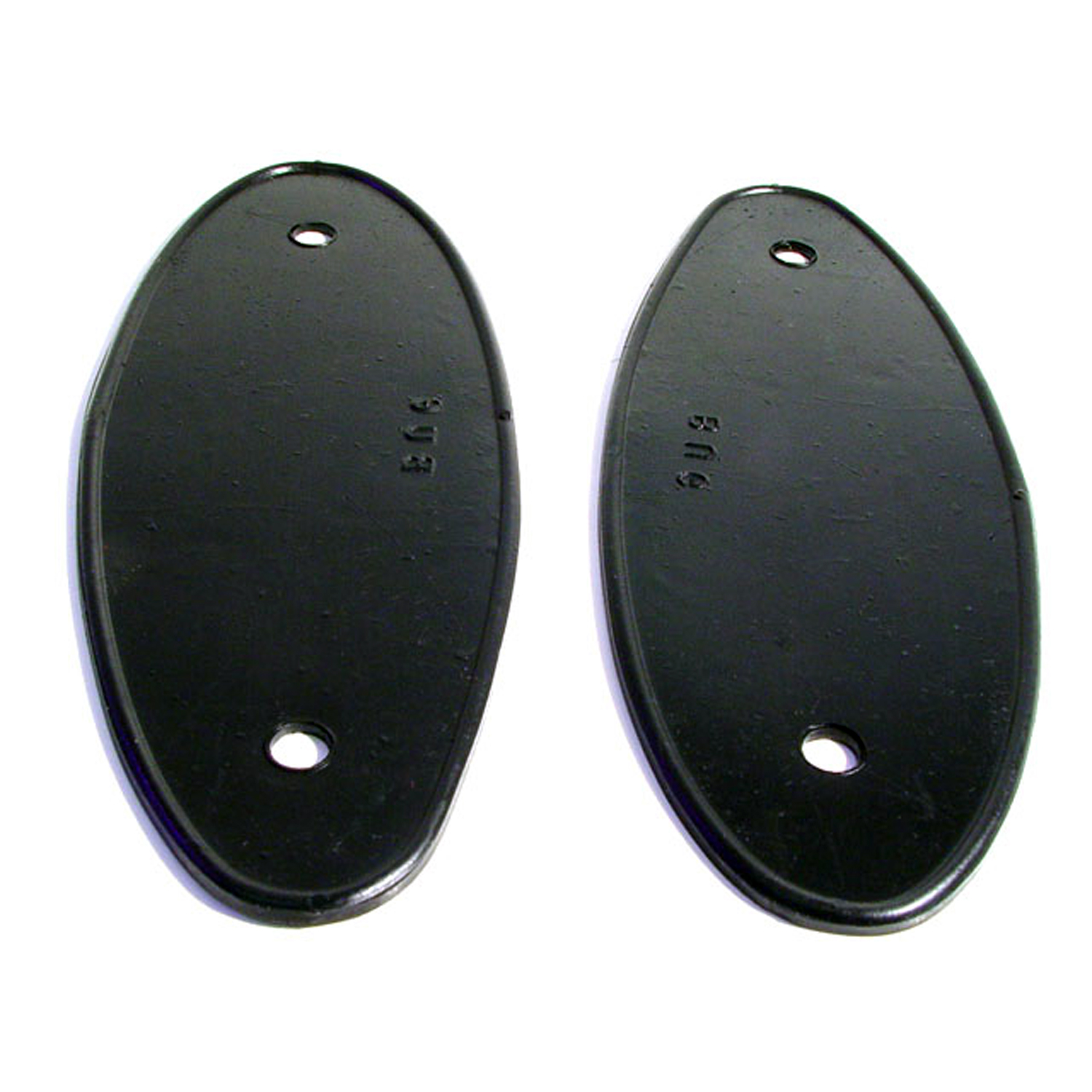 1928 Bugatti TYPE 41 ROYALE Headlight Pads. 3" wide X 8-1/8" long. Pair-MP 337-AHeadlight Pads. 3" wide X 8-1/8" long. Pair
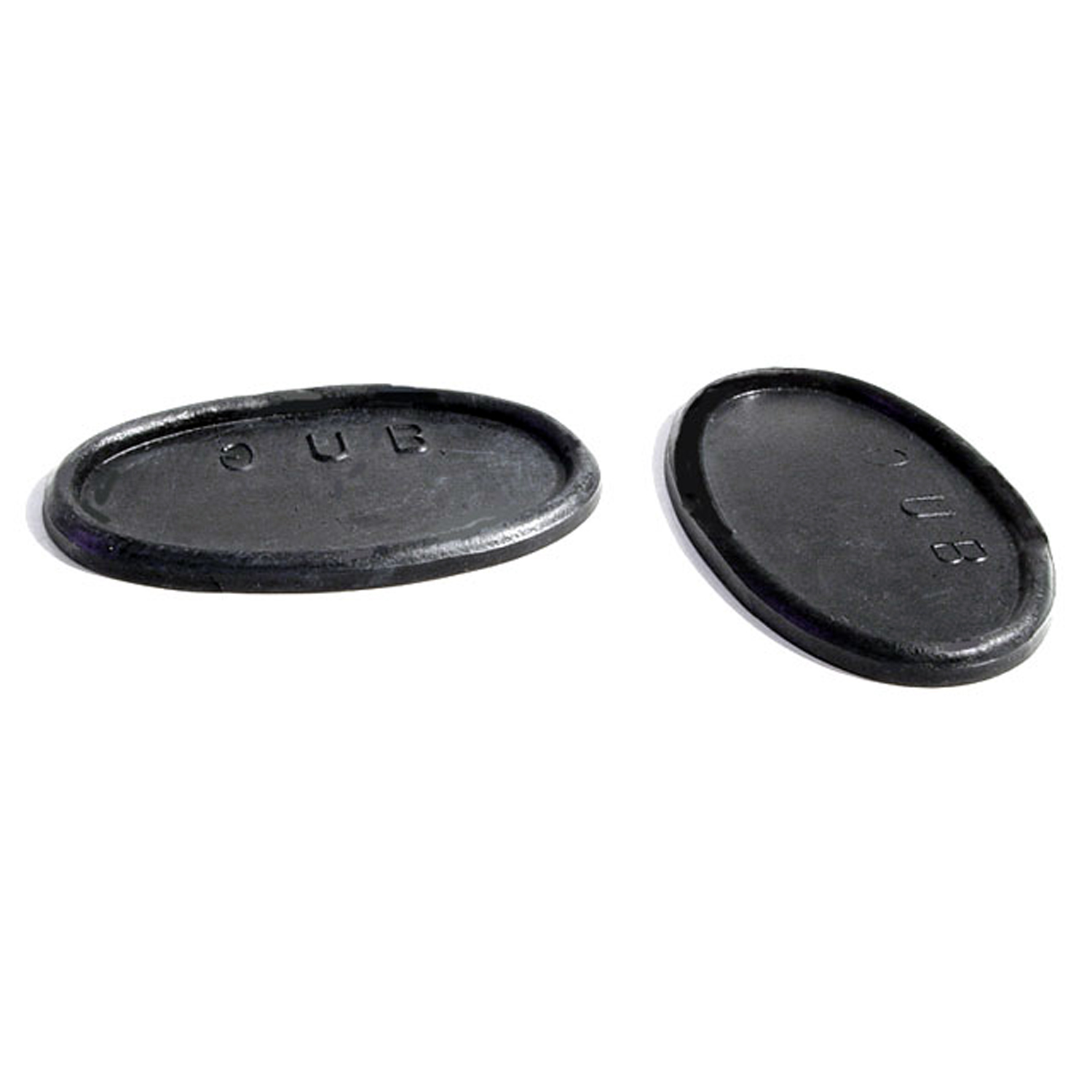 1928 Bugatti TYPE 41 ROYALE Door Handle Pads. 1-3/8" wide X 2-1/4" long. Pair-MP 337-BDoor Handle Pads. 1-3/8" wide X 2-1/4" long. Pair
Why Choose Metro?
For over 100 years, Metro Moulded Parts has been the pinnacle of quality in classic car restoration parts. Our commitment to precision and authenticity in every component ensures a perfect fit and an OEM-level appearance.
- Expert Craftsmanship & Quality: Each part is a testament to our dedication to reliability and perfection, crafted from original designs and thoroughly tested.
- Advanced Technology: We use cutting-edge techniques to create flawless, long-lasting parts that surpass others in performance.
- SuperSoft Sponge – The Ultimate Door Seal: Not only are our door seals 30% softer than competitors', but they're also guaranteed to never leak. They effectively reduce wind and road noise, enhancing your classic car's comfort and driving experience.
- Proudly American: Our parts are a product of American craftsmanship, made in the USA with a spirit of excellence and heritage.
- Unrivaled Warranty: We back our products with a 30-year industry-leading warranty, a testament to our confidence in their quality.
Join us in preserving the legacy of classic cars with parts that are crafted for perfection, not just made.