

Image of 1928 Bugatti Type 43a, Note: These illustrations use artistic license and may differ from actual historical models.
Performance Metrics
Fundamental Metrics
Emotional Appeal
MMP Rating
| Engine Specifications | |
|---|---|
| Engine: | Straight 8 |
| Displacement: | 2.3 L |
| Horsepower: | 120 hp |
| Torque: | Not available |
| Compression Ratio: | Not available |
| Ignition System: | Magneto ignition |
| Cooling System: | Water-cooled |
| Performance Specifications | |
| 0-60 Time: | Not available |
| 1/4 Mile Time: | Not available |
| Top Speed: | 110 mph |
| Transmission and Drive | |
| Drive Type: | Rear-wheel drive |
| Transmission Type: | 4-speed manual |
| Fuel and Efficiency | |
| Fuel System Type: | Carburetor |
| MPG: | Not available |
| Dimensions and Brakes | |
| Brakes: | Mechanical drum brakes |
| Wheelbase: | 2,700 mm |
| Weight: | 1,000 kg |
Note: Specifications for classic cars are given to the best of our ability, considering the limited and variant data available.
1928 Bugatti Type 43A: A Grand Sport with Racing Pedigree
The 1928 Bugatti Type 43A brought Grand Prix engineering onto the open road, with a supercharged straight-eight beneath its long bonnet and the promise of a genuine 100-mph top speed. Built by Automobiles Ettore Bugatti in Molsheim, then in the French region of Alsace, it was a road-going sports car for drivers who wanted more than elegant coachwork: they wanted the sensation of a competition Bugatti in a car they could tour in.
The Type 43 emerged in 1927 and remained in production into the early 1930s. Its most famous mechanical ingredient was an engine derived from Bugatti’s Type 35B racing car. That connection made the 43 special, but it also shaped its character: this was a refined road car with a distinctly purposeful heart. The name Type 43A appears in period references and modern listings, though historic cataloguing is not always consistent about the distinction between 43 and 43A.
One fact helps explain the car’s appeal: the Type 43 was among the first production sports cars capable of reaching 100 mph. At a time when many road cars were far slower, that was a remarkable figure, especially in a machine that could be ordered with seating for more than one passenger.
Bugatti Styling and Coachbuilt Character
The Type 43’s proportions announce its performance before the engine is even started. A long, narrow bonnet dominates the front, punctuated by louvres that help release heat from the engine bay. The familiar horseshoe-shaped Bugatti radiator sits proudly ahead of the chassis, while slim wings, exposed wheels and a low cockpit give the car a lean, almost mechanical beauty. Its lines are elegant, but never delicate: the whole design suggests speed held in reserve.
Many Type 43s were open sports cars, often configured as four-seat roadsters. The front seats put the driver close to the controls, while the rear seats made the car more practical for touring than a strict two-seat racer. Coachbuilt examples could vary in detail, and special bodies gave individual cars their own character. Coupé and other bespoke configurations also existed, but the open Grand Sport roadster is the most instantly recognizable form.
The cabin was purposeful rather than lavish by modern standards. Leather upholstery, a straightforward instrument panel and carefully finished metal fittings created an atmosphere of craftsmanship without distracting from the driving. As with many high-end cars of the period, the exact trim and finish depended on the individual car and its bodywork.
Bugatti did not treat paint as a single, fixed specification for every Type 43. Buyers could choose finishes to suit their taste, and coachbuilt cars added further variety. Dark tones, including black and deep blue, suit the car’s sporting elegance particularly well, while brighter colors can emphasize its sculptural bodywork. Bugatti blue is the most evocative choice for many enthusiasts, though it should not be mistaken for a universal factory color.
Supercharged Technology for the Road
At the center of the Type 43’s appeal was its 2,262 cc, supercharged inline-eight. Closely related to the engine used in the Type 35B, it combined a single overhead camshaft with Bugatti’s distinctive three-valve-per-cylinder arrangement. A Roots-type supercharger forced more air into the engine, helping it produce around 120 horsepower, an impressive output for a road car of the late 1920s.
Power went through a four-speed manual gearbox to the rear wheels. The chassis followed the era’s established sporting formula, with a substantial ladder frame, solid axles and leaf springs. Four-wheel mechanical brakes were an important part of the package, although their operation and feel are very different from a modern hydraulic braking system. The Type 43 was not built around electronic aids or modern convenience; its technology was mechanical, visible and closely connected to the driver.
Why the Type 43 Mattered
The Type 43 helped define the idea of the high-performance road car by translating racing-engine know-how into a usable touring machine. Bugatti had already earned its reputation on circuits, and the 43 gave wealthy customers a way to experience some of that engineering on public roads. It was not simply a race car with lamps added. Its seating, bodywork and road-going equipment made it a more versatile proposition, while its powertrain kept its competition roots unmistakable.
Compared with many contemporaries, the Type 43 offered an unusual blend of speed, exclusivity and mechanical sophistication. Its supercharged eight-cylinder engine delivered strong performance without requiring the enormous displacement used by some luxury rivals. The model also reinforced a lasting automotive idea: that a road car could be both a carefully crafted object and a serious performance machine.
Its influence is best understood as part of Bugatti’s wider legacy rather than as a single design copied by the industry. The Type 43 demonstrated how racing-derived engineering could shape a prestigious road car, a principle that continues to define performance brands today.
Performance and the Feel Behind the Wheel
Period figures and later references commonly put the Type 43’s top speed at about 100 mph, or roughly 160 km/h. The exact result depended on body style, gearing, mechanical condition and the accuracy of the speed measurement. There is no widely dependable factory 0-to-60-mph figure, so modern estimates should be treated cautiously. A sound example might take approximately 10 to 12 seconds, but road surface, tires and setup would make a substantial difference.
On a smooth road, the car’s long bonnet and low seating position create a focused, almost cockpit-like view of the world. The supercharged straight-eight builds speed with a distinctive mechanical urgency, accompanied by induction noise, exhaust rhythm and the whine of the blower. The four-speed gearbox asks for deliberate, practiced shifts, and the mechanical controls reward a driver who anticipates rather than reacts.
The Type 43’s solid-axle suspension reflects its age. It can feel firm and busy over rough pavement, and large bumps demand respect. On a winding road, however, its relatively light sporting character and direct mechanical connection make it engaging. It is not a modern sports car with effortless grip or isolation. Steering, braking and gear changes all require attention, and that hands-on involvement is a major part of the experience.
Owning a Type 43 Today
A Type 43 is best suited to careful touring, vintage events, concours appearances and occasional spirited drives on suitable roads. It is not a sensible daily driver. Age, rarity, value and the practical limits of 1920s engineering all argue for selective use, with regular inspection by specialists familiar with pre-war Bugattis.
Maintenance requires expertise and patience. The supercharged engine, vintage gearbox, mechanical brakes and individual coachwork need knowledgeable care, and parts or repairs can be expensive. An average owner without specialist experience should not expect to handle major work alone. Proper servicing and correct setup are essential, and a car’s history, restoration quality and mechanical condition matter at least as much as its appearance.
When maintained well, the Type 43 can be a rewarding touring car for its era. But “reliable” has to be understood in context: it is nearly a century old, and even an excellent example needs more attention than a modern vehicle. For prospective owners, a thorough pre-purchase inspection by a marque specialist is indispensable.
Type 43 Facts and Common Myths
Bugatti built approximately 160 Type 43s across the model’s production run, though exact totals can vary between references and chassis records. That figure covers the Type 43 family, not a confirmed count of cars specifically identified as Type 43A. The surviving population is smaller still, and each car’s chassis history and body configuration deserve careful verification.
The Type 43 is sometimes described as a 100-mph production-car pioneer. That is a useful way to understand its performance, but it is better to call it one of the early production sports cars capable of that speed than to assign it an unqualified “first” title. Claims about the precise number of Type 43A examples, original body styles or factory colors should likewise be checked against the individual car’s documentation.
It is also worth remembering that the Type 43 was not primarily a record-breaker or a mass-market racing model. Its significance lies in bringing competition-derived performance to a small group of road-going customers. Its rarity, engineering and connection to Bugatti’s racing program are the real headline acts.
Collector Value and Market Outlook
As a best estimate for the 2026 collector market, a genuine Bugatti Type 43 or Type 43A could fall roughly in the range of $1.5 million to $3.5 million. Exceptional provenance, a highly desirable body, outstanding restoration or documented originality could push a car beyond that range, while incomplete history, major restoration needs or questionable identification could reduce its value. These are broad guide figures, not a substitute for a current appraisal.
Availability is extremely limited. With only about 160 Type 43s built in total, examples rarely appear compared with more familiar classic sports cars. Buyers should pay close attention to chassis numbers, engine identity, coachwork history and restoration records. In a market where authenticity is central to value, documentation can be just as important as polished paint.
Over the long term, important pre-war Bugattis have generally benefited from their rarity and historical stature. The Type 43’s market can still fluctuate with broader collector-car conditions, and individual results vary considerably. Its scarcity and racing pedigree suggest enduring demand, but condition and provenance remain the strongest factors behind any particular sale price.
A Road Car with a Racing Pulse
The 1928 Bugatti Type 43A combines a supercharged racing-derived engine, unmistakable pre-war styling and the craftsmanship of a small, elite manufacturer. It is fast for its time, rare by any measure and demanding to own, but that demanding character is part of its appeal. The Type 43 stands as an early, vivid example of the grand touring sports car: a machine built to carry its driver beyond the ordinary, with every mile reminding them that Bugatti’s road and racing worlds were never far apart.
1928 Bugatti Type 43a Catalog of Parts
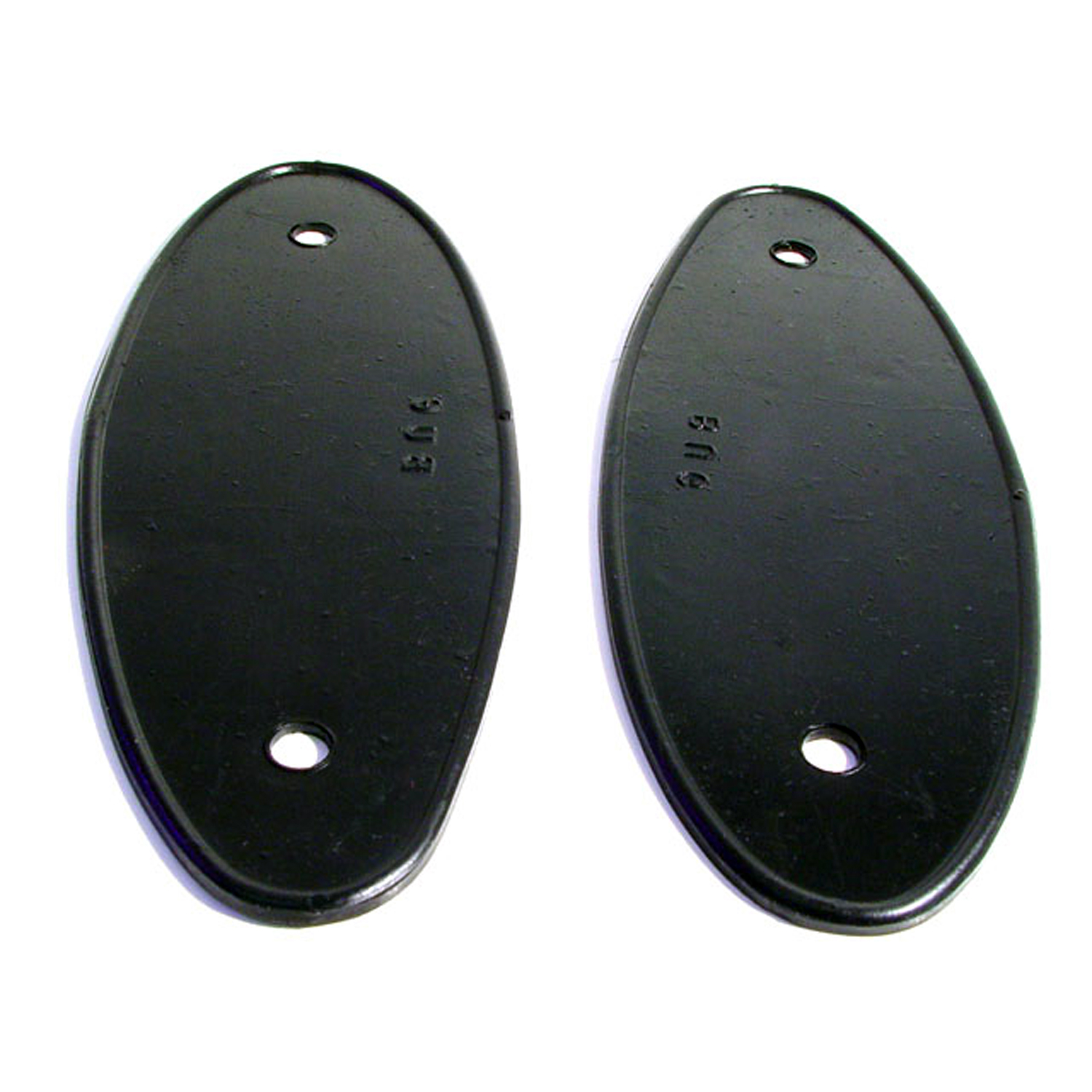 1928 Bugatti Type 43A Headlight Pads. 3" wide X 8-1/8" long. Pair-MP 337-AHeadlight Pads. 3" wide X 8-1/8" long. Pair
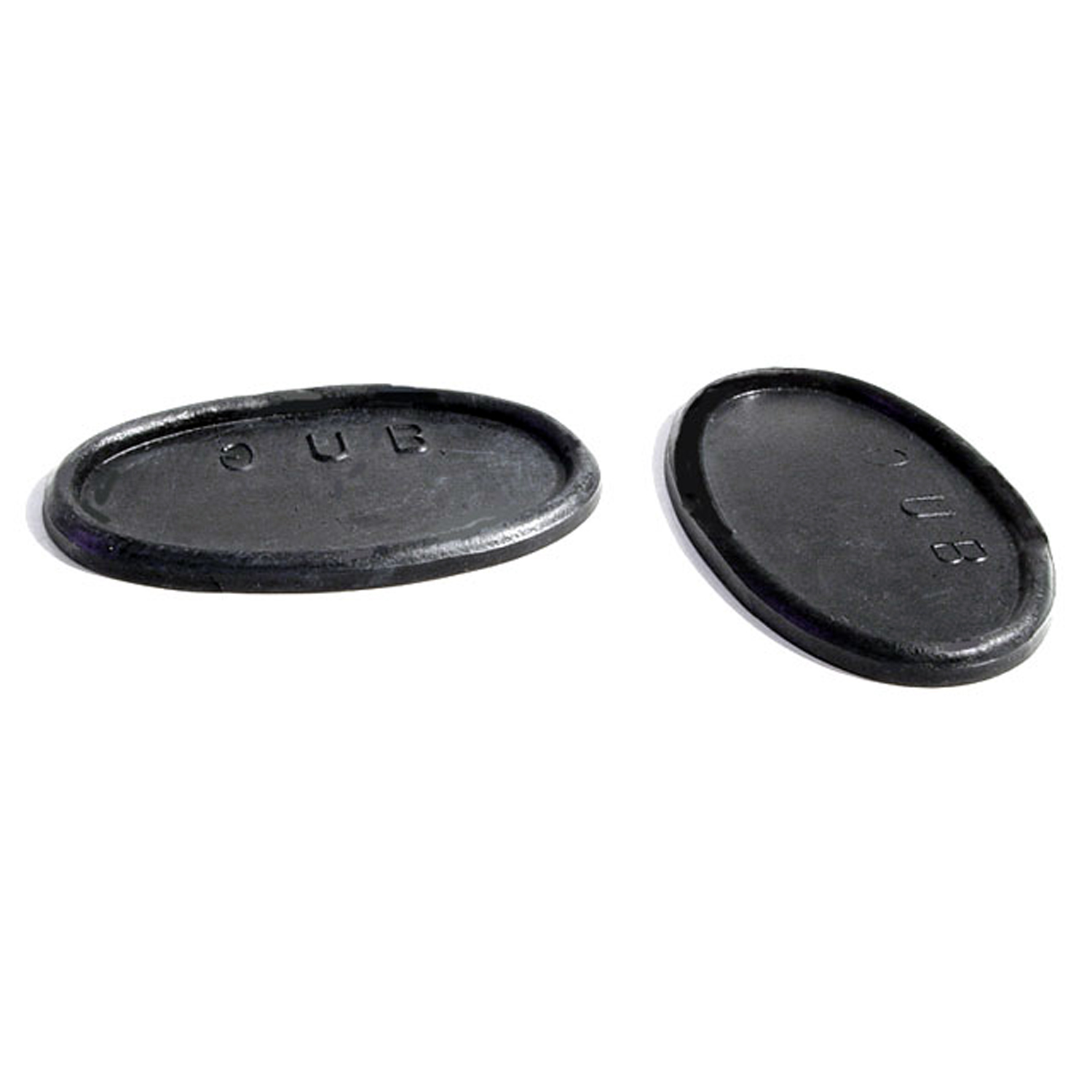 1928 Bugatti Type 43A Door Handle Pads. 1-3/8" wide X 2-1/4" long. Pair-MP 337-BDoor Handle Pads. 1-3/8" wide X 2-1/4" long. Pair
Why Choose Metro?
For over 100 years, Metro Moulded Parts has been the pinnacle of quality in classic car restoration parts. Our commitment to precision and authenticity in every component ensures a perfect fit and an OEM-level appearance.
- Expert Craftsmanship & Quality: Each part is a testament to our dedication to reliability and perfection, crafted from original designs and thoroughly tested.
- Advanced Technology: We use cutting-edge techniques to create flawless, long-lasting parts that surpass others in performance.
- SuperSoft Sponge – The Ultimate Door Seal: Not only are our door seals 30% softer than competitors', but they're also guaranteed to never leak. They effectively reduce wind and road noise, enhancing your classic car's comfort and driving experience.
- Proudly American: Our parts are a product of American craftsmanship, made in the USA with a spirit of excellence and heritage.
- Unrivaled Warranty: We back our products with a 30-year industry-leading warranty, a testament to our confidence in their quality.
Join us in preserving the legacy of classic cars with parts that are crafted for perfection, not just made.