

Image of 1928 Bugatti Type 44, Note: These illustrations use artistic license and may differ from actual historical models.
Performance Metrics
Fundamental Metrics
Emotional Appeal
MMP Rating
| Engine Specifications | |
|---|---|
| Engine: | Inline 8 |
| Displacement: | 2,991 cc |
| Horsepower: | 80 hp |
| Torque: | Not available |
| Compression Ratio: | Not available |
| Ignition System: | Magneto ignition |
| Cooling System: | Water-cooled |
| Performance Specifications | |
| 0-60 Time: | Not available |
| 1/4 Mile Time: | Not available |
| Top Speed: | 75 mph |
| Transmission and Drive | |
| Drive Type: | Rear-wheel drive |
| Transmission Type: | 4-speed manual |
| Fuel and Efficiency | |
| Fuel System Type: | Carburetor |
| MPG: | Not available |
| Dimensions and Brakes | |
| Brakes: | Mechanical drum brakes |
| Wheelbase: | 117.3 inches |
| Weight: | 2,425 lbs |
Note: Specifications for classic cars are given to the best of our ability, considering the limited and variant data available.
1928 Bugatti Type 44: The Grand Touring Bugatti
The 1928 Bugatti Type 44 paired a smooth, three-litre straight-eight with the craftsmanship of a hand-built French luxury car. Built by Automobiles Ettore Bugatti at Molsheim, in the Alsace region of France, it was designed for fast, refined road travel rather than Grand Prix competition. Its appeal was broad enough to make it one of the more numerous prewar Bugattis, yet each example could look quite different depending on the body its first owner chose.
The Type 44 arrived in 1927 and remained in production into 1930. It belonged to a period when Bugatti was famous for racing success, but Ettore Bugatti also wanted to build exceptional road cars. The Type 44 delivered that sporting character in a more practical package. One intriguing detail is that customers generally bought the rolling chassis and commissioned coachwork separately, so a Type 44 was not necessarily a single, standardized shape. Two cars with the same mechanical identity could wear entirely different bodies.
Elegant Bugatti Styling and Coachbuilt Bodies
The Type 44’s long bonnet gives it an unmistakable, purposeful profile. Its tall, horseshoe-shaped radiator leads the eye to slim front wings, large spoked wheels and a carefully tapered rear. The proportions are graceful rather than bulky, even on the more substantial closed bodies. A fabric-covered roof, external luggage rack or rear-mounted spare wheel might complete the look, depending on the coachwork.
Body styles included open tourers and torpedoes, roadsters, cabriolets, coupés, faux cabriolets and closed saloons. Many were created by independent coachbuilders to a buyer’s specification. Open touring bodies show off the chassis and mechanical details especially well, while a well-proportioned coupé or cabriolet gives the Type 44 a more formal grand touring presence. There was no single body style that defines every Type 44, which is part of its appeal to collectors.
Inside, the experience depended on the body, but fine leather upholstery, polished wood trim and well-made metal fittings were typical of the car’s luxury-class ambitions. The dashboard was generally functional and uncluttered, with clear instruments set within reach of the driver. These were hand-finished cars, not mass-produced interiors, so materials and details could vary from one commission to another.
Paint was also a matter of choice rather than a fixed factory palette. Dark blue, black, deep green and burgundy are natural period-appropriate choices, often paired with contrasting upholstery or trim. Bugatti’s famous racing blue is an obvious association, but a Type 44’s color depended on its original owner and coachbuilder. Today, restored examples appear in both historically informed colors and later choices made to suit an owner’s taste.
Three-Litre Straight-Eight Engineering
At the heart of the Type 44 is a 2,991 cc inline-eight engine with a single overhead camshaft and two valves per cylinder. It was a notably smooth powerplant for a road car of its era, producing around 80 horsepower in commonly cited specifications. A three-speed manual gearbox sent power to the rear wheels. Four-wheel mechanical brakes and a conventional solid-axle, leaf-spring layout provided the fundamental control and suspension technology of the period.
The straight-eight was the car’s defining technical feature. Its long, evenly firing engine delivered a smoother, more refined character than many contemporary four-cylinder cars. The Type 44 did not introduce a revolutionary new vehicle layout, but it brought sophisticated engine design and Bugatti’s attention to mechanical finish to a road-going model intended for touring.
Why the Type 44 Matters
The Type 44 shows how Bugatti’s reputation extended beyond the racetrack. The marque was closely associated with the Type 35 Grand Prix car, but the Type 44 served a different purpose: carrying its owner quickly and comfortably over real roads. It combined a high-quality engine and chassis with the individuality of coachbuilt design, an approach that made the car both a machine and a personal commission.
Its significance lies less in a single record-setting achievement than in the way it represents Bugatti’s road-car philosophy. The Type 44 made advanced engineering feel usable, while leaving room for the artistry of independent bodymakers. Its straight-eight also helped establish the smooth, high-performance touring character that would remain central to the marque’s road cars. It was not a direct substitute for a racing Bugatti, but it gave owners a more comfortable way to enjoy the company’s engineering.
Performance and Road Manners
A Type 44 in sound mechanical condition is generally credited with a top speed in the neighborhood of 70 to 75 mph. Published acceleration figures are less consistent, and surviving cars differ in body weight, gearing and condition. A reasonable period-car estimate for 0 to 60 mph is roughly 20 seconds or more. That figure should be treated as an approximation, not a guaranteed specification for every example.
On the road, the Type 44 is better understood as a brisk touring car than as a modern sports car. The straight-eight’s smooth delivery makes steady progress feel natural, while the manual gearbox calls for deliberate shifts and mechanical sympathy. Its solid axles and leaf springs can feel firm over sharp bumps, particularly compared with later cars, but the long chassis and touring-oriented setup help it settle into a rhythm on open roads.
On winding roads, the driver must plan ahead. Steering, braking and gear changes require more physical effort and anticipation than in a modern car, and narrow tires offer a very different sense of grip. The engine’s sound is a distinctive part of the experience: a measured mechanical hum that builds into a purposeful growl as revs rise. There is little insulation between driver and machinery, so every change in engine note, road surface and transmission feel becomes part of the drive.
Owning and Maintaining a Type 44
Today, a Type 44 is primarily a collector car, show car and occasional touring machine. Its most rewarding use is likely a carefully planned vintage rally or club event, where it can cover distance at a sensible pace and be appreciated for its character. Regular commuting is possible only in a very specialized sense, with a sympathetic owner, suitable roads and a willingness to accept the demands of a nearly century-old car.
Maintenance is not a straightforward do-it-yourself project for the average owner. The engine, chassis and period systems require knowledge of early Bugatti construction, and correct parts can be difficult and expensive to source. Routine work such as lubrication and inspection is essential, but major engine or gearbox repairs belong with specialists familiar with prewar machinery. Reliability depends heavily on restoration quality, careful setup and consistent maintenance. A well-sorted Type 44 can tour, but neglect or hurried repairs can turn a small issue into a costly one.
Type 44 Facts and Common Misconceptions
Production is commonly estimated at approximately 1,095 Type 44 chassis, making it relatively plentiful by the standards of prewar Bugatti models, though still rare in the broader classic-car world. That number is an estimate often cited in marque references, and surviving cars vary in completeness, originality and coachwork. The range of bodies is itself a point of interest: a Type 44’s history may involve a chassis, an original coachbuilder, later body changes and restoration decisions.
The Type 44 was not built to chase Grand Prix records, and it is not best known for a single celebrity owner or headline-grabbing speed achievement. Its distinction is subtler: it brought Bugatti’s engineering and prestige to a capable touring chassis that could be clothed in highly individual coachwork. That sometimes leads to a common misconception that every car is mechanically and visually identical. In reality, specifications and appearance can differ considerably from one example to another.
Another fair criticism is that the Type 44 can be overshadowed by more famous Bugattis, especially the racing Type 35 and the later Type 57. It is also demanding to drive by modern standards. Those are not flaws so much as reminders of its purpose and age: the Type 44 offers a period touring experience, not modern convenience or effortless performance.
Collector Values and Market Outlook
As a broad 2026 estimate, a complete, well-presented Type 44 might fall somewhere around $300,000 to $800,000. Exceptional examples with desirable original coachwork, strong provenance and high-quality restoration could exceed that range, potentially reaching or passing $1 million. A car requiring substantial work, missing important components or carrying less desirable later coachwork may be worth considerably less. These are guide figures, not a substitute for a specialist appraisal or recent comparable sales.
Availability is limited. Roughly 1,095 chassis were produced, but the number of complete, well-documented and regularly offered cars is much smaller. Values tend to depend on originality, condition, coachwork, history and the quality of the mechanical restoration, not simply the model name. In the long term, significant Bugattis have generally benefited from the strength of the prewar collector market, but individual prices can move unevenly. The Type 44 is usually more attainable than the most celebrated Bugatti racing and luxury models, which gives it a distinct place in the market.
A Bugatti Built for the Open Road
The 1928 Bugatti Type 44 combines a silky three-litre straight-eight, elegant coachbuilt style and the unmistakable mechanical character of a prewar automobile. It was not a Grand Prix car in touring clothes, nor was it a standardized luxury saloon. Instead, it offered Bugatti engineering in a form owners could tailor to their own tastes and ambitions.
That blend of performance, craftsmanship and individuality is what keeps the Type 44 compelling. Nearly a century later, it remains a reminder that a great classic car is not defined by speed alone, but by the way its engineering and design make every mile feel like an event.
1928 Bugatti Type 44 Catalog of Parts
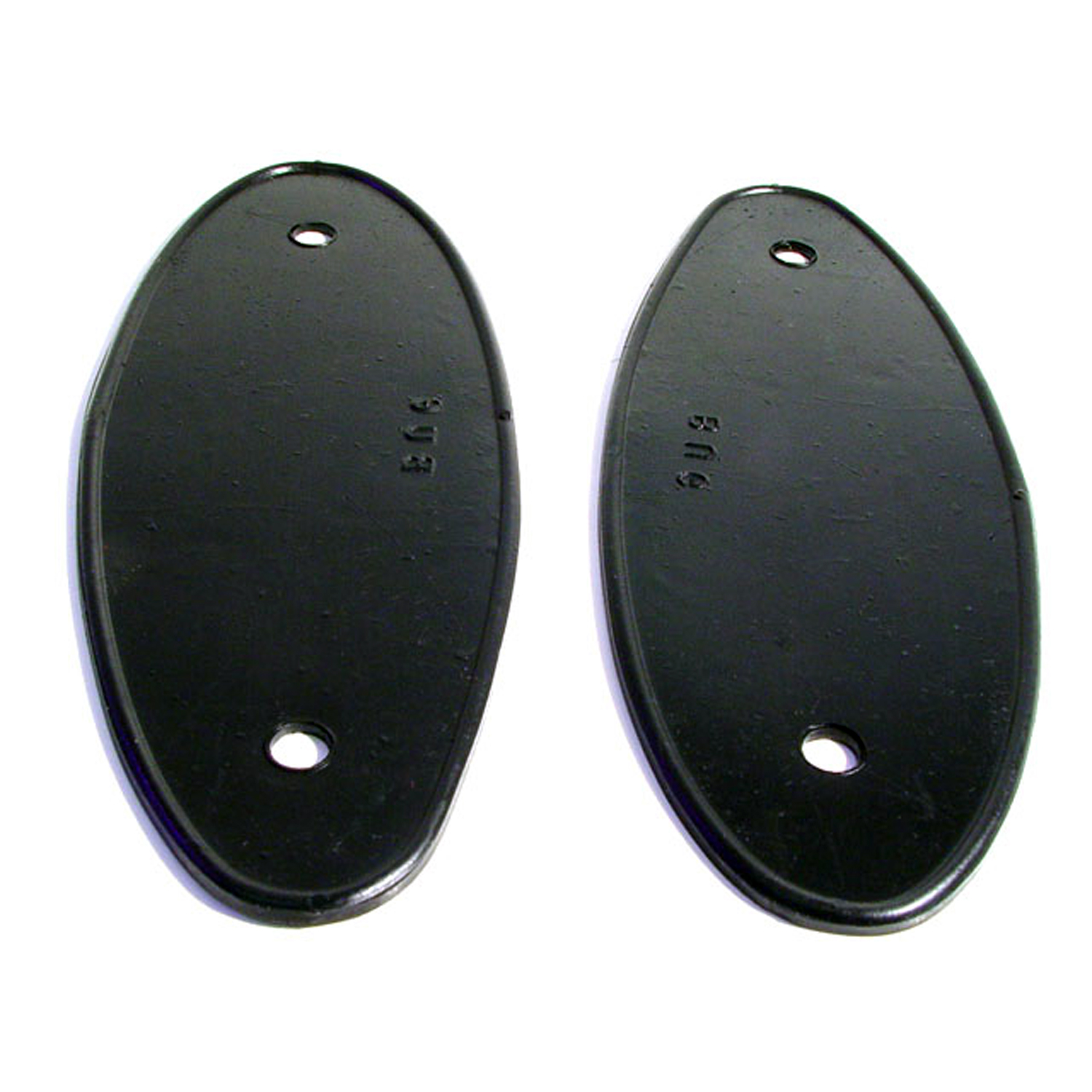 1928 Bugatti Type 44 Headlight Pads. 3" wide X 8-1/8" long. Pair-MP 337-AHeadlight Pads. 3" wide X 8-1/8" long. Pair
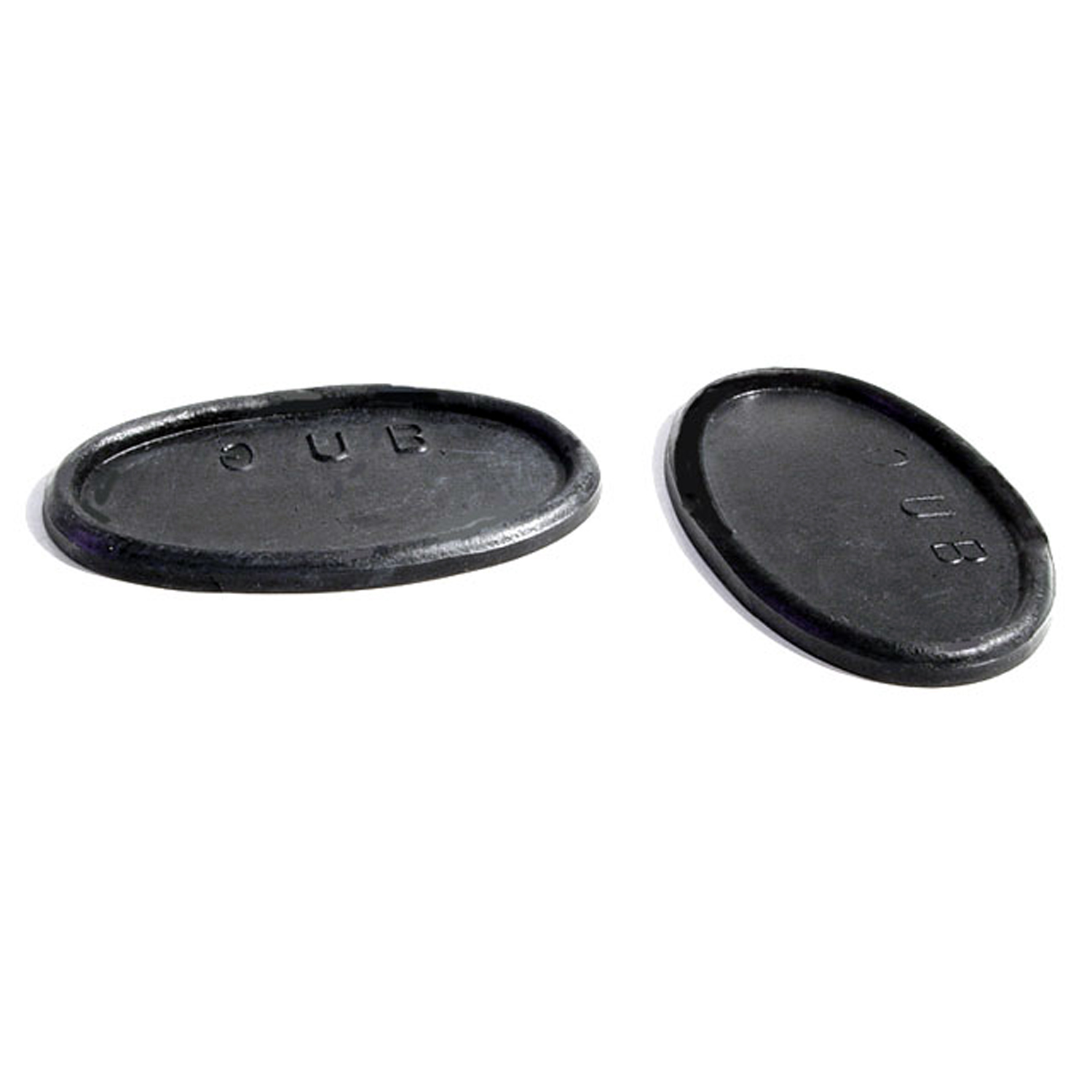 1928 Bugatti Type 44 Door Handle Pads. 1-3/8" wide X 2-1/4" long. Pair-MP 337-BDoor Handle Pads. 1-3/8" wide X 2-1/4" long. Pair
Why Choose Metro?
For over 100 years, Metro Moulded Parts has been the pinnacle of quality in classic car restoration parts. Our commitment to precision and authenticity in every component ensures a perfect fit and an OEM-level appearance.
- Expert Craftsmanship & Quality: Each part is a testament to our dedication to reliability and perfection, crafted from original designs and thoroughly tested.
- Advanced Technology: We use cutting-edge techniques to create flawless, long-lasting parts that surpass others in performance.
- SuperSoft Sponge – The Ultimate Door Seal: Not only are our door seals 30% softer than competitors', but they're also guaranteed to never leak. They effectively reduce wind and road noise, enhancing your classic car's comfort and driving experience.
- Proudly American: Our parts are a product of American craftsmanship, made in the USA with a spirit of excellence and heritage.
- Unrivaled Warranty: We back our products with a 30-year industry-leading warranty, a testament to our confidence in their quality.
Join us in preserving the legacy of classic cars with parts that are crafted for perfection, not just made.