

Image of 1929 Bugatti Type 41 Royale, Note: These illustrations use artistic license and may differ from actual historical models.
Performance Metrics
Fundamental Metrics
Emotional Appeal
MMP Rating
| Engine Specifications | |
|---|---|
| Engine Options: | Straight 8 |
| Displacement Range: | 12.7 L (12763 cc/778 in³) |
| Horsepower Range: | 300 HP |
| Torque: | Not available |
| Compression Ratio: | Not available |
| Ignition System: | Battery Ignition |
| Cooling System: | Water-cooled |
| Performance Specifications | |
| 0-60 Time: | Not available |
| 1/4 Mile Time: | Not available |
| Top Speed: | 100 mph (160 km/h) |
| Transmission and Drive | |
| Drive Type: | Rear-wheel drive |
| Transmission Type: | 3-speed manual |
| Fuel and Efficiency | |
| Fuel System Type: | Carburetor |
| MPG: | Not available |
| Dimensions and Brakes | |
| Brakes: | Mechanical drum brakes |
| Wheelbase: | 169.3 in (4,300 mm) |
| Weight: | 7,000 lb (3,175 kg) |
Note: Specifications for classic cars are given to the best of our ability, considering the limited and variant data available.
The 1929 Bugatti Type 41 Royale was less a car than a rolling declaration that no expense, engine, or stretch of road was too grand. Built in tiny numbers for the world’s wealthiest buyers, it remains one of the largest, most ambitious luxury cars ever conceived.
Bugatti Royale: A Car Built for Royalty
The Royale was the creation of Ettore Bugatti, founder of the French marque known for its racing cars and exquisite craftsmanship. Work on the Type 41 began in the mid-1920s, and the design emerged as Bugatti’s ultimate statement of prestige. The name reflected Ettore’s ambition: he intended the car for kings and heads of state, though its price and timing made it a difficult sell to even the richest customers.
Its heart was a monumental 12.7-liter straight-eight engine, an engine size more commonly associated with heavy machinery than a passenger car. The Royale arrived as the global economy was heading into crisis, and the Great Depression soon made its extravagant price even harder to justify. Only six complete cars were built. The twist is that, despite being conceived for royalty, the Royales found their early owners among industrialists and other private buyers rather than a line of monarchs.
Grandeur in Every Line
The Type 41 was delivered as a rolling chassis, allowing customers to commission bodywork from leading coachbuilders. As a result, there was no single standard Royale shape. Depending on the body, a finished car could stretch to roughly 6.4 meters, or about 21 feet, long. Its towering radiator, long bonnet, sweeping wings, and enormous wheels gave it a presence that few other road cars could match.
Body styles included formal limousines, town cars, coupes, cabriolets, and open roadsters. The closed Coupe Napoleon is among the most famous, while the Esders Roadster is celebrated for its dramatic, open two-seat design. Each car was a bespoke commission, so it is more accurate to talk about distinctive individual bodies than a single “most popular” style.
There was no standard factory color palette, either. Customers chose paint and trim to suit their tastes and coachwork. Dark, formal colors such as black and deep blue are especially associated with the Royale’s stately image, but each car’s finish was part of its individual specification.
A Bespoke Cabin and a Famous Mascot
Inside, the Royale offered the materials and finish expected of an exceptional coachbuilt automobile. Depending on the body and commission, passengers could find fine leather upholstery, polished wood, carefully fitted trim, and a spacious rear compartment designed for formal travel. The exact details differed from car to car, which is part of the appeal for historians and collectors today.
The radiator cap often carried one of the era’s most recognizable automotive mascots: a small rearing elephant sculpted by Ettore Bugatti’s brother, Rembrandt Bugatti. The figure added a playful flourish to a car otherwise defined by solemn scale and grandeur. Underneath the coachwork, the Royale also featured advanced engineering for its time, including an overhead-camshaft straight-eight, three valves per cylinder, and four-wheel mechanical drum brakes.
Why the Royale Mattered
The Type 41 did not introduce a mass-market technology that transformed everyday motoring. Its influence was more about ambition and execution. Bugatti combined a huge engine, a substantial chassis, and coachbuilt luxury in a way that made the car a defining example of the interwar prestige automobile. It showed how far engineering and custom bodywork could be pushed when production numbers and cost were secondary concerns.
The Royale also stood apart from competitors through its scale. Many luxury cars of the era offered impressive power and opulent cabins, but few matched its engine displacement or sheer physical presence. Its lasting legacy is visible in the idea of the flagship automobile: a vehicle built not simply to transport its owner, but to embody the identity and capabilities of its maker.
Bugatti’s large engines also had a life beyond the Royale. Related engine technology was adapted for French railcars, extending the engineering legacy of the company’s ambitious straight-eight program beyond the road.
12.7 Liters on the Road
The Royale’s straight-eight displaced approximately 12,763 cc and is generally credited with producing around 300 horsepower at low engine speeds. It drove the rear wheels through a three-speed manual gearbox. With a finished car weighing several tons, the engine’s job was less about sports-car urgency and more about moving a vast luxury automobile with strong, effortless pulling power.
Published top-speed figures vary, but estimates commonly place the Royale’s maximum speed near 100 mph, or about 160 km/h, depending on its body and condition. There is no widely accepted factory 0-to-60 mph figure. Given the car’s enormous weight, gearing, and age, modern estimates often land somewhere around 10 to 15 seconds, but those numbers should be treated as approximations rather than period test results.
On the road, the Royale would feel imposing rather than nimble. Its long wheelbase helps it settle into a steady cruise, while the substantial chassis and suspension are suited to smoothing out ordinary road irregularities. Narrow lanes, tight bends, and strong crosswinds demand respect: a car this long and heavy is not going to change direction like a sports car. The driver works a large steering wheel and a manual gearbox, while the low-revving eight-cylinder engine delivers a deep, measured sound rather than a high-pitched racing howl.
Owning a Royale Today
A Royale is not a daily driver in any practical modern sense. These cars are prized for preservation, concours events, private collections, and occasional carefully planned drives. Their rarity and historical importance mean that even routine use requires specialist knowledge and meticulous preparation.
Maintenance is far beyond the reach of the average home mechanic. The engine, chassis, brakes, and coachwork are bespoke or period-specific, and replacement parts may need to be sourced, restored, or made to order. The Royale’s mechanical systems are relatively straightforward in concept compared with modern electronics, but its scale and value make repairs a specialist undertaking. Reliability depends heavily on the car’s restoration quality, ongoing care, and the expertise of the people looking after it.
Royale Facts and Famous Moments
Only six complete Type 41 Royales were built, and all six are generally reported to survive. That extraordinary survival rate is one reason the model is so closely documented and so rarely seen changing hands. Each example has its own body, history, and identity, making the Royale more like a group of individual automotive works of art than a conventional model range.
The Coupe Napoleon, associated with Ettore Bugatti himself, is among the best-known examples. The Royale’s story also includes a famous market milestone: a Type 41 Kellner Coupe sold at auction in 1987 for about $9.7 million, setting a record at the time. That sale helped establish the Royale as one of the most valuable and desirable collector cars in the world.
A common criticism is that the Royale’s sheer size and extravagant cost made it an impractical answer to the changing conditions of the late 1920s and early 1930s. That is fair: it was never a sensible purchase by ordinary standards. But practicality was not the point. The Royale was a statement of engineering confidence, and its rarity is the direct result of that uncompromising ambition.
Collector Value and Availability
With just six examples, availability is exceptionally limited. Royales are generally held in major private collections or museums, and public sales are rare. There is no dependable “market price” in the usual sense because each car has a unique body, provenance, condition, and restoration history.
As a broad present-day estimate, a Royale could be valued in the tens of millions of U.S. dollars. A hypothetical range of roughly $20 million to $50 million or more is plausible, though a major sale could fall outside it depending on the car and the circumstances. Values have generally strengthened over the long term for landmark prewar automobiles, but price comparisons are difficult when so few examples trade publicly. For a car this rare, provenance and historical significance matter as much as condition.
The Ultimate Bugatti Statement
The 1929 Bugatti Type 41 Royale brought together a colossal engine, coachbuilt elegance, advanced engineering, and a level of exclusivity that few cars have ever matched. It was too expensive and too grand for the world that first encountered it, yet that same audacity made it unforgettable. Nearly a century later, the Royale remains more than a classic car: it is Bugatti’s most commanding expression of what an automobile could be.
1929 Bugatti Type 41 Royale Catalog of Parts
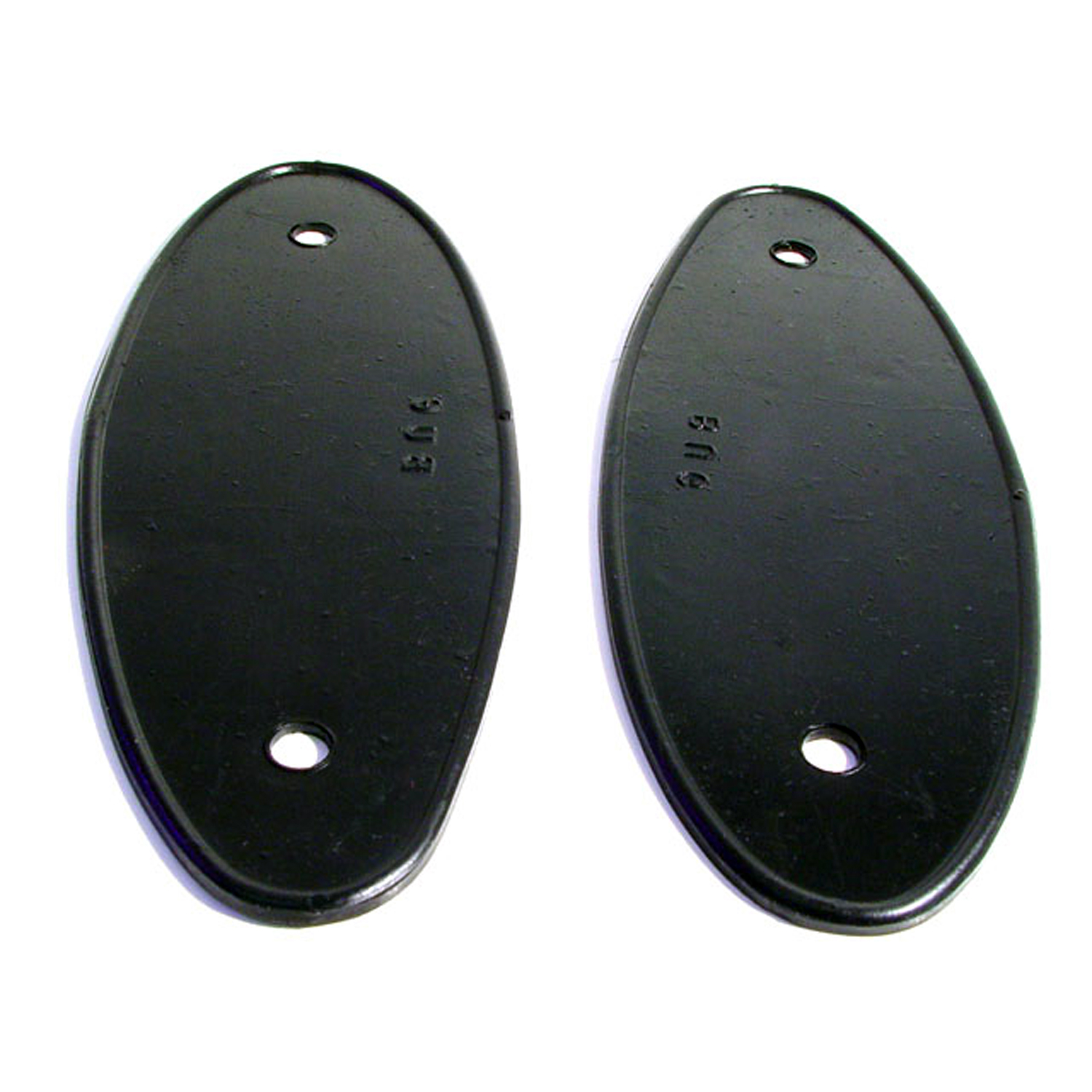 1929 Bugatti TYPE 41 ROYALE Headlight Pads. 3" wide X 8-1/8" long. Pair-MP 337-AHeadlight Pads. 3" wide X 8-1/8" long. Pair
 1929 Bugatti TYPE 41 ROYALE Door Handle Pads. 1-3/8" wide X 2-1/4" long. Pair-MP 337-BDoor Handle Pads. 1-3/8" wide X 2-1/4" long. Pair
Why Choose Metro?
For over 100 years, Metro Moulded Parts has been the pinnacle of quality in classic car restoration parts. Our commitment to precision and authenticity in every component ensures a perfect fit and an OEM-level appearance.
- Expert Craftsmanship & Quality: Each part is a testament to our dedication to reliability and perfection, crafted from original designs and thoroughly tested.
- Advanced Technology: We use cutting-edge techniques to create flawless, long-lasting parts that surpass others in performance.
- SuperSoft Sponge – The Ultimate Door Seal: Not only are our door seals 30% softer than competitors', but they're also guaranteed to never leak. They effectively reduce wind and road noise, enhancing your classic car's comfort and driving experience.
- Proudly American: Our parts are a product of American craftsmanship, made in the USA with a spirit of excellence and heritage.
- Unrivaled Warranty: We back our products with a 30-year industry-leading warranty, a testament to our confidence in their quality.
Join us in preserving the legacy of classic cars with parts that are crafted for perfection, not just made.