

Image of 1929 Bugatti Type 43, Note: These illustrations use artistic license and may differ from actual historical models.
Performance Metrics
Fundamental Metrics
Emotional Appeal
MMP Rating
| Engine Specifications | |
|---|---|
| Engine: | Straight 8 |
| Displacement: | 2.3 L |
| Horsepower: | 120 HP |
| Torque: | Not available |
| Compression Ratio: | Not available |
| Ignition System: | Magneto ignition |
| Cooling System: | Water-cooled |
| Performance Specifications | |
| 0-60 Time: | Not available |
| 1/4 Mile Time: | Not available |
| Top Speed: | 110 mph |
| Transmission and Drive | |
| Drive Type: | Rear-wheel drive |
| Transmission Type: | 4-speed manual |
| Fuel and Efficiency | |
| Fuel System Type: | Carburetor |
| MPG: | Not available |
| Dimensions and Brakes | |
| Brakes: | Mechanical drum brakes |
| Wheelbase: | 2,600 mm |
| Weight: | 900 kg |
Note: Specifications for classic cars are given to the best of our ability, considering the limited and variant data available.
1929 Bugatti Type 43: A Road Car with Racing Blood
The 1929 Bugatti Type 43 brought Grand Prix engineering onto public roads, pairing a supercharged straight-eight with elegant coachwork and performance that few contemporary touring cars could match. Built by Automobiles Ettore Bugatti in Molsheim, then in France, it was a fast, finely finished road car with a direct connection to the marque’s successful racing machines.
The Type 43 emerged in the late 1920s, when Bugatti was already famous for lightweight, quick Grand Prix cars such as the Type 35. The new model adapted that racing expertise for road use, most notably through an engine related to the 2.3-litre powerplant used in the Type 35B. The result was unusual for its day: a comfortable, coachbuilt car capable of speeds around 100 mph or more, depending on specification and condition. It is often described as one of the first production supercars, although the label is a modern one rather than a term Bugatti used at the time.
One compelling detail is just how closely the Type 43 connected road and track. Its supercharged engine and chassis drew on competition experience, yet it could be ordered with practical touring bodywork. That blend made the car more than a racing machine with number plates: it was a high-performance automobile intended for serious road driving.
Elegant Coachwork, Racing Proportions
The Type 43 has the unmistakable stance of a Bugatti from the marque’s golden age. Its long bonnet, narrow radiator, sweeping front wings and exposed wire wheels give it a purposeful, almost feline profile. The large bonnet louvers help manage heat while adding visual texture, and the low cockpit sits well back from the front axle, making the car look fast even when parked.
Interior appointments depended on the body and the individual commission, but the emphasis was on craftsmanship rather than modern convenience. A typical cockpit featured leather upholstery, a wood-rimmed steering wheel, clear analogue instruments and carefully finished trim. Materials and details could vary between cars, reflecting the work of the coachbuilder and the preferences of the first owner. This was a hand-built luxury car, not a mass-produced model with a fixed interior package.
Bugatti offered the Type 43 as a chassis that could receive different coachwork. Open roadster and Grand Sport-style bodies are among the best-known forms, while coupé, cabriolet and touring configurations were also possible. The two-seat open body is especially iconic, showing off the car’s sweeping wings and mechanical hardware. Some coachwork provided more passenger space, making the Type 43 a genuine fast tourer as well as a sporting roadster.
There was no single universal paint catalogue in the modern sense. Owners could commission individual colors, and surviving cars appear in a range of finishes. French racing blue is the shade most closely associated with Bugatti and remains a popular choice among enthusiasts, while dark tones, reds and other custom colors also suit the car’s period character.
Engineering Ahead of Its Time
At the heart of the Type 43 is a 2.3-litre, inline eight-cylinder engine fitted with a Roots-type supercharger. Its three-valve-per-cylinder layout was a signature of Bugatti engineering, and the supercharger helped the engine deliver strong power for its size. Output is commonly quoted at about 120 horsepower, though figures can vary by source and by the condition or specification of an individual car.
The engine drove through a four-speed manual gearbox. The Type 43 also used a substantial chassis and mechanical components influenced by Bugatti’s racing programme. Its engineering was not modern in today’s terms: it lacked features such as independent suspension and power-assisted controls. Instead, it relied on carefully developed mechanical systems, a relatively light structure and the driver’s skill.
That mix of race-bred hardware and road-car usability set the Type 43 apart from many contemporaries. A large touring car might offer comfort and presence but not its pace. A racing car might be quicker on a circuit but far less suited to an extended road journey. The Type 43 occupied a rare middle ground, helping establish the idea that a road car could deliver genuine competition-inspired performance without being a pure racer.
Speed, Steering and the Drive
Period accounts and later references commonly place the Type 43’s top speed at approximately 100 to 110 mph, or around 160 to 177 km/h, depending on body style, gearing and mechanical condition. A precise, dependable 0-to-60-mph figure is difficult to establish for an individual surviving car. A reasonable modern estimate is roughly 8 to 10 seconds, but it should be treated as an approximation rather than a factory-certified specification.
Behind the wheel, the car is best understood as a vintage sports machine, not a modern grand tourer. The steering is unassisted and communicates the road directly through the wheel. The suspension and narrow tires reflect the technology of the period, so rough surfaces can make the car feel busy, particularly at speed. On a smooth, winding road, its relatively light build and responsive engine make it feel alert and engaging. Its long bonnet also asks the driver to judge the car’s width and position carefully through tight bends.
The straight-eight supplies much of the theatre. Expect a deep mechanical note that rises into a hard-edged roar as the supercharger comes into its own. Gear changes require deliberate input, and braking demands anticipation compared with a modern car. The reward is an unusually direct connection between driver and machine: every sound, vibration and steering correction becomes part of the experience.
A Milestone in Bugatti History
The Type 43 helped define Bugatti’s reputation for building road cars with serious sporting credentials. It showed how competition-derived engineering could be adapted for customers who wanted speed and style on public roads. Its long bonnet, compact cabin and exposed mechanical details also became part of the visual language associated with classic high-performance cars.
Its influence is less about a single feature copied by every later manufacturer and more about the combination it represented: race-developed technology, coachbuilt luxury and exceptional road performance in one model. That formula remains familiar in today’s high-performance grand tourers and supercars. The Type 43’s special achievement was offering it nearly a century ago, when high-speed motoring demanded considerable mechanical sympathy and driver confidence.
Living with a Type 43
Today, a Type 43 is best suited to specialist touring, vintage rallies, concours events and carefully planned drives. It is not a sensible daily driver. Weather protection, braking, lighting, comfort and reliability are all shaped by the standards of its era, and operating a valuable pre-war Bugatti on busy modern roads requires caution.
Maintenance is also a specialist undertaking. The supercharged engine, bespoke components and hand-built construction call for experienced marque knowledge and access to appropriate parts. Routine work can be manageable for a skilled vintage-car mechanic, but major engine or gearbox repairs are not jobs for the average owner working with basic tools. Regular servicing, careful warm-up, close attention to lubrication and thoughtful storage are essential to preserving the car.
Reliability depends heavily on the individual example’s history and restoration quality. A well-maintained Type 43 can be driven and enjoyed, but it should never be treated like a modern car that can be neglected between services. Its rarity and value also mean that many owners choose enclosed transport for longer trips to events.
Rarity, Records and Collector Value
Production is generally estimated at around 160 Type 43s, though totals can differ according to how chassis, completed cars and body variations are counted. That makes the model rare, and original cars with well-documented histories are seldom available on the open market. Coachwork, originality, restoration standard and provenance all have a major effect on value.
There is no single price that suits every example. As a broad collector-market estimate, a Type 43 might fall in the region of US$1.5 million to US$3.5 million, with exceptional, highly original or particularly desirable cars potentially exceeding that range. This is an indicative guide, not a current appraisal: auction results shift with condition, specification, documentation and the wider classic-car market.
Values for important pre-war Bugattis have generally shown long-term strength, supported by limited supply and lasting international interest. Short-term results can still fluctuate, and restoration costs are substantial. Buyers typically prize originality and credible history, while a beautifully restored car can also command a premium when the work is properly documented.
The Type 43 is not widely known for holding a single headline speed or endurance record, nor is it defined by one famous celebrity owner. Its distinction is broader: it brought remarkable speed and racing-derived engineering to a road-going Bugatti at a time when such performance was exceptional. Its many coachbuilt variations and individual histories are part of the model’s appeal.
Common criticisms are fair but worth putting in context. The ride can be firm, the controls demand effort, and maintenance is costly. It is also not as forgiving or convenient as a later sports car. Those limitations are part of the Type 43’s character, and they explain why ownership is a commitment as much as a pleasure.
Why the Type 43 Still Matters
The 1929 Bugatti Type 43 combines a supercharged 2.3-litre straight-eight, coachbuilt elegance and performance that was extraordinary for its era. Its production numbers were small, its engineering carried genuine racing influence, and its driving experience remains vivid and demanding. More than a beautiful pre-war car, it stands as an early expression of the high-performance road car: a machine built to make speed feel special.
Nearly a century later, the Type 43 still delivers the promise its shape suggests. It is a Bugatti made for the open road, where craftsmanship, mechanical drama and racing heritage meet in one unforgettable car.
1929 Bugatti Type 43 Catalog of Parts
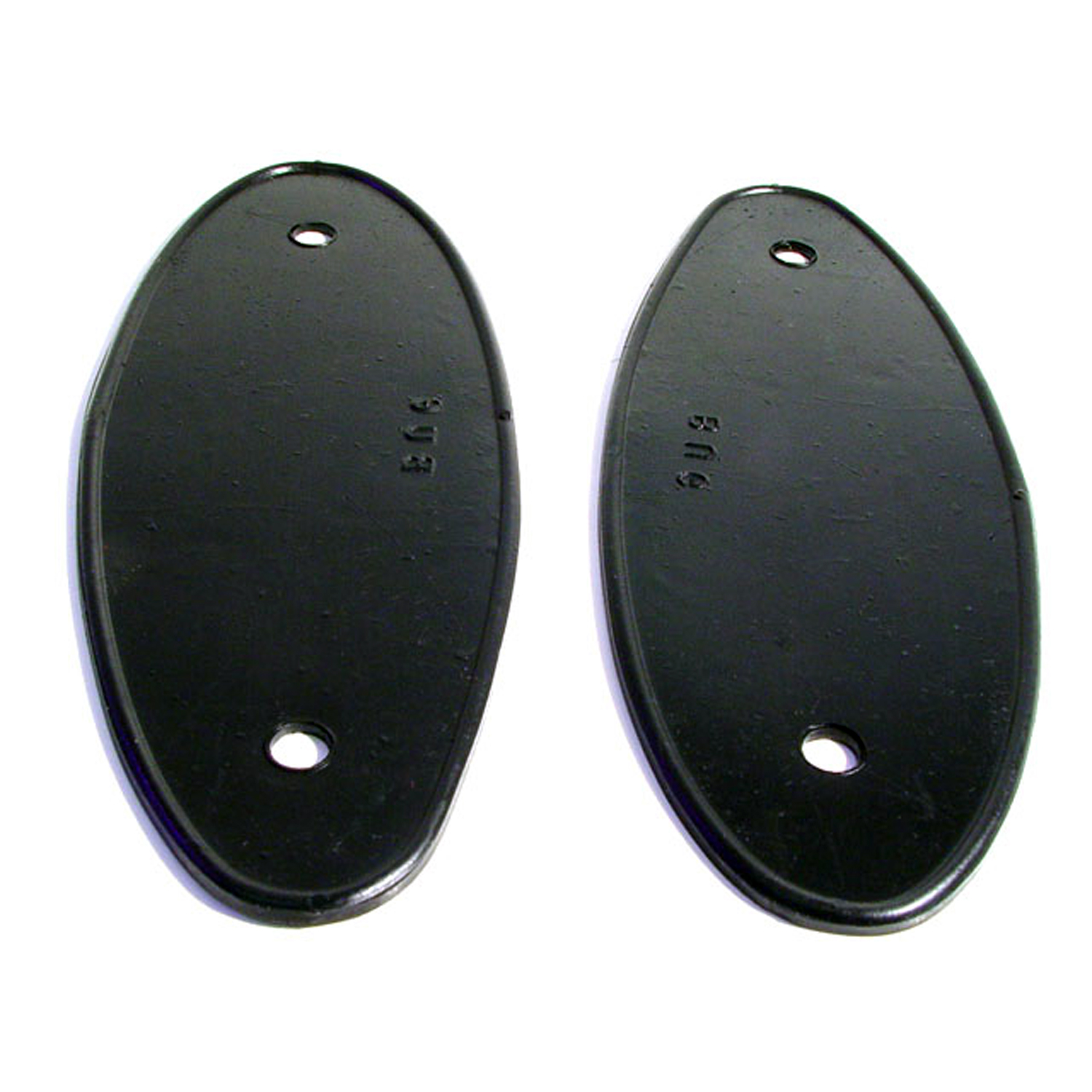 1929 Bugatti Type 43 Headlight Pads. 3" wide X 8-1/8" long. Pair-MP 337-AHeadlight Pads. 3" wide X 8-1/8" long. Pair
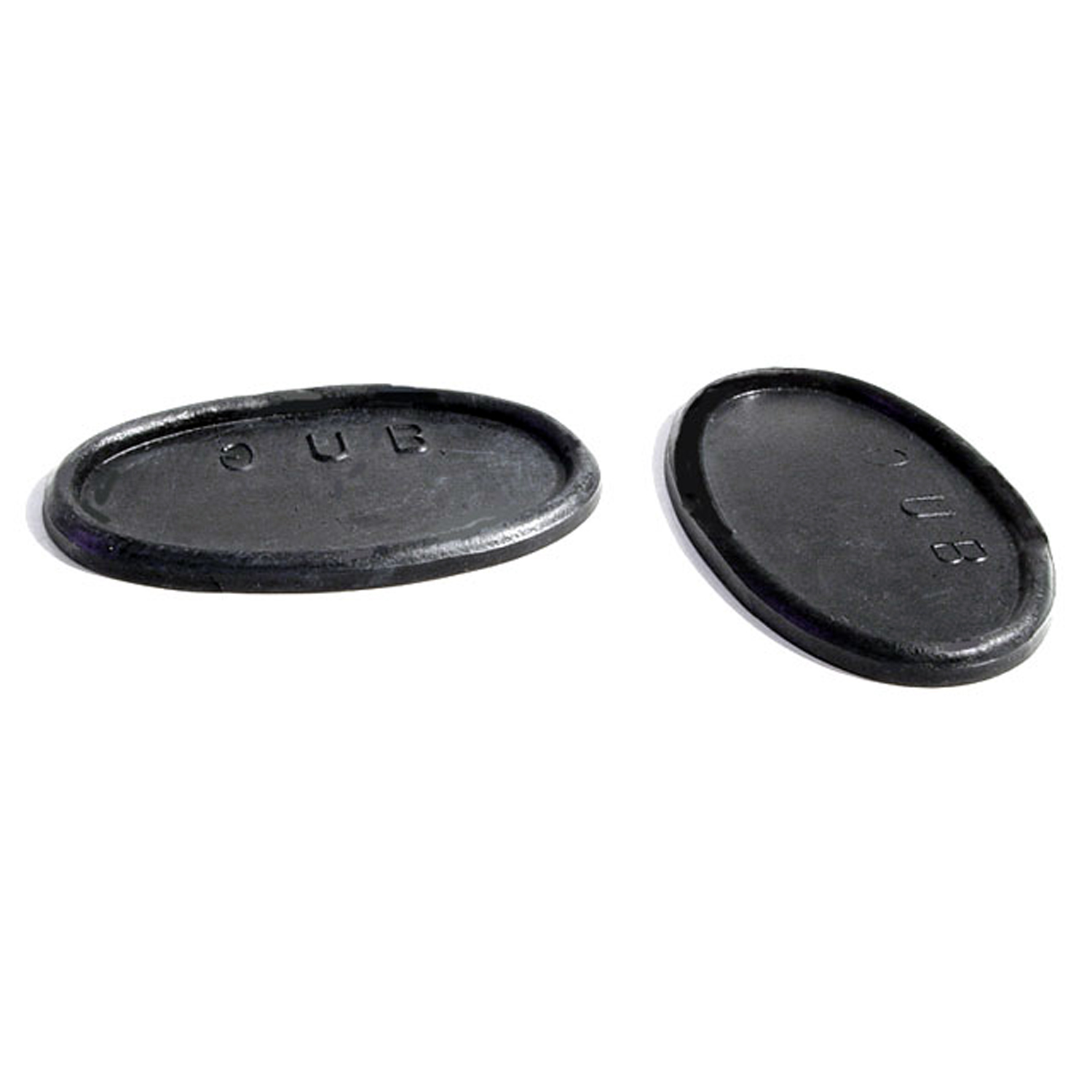 1929 Bugatti Type 43 Door Handle Pads. 1-3/8" wide X 2-1/4" long. Pair-MP 337-BDoor Handle Pads. 1-3/8" wide X 2-1/4" long. Pair
Why Choose Metro?
For over 100 years, Metro Moulded Parts has been the pinnacle of quality in classic car restoration parts. Our commitment to precision and authenticity in every component ensures a perfect fit and an OEM-level appearance.
- Expert Craftsmanship & Quality: Each part is a testament to our dedication to reliability and perfection, crafted from original designs and thoroughly tested.
- Advanced Technology: We use cutting-edge techniques to create flawless, long-lasting parts that surpass others in performance.
- SuperSoft Sponge – The Ultimate Door Seal: Not only are our door seals 30% softer than competitors', but they're also guaranteed to never leak. They effectively reduce wind and road noise, enhancing your classic car's comfort and driving experience.
- Proudly American: Our parts are a product of American craftsmanship, made in the USA with a spirit of excellence and heritage.
- Unrivaled Warranty: We back our products with a 30-year industry-leading warranty, a testament to our confidence in their quality.
Join us in preserving the legacy of classic cars with parts that are crafted for perfection, not just made.