

Image of 1929 Bugatti Type 43a, Note: These illustrations use artistic license and may differ from actual historical models.
Performance Metrics
Fundamental Metrics
Emotional Appeal
MMP Rating
| Engine Specifications | |
|---|---|
| Engine: | Straight 8 |
| Displacement: | 2.3 L |
| Horsepower: | 120 HP |
| Torque: | Not available |
| Compression Ratio: | Not available |
| Ignition System: | Magneto ignition |
| Cooling System: | Water-cooled |
| Performance Specifications | |
| 0-60 Time: | Not available |
| 1/4 Mile Time: | Not available |
| Top Speed: | 110 mph |
| Transmission and Drive | |
| Drive Type: | RWD |
| Transmission Type: | 4-speed manual |
| Fuel and Efficiency | |
| Fuel System Type: | Carburetor |
| MPG: | Not available |
| Dimensions and Brakes | |
| Brakes: | Cable-operated drum brakes |
| Wheelbase: | 2,950 mm |
| Weight: | 1,000 kg |
Note: Specifications for classic cars are given to the best of our ability, considering the limited and variant data available.
1929 Bugatti Type 43A: Grand Prix Power for the Road
A Bugatti Type 43A turns a stretch of road into a reminder that, in the late 1920s, the boundary between a racing car and a road car could be remarkably thin. Built by Automobiles Ettore Bugatti in Molsheim, then in the Alsace region, it brought competition-bred engineering and a claimed 100-mph-plus pace to a machine its owner could drive beyond the circuit.
The Type 43 arrived in 1927, drawing heavily on the company’s successful Type 35 Grand Prix cars. Its centerpiece was a supercharged straight-eight, while its chassis and sporting character reflected Bugatti’s racing experience. The “Type 43A” label appears in descriptions of some cars and variants, but historical references do not always use the suffix consistently. It is safest to understand a 1929 Type 43A as part of the Type 43 family rather than assume it was a wholly separate model with a distinct production run.
That racing connection is more than a marketing flourish. The Type 43 is often credited as one of the first production sports cars capable of exceeding 100 mph, a remarkable figure for a road-going car of its era. It offered a taste of Grand Prix performance without being a purpose-built single-seat racer.
Bugatti Styling and Coachbuilt Details
The Type 43’s appearance is unmistakably Bugatti: long bonnet, narrow horseshoe radiator, sweeping front wings and a low, purposeful stance. The exposed wheels and tall, slim tires emphasize its competition roots. Many examples wore elegant touring bodies, but individual cars could look quite different because customers could order coachwork from specialist builders.
Roadsters and open sports bodies are among the most evocative forms, with low windscreens and a cockpit that puts the driver close to the mechanical action. More enclosed touring and cabriolet styles offered greater weather protection, and some cars were configured to carry additional passengers. There was no single body style that defined every Type 43, though the open two-seat sports car remains the image most closely associated with its sporting character.
Inside, the cabin was purposeful rather than lavish by modern standards. Leather upholstery, a compact dashboard and clearly arranged instruments gave the cockpit a handcrafted feel. Fine trim and coachbuilt touches could vary from car to car. This was a luxury Bugatti, but the driver was never far removed from the engine, gearbox and road.
Color was likewise a matter of specification and later ownership, not a fixed factory palette. Deep blue, black, red and green are all plausible period or restored finishes, with Bugatti blue a particularly recognizable choice. Original paint history and documented changes matter greatly to collectors today.
Racing Technology in a Road Car
The Type 43 used a 2,262-cc (2.3-liter) inline-eight with a Roots-type supercharger. The engine’s architecture was closely related to Bugatti’s racing machinery, including the Type 35B, but adapted for road use. Period specifications commonly put output at around 120 horsepower, an impressive figure for a relatively light sports car of the late 1920s.
Power went to the rear wheels through a four-speed manual gearbox. The chassis used a conventional front-engine, rear-wheel-drive layout, with Bugatti’s distinctive engineering details and mechanical drum brakes at all four corners. Its alloy wheels, often associated with Bugatti’s sporting models, were both functional and visually striking.
What set the Type 43 apart was the way it combined these elements in a usable road car. Supercharging, a sophisticated straight-eight and racing-derived chassis ideas were not everyday equipment in the period. The result helped establish the high-performance grand touring car as a compelling alternative to a dedicated competition machine.
Speed, Acceleration and Road Manners
A well-sorted Type 43 is generally credited with a top speed in the neighborhood of 110 mph, though body shape, gearing, mechanical condition and road conditions all affect the real figure. There is no universally reliable factory 0-to-60-mph figure. Based on its power and weight, an estimate of roughly 10 to 12 seconds is reasonable for many examples, but it should be treated as an approximation, not a guaranteed specification.
The supercharged eight gives the car a distinctive character. At low speeds, the engine has the mechanical presence of a large, finely made machine; as revs rise, the blower adds its characteristic whine over the straight-eight’s busy exhaust note. The driver works a manual gearbox and mechanical controls rather than relying on modern assistance, so quick progress demands attention and smooth technique.
On a smooth, open road, the Type 43’s long bonnet and strong power delivery make it feel like a serious high-speed tourer. On rough surfaces, its period suspension and narrow tires transmit more movement and texture than a modern car. A winding road rewards a measured approach: the steering is direct by vintage standards, but the car’s age, tire technology and mechanical brakes call for anticipation. It is not a car to drive as though it had modern ABS or power steering.
Why the Type 43 Matters
The Type 43 helped demonstrate that race-derived engineering could be packaged in a road car with genuine touring ability. Its supercharged engine and high-speed performance anticipated the formula later associated with the grand touring car: a powerful, carefully engineered machine capable of covering distance quickly while carrying its occupants in relative comfort.
It also strengthened Bugatti’s reputation for joining technical ambition with visual elegance. The Type 43 was not simply a racing car with license plates, nor was it a conventional luxury car with a large engine. Its blend of competition influence, coachbuilt individuality and road-going purpose made it distinctive among its contemporaries and remains central to its appeal.
Owning and Maintaining a Type 43
Today, a Type 43 is best understood as a collector car and occasional-use touring machine, not a daily driver. Owners may take one to concours events, vintage rallies and carefully planned road tours. Its performance can still be exhilarating, but the car is valuable, mechanically complex and difficult to replace if damaged.
Maintenance requires specialists familiar with early Bugatti engines, superchargers, manual gearboxes and mechanical braking systems. Routine care includes close attention to lubrication, cooling, ignition, fuel delivery and the condition of the blower. Parts can be difficult and expensive to source, and repairs often require specialist fabrication or restoration knowledge. For the average owner without vintage-car experience, this is not an easy car to maintain independently.
Reliability depends heavily on the quality of the restoration and ongoing care. A properly maintained example can be driven, but age, rarity and value encourage cautious use. A thorough inspection by a Bugatti specialist is essential before purchase, especially to verify the engine, chassis, supercharger and coachwork against the car’s documented history.
Type 43A Facts and Caveats
About 160 Type 43 cars are commonly cited as having been built. That figure refers to the Type 43 family overall, not necessarily to a separately defined Type 43A production series. The small production total, combined with the survival and provenance of individual cars, makes each example a significant piece of Bugatti history.
The model’s headline claim is its roughly 110-mph capability, and it is often described as one of the first production sports cars to pass the 100-mph mark. It was not, however, a mass-market record setter or a car built for ordinary endurance competition. Individual examples could be used in sporting events, but the Type 43’s importance lies chiefly in bringing racing-derived speed to the road.
There is no single celebrity-owner story that defines the model as a whole. Its strongest historical connection is to the Bugatti racing lineage and the company’s broader reputation for engineering excellence. Common criticisms are practical ones: the cockpit is compact, the ride is firm by modern standards, the brakes require foresight, and the mechanicals demand specialist attention.
Collector Value and Market Outlook
Type 43s are exceptionally rare on the open market. A reasonable estimate is that only a small number will be publicly offered in any given year, and a car advertised as a Type 43A needs careful review of its chassis identity, factory records, body history and restoration documentation. The suffix alone should not be treated as proof of a distinct model or a premium specification.
As a broad 2026 estimate, a genuine, well-documented Type 43 could fall roughly in the US$1.5 million to US$3.5 million range. A highly original or exceptional example with compelling provenance could exceed that range, while a car with significant restoration needs, altered coachwork or unclear history could be worth less. These are necessarily broad estimates: rarity, condition, originality and the quality of documentation can outweigh the model name in a particular sale.
Over the long term, the Type 43 has strong fundamentals for collector demand: limited production, a supercharged eight-cylinder engine and a direct connection to Bugatti’s Grand Prix heritage. Values have generally been supported by its rarity and status, but the market for very expensive prewar cars can be uneven. Auction results are not a guarantee of future appreciation, and restoration costs can be substantial.
A Roadgoing Bugatti with Racing DNA
The 1929 Bugatti Type 43A represents a rare moment when a road car could carry the engineering spirit of a Grand Prix machine without giving up its touring purpose. Its supercharged straight-eight, distinctive coachbuilt bodywork and remarkable speed made it exceptional in its own time. Nearly a century later, it remains a vivid example of Bugatti’s ability to make performance feel not merely fast, but beautifully engineered.
1929 Bugatti Type 43a Catalog of Parts
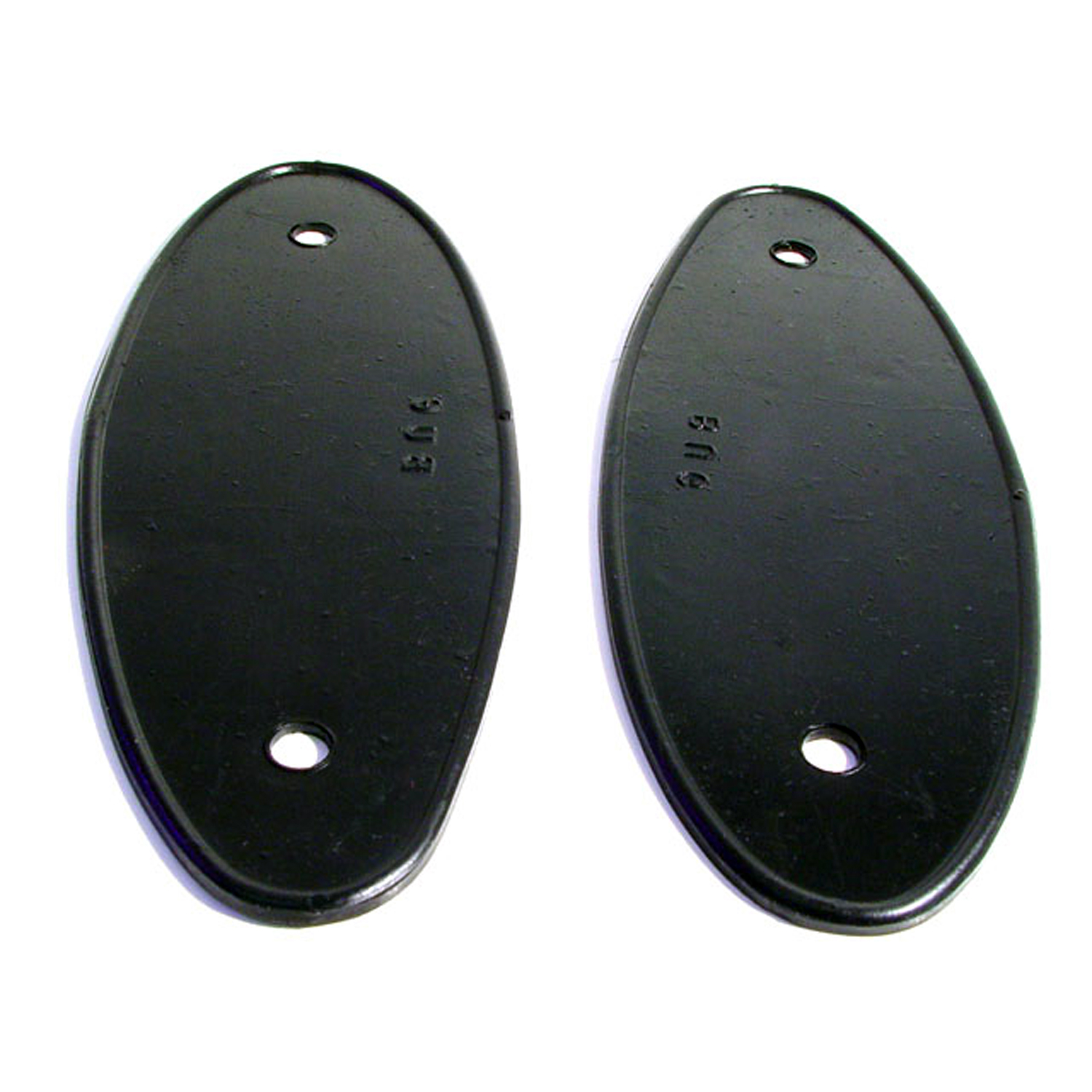 1929 Bugatti Type 43A Headlight Pads. 3" wide X 8-1/8" long. Pair-MP 337-AHeadlight Pads. 3" wide X 8-1/8" long. Pair
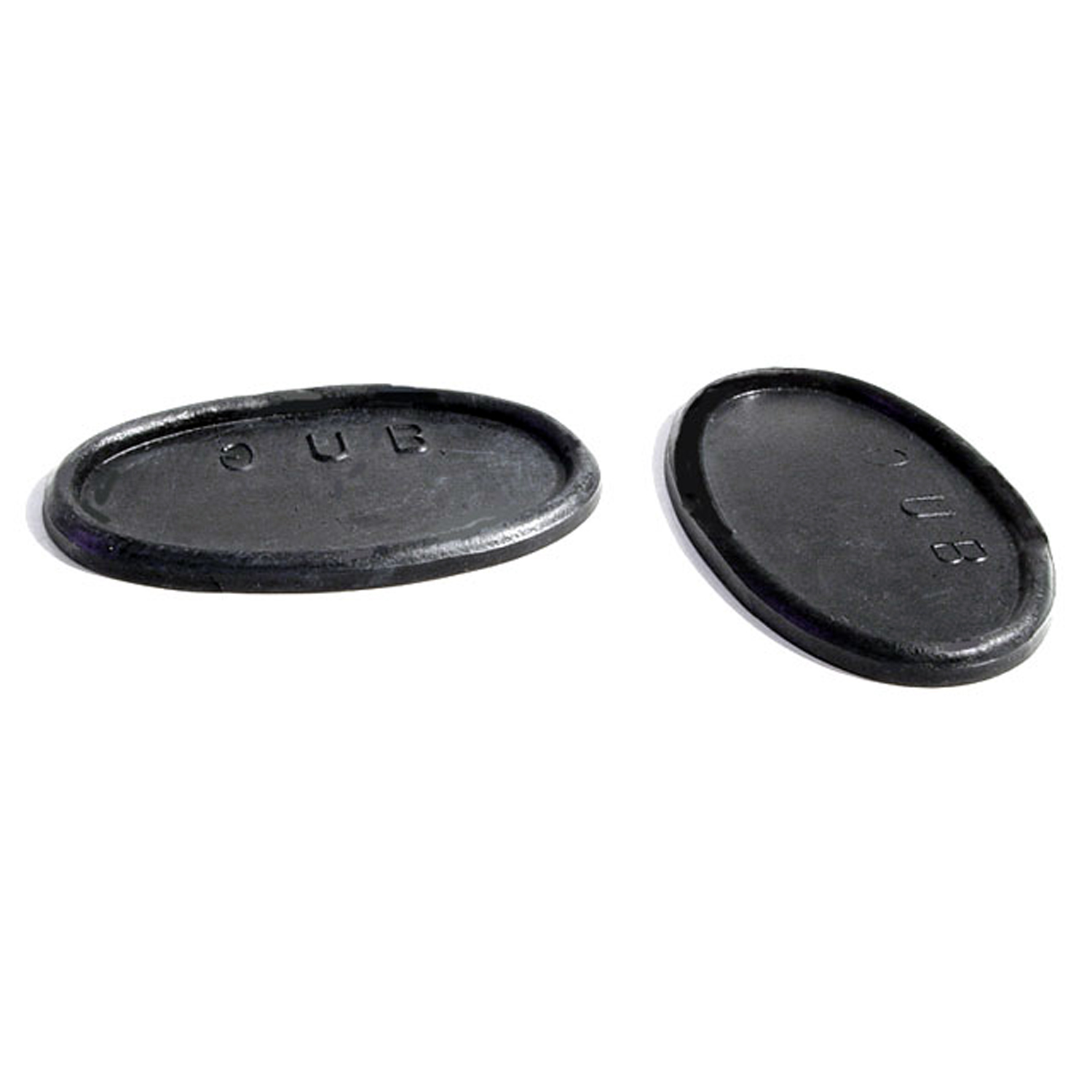 1929 Bugatti Type 43A Door Handle Pads. 1-3/8" wide X 2-1/4" long. Pair-MP 337-BDoor Handle Pads. 1-3/8" wide X 2-1/4" long. Pair
Why Choose Metro?
For over 100 years, Metro Moulded Parts has been the pinnacle of quality in classic car restoration parts. Our commitment to precision and authenticity in every component ensures a perfect fit and an OEM-level appearance.
- Expert Craftsmanship & Quality: Each part is a testament to our dedication to reliability and perfection, crafted from original designs and thoroughly tested.
- Advanced Technology: We use cutting-edge techniques to create flawless, long-lasting parts that surpass others in performance.
- SuperSoft Sponge – The Ultimate Door Seal: Not only are our door seals 30% softer than competitors', but they're also guaranteed to never leak. They effectively reduce wind and road noise, enhancing your classic car's comfort and driving experience.
- Proudly American: Our parts are a product of American craftsmanship, made in the USA with a spirit of excellence and heritage.
- Unrivaled Warranty: We back our products with a 30-year industry-leading warranty, a testament to our confidence in their quality.
Join us in preserving the legacy of classic cars with parts that are crafted for perfection, not just made.