

Image of 1931 Bugatti Type 43, Note: These illustrations use artistic license and may differ from actual historical models.
Performance Metrics
Fundamental Metrics
Emotional Appeal
MMP Rating
| Engine Specifications | |
|---|---|
| Engine: | Straight-8 engine |
| Displacement: | 2.3 liters |
| Horsepower: | Estimated 120 horsepower |
| Torque: | Not available |
| Compression Ratio: | Not available |
| Ignition System: | Magneto ignition system |
| Cooling System: | Water-cooled |
| Performance Specifications | |
| 0-60 Time: | Not available |
| 1/4 Mile Time: | Not available |
| Top Speed: | 110 mph |
| Transmission and Drive | |
| Drive Type: | Rear-wheel drive |
| Transmission Type: | 4-speed manual |
| Fuel and Efficiency | |
| Fuel System Type: | Carburetor |
| MPG: | Not available |
| Dimensions and Brakes | |
| Brakes: | Mechanical drum brakes |
| Wheelbase: | 2.6 meters |
| Weight: | Estimated 900 kg |
Note: Specifications for classic cars are given to the best of our ability, considering the limited and variant data available.
1931 Bugatti Type 43: The Grand Sport That Made 100 mph Feel Possible
The 1931 Bugatti Type 43 was a road car with racing blood and a remarkable party trick: in the right conditions, it could reach around 100 mph, a speed that made many contemporary sports cars seem positively leisurely. Built by Automobiles Ettore Bugatti in Molsheim, then part of France, the Type 43 combined Grand Prix-inspired engineering with open-road manners. It was fast, beautifully finished, and produced in small numbers, making it one of the most compelling prewar Bugattis for collectors today.
The Type 43 arrived in 1927 and remained in production into the early 1930s. It drew heavily on the company’s successful racing technology, particularly the Type 35 family, but was created as a high-performance road-going sports car rather than a stripped-out competition machine. Its defining feature was a supercharged straight-eight engine, a sophisticated powerplant that helped give the car its extraordinary pace. The Type 43 is often described as one of the first production sports cars capable of exceeding 100 mph.
Grand Prix Roots, Road-Car Ambition
Bugatti developed the Type 43 during a period when the boundary between racing cars and road cars was unusually thin. Ettore Bugatti’s company had established itself on the Grand Prix circuit, and its road cars benefited from that experience. The Type 43 used an engine related to the one in the Type 35B, adapted for road use and paired with a longer, more practical chassis.
That blend gave the car a distinctive character. It was not merely a racer with number plates, nor was it a comfortable touring car with a sporting badge. The Type 43 offered serious speed in a machine that could be driven on public roads, provided its owner was prepared for the physical effort and mechanical attention that came with a high-performance car of the era.
Streamlined Style and Bespoke Coachwork
The Type 43’s appearance is all long bonnet, upright radiator, and compact open cockpit. Its narrow, sculpted bodywork flows back from the famous horseshoe-shaped Bugatti grille, while the exposed wheels and running boards give it a purposeful, mechanical look. The silhouette is elegant rather than bulky, with the engine’s length lending the car a dramatic front-heavy profile.
Most Type 43s are associated with open sports-car coachwork, commonly configured as a two-seat roadster with an occasional rear seat or small rear compartment. The factory-style Grand Sport body is the most iconic look: low, rakish, and suited to fast touring. Individual cars could also receive coachwork from outside specialists, so details such as body shape, windscreens, seating, and trim can differ between surviving examples.
As was typical for an expensive Bugatti, there was no single universal color palette. French racing blue is the shade most closely associated with the marque, but Type 43s could be finished in other colors according to a customer’s taste. Dark blues, reds, greens, and contrasting body details are all in keeping with period coachbuilt practice. The exact color history of any particular car is best judged from its records and restoration history.
Inside, the Type 43 was purposeful but luxurious by sporting-car standards. Leather upholstery, carefully finished controls, and a compact instrument panel made the cabin feel special without disguising its sporting purpose. Materials and fittings varied from car to car, as owners could specify details when ordering or commission changes later. The driving position is close to the machinery, with the driver looking over a long bonnet and reaching for a traditional manual gear lever.
Supercharged Straight-Eight Technology
Power comes from a 2,262 cc inline-eight with a Roots-type supercharger. The engine is generally rated at about 120 horsepower, a formidable output for a road car of the late 1920s. Its design drew on Bugatti’s racing experience, including an overhead camshaft layout and three valves per cylinder, with two intake valves and one exhaust valve. A four-speed manual gearbox sends power to the rear wheels.
The supercharger is central to the Type 43’s character. It forces additional air into the engine, helping the small-displacement eight-cylinder produce strong power across a useful rev range. The result was not only a high top speed but also impressive flexibility for the period. The chassis and mechanical layout were equally rooted in Bugatti’s racing practice, though the road car’s longer proportions and bodywork made it more suitable for fast journeys beyond the circuit.
Why the Type 43 Mattered
The Type 43 helped establish the idea that a production road car could deliver genuine Grand Prix-inspired performance without being a competition-only machine. Its combination of a supercharged engine, sophisticated multi-cylinder design, and road-going coachwork set it apart from many sports cars of its time. In an era when 60 mph was already a serious speed for numerous automobiles, the Type 43’s ability to approach or exceed 100 mph was a striking statement.
Its influence was not simply a matter of one headline speed figure. The car showed how racing engineering could be adapted for wealthy drivers who wanted both performance and exclusivity. That approach became a lasting part of the high-performance automobile’s identity: advanced mechanicals, individual coachwork, and a driving experience that felt connected to competition. The Type 43 also strengthened Bugatti’s reputation for building cars that were as technically ambitious as they were visually distinctive.
Speed, Steering, and the Driving Experience
Period specifications and later accounts commonly put the Type 43’s top speed at around 100 mph, with some sources citing figures approaching 110 mph under favorable conditions. Exact performance depends on the individual car, its gearing, bodywork, mechanical condition, and test conditions. There is no directly comparable modern factory 0-to-60 mph figure, but a reasonable period-car estimate is roughly 8 to 10 seconds. That is an estimate, not a standardized figure for every surviving example.
Behind the wheel, the Type 43 would feel busy and vivid by modern standards. The supercharged eight-cylinder engine produces a distinctive mechanical rush, with the blower adding a sharper, more urgent quality as revs rise. The long bonnet gives the driver a strong sense of the engine’s presence, while the manual gearbox calls for deliberate shifts and an understanding of the car’s rhythms.
On a smooth, open road, the Type 43’s performance and balance make the most sense. Its relatively narrow tires, period suspension, and rigid chassis can make rough surfaces lively, and broken pavement demands care. On winding roads, the car rewards smooth inputs and anticipation rather than abrupt steering or braking. Wind and weather are part of the experience in an open roadster, and at high speed the driver is exposed in ways a modern sports-car owner might find startling.
Living With a Type 43
Today, a Type 43 is primarily a collector car, concours entrant, historic-tour participant, or occasional vintage-event machine. It is not a sensible daily driver. Its rarity, value, age, and specialized mechanical requirements make regular commuting an unrealistic use for most owners. The car is best enjoyed on planned drives, where it can be warmed carefully and driven by someone familiar with prewar machinery.
Maintenance is demanding, and repairs are not a job for the average owner without specialist knowledge. The supercharged engine, vintage fuel and ignition systems, mechanical brakes, and hand-built components need experienced attention. Parts can be difficult or costly to source, and even seemingly routine work may require careful adjustment. Reliability depends heavily on the quality of the restoration, the availability of correct components, and a disciplined maintenance schedule.
For a prospective owner, documented history and mechanical condition matter as much as appearance. A beautifully presented car may still need expensive engine, gearbox, chassis, or supercharger work. Pre-purchase inspection by a Bugatti specialist is essential, along with close review of chassis and engine numbers, restoration records, and any changes to the car’s coachwork.
Rarity, Stories, and Common Misconceptions
Production figures are generally quoted at about 160 Type 43s, though totals can vary slightly among reference sources depending on how chassis and related versions are counted. That small production run, combined with the passage of nearly a century, means examples rarely appear on the open market. Each car has its own history, and surviving cars may differ in specification because of their original coachwork and subsequent restoration.
The Type 43 is sometimes treated as a racing car because of its close relationship to Bugatti’s Grand Prix machines. It was, however, conceived as a high-performance road car. Its racing-derived engineering gave it speed and prestige, but it should not be confused with a purpose-built Grand Prix Type 35. Nor should every surviving car be assumed to have identical bodywork or original equipment.
One persistent criticism is that the Type 43 can be demanding to drive and maintain, especially compared with later sports cars. Its open cabin offers little protection from weather, its controls require physical involvement, and its performance asks for respect. Those are real compromises, but they are also part of what makes the car such a vivid experience. The Type 43 is not effortless transport; it is a fast, finely engineered piece of automotive history.
Collector Values and Market Outlook
As a best-effort current estimate, a genuine Bugatti Type 43 might fall in a broad range of roughly US$1.5 million to US$3 million, with exceptional examples, distinguished provenance, highly original condition, or important history potentially selling above that range. Restoration quality, matching components, coachwork, and documentation can shift the price substantially. Actual auction results vary, so buyers and sellers should consult recent specialist sales and marque experts before making a valuation.
The Type 43 is exceptionally rare in the wider classic-car market, and a genuine example may not be available for sale for years. Its limited production, Bugatti name, supercharged engine, and landmark performance give it enduring appeal. Over the long term, top-quality prewar Bugattis have generally attracted strong collector interest, though values can rise or soften with broader market conditions. The best cars are likely to remain desirable, but rarity alone does not guarantee a particular price.
The Type 43’s Lasting Appeal
The 1931 Bugatti Type 43 brought racing-derived engineering onto the road in a beautifully individual form. Its supercharged straight-eight, roughly 100-mph capability, open coachwork, and close connection to Bugatti’s Grand Prix achievements made it one of the defining high-performance sports cars of its era. It was rare when new and is rarer still today.
Nearly a century later, the Type 43 still represents a thrilling moment in automotive history, when speed, craftsmanship, and mechanical daring came together in a road car. It does not make fast driving effortless. It makes it memorable.
1931 Bugatti Type 43 Catalog of Parts
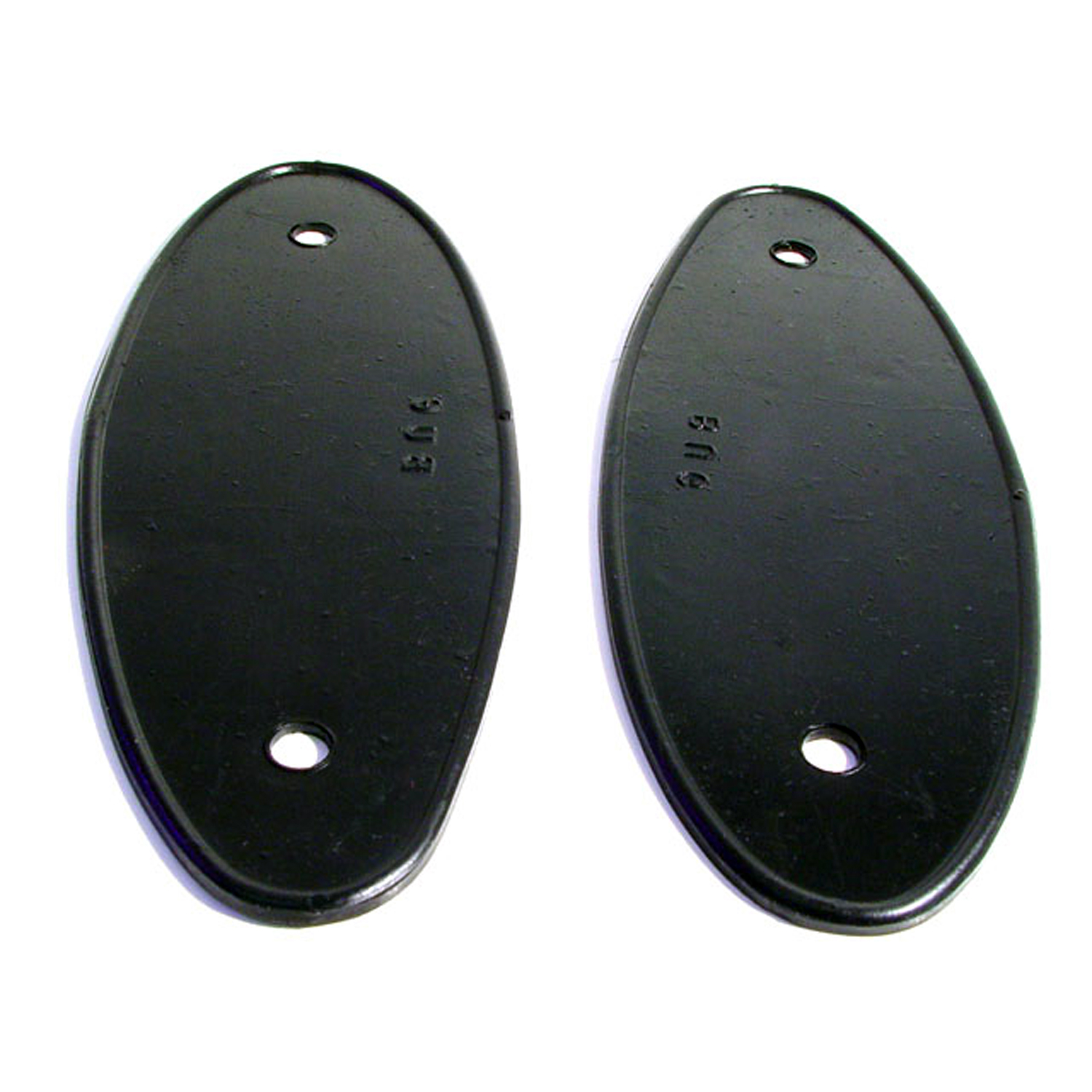 1931 Bugatti Type 43 Headlight Pads. 3" wide X 8-1/8" long. Pair-MP 337-AHeadlight Pads. 3" wide X 8-1/8" long. Pair
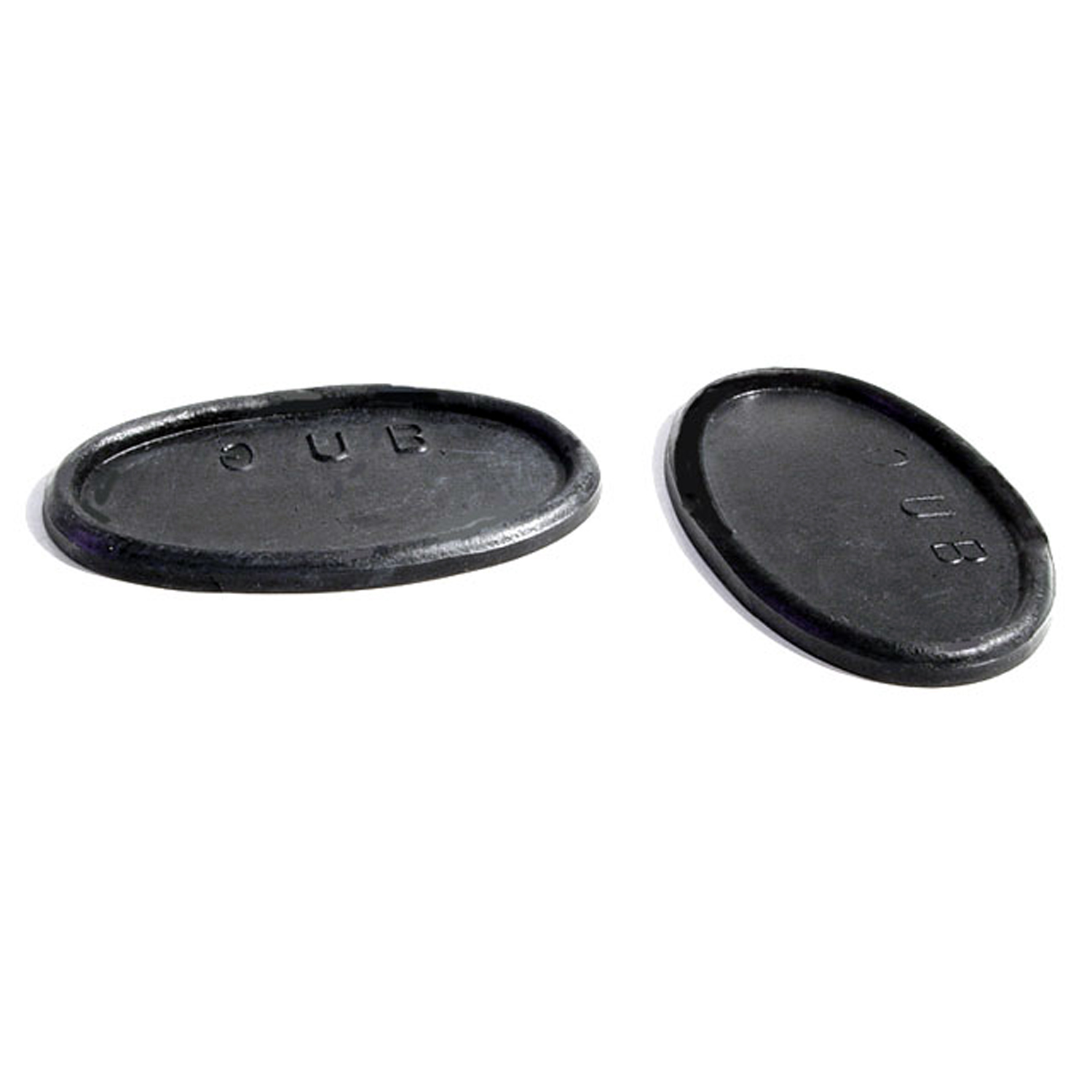 1931 Bugatti Type 43 Door Handle Pads. 1-3/8" wide X 2-1/4" long. Pair-MP 337-BDoor Handle Pads. 1-3/8" wide X 2-1/4" long. Pair
Why Choose Metro?
For over 100 years, Metro Moulded Parts has been the pinnacle of quality in classic car restoration parts. Our commitment to precision and authenticity in every component ensures a perfect fit and an OEM-level appearance.
- Expert Craftsmanship & Quality: Each part is a testament to our dedication to reliability and perfection, crafted from original designs and thoroughly tested.
- Advanced Technology: We use cutting-edge techniques to create flawless, long-lasting parts that surpass others in performance.
- SuperSoft Sponge – The Ultimate Door Seal: Not only are our door seals 30% softer than competitors', but they're also guaranteed to never leak. They effectively reduce wind and road noise, enhancing your classic car's comfort and driving experience.
- Proudly American: Our parts are a product of American craftsmanship, made in the USA with a spirit of excellence and heritage.
- Unrivaled Warranty: We back our products with a 30-year industry-leading warranty, a testament to our confidence in their quality.
Join us in preserving the legacy of classic cars with parts that are crafted for perfection, not just made.