

Image of 1931 Bugatti Type 43a, Note: These illustrations use artistic license and may differ from actual historical models.
Performance Metrics
Fundamental Metrics
Emotional Appeal
MMP Rating
| Engine Specifications | |
|---|---|
| Engine: | Straight 8 |
| Displacement: | 2.3 L |
| Horsepower: | 120 hp |
| Torque: | Not available |
| Compression Ratio: | Not available |
| Ignition System: | Magneto ignition |
| Cooling System: | Water-cooled |
| Performance Specifications | |
| 0-60 Time: | Not available |
| 1/4 Mile Time: | Not available |
| Top Speed: | 110 mph |
| Transmission and Drive | |
| Drive Type: | Rear-wheel drive |
| Transmission Type: | 4-speed manual |
| Fuel and Efficiency | |
| Fuel System Type: | Carburetor |
| MPG: | Not available |
| Dimensions and Brakes | |
| Brakes: | Mechanical drum brakes |
| Wheelbase: | 2,600 mm |
| Weight: | 1,000 kg |
Note: Specifications for classic cars are given to the best of our ability, considering the limited and variant data available.
1931 Bugatti Type 43A: A Grand Prix Heart for the Road
The 1931 Bugatti Type 43A brought the pulse of a Grand Prix racer to the open road, pairing a supercharged straight-eight with elegant, coachbuilt bodywork. Built by Automobiles Ettore Bugatti at Molsheim in Alsace, the Type 43 came from a marque whose founder, Ettore Bugatti, believed a road car should be as technically ambitious as it was beautiful.
The “Type 43A” name is used for late Type 43 and Grand Sport variants, though historic records and modern catalogues do not always apply the suffix consistently. The essential recipe is unmistakable: a road-going chassis, a powerful engine developed from Bugatti’s racing practice, and a design that made speed part of everyday motoring rather than something reserved for the circuit.
A particularly striking claim follows the model: the Type 43 is widely regarded as one of the first production sports cars capable of exceeding 100 mph. That made it more than a fast Bugatti. It was a glimpse of the high-performance grand touring car to come.
Streamlined Style and Coachbuilt Character
The Type 43’s long bonnet, upright horseshoe radiator, tapered tail and sweeping front wings give it a purposeful, almost predatory stance. Its proportions communicate the mechanical layout beneath: a long engine ahead of the cabin, a low chassis, and room for passengers behind the driver. The result is elegant without being delicate. Even at rest, the car looks ready to gather speed.
There was no single body style for every Type 43. Bugatti supplied the mechanical foundation, while bodies could be built or finished by specialist coachbuilders, including Bugatti’s closely associated coachbuilding operation at Molsheim. Open roadster and tourer forms are among the most admired, while coupé and cabriolet treatments added weather protection and a more formal grand touring character. Two-seat open bodies are especially iconic because they make the car’s sporting purpose so clear.
Interiors were tailored to the individual car rather than produced to a modern, standardized trim catalogue. Expect a compact cockpit, a large steering wheel, clear period instruments and carefully finished leather upholstery. Depending on the body and specification, metal trim, polished fittings and wood details could add further richness. These were luxurious cars, but their interiors remained focused on the driver rather than on modern conveniences.
Paint choices were likewise dependent on the particular commission and later ownership history. French racing blue is the color most closely associated with Bugatti’s competition heritage, while dark blue, black and other restrained shades also suit the Type 43’s flowing lines. As with any individual example, its original finish and documented history matter more than a color’s supposed factory popularity.
Racing Engineering for the Road
The Type 43’s defining feature was its 2,262 cc supercharged inline-eight, an engine derived from Bugatti’s successful Type 35B racing machinery. It used a single overhead camshaft and was rated at approximately 120 horsepower, a formidable figure for a road car of the late 1920s and early 1930s. A Roots-type supercharger helped the engine deliver strong performance, while a four-speed manual gearbox gave the driver direct control over the car’s pace.
Its engineering reflected an era when competition experience was transferred directly to customers’ cars. The Type 43 combined a lightweight, sporting chassis with four-wheel drum brakes and mechanical systems that demanded attention from the driver. It did not have the insulation, braking assistance or safety equipment expected in a modern automobile. Its achievement was to make serious performance available in a road-going package.
That combination helped establish a lasting Bugatti idea: a road car could be both a grand tourer and a close relative of a racing machine. The Type 43 was not merely styled to look fast. Its engine and chassis gave it the performance to back up the appearance.
Speed, Steering and the Open-Road Experience
Period accounts and later references commonly place the Type 43’s top speed at around 100 to 110 mph, depending on bodywork, gearing and condition. Acceleration figures were not recorded as consistently as they are today. A modern estimate for 0 to 60 mph is roughly 10 to 12 seconds, but that should be treated as an approximation, not a definitive factory figure. The car’s standout achievement was its ability to sustain speeds that were exceptional for a production automobile of its time.
On a smooth, open road, the Type 43 feels purposeful and alive. Its straight-eight produces a distinctive mechanical rush, with the supercharger adding a characteristic whine as engine speed rises. The manual gearbox asks for deliberate, well-timed shifts, and the unassisted controls make the driver an active participant rather than a passenger.
Its ride is firm by modern standards. The relatively narrow tires, period suspension and exposed cockpit transmit road texture, while bumps call for respect rather than speed. On a winding road, the car rewards anticipation and smooth inputs. It is not a modern sports car with effortless grip and precise, light steering; it is a fast prewar machine that asks its driver to understand its weight, brakes and limits. Wind protection varies greatly with body style, and an open example can be exhilarating as well as noisy.
A Landmark in Bugatti’s Road-Car Story
The Type 43 stands apart from many contemporaries because it brought genuine racing-derived performance into a refined road car. Its engine was connected to Bugatti’s Grand Prix achievements, yet the car could carry passengers and luggage on long journeys. That blend helped define the European high-performance grand tourer: fast enough to cover distance at speed, but finished with the individuality and craftsmanship of a luxury automobile.
Its influence is less about one specific styling detail than about a complete approach to design. The Type 43 showed how a road car could unite advanced power, light construction, elegant coachwork and sporting character. Later generations of grand tourers would pursue the same balance, even as technology made them quieter, safer and easier to drive.
Ownership: A Specialist’s Passion
Today, a Type 43 is principally a collector car, historic rally entrant and concours or touring event machine, not a practical daily driver. Its open bodywork and striking presence make it a natural showpiece, while its performance means a well-prepared example can still be driven on suitable events. Owners generally prioritize preservation and sympathetic use over routine commuting.
Maintenance is specialized. The supercharged engine, period fuel and ignition systems, gearbox, brakes and chassis all need knowledgeable care, and parts or repairs can be costly. The car is mechanically understandable to a skilled vintage-car specialist, but it is not an easy project for the average owner. Originality, correct components and expert maintenance are especially important because an incorrect repair can affect both the car’s value and its safe operation.
Reliability depends heavily on condition and preparation. A carefully maintained Type 43 can be used for touring, but age, complex machinery and the scarcity of replacement parts make regular inspections essential. Before a long drive, owners need to think like prewar motorists: check fluids and mechanical systems, plan a sensible route, and be prepared for the occasional roadside adjustment.
Rare Details, Records and Realities
Bugatti produced approximately 160 Type 43 cars, though published totals and the count of cars specifically identified as Type 43A can vary. There is no universally agreed production split for the A designation, so claims about the exact number of Type 43As should be checked against individual chassis records. Whatever the precise count, surviving examples are rare, and cars with strong provenance, original components and desirable coachwork are rarer still.
The model’s most enduring record is its association with the 100-mph threshold. It is often described as one of the first production sports cars able to exceed that speed, a remarkable distinction in an era when many ordinary cars were far slower. The Type 43’s story is also tied to Bugatti’s racing success, although it should not be confused with a single famous race result or an official production-car speed record.
There is no broadly verified celebrity-ownership story that defines every Type 43A. Individual cars have their own histories, and the details can be fascinating, but provenance should be supported by chassis documentation and reliable records rather than repeated auction-room anecdotes.
The main criticism is that the Type 43’s period character comes with period compromises. Braking distances, ride comfort, weather protection and ease of operation fall short of modern expectations. Its supercharged engine and bespoke construction also make ownership expensive. For enthusiasts, those limitations are part of the experience; for anyone seeking convenient transport, they are a substantial drawback.
Collector Value and Market Outlook
Type 43 values depend strongly on authenticity, restoration quality, coachwork, documented history and whether the car retains its matching-number mechanical components. As a broad present-day estimate, a well-documented example might fall in the region of $2 million to $5 million, with exceptional provenance or highly desirable specification potentially pushing a car beyond that range. A project or substantially altered example may be worth considerably less.
Availability is extremely limited. With roughly 160 Type 43s built and the Type 43A designation not consistently separated in production records, a buyer may wait a long time for the right car to appear publicly. Some transactions occur privately, making visible auction results an incomplete picture of the market.
Over the long term, significant prewar Bugattis have generally benefited from their rarity, engineering importance and international collector appeal. Values can still move with broader economic conditions, and restoration costs can be enormous. The strongest examples are likely to remain the most resilient, while provenance and originality increasingly shape the difference between a merely expensive car and a truly exceptional one.
Why the Type 43A Still Matters
The 1931 Bugatti Type 43A combines a supercharged racing-derived straight-eight, individual coachbuilt styling and performance that placed it among the fastest road cars of its day. It also captures the appeal and compromises of prewar motoring: vivid mechanical character, demanding controls and craftsmanship that makes each surviving car feel personal.
More than a beautiful antique, the Type 43 is an early statement of the modern high-performance grand tourer. It turned the road into an extension of the racetrack, and nearly a century later, its blend of speed, engineering and elegance remains unmistakably Bugatti.
1931 Bugatti Type 43a Catalog of Parts
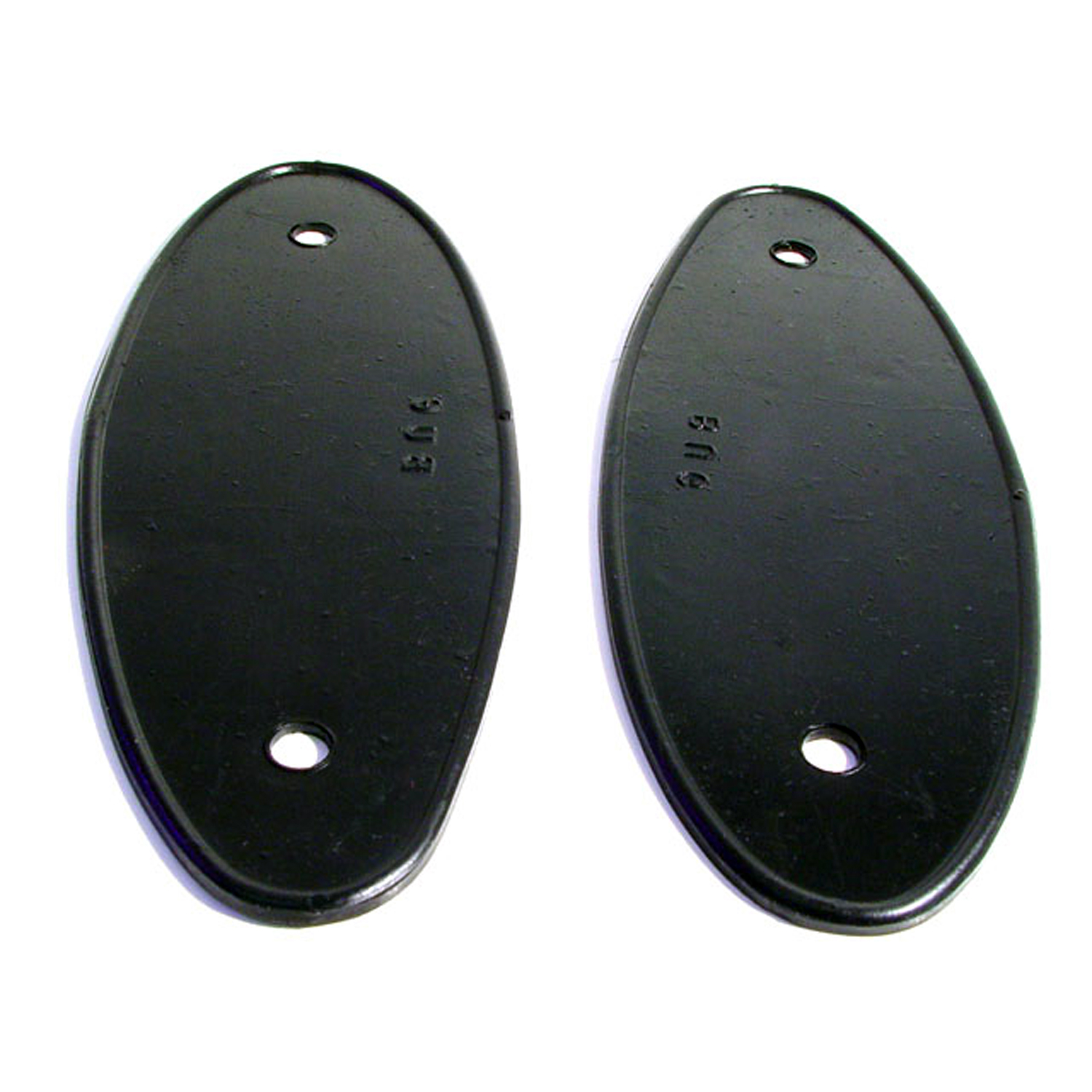 1931 Bugatti Type 43A Headlight Pads. 3" wide X 8-1/8" long. Pair-MP 337-AHeadlight Pads. 3" wide X 8-1/8" long. Pair
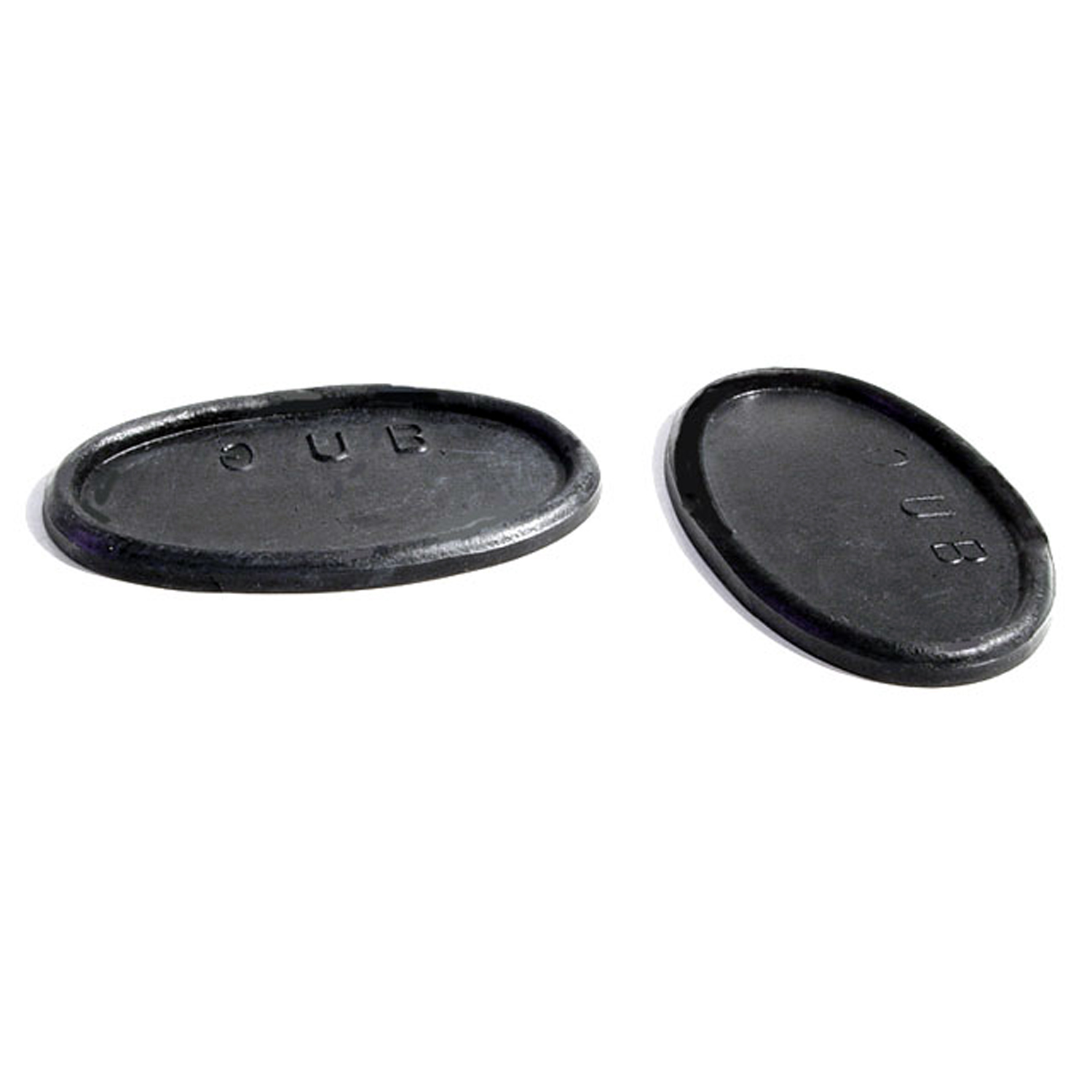 1931 Bugatti Type 43A Door Handle Pads. 1-3/8" wide X 2-1/4" long. Pair-MP 337-BDoor Handle Pads. 1-3/8" wide X 2-1/4" long. Pair
Why Choose Metro?
For over 100 years, Metro Moulded Parts has been the pinnacle of quality in classic car restoration parts. Our commitment to precision and authenticity in every component ensures a perfect fit and an OEM-level appearance.
- Expert Craftsmanship & Quality: Each part is a testament to our dedication to reliability and perfection, crafted from original designs and thoroughly tested.
- Advanced Technology: We use cutting-edge techniques to create flawless, long-lasting parts that surpass others in performance.
- SuperSoft Sponge – The Ultimate Door Seal: Not only are our door seals 30% softer than competitors', but they're also guaranteed to never leak. They effectively reduce wind and road noise, enhancing your classic car's comfort and driving experience.
- Proudly American: Our parts are a product of American craftsmanship, made in the USA with a spirit of excellence and heritage.
- Unrivaled Warranty: We back our products with a 30-year industry-leading warranty, a testament to our confidence in their quality.
Join us in preserving the legacy of classic cars with parts that are crafted for perfection, not just made.