

Image of 1931 Bugatti Type 50, Note: These illustrations use artistic license and may differ from actual historical models.
Performance Metrics
Fundamental Metrics
Emotional Appeal
MMP Rating
| Engine Specifications | |
|---|---|
| Engine: | Straight 8 |
| Displacement: | 4972 cc |
| Horsepower: | 200 HP |
| Torque: | Not available |
| Compression Ratio: | Not available |
| Ignition System: | Magneto ignition |
| Cooling System: | Water-cooled |
| Performance Specifications | |
| 0-60 Time: | Not available |
| 1/4 Mile Time: | Not available |
| Top Speed: | 100 mph |
| Transmission and Drive | |
| Drive Type: | Rear-wheel drive |
| Transmission Type: | 4-speed manual |
| Fuel and Efficiency | |
| Fuel System Type: | Carburetor |
| MPG: | Not available |
| Dimensions and Brakes | |
| Brakes: | Mechanical drum brakes |
| Wheelbase: | 130 inches |
| Weight: | 2300 lbs |
Note: Specifications for classic cars are given to the best of our ability, considering the limited and variant data available.
1931 Bugatti Type 50: A Grand Touring Giant
The 1931 Bugatti Type 50 paired the elegance of a hand-built French grand tourer with the kind of advanced engine technology usually associated with racing cars. Created by Automobiles Ettore Bugatti in Molsheim, then part of Germany and now in France, it was a powerful, exclusive machine built for fast, comfortable travel rather than ordinary motoring.
Introduced around 1930, the Type 50 arrived as the Great Depression was reshaping the luxury-car market. Bugatti responded not with a modest, economical model, but with a sophisticated five-litre straight-eight and chassis intended for bespoke coachwork. One intriguing detail: the Type 50’s engine used twin overhead camshafts, a configuration far ahead of what most road cars of its day offered.
Bugatti Type 50 Design and Coachwork
The Type 50’s appearance depended heavily on the coachbuilder chosen by its first owner, but its proportions gave every version a sense of purpose. A long bonnet advertised the engine beneath it, while the tall, upright radiator grille, sweeping front wings and large wire wheels made the car unmistakably Bugatti. Depending on the body, the rear could be a close-coupled tail, a formal luggage compartment or a smoothly flowing grand touring profile.
Bugatti supplied the rolling chassis, and specialist coachbuilders completed many of the cars. Buyers could choose from sporting coupés, closed saloons, cabriolets and other custom bodies. The elegant coupé is among the most memorable forms today, but there was no single universal “standard” body. That bespoke approach is part of the Type 50’s appeal: two examples can share the same mechanical foundation while looking quite different.
Inside, the emphasis was on craftsmanship and long-distance comfort. Depending on the body and specification, cabins featured quality leather upholstery, polished wood trim, thick carpeting and carefully finished metal fittings. These were individually commissioned automobiles, so materials and details varied rather than following a modern, fixed trim catalogue.
Paint was similarly a matter of personal taste and coachbuilder choice. Dark blue, black, deep red and two-tone combinations suited the Type 50’s formal lines, although period colors were not limited to a single factory palette. Its most popular look today is often a restrained, dark finish that lets the body shape and brightwork stand out.
Advanced Engineering for the Road
At the heart of the Type 50 was a supercharged, 4,972 cc straight-eight. Its twin overhead camshafts operated the valves, while a Roots-type supercharger forced additional air into the engine. Output is commonly quoted at about 225 horsepower, although published figures can vary by specification and source. Power went to the rear wheels through a manual gearbox, giving the car the mechanical character expected of a high-performance machine in the early 1930s.
The Type 50 was not simply a large engine fitted to a luxury chassis. Its combination of overhead-cam engineering and supercharging brought competition-inspired technology to a road-going Bugatti. The chassis was designed to support a range of coachbuilt bodies, and the car used the period’s conventional foundation of mechanical brakes and suspension suited to the roads of its time. Compared with a modern car, it required more physical effort and a much more attentive driver.
Why the Type 50 Mattered
The Type 50 showed how far a luxury car could go in combining speed, engineering sophistication and bespoke design. Many contemporary prestige cars concentrated on size, comfort and visual presence. The Bugatti offered those qualities while adding a supercharged twin-cam engine that reflected Ettore Bugatti’s competition-minded approach.
Its influence is less about a single styling feature copied by later manufacturers and more about the idea of a road car as a high-performance, individually bodied machine. That formula helped define the grand tourer: a car able to cover distance rapidly, with the comfort and finish expected by a wealthy owner. The Type 50 also demonstrated that advanced engine design could be part of a luxurious road car, not just a racing special.
Type 50 Performance and Driving Feel
Contemporary performance figures are not as standardized as they are today. Depending on body weight, gearing, condition and specification, a Type 50 is generally associated with a top speed in the region of 120 to 125 mph. A modern estimate for 0 to 60 mph is roughly 10 to 12 seconds. Treat that acceleration figure as an approximation, not a period factory test result: surviving cars vary, and dependable, directly comparable tests are scarce.
On a smooth, open road, the Type 50 would feel exceptionally fast for its era. The straight-eight delivers a deep, mechanical note, while the supercharger adds a distinctive whine as the engine works harder. Steering and braking demand more attention than in a modern car, and the driver must anticipate the road rather than rely on electronic assistance.
Its ride depends on the particular chassis, body and setup. Broken pavement can make a large, heavy pre-war car feel unsettled, and narrow or winding roads call for measured inputs. On a flowing route, however, the Type 50’s long-legged character comes into its own. It was made to travel quickly and confidently, not to be hustled like a lightweight sports car on every bend.
Ownership, Maintenance and Reliability
A Type 50 today is best understood as a collector car, historic showpiece and occasional touring machine, not a daily driver. Owners may take one to concours events, vintage rallies or carefully planned long-distance tours, but its rarity and value make routine use impractical for most people.
Maintenance is a specialist undertaking. The supercharged twin-cam engine, period components and bespoke coachwork require knowledgeable care, and replacement parts may need to be sourced, restored or made. Repairs are not realistically easy for the average owner. Regular inspections, careful warm-up, correct lubrication and access to a mechanic familiar with pre-war Bugattis are essential to preserving both reliability and originality.
Like other cars of its age, a Type 50 can be dependable when properly maintained, but it is not trouble-free by modern standards. The condition of an individual example matters enormously. A well-documented car with a sound engine and sympathetic restoration is a very different ownership proposition from one that needs major mechanical or bodywork attention.
Rare Facts and Racing Connections
The Type 50 family included the Type 50T, a touring-oriented version, alongside the standard Type 50. Bugatti also developed the Type 50B as a racing derivative. These related models are worth distinguishing: the road-going Type 50 was already exceptionally powerful, while the “B” designation refers to a competition-focused branch rather than a routine trim level.
Type 50s were connected to the period’s road-racing culture, including competition at Le Mans, but the model is not best known for a headline factory victory or a major speed record. Its historical distinction rests more firmly on its unusual blend of road comfort and advanced engine engineering. Because bodies were custom-built and individual cars have had long, varied lives, claims about a particular example’s racing history or celebrity ownership should be checked against its documentation.
A frequent criticism is that the Type 50 can seem imposing rather than agile, especially by the standards of later sports cars. Its size, weight and period braking technology are part of the experience, not flaws that can be judged fairly by modern expectations. The same qualities that make it demanding also give it the presence of a true pre-war grand tourer.
Bugatti Type 50 Value and Rarity
The Type 50 is exceptionally scarce. Production estimates vary depending on whether sources count the Type 50 and Type 50T separately, but a reasonable working estimate is roughly 65 to 75 cars across the family. Exact totals are difficult to state with confidence, and surviving examples are rarer still. They appear on the market only occasionally, often through major international auctions or private sales.
As a broad current-market estimate, a genuine Type 50 might fall somewhere around US$2 million to US$5 million, with exceptional originality, important provenance or especially desirable coachwork potentially pushing a car higher. A figure in the US$5 million to US$8 million range is plausible for a standout example, but no single price applies to every car. Restoration quality, documentation, mechanical condition and the identity of the coachbuilder all influence value.
Over the long term, exceptional pre-war Bugattis have generally benefited from their rarity and historical importance. That does not mean prices rise smoothly: auction results can fluctuate with condition, provenance and broader collector demand. For a car this rare, one sale is not enough to establish a simple market trend.
A Lasting Bugatti Grand Tourer
The 1931 Bugatti Type 50 brought together a supercharged twin-cam straight-eight, bespoke coachbuilt styling and the ability to cover distance at remarkable speed for its time. Its rarity, demanding ownership and extraordinary engineering make it a car for dedicated enthusiasts rather than casual motorists.
Nearly a century later, the Type 50 remains a compelling expression of Bugatti’s ambition: a luxurious road car with the heart of a racer and the individuality of a one-off commission.
1931 Bugatti Type 50 Catalog of Parts
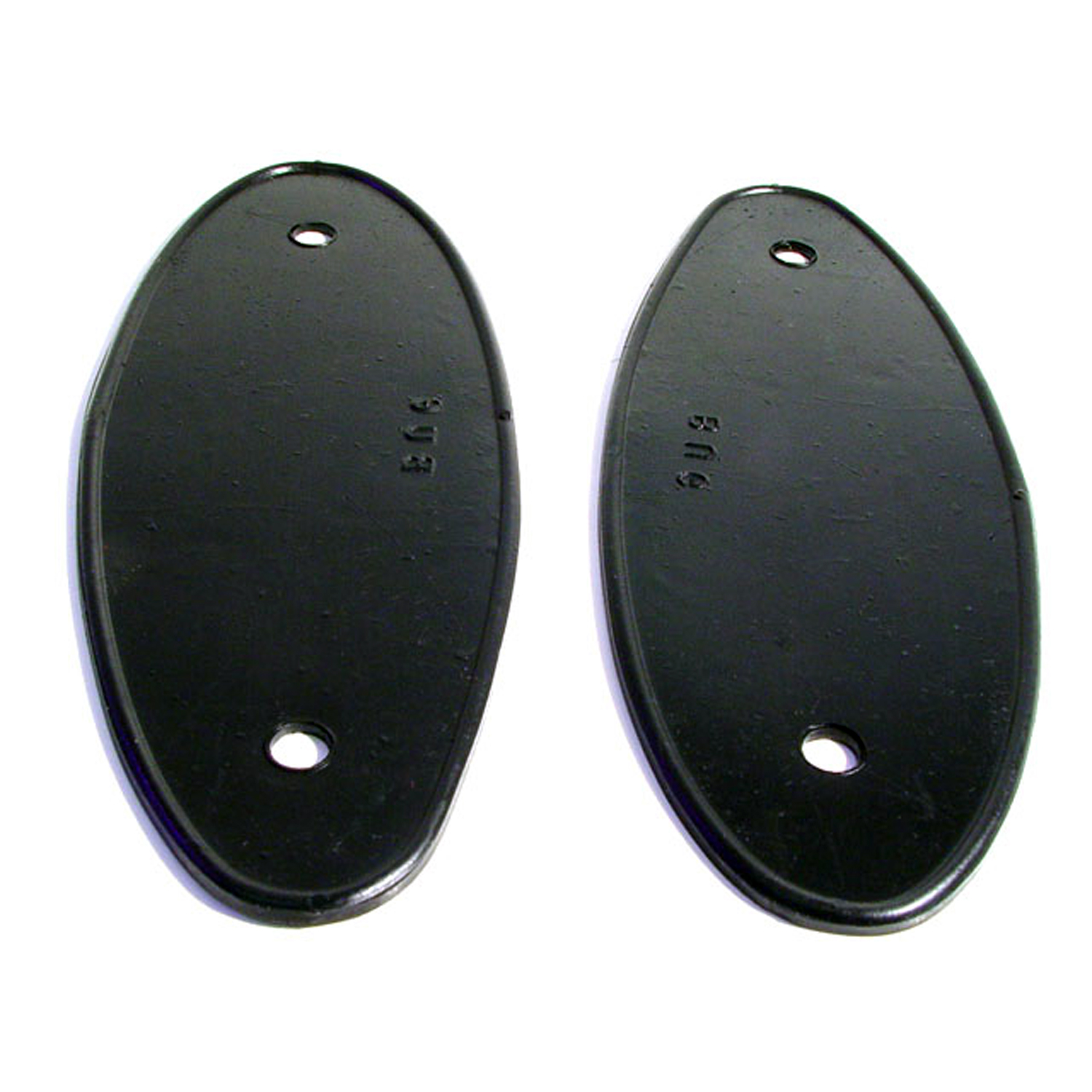 1931 Bugatti Type 50 Headlight Pads. 3" wide X 8-1/8" long. Pair-MP 337-AHeadlight Pads. 3" wide X 8-1/8" long. Pair
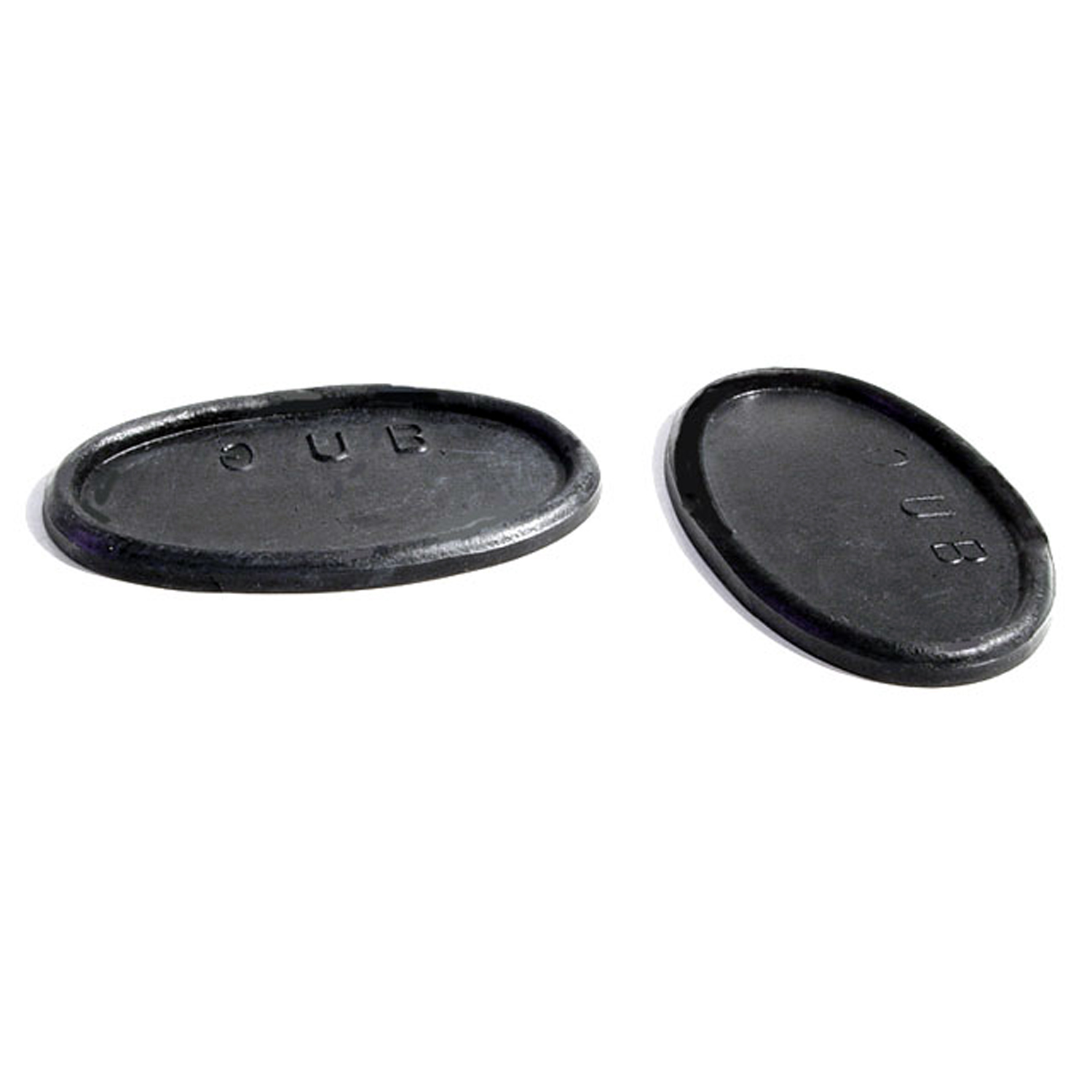 1931 Bugatti Type 50 Door Handle Pads. 1-3/8" wide X 2-1/4" long. Pair-MP 337-BDoor Handle Pads. 1-3/8" wide X 2-1/4" long. Pair
Why Choose Metro?
For over 100 years, Metro Moulded Parts has been the pinnacle of quality in classic car restoration parts. Our commitment to precision and authenticity in every component ensures a perfect fit and an OEM-level appearance.
- Expert Craftsmanship & Quality: Each part is a testament to our dedication to reliability and perfection, crafted from original designs and thoroughly tested.
- Advanced Technology: We use cutting-edge techniques to create flawless, long-lasting parts that surpass others in performance.
- SuperSoft Sponge – The Ultimate Door Seal: Not only are our door seals 30% softer than competitors', but they're also guaranteed to never leak. They effectively reduce wind and road noise, enhancing your classic car's comfort and driving experience.
- Proudly American: Our parts are a product of American craftsmanship, made in the USA with a spirit of excellence and heritage.
- Unrivaled Warranty: We back our products with a 30-year industry-leading warranty, a testament to our confidence in their quality.
Join us in preserving the legacy of classic cars with parts that are crafted for perfection, not just made.