
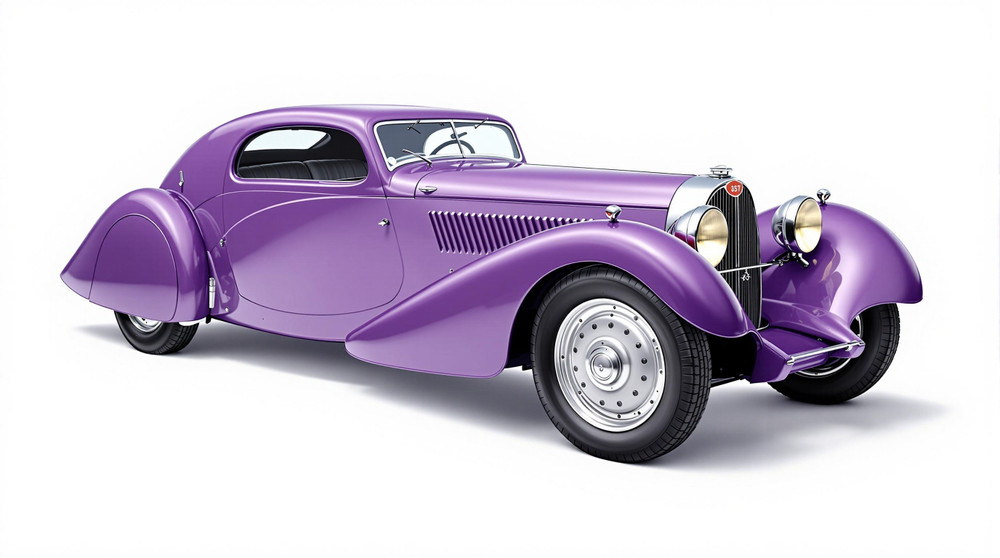
Image of 1933 Bugatti Type 46/46s, Note: These illustrations use artistic license and may differ from actual historical models.
Performance Metrics
Fundamental Metrics
Emotional Appeal
MMP Rating
| Engine Specifications | |
|---|---|
| Engine: | Straight 8 |
| Displacement: | 5.4 L |
| Horsepower: | Estimated 140 HP |
| Torque: | Not available |
| Compression Ratio: | Not available |
| Ignition System: | Coil ignition |
| Cooling System: | Water-cooled |
| Performance Specifications | |
| 0-60 Time: | Not available |
| 1/4 Mile Time: | Not available |
| Top Speed: | 93 mph |
| Transmission and Drive | |
| Drive Type: | Rear-wheel drive |
| Transmission Type: | 3-speed manual |
| Fuel and Efficiency | |
| Fuel System Type: | Carburetor |
| MPG: | Not available |
| Dimensions and Brakes | |
| Brakes: | Mechanical drum brakes |
| Wheelbase: | 138 in |
| Weight: | Estimated 2,425 lbs |
Note: Specifications for classic cars are given to the best of our ability, considering the limited and variant data available.
1933 Bugatti Type 46: The “Petite Royale” in Brief
The 1933 Bugatti Type 46 brought grand touring ambition to a scale just short of the legendary Royale. Built by Automobiles Ettore Bugatti in Molsheim, then in France, it combined a large, sophisticated straight-eight engine with coachbuilt elegance and the sort of road presence expected of a luxury car in the 1930s.
Introduced in 1929, the Type 46 was often nicknamed the “Petite Royale.” The name captured its character, though it was a popular comparison rather than an official model title. The car offered some of the Royale’s imposing style and mechanical ambition in a more attainable, more usable package. A supercharged version, the Type 46S, added extra performance for buyers who wanted an even more exclusive grand tourer.
One intriguing detail is how much the finished car could vary from one example to another. Bugatti supplied the chassis and running gear, while prestigious coachbuilders shaped many of the bodies to suit an individual owner. A Type 46 was therefore not simply a model with one fixed appearance. It was a platform for bespoke automotive design.
Long Bonnet, Bespoke Coachwork
The Type 46 has the unmistakable proportions of a large interwar Bugatti: a long, narrow bonnet, upright radiator, sweeping front wings, running boards and a compact passenger compartment set well back on the chassis. Its horseshoe-shaped radiator grille gave the nose a strong visual identity, while the exposed spare wheel and elegant flowing fenders emphasized its touring purpose.
Bodywork depended on the commission. Buyers could choose formal saloons and limousines, coupés, cabriolets and other touring styles, with work from coachbuilders including Bugatti’s own works and firms such as Gangloff. Coupé de Ville and enclosed coupé designs suited owners who wanted stately luxury, while open cabriolets made the most of the car’s grand-touring character. The most striking and memorable examples are often those with distinctive coachwork, rather than a single universally recognized body style.
Interiors were appropriately luxurious, with leather upholstery, polished wood trim, carpeting and carefully finished metal fittings. Exact materials and details varied with the bodybuilder and customer’s specification. This was a hand-built prestige car, not a mass-produced model with a standard trim package.
Color was similarly a matter of personal taste. There was no single standard palette that defined every Type 46. Dark blues, black, deep reds and restrained two-tone schemes suit the period and appear often in restored examples, while lighter colors could highlight the curves of an open touring body. Original paint evidence and a car’s documented history matter more to collectors than choosing a supposedly “correct” universal color.
Type 46 Engineering and the 46S
At the heart of the Type 46 was a 5,359 cc (5.4-liter) inline-eight engine. It used a single overhead camshaft and three valves per cylinder, a technically ambitious arrangement for a luxury touring car of its era. Period specifications and later references vary, but standard Type 46 output is generally quoted at roughly 140 horsepower. The engine’s size and smooth delivery were better suited to effortless, sustained touring than to high-revving sports-car behavior.
The Type 46S added a supercharger, with output commonly reported at around 160 horsepower. The “S” is associated with the French term for supercharging, surcompresseur. The boost gave the already substantial car stronger performance, though the exact figures depended on specification, bodywork and condition. Both models used period mechanical systems, including a three-speed gearbox and mechanical brakes, rather than the controls and stopping power drivers expect from a modern car.
Bugatti offered the Type 46 as a complete chassis for coachbuilding, so wheelbase, body design, weight and gearing could affect how any particular car performed. That makes neat, single-number specifications less definitive than they might be for a standardized production car.
Why the Type 46 Mattered
The Type 46’s significance lies in the way it brought high-end Bugatti engineering to a luxury touring car that was more usable than the enormous Type 41 Royale. It was not a mass-market innovation, nor did it establish a new mainstream design formula. Instead, it demonstrated how a powerful, technically sophisticated chassis could serve as the foundation for highly individual coachbuilt automobiles.
Its blend of an advanced multi-cylinder engine, long-distance comfort and bespoke bodywork set it apart from many contemporaries. The Type 46 also reflects the interwar coachbuilding tradition at its height: the manufacturer supplied the mechanical heart, and a specialist bodybuilder completed the car according to the owner’s taste. That close relationship between engineering and custom design remains central to the car’s appeal today.
Top Speed and Driving Character
A standard Type 46 is commonly credited with a top speed around 90 mph, while some accounts place supercharged Type 46S examples nearer to 100 mph. These are period-style estimates, not guarantees for every surviving car. Body shape, gearing, mechanical condition and the accuracy of the historical specification all influence the result.
Reliable factory 0–60 mph figures are difficult to pin down. As a broad modern estimate, a standard Type 46 might take roughly 15 to 20 seconds, with a Type 46S potentially quicker. These figures should be treated as approximations, not precise test results. The car’s considerable mass and touring-oriented gearing mean acceleration is less dramatic than its large engine might suggest.
On the road, a Type 46 is best understood as a fast, substantial grand tourer. Its long wheelbase can help it feel composed on open roads, while its mass and period suspension ask the driver to approach bumps and rough surfaces with care. On winding roads it rewards smooth inputs and anticipation rather than sudden changes of direction. The steering, braking and shifting all require more physical involvement than in a modern car, and a large coachbuilt body can make narrow roads feel especially tight.
The straight-eight’s voice is a major part of the experience: a deep, smooth mechanical note that gathers in volume as the engine works, rather than the sharp bark of a lightweight racing car. The ride is more about measured progress than isolation, and the driver must plan braking distances, gear changes and corner entries well ahead. In return, the Type 46 offers an unusually direct connection to the craft and machinery of prewar motoring.
Owning and Maintaining a Type 46
Today, the Type 46 is principally a collector, concours and touring-event car. Its original purpose was long-distance luxury motoring, and carefully prepared examples can still take part in suitable rallies and historic events. It is not generally a sensible daily driver: the car is valuable, mechanically specialized and less suited to modern traffic than a contemporary vehicle.
Maintenance calls for expertise in vintage Bugatti engineering. Parts may need to be sourced through specialist networks or fabricated, and coachwork repairs require craftspeople familiar with traditional materials and methods. A knowledgeable owner can manage routine inspections and basic care, but an average modern-car owner should not expect straightforward repairs. The condition of the engine, gearbox, chassis, brakes and body structure should be assessed by a marque specialist before purchase.
Reliability depends heavily on restoration quality and ongoing maintenance. A well-sorted Type 46 can be enjoyed on carefully planned tours, but age, bespoke components and the demands of a large prewar engine make preventative maintenance essential. Originality and mechanical soundness are also closely tied to long-term value.
Type 46 Trivia and Common Criticisms
The “Petite Royale” nickname is the Type 46’s most famous shorthand, reflecting its position as a smaller companion to Bugatti’s extraordinary Royale. The Type 46S is the rare supercharged branch of the family, and its added performance makes it particularly desirable among collectors.
Production totals are not perfectly consistent across published sources, in part because chassis, bodywork and variant counts are not always presented the same way. A reasonable estimate is roughly 400 to 500 Type 46 chassis built, with only a small fraction being Type 46S cars. Exact totals should be treated as estimates, and individual chassis histories are more useful than a broad production figure when evaluating a specific car.
The Type 46 is not chiefly remembered for a famous speed record or a single defining race victory. Its distinction is its role as a refined, coachbuilt Bugatti for wealthy touring customers. Its most common criticisms follow from that purpose: it is heavy, expensive to maintain and not as agile as Bugatti’s lighter sporting models. The three-speed gearbox and mechanical brakes also demand patience and skill by modern standards. Those traits are part of its period character, but they are worth understanding before buying one.
1933 Bugatti Type 46 Collector Values
Type 46s are rare sights on the market, and a true comparison between two cars can be difficult because body styles, originality, restoration quality and provenance vary so widely. As a broad 2026 estimate, a standard Type 46 might fall somewhere around US$1 million to US$2.5 million. A rare, well-documented Type 46S or an especially desirable coachbuilt example could reach roughly US$2 million to US$4 million or more. These are indicative ranges, not appraisals; exceptional history or condition can move a car beyond them.
In the long term, the Type 46’s rarity, Bugatti name and connection to the golden age of coachbuilding support strong collector interest. Values can still fluctuate with the wider classic-car market, and a poor restoration or uncertain history can weigh heavily on price. The most important factors are typically the chassis identity, documented provenance, quality of the coachwork, mechanical condition and degree of originality.
A Grand Tourer with Bugatti DNA
The 1933 Bugatti Type 46 paired a sophisticated straight-eight with elegant coachbuilt bodies and the imposing presence of a great interwar luxury car. Its supercharged 46S sibling added rarity and extra performance, while both versions reflected an era when a car could be engineered by one firm and individually finished by another.
Not the lightest or easiest Bugatti to own, the Type 46 rewards those who value craftsmanship, history and unhurried power. It remains a compelling reminder that a grand touring car could be both a feat of engineering and a personal work of art.
1933 Bugatti Type 46/46s Catalog of Parts
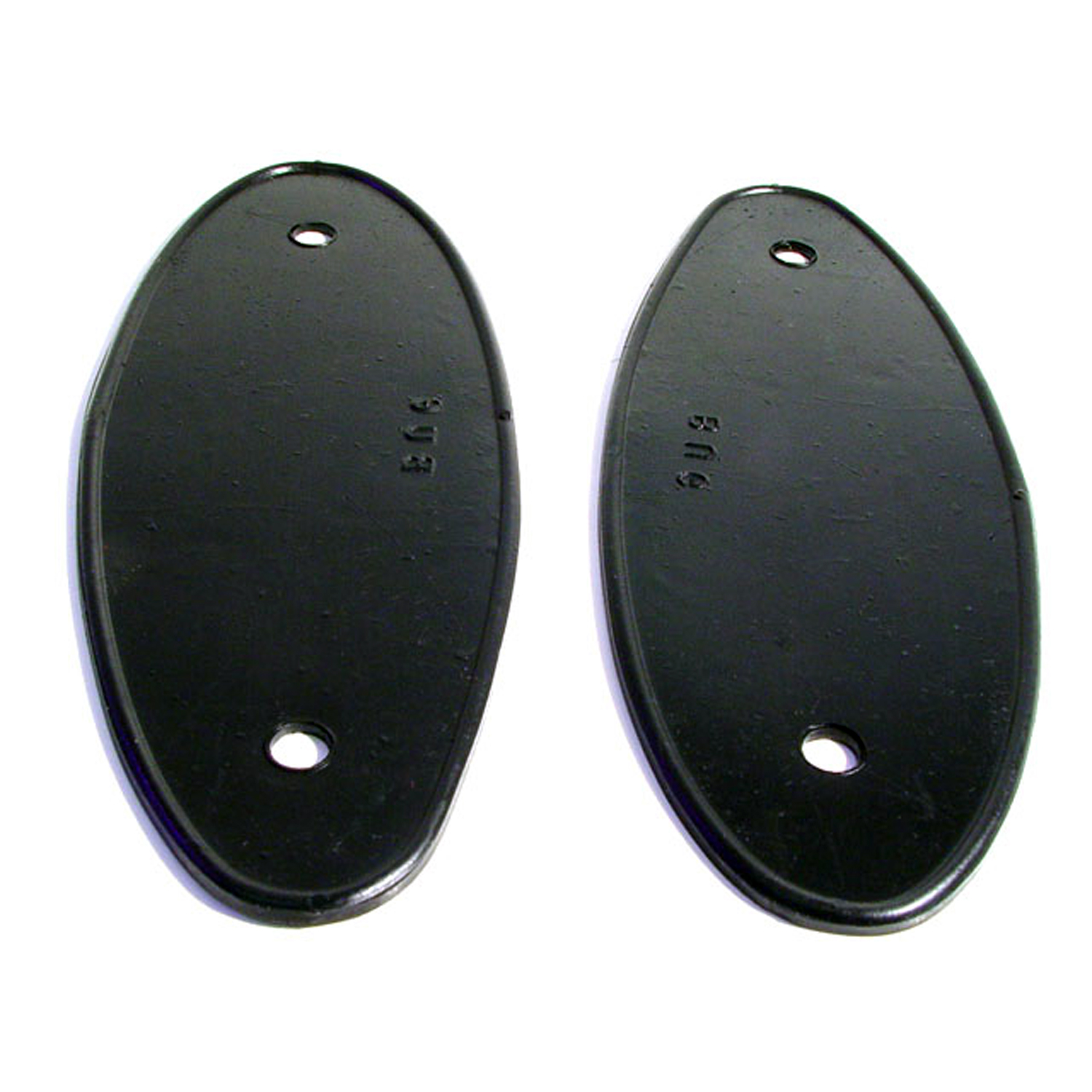 1933 Bugatti TYPE 46/46S Headlight Pads. 3" wide X 8-1/8" long. Pair-MP 337-AHeadlight Pads. 3" wide X 8-1/8" long. Pair
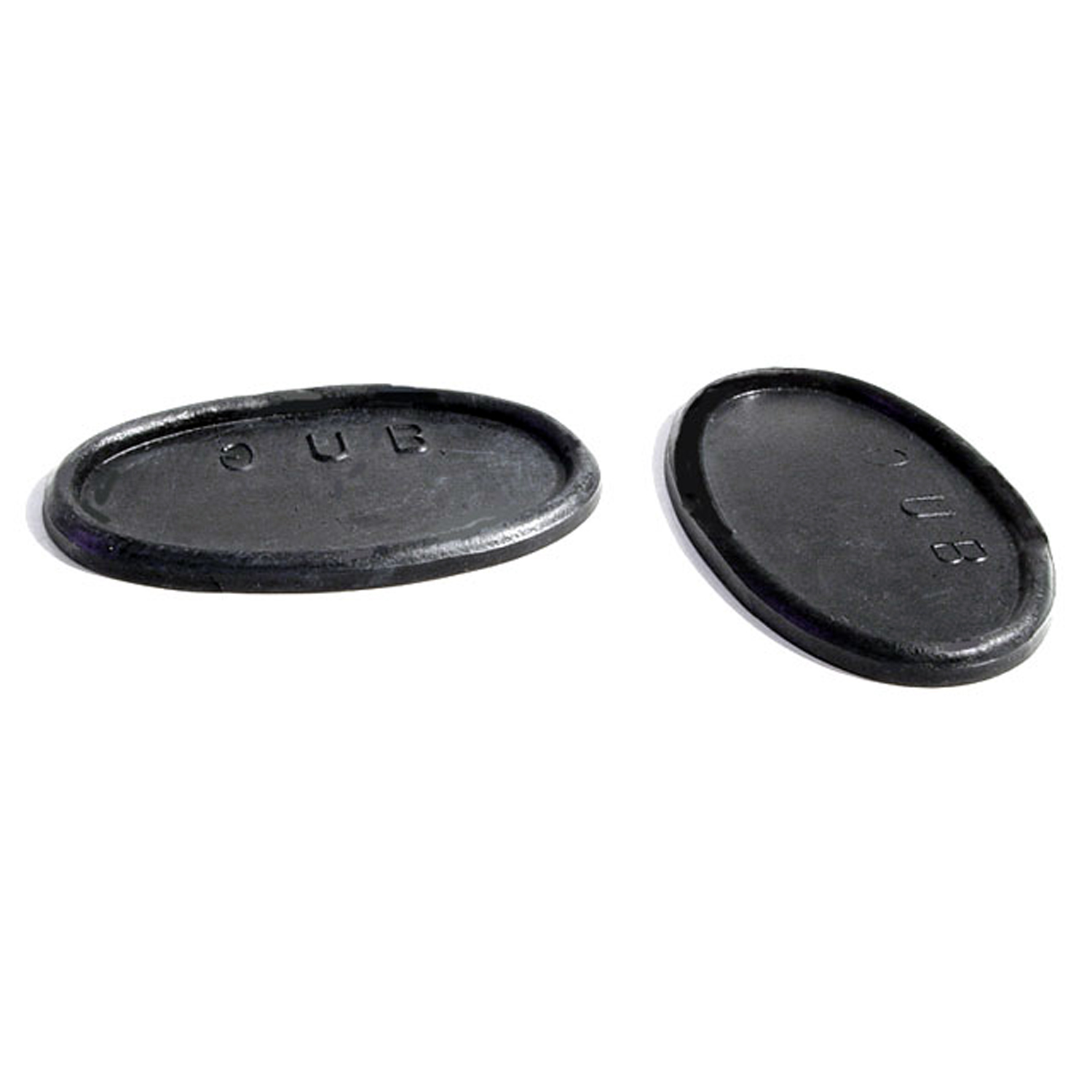 1933 Bugatti TYPE 46/46S Door Handle Pads. 1-3/8" wide X 2-1/4" long. Pair-MP 337-BDoor Handle Pads. 1-3/8" wide X 2-1/4" long. Pair
Why Choose Metro?
For over 100 years, Metro Moulded Parts has been the pinnacle of quality in classic car restoration parts. Our commitment to precision and authenticity in every component ensures a perfect fit and an OEM-level appearance.
- Expert Craftsmanship & Quality: Each part is a testament to our dedication to reliability and perfection, crafted from original designs and thoroughly tested.
- Advanced Technology: We use cutting-edge techniques to create flawless, long-lasting parts that surpass others in performance.
- SuperSoft Sponge – The Ultimate Door Seal: Not only are our door seals 30% softer than competitors', but they're also guaranteed to never leak. They effectively reduce wind and road noise, enhancing your classic car's comfort and driving experience.
- Proudly American: Our parts are a product of American craftsmanship, made in the USA with a spirit of excellence and heritage.
- Unrivaled Warranty: We back our products with a 30-year industry-leading warranty, a testament to our confidence in their quality.
Join us in preserving the legacy of classic cars with parts that are crafted for perfection, not just made.