

Image of 1934 Bugatti Type 50, Note: These illustrations use artistic license and may differ from actual historical models.
Performance Metrics
Fundamental Metrics
Emotional Appeal
MMP Rating
| Engine Specifications | |
|---|---|
| Engine: | Straight 8 |
| Displacement: | 4.9 L |
| Horsepower: | 200-250 HP |
| Torque: | Not available |
| Compression Ratio: | Not available |
| Ignition System: | Coil ignition |
| Cooling System: | Water-cooled |
| Performance Specifications | |
| 0-60 Time: | Not available |
| 1/4 Mile Time: | Not available |
| Top Speed: | 100 mph |
| Transmission and Drive | |
| Drive Type: | Rear-wheel drive |
| Transmission Type: | 4-speed manual |
| Fuel and Efficiency | |
| Fuel System Type: | Carburetor |
| MPG: | Not available |
| Dimensions and Brakes | |
| Brakes: | Mechanical drum brakes |
| Wheelbase: | 130 inches |
| Weight: | 2,200 lbs |
Note: Specifications for classic cars are given to the best of our ability, considering the limited and variant data available.
1934 Bugatti Type 50: A Grand Tourer with Racing DNA
The 1934 Bugatti Type 50 brought the spirit of a racing machine to the grand-tourer road. Built by Automobiles Ettore Bugatti in Molsheim, then in France’s Alsace region, it paired a powerful, advanced engine with the handcrafted finish expected of one of Europe’s most exclusive marques. Its most striking calling card was a 5.0-liter twin-overhead-cam straight-eight, a sophisticated design for a road car of its era.
The Type 50 appeared during a period when luxury manufacturers were competing to build cars that could cross long distances at high speed in comfort. Bugatti’s answer was not simply a larger engine. The company wrapped its engineering in individual coachwork, ranging from elegant open tourers to dramatic, streamlined coupes. A notable chapter in the model’s story is its competition connection: Type 50s were entered in the 24 Hours of Le Mans, bringing the car’s grand-touring reputation into the world of endurance racing.
Design, Coachwork, and Cabin
The Type 50’s proportions are unmistakably prewar Bugatti: a long bonnet, upright radiator, sweeping front wings, and a cockpit set well back from the nose. The result looks both formal and purposeful. Depending on the coachbuilder and body style, the car could appear stately and upright or low and fast, with flowing fenders and a tapered rear. Its famous horseshoe-shaped radiator, polished hardware, and finely detailed wheels gave it a distinctive presence even among other luxury cars.
Bugatti supplied chassis for independent coachbuilders as well as offering factory-associated bodies. Surviving Type 50s can be found as coupes, cabriolets, open tourers, and closed saloons. The sleek Coupé Profilée is among the model’s most recognizable forms, while open touring bodies show off the car’s long bonnet and exposed mechanical character. No single body style represents every Type 50, but the close-coupled coupe is especially admired for combining dramatic lines with long-distance practicality.
Inside, the emphasis was on craftsmanship rather than modern convenience. Owners could expect carefully finished leather upholstery, polished wood or finely finished metal trim, and a dashboard arranged around clear, period-style instruments. Materials and details varied with the body and the buyer’s specification. These were bespoke cars, so cabin finishes were not limited to one standardized factory package.
Color choices were similarly individual. Dark shades, black, and rich two-tone combinations suit the Type 50’s formal character, while Bugatti blue is an enduring favorite among enthusiasts. In period, paint and upholstery could be selected to complement the coachwork and the owner’s taste rather than chosen from a simple universal menu.
Twin-Cam Technology and Historical Importance
The Type 50’s defining innovation was its 4,972 cc straight-eight with two overhead camshafts. Twin cams allowed more direct and precise control of the valves than the simpler layouts common on many road cars of the time. The engine’s architecture reflected Bugatti’s interest in applying competition-minded engineering to a luxurious touring chassis. Many Type 50s were also fitted with a supercharger, which helped deliver strong performance for a car designed to carry substantial coachwork.
This combination set the Type 50 apart from many contemporaries, which relied on less sophisticated valve gear or larger, slower-revving engines. Bugatti offered not just speed but a sense of mechanical refinement: a high-performance powerplant in a chassis intended for serious road travel. Its twin-cam layout also reinforced the company’s reputation for engineering ambition, even though the Type 50 was not produced in anything like mass-market numbers.
The car’s lasting influence is less about a single design copied across the industry than about the standard it represented. The Type 50 showed that a luxury road car could use advanced engine technology without giving up bespoke coachwork, comfort, or long-distance ability. It remains an important link between Bugatti’s racing achievements and its tradition of exclusive grand tourers.
Performance and Road Manners
Exact specifications vary by version, engine tune, and body. A supercharged Type 50 is commonly credited with roughly 200 to 225 horsepower, while lighter bodies and favorable gearing helped the car reach an estimated top speed in the neighborhood of 120 mph. That was exceptional performance for a luxury car in the early 1930s. Period-style 0-to-60 mph figures were not consistently recorded, but a well-sorted example may manage the sprint in roughly eight to ten seconds. Treat that as a modern estimate, not a factory-certified figure.
On a smooth, open road, the Type 50 was built to cover ground quickly and with composure. Its long chassis and substantial weight help it feel settled at speed, while its steering and suspension reflect the expectations of a prewar car rather than the precision of a modern sports coupe. Broken pavement and sharp bumps are felt through the chassis, and narrow roads demand attention. On a winding route, the driver must plan ahead, balance the car’s momentum, and work the controls with care.
The engine is a central part of the experience. The straight-eight delivers a deep mechanical note that rises into a sharper, more urgent sound as revs build. In a supercharged example, the induction and blower add another layer to the engine’s character. The Type 50 is not a car to drive passively: it asks for deliberate gear changes, a light but attentive hand on the steering wheel, and respect for its age and mass. That involvement is part of its appeal.
Living with a Type 50
Today, Type 50s are primarily collector cars, shown at concours events, driven on historic tours, and occasionally exercised on suitable roads. They are not practical daily drivers. Their value, rarity, and specialist mechanical needs make routine commuting an unreasonable use for most examples, though a well-maintained car can still be driven and enjoyed as its designers intended.
Maintenance is specialist work. The twin-cam engine, supercharger where fitted, period brakes, and bespoke chassis components call for knowledge that most general repair shops do not have. Parts may need to be sourced or made, and repairs can be expensive. An average owner can handle basic checks and careful upkeep, but major servicing should be entrusted to a workshop experienced with prewar Bugattis. Reliability depends heavily on restoration quality, regular attention, and correct operation. A car that has been carefully maintained is far more reassuring than one that has merely received a fresh cosmetic finish.
Rare Details and Common Criticisms
The Type 50’s greatest trivia may be its scarcity: it was a hand-built, high-priced automobile from the outset, not a model intended for broad production. Estimates commonly put combined Type 50 and Type 50T production at around 65 cars, though exact totals can vary by source and by how variants are counted. Each surviving chassis has its own history, body, and restoration story, making provenance particularly important to collectors.
The car’s competition entries add an intriguing dimension, but the Type 50 is better known today as a fast and technically ambitious road car than as a record-setting racing champion. It did not establish a famous production-car speed record or an endurance milestone comparable to the headline achievements of some rivals. Its significance lies in bringing sophisticated engineering and serious speed to an exclusive grand tourer.
Common criticisms are closely tied to its age and purpose. The Type 50 is expensive to maintain, less comfortable on rough modern roads than a contemporary luxury car, and demanding to drive in traffic. Its steering, braking, and safety equipment are also firmly of the prewar era. For enthusiasts, however, those limitations are part of the honest, hands-on character of the machine rather than surprises to be overlooked.
Collector Value and Market Outlook
A Type 50 is exceptionally rare on the open market, and years may pass without a particular example being offered publicly. Based on the model’s scarcity and the prices achieved by prominent Bugattis, a broad present-day estimate for a genuine, well-documented Type 50 might run from about $1.5 million to $4 million. Exceptional examples with desirable coachwork, outstanding provenance, or a particularly strong restoration could exceed that range. Cars with complicated histories, major condition issues, or less sought-after specifications may command less.
Values depend on far more than the badge. Chassis and engine identity, originality, coachbuilder, restoration quality, ownership history, and competition provenance all matter. Because so few cars exist, there is no simple price curve based on frequent sales. In general, top-quality prewar Bugattis have remained prized collector assets over the long term, although individual results can shift with the broader high-end market. For a car at this level, careful research and expert inspection are essential before any purchase.
Why the Bugatti Type 50 Still Matters
The 1934 Bugatti Type 50 combined a sophisticated twin-cam straight-eight, grand-touring performance, and coachbuilt elegance in a package that few manufacturers could match. It was rare even when new, demanding to maintain, and built for owners who valued engineering as much as appearance. More than a fast prewar car, the Type 50 stands as a vivid example of Bugatti’s belief that advanced mechanical design and individual craftsmanship belonged together. Its long bonnet may be its first impression, but its engineering is what keeps it memorable.
1934 Bugatti Type 50 Catalog of Parts
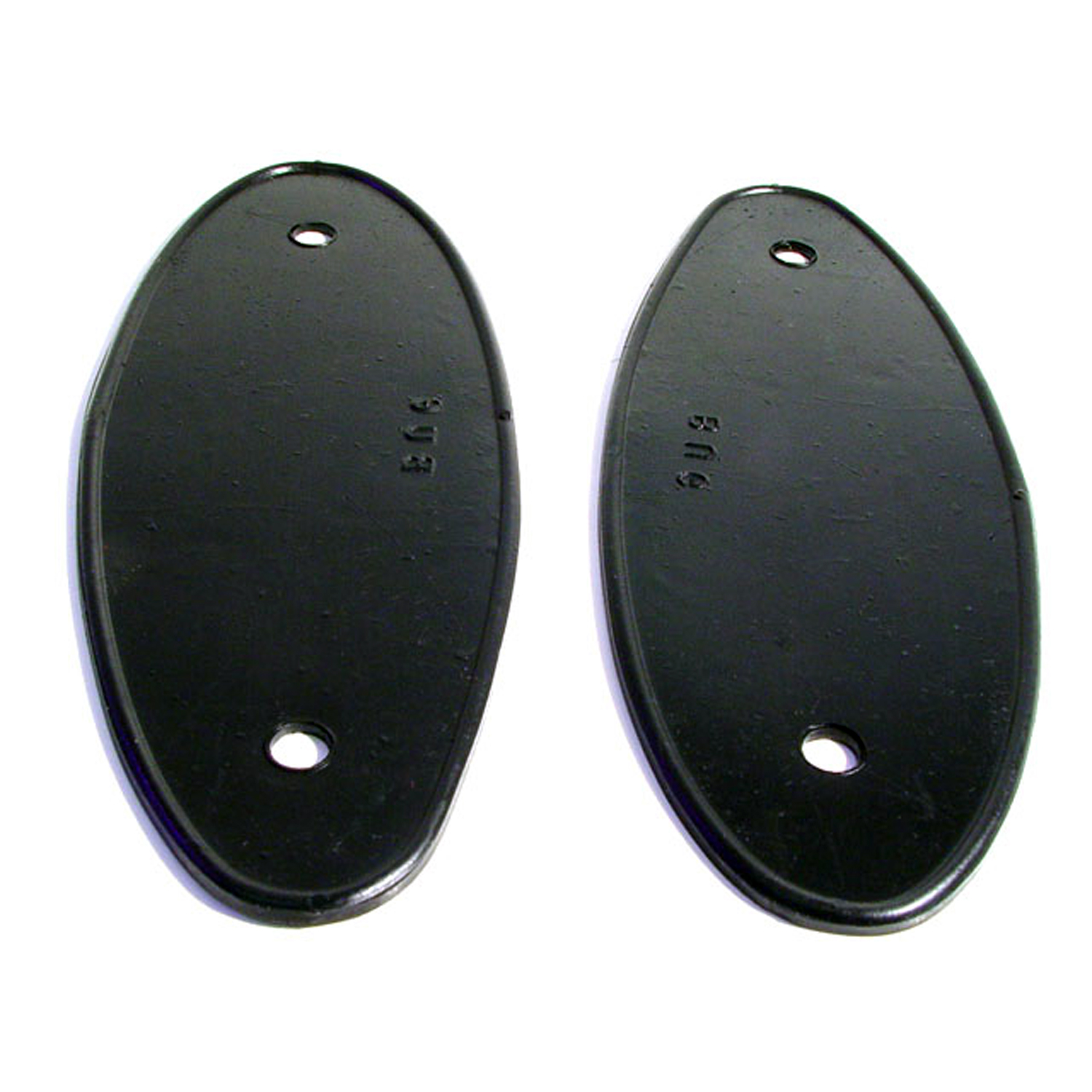 1934 Bugatti Type 50 Headlight Pads. 3" wide X 8-1/8" long. Pair-MP 337-AHeadlight Pads. 3" wide X 8-1/8" long. Pair
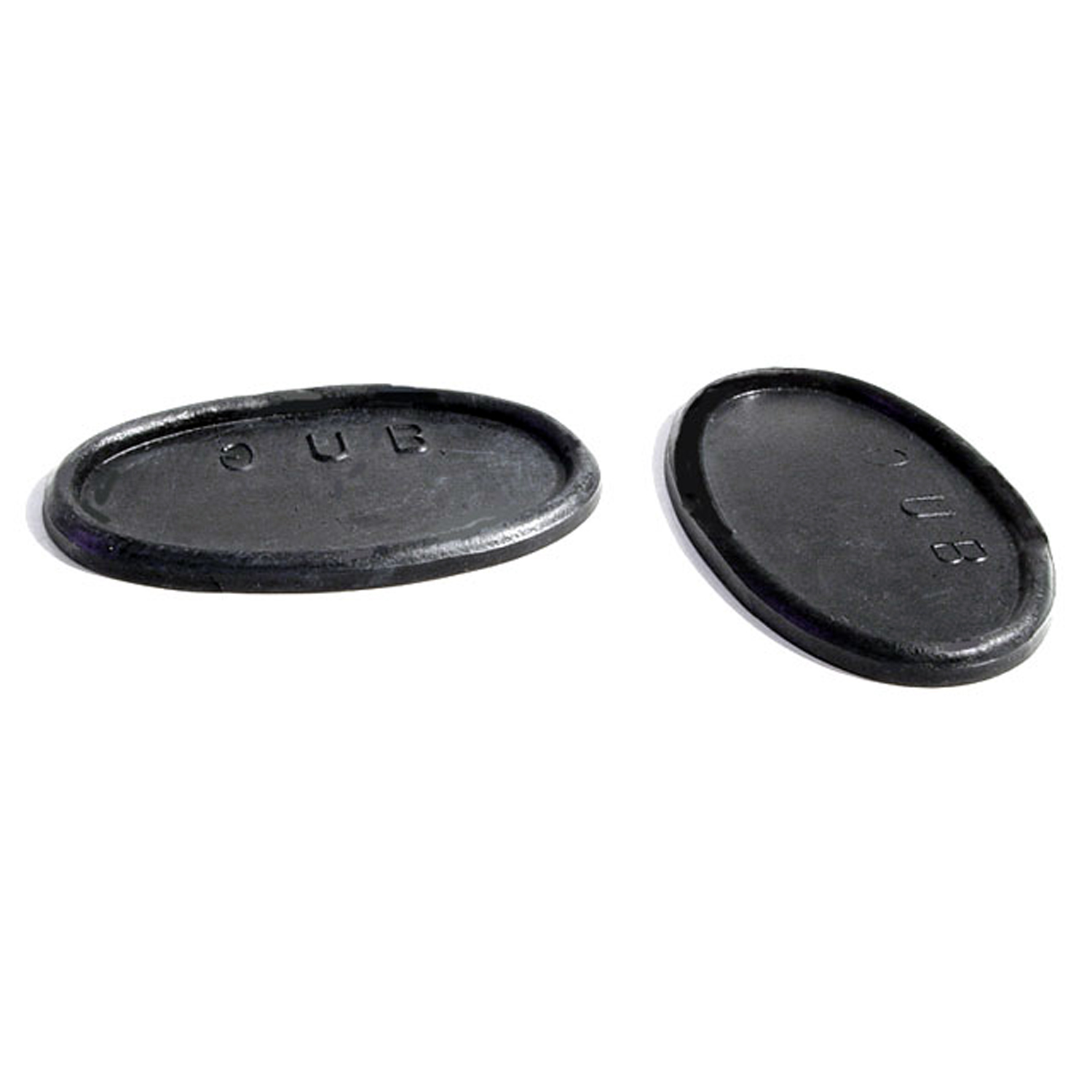 1934 Bugatti Type 50 Door Handle Pads. 1-3/8" wide X 2-1/4" long. Pair-MP 337-BDoor Handle Pads. 1-3/8" wide X 2-1/4" long. Pair
Why Choose Metro?
For over 100 years, Metro Moulded Parts has been the pinnacle of quality in classic car restoration parts. Our commitment to precision and authenticity in every component ensures a perfect fit and an OEM-level appearance.
- Expert Craftsmanship & Quality: Each part is a testament to our dedication to reliability and perfection, crafted from original designs and thoroughly tested.
- Advanced Technology: We use cutting-edge techniques to create flawless, long-lasting parts that surpass others in performance.
- SuperSoft Sponge – The Ultimate Door Seal: Not only are our door seals 30% softer than competitors', but they're also guaranteed to never leak. They effectively reduce wind and road noise, enhancing your classic car's comfort and driving experience.
- Proudly American: Our parts are a product of American craftsmanship, made in the USA with a spirit of excellence and heritage.
- Unrivaled Warranty: We back our products with a 30-year industry-leading warranty, a testament to our confidence in their quality.
Join us in preserving the legacy of classic cars with parts that are crafted for perfection, not just made.