

Image of 1934 Bugatti Type 57, Note: These illustrations use artistic license and may differ from actual historical models.
Performance Metrics
Fundamental Metrics
Emotional Appeal
MMP Rating
| Engine Specifications | |
|---|---|
| Engine: | Straight 8 |
| Displacement: | 3.3 L |
| Horsepower: | 135-160 hp |
| Torque: | Not available |
| Compression Ratio: | Not available |
| Ignition System: | Coil ignition |
| Cooling System: | Water-cooled |
| Performance Specifications | |
| 0-60 Time: | Not available |
| 1/4 Mile Time: | Not available |
| Top Speed: | 95 mph |
| Transmission and Drive | |
| Drive Type: | Rear-wheel drive |
| Transmission Type: | 4-speed manual |
| Fuel and Efficiency | |
| Fuel System Type: | Carburetor |
| MPG: | Not available |
| Dimensions and Brakes | |
| Brakes: | Drum brakes |
| Wheelbase: | 130 inches |
| Weight: | 2,200 lbs |
Note: Specifications for classic cars are given to the best of our ability, considering the limited and variant data available.
1934 Bugatti Type 57: A Grand Touring Icon
The 1934 Bugatti Type 57 brought racing-bred engineering into the world of fast, beautifully finished road cars. Designed and built by Automobiles Ettore Bugatti in Molsheim, then in the French region of Alsace, it combined a sophisticated twin-cam engine with coachwork that could be tailored to its first owner. It was not one fixed design so much as a high-performance chassis awaiting its own interpretation.
The Type 57 arrived as Europe’s luxury-car makers competed to build machines that were both swift and refined. Its most intriguing legacy grew from that flexibility: the same underlying model family could appear as a formal saloon, a graceful cabriolet, or one of the most celebrated coupés ever built, the 57SC Atlantic. The Atlantic was an exceptionally rare, later-bodied variant, not the standard 1934 car, but it helped make the Type 57 a legend.
Bugatti Styling and Coachbuilt Bodies
The Type 57’s long bonnet, upright horseshoe radiator and sweeping front wings gave it an unmistakably Bugatti profile. The proportions were purposeful rather than bulky, with a long engine compartment flowing into a passenger cabin set well back on the chassis. Depending on the body, the roofline could be formal and upright or low and close-coupled. Fine details such as the grille, headlamps, wheels and flowing fenders varied from one coachbuilt example to another.
Bugatti supplied complete cars as well as chassis that could be finished by specialist coachbuilders. Common body styles included the four-door Galibier saloon, the Ventoux coupé, the Stelvio cabriolet and the Atalante coupé. The open Stelvio suited touring in good weather, while the Galibier offered room and dignity for longer journeys. The low, sculptural Atalante became one of the most admired Type 57 forms. Later still, the Atlantic’s riveted, teardrop-shaped bodywork became the family’s most famous silhouette.
Cabins were finished to suit the car and its buyer, often with fine leather upholstery, polished wood trim, quality carpets and carefully made metal fittings. The result was luxurious without relying on modern conveniences. Instrumentation was clear and purposeful, while the driving position put the owner in direct contact with the car’s machinery and road manners.
There was no single factory color chart that defined every Type 57. Owners could commission colors and finishes to match their tastes, with dark blues, greens, reds, black and restrained two-tone combinations among the period-appropriate choices. The body style and paint were part of the car’s identity, making surviving examples especially individual.
Engineering Ahead of Its Era
At the heart of the standard Type 57 was a 3.3-liter straight-eight engine with twin overhead camshafts. It was a technically advanced design for a road car of the mid-1930s, reflecting Ettore Bugatti’s long-standing interest in precise, high-revving engines. Output for a naturally aspirated Type 57 is generally quoted at about 135 horsepower, though specifications can vary between years and individual cars.
Bugatti also offered more powerful versions. The Type 57C added a supercharger, while the Type 57S used a lower, sportier chassis. The supercharged 57SC combined the S chassis with forced induction. These distinctions matter: performance figures and equipment for an SC should not be treated as specifications for an ordinary 1934 Type 57.
The Type 57’s advanced engine sat within a comparatively traditional chassis arrangement, using rigid axles and leaf springs rather than modern independent suspension. Mechanical brakes and period transmission technology also required more driver attention than the systems in a contemporary car. The blend was characteristic of the era: intricate, high-quality engineering paired with hardware that rewarded skill and care.
Why the Type 57 Mattered
The Type 57 helped define the high-performance grand tourer: a car capable of covering distance quickly while offering the comfort and finish expected of a luxury automobile. Its twin-cam straight-eight gave it a technical edge, while its coachbuilt bodies showed how a single chassis could support very different ideas of elegance and speed.
It also demonstrated the importance of design collaboration. Jean Bugatti, Ettore’s son, played a significant role in the marque’s styling, and the Type 57 family became a showcase for his work and for the talents of outside coachbuilders. Its most radical expression, the Atlantic, remains a landmark of prewar automotive design, but the broader Type 57 range is just as revealing: it joined mechanical performance to the bespoke craft of the coachbuilding world.
Competition strengthened the model’s reputation. Purpose-built Type 57G “Tank” racers, which were related competition cars rather than standard road-going Type 57s, won the 24 Hours of Le Mans in 1937 and 1939. Those victories helped underline Bugatti’s engineering credibility, even as the road cars served a very different role.
Performance and Driving Character
A standard Type 57 is commonly estimated to reach roughly 95 to 100 mph, depending on body style, gearing, condition and tuning. A period 0-to-60-mph time is difficult to pin down because cars were coachbuilt in different configurations and were not tested to modern standards. A reasonable estimate for a naturally aspirated example is around 12 to 15 seconds. Supercharged and short-chassis variants can be quicker, but their figures should be considered separately.
On the road, the Type 57 feels less like a modern sports car than a fast, finely engineered touring machine. The straight-eight delivers a smooth, sonorous note that rises into a mechanical snarl as the revs build. The steering is direct but demands more effort than power-assisted systems, and the driver must work the clutch, gearbox and brakes with care. The car asks for concentration, but that involvement is part of its appeal.
Rigid axles and leaf springs can transmit sharp bumps more clearly than a modern suspension setup, particularly in a sporting-bodied car. On a winding road, a well-maintained Type 57 feels composed and capable, though its size, age and period tires call for respect. It is best enjoyed at a measured pace, where the engine’s flexibility, the coachwork and the sensation of piloting a prewar machine can take center stage.
Owning a Type 57
Today, Type 57s are primarily collector cars used for concours events, historic tours, rallies and carefully planned drives. Some owners exercise their cars regularly, but few would treat one as a daily driver. A valuable original example is more likely to be transported to events or driven selectively than exposed to routine commuting, heavy traffic and unpredictable weather.
Maintenance is specialized and expensive. The engine, transmission, brakes and chassis require knowledge of period Bugatti engineering, and parts may need to be sourced, restored or made to suit the individual car. Routine work is not necessarily beyond a skilled mechanic, but this is not a vehicle for an average owner to repair without specialist guidance. Provenance and originality also matter enormously, so even a technically sound restoration should be documented carefully.
Reliability depends heavily on condition and upkeep. A properly restored and regularly serviced Type 57 can be a rewarding touring car, but age brings the usual concerns: old components, cooling-system demands, fuel-system issues and the need to inspect mechanical parts before a long trip. Specialist pre-purchase inspections are essential.
Rare Variants and Type 57 Trivia
Bugatti built approximately 710 Type 57 cars across the model’s production run from 1934 to 1940, including its many versions and body styles. Exact totals can vary by source and by how variants are counted. That makes the overall model family relatively scarce, while certain coachbuilt bodies and high-performance derivatives are far rarer still.
The Type 57SC Atlantic is the most celebrated example. Only a handful were built, and the car’s flowing body, low roof and distinctive riveted seams have made it one of the most recognizable prewar designs. Its rarity and history have also produced intense speculation and extraordinary private-market valuations.
The Type 57’s racing connection is another point of distinction. The 1937 and 1939 Le Mans wins belonged to the specially prepared Type 57G Tank, not an ordinary road-going 1934 Type 57. That separation is worth noting because the shared family name can blur the line between a refined touring car and its competition relatives.
Common criticisms are largely part of the prewar ownership experience: the controls require effort, brakes and handling are not comparable to modern systems, and restoration can be costly. The car also needs specialist care and careful driving. For collectors, those limitations are usually balanced by its engineering, craftsmanship and historical importance.
Collector Values and Availability
Values vary dramatically according to body style, originality, restoration quality, provenance and whether the car is a standard Type 57 or a rarer derivative. As a broad 2026 collector-market estimate, a standard, well-presented Type 57 may fall in the range of about $1.5 million to $4 million. Exceptional examples with desirable coachwork or outstanding history may command several million dollars more, while rare variants can exceed that range substantially.
At the extreme end, an authentic Type 57SC Atlantic is in a different value category altogether. With only a few built, its price is difficult to estimate from ordinary auction comparisons; widely discussed valuations reach tens of millions of dollars, and a particularly important example could potentially exceed $50 million in a private transaction. Such figures should not be applied to a standard Type 57.
Type 57 values have generally strengthened over the long term as major prewar Bugattis have become increasingly scarce and desirable. They can still move with the wider collector-car market, and condition or provenance can make a larger difference than broad market trends. Availability is limited: examples do appear at specialist auctions, but buyers may wait a long time for the right body style, history and level of originality.
A Lasting Bugatti Masterpiece
The 1934 Bugatti Type 57 brought together a sophisticated twin-cam engine, bespoke coachwork and the kind of long-distance performance that made it a true grand tourer. Its many body styles gave it an unusually broad character, while its racing relatives and legendary Atlantic variants secured its place in automotive history.
More than a beautiful prewar car, the Type 57 is a reminder of an era when engineering, artistry and personal taste could all be expressed in a single automobile. Nearly a century later, it still turns a road into a stage.
1934 Bugatti Type 57 Catalog of Parts
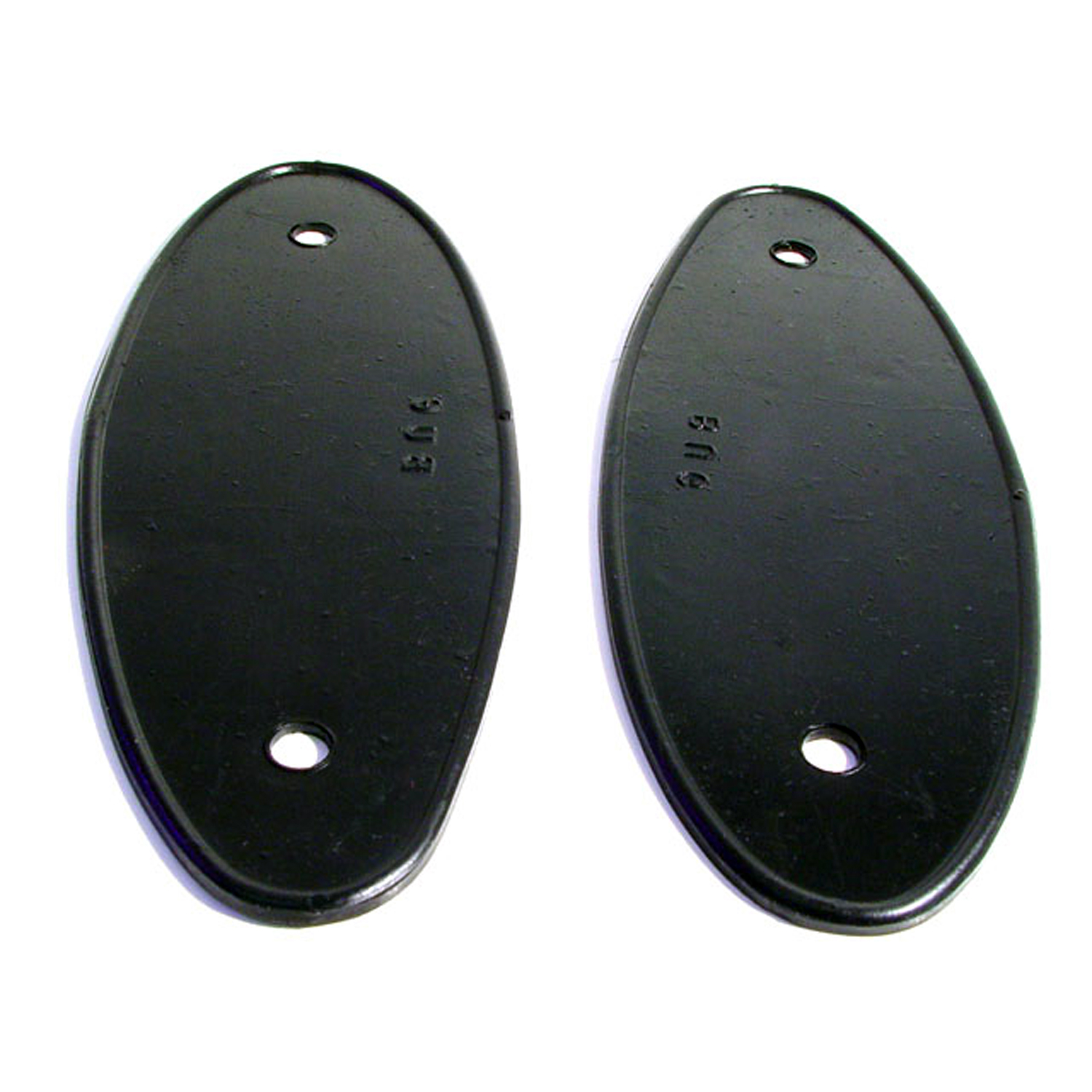 1934 Bugatti Type 57 Headlight Pads. 3" wide X 8-1/8" long. Pair-MP 337-AHeadlight Pads. 3" wide X 8-1/8" long. Pair
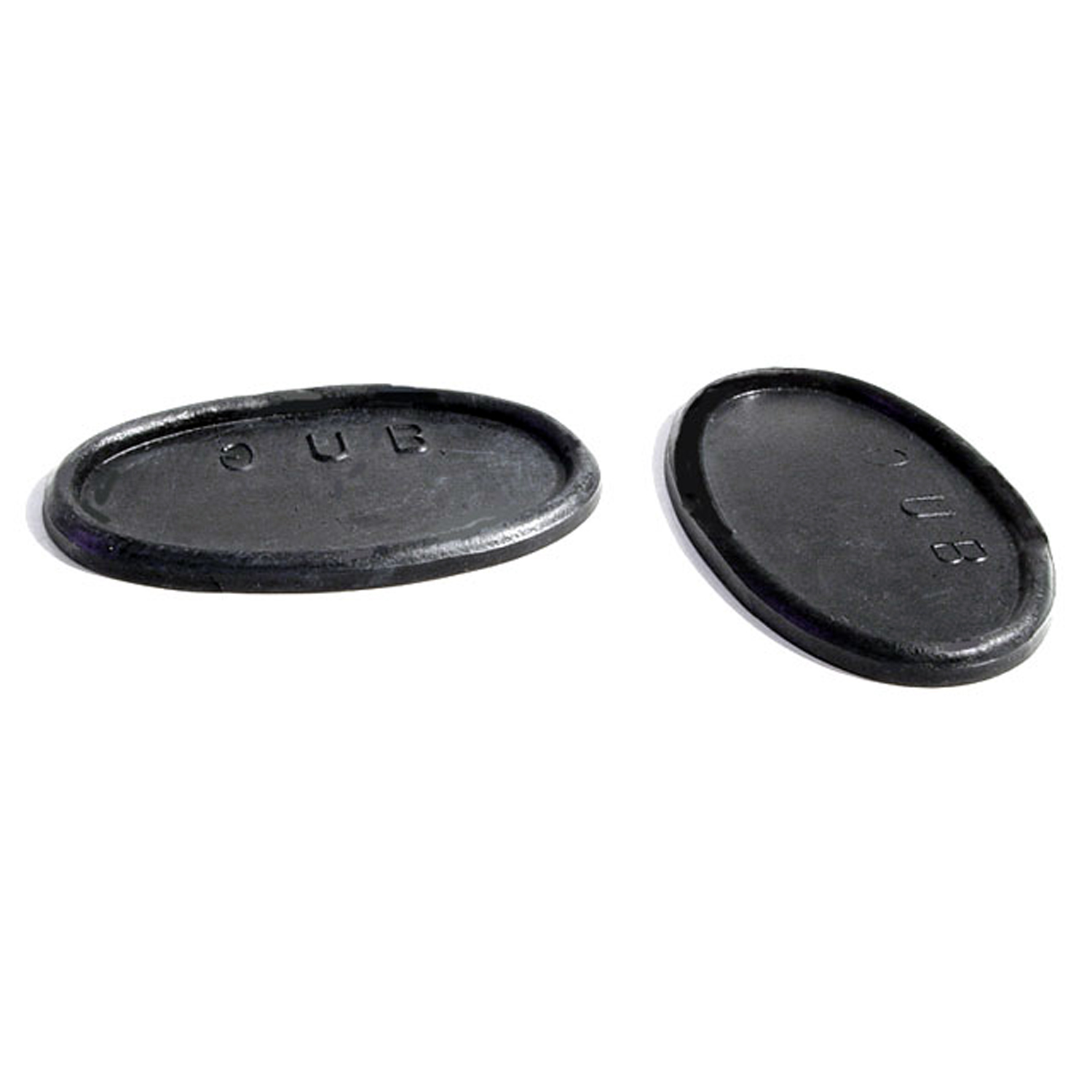 1934 Bugatti Type 57 Door Handle Pads. 1-3/8" wide X 2-1/4" long. Pair-MP 337-BDoor Handle Pads. 1-3/8" wide X 2-1/4" long. Pair
Why Choose Metro?
For over 100 years, Metro Moulded Parts has been the pinnacle of quality in classic car restoration parts. Our commitment to precision and authenticity in every component ensures a perfect fit and an OEM-level appearance.
- Expert Craftsmanship & Quality: Each part is a testament to our dedication to reliability and perfection, crafted from original designs and thoroughly tested.
- Advanced Technology: We use cutting-edge techniques to create flawless, long-lasting parts that surpass others in performance.
- SuperSoft Sponge – The Ultimate Door Seal: Not only are our door seals 30% softer than competitors', but they're also guaranteed to never leak. They effectively reduce wind and road noise, enhancing your classic car's comfort and driving experience.
- Proudly American: Our parts are a product of American craftsmanship, made in the USA with a spirit of excellence and heritage.
- Unrivaled Warranty: We back our products with a 30-year industry-leading warranty, a testament to our confidence in their quality.
Join us in preserving the legacy of classic cars with parts that are crafted for perfection, not just made.