

Image of 1935 Bugatti Type 57s/57sc, Note: These illustrations use artistic license and may differ from actual historical models.
Performance Metrics
Fundamental Metrics
Emotional Appeal
MMP Rating
| Engine Specifications | |
|---|---|
| Engine: | Straight 8 |
| Displacement: | 3.3 L (3257 cc/198 in³) |
| Horsepower: | 135-200 hp |
| Torque: | Not available |
| Compression Ratio: | Not available |
| Ignition System: | Coil ignition |
| Cooling System: | Water-cooled |
| Performance Specifications | |
| 0-60 Time: | Not available |
| 1/4 Mile Time: | Not available |
| Top Speed: | 95-120 mph |
| Transmission and Drive | |
| Drive Type: | Rear-wheel drive |
| Transmission Type: | 4-speed manual |
| Fuel and Efficiency | |
| Fuel System Type: | Twin carburetor |
| MPG: | Not available |
| Dimensions and Brakes | |
| Brakes: | 4-wheel drum brakes |
| Wheelbase: | 130 in (3,302 mm) |
| Weight: | 2,100 lbs (950 kg) |
Note: Specifications for classic cars are given to the best of our ability, considering the limited and variant data available.
1935 Bugatti Type 57: A Grand Touring Icon
The Bugatti Type 57 was built for the rare driver who wanted a racing-bred engine beneath coachwork fit for a grand hotel. Introduced in the mid-1930s by Automobiles Ettore Bugatti of Molsheim, the Type 57 became one of the marque’s most important road-car families. Its most celebrated versions, the lower, sportier Type 57S and supercharged 57SC, turned that sophisticated touring car into one of the defining automobiles of the prewar era.
A date clarification matters: 1935 is associated with the arrival of the Type 57, while the Type 57S appeared later, in 1936. The “S” stands for surbaissé, French for “lowered.” The 57SC added a supercharger, although many cars acquired that equipment through later upgrades. The family’s most famous body, the Type 57SC Atlantic, is instantly recognizable by its flowing teardrop shape and exposed riveted seam along the roof.
Art Deco Lines and Bespoke Coachwork
The Type 57’s chassis was a canvas for some of the finest coachbuilders of the period. Its body could be elegant and restrained or dramatically sculptural, with long sweeping fenders, a tall horseshoe-shaped radiator grille, and a bonnet that seemed to stretch toward the road. On the sporting 57S, the lowered stance gave the car a more purposeful profile, while the Atlantic’s fastback roof and curved bodywork made it look almost airborne at a standstill.
Bugatti offered the Type 57 in several body styles, including the four-door Galibier, two-door Ventoux, drophead Stelvio, and coupe-inspired Atalante. Coachbuilders such as Bugatti’s own factory works and Gangloff supplied bodies, while specialist firms created individual commissions. The Atalante is among the most admired closed designs, but the Atlantic is the model’s most famous and visually distinctive form.
Interiors reflected the car’s luxury-car status. Buyers could expect carefully finished leather upholstery, polished wood trim, fine carpets, and detailed metal fittings. The precise materials and colors varied by commission rather than following a single fixed specification. Deep blue, black, dark green, and burgundy were natural choices for a car of this character, and two-tone paint could emphasize the body’s flowing contours. Period Bugattis were often built to individual customer preferences, so surviving cars may differ considerably in trim and finish.
Engineering Beneath the Bonnet
The Type 57 used a 3.3-litre straight-eight engine with twin overhead camshafts, a layout that reflected Bugatti’s competition experience. In standard form, the engine produced roughly 135 horsepower. The Type 57S received a more sporting, lowered chassis and a tuned engine commonly quoted at around 175 horsepower. With a Roots-type supercharger, the 57SC could produce approximately 200 horsepower, depending on specification and period source.
The S chassis was more than a cosmetic lowering job. It was designed to give the car a lower center of gravity and a sportier character than the regular Type 57. The SC’s supercharger brought a stronger surge of power, especially at higher engine speeds. These were advanced, specialized machines for their day, though they remained handcrafted cars rather than mass-produced vehicles with identical specifications.
Why the Type 57 Still Matters
The Type 57 brought high-performance engineering and coachbuilt luxury together at a time when many manufacturers treated them as separate priorities. Its powerful straight-eight, elegant proportions, and range of body styles helped establish a template for the grand touring car: fast enough for long-distance travel, comfortable enough for the journey, and distinctive enough to make an entrance wherever it arrived.
Its lasting influence is especially visible in the Atlantic. The car’s uninterrupted, flowing bodywork and dorsal seam remain among the most recognizable design gestures in automotive history. The Type 57 also belongs to a larger Bugatti competition story. The Type 57G “Tank,” a related racing model, won the 24 Hours of Le Mans in 1937. That victory was not a Type 57S or 57SC road-car achievement, but it strengthened the reputation of the Type 57 family and the engineering behind it.
Speed, Steering, and the Open Road
Performance varied with body style, gearing, engine tune, and supercharging. A standard Type 57 could reach roughly 95 to 105 mph. A well-sorted 57S was capable of approximately 110 to 120 mph, while a 57SC could approach or exceed 120 mph in favorable conditions. Published period acceleration figures are inconsistent, but estimates put a 57SC’s 0-to-60-mph time in the region of 10 to 12 seconds. Those numbers are impressive for a large luxury car of the 1930s, though they should be treated as estimates rather than modern, standardized test results.
Behind the wheel, a Type 57 is a hands-on experience. The long bonnet, narrow cabin, mechanical controls, and substantial steering effort remind the driver that this is a prewar machine. On smooth roads, the car feels composed and purposeful. Its lowered S chassis gives it a more focused stance through bends, but it is not a modern sports car: uneven pavement, tight corners, and crosswinds demand anticipation and careful inputs. The engine’s metallic straight-eight note builds into a purposeful mechanical song, with the supercharger adding a distinctive whine on SC models.
Owning a Bugatti Type 57
Today, Type 57s are principally collector cars, concours entries, and occasional participants in historic touring events. They are not sensible daily drivers. Even a car that has been restored to excellent condition requires specialist care, and regular use is usually limited to carefully planned drives and events.
Maintenance is demanding because parts, expertise, and correct historical details are scarce. The engine and supercharger require knowledgeable attention, while restoration work can involve years of research and exceptional craftsmanship. Repairs are not a realistic do-it-yourself project for the average owner. A Type 57 that has been driven and maintained properly can be enjoyed on the road, but its age, value, and mechanical complexity make preventative care essential.
Rare Cars, Lost Legends, and Famous Bodies
The Type 57’s most intriguing historical mystery is the “La Voiture Noire,” a black Type 57SC Atlantic built for Jean Bugatti. It disappeared during the upheaval of the Second World War and has never been definitively found. Its absence has helped turn it into one of the most famous lost cars in the world.
Only four Atlantic coupes were built, and three are generally known to survive. The broader Type 57 family was produced in far greater numbers, with commonly cited totals of about 710 cars across the range. The rarer 57S is often estimated at around 40 chassis. Exact totals for 57SC cars are harder to pin down because some 57S cars were supercharged later, making it important to distinguish original factory specification from subsequent conversions.
One well-known Atlantic, chassis 57374, was owned by designer Ralph Lauren and has appeared at major concours events. The model has also featured in exhibitions and automotive media around the world. Its celebrated reputation comes with a practical criticism: the swooping bodywork and low roof can make access and visibility less convenient than in a conventional touring car. The Type 57’s uncompromising rarity and complexity are part of its appeal, but they also make ownership costly and demanding.
Collector Values and Market Outlook
There is no single price for a Type 57. Value depends heavily on body style, originality, restoration quality, provenance, and whether the car is a genuine S or SC rather than a later conversion. As a broad current-market estimate, standard Type 57 examples may sell for roughly $1 million to $5 million, while rare, documented 57S and 57SC cars can fall in the $5 million to $20 million range or more. Exceptional coachwork and significant history can push a car beyond those estimates.
An original Atlantic occupies an entirely different market. With only a handful built and extraordinary collector demand, an Atlantic could command many tens of millions of dollars in a private transaction. Public sales are too scarce to establish a simple, dependable price guide, and the most valuable examples are often traded privately.
Over the long term, exceptional Type 57s have generally appreciated as interest in prewar coachbuilt cars has grown. However, the market is selective: originality and provenance matter enormously, and restoration costs can be substantial. These cars are best approached as historically important collectibles, not as guaranteed short-term investments.
A Bugatti Built to Be Remembered
The Type 57 combined a sophisticated straight-eight, genuine performance, bespoke craftsmanship, and some of the most memorable bodywork of the 1930s. Its S and SC versions sharpened the formula, while the Atlantic turned it into automotive legend. More than a fast classic, the Type 57 is a reminder of an era when engineering, coachbuilding, and personal taste met in a single extraordinary machine.
1935 Bugatti Type 57s/57sc Catalog of Parts
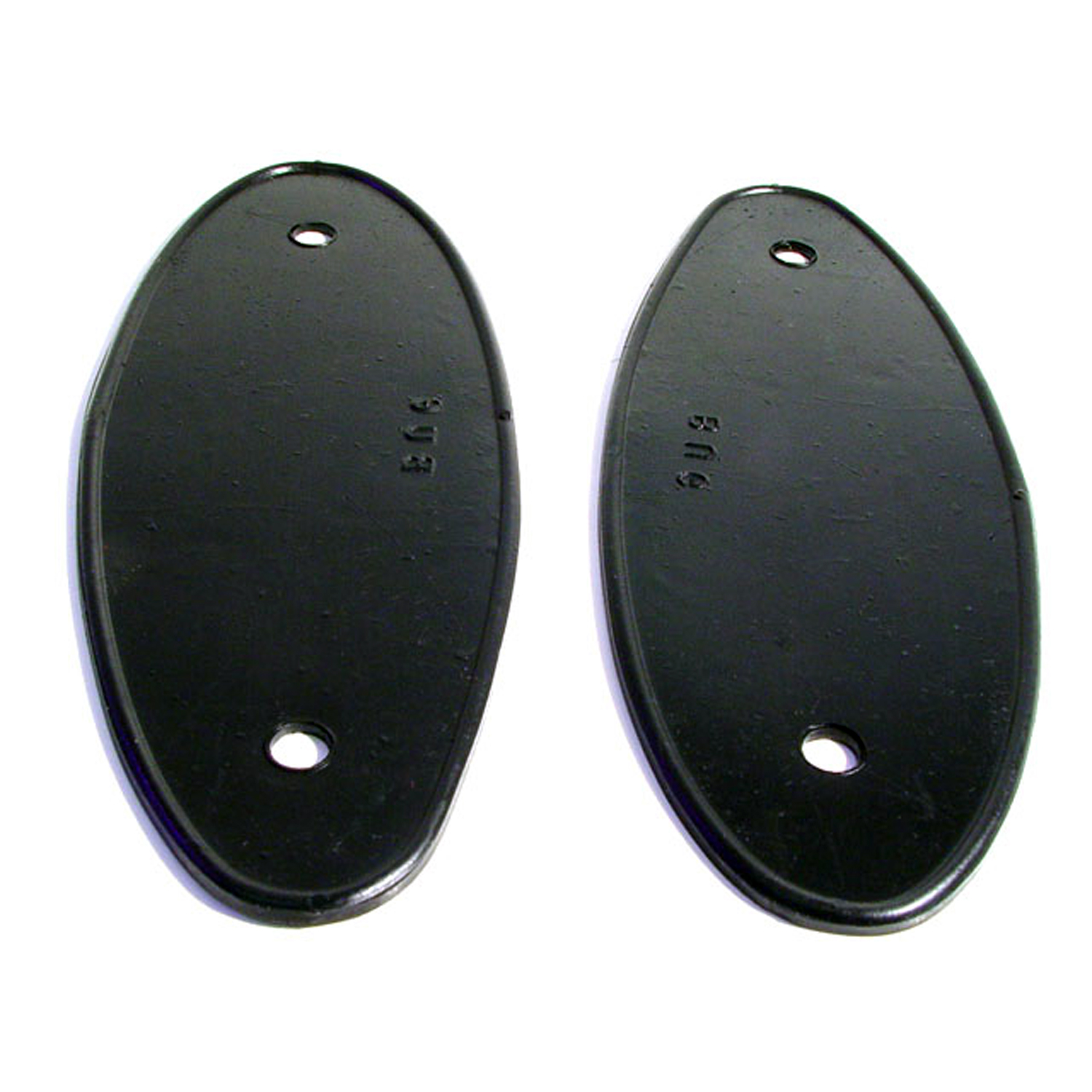 1935 Bugatti TYPE 57S/57SC Headlight Pads. 3" wide X 8-1/8" long. Pair-MP 337-AHeadlight Pads. 3" wide X 8-1/8" long. Pair
 1935 Bugatti TYPE 57S/57SC Door Handle Pads. 1-3/8" wide X 2-1/4" long. Pair-MP 337-BDoor Handle Pads. 1-3/8" wide X 2-1/4" long. Pair
Why Choose Metro?
For over 100 years, Metro Moulded Parts has been the pinnacle of quality in classic car restoration parts. Our commitment to precision and authenticity in every component ensures a perfect fit and an OEM-level appearance.
- Expert Craftsmanship & Quality: Each part is a testament to our dedication to reliability and perfection, crafted from original designs and thoroughly tested.
- Advanced Technology: We use cutting-edge techniques to create flawless, long-lasting parts that surpass others in performance.
- SuperSoft Sponge – The Ultimate Door Seal: Not only are our door seals 30% softer than competitors', but they're also guaranteed to never leak. They effectively reduce wind and road noise, enhancing your classic car's comfort and driving experience.
- Proudly American: Our parts are a product of American craftsmanship, made in the USA with a spirit of excellence and heritage.
- Unrivaled Warranty: We back our products with a 30-year industry-leading warranty, a testament to our confidence in their quality.
Join us in preserving the legacy of classic cars with parts that are crafted for perfection, not just made.