

Image of 1936 Bugatti Type 57, Note: These illustrations use artistic license and may differ from actual historical models.
Performance Metrics
Fundamental Metrics
Emotional Appeal
MMP Rating
| Engine Specifications | |
|---|---|
| Engine: | Straight 8 |
| Displacement: | 3.3 L (3257 cc/198 in³) |
| Horsepower: | 135-140 hp |
| Torque: | Not available |
| Compression Ratio: | Not available |
| Ignition System: | Coil ignition |
| Cooling System: | Water-cooled |
| Performance Specifications | |
| 0-60 Time: | Not available |
| 1/4 Mile Time: | Not available |
| Top Speed: | 95 mph |
| Transmission and Drive | |
| Drive Type: | Rear-wheel drive |
| Transmission Type: | 4-speed manual |
| Fuel and Efficiency | |
| Fuel System Type: | Twin carburetor |
| MPG: | Not available |
| Dimensions and Brakes | |
| Brakes: | 4-wheel drum brakes |
| Wheelbase: | 130 in (3,302 mm) |
| Weight: | 2,200 lb (1,000 kg) |
Note: Specifications for classic cars are given to the best of our ability, considering the limited and variant data available.
1936 Bugatti Type 57: A Grand Touring Classic
With its long bonnet, sculpted coachwork, and silk-smooth straight-eight engine, the 1936 Bugatti Type 57 made speed look effortless. Built by Automobiles Ettore Bugatti at Molsheim in Alsace, the Type 57 was a refined grand touring car for drivers who wanted performance without giving up elegance. It became one of the marque’s defining prewar models, blending Jean Bugatti’s design flair with the engineering ambition of his father, Ettore.
The Type 57 arrived in 1934 and remained in production until 1940. The 1936 cars belong to its early production years, when customers could order a chassis with factory bodywork or commission a coachbuilder to create something personal. A memorable detail from the model’s wider story: the Type 57 family was not confined to country lanes and concours lawns. Its competition-oriented Type 57G “Tank” won the 1937 24 Hours of Le Mans, demonstrating the potential of the same basic design in a very different setting.
Bugatti Type 57 Styling and Coachwork
The Type 57’s proportions are classic grand touring: a long, tapering bonnet, a low cabin, sweeping front wings, and a tail that flows neatly from the roofline. The radiator grille gives the car an unmistakable Bugatti face, while carefully shaped fenders and running boards soften the length of the chassis. Depending on the body, the result could be formal and imposing or low, sporting, and dramatic.
Bugatti offered several body styles, including the four-door Galibier saloon, the Ventoux coupe, the Stelvio cabriolet, and the Atalante coupe. Buyers could also turn to independent coachbuilders, including Gangloff and Vanvooren, for distinctive one-off or limited-production bodies. The Atalante is among the most admired shapes associated with the Type 57, though the most suitable body depended on whether an owner wanted an open tourer, a practical saloon, or a close-coupled coupe.
Interiors were trimmed to match the car’s bespoke character. Depending on specification, owners could expect fine leather upholstery, polished wood or metal details, quality carpets, and carefully finished controls. These were hand-built luxury cars, not mass-produced commuters, so trim, fittings, and even body details could vary from one example to another.
There was no single standard paint palette that defined every Type 57. Buyers could specify colors to suit their tastes, and two-tone finishes were especially effective on the car’s flowing bodywork. Deep blue, dark green, burgundy, black, and combinations of cream or other light shades with darker wings and body panels all suit the period. Original color, coachwork, and documented history can make a major difference to a collector car’s appeal.
Engineering That Set the Type 57 Apart
At the heart of the Type 57 was a 3,257 cc inline-eight engine with twin overhead camshafts. In standard form, it produced roughly 135 horsepower, a formidable figure for a luxury car of the mid-1930s. A four-speed manual gearbox sent power to the rear wheels. Bugatti’s approach paired sophisticated engine design with a chassis and suspension layout rooted in traditional practice, giving the car a distinctive mix of advanced mechanical thinking and period character.
Customers seeking more performance could choose the Type 57S, a lower, sportier version, or the supercharged Type 57SC. These are related members of the Type 57 family, not the specification of every 1936 Type 57. The distinction matters to collectors: model designation, original chassis details, later modifications, and matching mechanical components all affect a car’s identity and value.
The Type 57 helped establish the template for the high-performance European grand tourer: a powerful engine, elegant coachwork, and the ability to cover distance at speed. Its lasting appeal also reflects Bugatti’s willingness to let design and engineering work together. The body was not simply decoration around a motor; it was an essential part of the car’s personality.
1936 Bugatti Type 57 Performance and Driving
Performance depended on body style, gearing, condition, and engine specification. A standard Type 57 could reach approximately 95 to 100 mph when new, placing it among the faster luxury cars of its day. Period factory figures for acceleration are not consistently available, but modern estimates for a standard car put 0 to 60 mph at roughly 11 to 13 seconds. Treat those numbers as useful context rather than precise guarantees for every surviving example.
On a smooth, open road, the Type 57 is best understood as a fast, composed touring car rather than a modern sports car. The long wheelbase and substantial chassis help it settle into a steady rhythm, while the engine’s broad delivery makes sustained cruising its natural talent. Its period suspension cannot erase every pothole or sharp-edged bump, and rough roads make the car’s age and weight apparent. On winding roads, its steering and controls reward a measured hand rather than abrupt inputs.
The driving experience is as much about sensation as speed. The straight-eight produces a refined mechanical hum that builds into a more purposeful growl as the revs rise. The driver works a manual gearbox and receives more direct feedback than in a modern luxury car, while the cabin surrounds them with the aroma of leather, warm oil, and aged materials. It feels deliberate and involving, with the sense that every journey deserves time and attention.
Living With a Prewar Bugatti
A 1936 Type 57 is best suited to touring, private collections, historic motoring events, and concours shows. It is not a sensible daily driver for most owners. Even a well-restored example needs specialist care, correct fluids and adjustments, careful warm-up, and regular inspection. The engine and chassis are highly engineered, but they are also more than 90 years old, and replacement parts or accurate restoration work can be costly.
For the average owner, repairs are not especially easy. The Type 57’s mechanical systems are understandable to an experienced vintage-car specialist, but its bespoke components, delicate original details, and substantial value make improvisation a poor strategy. Provenance and restoration records are important, and a pre-purchase inspection by a Bugatti expert is essential. Reliability depends heavily on the quality of maintenance and restoration, not just the model’s reputation.
Type 57 History, Racing, and Trivia
The Type 57’s significance reaches beyond its road-car reputation. Its competition relatives showed that the design could be adapted for serious racing. The Type 57G “Tank” won Le Mans in 1937 with Jean-Pierre Wimille and Robert Benoist at the wheel. That victory gave the Type 57 name a place in endurance-racing history while highlighting the versatility of the platform.
One of the model family’s most famous designs is the Type 57SC Atlantic, an exceptionally rare, streamlined coupe associated with Jean Bugatti. It is a separate and much rarer variant, but its dramatic shape has helped make the entire Type 57 range famous. The Atlantic’s story also includes the disappearance of the celebrated “La Voiture Noire,” a car whose wartime fate remains one of classic motoring’s great mysteries.
Not every Type 57 was built for the racetrack or the spotlight. Many were bespoke road cars, and their variety is part of the fascination. That same individuality can complicate restoration: body styles, coachbuilder work, and specification differed, so there is no single universal set of details against which every car can be judged.
Common criticisms are rooted in the realities of a prewar machine. The Type 57 is expensive to maintain, lacks modern safety and comfort features, and can feel large and demanding on tight roads. Its performance should also be judged in its historical context, not against contemporary sports cars. For owners seeking a carefree classic, it may be the wrong choice. For someone who values craftsmanship, history, and mechanical character, those compromises are part of the appeal.
Bugatti Type 57 Values and Rarity
Bugatti built roughly 710 Type 57 chassis across the model family, although published totals can vary according to how variants and surviving records are counted. That makes the Type 57 rare by any ordinary standard, and individual cars are rarer still when judged by body style, original specification, condition, and provenance. Examples appear on the market only occasionally, with the most desirable cars often changing hands privately.
As a broad current-market estimate, a standard Type 57 in sound, presentable condition might fall somewhere around $1.5 million to $4 million. Exceptional coachwork, originality, documented history, and concours-quality restoration can push prices higher. The Type 57S, Type 57SC, and rare Atlantic models occupy a different price tier and can command many millions more. These are indicative ranges, not appraisals: exact value depends on the individual car and recent comparable sales.
Over the long term, the Type 57 has generally appreciated as interest in significant prewar cars has grown. The market is selective, however. A famous name alone does not guarantee a record price; buyers scrutinize authenticity, restoration quality, matching components, and provenance. Top examples remain highly sought after, while cars needing major work can be difficult and costly to bring back to standard.
Why the 1936 Bugatti Type 57 Still Matters
The 1936 Bugatti Type 57 brought together a sophisticated twin-cam straight-eight, coachbuilt elegance, and the ability to travel quickly over long distances. Its many body styles made it personal, while its competition relatives proved that the underlying design had genuine sporting potential. Ownership demands expertise and deep pockets, but few cars offer the same combination of engineering heritage, visual drama, and historic presence.
Nearly a century later, the Type 57 remains more than a beautiful survivor from another era. It is a reminder of a time when a grand touring car could be both a work of art and a serious piece of machinery, built to make every mile feel exceptional.
1936 Bugatti Type 57 Catalog of Parts
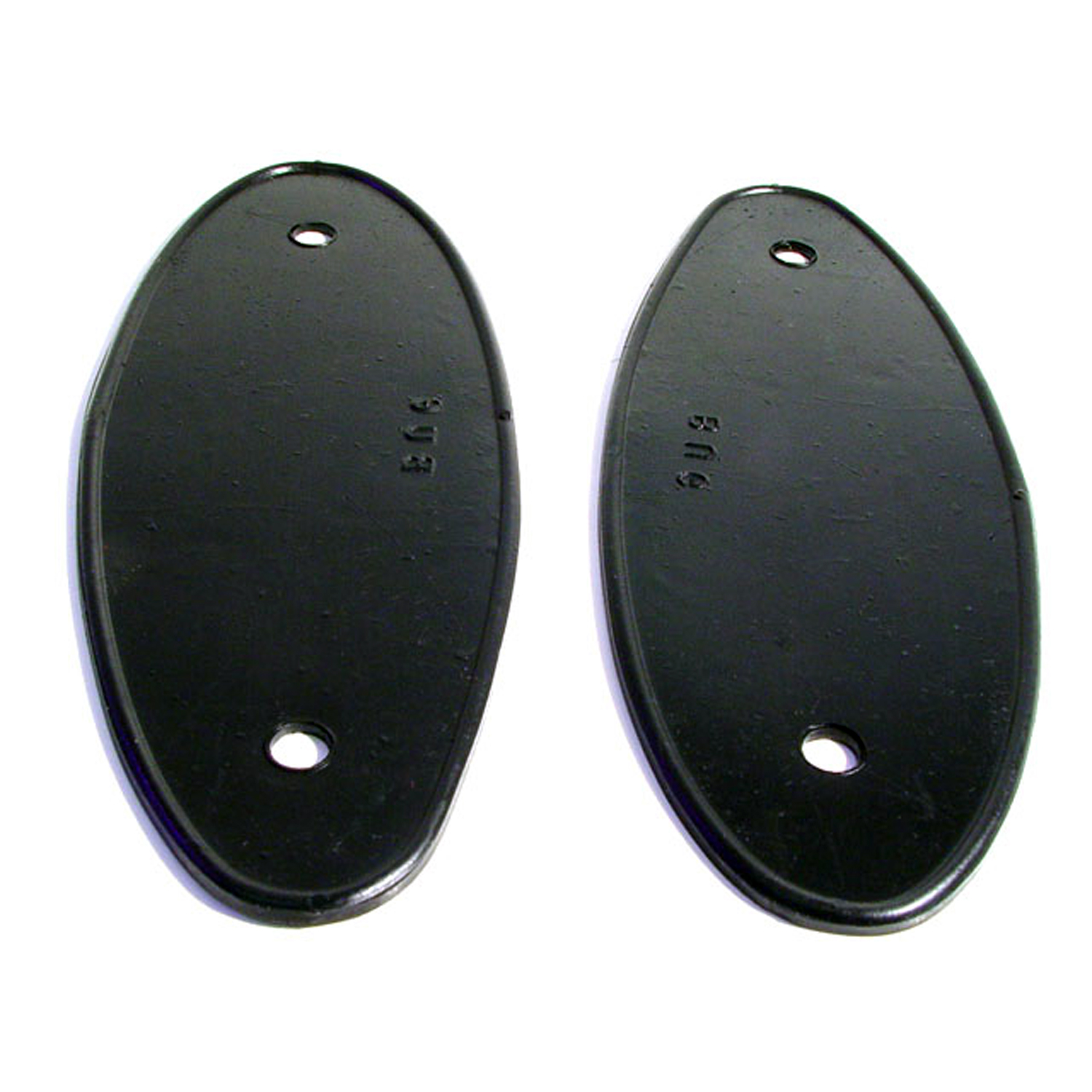 1936 Bugatti Type 57 Headlight Pads. 3" wide X 8-1/8" long. Pair-MP 337-AHeadlight Pads. 3" wide X 8-1/8" long. Pair
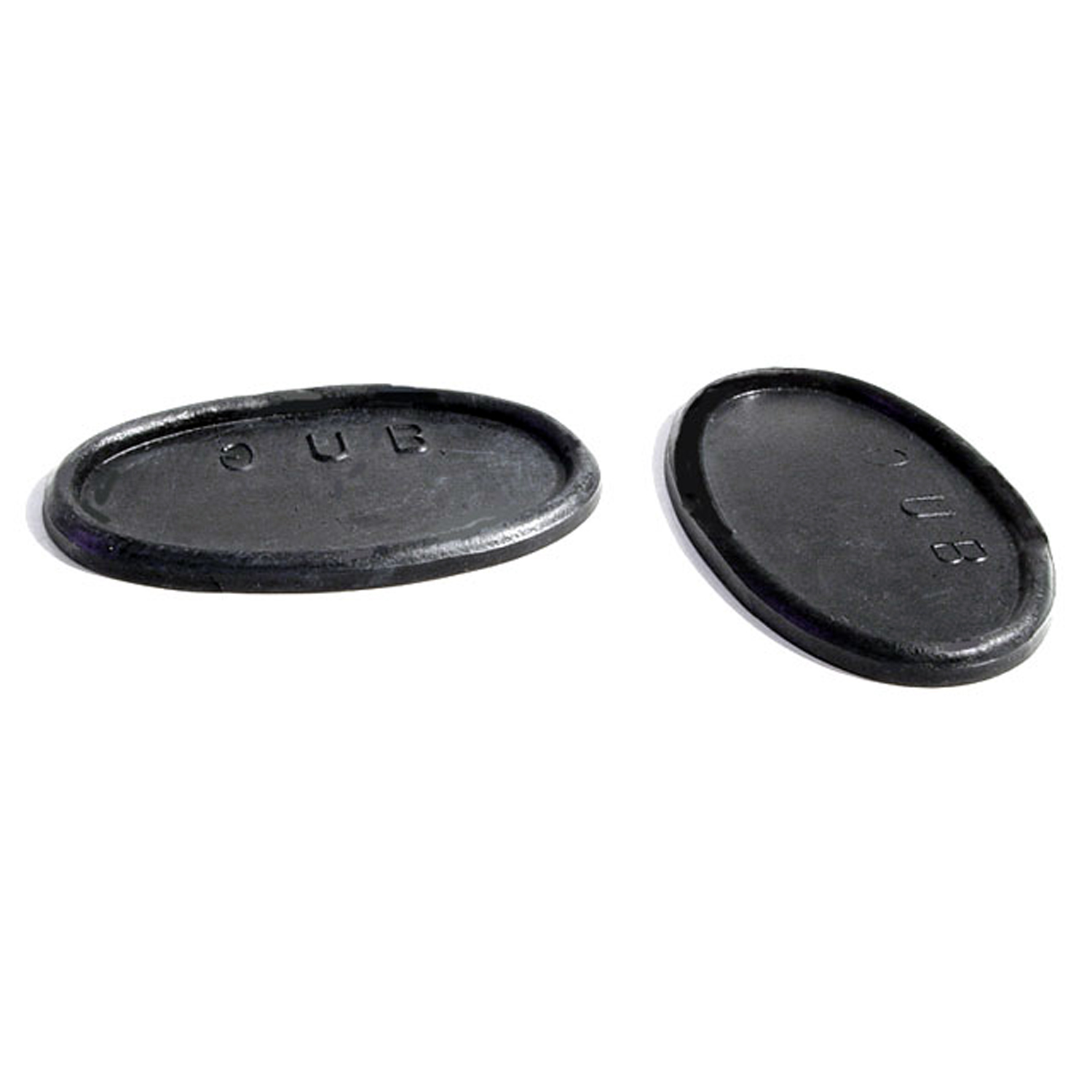 1936 Bugatti Type 57 Door Handle Pads. 1-3/8" wide X 2-1/4" long. Pair-MP 337-BDoor Handle Pads. 1-3/8" wide X 2-1/4" long. Pair
Why Choose Metro?
For over 100 years, Metro Moulded Parts has been the pinnacle of quality in classic car restoration parts. Our commitment to precision and authenticity in every component ensures a perfect fit and an OEM-level appearance.
- Expert Craftsmanship & Quality: Each part is a testament to our dedication to reliability and perfection, crafted from original designs and thoroughly tested.
- Advanced Technology: We use cutting-edge techniques to create flawless, long-lasting parts that surpass others in performance.
- SuperSoft Sponge – The Ultimate Door Seal: Not only are our door seals 30% softer than competitors', but they're also guaranteed to never leak. They effectively reduce wind and road noise, enhancing your classic car's comfort and driving experience.
- Proudly American: Our parts are a product of American craftsmanship, made in the USA with a spirit of excellence and heritage.
- Unrivaled Warranty: We back our products with a 30-year industry-leading warranty, a testament to our confidence in their quality.
Join us in preserving the legacy of classic cars with parts that are crafted for perfection, not just made.