

Image of 1937 Bugatti Type 57, Note: These illustrations use artistic license and may differ from actual historical models.
Performance Metrics
Fundamental Metrics
Emotional Appeal
MMP Rating
| Engine Specifications | |
|---|---|
| Engine: | Straight 8 |
| Displacement: | 3.3 L (3257 cc/198 cu in) |
| Horsepower: | 135-160 hp |
| Torque: | Not available |
| Compression Ratio: | Not available |
| Ignition System: | Coil ignition |
| Cooling System: | Water-cooled |
| Performance Specifications | |
| 0-60 Time: | Not available |
| 1/4 Mile Time: | Not available |
| Top Speed: | 95 mph (153 km/h) |
| Transmission and Drive | |
| Drive Type: | Rear-wheel drive |
| Transmission Type: | 4-speed manual |
| Fuel and Efficiency | |
| Fuel System Type: | Carburetor |
| MPG: | Not available |
| Dimensions and Brakes | |
| Brakes: | 4-wheel drum brakes |
| Wheelbase: | 130 in (3,302 mm) |
| Weight: | 2,100 lbs (953 kg) |
Note: Specifications for classic cars are given to the best of our ability, considering the limited and variant data available.
1937 Bugatti Type 57: The Grand Tourer That Defined an Era
The 1937 Bugatti Type 57 made speed look effortless. With its sophisticated straight-eight engine, sculptural coachbuilt bodywork, and unmistakable French character, it was a grand touring car for drivers who wanted both performance and presence. Built by Automobiles Ettore Bugatti in Molsheim, then part of France, the Type 57 became one of the marque’s most admired road-car families.
Introduced in 1934 and produced through 1940, the Type 57 evolved across several versions and body styles. The 1937 model year sits at a particularly fascinating point in its story: the Type 57S and supercharged 57SC were appearing, and the extraordinary Atlantic coupe was taking shape. The same family also produced the Type 57G Tank, which won the 24 Hours of Le Mans in 1937. That blend of road-going elegance and competition success is a big part of the Type 57’s enduring appeal.
Art Deco Coachwork and Bespoke Details
There was no single look for every Type 57. Bugatti supplied the chassis and mechanical components, while bodies were built by the factory and independent coachbuilders. The result was a range of designs, from formal four-door saloons to sweeping coupes and open tourers. Many cars were tailored to their first owners, so details such as body lines, trim, and fittings could vary considerably.
Among the most recognizable versions are the four-door Galibier, the two-door Ventoux coupe, and the open Stelvio cabriolet. The Atalante coupe is especially admired for its flowing fenders and close-coupled proportions. The Atlantic, developed from the Type 57S platform, is the most celebrated design of all: its dramatic fastback roofline, long bonnet, and distinctive riveted body seams make it one of the great icons of prewar automotive design.
Inside, the Type 57 was made for long-distance travel in a style that suited its owner. Depending on the body and specification, the cabin could feature fine leather or cloth upholstery, polished wood trim, carefully finished metal fittings, and elegant instruments. It was luxurious by the standards of the 1930s, but not isolated from the mechanics. The driver sat behind a purposeful dashboard, with the engine’s character and the road’s texture always close at hand.
Bugatti did not offer one universal color palette for every coachbuilt example. Buyers could commission individual finishes, and surviving cars appear in colors ranging from dark blue and black to burgundy, cream, and two-tone combinations. Deep, restrained shades suit the Type 57’s formal bodies, while brighter colors can emphasize the curves of an open tourer or coupe. French racing blue is an especially evocative choice, though it was not the only historically appropriate finish.
Engineering Ahead of Its Time
At the heart of the standard Type 57 was a 3,257 cc inline eight-cylinder engine with twin overhead camshafts. This advanced layout helped the engine breathe efficiently and deliver strong performance for a luxury car of its day. A four-speed manual gearbox sent power to the rear wheels. The Type 57 was not simply a handsome chassis dressed in coachwork: its carefully engineered engine and chassis gave it the ability to cover distance quickly and with composure.
The model range expanded to include the Type 57S, with a lower, shorter chassis, and the supercharged Type 57SC. The compressor-equipped cars offered substantially more power, with output commonly quoted at around 160 horsepower, though exact specifications varied. These versions brought even greater performance, but they also demanded skilled maintenance and careful driving.
The Type 57’s significance lies in the way it brought advanced engineering together with individualized body design. In an era when many luxury cars were imposing and heavy, Bugatti offered a machine that could be both technically ambitious and visually light on its feet. Its coachbuilt format also gave designers room to experiment, helping establish the car as a rolling showcase for late Art Deco styling.
Performance on the Open Road
Performance figures depend on the specific engine, gearing, and body fitted to a car. A standard Type 57 is often credited with a top speed in the region of 115 mph, while lighter or supercharged versions could be faster. Period specifications and modern estimates differ, so a single figure should not be treated as universal. A standard car’s 0-to-60 mph time is generally estimated at roughly 10 to 12 seconds, with the more powerful versions capable of quicker acceleration.
Behind the wheel, the Type 57 feels like a fast touring car rather than a modern sports car. Its straight-eight delivers a smooth, mechanical surge, accompanied by a distinctive engine note that grows more urgent as the revs rise. The manual gearbox asks for deliberate, well-timed shifts. Steering and braking require more effort than in a contemporary car, and the driver has to plan ahead rather than rely on modern assistance systems.
On a smooth, open road, a well-maintained Type 57 can settle into a confident touring rhythm. Its long wheelbase and substantial chassis help it feel composed at speed, while the exact ride and handling depend heavily on the body, suspension setup, tires, and condition of the car. Broken pavement and sharp bumps call for care, especially in a valuable example with vintage tires. On winding roads, the driver is rewarded for smooth inputs and a measured pace. It can be brisk, but it is not a modern car with modern grip or safety equipment.
Living with a Type 57
Today, Type 57s are primarily collector cars, concours entries, and participants in carefully selected historic tours. A particularly usable example may still travel on the road, but regular commuting is rarely practical. The car’s value, age, specialist components, and limited parts supply all make routine daily use a risky proposition.
Maintenance calls for marque expertise. The engine, gearbox, chassis, and any supercharger need knowledgeable inspection and servicing, and coachwork repairs can be as demanding as mechanical work. Some tasks are straightforward for a skilled vintage-car mechanic, but the average owner should not expect ordinary garage support to be enough. Provenance, correct specification, and the quality of previous restoration matter enormously, and originality can have a major effect on both value and long-term ownership decisions.
Type 57 Facts and Famous Moments
One of the Type 57 family’s most notable achievements came at Le Mans in 1937, when a Bugatti Type 57G Tank won the race. The streamlined competition car demonstrated that the Type 57’s engineering could succeed on the track as well as on the road. It also helped give the model family a sporting reputation that complemented its luxury-car status.
The Atlantic is the rarest and most famous Type 57 derivative. Four were originally built, and three are generally recognized as surviving. Its body seams were part of a striking design treatment associated with the prototype’s use of magnesium alloy, a material that was difficult to weld with the methods of the period. The production cars used different construction, but the visual seam remained a defining feature.
Not every Type 57 is an Atlantic, and that is part of the family’s charm. The range’s variety means that two cars can share a chassis and engine concept yet look completely different. A common criticism is that prewar mechanicals require frequent attention and can feel demanding by modern standards. That is fair, but it is also part of the period experience: the driver is actively involved rather than insulated from the machine.
Collector Values and Availability
Bugatti produced approximately 710 Type 57s across the model’s production run, a commonly cited total that includes multiple versions and body styles. The number for any specific configuration is much smaller, and surviving cars vary widely in originality, condition, coachbuilder, and documented history. The Type 57 is rare on the open market, and significant examples often change hands privately.
Values depend heavily on the individual car. As a broad guide, a standard Type 57 in good, documented condition might be valued somewhere around $1 million to $3 million, with exceptional coachwork, provenance, or restoration potentially pushing it higher. Desirable Atalantes and special-bodied cars can reach several million dollars, sometimes in the $3 million to $8 million range or beyond. The few surviving Type 57SC Atlantics occupy an entirely different tier, with values potentially reaching tens of millions of dollars. These are indicative estimates, not fixed prices, and actual sales can differ substantially.
Over the long term, top-quality Type 57s have generally appreciated as important prewar Bugattis, although the market for any individual car can move with economic conditions and collector tastes. Restoration costs, authenticity, and provenance are crucial. A prestigious name alone does not guarantee a strong result: collectors pay particularly close attention to whether the chassis, engine, coachwork, and documented history belong together.
Why the 1937 Bugatti Type 57 Still Matters
The 1937 Bugatti Type 57 combined advanced straight-eight engineering, coachbuilt individuality, and the ability to cover ground at remarkable speed. Its many body styles made it a platform for some of the most memorable automotive design of the prewar years, while its racing relatives proved that the family had genuine competition credentials.
Nearly nine decades later, the Type 57 remains more than a beautiful antique. It is a vivid expression of an era when engineering, craftsmanship, and personal style could meet in a single machine. Whether seen as a stately Galibier, a sporting Stelvio, or the unforgettable Atlantic, the Type 57 shows why Bugatti’s name still carries such force among collectors and enthusiasts.
1937 Bugatti Type 57 Catalog of Parts
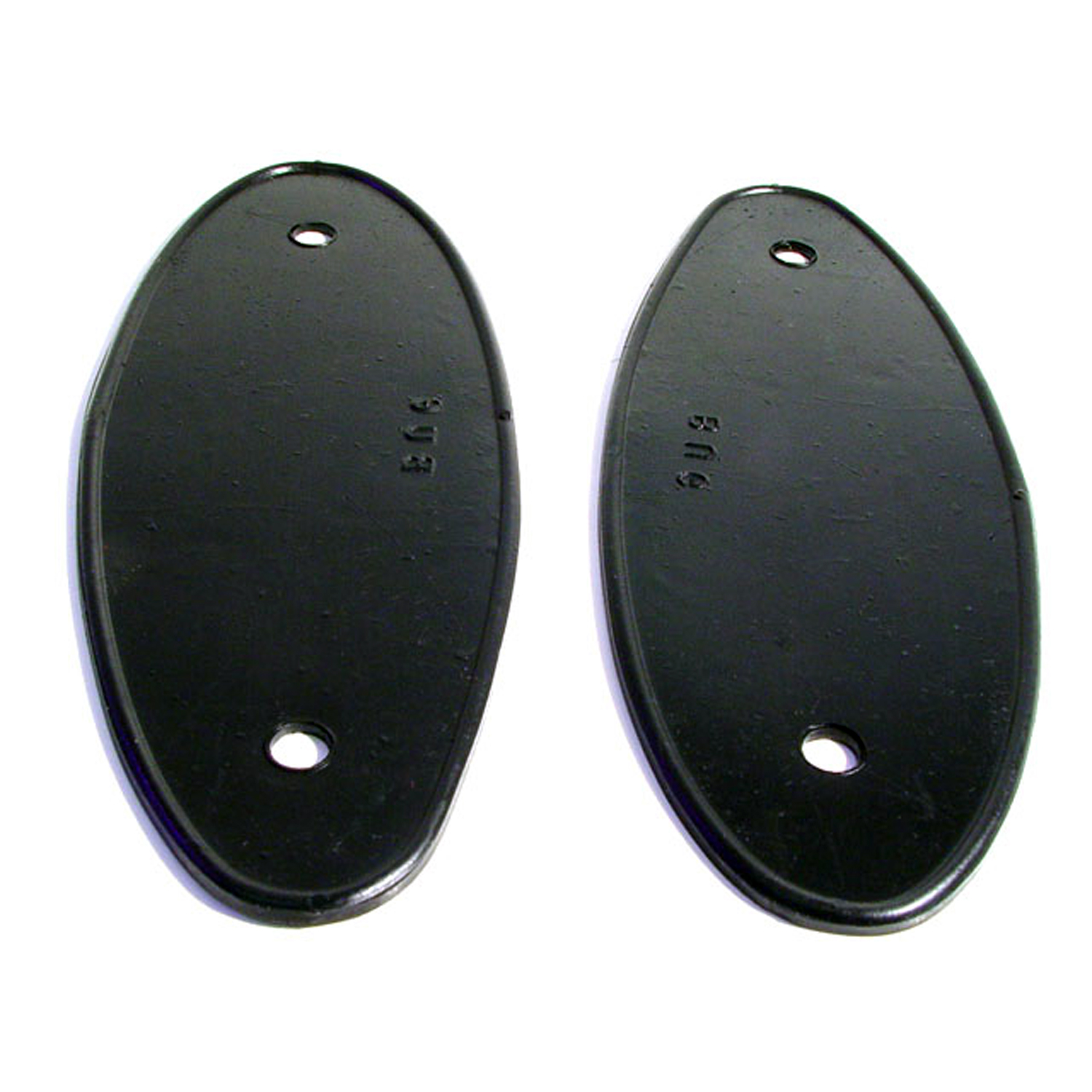 1937 Bugatti Type 57 Headlight Pads. 3" wide X 8-1/8" long. Pair-MP 337-AHeadlight Pads. 3" wide X 8-1/8" long. Pair
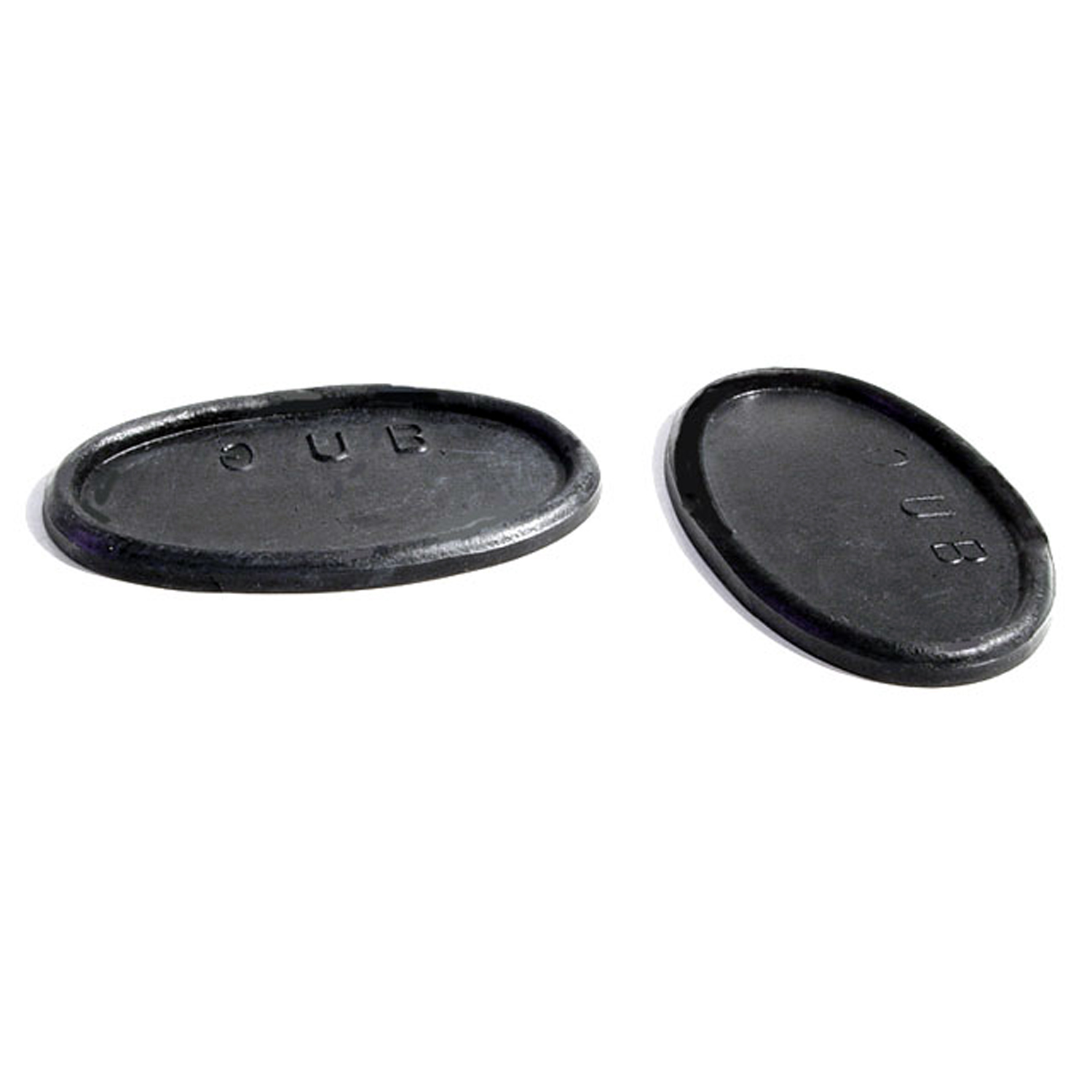 1937 Bugatti Type 57 Door Handle Pads. 1-3/8" wide X 2-1/4" long. Pair-MP 337-BDoor Handle Pads. 1-3/8" wide X 2-1/4" long. Pair
Why Choose Metro?
For over 100 years, Metro Moulded Parts has been the pinnacle of quality in classic car restoration parts. Our commitment to precision and authenticity in every component ensures a perfect fit and an OEM-level appearance.
- Expert Craftsmanship & Quality: Each part is a testament to our dedication to reliability and perfection, crafted from original designs and thoroughly tested.
- Advanced Technology: We use cutting-edge techniques to create flawless, long-lasting parts that surpass others in performance.
- SuperSoft Sponge – The Ultimate Door Seal: Not only are our door seals 30% softer than competitors', but they're also guaranteed to never leak. They effectively reduce wind and road noise, enhancing your classic car's comfort and driving experience.
- Proudly American: Our parts are a product of American craftsmanship, made in the USA with a spirit of excellence and heritage.
- Unrivaled Warranty: We back our products with a 30-year industry-leading warranty, a testament to our confidence in their quality.
Join us in preserving the legacy of classic cars with parts that are crafted for perfection, not just made.