
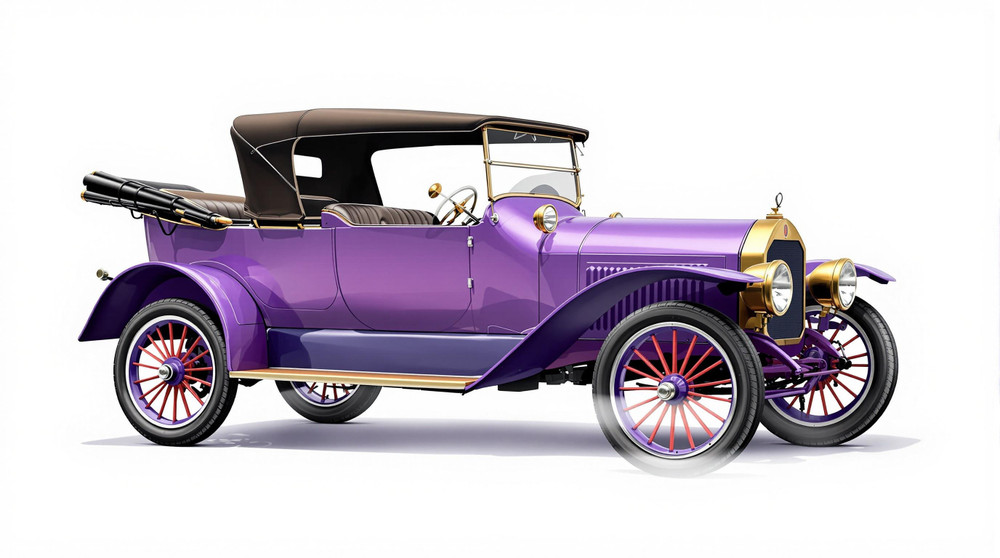
Image of 1912 Buick Model 28, Note: These illustrations use artistic license and may differ from actual historical models.
Performance Metrics
Fundamental Metrics
Emotional Appeal
MMP Rating
| Engine Specifications | |
|---|---|
| Engine Options: | 4-cylinder, in-line |
| Displacement Range: | 318 cubic inches |
| Horsepower Range: | Estimated 30-40 HP |
| Torque: | Not available |
| Compression Ratio: | Not available |
| Ignition System: | Magneto ignition system |
| Cooling System: | Water-cooled |
| Performance Specifications | |
| 0-60 Time: | Not available |
| 1/4 Mile Time: | Not available |
| Top Speed: | 40-50 mph |
| Transmission and Drive | |
| Drive Type: | Rear-wheel drive |
| Transmission Type: | 3-speed manual |
| Fuel and Efficiency | |
| Fuel System Type: | Carburetor |
| MPG: | Not available |
| Dimensions and Brakes | |
| Brakes: | Mechanical drum brakes |
| Wheelbase: | 106 inches |
| Weight: | Estimated 1,800 lbs |
Note: Specifications for classic cars are given to the best of our ability, considering the limited and variant data available.
1912 Buick Model 28: A Brass-Era Touring Car With Real Ambition
The 1912 Buick Model 28 was built for a time when a long country drive meant dust, ruts, and plenty of driver involvement. Its answer was a sturdy four-cylinder touring car with Buick’s signature overhead-valve engine, a practical open body, and the kind of mechanical character that helped make Buick one of America’s best-known early automobile names.
Buick was founded in Flint, Michigan, and became the foundation of General Motors when William C. Durant organized GM in 1908. By 1912, Buick was an established high-volume manufacturer, producing cars that aimed to balance useful performance with durability. The Model 28 belonged to a varied lineup of touring cars and roadsters. It was principally a four-passenger touring model, rather than a single body style with a long list of factory configurations.
One detail that makes the Model 28 especially interesting is its valve-in-head engine. Overhead valves were not new to Buick by 1912, but the company had made the layout central to its identity. At a time when many rival cars used side-valve engines, Buick’s design offered a more direct route for air and fuel into the cylinders, helping the engine breathe efficiently for its size.
Touring-Car Style and Brass-Era Detail
The Model 28 had the unmistakable proportions of an early touring car: a tall, upright body, exposed running boards, narrow tires, and a long bonnet stretching forward from the passenger compartment. Brass-era details, including bright metal lamps and fittings, gave the car a purposeful, almost nautical appearance. Its open body made the occupants part of the landscape, for better or worse. A motoring coat and goggles were practical equipment, not costume accessories.
Inside, the cabin was functional rather than luxurious by modern standards. The seats were upholstered, commonly in leather or leather-like material, with a simple finish suited to an open car exposed to weather and road grime. The dashboard and controls were straightforward, and the passenger area offered room for a small family or a driver carrying guests. It was a step up from a bare runabout, but it did not offer the insulation, weather protection, or convenience of a later enclosed sedan.
Period paint choices could vary by body, dealer, and buyer preference, so a single definitive factory color palette is difficult to establish for every Model 28. Black and other dark finishes were practical and visually at home on the car, while surviving examples and period practice suggest that richer colors could also be specified. Buyers should treat a car’s present paint color as a restoration choice unless documentation confirms its original finish.
The Model 28’s defining body style was the four-passenger touring car. Buick’s 1912 range also included other body configurations, such as roadsters and larger touring cars, but those were separate models rather than interchangeable Model 28 options. The touring body was the most useful choice for buyers who wanted a car for family outings and longer trips.
Buick Engineering in 1912
The Model 28’s most important engineering feature was its four-cylinder, overhead-valve engine. Published specifications commonly identify it as a 30-horsepower Buick, with an engine displacement of roughly 200 cubic inches. Exact figures can differ among historical references, so surviving factory literature and the individual car’s components are the best sources when documenting a specific example.
The engine was paired with a manual transmission, and the car used period-appropriate mechanical controls rather than modern driver aids. Starting generally required a hand crank, while ignition timing and engine speed called for more direct driver attention than a modern car demands. The Model 28 was a substantial machine for its day, but operating it was an active task.
Buick’s larger significance lies in its commitment to overhead-valve engineering. The company did not invent the concept in 1912, but it helped demonstrate that a practical, production automobile could use the layout reliably. That reputation for strong engines became an important part of Buick’s identity and helped distinguish the marque in a crowded early market.
Speed, Ride, and the Driving Experience
A 1912 Model 28 was built for steady travel, not quick acceleration by modern standards. A well-maintained example might reach approximately 40 to 45 mph under favorable conditions, though actual speed depends on gearing, mechanical condition, tire choice, road surface, and load. A meaningful 0-to-60-mph figure is not available and is generally beside the point: many cars of this type were unlikely to reach 60 mph in normal use.
The car’s acceleration would feel leisurely. The driver would work through the gears, listen to the engine, and plan ahead when approaching a hill or a slower vehicle. Its narrow tires and relatively simple suspension could make rough roads a lively experience. On a smooth road, the Model 28 would feel composed at moderate speed; on ruts and broken pavement, the driver and passengers would feel much more of the road than they would in a modern car.
On a winding road, the tall body and early chassis design call for measured steering and conservative cornering. This is not a car to hustle into bends. The engine’s mechanical sounds, the clatter of the drivetrain, and the open-air rush would be part of the experience. So would frequent attention to the controls. Driving a Model 28 is less like commuting and more like operating a well-preserved piece of machinery.
Living With a Model 28
Today, the Model 28 is best suited to historic motoring events, local parades, museum displays, and careful touring on suitable roads. It is not a sensible daily driver in modern traffic. Its braking, lighting, tires, weather protection, and cruising speed are all products of a very different era.
Maintenance is hands-on. Owners need to understand lubrication, ignition, fuel delivery, cooling, and the adjustment of mechanical components. The design is comparatively simple, and many repairs can be tackled by an experienced home mechanic, but simplicity does not mean that parts are interchangeable with modern hardware. Correct parts, specialist knowledge, and a patient approach are often necessary.
Reliability depends heavily on restoration quality and regular upkeep. A properly sorted Buick can be dependable for vintage touring, while a neglected example may require extensive work before it is safe to drive. Before buying, inspect the engine, transmission, frame, steering, brakes, wheels, and body structure, and seek advice from a specialist familiar with early Buicks.
Brass-Era Trivia and Common Misconceptions
Buick’s overhead-valve reputation reaches back well before the Model 28. The company’s early adoption of valve-in-head engineering helped make the feature a recognizable part of Buick’s technical story. The 1912 car represents a mature chapter in that development, rather than a one-year invention or experimental model.
There is no widely established Model 28 speed record or famous celebrity ownership that defines the car’s history. Its significance is broader: it represents the kind of dependable, practical touring automobile that helped put American families on the road before paved highways and enclosed bodies became commonplace. The model is also easy to confuse with other 1912 Buicks, since the brand offered several closely related cars with different seating and body arrangements.
A fair criticism is that the Model 28 is demanding by modern standards. It is slow, exposed to weather, and physically engaging to operate. Those are limitations for everyday transport, but they are also central to its appeal as a historical vehicle.
Collector Value and Availability
Surviving Model 28s are uncommon, though exact production and survival figures are not readily established. Buick built cars in substantial numbers by early automobile standards, but that does not mean a specific model has abundant survivors. As a working estimate rather than a verified factory total, Model 28 production was likely in the hundreds to low thousands. The number of complete, documented examples available today is much smaller.
Values vary widely with originality, restoration quality, mechanical condition, documentation, and whether the car is a complete, usable example. A rough project might fall around $15,000 to $30,000, while a sound driver or older restoration could bring roughly $30,000 to $55,000. A high-quality, correctly restored car may reach approximately $60,000 to $90,000 or more, especially if its history and specification are well documented. These are broad estimates, not a current appraisal or guaranteed sale price.
Early-car values tend to be selective. The best-restored examples can hold interest among brass-era collectors, but restoration costs are high and the buyer pool is smaller than for later classics. Over time, desirable, authentic cars may appreciate, though short-term prices can fluctuate and a restoration may cost more than the finished car is worth.
Why the 1912 Buick Model 28 Still Matters
The 1912 Buick Model 28 combines open touring-car style with a technically significant Buick engine. Its overhead-valve layout, practical four-passenger body, and hands-on driving experience capture a moment when automobiles were becoming more usable but still demanded real mechanical sympathy from their owners.
It is not fast by today’s standards, nor is it an easy car to live with. Its appeal is more enduring than that: the Model 28 shows how Buick helped turn early motoring into a serious, organized industry. Take a seat, hear the engine settle into its rhythm, and the distance between the brass era and the present suddenly feels a lot shorter.
1912 Buick Model 28 Catalog of Parts
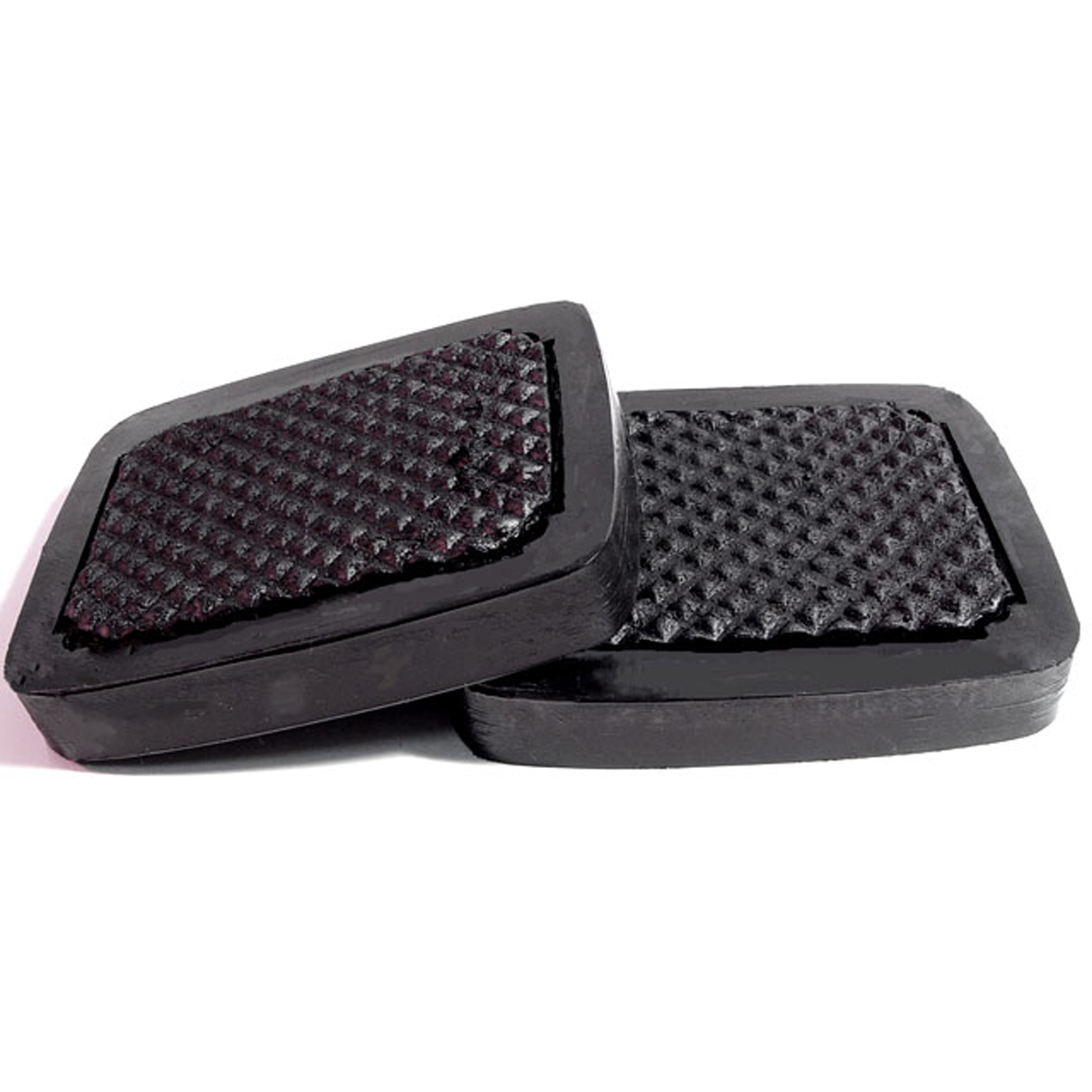 1912 Buick MODEL 28 Clutch and Brake Pedal Pads. 2-3/4" wide X 3-3/8" long-CB 12Clutch and Brake Pedal Pads. 2-3/4" wide X 3-3/8" long. Pair
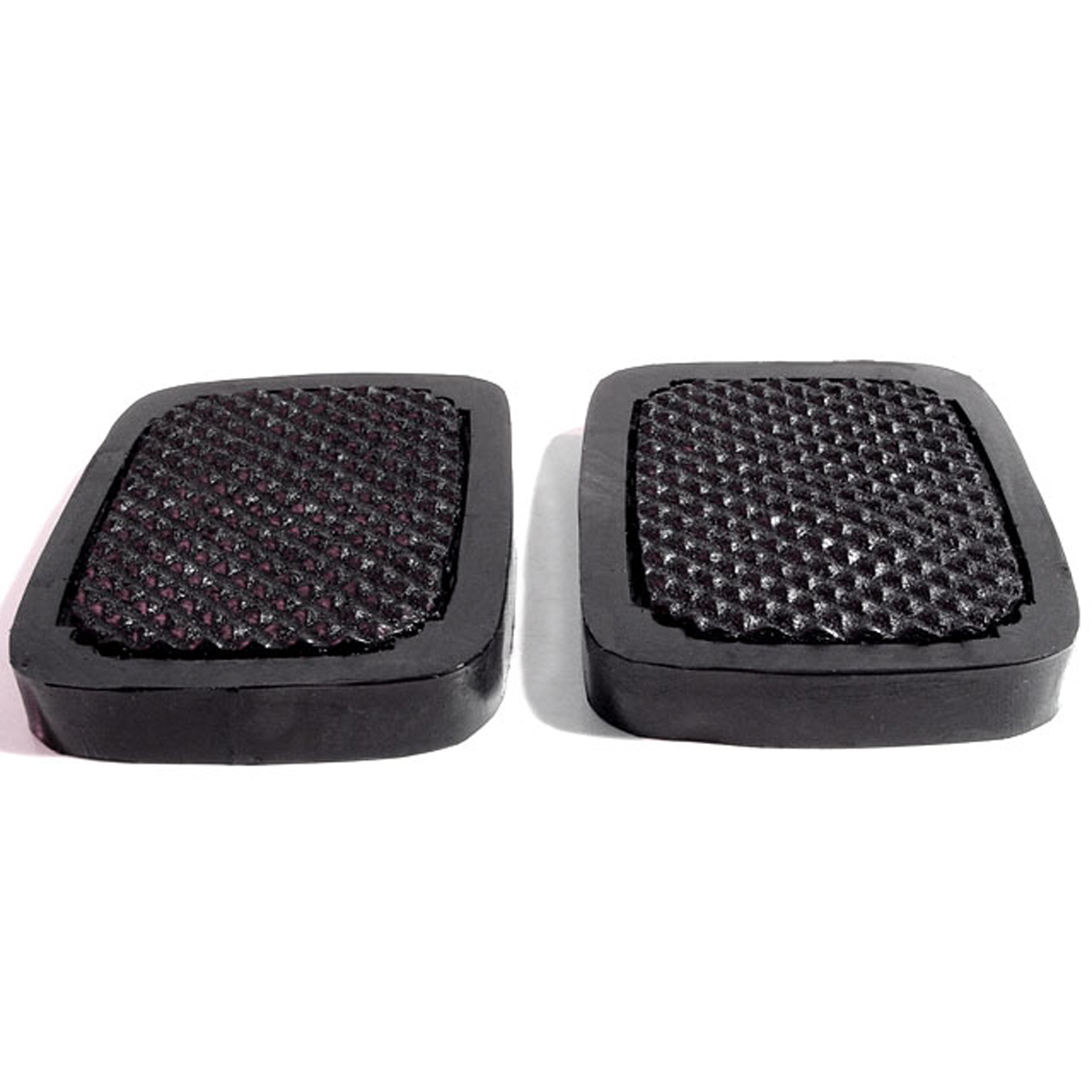 1912 Buick MODEL 28 Clutch and Brake Pedal Pads. 2-3/4" wide X 3-3/4" long-CB 13Clutch and Brake Pedal Pads. 2-3/4" wide X 3-3/4" long. Pair
Why Choose Metro?
For over 100 years, Metro Moulded Parts has been the pinnacle of quality in classic car restoration parts. Our commitment to precision and authenticity in every component ensures a perfect fit and an OEM-level appearance.
- Expert Craftsmanship & Quality: Each part is a testament to our dedication to reliability and perfection, crafted from original designs and thoroughly tested.
- Advanced Technology: We use cutting-edge techniques to create flawless, long-lasting parts that surpass others in performance.
- SuperSoft Sponge – The Ultimate Door Seal: Not only are our door seals 30% softer than competitors', but they're also guaranteed to never leak. They effectively reduce wind and road noise, enhancing your classic car's comfort and driving experience.
- Proudly American: Our parts are a product of American craftsmanship, made in the USA with a spirit of excellence and heritage.
- Unrivaled Warranty: We back our products with a 30-year industry-leading warranty, a testament to our confidence in their quality.
Join us in preserving the legacy of classic cars with parts that are crafted for perfection, not just made.