

Image of 1912 Buick Model 35, Note: These illustrations use artistic license and may differ from actual historical models.
Performance Metrics
Fundamental Metrics
Emotional Appeal
MMP Rating
| Engine Specifications | |
|---|---|
| Engine: | 4-cylinder, in-line, L-head |
| Displacement: | 165 cubic inches |
| Horsepower: | Estimated 22.5 HP |
| Torque: | Not available |
| Compression Ratio: | Not available |
| Ignition System: | Magneto |
| Cooling System: | Water, thermo-siphon |
| Performance Specifications | |
| 0-60 Time: | Not available |
| 1/4 Mile Time: | Not available |
| Top Speed: | 40 mph |
| Transmission and Drive | |
| Drive Type: | Rear-wheel drive |
| Transmission Type: | 3-speed manual |
| Fuel and Efficiency | |
| Fuel System Type: | Carburetor |
| MPG: | Not available |
| Dimensions and Brakes | |
| Brakes: | Mechanical drum |
| Wheelbase: | 100 inches |
| Weight: | 1,650 lbs |
Note: Specifications for classic cars are given to the best of our ability, considering the limited and variant data available.
1912 Buick Model 35: A Brass-Era Buick Built for the Open Road
The 1912 Buick Model 35 brought the confidence of a big touring car to an era when every journey still involved open air, exposed machinery, and a close relationship between driver and road. Built by the Buick Motor Company in Flint, Michigan, it combined a substantial four-cylinder engine with Buick’s emerging reputation for sturdy, practical automobiles. More than a century later, the Model 35 is a compelling example of the brass-era car: imposing, mechanically direct, and designed to make distance feel like an adventure.
Buick’s story had begun with inventor David Dunbar Buick, but the company’s rapid growth was driven by William C. Durant, who acquired Buick and used it as the foundation for General Motors in 1908. By 1912, Buick was an established name in a fast-changing industry. Its cars were known for the overhead-valve engines Buick promoted as “valve-in-head” power, a design that helped distinguish the marque from many rivals.
A notable point of interest is that the Model 35 represents Buick at a turning point. The company was moving beyond the earliest, simplest automobiles toward larger and more capable touring cars, while still retaining the exposed controls and hands-on operation of the period. The result was not a modern car in the contemporary sense, but it was a serious road machine.
Brass-Era Styling and Touring-Car Comfort
The Model 35 wore the upright, purposeful proportions typical of a 1912 automobile. Its tall radiator and long hood gave the front end a commanding look, while large, thin-spoked wheels and narrow tires emphasized its high stance. Depending on equipment and restoration, brass or brass-finished details could add warm highlights to the lamps, radiator fittings, and other hardware. The overall impression was elegant but functional, with little bodywork to hide the mechanical components beneath.
As a touring car, the Model 35 was built around open-air motoring. The cabin was comparatively simple by later standards, with individual seating, exposed controls, and a folding top intended to provide shelter rather than modern weather sealing. Upholstery and trim varied with specification, restoration, and replacement over the car’s long life. Period materials were generally chosen for durability and appearance, not the soft-touch comfort or sound insulation expected in a modern vehicle.
Paint choices could vary by order and market, and the color of a surviving car is not always proof of its original finish. Dark, formal shades such as black, deep green, blue, or maroon suit the period and are often seen on restored brass-era cars. Buyers should treat any specific claim about a Model 35’s original color as something to verify through factory records, photographs, or paint analysis.
The five-passenger touring body is the configuration most associated with the Model 35. Period Buick catalogs and surviving cars can reflect variations in body styles and equipment, so the exact offering should be checked against original literature for a particular chassis. Touring bodies were popular because they carried a family or group of passengers and made the car useful for longer outings. A folding top and removable side curtains offered some protection, though neither could match the weather security of a closed sedan.
Engineering That Helped Define Buick
The Model 35’s central engineering feature was its four-cylinder, overhead-valve engine, rated at about 35 horsepower in period descriptions. Buick had made overhead-valve construction a hallmark of its early cars. Placing the valves in the cylinder head could support efficient breathing and strong performance for the time, helping Buick build a reputation for engines that were capable as well as durable.
Like other cars of its era, the Model 35 required the driver to manage a comparatively involved set of controls. A manual transmission, clutch, throttle, ignition adjustments, and hand-operated controls demanded more attention than a modern driver is used to giving. Its construction reflects a period when the driver was an active participant in keeping the engine running smoothly, rather than simply selecting a gear and pressing an accelerator.
Buick’s wider influence grew from this combination of engineering and reputation. Its early commitment to overhead-valve engines became a lasting part of the brand’s identity, while its expansion under Durant helped place Buick at the heart of General Motors. The Model 35 was one participant in that larger story, rather than a single revolutionary model that changed the industry by itself.
Performance and the Brass-Era Driving Experience
Period performance figures are not as standardized as modern test results. A Model 35 in sound mechanical condition may be capable of roughly 45 to 50 mph, depending on gearing, tire size, road surface, tune, and the car’s individual condition. That is a meaningful speed for a 1912 touring car, but it should not be treated as a recommended cruising pace for an antique vehicle today.
A reliable factory 0-to-60 mph figure is not known, and the Model 35 was not designed or tested around that modern benchmark. In practice, a car in original-style specification may take a long time to approach highway speed and may not comfortably or safely reach 60 mph at all. Any acceleration estimate would be a modern approximation, not a period specification. For owners, gentle acceleration and moderate speeds are the sensible approach.
On a smooth road, the Model 35’s tall wheels and relatively simple suspension deliver a distinctly old-fashioned ride. Potholes and sharp bumps are felt directly, and the narrow tires do little to soften rough pavement. On winding roads, steering requires deliberate effort and anticipation. There is no modern power assistance, and the high center of gravity and period braking system call for conservative cornering and generous stopping distance.
The engine experience is part of the appeal. Expect mechanical clatter, exhaust pulses, and the sounds of an open car moving through the air. The driver must listen and respond, tending to the controls and engine behavior as conditions change. That involvement is charming on a quiet Sunday drive, but it also means the Model 35 is best enjoyed at an unhurried pace.
Owning and Maintaining a 1912 Buick
Today, a Model 35 is best suited to touring events, local antique-car gatherings, museum displays, and carefully planned pleasure drives. It is not a practical daily driver by modern standards. Traffic speed, limited braking, weather exposure, and the availability of suitable roads all make routine commuting a poor fit.
Many early automobiles are mechanically straightforward compared with modern cars, and an experienced vintage-car mechanic can often understand their basic systems without electronic diagnostic equipment. That does not make the Model 35 an effortless do-it-yourself project. Parts may need to be sourced from specialist suppliers, fabricated, or adapted, and original components can be costly. The owner also needs period-appropriate knowledge of lubrication, ignition, fuel delivery, and starting procedures.
Reliability depends heavily on maintenance and restoration quality. A carefully sorted car can be dependable for short, well-planned outings, but age brings challenges such as worn bearings, aging metal, tired wood framing, old wiring, and deteriorated tires. Before driving, owners should inspect the brakes, steering, wheels, tires, fuel system, and chassis. A prewar touring car should be maintained for its actual use, not simply polished for display.
Facts, Myths, and Period Context
The Model 35 belongs to Buick’s early growth period, when the company’s engineering reputation and business expansion were helping shape what would become General Motors. Its connection to Buick’s overhead-valve tradition is more historically significant than any single headline-grabbing record attached to the model.
There is no widely documented Model 35 speed, sales, or endurance record that defines the car. Nor is there a broadly established celebrity-ownership story associated specifically with the 1912 Model 35. Claims of unusual provenance are best checked against titles, period photographs, factory documentation, and a clear chain of ownership rather than repeated without evidence.
A common criticism of cars from this period is that they can look more capable than they feel at modern traffic speeds. The Model 35’s open body, limited weather protection, demanding controls, and modest braking performance are all part of that reality. Those drawbacks are not defects by modern design standards; they are reminders that the car was built for a different road system and a different pace of life.
Collector Value and Rarity
Exact production figures for the Model 35 are not readily established in commonly available model-specific records. Buick produced many cars in 1912 across a range of models, but that total cannot be used as a Model 35 production count. As a cautious estimate rather than a factory figure, production may have numbered in the low thousands. The number of surviving, complete, correctly identified examples is likely much smaller.
Market value depends on authenticity, condition, body style, completeness, restoration quality, and documentation. As a broad current-market estimate, a project or incomplete example might fall around $20,000 to $40,000, while a sound, usable restoration could be in the $45,000 to $85,000 range. A highly finished, historically documented car may exceed $100,000 in the right sale. These are guide figures, not a formal appraisal, and early-car auction prices can vary considerably.
Values for brass-era cars tend to be selective rather than uniformly rising. Exceptional, documented examples remain attractive to collectors, while cars needing extensive restoration face high parts and labor costs that can exceed the eventual resale value. The Model 35’s rarity and Buick heritage support its appeal, but prospective buyers should prioritize condition and provenance over assumptions that age alone guarantees appreciation.
Why the Model 35 Still Matters
The 1912 Buick Model 35 captures an important stage in Buick’s rise: a time when the company was building capable touring cars, developing its overhead-valve identity, and becoming a major force in the emerging automobile industry. Its tall brass-era profile, open touring layout, and hands-on controls make it a vivid reminder of how different motoring once was.
For collectors, the Model 35 offers more than an antique badge and polished brass. It is a machine that asks its driver to slow down, pay attention, and take part in the journey. That combination of early Buick engineering and unmistakable road-going character is what keeps this 1912 touring car memorable today.
1912 Buick Model 35 Catalog of Parts
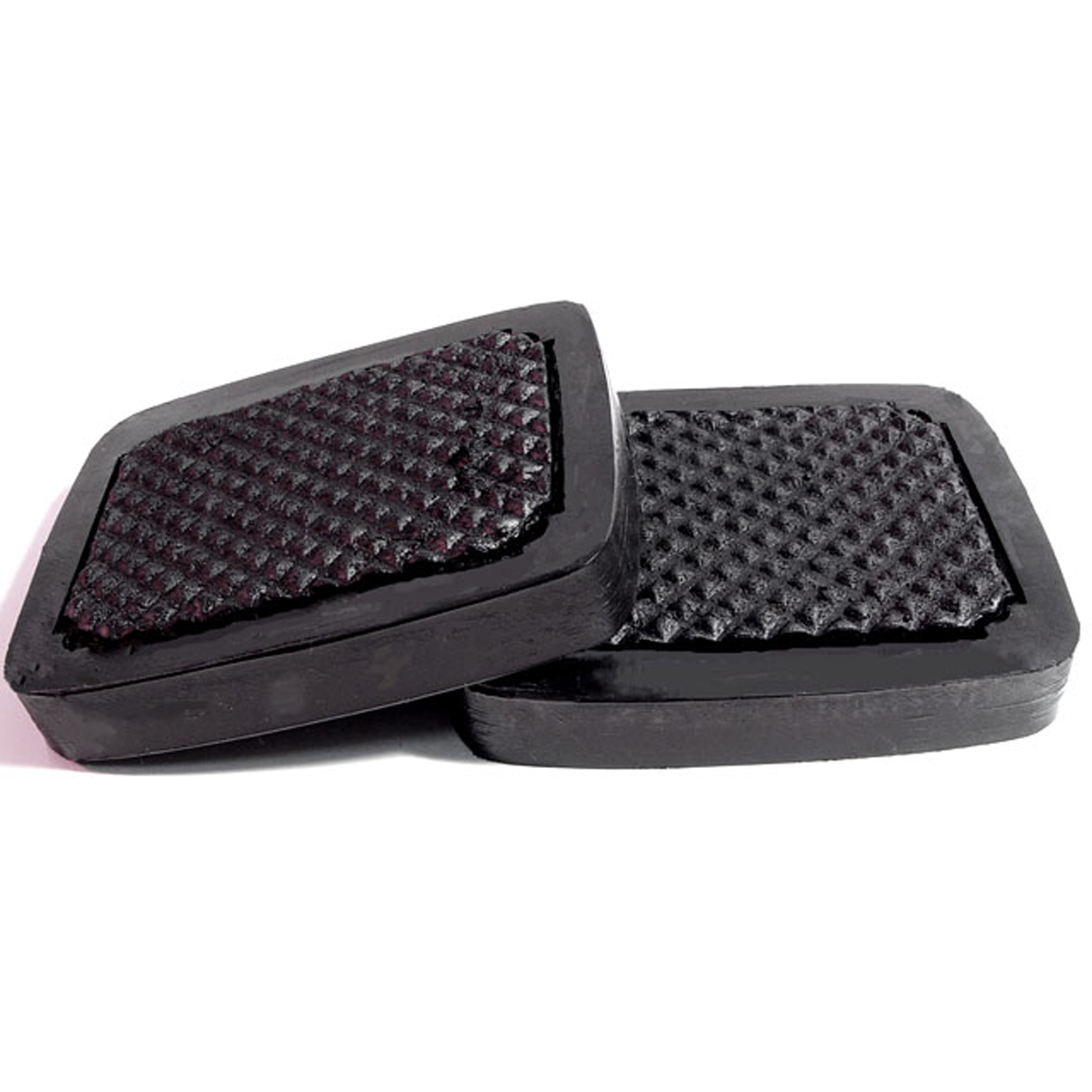 1912 Buick MODEL 35 Clutch and Brake Pedal Pads. 2-3/4" wide X 3-3/8" long-CB 12Clutch and Brake Pedal Pads. 2-3/4" wide X 3-3/8" long. Pair
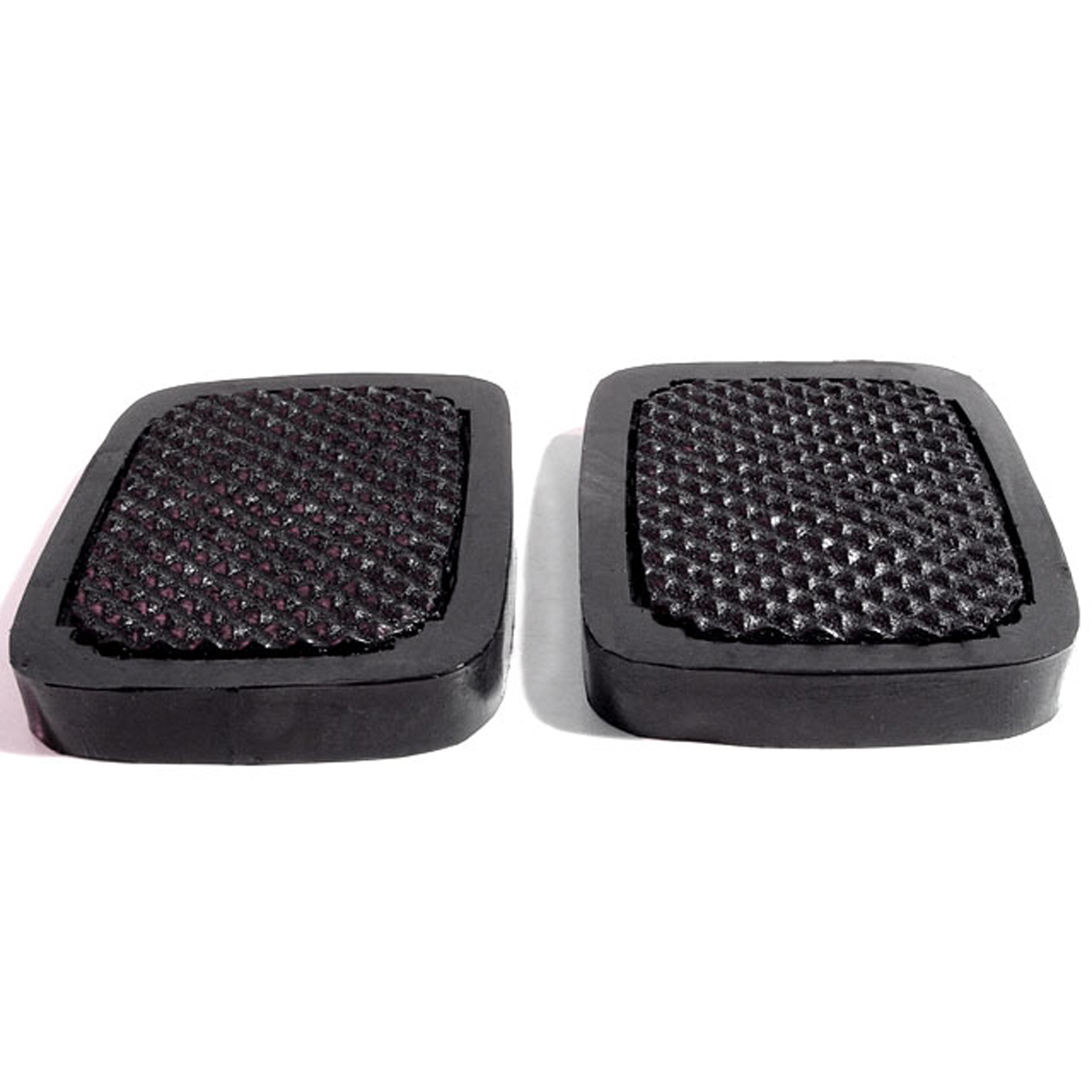 1912 Buick MODEL 35 Clutch and Brake Pedal Pads. 2-3/4" wide X 3-3/4" long-CB 13Clutch and Brake Pedal Pads. 2-3/4" wide X 3-3/4" long. Pair
Why Choose Metro?
For over 100 years, Metro Moulded Parts has been the pinnacle of quality in classic car restoration parts. Our commitment to precision and authenticity in every component ensures a perfect fit and an OEM-level appearance.
- Expert Craftsmanship & Quality: Each part is a testament to our dedication to reliability and perfection, crafted from original designs and thoroughly tested.
- Advanced Technology: We use cutting-edge techniques to create flawless, long-lasting parts that surpass others in performance.
- SuperSoft Sponge – The Ultimate Door Seal: Not only are our door seals 30% softer than competitors', but they're also guaranteed to never leak. They effectively reduce wind and road noise, enhancing your classic car's comfort and driving experience.
- Proudly American: Our parts are a product of American craftsmanship, made in the USA with a spirit of excellence and heritage.
- Unrivaled Warranty: We back our products with a 30-year industry-leading warranty, a testament to our confidence in their quality.
Join us in preserving the legacy of classic cars with parts that are crafted for perfection, not just made.