

Image of 1913 Buick Model 31, Note: These illustrations use artistic license and may differ from actual historical models.
Performance Metrics
Fundamental Metrics
Emotional Appeal
MMP Rating
| Engine Specifications | |
|---|---|
| Engine: | 4-cylinder, in-line, L-head |
| Displacement: | 165 cubic inches |
| Horsepower: | Estimated 30-40 HP |
| Torque: | Not available |
| Compression Ratio: | Not available |
| Ignition System: | Magneto |
| Cooling System: | Water, thermo-siphon |
| Performance Specifications | |
| 0-60 Time: | Not available |
| 1/4 Mile Time: | Not available |
| Top Speed: | 40-50 mph |
| Transmission and Drive | |
| Drive Type: | Rear-wheel drive |
| Transmission Type: | 3-speed manual |
| Fuel and Efficiency | |
| Fuel System Type: | Gravity feed |
| MPG: | Not available |
| Dimensions and Brakes | |
| Brakes: | Mechanical drum on rear wheels |
| Wheelbase: | 100 inches |
| Weight: | 1,650 lbs |
Note: Specifications for classic cars are given to the best of our ability, considering the limited and variant data available.
1913 Buick Model 31: A Practical Pioneer
The 1913 Buick Model 31 brought early motoring within reach of drivers who wanted more than a fragile novelty: it was a substantial, four-cylinder touring car built around Buick’s signature overhead-valve engineering. Buick Motor Company, founded by David Dunbar Buick and led to rapid growth by William C. Durant, had become a cornerstone of General Motors by this time. The Model 31 reflects that shift from experimental automobile making to increasingly organized, large-scale production.
Its most intriguing detail is under the hood. Buick’s “valve-in-head” engine placed the valves above the cylinders, a layout that helped the company build a reputation for strong performance and durability. The Model 31 was not a modern car in the present-day sense, but it was a capable machine for its era, designed for real road travel as well as town use.
Period specifications can differ slightly across catalogs and surviving cars, particularly where equipment or bodywork varied by market. The figures below are best treated as representative rather than as a guarantee for every Model 31.
Open Touring-Car Style
The Model 31’s appearance is classic early motoring: upright, narrow, and exposed, with a tall radiator, separate headlamps, prominent fenders, and a long bonnet leading back to an open passenger compartment. Its large spoked wheels and high ground clearance gave it a purposeful stance. Compared with later streamlined cars, the Model 31 wore its mechanical parts openly, making the engine, lamps, running gear, and controls part of its visual character.
The best-known configuration is the five-passenger touring car. Its open body suited the social side of motoring, with room for family or friends and a folding top for rain or strong sun. Buick’s catalog offerings and body choices could vary, so a roadster or other open configuration should be verified against the specific car’s chassis and period documentation rather than assumed to be a standard Model 31 version.
Inside, the emphasis was on practical craftsmanship rather than modern comfort. The cabin typically featured a wood body structure beneath its exterior finish, a simple dashboard, bench-style seating, and upholstery commonly made from leather or leather-like material depending on specification and restoration history. There was little in the way of weather protection by modern standards. A top and side curtains could help, but wind, dust, and road spray remained part of the journey.
Paint choices were not as standardized or comprehensively documented as those on later mass-market cars. Dark finishes such as black, deep blue, and maroon are plausible period choices, but original colors should be established from factory records or physical evidence on an individual car. Today, restorers often choose a dark, traditional finish because it suits the car’s formal touring profile.
Valve-in-Head Engineering
The Model 31’s defining technical feature was its four-cylinder, valve-in-head engine, Buick’s name for the overhead-valve layout. In a period when many competing engines used side valves, placing the valves above the cylinders was a notable engineering distinction. Buick promoted the arrangement as a source of power and efficiency, and its success helped make overhead-valve design an important part of the company’s identity.
Representative Model 31 specifications include a four-cylinder engine rated at about 35 horsepower, a manual transmission, and rear-wheel drive through a driveshaft. The car used conventional period chassis engineering, including a ladder-style frame and leaf-spring suspension. It was built for the rough, unpaved roads of its day, not for the smooth, high-speed travel expected of a modern automobile.
Starting and lighting equipment should be checked car by car. Early cars could rely on a hand crank, while electrical equipment and accessories varied with year, market, and specification. A surviving car may also have been updated during its lifetime or altered in restoration.
Why the Model 31 Matters
The Model 31’s importance lies less in a single revolutionary feature than in the way it represents Buick’s maturing approach to automobile design. Buick had established a strong reputation for overhead-valve engines, and its growing production helped demonstrate that a relatively powerful, mechanically sophisticated car could be made for a wider market.
It also belongs to a pivotal period for General Motors. Buick was one of the company’s strongest divisions and helped provide the manufacturing scale and commercial success that supported GM’s early growth. The Model 31 is therefore a useful snapshot of the company before closed bodies, electric starters, and paved roads became commonplace.
Against many contemporaries, the Buick’s selling point was its combination of engine performance, substantial construction, and touring practicality. It was not a lightweight sports car, nor was it as refined as later enclosed automobiles. Its legacy is more workmanlike: Buick helped popularize a style of engineering that would remain central to the brand for decades.
Speed, Ride, and Road Manners
With roughly 35 horsepower, a Model 31 could reach an estimated top speed in the neighborhood of 45 to 50 mph under favorable conditions. Actual speed depended on the car’s gearing, mechanical condition, tires, load, and road surface. A dependable 0-to-60-mph time is not meaningful: the car was not designed for 60-mph travel, and reliable period acceleration figures are not readily established. For a healthy example, reaching 30 mph would be a more realistic measure of ordinary road performance.
Driving one is a hands-on experience. The engine produces a steady, mechanical beat, accompanied by the sound of the transmission, tires, and exposed running gear. The driver must manage a manual gearbox, monitor the engine, and plan stops well ahead. Braking and steering require more effort than in a modern car, and braking performance is modest by current standards.
The suspension can cope with uneven roads at the speeds for which the car was intended, but bumps are felt directly through the open body and narrow tires. On winding roads, the high stance, period steering, and relatively narrow tire footprint call for slow, deliberate inputs. Crosswinds can buffet an open touring car, especially with its top raised. The Model 31 rewards a relaxed pace and attentive driving, not hurried cornering or modern traffic habits.
Living With a 1913 Buick
Today, the Model 31 is best suited to occasional touring, vintage-car events, parades, and museum or private collections. It can be driven on suitable roads, but it is not a practical daily driver. Modern traffic moves faster, and the car lacks contemporary lighting, crash protection, braking, and weather sealing.
Maintenance is straightforward in principle but demands period-car knowledge. Owners need to inspect lubrication, ignition, fuel delivery, cooling, tires, wheel bearings, and fasteners regularly. Depending on the car’s specification, starting may require a hand crank and a careful procedure. The mechanical layout is comparatively accessible, and many repairs are understandable to a capable home mechanic, but sourcing correct parts and preserving original components can take patience.
Reliability depends heavily on the quality of restoration and ongoing upkeep. A well-sorted Model 31 can be dependable for short tours, while a neglected example may need extensive work before it should be driven. As with any hand-cranked early automobile, safe starting practice matters: a poorly positioned hand or incorrect crank technique can result in injury.
Model 31 Trivia and Caveats
The Model 31 does not have a widely recognized individual speed record or a famous endurance feat that defines its reputation. Its historical interest comes instead from its connection to Buick’s early growth and its use of the company’s celebrated valve-in-head design. No particular celebrity ownership or single headline-making event is firmly associated with the model.
One common criticism is that early Buick descriptions can make the car sound more modern than it feels to drive. Its power was impressive for the period, but a 35-horsepower rating does not translate directly to modern performance. It also requires more frequent attention than a later classic car, and an open body offers limited comfort in cold, wet, or dusty conditions.
Another point worth checking is originality. Many early cars have received replacement upholstery, altered electrical systems, rebuilt engines, or reproduction body parts over the decades. A car that looks correct may not retain its original equipment, so documentation and inspection are especially valuable.
Rarity and Collector Value
There is no dependable, widely accepted production total for the Model 31 alone. Buick produced cars in substantial numbers by early-twentieth-century standards, but records do not always break surviving production down cleanly by model and body style. A reasonable rough estimate is that production was in the low thousands, perhaps around 2,000 to 5,000 cars, but that is an informed estimate rather than a confirmed factory figure. The number of surviving, correctly identified examples is much smaller.
As a broad U.S. market estimate for 2026, a project or incomplete car might fall around $10,000 to $20,000, depending on completeness and documentation. A usable, older restoration may bring roughly $25,000 to $45,000, while a high-quality, correct restoration could reach $50,000 to $80,000 or more. These are guide ranges, not appraisals. Condition, originality, provenance, body style, and the quality of the restoration can move a sale substantially.
Values for early touring cars have generally been selective rather than uniformly rising. Exceptional, documented examples remain attractive to collectors, but restoration costs can exceed the eventual sale price, and buyer demand is narrower than for more familiar postwar classics. For a Model 31, condition and authenticity usually matter more than a claim that the car is rare.
A Buick Built for the Open Road
The 1913 Buick Model 31 combines an early touring-car silhouette with one of Buick’s most important engineering signatures: the overhead-valve engine. Its open body, modest modern-day speed, and hands-on controls make it a demanding car by today’s standards, but they also reveal how ambitious and capable motoring had become just before the First World War.
For collectors, the Model 31 is more than an antique automobile. It is a rolling reminder of Buick’s rise, GM’s formative years, and the era when every journey asked the driver to participate in the machinery. Take it slowly, keep it carefully maintained, and the Model 31 turns an ordinary drive into a direct encounter with automotive history.
1913 Buick Model 31 Catalog of Parts
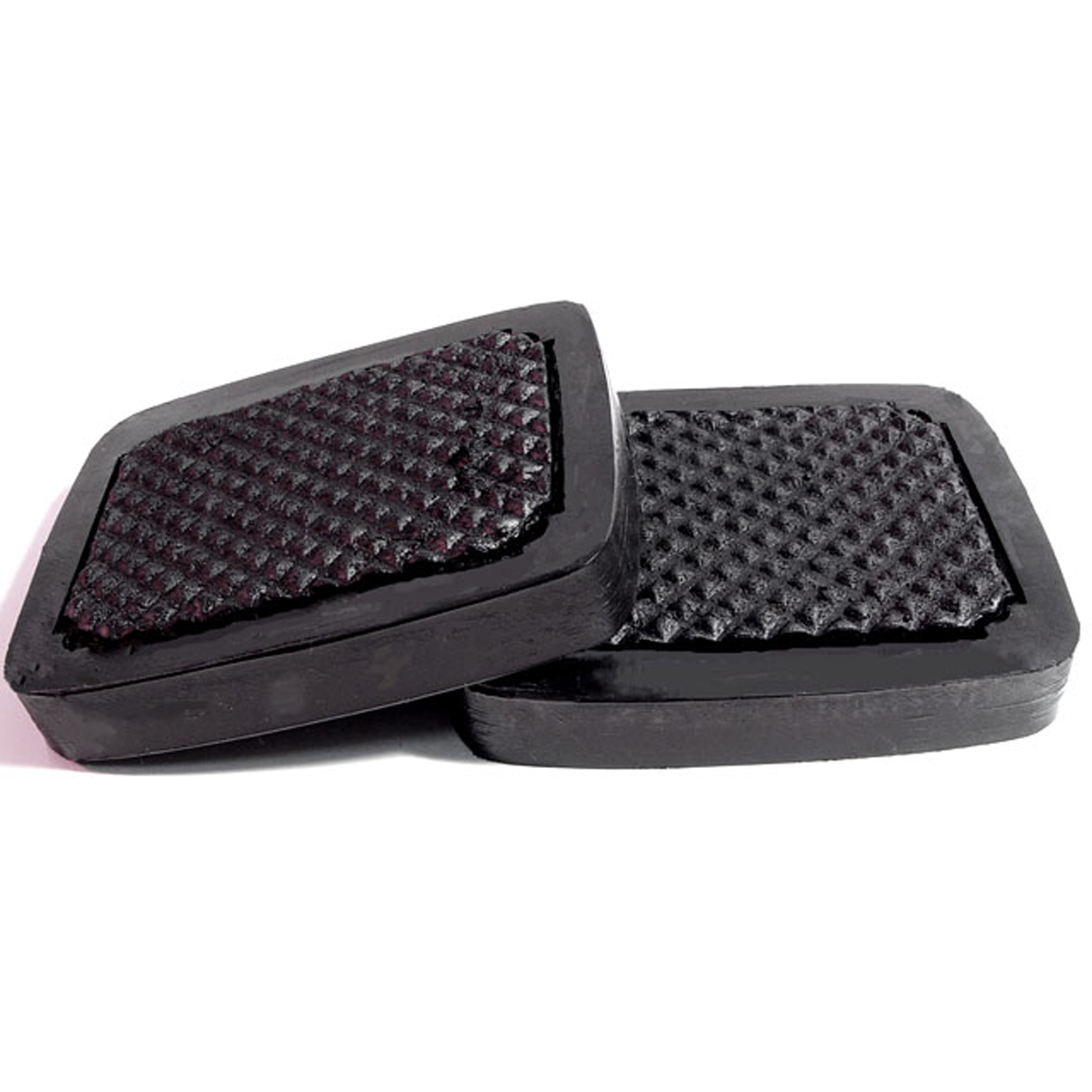 1913 Buick Model 31 Clutch and Brake Pedal Pads. 2-3/4" wide X 3-3/8" long-CB 12Clutch and Brake Pedal Pads. 2-3/4" wide X 3-3/8" long. Pair
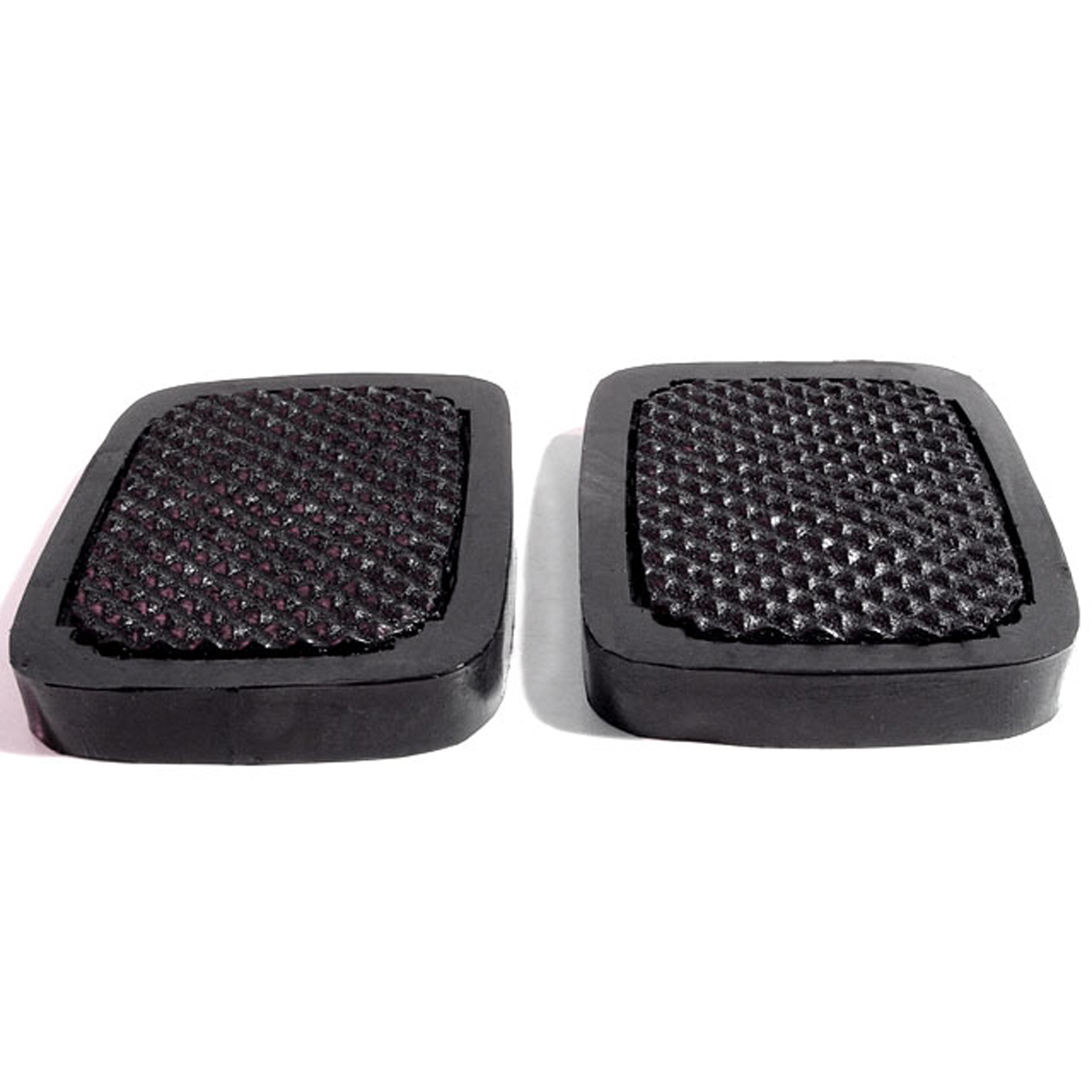 1913 Buick Model 31 Clutch and Brake Pedal Pads. 2-3/4" wide X 3-3/4" long-CB 13Clutch and Brake Pedal Pads. 2-3/4" wide X 3-3/4" long. Pair
Why Choose Metro?
For over 100 years, Metro Moulded Parts has been the pinnacle of quality in classic car restoration parts. Our commitment to precision and authenticity in every component ensures a perfect fit and an OEM-level appearance.
- Expert Craftsmanship & Quality: Each part is a testament to our dedication to reliability and perfection, crafted from original designs and thoroughly tested.
- Advanced Technology: We use cutting-edge techniques to create flawless, long-lasting parts that surpass others in performance.
- SuperSoft Sponge – The Ultimate Door Seal: Not only are our door seals 30% softer than competitors', but they're also guaranteed to never leak. They effectively reduce wind and road noise, enhancing your classic car's comfort and driving experience.
- Proudly American: Our parts are a product of American craftsmanship, made in the USA with a spirit of excellence and heritage.
- Unrivaled Warranty: We back our products with a 30-year industry-leading warranty, a testament to our confidence in their quality.
Join us in preserving the legacy of classic cars with parts that are crafted for perfection, not just made.