

Image of 1913 Buick Model 40, Note: These illustrations use artistic license and may differ from actual historical models.
Performance Metrics
Fundamental Metrics
Emotional Appeal
MMP Rating
| Engine Specifications | |
|---|---|
| Engine: | 4-cylinder, in-line |
| Displacement: | 5.2 liters |
| Horsepower: | Estimated 40-60 HP |
| Torque: | Not available |
| Compression Ratio: | Not available |
| Ignition System: | Magneto |
| Cooling System: | Water-cooled |
| Performance Specifications | |
| 0-60 Time: | Not available |
| 1/4 Mile Time: | Not available |
| Top Speed: | 40-50 mph |
| Transmission and Drive | |
| Drive Type: | Rear-wheel drive |
| Transmission Type: | 3-speed manual |
| Fuel and Efficiency | |
| Fuel System Type: | Carburetor |
| MPG: | Not available |
| Dimensions and Brakes | |
| Brakes: | Mechanical drum brakes |
| Wheelbase: | 118 inches |
| Weight: | Estimated 1,800 lbs |
Note: Specifications for classic cars are given to the best of our ability, considering the limited and variant data available.
1913 Buick Model 40: A Brass-Era Buick Built for the Open Road
The 1913 Buick Model 40 brought Buick’s growing reputation for sturdy engineering to the broad, open touring car that defined early motoring. Built by the Buick Motor Company in Flint, Michigan, it combined a four-cylinder overhead-valve engine with roomy, upright coachwork and the kind of mechanical simplicity owners needed when paved roads were scarce.
Buick’s story began with inventor David Dunbar Buick, but its rapid expansion came under the direction of William C. Durant. Buick became a cornerstone of General Motors when Durant organized the company in 1908. By 1913, the marque was already known for durable cars and its distinctive overhead-valve engines, a design that helped Buick stand apart in an era when many competitors used side-valve powerplants.
The Model 40’s appeal was practical as well as technical. It was a substantial touring car for families and motorists who wanted to travel beyond town, not simply a novelty for short drives. One detail that makes the car especially interesting today is that its celebrated Buick engineering had to work on roads that could be rutted, muddy, dusty, and barely more than tracks.
Touring-Car Style and Cabin Details
The Model 40 wears the unmistakable profile of an early open automobile: a tall brass-era radiator, long hood, exposed running boards, large spoked wheels, and a high, upright seating position. Its body sits above the chassis rather than flowing into it, giving the car a purposeful, almost carriage-like stance. Brass or brass-toned fittings, including lamps and radiator trim, add warmth to the dark paintwork typical of the period.
The best-known configuration was the open touring body, designed to carry several passengers. It offered a broad bench-style seating arrangement and a folding top that provided some shelter when the weather changed. Touring cars of the day were often supplied with side curtains, but those offered limited protection compared with a modern enclosed cabin. Body availability could vary by market and catalog year, so buyers researching a particular Model 40 should check its original documentation rather than assume every body style was offered everywhere.
Inside, the emphasis was on functional materials and straightforward construction. Upholstery was generally leather or leather-like carriage trim, paired with painted or varnished wood details and exposed metal controls. The cabin was open to wind, dust, and rain, and creature comforts were modest. There was no modern dashboard full of gauges, switches, and warning lights. The driver instead relied on a small number of instruments and direct mechanical controls.
Buick’s period color choices were not as standardized or widely documented as modern paint codes. Dark shades, including black and deep greens or blues, suit the car’s period appearance, while individual cars could have been ordered or refinished in other colors. Today, original paint evidence and period sales literature are more reliable guides than a color choice based on restoration fashion.
Overhead-Valve Engineering in 1913
The Model 40’s defining technical feature was its four-cylinder overhead-valve engine. With the valves positioned in the cylinder head, the design could breathe efficiently for its time and helped establish Buick’s reputation for lively, dependable power. Period specifications commonly identify the Model 40 as a roughly 35-horsepower car, though ratings and published details can differ among sources and markets.
Power went through a conventional manual transmission, generally a three-speed sliding-gear unit, and onward to the rear wheels. The driver operated the clutch and gear lever directly, with no automatic transmission, power assistance, or electronic aids to smooth out mistakes. A hand crank was part of the period starting routine, although equipment and electrical systems could vary between examples.
That combination of overhead-valve power and traditional mechanical hardware is important. Buick was not merely building a comfortable carriage with an engine attached. It was developing a recognizable engineering identity that helped distinguish its cars in a competitive market.
Why the Model 40 Matters
The Model 40 belongs to a period when manufacturers were still working out what a practical automobile should be. Its upright touring body reflected carriage-making traditions, while its engine showed how quickly automotive engineering was advancing. Buick’s commitment to overhead valves became a lasting part of the company’s identity and helped shape its reputation for strong, durable engines.
Compared with many contemporary cars, the Buick’s appeal lay in the balance between useful passenger capacity and capable mechanical design. It was not a purpose-built racer or a luxury limousine. It was a serious road car, made for owners who expected to cover distance and who accepted that driving involved regular inspection, adjustment, and repair.
The Model 40’s lasting influence is best understood as part of Buick’s broader contribution rather than as a single revolutionary model. It helped carry the company’s engineering approach into the growing mainstream market. The car also preserves a snapshot of motoring just before automobiles became more enclosed, standardized, and easier to operate.
Performance and Early-Road Manners
A Model 40 in good mechanical condition could likely reach around 45 to 50 mph under favorable conditions. That is a period-appropriate estimate, not a guaranteed modern test result. Actual speed depends on the car’s gearing, engine condition, tires, road surface, and how willing its owner is to push a century-old drivetrain.
A modern 0-to-60-mph figure is not especially meaningful for this Buick. The car was not designed around that kind of acceleration test, and many examples may struggle to reach 60 mph reliably. A rough estimate would put a run to 60 well beyond 30 seconds, if the car can achieve that speed at all. Its more natural task is steady travel at a moderate pace.
On rough roads, the tall wheels and relatively simple suspension can roll over some imperfections, but the ride is nothing like a modern car’s. Large bumps, ruts, and washboard surfaces are communicated directly to the chassis and passengers. On winding roads, the Model 40 asks for anticipation: steering is manual, the body sits high, and cornering should be taken gently. Braking distances are long by modern standards, so the driver must look well ahead and leave plenty of room.
The driving experience is wonderfully mechanical. The engine produces a measured, throaty four-cylinder beat, while gear changes require deliberate timing and a practiced hand. The driver feels the road through the steering wheel and chassis, listens for changes in engine note, and manages speed with a degree of attention that modern motorists rarely need. It is engaging, but it rewards patience over haste.
Living With a 1913 Buick
Today, the Model 40 is most often used for vintage-car tours, local parades, museum displays, and shows. Some owners exercise their cars on quiet roads, but it is not a sensible daily driver in modern traffic. Its open cabin, modest lighting, period brakes, and limited cruising speed make it far better suited to carefully planned outings than commuting.
Maintenance is hands-on. Owners should expect regular checks of lubrication, ignition, cooling, fasteners, tires, and the mechanical braking system. Period fuels and oils have changed, and a car that is driven frequently needs a knowledgeable maintenance routine. Parts availability varies: common wear items and some reproduction components can be found through specialist suppliers and antique-car networks, while model-specific pieces may require patient searching or custom work.
The mechanical layout is comparatively straightforward, which can make basic service accessible to a capable hobbyist. That does not mean every repair is easy. A century of wear, previous restorations, and scarce components can turn a simple job into a long project. Reliability depends less on the Buick’s original reputation than on the quality of its present-day restoration and the care it receives.
Buick Model 40 Facts and Myths
The Model 40 is part of Buick’s broader early reputation for durability and touring ability, but it is not widely known for a single record-breaking run or a headline-grabbing racing victory. Buick’s early successes in endurance and reliability events helped build the brand’s standing; those achievements should not be mistakenly credited to every individual model.
There is no widely recognized celebrity ownership story or famous historical event tied specifically to the 1913 Model 40. Its significance is more everyday and, in some ways, more revealing: cars like this helped make motoring a practical activity for people who could afford a substantial automobile and were prepared to maintain it.
Common criticisms are easy to understand from a modern perspective. The Model 40 is slow by current standards, offers little weather protection, requires physical effort to steer and operate, and has braking performance that demands caution. Those limitations are part of its character, but they also explain why a vintage touring car requires a different approach to driving than a modern classic with contemporary safety equipment.
Rarity, Value, and Collector Appeal
Exact production figures for the 1913 Model 40 are difficult to establish from commonly available summaries. Buick built many cars in this era, but model-by-model totals are not consistently reported. A reasonable working estimate is several thousand Model 40s, perhaps around 3,000 to 7,000, rather than a precise factory-confirmed number. Surviving examples are much rarer than the original production suggests, particularly cars with documented history and authentic components.
As a broad 2026 estimate, a project car might bring roughly $15,000 to $35,000, depending on completeness and condition. A usable driver could fall in the $30,000 to $60,000 range, while a high-quality, correctly restored example might reach approximately $65,000 to $110,000 or more. These are indicative ranges, not an appraisal. Provenance, originality, restoration quality, body configuration, and the strength of the particular auction or private-sale market all matter.
Values for Brass-era cars have generally been selective rather than uniformly rising. A desirable, well-restored Buick can attract committed collectors, but restoration costs often exceed the eventual sale price. That makes condition and sound documentation especially important. The Model 40 is best viewed as a historically appealing niche collectible, with value driven by the quality of the individual car rather than by a guaranteed upward trend.
The Lasting Appeal of the 1913 Buick
The 1913 Buick Model 40 brings together the open touring-car shape of the Brass Era and Buick’s early commitment to overhead-valve engineering. It is not quick by modern standards, nor is it effortless to own, but it offers a vivid connection to the moment when motoring was becoming more than an experiment.
For collectors, the Model 40 is a handsome and mechanically engaging piece of Buick history. For anyone lucky enough to ride in one, it is a reminder that early motoring was not just about reaching a destination. It was about hearing, feeling, and tending to every mile along the way.
1913 Buick Model 40 Catalog of Parts
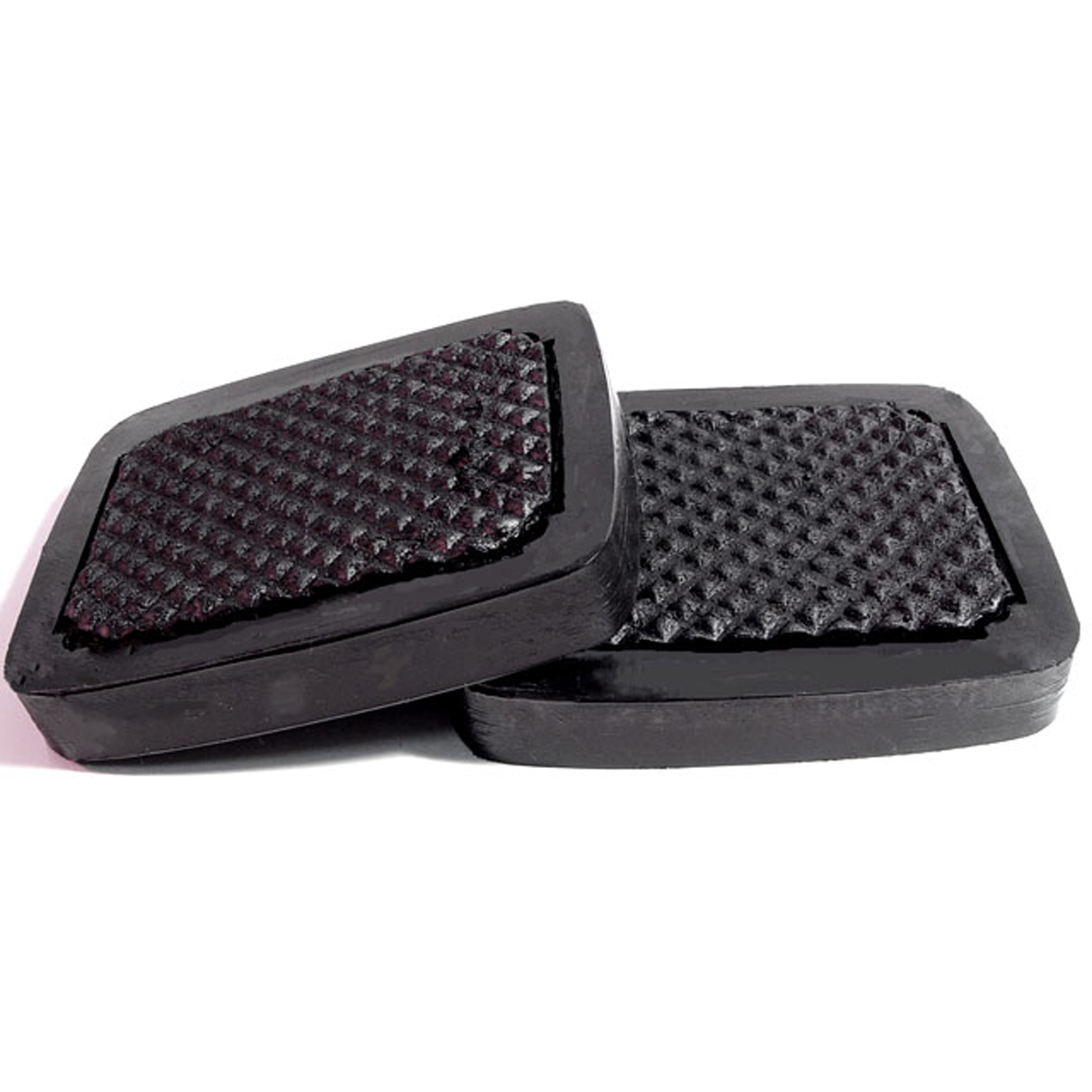 1913 Buick MODEL 40 Clutch and Brake Pedal Pads. 2-3/4" wide X 3-3/8" long-CB 12Clutch and Brake Pedal Pads. 2-3/4" wide X 3-3/8" long. Pair
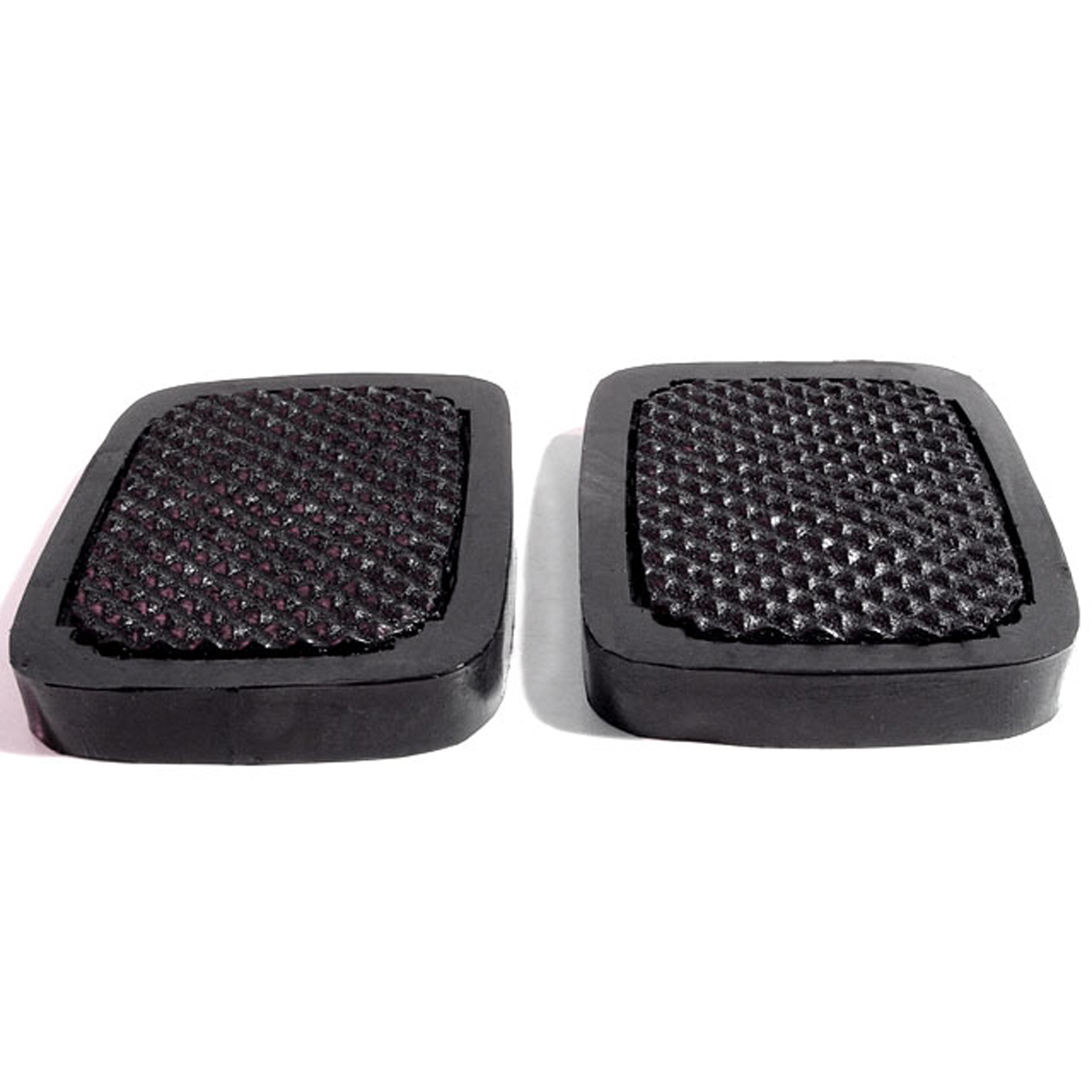 1913 Buick MODEL 40 Clutch and Brake Pedal Pads. 2-3/4" wide X 3-3/4" long-CB 13Clutch and Brake Pedal Pads. 2-3/4" wide X 3-3/4" long. Pair
Why Choose Metro?
For over 100 years, Metro Moulded Parts has been the pinnacle of quality in classic car restoration parts. Our commitment to precision and authenticity in every component ensures a perfect fit and an OEM-level appearance.
- Expert Craftsmanship & Quality: Each part is a testament to our dedication to reliability and perfection, crafted from original designs and thoroughly tested.
- Advanced Technology: We use cutting-edge techniques to create flawless, long-lasting parts that surpass others in performance.
- SuperSoft Sponge – The Ultimate Door Seal: Not only are our door seals 30% softer than competitors', but they're also guaranteed to never leak. They effectively reduce wind and road noise, enhancing your classic car's comfort and driving experience.
- Proudly American: Our parts are a product of American craftsmanship, made in the USA with a spirit of excellence and heritage.
- Unrivaled Warranty: We back our products with a 30-year industry-leading warranty, a testament to our confidence in their quality.
Join us in preserving the legacy of classic cars with parts that are crafted for perfection, not just made.