

Image of 1915 Buick Model C-24, Note: These illustrations use artistic license and may differ from actual historical models.
Performance Metrics
Fundamental Metrics
Emotional Appeal
MMP Rating
| Engine Specifications | |
|---|---|
| Engine: | 4-cylinder, in-line, L-head |
| Displacement: | 165 cubic inches |
| Horsepower: | Estimated 24-30 HP |
| Torque: | Not available |
| Compression Ratio: | Not available |
| Ignition System: | Magneto |
| Cooling System: | Water-cooled |
| Performance Specifications | |
| 0-60 Time: | Not available |
| 1/4 Mile Time: | Not available |
| Top Speed: | 40-45 mph |
| Transmission and Drive | |
| Drive Type: | Rear-wheel drive |
| Transmission Type: | 3-speed manual |
| Fuel and Efficiency | |
| Fuel System Type: | Carburetor |
| MPG: | Not available |
| Dimensions and Brakes | |
| Brakes: | Mechanical drum brakes |
| Wheelbase: | 112 inches |
| Weight: | 1,650 lbs |
Note: Specifications for classic cars are given to the best of our ability, considering the limited and variant data available.
1915 Buick Model C-24: An Early Buick Built for the Open Road
The 1915 Buick Model C-24 brought the sound of a four-cylinder engine and the promise of motoring freedom to a country still getting used to the automobile. Built by the Buick Motor Company in Flint, Michigan, it came from a maker already known for sturdy engineering and overhead-valve engines. The C-24 was a practical, open touring car rather than a luxury showpiece, but its blend of useful power and straightforward design made it a revealing example of Buick’s place in early American motoring.
Buick had become part of General Motors in 1908, during a period of rapid growth for the young auto industry. In 1915, roads were often rough or unpaved, and long-distance travel demanded mechanical sympathy as well as optimism. A notable detail of the C-24’s story is that its engine followed Buick’s distinctive valve-in-head, or overhead-valve, approach. At a time when many rivals used side-valve engines, that design helped Buick build a reputation for strong performance from a relatively compact powerplant.
Open Touring Style and Period Craftsmanship
The C-24’s most familiar form was an open touring car, with a tall, upright profile, separate fenders, exposed running boards, and a simple folding top. Its long hood gave the engine room to breathe, while the upright radiator and lamps reflected the functional styling of the prewar era. The look was handsome in a purposeful way: every major part appeared ready to deal with the road rather than merely decorate it.
Inside, the emphasis was on durable materials and straightforward controls. A surviving example may have leather upholstery, painted or varnished trim, and a metal dashboard with prominent gauges and levers. Equipment and finishes could vary by car and by restoration, so original factory details should be checked against period documentation. The touring layout provided seating for several passengers, but it offered little protection from weather, dust, or road spray. A fitted top and side curtains helped, though they could not make an open car feel like a modern enclosed sedan.
Period Buicks were commonly finished in conservative shades such as black and dark colors, with trim and upholstery choices varying by body and year. Exact paint availability for an individual C-24 should be confirmed through factory literature or reliable historical records. As with many early cars, today’s restored examples may wear colors selected by a later owner rather than a documented original combination.
Body-style naming can be confusing because Buick offered several models and body configurations during this period. The C-24 is especially associated with the touring body; related Buick models offered other open-car forms, including roadsters. Buyers could also choose equipment and accessories suited to their needs. The touring body remains the most recognizable expression of the C-24 because it captures the model’s central appeal: room for passengers and luggage, with the countryside close at hand.
Buick Engineering in 1915
The C-24’s defining engineering feature was its four-cylinder overhead-valve engine. In an overhead-valve layout, the valves sit above the combustion chamber rather than alongside the cylinder. Buick had used this arrangement for years, and it helped distinguish the company’s engines from many competitors. The C-24’s engine is generally listed at about 35 horsepower, with a displacement of roughly 3.7 liters, though specifications can vary across reference sources and should be verified for a particular car.
Power went through a manual transmission and a conventional rear-wheel-drive layout. The driver had to coordinate the clutch, throttle, and gear lever without the benefit of modern synchromesh, so shifting smoothly took practice. Mechanical controls were direct and understandable, but they demanded more effort and attention than a modern driver might expect. Equipment such as electric starting and lighting was becoming increasingly available in the period; the exact fitment on a C-24 should be checked against its specification and surviving components.
What set Buick apart was not a single futuristic feature, but the combination of proven engine design, practical construction, and a growing manufacturing organization. The C-24 belonged to a generation of cars that helped turn motoring from an experiment for the wealthy into a more accessible form of transportation. Its engineering also reinforced Buick’s long-standing association with overhead-valve power.
Performance, Speed, and Driving Feel
Period and later reference figures commonly put the C-24’s top speed in the neighborhood of 45 to 50 mph, depending on condition, gearing, tires, road surface, and load. A reliable factory 0-to-60-mph figure is not generally available, and 60 mph was not a useful everyday benchmark for this class of car. In ordinary use, acceleration was modest by modern standards, and the car was happiest at a steady, measured pace rather than being pushed hard.
On a smooth road, the C-24’s leaf-spring suspension and tall tires provided a relatively forgiving ride for its time. On ruts and potholes, the body could bounce and sway, and the driver had to keep a firm hand on the wheel. Narrow tires and period steering geometry rewarded anticipation on winding roads. The car had no modern stability aids, and braking performance depended on its original mechanical system and present-day condition, so safe driving means leaving plenty of room and speed for the road ahead.
Behind the wheel, the experience is physical and involving. The engine has a steady mechanical beat, the transmission rewards deliberate shifts, and the driver feels closely connected to the machinery. Wind, engine noise, and road texture are part of the trip. Even a short outing can feel like an event, especially when the C-24 is traveling at a pace that lets its occupants take in the landscape.
Living With a C-24
A 1915 Buick is now best suited to touring, club events, museum displays, and careful local drives. It is not a sensible modern daily driver: traffic moves faster than the car was designed for, and its lighting, brakes, tires, and occupant protection are products of another era. Owners who take one on public roads should plan routes carefully, keep to suitable speeds, and make sure the car is mechanically sound.
Maintenance is manageable for an experienced vintage-car owner, but it is not identical to working on a modern vehicle. The engine and chassis use mechanical systems that are relatively accessible, and many repairs can be handled with basic tools and patience. The challenges are finding correct parts, sourcing specialist help for restoration work, and understanding the car’s original adjustments. Regular attention to lubrication, ignition, cooling, tires, brakes, and fasteners is essential. Reliability depends heavily on restoration quality and upkeep, rather than age alone.
Facts, Myths, and Early Buick Character
The C-24’s strongest claim to distinction is its connection to Buick’s early overhead-valve tradition, not a famous speed record or celebrity ownership. Model-specific production totals and well-documented celebrity associations are difficult to establish, so such claims should be treated cautiously unless supported by period records. Buick’s broader growth in the early twentieth century, however, helped establish the company as one of the important American manufacturers of its era.
One common criticism of the C-24 is also part of its charm: it asks a lot of its driver. Steering and braking require more effort, weather protection is limited, and the car’s pace is slow beside modern traffic. Parts availability can also be a challenge. Those drawbacks are worth understanding before purchase, but they are not flaws in the context of 1915. The C-24 was designed for a world of lower speeds, simpler roads, and hands-on motoring.
Collector Value and Rarity
A precise production total for the 1915 Buick Model C-24 is not readily established in commonly available model histories. Buick produced cars in substantial numbers by the standards of the day, but surviving C-24s are now uncommon. As a broad, clearly labeled estimate rather than a documented factory figure, the model may have been built in the thousands or possibly into the low tens of thousands. The number of complete, usable examples today is much smaller.
Collector values depend on originality, completeness, mechanical condition, restoration quality, and documentation. As a general 2026 market estimate, a project car might fall around $8,000 to $20,000, while a sound driver-quality example could bring roughly $20,000 to $45,000. A high-quality, correctly restored car may reach about $50,000 to $80,000 or more, particularly if it has strong provenance or exceptional presentation. These are broad estimates, not a formal appraisal, and individual sales can land outside the range.
The C-24 occupies a specialized corner of the collector market. Interest in early brass-era and prewar cars remains steady among vintage motoring enthusiasts, but the buyer pool is smaller than for postwar classics. Values may rise over time for exceptional examples, though restoration costs can exceed the final sale price. Originality and condition often matter more than a costly restoration, so buyers should inspect the car carefully and verify its identity and history before committing.
Why the 1915 Buick C-24 Still Matters
The 1915 Buick Model C-24 combines a practical touring-car body, a distinctive overhead-valve engine, and the hands-on character of early motoring. It was built when the automobile was changing American travel, yet it remains refreshingly direct: engine, gears, road, and driver, with little in between. The C-24 is not a fast or effortless classic, but it offers a vivid connection to the engineering and ambition of its time. For anyone who values the roots of Buick and the open-road spirit of the prewar era, it is a small car with a substantial story.
1915 Buick Model C-24 Catalog of Parts
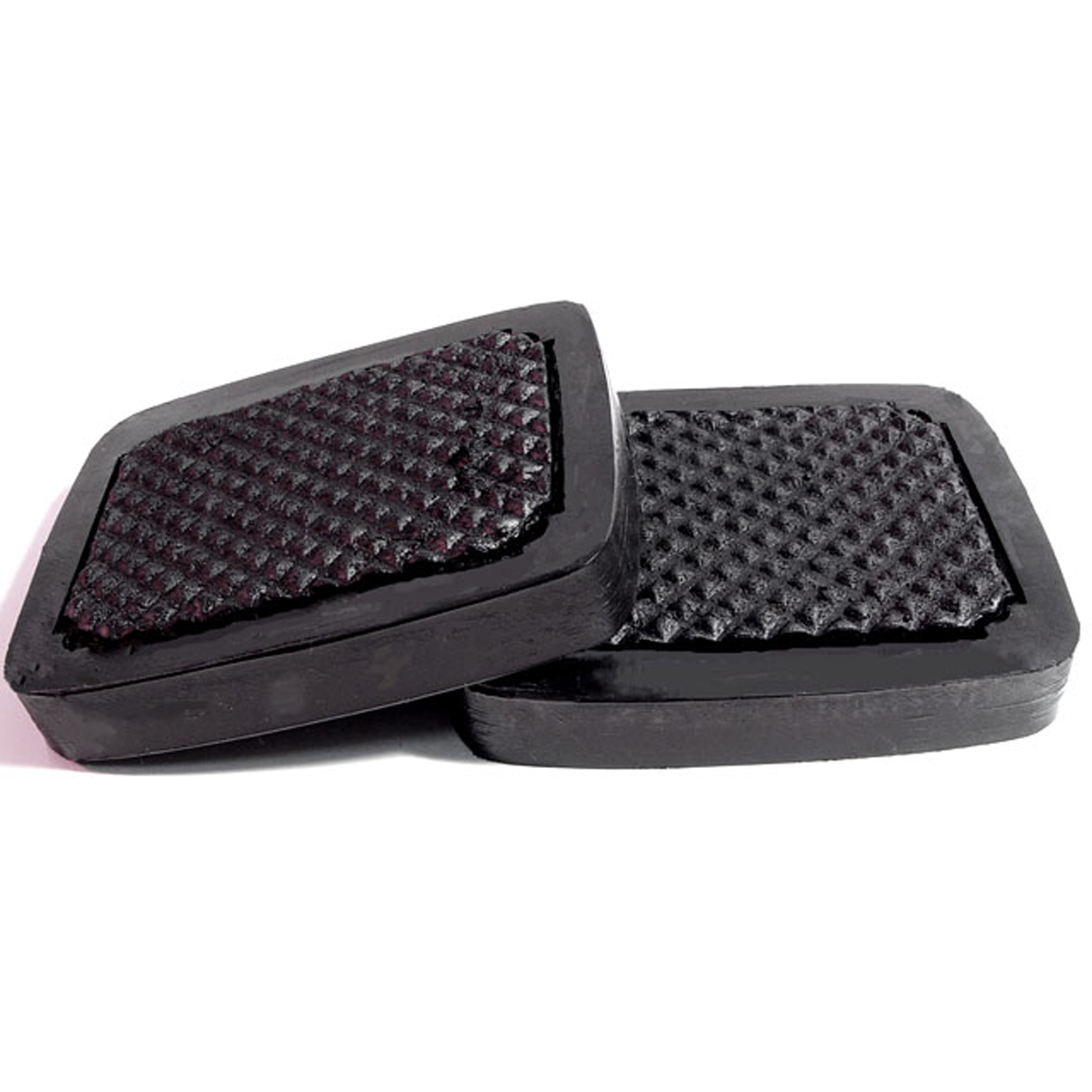 1915 Buick MODEL C-24 Clutch and Brake Pedal Pads. 2-3/4" wide X 3-3/8" long-CB 12Clutch and Brake Pedal Pads. 2-3/4" wide X 3-3/8" long. Pair
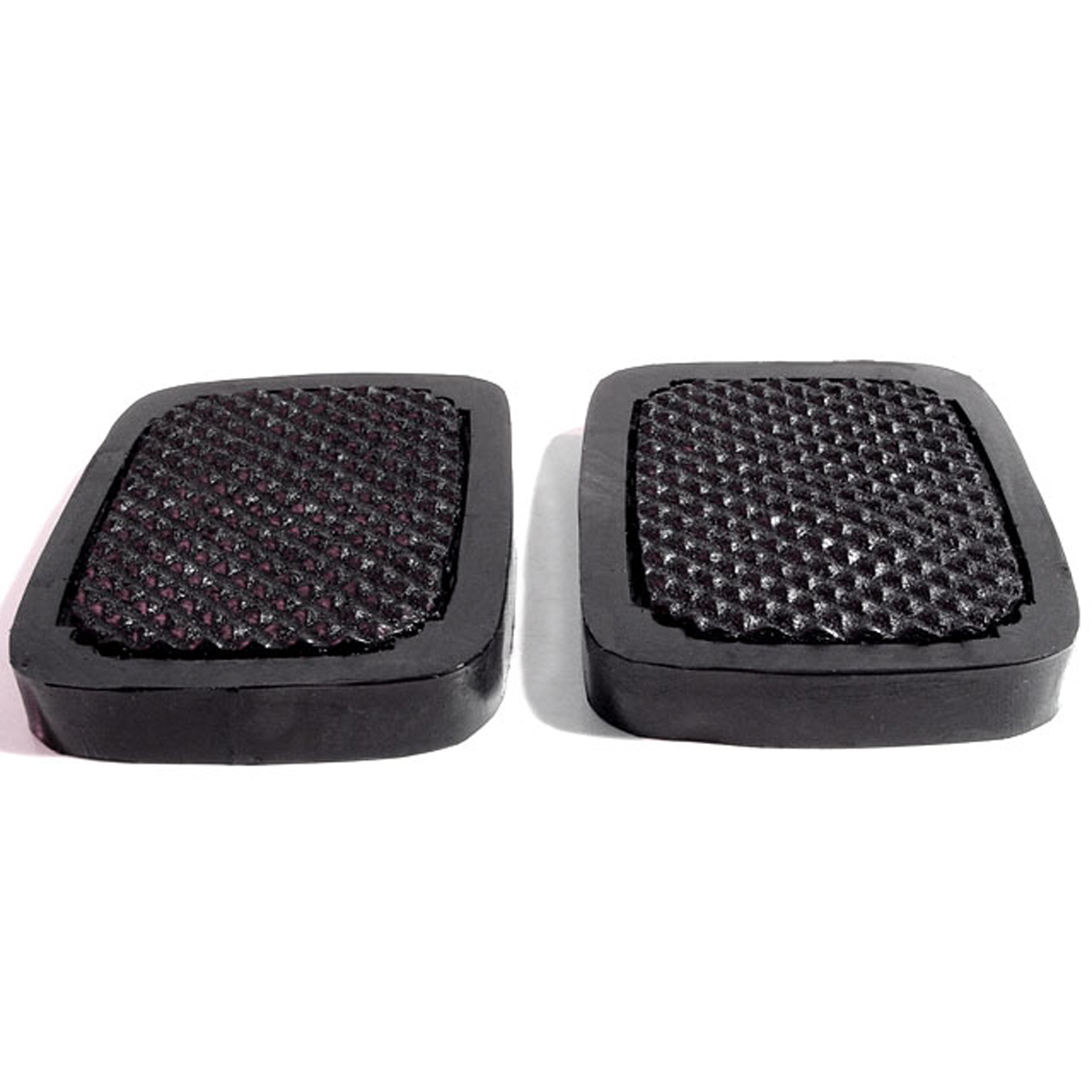 1915 Buick MODEL C-24 Clutch and Brake Pedal Pads. 2-3/4" wide X 3-3/4" long-CB 13Clutch and Brake Pedal Pads. 2-3/4" wide X 3-3/4" long. Pair
Why Choose Metro?
For over 100 years, Metro Moulded Parts has been the pinnacle of quality in classic car restoration parts. Our commitment to precision and authenticity in every component ensures a perfect fit and an OEM-level appearance.
- Expert Craftsmanship & Quality: Each part is a testament to our dedication to reliability and perfection, crafted from original designs and thoroughly tested.
- Advanced Technology: We use cutting-edge techniques to create flawless, long-lasting parts that surpass others in performance.
- SuperSoft Sponge – The Ultimate Door Seal: Not only are our door seals 30% softer than competitors', but they're also guaranteed to never leak. They effectively reduce wind and road noise, enhancing your classic car's comfort and driving experience.
- Proudly American: Our parts are a product of American craftsmanship, made in the USA with a spirit of excellence and heritage.
- Unrivaled Warranty: We back our products with a 30-year industry-leading warranty, a testament to our confidence in their quality.
Join us in preserving the legacy of classic cars with parts that are crafted for perfection, not just made.