

Image of 1915 Buick Model C-36, Note: These illustrations use artistic license and may differ from actual historical models.
Performance Metrics
Fundamental Metrics
Emotional Appeal
MMP Rating
| Engine Specifications | |
|---|---|
| Engine Options: | 6-cylinder, overhead valve |
| Displacement Range: | 331 cubic inches |
| Horsepower Range: | Estimated 40-50 HP |
| Torque: | Not available |
| Compression Ratio: | Not available |
| Ignition System: | Magneto ignition system |
| Cooling System: | Water-cooled |
| Performance Specifications | |
| 0-60 Time: | Not available |
| 1/4 Mile Time: | Not available |
| Top Speed: | 40-50 mph |
| Transmission and Drive | |
| Drive Type: | Rear-wheel drive |
| Transmission Type: | 3-speed manual |
| Fuel and Efficiency | |
| Fuel System Type: | Carburetor |
| MPG: | Not available |
| Dimensions and Brakes | |
| Brakes: | Mechanical drum brakes |
| Wheelbase: | 130 inches |
| Weight: | Estimated 2,800 lbs |
Note: Specifications for classic cars are given to the best of our ability, considering the limited and variant data available.
1915 Buick Model C-36: A Brass-Era Buick Built for the Open Road
The 1915 Buick Model C-36 turned a day’s drive into an open-air adventure, with a purposeful four-cylinder engine and the upright, carriage-inspired style of early motoring. Built by Buick Motor Company in Flint, Michigan, it belongs to a period when automobiles were becoming more practical and widely owned, yet still demanded mechanical sympathy from their drivers.
Buick was already an important name in the American auto industry. Its success helped William C. Durant build General Motors, and the marque had earned a reputation for engineering features such as overhead-valve engines. The C-36 is part of Buick’s prewar story: a traditional touring car from a company that was steadily making its automobiles more capable and refined.
One intriguing detail is the model’s designation. “C-36” identifies a particular Buick model in the company’s 1915 range, but surviving records do not make it easy to pin down a definitive production total for that exact variant. It is best understood as a specific model in a much larger Buick lineup, rather than as a separately numbered production run with a well-documented count.
Touring-Car Style and Brass-Era Details
The C-36’s appearance is unmistakably early twentieth century: a tall, upright radiator; long, exposed fenders; narrow running boards; and large spoked wheels with slim tires. Its hood and body sit high above the road, giving the car a formal stance that reflects its roots in horse-drawn carriage design. Lamps mounted at the front and sides add visual character, while the open cabin makes the car feel ready for a country excursion rather than enclosed city travel.
As with many cars of the period, the touring body is the style most closely associated with the C-36. It offered seating for several passengers beneath a folding top, with side curtains available for some protection from wind and rain. Buick’s broader 1915 range included different body configurations, but buyers should not assume every body style was offered on the C-36 itself. Model-specific factory documentation and surviving cars are the best guides to an individual car’s original configuration.
Inside, the emphasis was on durable, straightforward materials. The cabin typically featured a painted or wood-trimmed dashboard, simple gauges, a large steering wheel, and upholstered seating. Leather or leather-like trim was common in open cars of the era, though the exact upholstery could vary with specification and restoration. There was little in the way of modern convenience: occupants were exposed to dust, weather, engine heat, and road noise, and the driver had to manage the car’s controls directly.
Period Buick color choices depended on body style, finish, and production details, and a single universally correct palette for every C-36 is difficult to establish. Dark shades such as black, deep blue, and maroon are familiar on restored cars of the era. For an authentic restoration, factory records, original paint traces, and the car’s history are more reliable than assuming one color was standard across all examples.
Engineering That Set Buick Apart
The C-36’s most important technology was under the hood. Buick was known for overhead-valve engine design, in which the valves sit in the cylinder head rather than beside the cylinders. This arrangement helped Buick build a strong reputation for efficient breathing and useful power at a time when many competing engines used less advanced side-valve layouts.
The C-36 is generally identified as a four-cylinder Buick, commonly listed at about 35 horsepower. Published specifications for very early cars can vary by source and rating method, so figures should be checked against the serial number and period documentation for a particular example. The engine drove the rear wheels through a manual transmission, with the driver responsible for clutch operation, gear selection, and managing engine speed.
Buick’s reputation for engineering did not mean the C-36 was effortless to drive by modern standards. The controls required practice, and the driver had to listen and feel for the right moment to shift. Still, features such as the overhead-valve engine helped distinguish Buick from many contemporaries and reinforced the company’s identity as a maker of technically ambitious cars.
Historical Significance: Buick Before the Mass-Market Boom
The 1915 Model C-36 arrived as American car ownership was expanding rapidly. Automobiles were moving beyond the realm of wealthy hobbyists, but they remained expensive, mechanically involved machines. A touring Buick offered practical passenger capacity and useful road performance while retaining the open, hands-on character of early motoring.
Its significance is less about a single revolutionary feature than about Buick’s broader influence. The company helped popularize overhead-valve engine design and built cars that combined respectable performance with a growing emphasis on usability. That engineering reputation contributed to Buick’s long-term standing within General Motors and influenced how buyers judged American cars in the years that followed.
The C-36 also captures a transition in automotive design. Its high ground clearance, open body, exposed running gear, and narrow tires look distinctly early-era, while its engine and production context point toward the more standardized, increasingly accessible automobiles that would soon dominate American roads. It is a useful snapshot of an industry changing quickly just before the United States entered World War I.
Performance and the Early Driving Experience
A healthy C-36 is often estimated to have a top speed in the neighborhood of 45 to 50 mph, although actual performance depends on gearing, mechanical condition, road surface, tire type, and load. A modern-style 0-to-60-mph time is not especially meaningful: many examples may struggle to reach 60 mph, and the car was designed for steady travel rather than quick acceleration. Period gearing, narrow tires, and modest brakes all favor a relaxed pace.
On a smooth road, the C-36 would feel lively and engaging by 1915 standards. The engine’s steady mechanical beat, gear whine, and the rush of air around the open body are part of the experience. Acceleration is gradual, and the driver must coordinate the clutch and transmission without the benefit of a modern synchronized gearbox. Each shift is an action, not a casual flick of the wrist.
On rough roads, the car’s tall tires and flexible suspension offer some compliance, but bumps can still send movement through the body and steering. The high seating position and narrow tires make the car feel quite different from a modern vehicle, especially on rutted or crowned roads. On winding routes, careful steering and moderate speeds are essential. Early cars generally had limited braking capability compared with modern automobiles, so looking well ahead and allowing generous stopping distance are part of responsible driving.
Ownership, Maintenance, and Reliability
Today, a C-36 is best suited to touring events, museum displays, car shows, and occasional, carefully planned drives. It is not a practical daily driver in modern traffic. Its open body offers little protection from weather, and it lacks contemporary safety equipment, lighting performance, and braking systems.
Maintenance is hands-on. Owners need to monitor lubrication, cooling, ignition, fuel delivery, tire condition, and the many adjustments that older mechanical systems require. Parts availability varies: common service items and reproduction components may be obtainable through specialist suppliers, while model-specific body, trim, and engine parts can take more effort to locate. A mechanically experienced owner can handle many routine jobs, but accurate restoration or major engine work may call for a shop familiar with brass-era and prewar cars.
Reliability depends heavily on condition and upkeep. A well-restored Buick can be dependable for appropriate touring, but age alone makes every example a project to assess carefully. Before purchase, check the engine’s compression and oiling, cooling system, transmission, chassis, wood structure if applicable, and the quality of any restoration. A car that starts and runs is not necessarily roadworthy.
Facts, Myths, and Period Context
The C-36’s most notable claim to fame is its connection to Buick’s broader engineering legacy, rather than a widely documented speed record or a famous individual owner. No widely verified C-36-specific endurance record or celebrity association is established in commonly available model histories, so such claims should be treated cautiously unless supported by contemporary records.
Buick was already producing cars in substantial numbers by this period, but a dependable production figure for the C-36 alone is difficult to establish. As a broad estimate, Buick’s total 1915 output was in the tens of thousands, while the C-36 represented only part of the company’s model range. A reasonable working guess is that production of this particular model was in the thousands, but that is an estimate, not a verified factory total.
Common criticisms are easy to understand from a modern perspective: the C-36 is slow by today’s standards, exposed to the weather, mechanically demanding, and equipped with limited braking and safety provisions. Those are not design surprises so much as reminders of the era. Its appeal lies in the direct connection between driver, machine, and road, not in modern comfort or convenience.
Collector Value and Availability
Values depend on originality, body style, completeness, restoration quality, and documented history. As a broad current-market estimate, a project or incomplete example might fall around $15,000 to $30,000, while a sound, presentable car could bring roughly $30,000 to $60,000. A particularly well-restored, correct, and documented example may exceed that range, especially if it has an attractive body style or exceptional provenance. These are guide figures, not a formal appraisal, and early-car sales can vary significantly by venue.
The C-36 is uncommon on the market compared with better-known mass-produced classics, but it is not necessarily a one-off rarity. Finding one may require patience, and a buyer should verify the car’s identity and configuration rather than relying only on a seller’s description. Because exact C-36 production totals are not firmly established, assigning a precise surviving population would be guesswork.
Values for brass-era cars tend to be selective. High-quality, historically correct examples can hold collector interest, while expensive restorations do not always translate into equivalent resale prices. The market is generally more favorable to complete, well-documented cars than to ambitious projects. In real terms, many early touring cars have not followed the sharp appreciation seen in some later classics, so buyers should choose a C-36 for its history and driving experience, not as a guaranteed investment.
Why the 1915 Buick C-36 Still Matters
The 1915 Buick Model C-36 combines open-air touring-car style with the engineering reputation that helped make Buick a major American manufacturer. Its upright body, hands-on controls, and modest performance belong to a very different motoring world, while its overhead-valve Buick heritage points toward ideas that would shape the company’s future.
It is not a car for effortless commuting or high-speed travel. It is a rolling piece of automotive history, best appreciated at a measured pace, with the engine’s steady rhythm and the road unfolding directly ahead. The C-36 reminds us that early motoring was not simply about getting somewhere. It was about learning the machine, feeling every mile, and helping define what an automobile could become.
1915 Buick Model C-36 Catalog of Parts
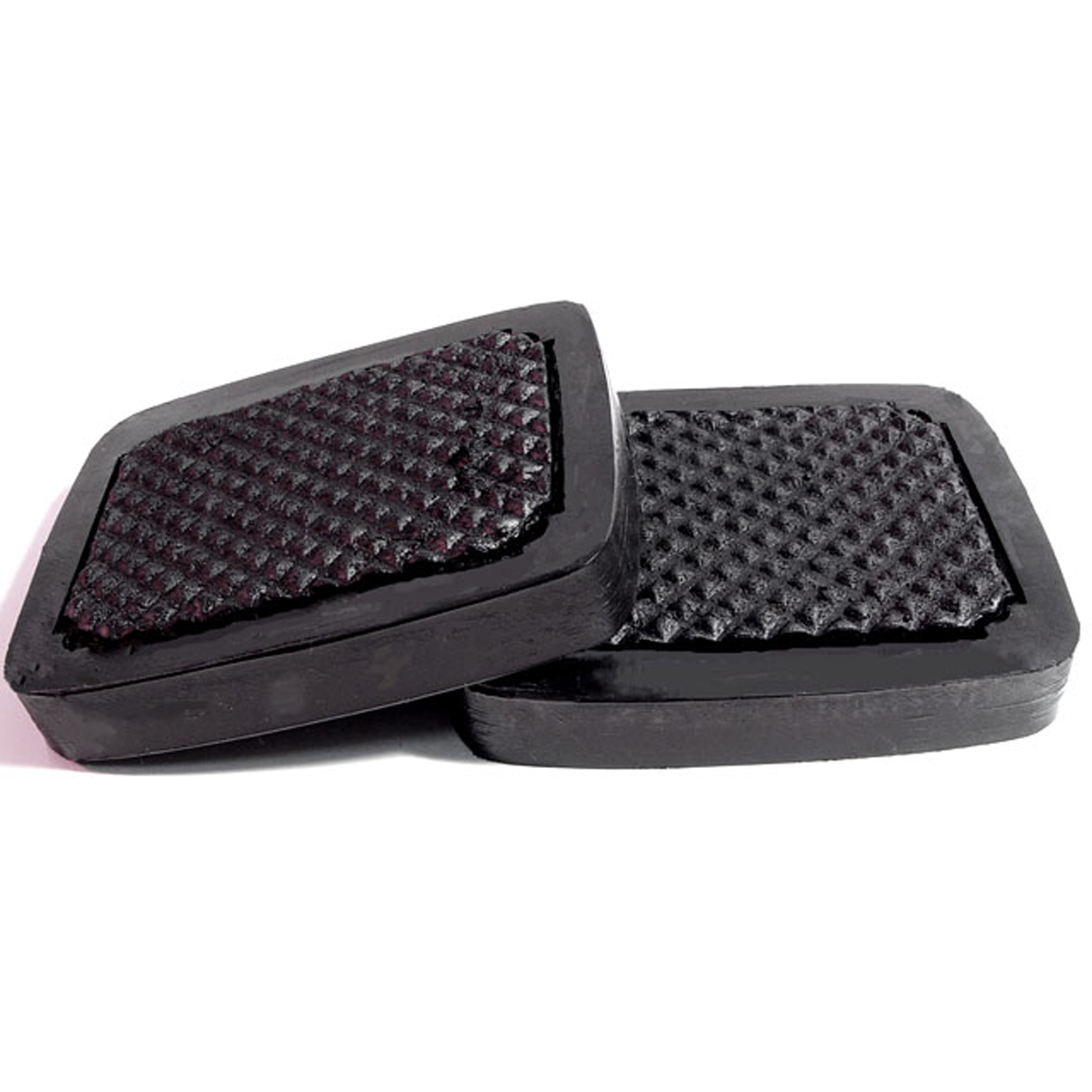 1915 Buick MODEL C-36 Clutch and Brake Pedal Pads. 2-3/4" wide X 3-3/8" long-CB 12Clutch and Brake Pedal Pads. 2-3/4" wide X 3-3/8" long. Pair
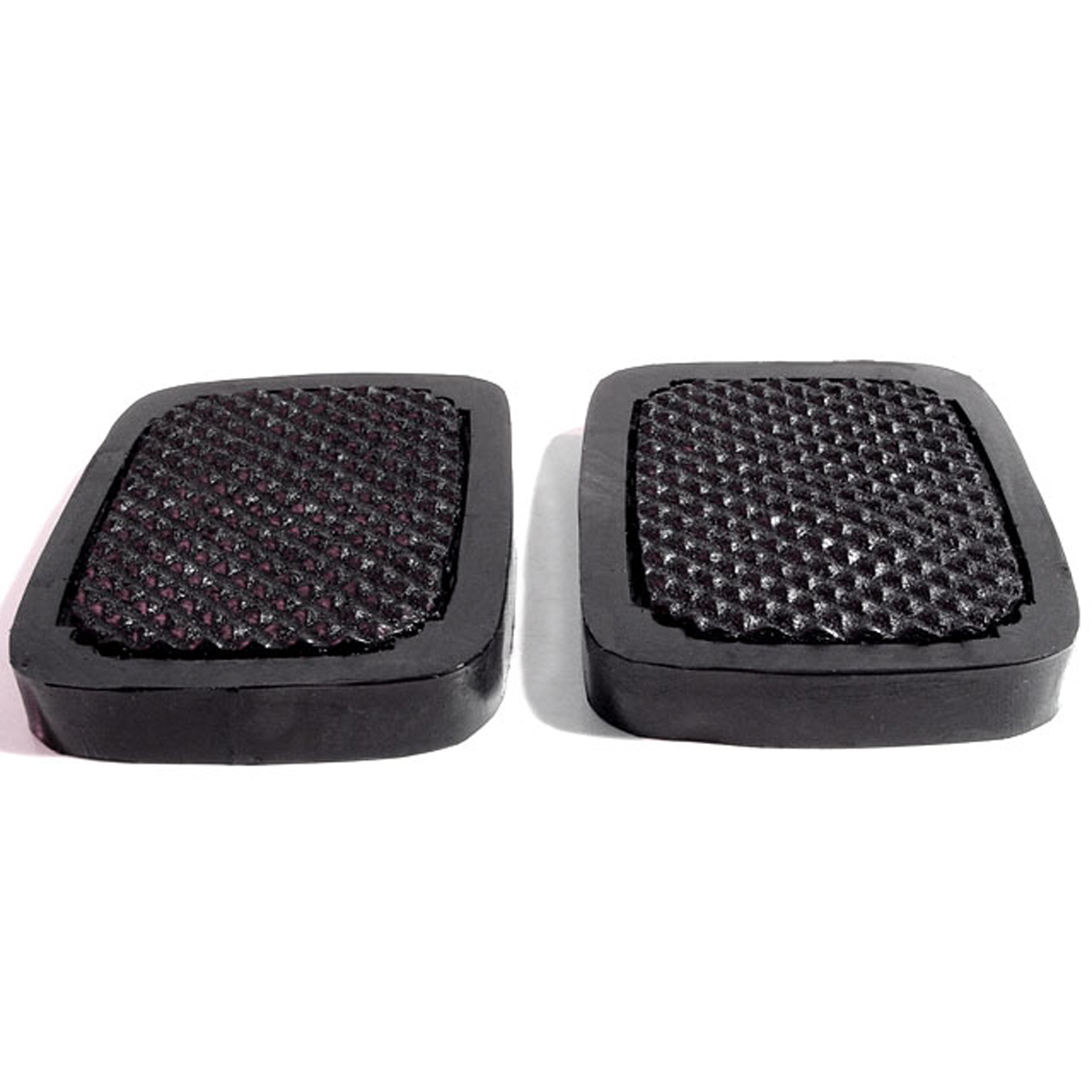 1915 Buick MODEL C-36 Clutch and Brake Pedal Pads. 2-3/4" wide X 3-3/4" long-CB 13Clutch and Brake Pedal Pads. 2-3/4" wide X 3-3/4" long. Pair
Why Choose Metro?
For over 100 years, Metro Moulded Parts has been the pinnacle of quality in classic car restoration parts. Our commitment to precision and authenticity in every component ensures a perfect fit and an OEM-level appearance.
- Expert Craftsmanship & Quality: Each part is a testament to our dedication to reliability and perfection, crafted from original designs and thoroughly tested.
- Advanced Technology: We use cutting-edge techniques to create flawless, long-lasting parts that surpass others in performance.
- SuperSoft Sponge – The Ultimate Door Seal: Not only are our door seals 30% softer than competitors', but they're also guaranteed to never leak. They effectively reduce wind and road noise, enhancing your classic car's comfort and driving experience.
- Proudly American: Our parts are a product of American craftsmanship, made in the USA with a spirit of excellence and heritage.
- Unrivaled Warranty: We back our products with a 30-year industry-leading warranty, a testament to our confidence in their quality.
Join us in preserving the legacy of classic cars with parts that are crafted for perfection, not just made.