

Image of 1915 Buick Model C-55, Note: These illustrations use artistic license and may differ from actual historical models.
Performance Metrics
Fundamental Metrics
Emotional Appeal
MMP Rating
| Engine Specifications | |
|---|---|
| Engine: | 4-cylinder, overhead valve |
| Displacement: | 5.2L |
| Horsepower: | Estimated 40-50 HP |
| Torque: | Not available |
| Compression Ratio: | Not available |
| Ignition System: | Magneto ignition system |
| Cooling System: | Water-cooled |
| Performance Specifications | |
| 0-60 Time: | Not available |
| 1/4 Mile Time: | Not available |
| Top Speed: | 40-50 mph |
| Transmission and Drive | |
| Drive Type: | Rear-wheel drive |
| Transmission Type: | 3-speed manual |
| Fuel and Efficiency | |
| Fuel System Type: | Carburetor |
| MPG: | Not available |
| Dimensions and Brakes | |
| Brakes: | Mechanical drum brakes |
| Wheelbase: | 120 inches |
| Weight: | Estimated 1,800-2,000 lbs |
Note: Specifications for classic cars are given to the best of our ability, considering the limited and variant data available.
1915 Buick Model C-55: A Brass-Era Buick with Six-Cylinder Ambition
The 1915 Buick Model C-55 brought six-cylinder power and Buick’s distinctive overhead-valve engineering to the open-road touring car just as American motoring was becoming part of everyday life. Built by the Buick Motor Company in Flint, Michigan, it came from a manufacturer already known for sturdy engines and practical engineering. The C-55 is a fascinating snapshot of Buick’s transition from early automobile pioneer to one of the leading names in the growing General Motors organization.
Buick’s history began under David Dunbar Buick, with William C. Durant later helping turn the company into a major industrial force. Buick became a founding cornerstone of General Motors in 1908. By 1915, the company was competing in a rapidly expanding market where buyers wanted more than a novelty. They wanted a car capable of carrying a family over rough roads, with enough power for hills and enough reliability to make longer journeys realistic.
One detail that makes the C-55 especially interesting is its six-cylinder engine. At a time when many affordable cars still used four-cylinder power, Buick offered a larger, smoother-running engine in a substantial touring chassis. Its overhead-valve layout was also a Buick trademark, giving the company a technical identity that distinguished it from many rivals.
Touring-Car Style and Period Details
The C-55’s appearance was formal but purposeful. Tall, narrow tires, separate curved fenders, running boards and a prominent upright radiator gave it the unmistakable profile of a prewar American automobile. The long hood announced the six-cylinder engine beneath it, while the open passenger compartment made the car feel more like a horse-drawn carriage adapted for motor travel than a modern enclosed sedan.
The five-passenger touring body is the style most closely associated with the C-55. Its open sides and folding top suited the period, when motoring was as much an outdoor activity as transportation. A windshield helped shield the front occupants from wind and road spray, while lamps mounted at the front and sides provided period lighting. Equipment and trim could vary with specification, so details on surviving cars may not be identical.
Inside, the C-55 favored durable, functional materials over modern comforts. The seats were typically upholstered in leather or other period-appropriate trim, with painted metal and wood details elsewhere in the cabin. The layout was straightforward: a large steering wheel, exposed controls and a relatively upright driving position. There was little sound insulation, and passengers were exposed to weather, dust and engine noise. A folding top and side curtains offered some protection, but this remained an open touring car at heart.
Factory color information can be difficult to establish for an individual surviving car, and paint choices varied by year and body specification. Dark shades such as black, deep blue and maroon are commonly associated with cars of the era, but a careful restoration should follow documentation specific to the car rather than assume that one color was universal.
Overhead-Valve Engineering in 1915
The C-55’s most significant engineering feature was its Buick overhead-valve engine. In an overhead-valve design, the valves sit above the combustion chambers rather than alongside the cylinders. Buick had built its reputation around this arrangement, which could support effective breathing and strong performance for its time. The C-55’s six-cylinder engine displaced about 331 cubic inches and was rated at approximately 55 horsepower by the standards used in the period.
Power went to the rear wheels through a manual transmission, generally described as a three-speed unit. The car also used a conventional rear-wheel-drive layout and a mechanical control system that required more effort and attentiveness than a modern driver expects. Buick’s use of electrical starting and lighting equipment was part of the broader move away from hand-cranking and oil or acetylene lamps, though equipment could vary by production specification and individual car.
Buick’s engineering did not make the C-55 effortless by modern standards. It did, however, combine a substantial engine with a chassis intended for real road use. That balance helped Buick appeal to buyers who wanted more capability and refinement than the most basic runabout could offer.
Why the C-55 Mattered
The Model C-55 represented an important point in Buick’s development. Its six-cylinder power reflected a market moving toward smoother, more capable touring cars, while its overhead-valve design reinforced Buick’s reputation for distinctive engine engineering. The car was not simply a stylistic showpiece. It was designed to cover distance, carry several passengers and cope with the uneven roads common in the 1910s.
Compared with a small, inexpensive four-cylinder car, the C-55 offered more displacement and a more substantial presence. Compared with luxury automobiles, it aimed for a more attainable level of ownership while still delivering a larger engine and generous touring-car proportions. Buick’s emphasis on engineering and durability helped shape the company’s identity for decades, even as later generations of cars adopted closed bodies, more sophisticated transmissions and modern safety equipment.
The C-55 also illustrates how quickly automobile design was changing. The upright radiator, separate fenders and open body belong to an earlier era, yet electrical equipment and a multi-cylinder engine point toward the more integrated automobiles that would follow. It sits at the crossroads between the pioneering Brass Era and the increasingly standardized cars of the 1920s.
Speed, Ride and Driving Feel
Period performance figures are not directly comparable with modern test results. A reasonable estimate for a healthy, correctly geared C-55 is a top speed in the neighborhood of 50 to 60 mph, with actual results depending on the car’s condition, tires, gearing and road surface. A reliable factory 0-to-60-mph figure is not generally available, and the measurement is not especially useful for a car designed nearly a century before modern acceleration testing. As a rough modern estimate, reaching 60 mph could take well over half a minute, if the car can reach that speed under the conditions at hand.
On the road, the six-cylinder engine would deliver its power in a steady, deliberate way rather than with modern urgency. The driver had to coordinate the clutch, throttle and gear changes, while keeping an eye on engine temperature, oiling and the road ahead. The sound is likely a mechanical combination of exhaust beat, drivetrain whir and open-air wind noise. It is an experience that makes the driver an active participant rather than a passenger insulated from the machine.
The suspension and tall tires were built for the rough roads of the day, but bumps still made themselves known through the body and steering. On winding roads, the C-55 required measured inputs and a respectful pace. Its high, narrow tires and period steering geometry do not deliver the precise cornering feel of a modern car. At speed, an attentive driver would need to allow extra room for braking and avoid abrupt maneuvers.
Braking is another important difference. The car lacks modern four-wheel hydraulic brakes and contemporary safety systems. Its mechanical braking arrangement requires more planning and distance than a present-day driver may expect. A well-maintained example can be driven, but it should be operated conservatively and inspected carefully before any road outing.
Living with a 1915 Buick
Today, the C-55 is best suited to touring events, historic motoring, museum displays and carefully managed local drives. It is not a practical daily driver. Weather protection is limited, cruising speeds are modest by modern standards and road safety has changed dramatically since 1915. Its greatest reward is the opportunity to experience early motoring directly, with the engine, controls and road all demanding attention.
Maintenance is regular and hands-on. Owners need to monitor lubrication, cooling, ignition, fuel delivery, tires and the condition of the mechanical brakes. Many service tasks are understandable to a mechanically minded owner, but the car requires knowledge of period systems and access to suitable parts. Specialist suppliers and antique-car clubs can help with technical advice, reproduction components and restoration leads. Original parts may be difficult to source, and careless use of modern substitutes can create new problems.
Reliability depends heavily on restoration quality and maintenance. A properly rebuilt C-55 can be dependable for the short, planned journeys appropriate to a vintage car. A neglected example may need extensive work before it is safe to drive. Before buying, a prospective owner should assess the engine, transmission, chassis, wood structure where applicable, electrical system and brake operation, ideally with an experienced prewar-car mechanic.
Noteworthy Facts and Common Criticisms
The C-55’s 55-horsepower rating was a meaningful selling point in its day, and its six-cylinder configuration gave it a smoother character than many smaller cars. Buick’s long-standing association with overhead-valve engines is another notable part of its story. The company’s engineering reputation helped it grow into one of the major American manufacturers and later a central GM division.
No widely documented celebrity ownership or singular record-setting achievement is firmly associated with the 1915 C-55. Its historical importance is better understood through Buick’s broader growth and the car’s representation of a significant technical and social transition. It belongs to the era when automobiles were becoming increasingly capable, but before mass ownership and modern road infrastructure had fully arrived.
Common criticisms are easy to understand from a modern perspective: the car is slow to accelerate, demanding to steer and brake, exposed to weather, and dependent on frequent attention. Parts availability can also be a challenge. Those limitations are part of the ownership reality, not defects that a restoration can completely erase. The C-55 rewards patience and mechanical sympathy rather than convenience.
Collector Value and Rarity
Exact production figures for the 1915 Buick Model C-55 are difficult to confirm, and model-specific totals are not consistently published. Buick was a major producer by this period, but that does not mean every body style survives in large numbers. As a cautious estimate rather than a documented factory total, several thousand C-55s may have been built. The number of complete, well-preserved or correctly restored examples available today is far smaller.
Values depend strongly on originality, mechanical condition, restoration quality, documentation and body style. A rough project might fall around $8,000 to $20,000, while a usable but imperfect example could be in the $20,000 to $40,000 range. A well-restored touring car may bring roughly $40,000 to $70,000, with exceptional, highly original or particularly well-documented cars potentially exceeding that range. These are broad market estimates, not a formal appraisal, and individual sales can vary considerably.
The market for early touring cars is specialized. Values tend to reward cars that are complete, authentic and ready for vintage events, while expensive restorations do not always return their full cost at resale. Long-term interest in Brass-Era cars remains supported by their historical appeal, but prices can be uneven and depend on the quality of the specific car. Buyers should compare recent sales of similar Buicks and have an expert inspect any serious candidate.
A Buick Built for the Open Road
The 1915 Buick Model C-55 combines a substantial six-cylinder engine, Buick’s hallmark overhead-valve engineering and the unmistakable form of an early American touring car. It reflects a moment when automobiles were moving beyond novelty and becoming practical machines for travel, while still demanding skill and care from their owners.
It may not be fast, quiet or easy to drive by modern standards, but that is precisely why the C-55 remains compelling. Behind its tall wheels and open cabin is a Buick that helped define the company’s engineering character and captured the excitement of motoring on the edge of a new century.
1915 Buick Model C-55 Catalog of Parts
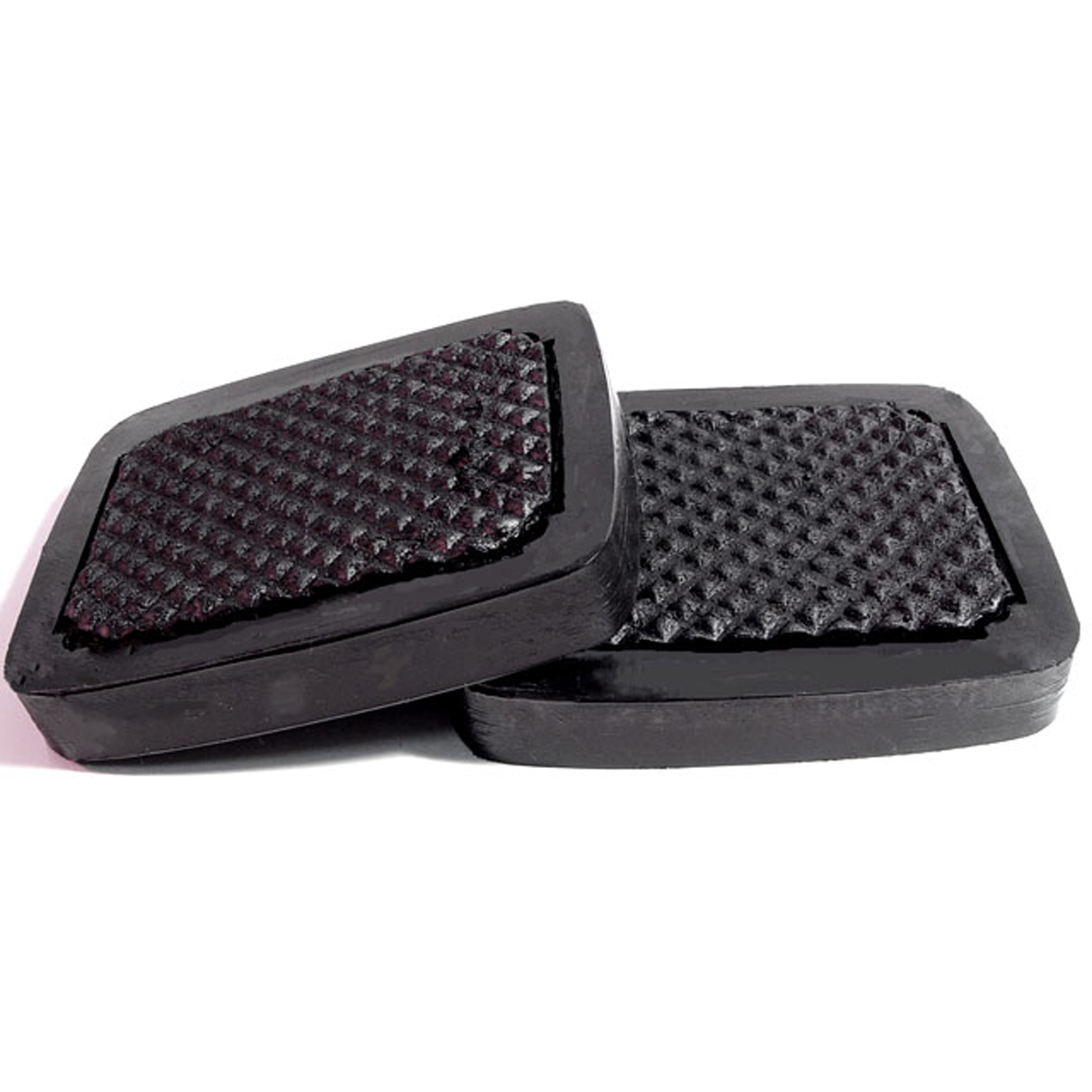 1915 Buick MODEL C-55 Clutch and Brake Pedal Pads. 2-3/4" wide X 3-3/8" long-CB 12Clutch and Brake Pedal Pads. 2-3/4" wide X 3-3/8" long. Pair
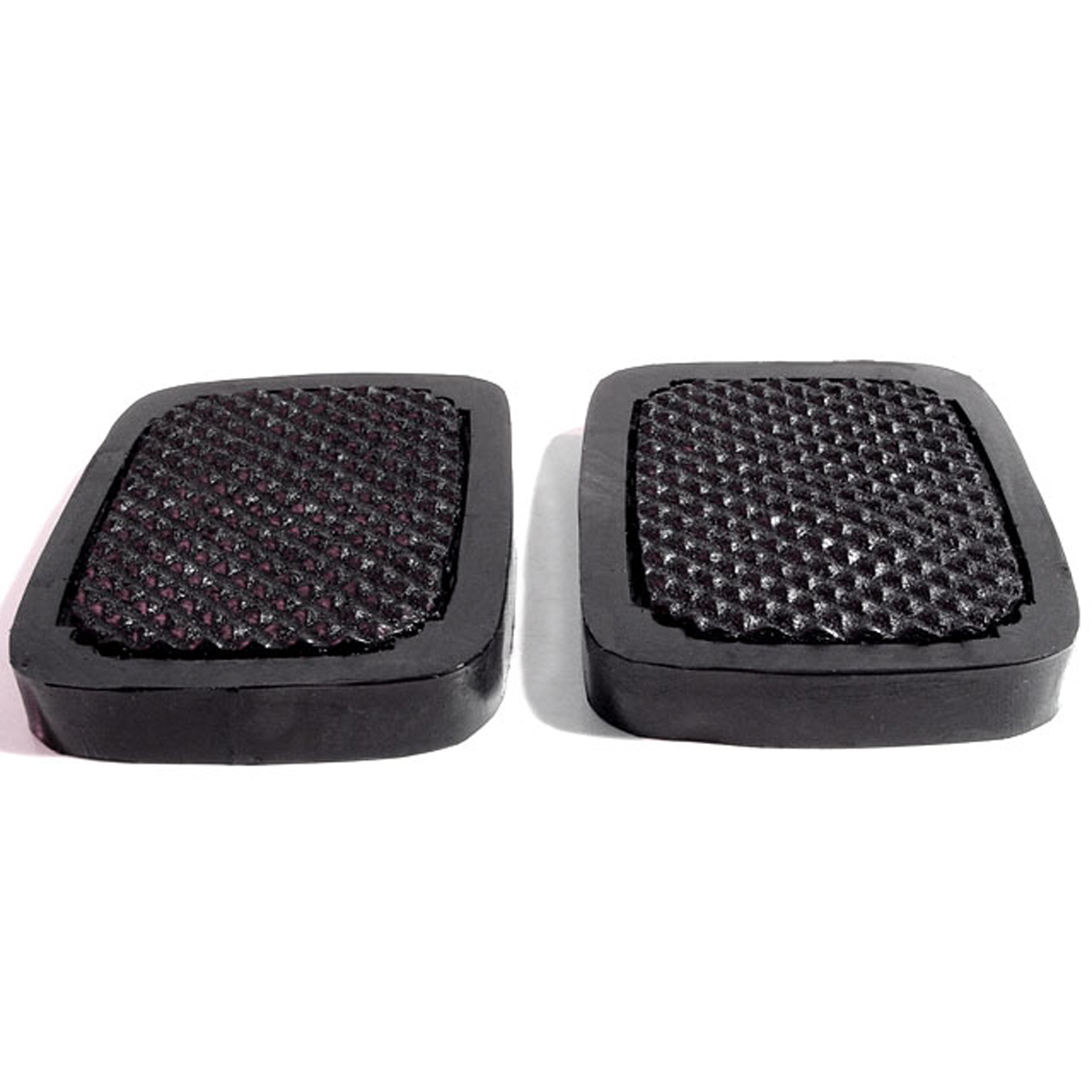 1915 Buick MODEL C-55 Clutch and Brake Pedal Pads. 2-3/4" wide X 3-3/4" long-CB 13Clutch and Brake Pedal Pads. 2-3/4" wide X 3-3/4" long. Pair
Why Choose Metro?
For over 100 years, Metro Moulded Parts has been the pinnacle of quality in classic car restoration parts. Our commitment to precision and authenticity in every component ensures a perfect fit and an OEM-level appearance.
- Expert Craftsmanship & Quality: Each part is a testament to our dedication to reliability and perfection, crafted from original designs and thoroughly tested.
- Advanced Technology: We use cutting-edge techniques to create flawless, long-lasting parts that surpass others in performance.
- SuperSoft Sponge – The Ultimate Door Seal: Not only are our door seals 30% softer than competitors', but they're also guaranteed to never leak. They effectively reduce wind and road noise, enhancing your classic car's comfort and driving experience.
- Proudly American: Our parts are a product of American craftsmanship, made in the USA with a spirit of excellence and heritage.
- Unrivaled Warranty: We back our products with a 30-year industry-leading warranty, a testament to our confidence in their quality.
Join us in preserving the legacy of classic cars with parts that are crafted for perfection, not just made.