

Image of 1916 Buick Model D-46, Note: These illustrations use artistic license and may differ from actual historical models.
Performance Metrics
Fundamental Metrics
Emotional Appeal
MMP Rating
| Engine Specifications | |
|---|---|
| Engine: | 4-cylinder, in-line, L-head |
| Displacement: | 224 cubic inches |
| Horsepower: | Estimated 22-24 HP |
| Torque: | Not available |
| Compression Ratio: | Not available |
| Ignition System: | Battery and coil |
| Cooling System: | Water, thermo-siphon |
| Performance Specifications | |
| 0-60 Time: | Not available |
| 1/4 Mile Time: | Not available |
| Top Speed: | 40-45 mph |
| Transmission and Drive | |
| Drive Type: | Rear-wheel drive |
| Transmission Type: | 3-speed manual |
| Fuel and Efficiency | |
| Fuel System Type: | Carburetor |
| MPG: | Not available |
| Dimensions and Brakes | |
| Brakes: | Mechanical drum brakes |
| Wheelbase: | 112 inches |
| Weight: | 1,650 lbs |
Note: Specifications for classic cars are given to the best of our ability, considering the limited and variant data available.
1916 Buick Model D-46: A Six-Cylinder Buick with Ambition
The 1916 Buick Model D-46 brought the smoothness of a six-cylinder engine and Buick’s distinctive overhead-valve engineering to the open-road motoring of the prewar era. Built by the Buick Motor Company in Flint, Michigan, it came from a marque that was already a cornerstone of General Motors and known for making advanced mechanical ideas practical for everyday motorists.
Buick’s story began with inventor David Dunbar Buick, but its rapid growth was driven by business leader William C. Durant, who brought Buick into the General Motors organization in 1908. By 1916, Buick had established a reputation for sturdy, well-engineered cars. The D-46 belonged to the company’s six-cylinder D-series, a range that showed Buick’s commitment to refinement as well as utility.
One intriguing detail is the engine’s valve-in-head layout, now called overhead-valve or OHV design. At a time when many competitors relied on side-valve engines, Buick made overhead valves a defining feature of its identity. That engineering choice would remain central to the brand’s reputation for decades.
Open-Car Styling and Period Craftsmanship
The D-46 had the tall, upright proportions of an early automobile, with a long hood, narrow radiator, separate fenders, running boards, and large spoked wheels. Its high seating position and open cabin gave occupants a clear view of the road, while its exposed lamps and simple, functional bodywork made its mechanical character part of its appearance. It was elegant by the standards of the day, but not fussy: the design emphasized dependable touring over ornament.
Surviving D-46s and period Buick specifications are associated with open touring-style bodies. Buick’s broader D-series range included different body configurations, and exact offerings could vary by market and production run. The open touring car is the most evocative version today, with room for several passengers and a folding top for protection from weather. Contemporary roadsters and other body styles across the Buick range offered more compact, sportier alternatives.
Inside, the emphasis was on durable materials and straightforward controls. Upholstery was typically leather or another hard-wearing period covering, set against painted or finished woodwork and metal fittings. The cabin was spacious by early-car standards, but comfort was basic: there was little weather protection, limited storage, and no modern conveniences such as a heater or power accessories.
Factory color records for individual D-46s are not always easy to establish. Like many cars of the period, Buicks were commonly finished in subdued colors, including dark shades and black, with upholstery and trim chosen to complement the body. Restorers should rely on surviving paint evidence or factory documentation for a particular car rather than assuming that every example left Flint in the same color.
OHV Engineering in the 1916 Buick
The D-46’s six-cylinder engine was a major part of its appeal. Period specifications commonly associate the D-series with a 255-cubic-inch, approximately 4.2-liter inline-six producing around 45 horsepower. Its overhead-valve arrangement helped Buick distinguish itself from many rivals and contributed to the marque’s reputation for lively, durable engines.
Power went through a conventional manual transmission, generally described as a three-speed unit, and then to the rear wheels. The car also reflected the transition toward more modern motoring: electric starting and lighting were becoming important features in the market, replacing the hand-cranking and lamp-lighting routines that had defined earlier automobiles. Exact equipment can differ by build and surviving example, so a particular car’s specification should be checked against its records.
For 1916, this was meaningful progress, but it was not a modern car in disguise. The driver still had to manage a manual gearbox, mechanical controls, and the road conditions of an era with few paved highways. The D-46’s engineering made motoring more capable and refined, not effortless.
Buick D-46 Historical Significance
The Model D-46’s significance lies less in a single revolutionary feature than in the way it represented Buick’s engineering direction. Buick helped popularize overhead-valve engines in production cars, demonstrating that the layout could be robust enough for ordinary owners, not just a technical curiosity. Its six-cylinder power also offered smoother operation than many four-cylinder competitors of the day.
That combination helped Buick occupy a useful middle ground. It was more substantial and mechanically ambitious than a basic runabout, while remaining a practical touring car rather than an exotic luxury machine. Buick’s OHV expertise became a lasting brand signature, influencing the company’s engine development long after the D-46 had left the showroom.
The car also arrived at a turning point. The American automobile industry was growing quickly, and the United States would enter World War I the following year. In 1916, however, the D-46 was still very much a civilian touring car, built for family travel, business, and leisure on roads that could be rough, dusty, or muddy.
Performance, Speed, and Road Manners
With roughly 45 horsepower, a D-46 in good mechanical condition was capable of respectable touring speeds for its time. A reasonable period-car estimate for top speed is about 50 to 55 mph, though gearing, body style, mechanical condition, tires, and road surface all affect what an individual car can achieve. That figure is best treated as an estimate, not a guaranteed factory-tested performance number.
A modern 0-to-60-mph time is not especially useful for this Buick. The car was not designed around quick acceleration, and many examples would struggle to reach 60 mph under ordinary conditions. Expect leisurely pickup and a long run-up to highway speed, rather than a meaningful modern-style sprint time. In period use, steady progress and the ability to maintain a sustainable touring pace mattered more than acceleration figures.
On a smooth road, the D-46 would feel composed and substantial. Its tall tires and simple suspension could take the edge off minor imperfections, but deep ruts and sharp bumps would make themselves known through the chassis and steering. On a winding road, the driver needed to plan ahead: the car’s height, narrow tires, manual steering, and period braking system call for measured cornering and generous stopping distance.
The experience is wonderfully mechanical. The six-cylinder engine produces a rhythmic, purposeful note, while the transmission and controls require the driver’s full attention. There is no power steering or modern sound insulation. Instead, the driver feels the road through the wheel, listens to the engine, and works the car at a pace suited to its age.
Living with a Model D-46
In 1916, the D-46 was a touring and personal-use car, serving families, professionals, and motorists who wanted a capable open automobile. Today, most examples are collector cars, restored show vehicles, or carefully maintained cars used for parades and occasional tours. Regular modern commuting is possible only in a very limited sense and is generally unwise given the car’s speed, braking, lighting, and protection compared with present-day traffic.
Maintenance is approachable for an owner with mechanical skill, a suitable workshop, and patience. The basic systems are visible and largely mechanical, making diagnosis less dependent on specialized electronics. However, parts are not as readily available as parts for a later mass-produced classic, and a correct restoration may require specialist knowledge of early Buick components. Routine attention to lubrication, ignition, cooling, tires, brakes, and fasteners is essential.
Reliability depends heavily on restoration quality and upkeep. A well-sorted D-46 can be dependable for short tours, but age, infrequent use, and poorly executed repairs can create problems. Before driving one, inspect the brakes, steering, wheels, tires, fuel system, and cooling system carefully. Its age is part of its charm, but it also demands respect.
Buick D-46 Facts and Common Criticisms
The Model D-46 has no widely documented speed or endurance record that defines its place in automotive history. Its stronger claim to notice is the broader Buick story: the company’s early commitment to overhead-valve engines helped distinguish its production cars and build a lasting engineering reputation. The D-46 belongs to that important chapter.
There is no dependable, widely published production total for the D-46 alone. Buick built cars in substantial numbers by early-twentieth-century standards, but model-by-model records can be difficult to separate. A cautious estimate would put D-46 production in the low thousands, perhaps roughly 2,000 to 8,000, but that is an informed guess rather than a verified factory figure. Surviving examples are much scarcer than the original production suggests.
The main criticisms are the ones common to early touring cars: limited weather protection, modest braking, slow acceleration, and a demanding driving routine. The open body can be uncomfortable in rain or cold, and the car requires more maintenance attention than a later classic. Those limitations are real, but they are also part of what makes a properly preserved example such an engaging piece of motoring history.
Collector Value and Market Outlook
Values vary sharply with body style, originality, restoration quality, documentation, and whether the car is complete and running. As a broad current-market estimate, a project or incomplete example might fall around $15,000 to $30,000, while a sound, usable car could bring roughly $30,000 to $60,000. A high-quality, correctly restored example may exceed that range, particularly if it has strong provenance or exceptional presentation. These are estimates, not a formal appraisal, and early-car sales can be highly individual.
The D-46 is uncommon on the open market, and buyers may wait a long time for a suitable example. Values for early cars tend to reward condition and authenticity more than mere age. In nominal dollars, well-presented examples have generally held collector interest and can appreciate selectively, but the market is relatively specialized. Restoration costs can also exceed the eventual resale value, so purchasing a complete, documented car is often the more sensible route.
Why the 1916 Buick D-46 Still Matters
The 1916 Buick Model D-46 combined a smooth six-cylinder engine, Buick’s forward-looking overhead-valve design, and the practical appeal of an open touring car. It was not fast by modern standards, nor was it built for effortless comfort. Its importance comes from showing how early Buick turned engineering ideas into sturdy, usable automobiles at a pivotal moment in American motoring.
More than a century later, the D-46 rewards the driver who appreciates mechanical connection and unhurried travel. It is a reminder that progress in the automobile industry was not only about speed or style, but also about making better engineering work on ordinary roads.
1916 Buick Model D-46 Catalog of Parts
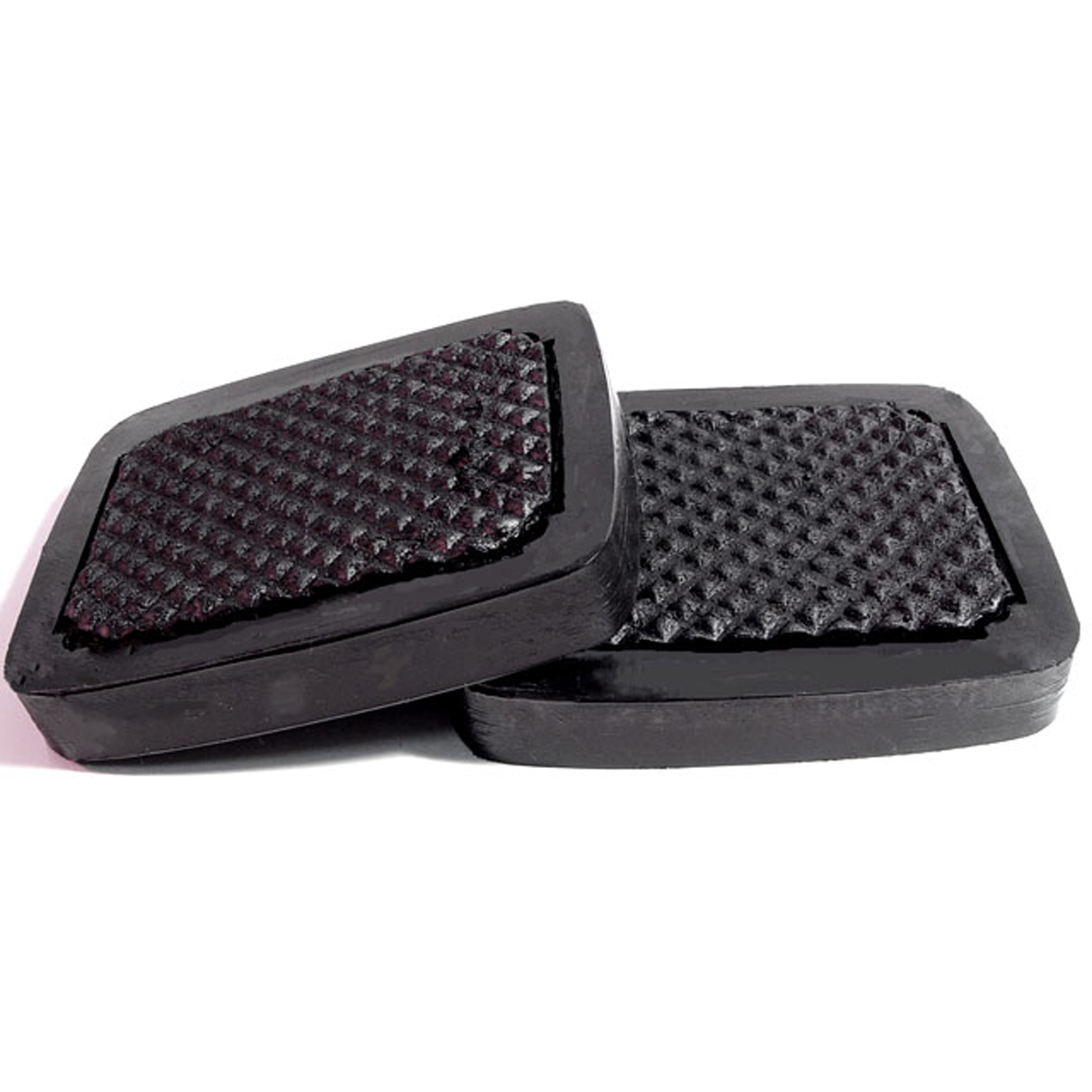 1916 Buick MODEL D-46 Clutch and Brake Pedal Pads. 2-3/4" wide X 3-3/8" long-CB 12Clutch and Brake Pedal Pads. 2-3/4" wide X 3-3/8" long. Pair
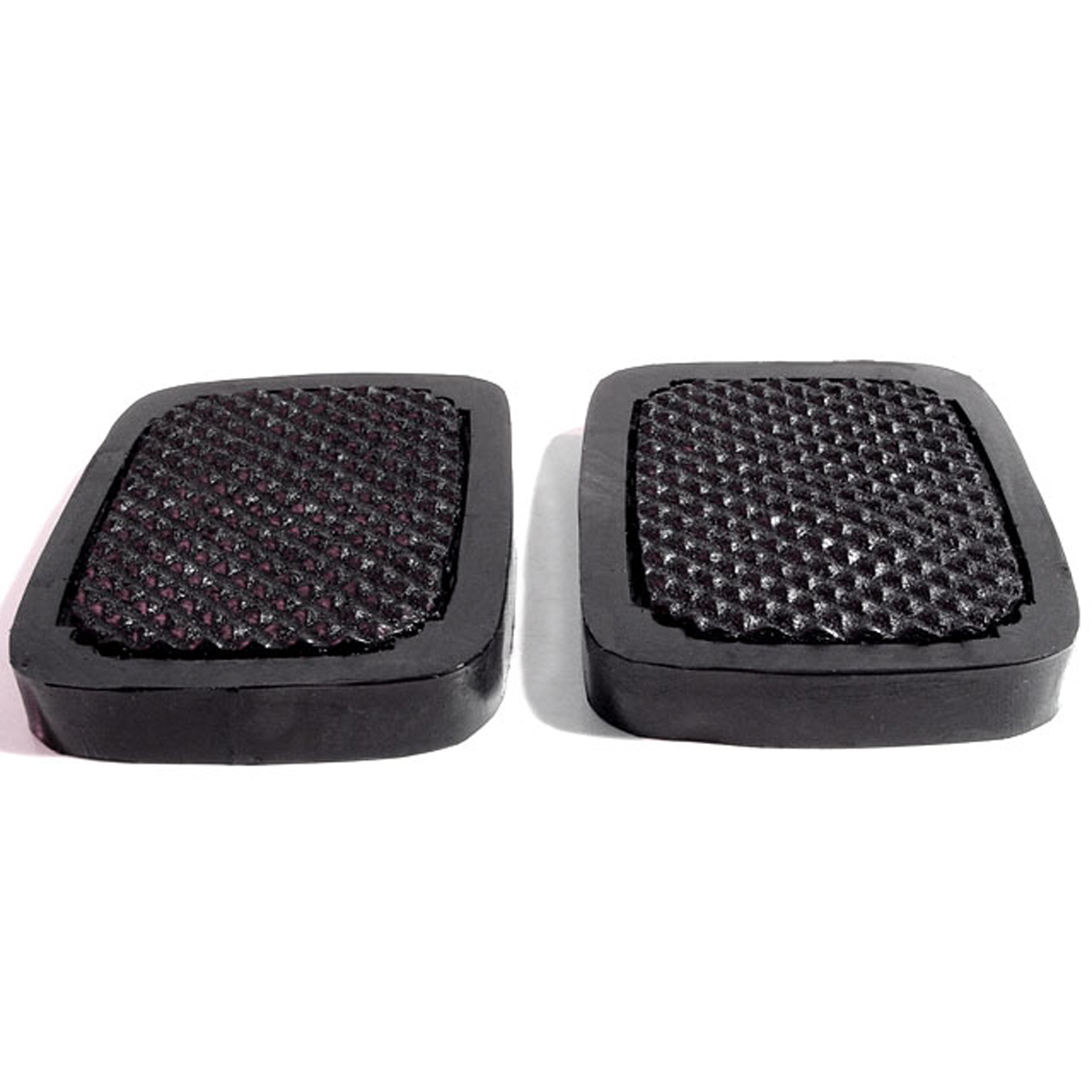 1916 Buick MODEL D-46 Clutch and Brake Pedal Pads. 2-3/4" wide X 3-3/4" long-CB 13Clutch and Brake Pedal Pads. 2-3/4" wide X 3-3/4" long. Pair
Why Choose Metro?
For over 100 years, Metro Moulded Parts has been the pinnacle of quality in classic car restoration parts. Our commitment to precision and authenticity in every component ensures a perfect fit and an OEM-level appearance.
- Expert Craftsmanship & Quality: Each part is a testament to our dedication to reliability and perfection, crafted from original designs and thoroughly tested.
- Advanced Technology: We use cutting-edge techniques to create flawless, long-lasting parts that surpass others in performance.
- SuperSoft Sponge – The Ultimate Door Seal: Not only are our door seals 30% softer than competitors', but they're also guaranteed to never leak. They effectively reduce wind and road noise, enhancing your classic car's comfort and driving experience.
- Proudly American: Our parts are a product of American craftsmanship, made in the USA with a spirit of excellence and heritage.
- Unrivaled Warranty: We back our products with a 30-year industry-leading warranty, a testament to our confidence in their quality.
Join us in preserving the legacy of classic cars with parts that are crafted for perfection, not just made.