

Image of 1917 Buick Model D-44, Note: These illustrations use artistic license and may differ from actual historical models.
Performance Metrics
Fundamental Metrics
Emotional Appeal
MMP Rating
| Engine Specifications | |
|---|---|
| Engine: | 4-cylinder, in-line, L-head |
| Displacement: | 170 cubic inches |
| Horsepower: | Estimated 40-50 HP |
| Torque: | Not available |
| Compression Ratio: | Not available |
| Ignition System: | Battery and coil |
| Cooling System: | Water, thermo-siphon |
| Performance Specifications | |
| 0-60 Time: | Not available |
| 1/4 Mile Time: | Not available |
| Top Speed: | 50 mph |
| Transmission and Drive | |
| Drive Type: | Rear-wheel drive |
| Transmission Type: | 3-speed manual |
| Fuel and Efficiency | |
| Fuel System Type: | Carburetor |
| MPG: | Not available |
| Dimensions and Brakes | |
| Brakes: | Mechanical drum brakes |
| Wheelbase: | 118 inches |
| Weight: | 1,650 lbs |
Note: Specifications for classic cars are given to the best of our ability, considering the limited and variant data available.
1917 Buick Model D-44: A Six-Cylinder Touring Car with Buick DNA
The 1917 Buick Model D-44 brought the open-road freedom of a touring car together with one of the era’s most distinctive engineering ideas: Buick’s overhead-valve, or “valve-in-head,” engine. Built by the Buick Motor Company, by then a major part of General Motors, the D-44 was a five-passenger touring model from a period when cars were becoming more dependable, more widely available, and increasingly useful beyond city streets.
Its timing gives the car an extra layer of history. The United States entered the First World War in 1917, a year of major change for American industry and transportation. The D-44 was designed for civilian motoring, not as a purpose-built military vehicle, but it represents the robust, practical American car culture that developed just before wartime production priorities reshaped the industry. One detail that still makes it stand out is the overhead-valve layout: while many contemporary engines used side valves, Buick had made its “valve-in-head” design a defining feature.
Touring-Car Style and Cabin Details
The D-44 has the unmistakable profile of an early open touring car: a long hood, upright radiator, separate rounded fenders, slim running boards, and large spoked wheels. Its tall, narrow proportions look formal beside a modern car, but they were practical for the time. The high ground clearance helped on rough, unpaved roads, while the open body made the car feel airy and sociable on a day’s drive.
As a five-passenger tourer, the D-44 offered two rows of seating beneath a folding fabric top. The windshield was upright and relatively simple, and the exposed lamps and external fittings gave the car much of its period character. The cabin was functional rather than lavish by modern standards. Upholstery and trim varied with specification and restoration, but leather seating was a desirable fit on open cars, paired with painted metal, wood details, and straightforward controls. Owners could add weather equipment such as side curtains to make the open body more useful in rain or cold.
Surviving cars and period paint practices point to subdued colors rather than a single universally documented D-44 palette. Dark blue, black, maroon, and other deep shades suit the model’s period appearance, but exact factory choices could vary by body and finish. Today, restorers often choose a historically sympathetic color based on evidence from a particular car, rather than assuming every D-44 left the factory in the same shade.
The D-44’s defining body style was the touring body. Buick’s broader range included other open and closed body types, with availability depending on the model and year. The five-passenger tourer was especially appealing because it could carry a family or a small group, fold its top for fair weather, and still provide a practical everyday layout for the era.
Buick Engineering in 1917
At the heart of the D-44 was Buick’s six-cylinder, overhead-valve engine. Period specifications commonly list a displacement of about 242 cubic inches and an output of roughly 45 horsepower, though figures can vary between references and the rating methods of the day. The valves sat above the combustion chamber rather than alongside the cylinders, a layout that helped Buick build its reputation for energetic performance and engineering ambition.
The engine worked with a manual transmission and rear-wheel drive, using controls that demanded more attention and coordination than a modern driver is used to. The D-44 also belonged to the generation of cars adopting useful electrical equipment, including electric starting and lighting. These features reduced the effort of getting underway compared with earlier cars that relied on hand cranking and less capable lamps, though maintenance and operating routines remained very hands-on.
Why the D-44 Matters
The Model D-44’s significance is tied to Buick’s wider influence. Buick helped popularize overhead-valve engines in an era when the design was still a meaningful point of difference. Its reputation for sturdy construction and strong performance helped establish the company as a major American automaker, and Buick’s success contributed to the early growth of General Motors.
The D-44 was not a one-off experiment or a record-breaking specialty car. Its importance is more practical: it shows how advanced engine design was moving into a usable, production touring car. Compared with many contemporaries, its six-cylinder power and Buick’s valve-in-head approach gave it a persuasive blend of smoothness and pulling power. The engine concept would remain closely associated with Buick for generations, making the D-44 part of a much longer technical story.
Road Manners, Speed, and Driving Feel
With around 45 horsepower, the D-44 was lively for its day, but its performance should be understood in the context of 1917 roads, tires, brakes, and gearing. A healthy example may reach approximately 45 to 55 mph, depending on condition, equipment, and road surface. A dependable factory 0-to-60-mph figure is not generally available, and 60 mph was not a standard performance benchmark in the period. By modern estimates, acceleration would be leisurely, likely taking well over 30 seconds if the car can reach 60 at all. Many owners would sensibly cruise below its theoretical top speed.
On a smooth road, the D-44 feels deliberate and mechanical. The six-cylinder engine produces a steady, low-pitched beat, with more vibration and mechanical noise than a modern car. The tall tires, solid axles, and period suspension soften some bumps, but the ride can still feel busy over broken pavement. On winding roads, the driver must plan ahead: steering is slower, body lean is noticeable, and braking distances are long by current standards. The car rewards a measured pace rather than quick inputs.
Driving one is an active experience. The driver manages a manual gearbox, monitors engine temperature and lubrication, and pays attention to the road in a way that modern power steering, disc brakes, and electronic systems usually spare us. The reward is a direct connection to the machinery: engine sound, gear changes, road texture, and the open-air view all become part of the journey.
Owning and Maintaining a 1917 Buick
A D-44 today is most often a collector car, parade vehicle, touring-club participant, or show car rather than a daily driver. It can still cover roads under its own power, but modern traffic moves faster and expects stronger braking, brighter lighting, and greater crash protection. Owners generally plan routes around slower speeds and avoid busy highways.
Maintenance is approachable for an experienced hobbyist, but it is not maintenance-free. The engine needs regular attention to lubrication, ignition, cooling, and fuel delivery. The clutch, transmission, brakes, wheel bearings, and steering also require inspection and adjustment. Many repairs are mechanically straightforward compared with work on a modern vehicle, yet age brings its own challenges: worn parts, previous repairs, and the difficulty of sourcing correct components can turn a simple job into a research project.
Reliability depends heavily on the quality of restoration and ongoing care. A well-sorted D-44 can be dependable on planned outings, while a neglected example may need substantial recommissioning before it is safe to drive. For a new owner, a pre-purchase inspection by someone familiar with prewar cars is money well spent.
Little-Known D-44 Details
The D-44’s most notable “claim to fame” is the engineering tradition it represents: Buick’s early commitment to overhead-valve engines. There is no widely recognized D-44 speed or endurance record, nor a famous model-specific celebrity association that defines the car’s story. Its appeal comes instead from its place in Buick history and from the vivid experience of an open touring car built more than a century ago.
There is also a useful reality check for anyone considering one: the word “touring” describes the body style, not modern long-distance comfort. Weather protection is limited, luggage space is modest, and the car’s pace is best suited to scenic roads, local events, and relaxed club tours. Those limitations are part of its character, but they are also the reason it is not a practical substitute for a modern vehicle.
Collector Value and Availability
Exact production totals for the 1917 D-44 are difficult to establish from commonly available model-level records. Buick built cars in substantial numbers for the period, but a reliable D-44-only figure is not readily confirmed. A reasonable estimate is that several thousand may have been produced, while the number of complete, roadworthy examples surviving today is much smaller. This is an informed estimate, not a documented factory total.
Values depend far more on condition, completeness, restoration quality, and provenance than on a single published price. As a broad current-market guide, a project car might fall around $8,000 to $15,000; a usable, older restoration could bring roughly $18,000 to $35,000; and a high-quality, correctly restored example may reach about $35,000 to $60,000 or more. Exceptional cars can exceed that range, while incomplete or poorly restored cars can sell for less. These are estimates, not guaranteed sale prices.
The market for early touring cars is specialized. Values tend to be steady but selective, with the best-preserved and best-documented examples attracting the most interest. Over time, quality examples may appreciate, but restoration costs can outpace resale value. Buyers should choose a D-44 because they value its history and driving experience, not because they expect a quick financial return.
A Buick Built for the Open Road
The 1917 Buick Model D-44 combines open touring-car style with an important chapter in Buick engineering. Its six-cylinder overhead-valve engine, practical five-passenger body, and direct, hands-on driving experience make it more than a handsome antique. It is a reminder of the moment when American cars were becoming capable machines for real travel, and when Buick’s engineering choices helped shape the company’s identity. More than a century later, the D-44 still turns a simple drive into a conversation with automotive history.
1917 Buick Model D-44 Catalog of Parts
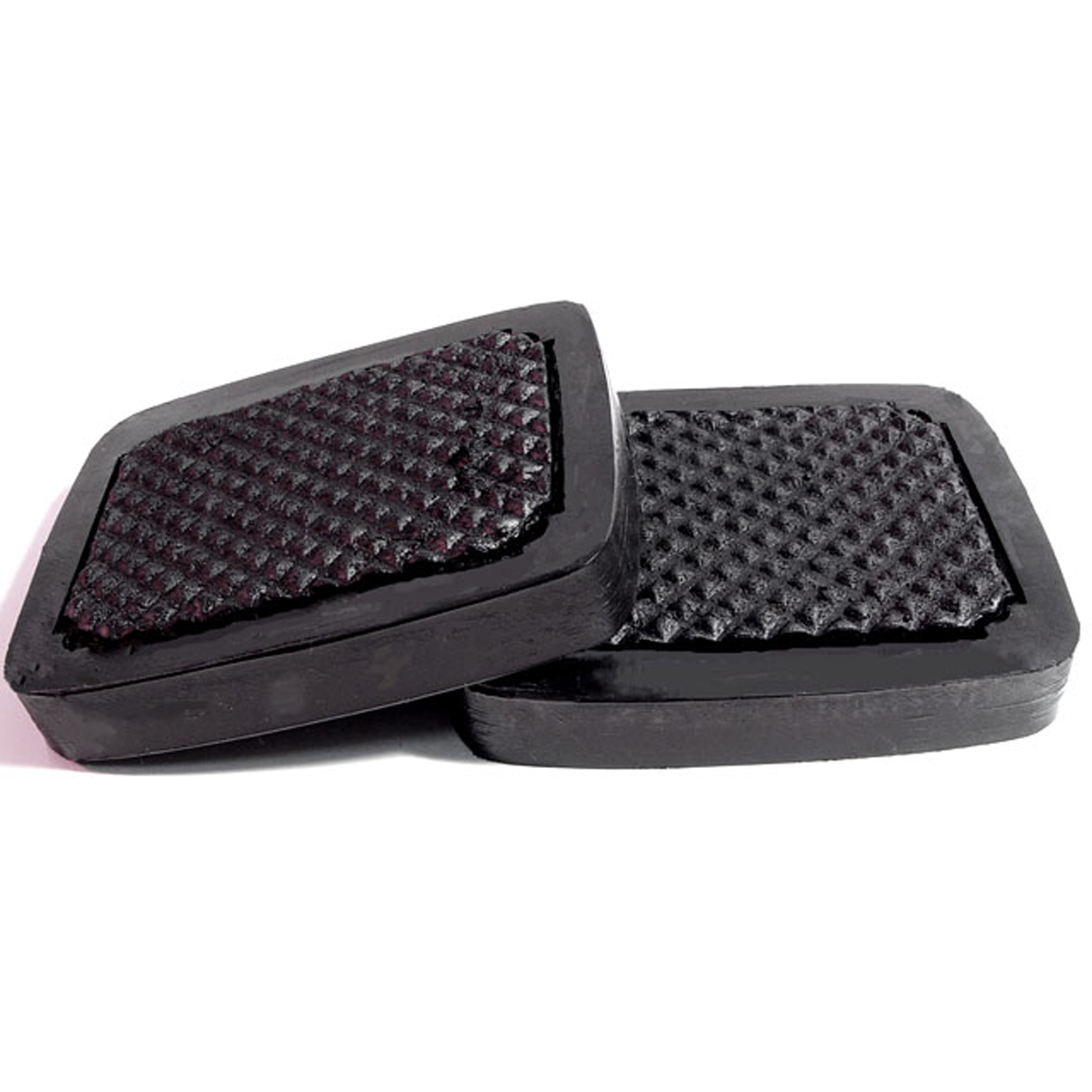 1917 Buick MODEL D-44 Clutch and Brake Pedal Pads. 2-3/4" wide X 3-3/8" long-CB 12Clutch and Brake Pedal Pads. 2-3/4" wide X 3-3/8" long. Pair
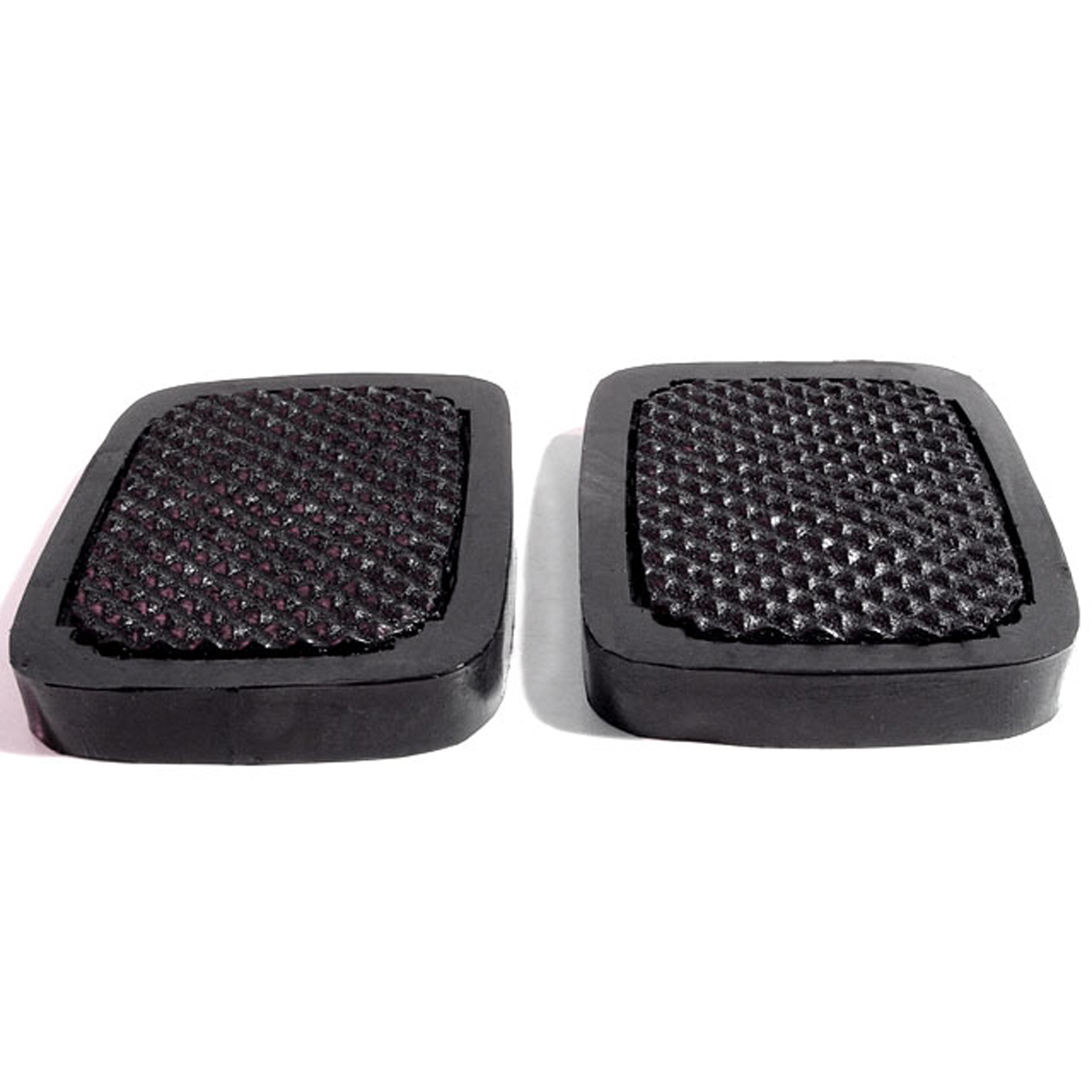 1917 Buick MODEL D-44 Clutch and Brake Pedal Pads. 2-3/4" wide X 3-3/4" long-CB 13Clutch and Brake Pedal Pads. 2-3/4" wide X 3-3/4" long. Pair
Why Choose Metro?
For over 100 years, Metro Moulded Parts has been the pinnacle of quality in classic car restoration parts. Our commitment to precision and authenticity in every component ensures a perfect fit and an OEM-level appearance.
- Expert Craftsmanship & Quality: Each part is a testament to our dedication to reliability and perfection, crafted from original designs and thoroughly tested.
- Advanced Technology: We use cutting-edge techniques to create flawless, long-lasting parts that surpass others in performance.
- SuperSoft Sponge – The Ultimate Door Seal: Not only are our door seals 30% softer than competitors', but they're also guaranteed to never leak. They effectively reduce wind and road noise, enhancing your classic car's comfort and driving experience.
- Proudly American: Our parts are a product of American craftsmanship, made in the USA with a spirit of excellence and heritage.
- Unrivaled Warranty: We back our products with a 30-year industry-leading warranty, a testament to our confidence in their quality.
Join us in preserving the legacy of classic cars with parts that are crafted for perfection, not just made.