

Image of 1917 Buick Model D-47, Note: These illustrations use artistic license and may differ from actual historical models.
Performance Metrics
Fundamental Metrics
Emotional Appeal
MMP Rating
| Engine Specifications | |
|---|---|
| Engine: | 4-cylinder, overhead valve |
| Displacement: | 170 cubic inches |
| Horsepower: | Estimated 25-30 HP |
| Torque: | Not available |
| Compression Ratio: | Not available |
| Ignition System: | Battery and coil |
| Cooling System: | Water, thermo-siphon |
| Performance Specifications | |
| 0-60 Time: | Not available |
| 1/4 Mile Time: | Not available |
| Top Speed: | 40-45 mph |
| Transmission and Drive | |
| Drive Type: | Rear-wheel drive |
| Transmission Type: | 3-speed manual |
| Fuel and Efficiency | |
| Fuel System Type: | Carburetor |
| MPG: | Not available |
| Dimensions and Brakes | |
| Brakes: | Mechanical drum |
| Wheelbase: | 118 inches |
| Weight: | 1,800 lbs |
Note: Specifications for classic cars are given to the best of our ability, considering the limited and variant data available.
1917 Buick Model D-47: A Brass-Era Buick with Six-Cylinder Confidence
The 1917 Buick Model D-47 brought the promise of a powerful, modern six-cylinder car to an America on the move. Built by the Buick Motor Company, then a major pillar of General Motors, the D-47 combined Buick’s signature overhead-valve engineering with the open-air practicality of a large touring car. More than a handsome antique, it represents a turning point when dependable six-cylinder power was becoming a compelling alternative to the smaller engines common in early automobiles.
The D-47 belongs to Buick’s 1917 Model D range. It is commonly identified as a seven-passenger touring model, with an open body, a folding top, and room for a full party of occupants. Model-year catalogs and surviving cars can be described inconsistently, so exact body details should be checked against the vehicle’s serial number and original documentation.
One detail that makes this Buick especially interesting is its connection to the brand’s long-running valve-in-head tradition. Buick had championed overhead-valve engines since its early years, and by 1917 that design gave the company a strong reputation for lively performance and engineering sophistication.
Touring-Car Styling and Cabin Details
The D-47 has the upright, purposeful proportions of a prewar touring car. Its tall radiator and hood lead the eye toward a long, open passenger compartment, while separate fenders arch over narrow tires. Exposed lamps, running boards, and a folding fabric top complete the unmistakably early-automobile silhouette. The overall look is functional rather than streamlined: every major component seems designed to be accessible, sturdy, and ready for the road.
Inside, the touring body offered generous seating by 1917 standards. Upholstery was typically leather or leather-like material, with finished woodwork and metal fittings adding a touch of craftsmanship. The cabin was open to the weather when the top was folded, and side curtains offered some protection from wind and rain. Comfort was measured against the standards of the day, not those of a modern sedan: occupants sat upright, road noise came freely into the cabin, and luggage space was limited.
Buick’s period equipment emphasized practical advances. The D-47’s six-cylinder engine, electric starting, and electric lighting made it feel substantially more modern than a hand-cranked, lamp-lit runabout. Exact equipment could vary by specification and year, so restorers generally confirm details through factory literature or the individual car’s history.
Period Buicks were offered in restrained colors suited to the era, including dark shades such as blue, gray, maroon, and black, though available finishes could vary by body and production run. Black is a familiar choice on surviving restorations, but it should not be assumed to have been the only factory color. The open touring body is the D-47’s defining form and the version most strongly associated with the model.
Why the D-47 Mattered
In 1917, an overhead-valve six-cylinder engine was a meaningful selling point. Buick’s design placed the valves in the cylinder head rather than relying on the less direct side-valve layout common among many cars of the period. That arrangement helped the engine breathe efficiently and reinforced Buick’s image as a technically ambitious manufacturer.
The D-47 was not a one-car revolution, but it reflected a broader shift in American motoring. Larger, more capable cars were becoming practical for longer trips, while electric starting and lighting made ownership less physically demanding. Buick’s engineering and production strength also helped establish the company as one of the most important names in the early General Motors organization.
Compared with many contemporaries, the D-47’s appeal lay in the combination of six-cylinder smoothness, substantial touring-car space, and Buick’s reputation for robust construction. Its influence is best understood as part of Buick’s steady development of accessible, well-engineered cars rather than as a single breakthrough that changed the industry overnight.
Engine, Speed, and Road Manners
The 1917 Model D range used a 242-cubic-inch (approximately 4.0-liter) inline six rated at about 45 horsepower by contemporary measurement. Power went to the rear wheels through a three-speed manual transmission. Period horsepower ratings are not directly comparable with modern figures, but the engine’s displacement and six-cylinder layout suited a substantial touring car well.
A mechanically sound D-47 is generally estimated to reach roughly 50 to 55 mph under favorable conditions. That is a period-car estimate, not a guaranteed factory-tested figure for every surviving example. A dependable 0-to-60-mph time is not documented, and reaching 60 mph may be unrealistic or inadvisable in an original car. If a modern comparison is essential, acceleration would be slow by today’s standards, likely taking well over 30 seconds where the car can reach 60 at all.
On a smooth road, the D-47’s long touring-car proportions and six-cylinder engine should make for a steady, unhurried drive. Rough surfaces expose the limitations of early suspension and narrow tires: bumps travel into the cabin, and the driver needs to manage speed carefully. On winding roads, the tall body, period steering, and modest tire grip call for deliberate inputs rather than quick corrections. Mechanical brakes also require more anticipation and stopping distance than a modern driver may expect.
The engine’s soundtrack is a soft, rhythmic mechanical six-cylinder note, accompanied by the familiar sounds of exposed machinery, tires, and wind. Driving takes active attention. The driver must coordinate the clutch and gear lever, read the road well ahead, and allow plenty of room for braking. That hands-on quality is a major part of the car’s appeal, but it also makes a D-47 feel very different from a modern classic with power steering and synchronized shifting.
Owning and Maintaining a 1917 Buick
Today, a D-47 is best suited to touring events, vintage-car gatherings, museums, and careful local drives. It is not a sensible daily driver in modern traffic. Its open body, limited weather protection, modest braking performance, and lack of contemporary safety equipment all favor lower speeds and quieter routes.
Many mechanical jobs are approachable for an experienced hobbyist because the car uses relatively straightforward systems and was built before modern electronic controls. However, “simple” does not mean maintenance-free. Owners need to understand the lubrication schedule, cooling system, ignition, carburetion, clutch, and period electrical equipment. Correct parts and skilled advice can be difficult to find, and body, trim, or upholstery work may require specialist restoration skills.
Reliability depends heavily on condition and upkeep. A carefully restored Buick can participate in touring events, while an unrestored or poorly maintained car may need extensive work before it is safe to drive. Regular checks of tires, steering, brakes, fuel lines, and fasteners are essential. For a car of this age, prevention and conservative driving matter more than speed.
Rare Details, Records, and Common Complaints
There is no widely documented D-47-specific speed or endurance record, and no well-established celebrity ownership story defines the model. Its historical interest comes instead from its place in Buick’s growing six-cylinder lineup and from the glimpse it offers of American motoring during the First World War era.
Exact production totals for the D-47 body style are not readily established in commonly available records. Buick produced cars in substantial numbers for the period, but that does not mean the surviving D-47 touring cars are plentiful. As a broad estimate rather than a verified factory figure, several thousand may have been built; the number still in running, original, or correctly restored condition is much smaller.
Common criticisms are familiar to anyone who owns an early touring car: weak weather protection, slow acceleration, demanding controls, limited braking, and scarce specialized parts. Those traits are part of the period experience, but they are also why the D-47 is not a casual purchase. A prospective owner should prioritize mechanical condition, completeness, documentation, and restoration quality over a shiny paint job.
Collector Value and Market Outlook
Values vary widely with condition, originality, history, and the quality of restoration. As a general current-market estimate, a project or incomplete example might fall around $10,000 to $20,000, while a sound driver-quality car could bring roughly $20,000 to $40,000. A high-quality, well-documented restoration may reach approximately $40,000 to $65,000 or more, especially if it is unusually original or has a strong provenance. These are broad estimates, not a formal appraisal.
The D-47 is uncommon enough to attract serious early-Buick and prewar-car enthusiasts, but it is not necessarily a fast-moving investment. The market for brass-era and pre-1920 cars tends to reward completeness, authenticity, and documented restoration more than speculative rarity alone. Values have generally been firmest for exceptional examples, while ordinary cars can be harder to sell. Over the long term, a top-tier D-47 may appreciate modestly, but ownership costs can easily outweigh any gain.
A Buick Built for the Open Road
The 1917 Buick Model D-47 combines a substantial touring-car body with Buick’s distinctive overhead-valve six-cylinder engineering. Its performance is modest by modern standards, and its controls demand patience, but its spacious open cabin, mechanical character, and place in Buick history make it a rewarding piece of early motoring.
For collectors, the D-47 is more than a polished antique. It is a working reminder of the moment when American cars were becoming more capable, more comfortable, and more accessible. Take one out on a quiet road, and the distance between the brass-era past and the modern automobile suddenly feels very small.
1917 Buick Model D-47 Catalog of Parts
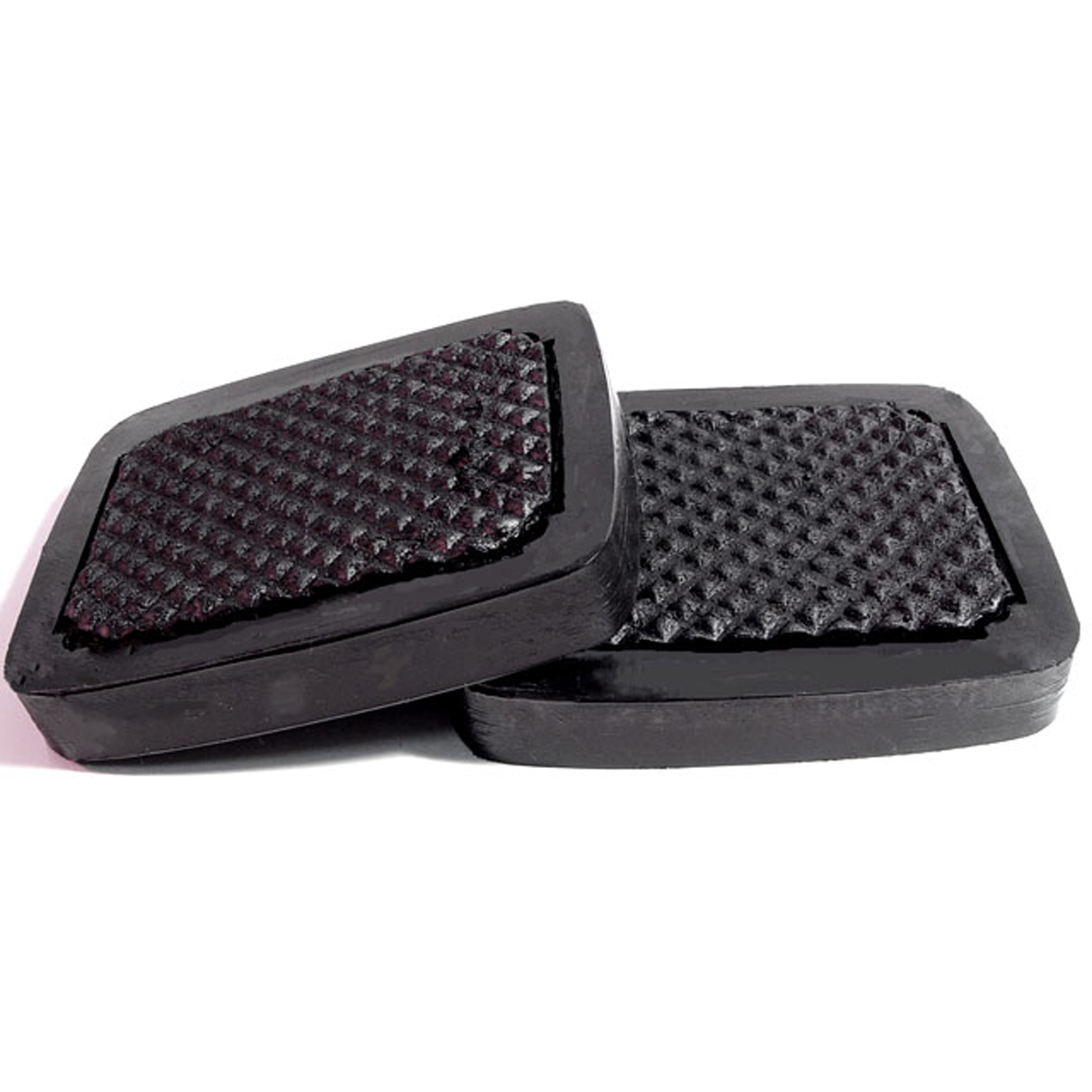 1917 Buick MODEL D-47 Clutch and Brake Pedal Pads. 2-3/4" wide X 3-3/8" long-CB 12Clutch and Brake Pedal Pads. 2-3/4" wide X 3-3/8" long. Pair
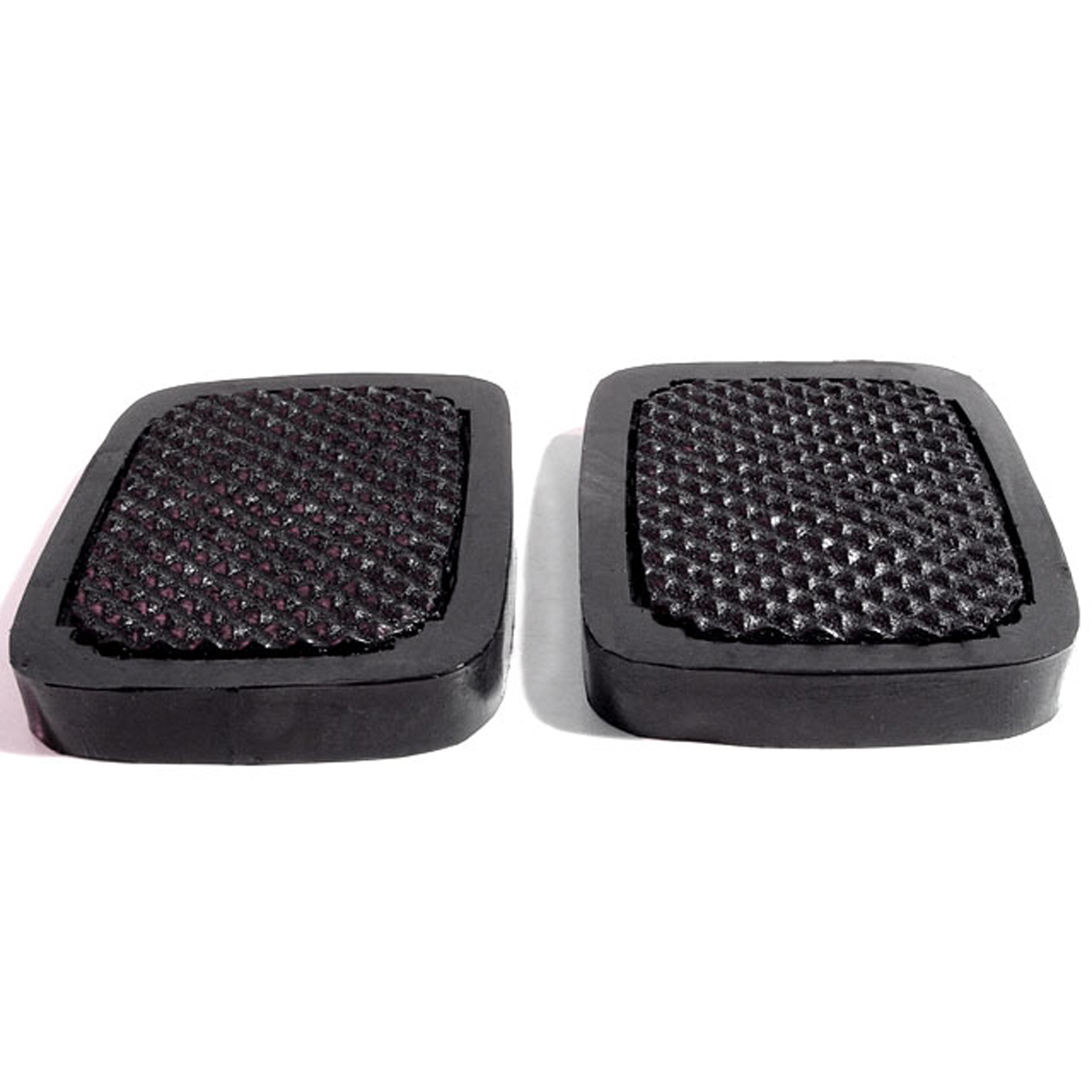 1917 Buick MODEL D-47 Clutch and Brake Pedal Pads. 2-3/4" wide X 3-3/4" long-CB 13Clutch and Brake Pedal Pads. 2-3/4" wide X 3-3/4" long. Pair
Why Choose Metro?
For over 100 years, Metro Moulded Parts has been the pinnacle of quality in classic car restoration parts. Our commitment to precision and authenticity in every component ensures a perfect fit and an OEM-level appearance.
- Expert Craftsmanship & Quality: Each part is a testament to our dedication to reliability and perfection, crafted from original designs and thoroughly tested.
- Advanced Technology: We use cutting-edge techniques to create flawless, long-lasting parts that surpass others in performance.
- SuperSoft Sponge – The Ultimate Door Seal: Not only are our door seals 30% softer than competitors', but they're also guaranteed to never leak. They effectively reduce wind and road noise, enhancing your classic car's comfort and driving experience.
- Proudly American: Our parts are a product of American craftsmanship, made in the USA with a spirit of excellence and heritage.
- Unrivaled Warranty: We back our products with a 30-year industry-leading warranty, a testament to our confidence in their quality.
Join us in preserving the legacy of classic cars with parts that are crafted for perfection, not just made.