

Image of 1918 Buick Model E-44, Note: These illustrations use artistic license and may differ from actual historical models.
Performance Metrics
Fundamental Metrics
Emotional Appeal
MMP Rating
| Engine Specifications | |
|---|---|
| Engine Options: | 4-cylinder, in-line, L-head |
| Displacement Range: | 170 cubic inches |
| Horsepower Range: | Estimated 27-30 HP |
| Torque: | Not available |
| Compression Ratio: | Not available |
| Ignition System: | Battery and coil |
| Cooling System: | Thermosyphon, no pump |
| Performance Specifications | |
| 0-60 Time: | Not available |
| 1/4 Mile Time: | Not available |
| Top Speed: | 40-45 mph |
| Transmission and Drive | |
| Drive Type: | Rear-wheel drive |
| Transmission Type: | 3-speed manual |
| Fuel and Efficiency | |
| Fuel System Type: | Gravity feed |
| MPG: | Not available |
| Dimensions and Brakes | |
| Brakes: | Mechanical drum brakes |
| Wheelbase: | 120 inches |
| Weight: | 1,650 lbs |
Note: Specifications for classic cars are given to the best of our ability, considering the limited and variant data available.
1918 Buick E-44: A Touring Car Built for the Open Road
The 1918 Buick E-44 turned a stretch of ordinary road into an occasion. Tall, upright and openly mechanical, this six-cylinder touring car came from a company already known for dependable engines and practical engineering. Buick was founded by David Dunbar Buick and became the cornerstone of General Motors in 1908. By 1918, its cars had earned a reputation for bringing substantial power and sound construction to a growing market for motorcars.
The E-44 belongs to Buick’s early six-cylinder era, when the company’s “valve-in-head” engine design was a defining part of its identity. Its arrival also coincided with the closing months of World War I, a period of disruption for American manufacturing. One intriguing detail is that the E-44 was made for motoring in an age before sealed roads and enclosed cabins were the norm. Its open body made the journey part of the experience, for better or worse.
Buick E-44 Design and Body Style
The E-44’s five-passenger touring body has the unmistakable profile of an early American automobile: a long hood, upright radiator, separate front fenders and large, thin-spoked wheels. The high seating position and straight windshield gave occupants a clear view of the road, while the folding fabric top could be raised when the weather turned. With the top down, the car looked purposeful and expansive rather than sleek by modern standards. Its proportions were shaped as much by the engine and chassis as by styling.
Inside, the emphasis was on straightforward function. The cabin typically featured leather seating, painted or finished metal surfaces, wood details and a simple instrument panel with period gauges. The upholstery and trim were durable, but an open touring car offered little protection from dust, rain or cold. Side curtains could help, though they were no substitute for a fully enclosed body.
The E-44 designation is associated with the five-passenger touring body. Buick’s broader 1918 range included other body configurations, such as roadsters and enclosed cars, but those were separate versions rather than interchangeable E-44 styles. The touring car was the most sociable and visually recognizable choice, with room for a family or a group of friends and a top that folded away for fair-weather driving.
Paint availability could vary by production date and body, and surviving records do not always provide a complete color list for every E-44. Period Buicks were often finished in restrained, dark shades, including colors such as black, blue, green or maroon, depending on the offering. Black remains a popular choice on restored examples because it suits the car’s formal lines, although a correctly documented non-black finish can make a restoration especially appealing.
Valve-in-Head Engineering
The E-44’s most important engineering feature was its six-cylinder, overhead-valve engine. Buick had made its valve-in-head layout a signature long before 1918. Placing the valves above the combustion chamber helped the engine breathe efficiently compared with many contemporary side-valve designs. That did not make the E-44 a modern performance car, but it helped Buick build a reputation for strong, reliable power.
The engine displaced approximately 242 cubic inches and was commonly rated at about 45 horsepower under the rating systems of the period. Power went to the rear wheels through a manual transmission, generally described as a three-speed unit. The car also had period electrical equipment, including an electric starter and lighting on typical examples, a convenience that spared drivers some of the labor associated with hand-cranking earlier automobiles. Equipment can differ between surviving cars, so original components and chassis records matter when assessing an individual E-44.
Braking and control remained firmly of their era. The E-44 did not have modern hydraulic four-wheel brakes, power steering or suspension designed to isolate occupants from rough roads. Its engineering was advanced in meaningful ways for the time, but the driver still had to manage the car with muscle, attention and mechanical sympathy.
Why the 1918 Buick Matters
The E-44 was not a one-model revolution. Its significance comes from how it represents Buick’s established engineering direction at a pivotal moment in American motoring. The company had built its identity around overhead-valve engines, and the E-44 carried that approach into a practical touring car. Buick’s connection to General Motors also placed it within a rapidly expanding automotive organization, helping the marque develop a broad national presence.
Compared with many contemporaries, the E-44’s six-cylinder engine offered smoothness and useful pulling power for touring. Its open body, substantial chassis and relatively conventional controls made it a capable car for long trips by the standards of 1918. The model helped reinforce Buick’s reputation for sturdy, technically progressive cars, a reputation that would continue to shape the marque’s identity.
Its lasting influence is less about a single styling feature than about the wider acceptance of overhead-valve engines. Buick’s commitment to valve-in-head design helped distinguish the company and made the technology central to its story. The E-44 is a tangible example of that engineering philosophy in an era when the automobile was moving from novelty toward everyday transportation.
1918 Buick E-44 Performance
With roughly 45 horsepower and a large-displacement six-cylinder engine, the E-44 was built for steady progress rather than quick acceleration. A healthy, correctly geared example might reach approximately 50 to 60 mph in favorable conditions. That is a period-car estimate, not a guaranteed factory test result. Actual speed depends heavily on engine condition, tires, gearing, road surface and how well the car has been maintained.
There is no dependable factory 0-to-60 mph figure for the E-44. As a modern estimate, acceleration to 60 mph could take around 30 to 45 seconds in a well-sorted car, and some examples may struggle to reach that speed at all. A more realistic measure of its performance is how it gathers speed steadily and carries passengers over a long stretch of road without feeling strained.
On rough roads, the tall body and period suspension deliver a ride that is soft by early-car standards but lively by modern ones. Potholes and ruts make themselves known through the steering wheel and seat. On a winding road, the E-44 rewards a measured pace. Its narrow tires, high center of gravity and manual steering call for smooth inputs, not sharp cornering. Wind can buffet an open car, especially with the top raised.
From behind the wheel, the experience is engaging and physical. The six-cylinder engine produces a steady mechanical rumble, accompanied by the sounds of the transmission, tires and open air. The driver works the clutch and gear lever, watches the road closely and makes deliberate steering corrections. It is less isolated than driving a modern car, but that direct connection is precisely what makes an E-44 memorable.
Owning and Maintaining an E-44
Today, the E-44 is primarily a collector car, a museum or club display vehicle, and a participant in vintage-car tours. It can be driven on suitable roads, but it is not an everyday commuter. Modern traffic moves too quickly for its acceleration and braking, and frequent exposure to rain and road salt can damage an unrestored car.
Maintenance is manageable for an owner comfortable with older machinery, but it is not a maintenance-free antique. Regular attention to lubrication, ignition, fuel delivery, cooling, tires and mechanical brakes is essential. The engine and chassis use understandable mechanical systems, and many repairs can be approached with standard workshop skills. However, parts availability varies, and specialist knowledge is valuable for work involving the engine, transmission, woodwork, upholstery or period-correct electrical equipment.
Reliability depends more on the condition and quality of the restoration than on the badge alone. A well-maintained E-44 can be a satisfying touring car, while a neglected example may need extensive work before it is safe to drive. Owners should pay particular attention to the frame, suspension, steering, brake components and the condition of any wood structure in the body.
Buick E-44 Trivia and Common Criticisms
The E-44’s greatest claim to fame is its place in Buick’s early six-cylinder and overhead-valve story, rather than a famous speed record or a widely documented celebrity connection. No major E-44-specific racing, endurance or production record is commonly associated with the model. It was a road car intended for private owners, not a factory racing machine.
It also belongs to the World War I era, when American industry faced changing priorities and material demands. That historical setting gives the E-44 context, but it should not be mistaken for a military vehicle. The model is best understood as a civilian touring car built during a consequential period in both automotive and world history.
Common criticisms are easy to understand from a modern perspective: the open cabin is exposed to weather, the brakes require more anticipation, steering takes effort, and the ride can be unsettled on poor roads. Parts for a specific year may also take time to locate. Those drawbacks are part of the honest ownership picture, and they explain why careful restoration and thoughtful driving matter.
1918 Buick E-44 Value and Rarity
There is no dependable published production total for the E-44 alone. Buick built cars in substantial numbers, but surviving production summaries do not always break output down by individual body style. A reasonable working estimate is that the E-44 was produced in the thousands, perhaps around 3,000 to 8,000 examples. Treat that as an informed estimate, not a confirmed factory figure. Surviving cars are far less common than the original production suggests, especially examples with documented history and correct details.
As a broad 2026 collector-market estimate, an incomplete or project-condition E-44 might sell for roughly $8,000 to $18,000. A solid, usable car could fall in the $18,000 to $35,000 range, while a high-quality, correct restoration may bring approximately $35,000 to $55,000 or more. These are general guide ranges rather than a formal appraisal. Condition, originality, provenance, restoration quality and local demand can shift the price considerably.
Values for early touring cars tend to be selective rather than uniformly rising. Exceptional, well-documented examples can attract strong interest, but project cars and costly restorations do not always return their full investment. The E-44 is best bought for its history and driving character, with appreciation viewed as a possible bonus rather than a guarantee.
The E-44’s Lasting Appeal
The 1918 Buick E-44 combines a substantial overhead-valve six, practical touring-car design and the open-air character of early motoring. It was not built to set speed records or isolate its passengers from the road. It was built to carry people with confidence at a time when long-distance travel still demanded patience, preparation and a good deal of mechanical understanding.
More than a century later, the E-44 remains a vivid reminder of Buick’s engineering roots and the moment when the automobile was becoming part of everyday American life. Its appeal lies not just in what it is, but in the way it makes every mile feel earned.
1918 Buick Model E-44 Catalog of Parts
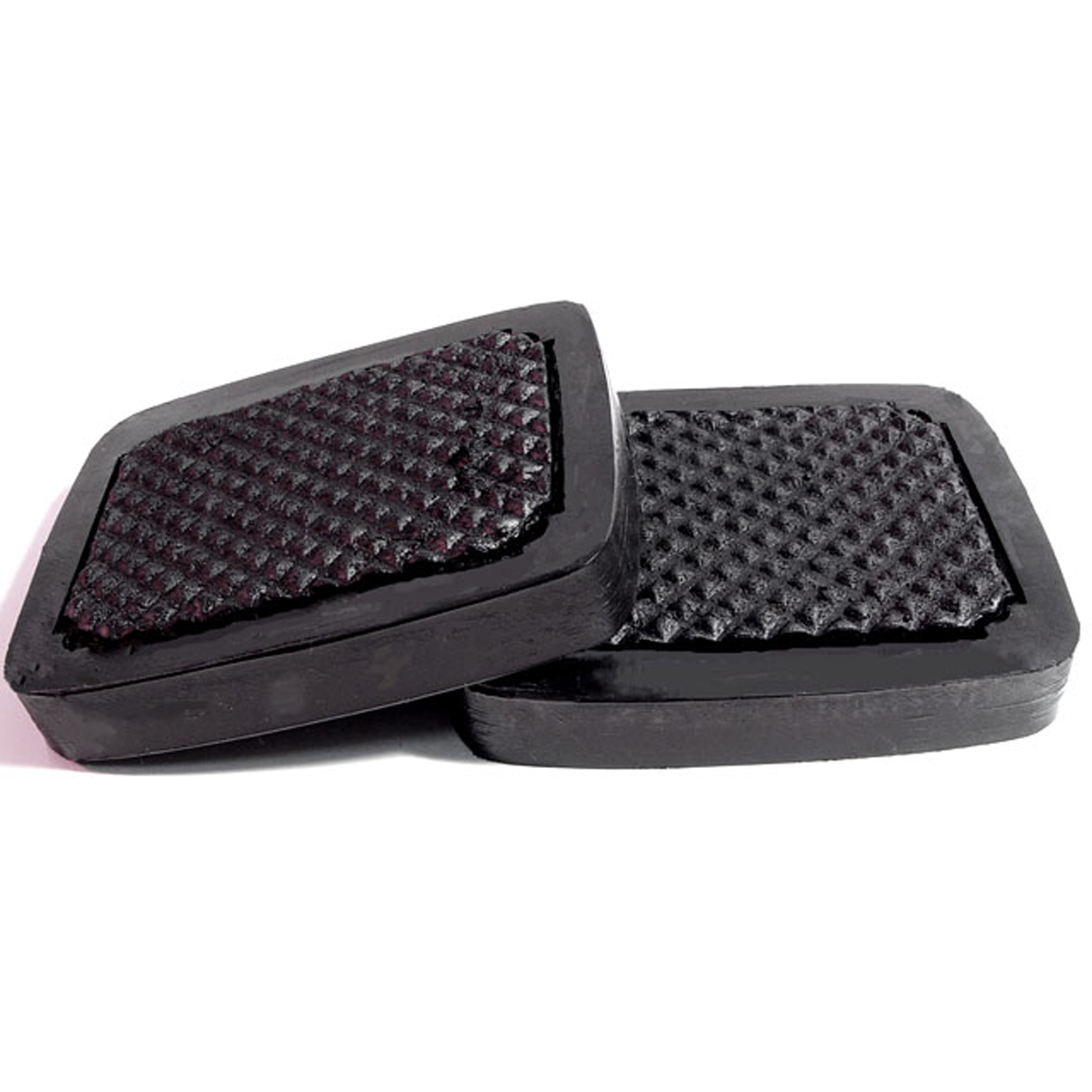 1918 Buick MODEL E-44 Clutch and Brake Pedal Pads. 2-3/4" wide X 3-3/8" long-CB 12Clutch and Brake Pedal Pads. 2-3/4" wide X 3-3/8" long. Pair
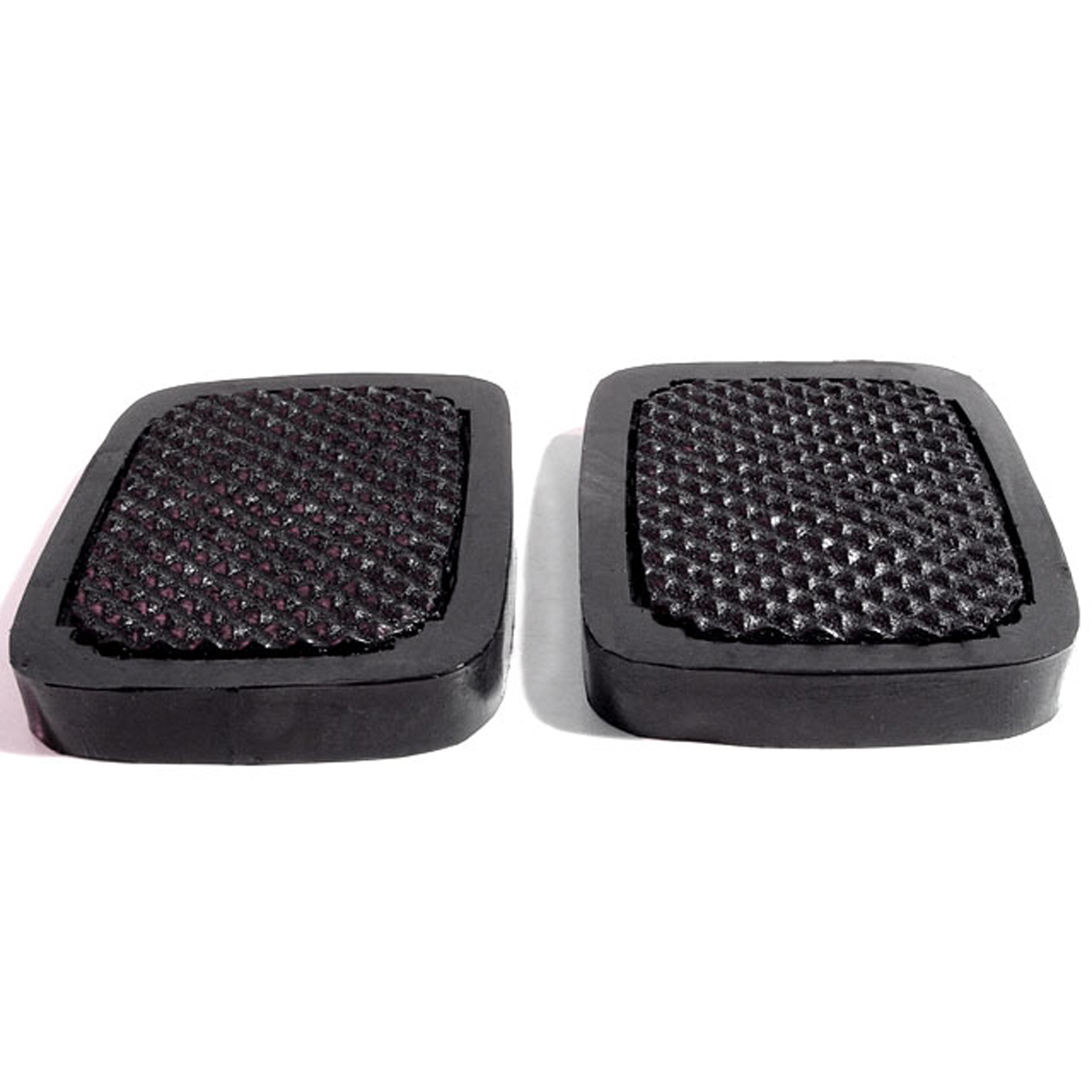 1918 Buick MODEL E-44 Clutch and Brake Pedal Pads. 2-3/4" wide X 3-3/4" long-CB 13Clutch and Brake Pedal Pads. 2-3/4" wide X 3-3/4" long. Pair
Why Choose Metro?
For over 100 years, Metro Moulded Parts has been the pinnacle of quality in classic car restoration parts. Our commitment to precision and authenticity in every component ensures a perfect fit and an OEM-level appearance.
- Expert Craftsmanship & Quality: Each part is a testament to our dedication to reliability and perfection, crafted from original designs and thoroughly tested.
- Advanced Technology: We use cutting-edge techniques to create flawless, long-lasting parts that surpass others in performance.
- SuperSoft Sponge – The Ultimate Door Seal: Not only are our door seals 30% softer than competitors', but they're also guaranteed to never leak. They effectively reduce wind and road noise, enhancing your classic car's comfort and driving experience.
- Proudly American: Our parts are a product of American craftsmanship, made in the USA with a spirit of excellence and heritage.
- Unrivaled Warranty: We back our products with a 30-year industry-leading warranty, a testament to our confidence in their quality.
Join us in preserving the legacy of classic cars with parts that are crafted for perfection, not just made.