

Image of 1919 Buick Model H-47, Note: These illustrations use artistic license and may differ from actual historical models.
Performance Metrics
Fundamental Metrics
Emotional Appeal
MMP Rating
| Engine Specifications | |
|---|---|
| Engine: | 6-cylinder, overhead valve |
| Displacement: | 331 cubic inches |
| Horsepower: | Estimated 60-70 HP |
| Torque: | Not available |
| Compression Ratio: | Not available |
| Ignition System: | Battery and coil |
| Cooling System: | Water-cooled |
| Performance Specifications | |
| 0-60 Time: | Not available |
| 1/4 Mile Time: | Not available |
| Top Speed: | 50-55 mph |
| Transmission and Drive | |
| Drive Type: | Rear-wheel drive |
| Transmission Type: | 3-speed manual |
| Fuel and Efficiency | |
| Fuel System Type: | Carburetor |
| MPG: | Not available |
| Dimensions and Brakes | |
| Brakes: | Mechanical drum brakes |
| Wheelbase: | 124 inches |
| Weight: | 3,400 lbs |
Note: Specifications for classic cars are given to the best of our ability, considering the limited and variant data available.
1919 Buick Model H-47: A Six-Cylinder Touring Car
The 1919 Buick Model H-47 was built for a world moving from wartime production into a new age of automobile ownership. A large, open seven-passenger touring car, it paired Buick’s celebrated overhead-valve six-cylinder engine with the practical space and sturdy construction expected of an early family or chauffeur-driven car. Its upright profile and folding canvas top look distinctly vintage today, but in 1919 the H-47 represented a capable, modern machine from one of America’s most influential manufacturers.
Buick began in the late 19th century under inventor David Dunbar Buick. After financial difficulties, the company came under the control of William C. Durant and became a cornerstone of General Motors, which Durant organized in 1908. Buick’s reputation rested on well-engineered engines and solid construction. The H-47 arrived during the post-World War I production boom, when automakers were returning to civilian cars and more Americans were looking beyond horse-drawn transport.
One detail that makes the H-47 especially interesting is its model designation: it identifies a particular body configuration, not simply a trim level. The H-47 was a seven-passenger touring model, offering room for a full party of passengers. Exact production figures for this individual body style are not readily documented, which adds a bit of mystery for restorers and collectors.
Buick H-47 Design and Interior
The H-47 has the unmistakable proportions of an early touring car: a tall, upright radiator, long hood, exposed fenders, narrow running boards, and large wheels with slender tires. The passenger compartment sits high above the road, with a broad windshield and an open cabin that could be protected by a folding fabric top and detachable side curtains. Brass-era styling had largely given way to nickel and painted finishes by this period, so the H-47 looks more restrained than a prewar brass-trimmed automobile.
Inside, the emphasis was on usable space rather than modern comforts. The seven-passenger layout provided several rows of seating, typically finished in leather or leather-like upholstery, with painted or varnished trim and exposed fittings. Materials and details could vary with factory specification, dealer preparation, and later restoration. The top and side curtains offered useful shelter from rain and wind, but they were no substitute for the weather protection of a closed sedan.
Buick offered period-appropriate paint finishes rather than today’s wide choice of metallic colors. Dark, conservative shades such as black, gray, blue, or maroon are commonly associated with cars of the era, though the exact factory palette could vary by model year and specification. Many surviving cars have been repainted, so a color seen on a restored H-47 is not automatically proof of its original finish.
The H-47 was the seven-passenger touring member of Buick’s 1919 range. Other Buick body styles in the broader lineup included smaller touring cars and roadsters, as well as closed bodies such as sedans and coupes, depending on model and series. The H-47’s open touring body is its defining and most recognizable form.
Engineering Ahead of Its Time
At the heart of the H-47 was Buick’s six-cylinder, valve-in-head engine, generally listed at about 242 cubic inches and 45 horsepower for this period. “Valve-in-head” was Buick’s term for overhead-valve construction. Compared with the more common flathead layout, overhead valves could support efficient breathing and strong performance for the engine’s size. Buick had made this design a signature well before it became standard across the industry.
The car used a conventional three-speed manual transmission and rear-wheel drive. Its chassis relied on a substantial frame, leaf-spring suspension, and mechanical braking at the rear wheels. Electric starting and lighting were important conveniences for the era, although owners still had to understand the controls and routine adjustments that modern drivers take for granted.
The H-47 did not invent the touring car, the six-cylinder engine, or the overhead-valve layout. Its significance lies in bringing Buick’s established engineering approach to a practical, spacious model at a time when cars were becoming increasingly central to American life. It also reflects Buick’s growing role within General Motors: a well-built car positioned above basic transportation without entering the realm of the most expensive luxury marques.
1919 Buick H-47 Performance and Road Manners
Period performance figures are not as standardized as modern test results, and published numbers can vary with gearing, body load, engine condition, and road surface. A well-maintained H-47 is generally associated with a top speed in the neighborhood of 50 to 55 mph. That is a period estimate, not a guarantee for every surviving example. A modern-style 0-to-60 mph time is not meaningfully available; the car was not designed around that test, and many examples may struggle to reach 60 mph in ordinary running condition.
On a smooth road, the H-47’s long wheelbase and substantial mass give it a steady, deliberate feel. Its leaf springs absorb some roughness, but tall tires, an upright body, and early suspension design mean that potholes and sharp bumps are felt more directly than in a modern car. On winding roads, the driver needs to plan ahead. Steering is comparatively slow, the body can lean, and the rear-wheel mechanical brakes demand more anticipation and stopping distance than contemporary hydraulic systems.
The driving experience is part of the car’s appeal. The six-cylinder engine produces a measured mechanical hum, joined by the sounds of the transmission, tires, and wind around the open cabin. Shifting requires coordination and attention, while steering and braking call for a more active driver than a modern vehicle does. With its top folded, passengers get an unusually direct connection to the road, the weather, and the landscape.
Owning and Maintaining a Buick H-47
Today, an H-47 is best suited to touring events, historic vehicle displays, parades, and occasional fair-weather drives. Its generous seating makes it a natural crowd-pleaser, but its size, open body, modest cruising speed, and mechanical brakes make it an impractical daily driver in modern traffic. It is also too slow and valuable for most owners to treat as a racing car.
Routine maintenance is straightforward by vintage-car standards, but it calls for regular attention. Owners need to monitor lubrication, ignition, cooling, fuel delivery, clutch adjustment, the charging system, and the condition of the wooden wheels and tires. Mechanical components can often be repaired with ordinary workshop skills, but sourcing correct parts, rebuilding worn assemblies, and maintaining an original body or interior may require specialist help. A careful inspection before driving is essential, especially of the brakes, steering, tires, and wheels.
Reliability depends heavily on restoration quality and upkeep. A properly sorted Buick can participate in carefully planned tours, while a neglected example may need extensive work before it is safe to drive. Owners should also be comfortable with period procedures, such as managing a manual transmission and allowing generous stopping distance.
H-47 Trivia and Common Criticisms
The H-47’s seven-passenger capacity was a practical selling point in an era when cars often served as the family’s main motor vehicle and sometimes carried relatives, neighbors, or business associates. Its folding top and side curtains made it adaptable to changing weather, though putting them up was far more involved than raising the roof of a modern convertible.
There is no widely recognized H-47 speed, endurance, or sales record, and no single celebrity ownership story is firmly associated with the model. It should also not be confused with a purpose-built competition car. Buick’s importance in early American motoring is well established, but claims about a particular H-47 taking part in a famous event should be checked against documentation for that individual car.
Common criticisms are the same ones that apply to many large touring cars of the period: limited weather protection, slow acceleration by modern standards, considerable effort required for steering and braking, and a need for frequent maintenance. Those drawbacks are part of the ownership reality, not defects that a restoration can entirely erase.
1919 Buick H-47 Collector Value and Rarity
Surviving H-47s are uncommon on the open market, and there is no dependable public census of how many remain. The seven-passenger body is more specialized than the smaller touring configurations, but a precise survival total would be guesswork. Based on Buick’s substantial overall production during the period, a cautious estimate for original H-47 production might be several thousand cars, perhaps roughly 3,000 to 8,000. That is an informed estimate, not a verified factory figure.
As a broad 2026 market guide, an incomplete or project-quality car might fall around $10,000 to $20,000. A running, presentable example could bring roughly $20,000 to $40,000, while a high-quality restoration with strong documentation may reach $40,000 to $60,000 or more. Actual sale prices depend on originality, mechanical condition, restoration quality, provenance, and whether the car is correctly identified as an H-47. These ranges are estimates rather than a formal appraisal.
Values for early touring cars have tended to be selective rather than uniformly rising. Excellent, well-documented examples can attract dedicated buyers, but restoration costs are high and the pool of shoppers is smaller than it is for better-known postwar classics. In inflation-adjusted terms, many vintage cars have not kept pace with the cost of restoration. Buyers generally pay a premium for a car that is complete, safe, and ready to tour.
Why the 1919 Buick H-47 Matters
The 1919 Buick Model H-47 combines a roomy seven-passenger touring body with Buick’s early commitment to overhead-valve engineering. Its long hood, open cabin, measured six-cylinder performance, and hands-on controls capture a pivotal period when American motoring was becoming more accessible and more ambitious. It is not a modern-speed machine, nor does it pretend to be. The H-47’s real reward is the chance to experience how a well-engineered American car carried people into a new era of travel.
1919 Buick Model H-47 Catalog of Parts
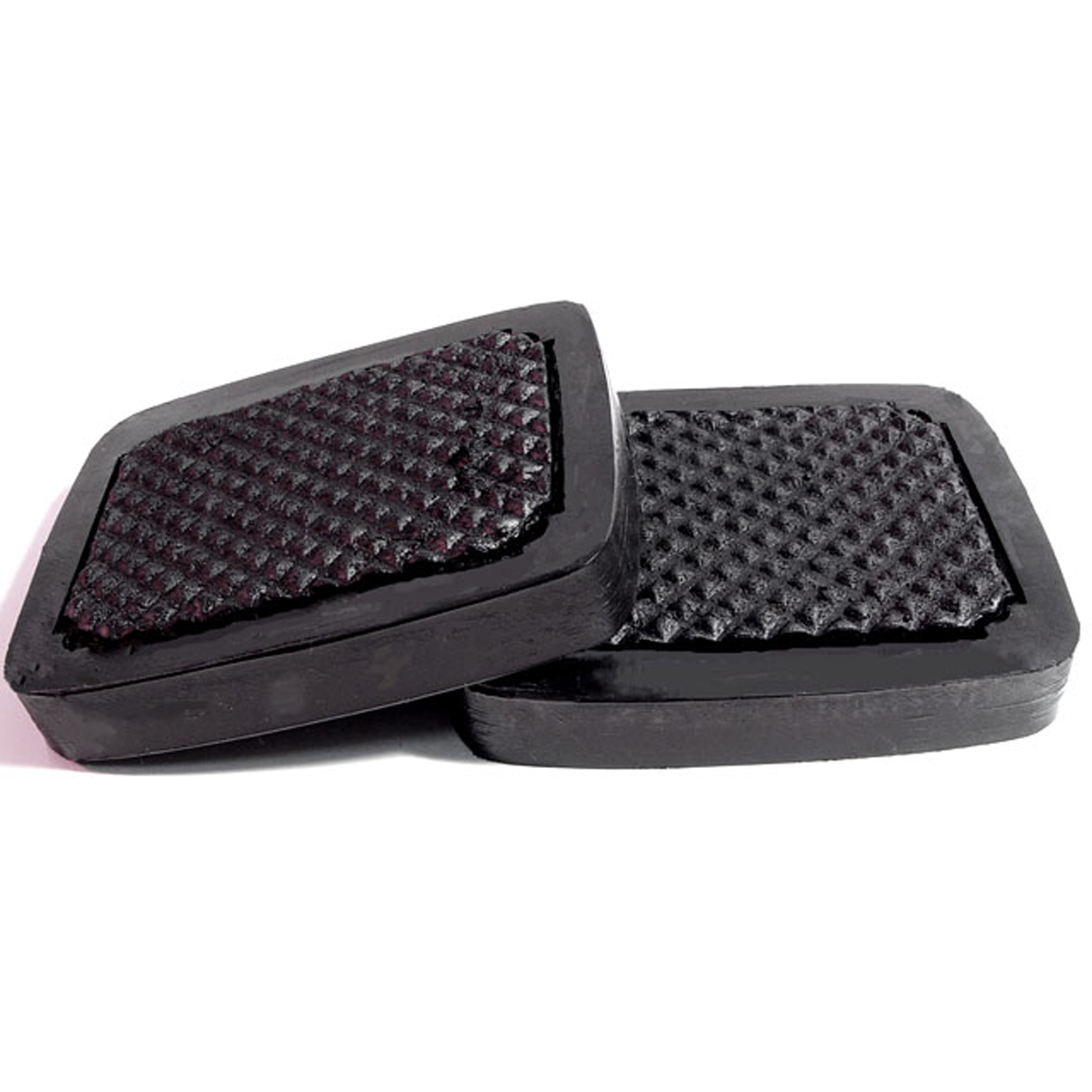 1919 Buick MODEL H-47 Clutch and Brake Pedal Pads. 2-3/4" wide X 3-3/8" long-CB 12Clutch and Brake Pedal Pads. 2-3/4" wide X 3-3/8" long. Pair
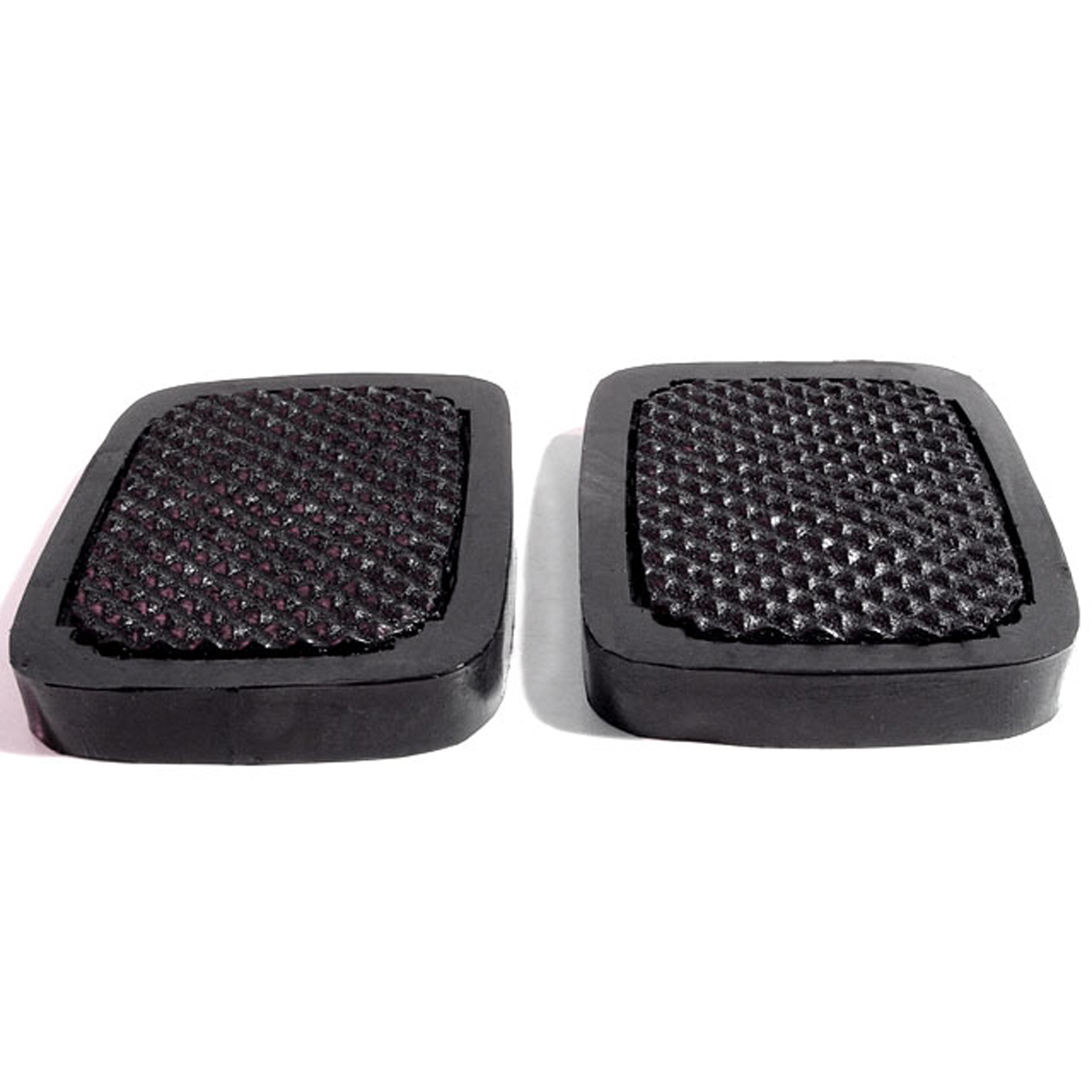 1919 Buick MODEL H-47 Clutch and Brake Pedal Pads. 2-3/4" wide X 3-3/4" long-CB 13Clutch and Brake Pedal Pads. 2-3/4" wide X 3-3/4" long. Pair
Why Choose Metro?
For over 100 years, Metro Moulded Parts has been the pinnacle of quality in classic car restoration parts. Our commitment to precision and authenticity in every component ensures a perfect fit and an OEM-level appearance.
- Expert Craftsmanship & Quality: Each part is a testament to our dedication to reliability and perfection, crafted from original designs and thoroughly tested.
- Advanced Technology: We use cutting-edge techniques to create flawless, long-lasting parts that surpass others in performance.
- SuperSoft Sponge – The Ultimate Door Seal: Not only are our door seals 30% softer than competitors', but they're also guaranteed to never leak. They effectively reduce wind and road noise, enhancing your classic car's comfort and driving experience.
- Proudly American: Our parts are a product of American craftsmanship, made in the USA with a spirit of excellence and heritage.
- Unrivaled Warranty: We back our products with a 30-year industry-leading warranty, a testament to our confidence in their quality.
Join us in preserving the legacy of classic cars with parts that are crafted for perfection, not just made.