

Image of 1919 Buick Model H-50, Note: These illustrations use artistic license and may differ from actual historical models.
Performance Metrics
Fundamental Metrics
Emotional Appeal
MMP Rating
| Engine Specifications | |
|---|---|
| Engine: | 6-cylinder, overhead valve |
| Displacement: | 331 cubic inches |
| Horsepower: | Estimated 60-70 HP |
| Torque: | Not available |
| Compression Ratio: | Not available |
| Ignition System: | Battery and coil |
| Cooling System: | Water-cooled |
| Performance Specifications | |
| 0-60 Time: | Not available |
| 1/4 Mile Time: | Not available |
| Top Speed: | 50-55 mph |
| Transmission and Drive | |
| Drive Type: | Rear-wheel drive |
| Transmission Type: | 3-speed manual |
| Fuel and Efficiency | |
| Fuel System Type: | Carburetor |
| MPG: | Not available |
| Dimensions and Brakes | |
| Brakes: | Mechanical drum brakes |
| Wheelbase: | 125 inches |
| Weight: | Estimated 3500 lbs |
Note: Specifications for classic cars are given to the best of our ability, considering the limited and variant data available.
1919 Buick Model H-50: A Brass-Era Buick with Six-Cylinder Muscle
The 1919 Buick Model H-50 brought six-cylinder power and Buick’s distinctive overhead-valve engineering to the open-road touring car. Built by the Buick Motor Company, then a major part of General Motors, the H-50 belongs to a pivotal period when cars were becoming more dependable and practical, while still demanding plenty of attention from their drivers. Its combination of substantial size, useful power, and traditional open-air styling makes it a memorable example of early American motoring.
Buick had earned a reputation for sturdy engineering before the H-50 arrived. The company’s valve-in-head, or overhead-valve, engines were a defining feature, and Buick promoted their ability to deliver strong performance for their size. A distinctive detail of the H-50’s era is that an electric starter and electric lighting were increasingly part of the ownership experience. That made driving less of a physical chore than in the earliest automobiles, though starting and operating a 1919 car still required skill.
Touring-Car Style and Craftsmanship
The H-50’s appearance is unmistakably early twentieth century: tall, upright, and built around a long hood and exposed running boards. Its upright radiator and prominent headlamps gave the front end a formal, almost carriage-like presence. Narrow tires, spoked wheels, and separate fenders completed the look. The open touring body placed passengers in the fresh air, with a folding fabric top available for protection from sun or rain. When raised, the top changed the car’s silhouette but did not turn it into a fully enclosed modern cabin.
Inside, the emphasis was on durable, practical materials rather than modern conveniences. Depending on specification and restoration, an H-50 may feature leather upholstery, a simple instrument panel, and substantial wood or painted trim. The cabin is open and straightforward, with the driver surrounded by mechanical controls rather than switches and displays. Period details such as the steering wheel, hand controls, and exposed fittings are part of the car’s appeal.
Factory color information for individual surviving H-50s can be difficult to verify, and paint choices could vary by year, body, and order. Dark, conservative colors such as black, deep blue, and dark green suit the period and are popular on restored examples, but a modern restoration’s color is not proof of its original finish.
The H-50 is associated with an open touring body, commonly described as a seven-passenger touring car. Buick’s broader 1919 range included other body configurations, such as roadsters, closed sedans, and coupes, depending on model and series. Those alternatives were not necessarily H-50 body options. The touring format is the most recognizable expression of the H-50: roomy, social, and designed for travel with family or friends.
Buick Engineering in a Changing Era
The H-50’s significance lies less in a single radical feature than in the way it brought established Buick engineering to a growing market for capable six-cylinder cars. Its valve-in-head layout was an important point of difference from many engines of the period, which used side-valve designs. Overhead valves could support efficient breathing and strong output, helping Buick build a reputation for lively performance and mechanical durability.
In 1919, the automobile was moving from novelty toward everyday transportation, but roads were still rough, services were limited, and long-distance travel required preparation. A sizeable Buick touring car offered more comfort and power than a basic runabout, while retaining the open, hands-on character of an early automobile. Its lasting influence is part of Buick’s broader engineering story: the brand made mechanical sophistication a central part of its identity, rather than treating a car as little more than a motorized carriage.
Six-Cylinder Performance and Period Road Manners
The H-50 is generally associated with a Buick six-cylinder engine of approximately 242 cubic inches and a period rating of about 60 horsepower. Exact specifications can vary between references and surviving cars, so engine numbers and original documentation are valuable when assessing an individual example. Power was delivered through a manual transmission, and the driver had to coordinate the clutch, throttle, and gear changes without the assistance of a modern synchronized gearbox.
There is no dependable factory 0-to-60 mph figure for the H-50, and period testing methods were not standardized in the way they are today. A realistic estimate is that acceleration to 60 mph would take well over 30 seconds, if the car could reach that speed in its particular condition and gearing. A top speed in the neighborhood of 50 to 55 mph is a reasonable estimate for a sound example, but sustained high-speed driving is not what the car was designed for. Tire condition, engine health, road surface, load, and gearing all matter.
On a smooth road, the H-50’s long wheelbase and substantial chassis should help it feel steady at a measured touring pace. On broken surfaces, solid axles and period suspension transmit more movement to the occupants than a modern car would. Narrow tires and the car’s height call for smooth steering inputs, especially on winding roads or in crosswinds. The driver sits upright, hears the engine and drivetrain clearly, and makes frequent, deliberate adjustments. The experience is engaging, but it rewards anticipation rather than quick reactions.
The engine’s sound is a steady mechanical rumble, with gear changes and road noise always present. There is little between the driver and the machinery: the clutch has a direct feel, the steering requires effort, and braking distances are much longer than those of a modern vehicle. The H-50 is best enjoyed at a relaxed pace, where its period character can be appreciated without asking old brakes, tires, and components to do more than they safely can.
Living with a 1919 Buick
Today, an H-50 is primarily a show car, touring vehicle, or carefully maintained collector automobile. Some owners take their cars to vintage rallies and local events, while others prefer static displays. It can be driven on suitable roads, but it is not a sensible daily driver by modern standards. Weather protection is limited, traffic moves faster, and safety equipment is basic.
Maintenance is manageable for an owner with mechanical confidence, workshop space, and access to vintage-car specialists. Routine work may include lubrication, ignition and carburetor adjustments, cooling-system checks, and careful attention to the clutch, transmission, brakes, and tires. Many mechanical parts are understandable and repairable, but that does not make every repair simple: worn components may need specialist machining, and replacement parts can take time to source. A pre-purchase inspection by someone familiar with brass- and nickel-era Buicks is strongly recommended.
Reliability depends heavily on restoration quality and upkeep. A well-sorted H-50 can be a dependable participant in short touring events, but an old car may still need frequent inspection and adjustment. Before driving, owners should check the brakes, steering, wheel bearings, tires, fluid levels, and fuel system. Originality is valuable, but safe, correct mechanical work matters more than appearance when the car is on the road.
H-50 Trivia and Common Criticisms
The H-50 is a product of a time when the touring car was both transport and entertainment. Its open cabin made passengers part of the journey, for better and worse: a scenic drive could be delightful, while dust, cold, and sudden rain were part of the bargain. The car’s upright stance and exposed hardware also preserve the visual link between early automobiles and horse-drawn vehicles.
No widely documented H-50 speed or endurance record is generally associated with the model, and claims about individual cars should be supported by period records. Likewise, celebrity ownership is not a defining part of the H-50’s known history. Its appeal is broader: it represents Buick’s engineering at a moment when motor travel was expanding rapidly.
Common criticisms are easy to understand from a modern perspective. The car is slow by contemporary standards, offers little weather protection, and has braking and handling limits that require respect. Parts availability and specialist labor can also make ownership expensive. Those drawbacks are not unusual for a 1919 automobile, but they are important considerations for anyone expecting effortless vintage motoring.
Collector Values, Rarity, and Market Outlook
There is no widely available, authoritative production total specifically for the 1919 Buick H-50. Buick built cars in significant numbers during this period, but surviving examples are much less common than new-car production figures might suggest. As a practical estimate rather than a documented factory count, H-50 production may have been in the several-thousand range. The number of complete, roadworthy cars still in existence is considerably smaller, and availability depends on condition, provenance, and location.
In the current U.S. collector market, a project or incomplete example might fall roughly in the $10,000 to $25,000 range. A complete, usable car could bring about $25,000 to $50,000, while a high-quality restoration with strong documentation may reach approximately $50,000 to $80,000 or more. These are broad estimates, not a formal appraisal. Body style, originality, restoration quality, mechanical condition, and the presence of correct components can shift the value substantially.
Like many early automobiles, the H-50 is a specialized purchase. Prices tend to reward excellent condition and provenance, while incomplete cars can be difficult to restore economically. Values are best described as condition-sensitive rather than guaranteed to rise steadily. A well-preserved example may hold its appeal, but prospective buyers should focus on the car’s actual condition and ownership costs instead of assuming appreciation will offset restoration expenses.
Why the 1919 Buick H-50 Still Matters
The 1919 Buick Model H-50 combines a substantial touring-car body, a distinctive Buick six-cylinder engine, and the open-road character of the early automobile era. Its overhead-valve engineering helped distinguish Buick from many rivals, while its upright styling and hands-on controls preserve a vivid link to the way people traveled a century ago.
The H-50 is not quick, quiet, or effortless by modern standards. Its rewards are different: mechanical honesty, period craftsmanship, and the feeling of being directly involved in every mile. For collectors and enthusiasts, that is precisely what makes this Buick more than an old car. It is a working reminder of how American motoring found its stride.
1919 Buick Model H-50 Catalog of Parts
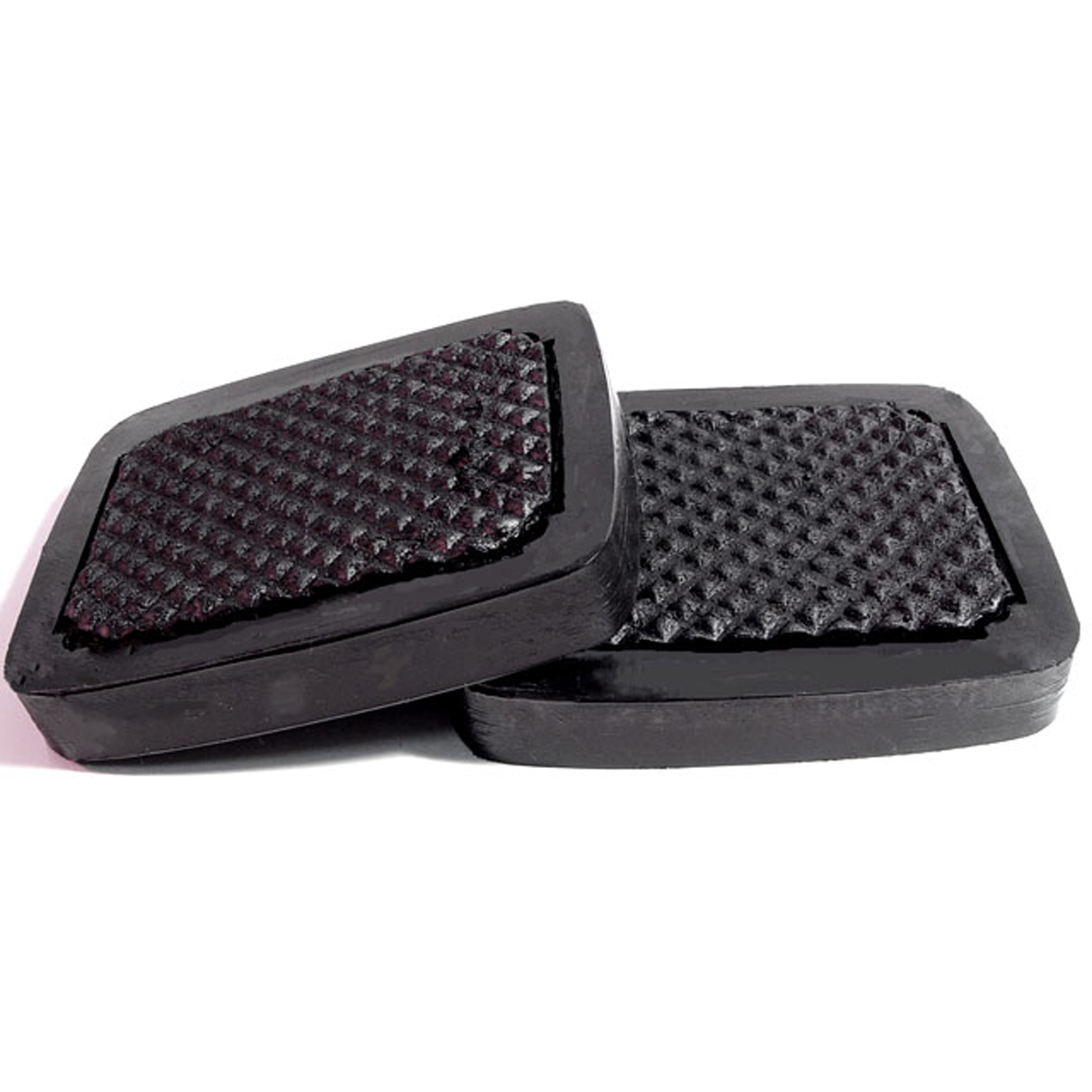 1919 Buick MODEL H-50 Clutch and Brake Pedal Pads. 2-3/4" wide X 3-3/8" long-CB 12Clutch and Brake Pedal Pads. 2-3/4" wide X 3-3/8" long. Pair
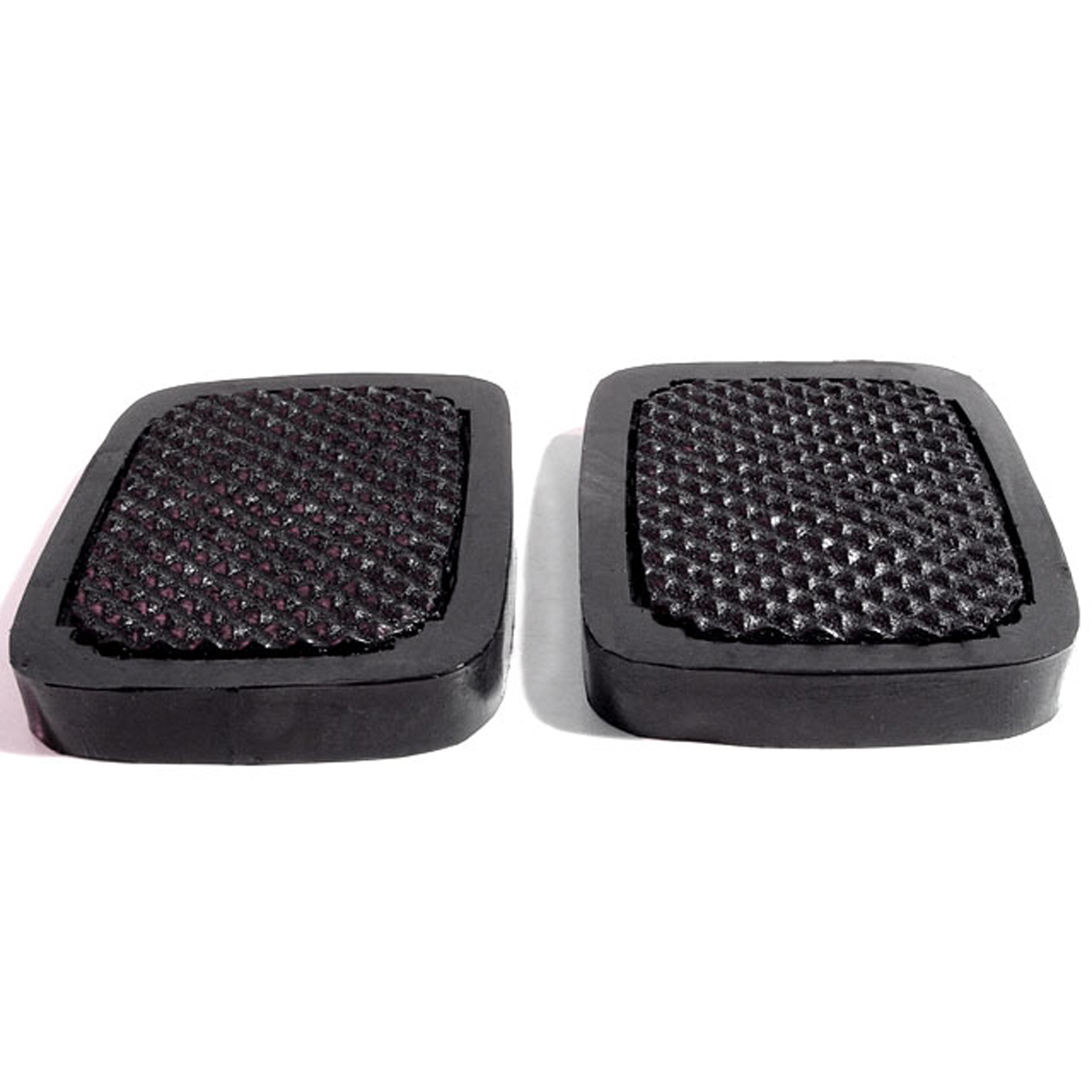 1919 Buick MODEL H-50 Clutch and Brake Pedal Pads. 2-3/4" wide X 3-3/4" long-CB 13Clutch and Brake Pedal Pads. 2-3/4" wide X 3-3/4" long. Pair
Why Choose Metro?
For over 100 years, Metro Moulded Parts has been the pinnacle of quality in classic car restoration parts. Our commitment to precision and authenticity in every component ensures a perfect fit and an OEM-level appearance.
- Expert Craftsmanship & Quality: Each part is a testament to our dedication to reliability and perfection, crafted from original designs and thoroughly tested.
- Advanced Technology: We use cutting-edge techniques to create flawless, long-lasting parts that surpass others in performance.
- SuperSoft Sponge – The Ultimate Door Seal: Not only are our door seals 30% softer than competitors', but they're also guaranteed to never leak. They effectively reduce wind and road noise, enhancing your classic car's comfort and driving experience.
- Proudly American: Our parts are a product of American craftsmanship, made in the USA with a spirit of excellence and heritage.
- Unrivaled Warranty: We back our products with a 30-year industry-leading warranty, a testament to our confidence in their quality.
Join us in preserving the legacy of classic cars with parts that are crafted for perfection, not just made.