

Image of 1920 Buick Model K-45, Note: These illustrations use artistic license and may differ from actual historical models.
Performance Metrics
Fundamental Metrics
Emotional Appeal
MMP Rating
| Engine Specifications | |
|---|---|
| Engine: | 6-cylinder, overhead valve |
| Displacement: | 4.4L |
| Horsepower: | Estimated 27-30 HP |
| Torque: | Not available |
| Compression Ratio: | Not available |
| Ignition System: | Battery and coil |
| Cooling System: | Water-cooled |
| Performance Specifications | |
| 0-60 Time: | Not available |
| 1/4 Mile Time: | Not available |
| Top Speed: | 50-55 mph |
| Transmission and Drive | |
| Drive Type: | Rear-wheel drive |
| Transmission Type: | 3-speed manual |
| Fuel and Efficiency | |
| Fuel System Type: | Carburetor |
| MPG: | Not available |
| Dimensions and Brakes | |
| Brakes: | Mechanical drum brakes |
| Wheelbase: | 125 inches |
| Weight: | 3,400 lbs |
Note: Specifications for classic cars are given to the best of our ability, considering the limited and variant data available.
1920 Buick Model K-45: Buick’s Big-Six Touring Car
The 1920 Buick Model K-45 arrived with the confidence of a car built for open roads: upright, substantial, and powered by Buick’s distinctive overhead-valve six-cylinder engine. Made by the Buick Motor Company, by then a central marque within General Motors, the K-45 reflected a moment when American buyers were moving beyond basic transportation and looking for more power, comfort, and dependable motoring.
The K-45 was a five-passenger touring car, an open-bodied style well suited to road trips and social outings in an era when enclosed cars were still relatively expensive. Its appeal came from a blend of practical engineering and upscale presence. One detail that makes the model especially interesting today is its engine layout: Buick’s valve-in-head design was an established company hallmark, giving the K-45 a technical identity that set it apart from many cars using side-valve engines.
Touring-Car Style and Cabin Details
The K-45 has the unmistakable profile of an early-1920s American touring car. Its tall, upright radiator and long hood give the front end a formal look, while separate round headlamps, exposed fenders, running boards, and large wooden-spoke wheels emphasize its open-air, mechanical character. The folding top could be raised when the weather turned, but with the top down, the car’s long body and high seating made it feel more like a carriage transformed for the motor age than a modern automobile.
Inside, the touring layout provided seating for five, with a high driving position and a large steering wheel. Upholstery was typically leather or leather-like trim, depending on equipment and market, paired with durable painted or finished metal and wood details. Comfort was relative to the period: there was no modern climate control, and the cabin offered limited protection from wind and road dust. The roomy seating and practical top made it a more accommodating choice than a two-seat roadster.
Factory paint and trim could vary by year, body, and destination, so there is no single color that defines every K-45. Dark shades such as black, blue, maroon, and gray are commonly associated with cars of the period. Black was a practical and familiar choice, while darker blues and reds gave a touring car a more distinctive appearance. Buyers could also encounter differences in upholstery, top material, and brightwork.
The K-45’s defining body style was the five-passenger touring body. Buick’s broader 1920 range included other body types and model designations, but the K-45 is particularly associated with open touring. Its combination of passenger capacity and folding top made it a versatile family and leisure car, rather than a specialized sports model.
Buick Engineering in a Changing Era
Buick’s valve-in-head, or overhead-valve, engine was a major part of the company’s identity. In this design, the valves sat in the cylinder head rather than beside the cylinders, a layout that could support efficient breathing and strong performance for its time. The K-45 carried that engineering tradition into the postwar years, when American manufacturers were competing to offer smoother, more capable cars for a growing network of roads.
The Model K-45 was not a revolutionary one-off, but it represented an important kind of progress: established engineering made practical for a broad market. Buick had a reputation for sturdy construction and lively six-cylinder power, and its association with General Motors gave the brand a strong position in the expanding automobile industry. The K-45 helped reinforce Buick’s image as a step above basic transportation without entering the price territory of the most exclusive luxury marques.
Its lasting influence is best understood through the Buick formula it embodied: a refined six-cylinder engine, solid road-going construction, and a focus on dependable performance. Later Buicks would become more enclosed, more comfortable, and increasingly modern, but the K-45 belongs to the era when those qualities were being established.
Six-Cylinder Performance and Road Manners
Published specifications for early cars can differ by source, and period horsepower ratings do not translate neatly to modern measurements. The Model K-45 is generally associated with a Buick overhead-valve six of about 242 cubic inches and a period rating of roughly 45 horsepower. It used a manual transmission, commonly described as a three-speed unit, with rear-wheel drive. Exact equipment and specifications should be checked against the individual car and its documentation.
A realistic top-speed estimate is approximately 55 to 60 mph in good condition, though age, gearing, tire condition, road surface, and engine health make a large difference. A reliable factory 0-to-60 mph figure is not generally available, and the K-45 was not designed around modern acceleration testing. A broad estimate would put the run well beyond 20 seconds, potentially around 25 to 35 seconds or more. Treat that as an informed approximation, not a factory claim.
On the road, the K-45 is more about steady progress than quick responses. Its long wheelbase and substantial chassis help it feel settled on smoother roads, while tall tires and period suspension absorb some bumps but cannot match the control or comfort of a modern car. On rough surfaces, passengers will feel the road, and the open cabin exposes them to wind and dust. Winding roads call for measured steering inputs and conservative speeds, especially by modern standards.
The driving experience is wonderfully direct. The engine’s low, mechanical note, the cadence of its six cylinders, and the movement of the manual controls make every trip feel hands-on. Steering is unassisted, braking is period-appropriate rather than modern, and the driver must plan ahead. A healthy K-45 can be enjoyable on quiet country roads, but it rewards patience and mechanical sympathy rather than hurried driving.
Living With a 1920 Buick
Today, a K-45 is best suited to touring events, museums, private collections, and carefully planned local drives. It can be used on the road when properly restored and maintained, but it is not a sensible daily driver in modern traffic. Its open body, modest braking performance, limited safety equipment, and lower cruising speed make it a poor match for busy highways.
Maintenance is manageable for an owner comfortable with vintage machinery, but it requires regular attention. Lubrication, ignition timing, carburetor adjustment, cooling-system upkeep, and inspection of the brakes and tires are all important. Parts availability varies: common service items may be obtainable through antique-car suppliers, while model-specific body, trim, and engine components can take time to find or require specialist repair.
The K-45’s mechanical systems are comparatively straightforward, which can make basic work accessible to an experienced home mechanic. Still, restoration is not automatically easy. Woodwork, upholstery, body panels, correct finishes, and period hardware can demand skilled labor. Before buying, inspect the chassis and frame, look for corrosion or old repairs, verify that the engine turns freely, and check whether major components are original or suitable replacements.
Little-Known K-45 Details
The “45” in the K-45 designation is part of Buick’s model naming system, not a promise of a modern 45-horsepower rating. Period ratings were calculated differently from today’s familiar brake-horsepower figures, so comparisons need care.
There is no widely recognized land-speed or endurance record specifically associated with the K-45, nor is it known chiefly for celebrity ownership or a single famous historical event. Its significance is more everyday and arguably more representative: cars like this helped make longer-distance motoring a practical part of American life. As with many surviving early cars, individual examples may have unusual ownership histories, but claims of celebrity provenance should be supported by documentation.
Common criticisms are tied to the car’s age rather than a hidden design flaw. It is slow by modern standards, noisy and exposed when the top is down, and demanding to operate in traffic. Parts and restoration work can also be costly relative to the car’s market value. For enthusiasts, those limitations are part of the experience; for someone seeking easy, frequent transportation, they are reasons to choose a later classic.
Collector Value and Availability
There is no dependable public production total for the Model K-45 alone, so a precise build figure would be speculation. Buick produced cars in substantial numbers for the era, but survival rates for early open cars are low, and surviving examples vary greatly in completeness and originality. A fair description is uncommon rather than impossibly rare: K-45s do appear in the antique-car world, but buyers may need patience to find the right one.
As a broad U.S. market estimate, a project car might sell for roughly $8,000 to $18,000, depending on completeness and condition. A usable, partly restored example could fall around $20,000 to $40,000, while a high-quality restoration with strong documentation may reach approximately $45,000 to $70,000 or more. These are general estimates, not appraisals. Body condition, mechanical quality, originality, provenance, and the quality of restoration have a major effect on price.
Values for early touring cars tend to be selective rather than uniformly rising. Exceptional, authentic examples can hold their appeal, but restoration costs often exceed resale value, and buyer demand is narrower than for better-known postwar classics. In recent years, the strongest cars have generally been more resilient than incomplete projects. A buyer should choose a K-45 for its history and driving experience, not assume it will deliver a quick investment return.
Why the 1920 Buick K-45 Still Matters
The 1920 Buick Model K-45 captures an important stage in American motoring: powerful enough for serious road use, spacious enough for a family, and still built in the open touring-car style that was soon to give way to enclosed bodies. Its overhead-valve six, upright styling, and practical five-passenger layout made it a convincing expression of Buick’s engineering and market position.
More than a century later, the K-45 asks its driver to slow down, listen closely, and take the road as it comes. That is precisely its charm: it is not just an early Buick preserved in metal and wood, but a vivid reminder of how modern motoring first found its stride.
1920 Buick Model K-45 Catalog of Parts
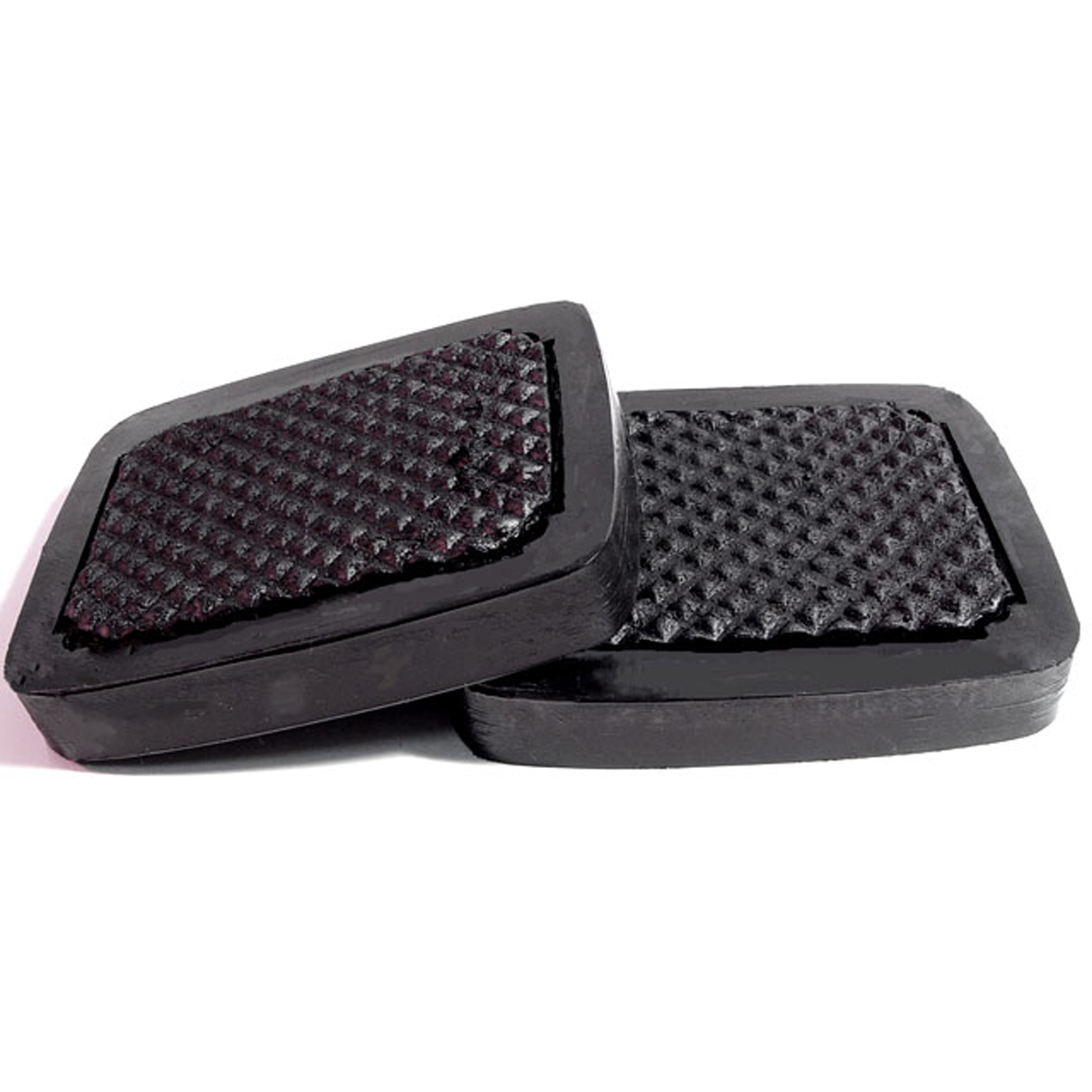 1920 Buick MODEL K-45 Clutch and Brake Pedal Pads. 2-3/4" wide X 3-3/8" long-CB 12Clutch and Brake Pedal Pads. 2-3/4" wide X 3-3/8" long. Pair
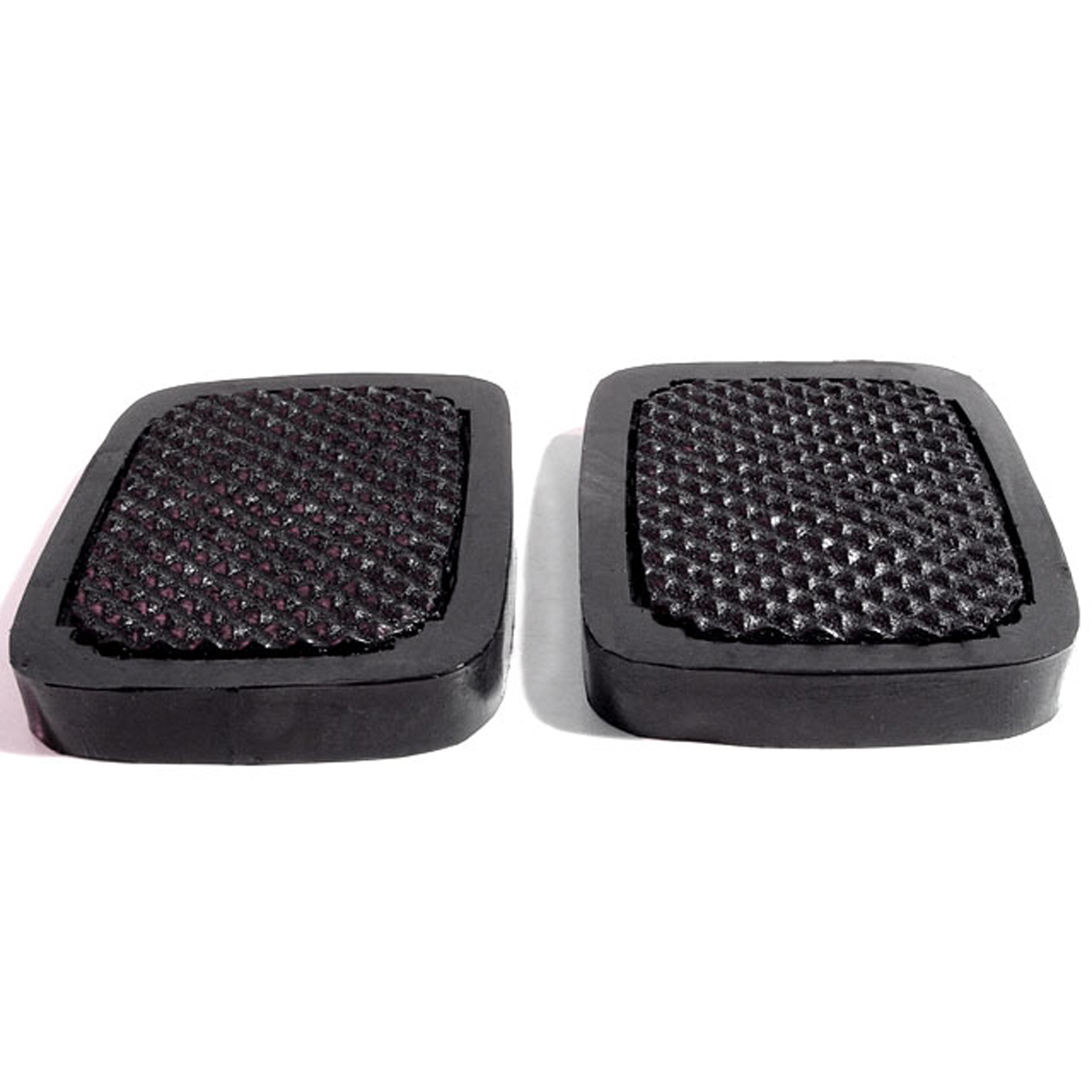 1920 Buick MODEL K-45 Clutch and Brake Pedal Pads. 2-3/4" wide X 3-3/4" long-CB 13Clutch and Brake Pedal Pads. 2-3/4" wide X 3-3/4" long. Pair
Why Choose Metro?
For over 100 years, Metro Moulded Parts has been the pinnacle of quality in classic car restoration parts. Our commitment to precision and authenticity in every component ensures a perfect fit and an OEM-level appearance.
- Expert Craftsmanship & Quality: Each part is a testament to our dedication to reliability and perfection, crafted from original designs and thoroughly tested.
- Advanced Technology: We use cutting-edge techniques to create flawless, long-lasting parts that surpass others in performance.
- SuperSoft Sponge – The Ultimate Door Seal: Not only are our door seals 30% softer than competitors', but they're also guaranteed to never leak. They effectively reduce wind and road noise, enhancing your classic car's comfort and driving experience.
- Proudly American: Our parts are a product of American craftsmanship, made in the USA with a spirit of excellence and heritage.
- Unrivaled Warranty: We back our products with a 30-year industry-leading warranty, a testament to our confidence in their quality.
Join us in preserving the legacy of classic cars with parts that are crafted for perfection, not just made.