

Image of 1920 Buick Model K-49, Note: These illustrations use artistic license and may differ from actual historical models.
Performance Metrics
Fundamental Metrics
Emotional Appeal
MMP Rating
| Engine Specifications | |
|---|---|
| Engine: | 6-cylinder, in-line, L-head |
| Displacement: | 331.5 cubic inches |
| Horsepower: | Estimated 27 HP |
| Torque: | Not available |
| Compression Ratio: | Not available |
| Ignition System: | Battery and coil |
| Cooling System: | Water, thermo-siphon |
| Performance Specifications | |
| 0-60 Time: | Not available |
| 1/4 Mile Time: | Not available |
| Top Speed: | 50-55 mph |
| Transmission and Drive | |
| Drive Type: | Rear-wheel drive |
| Transmission Type: | 3-speed manual |
| Fuel and Efficiency | |
| Fuel System Type: | Carburetor |
| MPG: | Not available |
| Dimensions and Brakes | |
| Brakes: | Mechanical, 2-wheel brakes |
| Wheelbase: | 120 inches |
| Weight: | 3,370 lbs |
Note: Specifications for classic cars are given to the best of our ability, considering the limited and variant data available.
1920 Buick Model K-49: A Big-Six Buick from a Changing America
The 1920 Buick Model K-49 brought Buick’s signature valve-in-head engineering to a substantial, beautifully finished automobile built for an era when motoring was becoming part of everyday life. Produced by the Buick Motor Company in Flint, Michigan, the K-49 belonged to Buick’s postwar K series, a range that paired a six-cylinder engine with the generous proportions and formal coachwork buyers expected from an upscale American car.
Buick had become part of General Motors in 1908, and by 1920 it was one of America’s most important automobile manufacturers. Its reputation rested heavily on overhead-valve engines, which Buick promoted as “valve-in-head” powerplants. A memorable point of context for the K-49 is that it arrived just as the postwar car-buying boom was meeting economic turbulence. The recession of 1920 and 1921 made a large, expensive automobile a serious purchase, but Buick’s engineering and established dealer network helped the marque retain its strong position.
One detail worth knowing before comparing examples is that early Buick model and body-style listings are not always consistent. The K-49 is commonly identified in collector references as a large, closed, seven-passenger sedan, though descriptions of period Buick body designations can vary. For a particular car, its original catalog, serial information, and surviving coachwork are more reliable guides than a modern listing title alone.
Formal Lines and Comfortable Coachwork
The K-49 has the upright, confident stance associated with early American luxury cars. Its tall radiator and narrow grille give the nose a formal look, while sweeping front fenders lead the eye toward a long hood and broad passenger compartment. Large, thin-rimmed wheels, running boards, external lamps, and a high seating position complete a silhouette designed to look substantial rather than sleek. The body’s height and generous glass area also helped passengers see out over the road, an important advantage on routes that could be rough, dusty, or crowded with horse-drawn traffic.
As a closed seven-passenger car, the K-49 offered room for a larger household or for carrying guests and business associates. The cabin would have used period upholstery and trim, typically with durable cloth or broadcloth in enclosed cars, carefully finished woodwork, and metal fittings selected for both appearance and function. Exact materials and patterns could differ with equipment, coachwork, and later restoration. A well-preserved interior feels more like a compact sitting room than the sparse cabin of a modern car, although its controls and seating are unmistakably from another age.
Buick’s 1920 range included several body styles, with open touring cars and roadsters alongside closed coupes and sedans. The open touring body was a particularly recognizable early Buick form, but the K-49’s appeal lies in its more formal, enclosed passenger space. That distinction mattered to buyers who wanted weather protection and a dignified appearance rather than an open-air motoring experience.
Period paint choices depended on the model, body, and finish schedule, so there is no single color that can be confidently named as the universal K-49 choice. Black and dark, restrained colors such as deep blue or maroon suit the car’s formal character and are common choices for restorations. Original paint evidence, where it survives, is more valuable than assuming every Buick left the factory in the same shade.
Valve-in-Head Engineering
The K-49’s most important technical feature was its inline six-cylinder engine with overhead valves. Buick had built its reputation around this configuration, which placed the valves above the combustion chamber rather than using the side-valve layout common in many cars of the period. The arrangement helped the engine breathe efficiently for its time and gave Buick a useful blend of power and flexibility.
Specifications commonly associated with the 1920 Buick K series include a 242-cubic-inch six producing about 60 horsepower. The exact specification should be checked against the car’s serial number and period documentation, since surviving vehicles may have received replacement parts or engines over the decades. The drivetrain was built around a manual transmission, and the car used mechanical controls rather than the power-assisted systems drivers now take for granted. Electric starting and lighting were part of the period’s move away from hand-cranking and acetylene lamps, though equipment details could vary by car and market.
These features were not futuristic by today’s standards, but they represented meaningful progress in 1920. A six-cylinder engine ran more smoothly than many four-cylinder alternatives, while overhead valves helped Buick make a persuasive case for performance without relying on enormous displacement alone.
How the K-49 Drives
Expect a relaxed, deliberate driving experience rather than modern acceleration. With roughly 60 horsepower moving a large, heavy car, a K-49 is best understood as a steady road machine. Period manufacturers did not generally publish standardized 0-to-60-mph figures, and present-day results depend greatly on gearing, engine condition, tire choice, load, and road surface. A reasonable modern estimate is that a sound example could take roughly 35 to 45 seconds to reach 60 mph, if it can reach that speed at all. A more dependable expectation is comfortable travel at moderate speeds, not sustained freeway pace.
Top-speed figures are similarly affected by condition and gearing. A well-sorted K-series Buick may be capable of approximately 55 to 60 mph under favorable conditions, but that should not be mistaken for a recommended cruising speed. Age, braking capability, tire construction, and the quality of a restoration all matter more than a headline number.
On uneven roads, the K-49’s long wheelbase and substantial chassis help it feel composed, though its suspension cannot erase deep ruts or sharp bumps. On a winding road, the driver has to plan ahead. Steering is heavy by modern standards, body roll is noticeable, and the car rewards smooth inputs rather than quick corrections. The driver sits high, works a manual gearbox, and listens closely to the engine and chassis. The six delivers a measured mechanical growl, accompanied by the sounds of tires, drivetrain, and road that modern sound insulation normally hides.
Buick’s Place in Automotive History
The K-49’s importance is not that it introduced a single revolutionary feature. Its significance comes from how it brought Buick’s established engineering approach into a spacious, refined car at a pivotal moment in American motoring. Buick’s overhead-valve six helped distinguish the company from competitors, and its reputation for usable power and solid construction supported the brand’s growth within General Motors.
Compared with many contemporary cars, the K-49 offered the smoothness of a six-cylinder engine, substantial passenger space, and the prestige of a closed body. It was still a machine that demanded skill and attention, but it represented a shift toward cars intended for more than short local trips or fair-weather touring. In that sense, it belongs to the transition from the exposed, hands-on motoring of the earliest automobile era toward the more comfortable and capable cars that would define the 1920s.
Its lasting influence is best understood through Buick as a marque rather than through the K-49 alone. The model helped carry Buick’s engineering identity forward: practical six-cylinder power, conservative but substantial styling, and an emphasis on building a car buyers could use with confidence. Later generations of Buick would change dramatically, but that combination of smoothness and solid construction remained part of the brand’s appeal.
Living with a 1920 Buick
Today, the K-49 is more likely to be a touring, display, or museum car than a daily driver. It can take part in local vintage-car events and carefully planned road tours, but modern traffic, highway speeds, and limited braking performance make routine commuting impractical. Owners who drive one regularly tend to choose quieter routes, keep speeds moderate, and carry basic tools and spares.
Maintenance is straightforward in principle but requires period-car knowledge and patience. The engine and mechanical systems are accessible compared with many modern vehicles, and a skilled vintage-car mechanic can often service or repair them without specialized electronic equipment. The challenge is finding correct parts, preserving original components, and understanding the adjustments that older ignition, fuel, lubrication, and braking systems need. Regular checks of fluids, fasteners, tires, and brakes are essential. A newly restored car is not automatically a reliable car unless it has been properly sorted and driven enough to reveal small problems.
Common ownership complaints are part of the experience: heavy steering, a labor-intensive gearbox, limited braking compared with modern cars, and a cabin that may be noisy or drafty despite its closed body. Those compromises are also why a K-49 feels so different from a contemporary automobile. The driver is an active participant, not simply a passenger operating a steering wheel and pedals.
Small Details and Big Buick Trivia
The K-49’s overhead-valve six is its most useful trivia point because it connects the car directly to Buick’s long-standing “valve-in-head” identity. The company used that engineering distinction as a central part of its reputation for decades. The K-49 also reflects a period when body style could dramatically change a car’s purpose: an open touring Buick suited fair-weather excursions, while a closed sedan offered more privacy and protection for passengers.
No widely established speed, endurance, or sales record is specifically associated with the 1920 K-49, and there is no broadly documented celebrity ownership story that defines the model. It is better known as a representative of Buick’s successful early-six-cylinder era than as a record-breaking special edition. Like many large early cars, it can also be criticized for being heavy, mechanically demanding, and slow by modern standards. Those are fair observations, but they should be judged in the context of 1920 rather than by today’s expectations.
Collector Value and Availability
There is no dependable, widely published production total for the K-49 body style alone. Buick built cars in substantial numbers, but surviving model-level records and body-by-body totals are difficult to pin down. A reasonable estimate is that several thousand K-49s may have been produced, while the number surviving in recognizable, usable condition is likely far smaller, perhaps in the dozens to low hundreds worldwide. That is an informed estimate, not a confirmed factory count.
Availability is limited, especially for complete, correctly identified cars with sound coachwork and documented history. As a broad current-market estimate, a project or incomplete example might fall around $8,000 to $18,000. A running, presentable car could bring roughly $20,000 to $45,000, while an excellent, highly restored example may reach $50,000 to $75,000 or more. These are guide figures rather than a formal valuation. Condition, originality, provenance, restoration quality, and the strength of the market at the time of sale can move the price considerably.
Values for early automobiles tend to be selective rather than uniformly rising. Exceptional, documented cars can hold interest among collectors, while cars needing expensive restoration may be difficult to sell at a price that covers the work. The K-49’s appeal is strongest for buyers who appreciate early Buick engineering and large prewar-era American cars, rather than shoppers seeking a fast return. Over time, well-preserved examples are likely to remain desirable, but the market is best described as condition-sensitive and relatively specialized.
Why the 1920 Buick K-49 Still Matters
The 1920 Buick Model K-49 combines formal early-automobile styling, spacious coachwork, and the overhead-valve six that helped establish Buick’s engineering reputation. It is not a modern-speed machine, nor is it effortless to maintain, but it offers an unusually direct connection to the years when American cars were becoming more capable, comfortable, and widely used.
For collectors, the K-49 is a substantial piece of Buick history. For anyone lucky enough to ride in one, it is a reminder that motoring once demanded attention at every turn, and that progress arrived one solid, carefully engineered Buick at a time.
1920 Buick Model K-49 Catalog of Parts
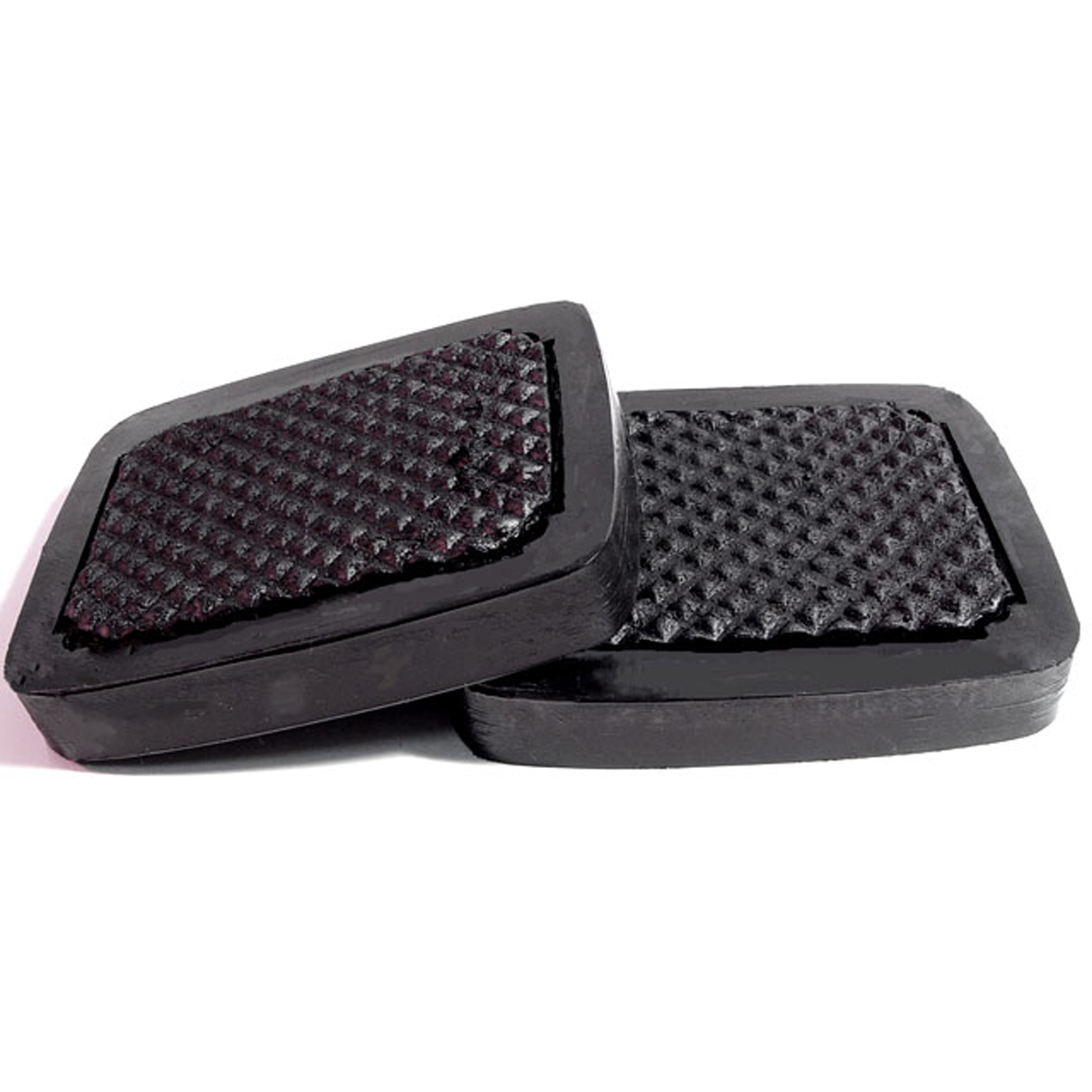 1920 Buick MODEL K-49 Clutch and Brake Pedal Pads. 2-3/4" wide X 3-3/8" long-CB 12Clutch and Brake Pedal Pads. 2-3/4" wide X 3-3/8" long. Pair
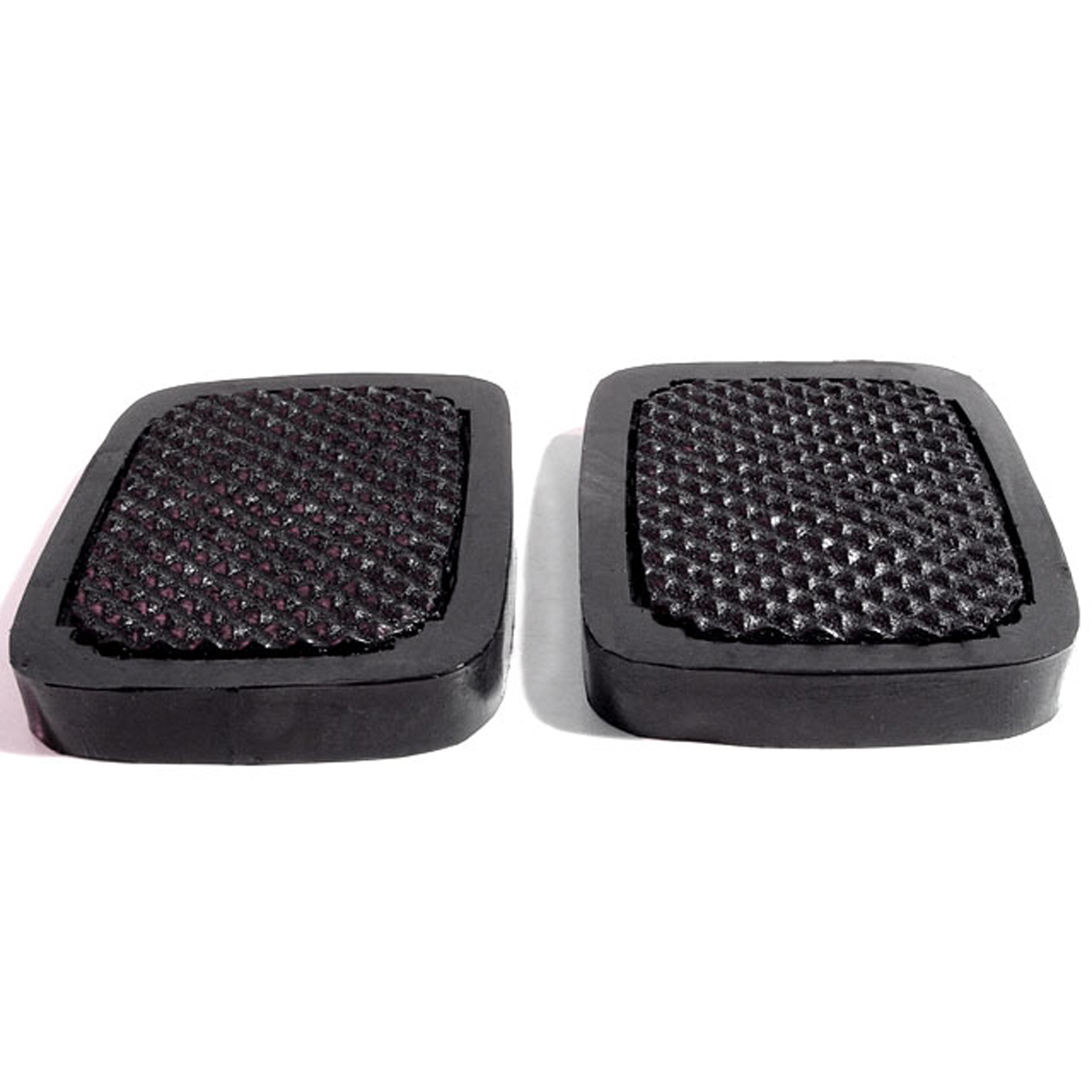 1920 Buick MODEL K-49 Clutch and Brake Pedal Pads. 2-3/4" wide X 3-3/4" long-CB 13Clutch and Brake Pedal Pads. 2-3/4" wide X 3-3/4" long. Pair
Why Choose Metro?
For over 100 years, Metro Moulded Parts has been the pinnacle of quality in classic car restoration parts. Our commitment to precision and authenticity in every component ensures a perfect fit and an OEM-level appearance.
- Expert Craftsmanship & Quality: Each part is a testament to our dedication to reliability and perfection, crafted from original designs and thoroughly tested.
- Advanced Technology: We use cutting-edge techniques to create flawless, long-lasting parts that surpass others in performance.
- SuperSoft Sponge – The Ultimate Door Seal: Not only are our door seals 30% softer than competitors', but they're also guaranteed to never leak. They effectively reduce wind and road noise, enhancing your classic car's comfort and driving experience.
- Proudly American: Our parts are a product of American craftsmanship, made in the USA with a spirit of excellence and heritage.
- Unrivaled Warranty: We back our products with a 30-year industry-leading warranty, a testament to our confidence in their quality.
Join us in preserving the legacy of classic cars with parts that are crafted for perfection, not just made.