

Image of 1920 Buick Model K-50, Note: These illustrations use artistic license and may differ from actual historical models.
Performance Metrics
Fundamental Metrics
Emotional Appeal
MMP Rating
| Engine Specifications | |
|---|---|
| Engine: | 6-cylinder, overhead valve |
| Displacement: | 331 cubic inches |
| Horsepower: | Estimated 60-70 HP |
| Torque: | Not available |
| Compression Ratio: | Not available |
| Ignition System: | Battery and coil |
| Cooling System: | Water-cooled |
| Performance Specifications | |
| 0-60 Time: | Not available |
| 1/4 Mile Time: | Not available |
| Top Speed: | 50-55 mph |
| Transmission and Drive | |
| Drive Type: | Rear-wheel drive |
| Transmission Type: | 3-speed manual |
| Fuel and Efficiency | |
| Fuel System Type: | Carburetor |
| MPG: | Not available |
| Dimensions and Brakes | |
| Brakes: | Mechanical drum brakes |
| Wheelbase: | 128 inches |
| Weight: | 3,400 lbs |
Note: Specifications for classic cars are given to the best of our ability, considering the limited and variant data available.
1920 Buick Model K-50: A Brass-Era Road Tourer with Buick Muscle
The 1920 Buick Model K-50 brought the open-road spirit of the early automobile age together with one of Buick’s defining engineering strengths: a smooth, powerful-for-its-day overhead-valve six-cylinder engine. Built by the Buick Motor Company, then a key part of General Motors, the K-50 arrived as American motorists were moving beyond the earliest, most fragile cars toward dependable touring machines suited to longer journeys.
Buick’s reputation rested in large part on its “valve-in-head” engines, a design in which the valves sat above the combustion chambers rather than beside them. That layout helped Buick deliver lively performance and became central to the marque’s identity. The Model K-50 is a memorable example of that approach in the years just after World War I, when road travel was expanding but much of the country still offered rough, unpaved routes.
One intriguing detail is that the Model K-50 belongs to an era when the car’s model number could tell buyers more about its body configuration than a modern trim badge would. Exact specifications and body designations can vary among surviving records, so individual cars are best identified by their original Buick documentation, body tags, and period literature.
Touring-Car Style and Early Buick Comfort
The K-50 has the upright, purposeful look that defines a classic early-1920s Buick. Its tall radiator, long hood, separate fenders, narrow running boards, and large spoked wheels give it a formal profile, while the exposed lamps and open body make its period character unmistakable. Details such as the radiator finish, lamps, wheels, and upholstery could differ by year, equipment, and owner, so not every surviving car looks exactly alike.
As a touring-style Buick, the K-50 was made for open-air motoring. The cabin was arranged for passengers to sit upright, with a broad bench seat and a folding top for protection from the weather. Period interiors typically used durable upholstery, often leather or leather-like trim, alongside painted or finished wood and metal fittings. Comfort was practical rather than luxurious by modern standards: there was little sound insulation, limited weather protection, and no modern heating or ventilation system.
Black was a common and visually appropriate choice for cars of the period, but paint colors could vary with model, body, and buyer preference. Dark shades such as green, maroon, and blue were also associated with early automobiles. Original color availability should be confirmed against factory records for the specific car, since later repainting has changed the appearance of many survivors.
Body-style details are especially important when researching a K-50. Buick offered a range of open and closed bodies across its early-1920s lineup, including touring cars, roadsters, coupes, and sedans. The K-50 is most often encountered in touring-car form, which best suits its open, long-distance personality. Buyers could also choose equipment and trim, but the exact menu depended on the model and sales market.
Valve-in-Head Engineering and Buick’s Place in History
Buick’s most important contribution to the K-50 was not an exotic body feature but the engine beneath its long hood. The marque had made overhead-valve engineering a signature well before 1920. Compared with many side-valve engines of the era, Buick’s valve-in-head arrangement helped the engine breathe efficiently and produce strong performance for its displacement. It also gave Buick a technical identity that distinguished the company within General Motors.
The K-50 was not a radical styling landmark, nor is it known for a single breakthrough invented specifically for that model. Its significance lies in how it represents Buick’s transition into a more mature automobile market: a sturdy, usable car from a manufacturer increasingly associated with dependable six-cylinder power. Buick’s emphasis on engineering and quality helped establish the brand as an important step up from the cheapest cars of the day, while still serving a broad market.
Many conveniences that drivers now take for granted were absent or primitive. The K-50 had no modern safety systems, power assistance, or synchronized transmission in the contemporary sense. Yet electric starting and lighting were part of the wider shift that made cars easier to operate than the earliest hand-cranked machines. Exact equipment could vary, so restorers should check the car’s original specification rather than assume every feature was standard.
Performance, Speed, and the Feel of the Road
Period Buick Model K cars are generally associated with a 242-cubic-inch inline-six producing about 60 horsepower, paired with a three-speed manual transmission and rear-wheel drive. Specifications can differ across references and individual cars, so those figures are best treated as representative of the K-series rather than a guarantee for every K-50. The engine’s overhead-valve design gave it a useful blend of torque and flexibility for a car of its time.
A precise factory 0-to-60-mph figure is not readily available, and performance depended on body weight, gearing, road surface, mechanical condition, and passenger load. A modern estimate would put acceleration to 60 mph at well over 20 seconds, if the car reaches that speed at all under ordinary conditions. A healthy example might manage roughly 50 to 60 mph on a suitable road, but it was designed for steady touring, not sustained high-speed travel.
On rough roads, the K-50’s tall tires and traditional suspension offer a more compliant feel than its upright shape might suggest, but the ride is still unmistakably vintage. Bumps travel through the chassis, steering requires more attention than in a modern car, and the driver must plan ahead. On a winding road, narrow tires, period brakes, and a high center of gravity reward a measured pace rather than spirited cornering.
Behind the wheel, the experience is hands-on. The driver works the clutch and gear lever, listens to the engine, and makes deliberate steering corrections. The inline-six produces a steady mechanical thrum, accompanied by tire noise, wind, and the clatter of an open touring body. It is a car to experience at a thoughtful pace, with the engine’s sound and the changing landscape very much part of the journey.
Living with a 1920 Buick
Today, a Model K-50 is best suited to vintage-car touring, local parades, museum display, and judged events. It can be driven, but it is not a practical everyday vehicle in the modern sense. Its open body offers limited protection from rain and cold, while its pace and braking distances call for roads and traffic conditions that suit an antique car.
Maintenance is approachable for an experienced hobbyist, especially compared with the electronics-heavy systems found in newer vehicles. The mechanical layout is relatively straightforward, and many routine tasks can be handled with traditional tools. However, age brings its own challenges: correct parts may be difficult to source, fasteners and fittings can be nonstandard, and an engine that has sat unused may need careful recommissioning before it is safe to drive.
Reliability depends more on restoration quality and ongoing care than on the car’s original reputation. Cooling-system condition, lubrication, ignition, fuel delivery, tires, steering, and brakes deserve close inspection. A well-maintained Buick can be rewarding on organized tours, but an unrestored or poorly repaired example should not be treated as ready for the road simply because it starts.
Rare Details, Records, and Common Complaints
The K-50 is not widely associated with a special racing edition, a famous speed record, or a major celebrity ownership story. Its appeal is more grounded: it represents the practical touring cars that helped make early motoring part of everyday American life. Surviving cars may have unusual trim, accessories, or coachwork, but those details should be verified rather than assumed to indicate a factory special edition.
There is no well-established Model K-50 production total or widely cited record attached specifically to the model. Buick produced cars in substantial numbers for the period, but production was divided among different models and body styles. A common criticism today is that the car can feel slow and demanding beside even a modest modern vehicle. Its brakes, steering effort, weather protection, and parts availability can also frustrate owners who expect modern convenience. Those limitations are part of the period experience, but they matter when planning a purchase.
Collector Value and How Rare Is It?
Exact production figures for the K-50 are difficult to establish from commonly available model-level records. As a cautious estimate rather than a documented factory total, production was likely in the thousands, not the hundreds of thousands, with surviving examples far fewer today. The number of cars offered for sale at any one time is small, and condition, completeness, originality, and body style make a major difference to both availability and value.
As a broad current-market estimate, a project or incomplete example might fall around $10,000 to $25,000. A usable, restored touring car could bring approximately $25,000 to $50,000, while an exceptional, authentic, well-documented example may reach $50,000 to $75,000 or more. These are general guide ranges, not a formal appraisal; unusual provenance, restoration quality, and regional demand can move a sale well outside them.
Prices for early touring cars tend to be selective rather than uniformly rising. High-quality, correctly restored examples remain attractive to collectors, but restoration costs can exceed the value of a car in poor condition. The best prospects are complete cars with strong documentation and sound mechanical work. Buyers should compare recent sales of similar Buicks rather than rely only on asking prices.
Why the Buick K-50 Still Matters
The 1920 Buick Model K-50 combines the open-air charm of early motoring with the engineering tradition that helped define Buick. Its upright touring-car styling, hands-on controls, and overhead-valve six-cylinder character make it a vivid reminder of a time when a long drive demanded preparation as well as enthusiasm. It is not fast or effortless by modern standards, but that is not the point. The K-50 matters because it shows how Buick helped turn the automobile from a novelty into a capable companion for the open road.
1920 Buick Model K-50 Catalog of Parts
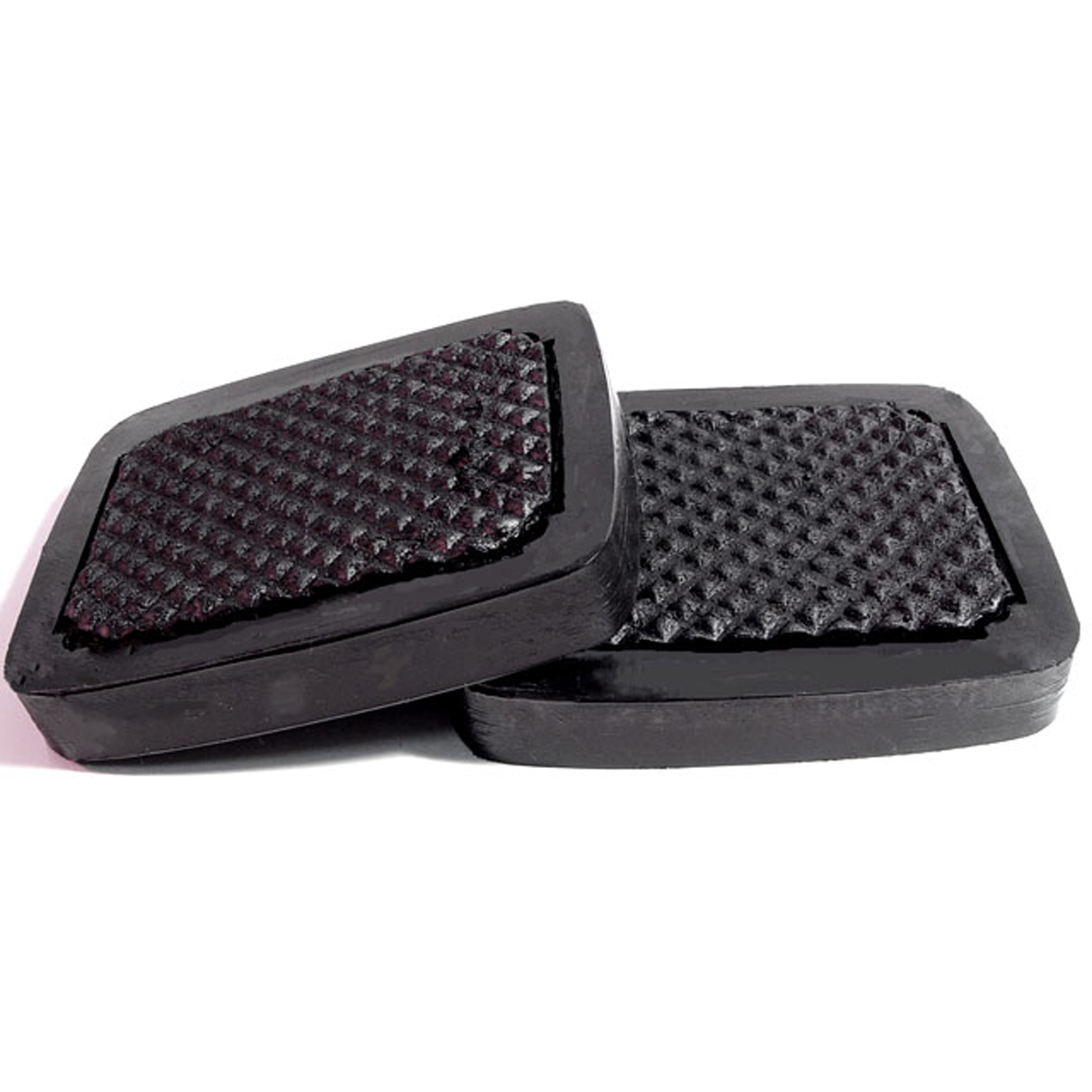 1920 Buick MODEL K-50 Clutch and Brake Pedal Pads. 2-3/4" wide X 3-3/8" long-CB 12Clutch and Brake Pedal Pads. 2-3/4" wide X 3-3/8" long. Pair
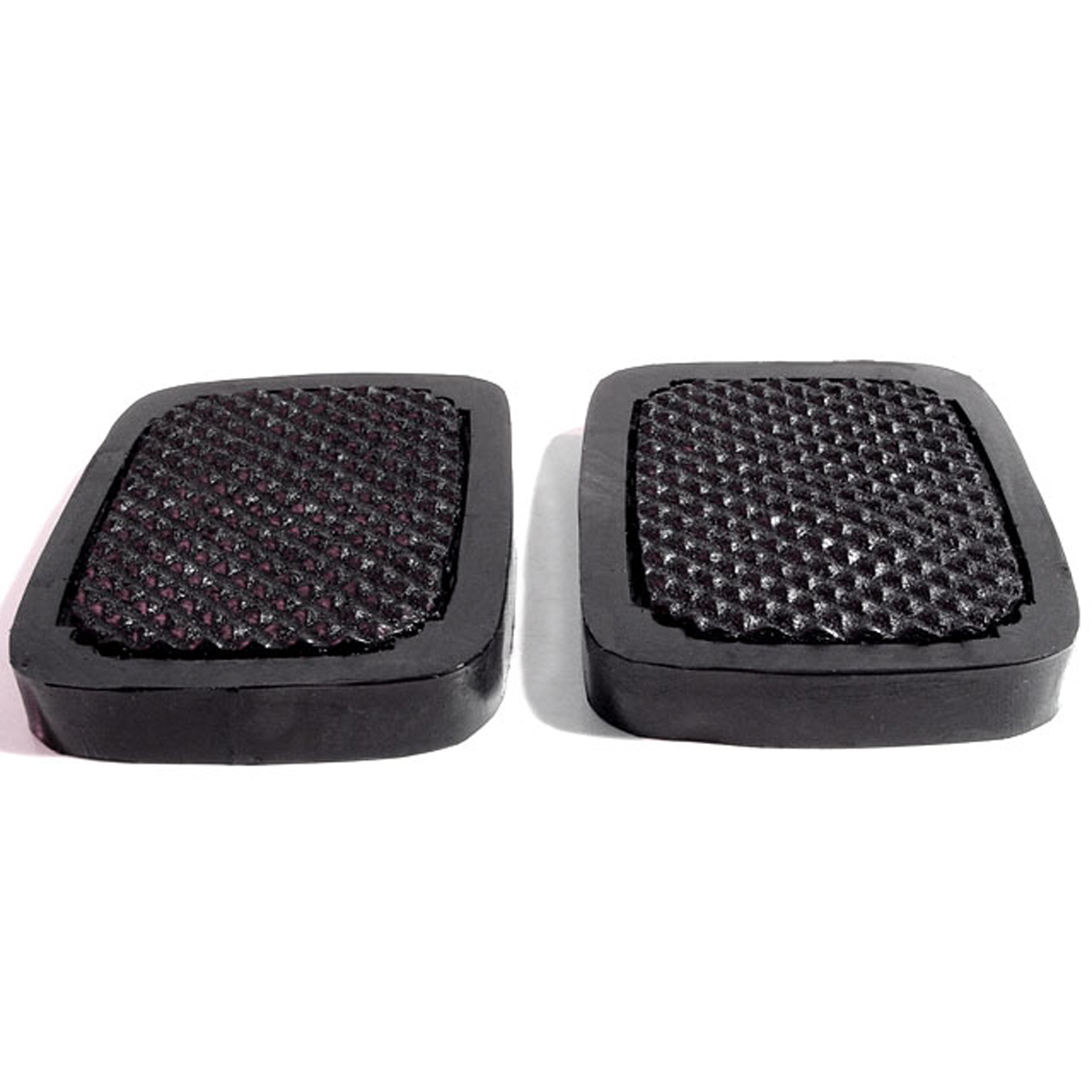 1920 Buick MODEL K-50 Clutch and Brake Pedal Pads. 2-3/4" wide X 3-3/4" long-CB 13Clutch and Brake Pedal Pads. 2-3/4" wide X 3-3/4" long. Pair
Why Choose Metro?
For over 100 years, Metro Moulded Parts has been the pinnacle of quality in classic car restoration parts. Our commitment to precision and authenticity in every component ensures a perfect fit and an OEM-level appearance.
- Expert Craftsmanship & Quality: Each part is a testament to our dedication to reliability and perfection, crafted from original designs and thoroughly tested.
- Advanced Technology: We use cutting-edge techniques to create flawless, long-lasting parts that surpass others in performance.
- SuperSoft Sponge – The Ultimate Door Seal: Not only are our door seals 30% softer than competitors', but they're also guaranteed to never leak. They effectively reduce wind and road noise, enhancing your classic car's comfort and driving experience.
- Proudly American: Our parts are a product of American craftsmanship, made in the USA with a spirit of excellence and heritage.
- Unrivaled Warranty: We back our products with a 30-year industry-leading warranty, a testament to our confidence in their quality.
Join us in preserving the legacy of classic cars with parts that are crafted for perfection, not just made.