

Image of 1921 Buick Model 46, Note: These illustrations use artistic license and may differ from actual historical models.
Performance Metrics
Fundamental Metrics
Emotional Appeal
MMP Rating
| Engine Specifications | |
|---|---|
| Engine: | 242 cubic inch inline-6 |
| Displacement: | 242 cubic inches |
| Horsepower: | Estimated 50-60 HP |
| Torque: | Not available |
| Compression Ratio: | Not available |
| Ignition System: | Battery and coil |
| Cooling System: | Water-cooled |
| Performance Specifications | |
| 0-60 Time: | Not available |
| 1/4 Mile Time: | Not available |
| Top Speed: | 50-55 mph |
| Transmission and Drive | |
| Drive Type: | Rear-wheel drive |
| Transmission Type: | 3-speed manual |
| Fuel and Efficiency | |
| Fuel System Type: | Carburetor |
| MPG: | Not available |
| Dimensions and Brakes | |
| Brakes: | Mechanical drum brakes |
| Wheelbase: | 118 inches |
| Weight: | 2,800 lbs |
Note: Specifications for classic cars are given to the best of our ability, considering the limited and variant data available.
1921 Buick Model 46: A Touring Car with Buick Muscle
With its tall brass-free radiator, sweeping fenders, and purposeful six-cylinder engine, the 1921 Buick Model 46 brought a confident presence to America’s roads. Built by Buick Motor Company, then a key part of General Motors, the Model 46 was a six-cylinder touring car from an era when dependable power and long-distance comfort were becoming central to motoring.
Buick’s roots go back to the company founded by David Dunbar Buick in the early 1900s. William C. Durant brought Buick into the General Motors organization, and the brand soon earned a reputation for engineering and durability. The Model 46 carried forward one of Buick’s best-known ideas: the overhead-valve, or “valve-in-head,” engine. At a time when many engines used less efficient side-valve layouts, that design helped establish Buick’s identity as a maker of technically ambitious cars.
One intriguing detail is the Model 46’s place in Buick’s model-number system. It was not simply a trim level: the number identified a particular body configuration within the brand’s six-cylinder range. It is commonly associated with the five-passenger touring body, an open car designed to carry a family or traveling party with luggage and the weather protection of a folding top and side curtains.
Touring-Car Styling and Craftsmanship
The Model 46 had the upright proportions typical of an early-1920s touring car. Its long hood led to a high, nearly vertical radiator, while broad front fenders curved over narrow tires. Running boards connected the fenders along the sides, and the open passenger compartment sat high above the road. A folding fabric top could be raised when the weather turned, though it offered less insulation and sealing than a later closed body.
Inside, the emphasis was on practical workmanship rather than modern luxury. The cabin typically featured durable upholstery, often leather or leather-like material depending on specification and restoration history, with painted or wood-finished trim and a straightforward instrument panel. Large controls and clear gauges were important in a car that demanded more physical involvement from its driver than a modern vehicle. Details can vary between surviving cars, so original brochures, build records, and the car itself are the best guides to a particular example’s materials and equipment.
Buick offered period paint finishes in a range of dark, conservative colors. Black and deep shades such as blue or maroon are commonly associated with cars of the period, but exact choices depended on the year, body, and market. Restored examples may also wear colors selected by later owners, so a striking paint job is not necessarily proof of a factory-original finish.
The Model 46’s signature form was the open five-passenger touring body. Buick’s wider range included other body styles, such as roadsters and closed cars, though not every body was cataloged under the Model 46 designation. The touring car was the natural choice for buyers who wanted room, flexibility, and a car suited to both town trips and longer journeys.
Buick Engineering in 1921
The Model 46’s most important technical feature was its six-cylinder overhead-valve engine. Buick had built its reputation around the valve-in-head layout, which placed the valves above the combustion chamber rather than alongside it. For the period, this was a distinctive engineering choice, helping Buick deliver strong, usable performance and reinforcing its image as a step above basic transportation.
Electric starting and lighting were also part of the changing motoring experience. Earlier drivers had to crank engines by hand and rely on less convenient lighting systems. By 1921, electric equipment made everyday use much more approachable, although starting, shifting, braking, and steering still required attention and effort compared with a modern car.
The Model 46 did not invent the touring car, nor was it the only vehicle of its time with an overhead-valve engine. Its significance lies in how Buick combined that engine architecture with a practical, full-size body and a growing national dealer network. It helped make Buick’s engineering reputation tangible to buyers who wanted something more substantial than a basic runabout.
Six-Cylinder Performance and Road Manners
Commonly cited specifications for the 1921 Buick Model 46 include a six-cylinder engine of about 242 cubic inches and approximately 60 horsepower. Exact figures can vary among references and surviving cars, so buyers should verify an individual vehicle’s engine and components rather than rely on a badge or listing alone. A three-speed manual transmission was typical for the period.
A sound, correctly tuned Model 46 could reach roughly 50 to 55 mph in favorable conditions. That is a period-appropriate estimate, not a promise for every car: engine condition, gearing, tires, road surface, and body weight all affect speed. Reliable factory 0-to-60 mph figures are not readily documented, and the car’s leisurely acceleration makes a precise modern-style sprint time a poor measure of its character. Reaching 60 mph may be difficult for some examples, especially on ordinary roads.
On the move, the six-cylinder engine should feel smooth and steady by early-1920s standards, accompanied by a mechanical hum, exhaust pulse, and the sounds of an uninsulated open cabin. The suspension can take the sting out of modest bumps, but large potholes and rough roads are transmitted more directly than in a modern car. Narrow tires, a tall seating position, and period steering geometry call for measured inputs, especially on winding roads or in crosswinds. The driver is very much part of the operation, managing the clutch, gear lever, brakes, and road position rather than simply pointing the car and cruising.
Owning and Maintaining a Model 46
In its own day, a Model 46 could serve as family transportation, a touring car, or a vehicle for business and social travel. Today, most examples are used for local drives, club events, parades, and shows. Regular highway use is less common, not because the car cannot move under its own power, but because its speed, braking, lighting, and crash protection belong to another era.
Maintenance is approachable for an owner comfortable with mechanical work, but “simple” does not mean maintenance-free. The ignition, carburetor, cooling system, lubrication, clutch, brakes, and steering all need regular inspection. Parts availability is generally better than for many obscure prewar makes, thanks to Buick’s popularity, though correct original components and restoration-quality body parts can take time to find. A car intended for driving should be checked by a specialist familiar with veteran and early classic vehicles, especially before being taken into modern traffic.
Reliability depends heavily on restoration quality and ongoing care. A well-sorted Model 46 can be enjoyable on appropriate roads, while a neglected example may need extensive work despite looking presentable. Its owner should be comfortable with slower travel, careful pre-trip checks, and the fact that roadside repairs are a more realistic possibility than they are with a contemporary car.
Model 46 Facts and Common Myths
The Model 46’s best-known claim to distinction is not a celebrity connection or a famous speed record. It represents Buick’s broader commitment to overhead-valve engineering at a time when that approach helped distinguish the marque. No widely documented production record or headline endurance achievement is specifically associated with the Model 46, and claims of a particular celebrity owner should be treated cautiously unless supported by reliable documentation.
Buick’s early valve-in-head reputation was valuable enough to become central to its public identity. The Model 46 is therefore a useful snapshot of the company’s engineering story, even though its individual features were part of a wider evolution in automobile design rather than a single revolutionary breakthrough.
Common criticisms are familiar to anyone who drives an early open car: limited weather protection, modest braking by modern standards, slow acceleration, and a demanding driving position. Parts and restoration costs can also surprise new owners. Those drawbacks are balanced by the car’s mechanical character, handsome proportions, and the direct connection it offers to early motoring.
Collector Value and Rarity
Exact production totals for the Model 46 are difficult to establish from readily available public figures, so a precise count would be misleading. As a reasonable estimate, production was likely in the thousands rather than the tens of thousands for this specific body designation. Surviving, correctly identified examples are a much smaller group, and fully restored cars appear only occasionally on the market.
As a broad North American guide, a project or incomplete car might fall around $5,000 to $15,000, depending on completeness and condition. A usable driver or solid older restoration could bring approximately $15,000 to $30,000, while a high-quality, correctly restored example may reach $30,000 to $45,000 or more. These are estimates, not appraisals: provenance, originality, mechanical condition, bodywork, and the quality of the restoration can move a price substantially.
Values for early touring cars tend to be selective rather than uniformly rising. Well-documented, attractive, roadworthy examples can hold interest, but restoration costs often exceed the eventual sale price. Over the long term, the Model 46 is best viewed as a collector car whose strongest appeal is historical character and condition, not guaranteed investment growth.
Why the 1921 Buick Model 46 Still Matters
The 1921 Buick Model 46 brings together the defining qualities of an early American touring car: open-air practicality, imposing period styling, and a six-cylinder overhead-valve engine that reflected Buick’s engineering ambitions. It is not quick or effortless by modern standards, and it asks its driver to take an active role. That is exactly what makes it memorable.
For collectors, the Model 46 offers more than a handsome old body. It captures a pivotal stage in the move toward more capable, comfortable, and technically sophisticated cars. Seen on the road today, it is a reminder that Buick’s reputation was built one carefully engineered mile at a time.
1921 Buick Model 46 Catalog of Parts
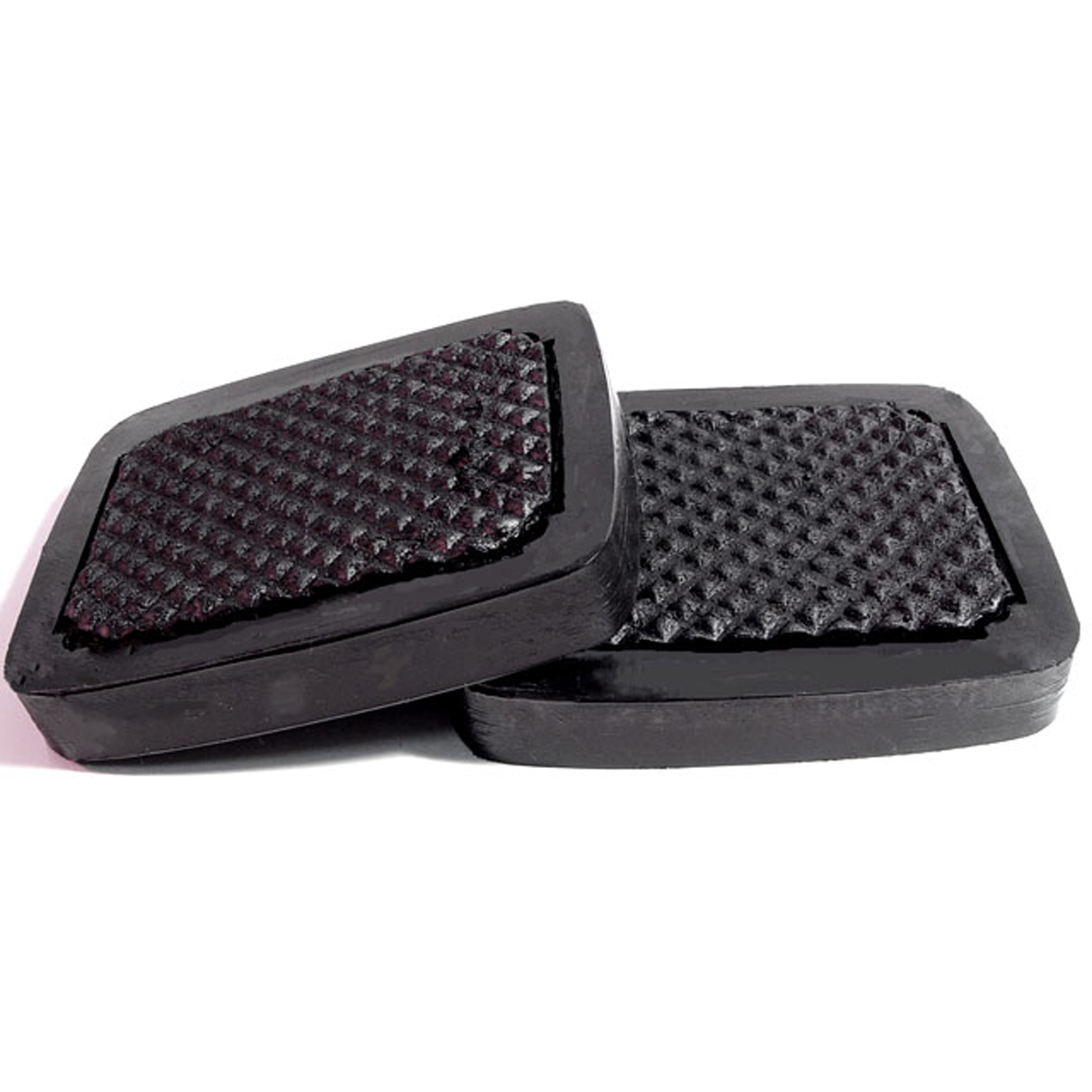 1921 Buick MODEL 46 Clutch and Brake Pedal Pads. 2-3/4" wide X 3-3/8" long-CB 12Clutch and Brake Pedal Pads. 2-3/4" wide X 3-3/8" long. Pair
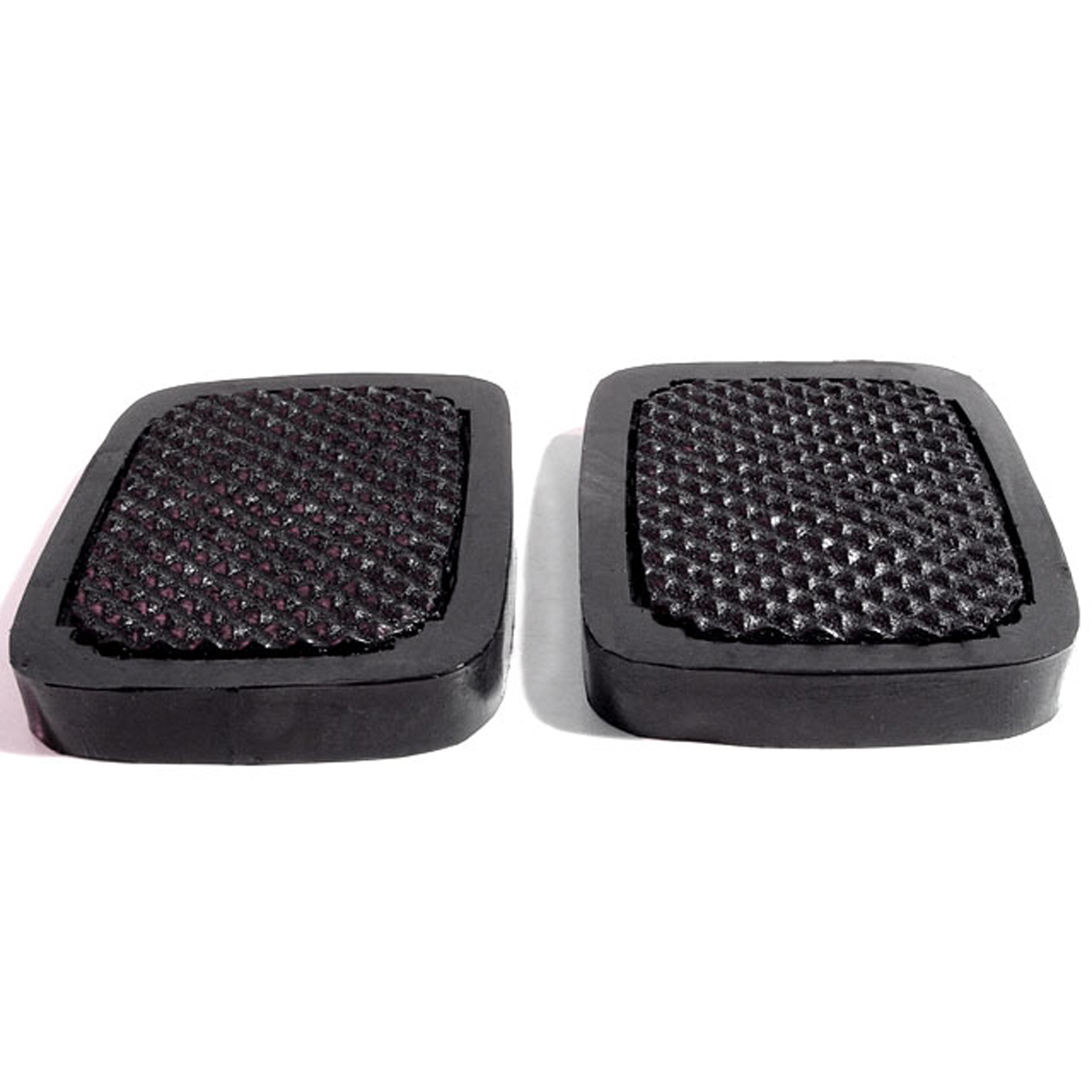 1921 Buick MODEL 46 Clutch and Brake Pedal Pads. 2-3/4" wide X 3-3/4" long-CB 13Clutch and Brake Pedal Pads. 2-3/4" wide X 3-3/4" long. Pair
Why Choose Metro?
For over 100 years, Metro Moulded Parts has been the pinnacle of quality in classic car restoration parts. Our commitment to precision and authenticity in every component ensures a perfect fit and an OEM-level appearance.
- Expert Craftsmanship & Quality: Each part is a testament to our dedication to reliability and perfection, crafted from original designs and thoroughly tested.
- Advanced Technology: We use cutting-edge techniques to create flawless, long-lasting parts that surpass others in performance.
- SuperSoft Sponge – The Ultimate Door Seal: Not only are our door seals 30% softer than competitors', but they're also guaranteed to never leak. They effectively reduce wind and road noise, enhancing your classic car's comfort and driving experience.
- Proudly American: Our parts are a product of American craftsmanship, made in the USA with a spirit of excellence and heritage.
- Unrivaled Warranty: We back our products with a 30-year industry-leading warranty, a testament to our confidence in their quality.
Join us in preserving the legacy of classic cars with parts that are crafted for perfection, not just made.