

Image of 1922 Buick Series 22, Note: These illustrations use artistic license and may differ from actual historical models.
Performance Metrics
Fundamental Metrics
Emotional Appeal
MMP Rating
| Engine Specifications | |
|---|---|
| Engine: | 242 cu in (4.0 L) OHV I6 |
| Displacement: | 242 cu in (4.0 L) |
| Horsepower: | 50-60 HP |
| Torque: | Not available |
| Compression Ratio: | Not available |
| Ignition System: | Battery and coil |
| Cooling System: | Water-cooled |
| Performance Specifications | |
| 0-60 Time: | Not available |
| 1/4 Mile Time: | Not available |
| Top Speed: | 50-55 mph |
| Transmission and Drive | |
| Drive Type: | Rear-wheel drive |
| Transmission Type: | 3-speed manual |
| Fuel and Efficiency | |
| Fuel System Type: | Carburetor |
| MPG: | Not available |
| Dimensions and Brakes | |
| Brakes: | Mechanical drum brakes |
| Wheelbase: | 118-128 inches |
| Weight: | 2,800-3,200 lbs |
Note: Specifications for classic cars are given to the best of our ability, considering the limited and variant data available.
1922 Buick Series 22: A Six-Cylinder Buick in a Changing America
The 1922 Buick Series 22 brought Buick’s celebrated “Valve-in-Head” engineering to motorists who wanted more than basic transportation. Built by the Buick Motor Company, then part of General Motors, it was a substantial early-1920s automobile with a six-cylinder engine, upright styling, and the kind of mechanical reputation that helped make Buick one of America’s leading carmakers.
The Series 22 arrived during a period of rapid change. The United States was moving into a decade of rising car ownership, better roads, and growing demand for enclosed cars. Open touring cars and roadsters were still familiar sights, but sedans and coupes were becoming increasingly attractive to buyers who wanted protection from weather and dust. Buick offered a range of body styles to suit both kinds of driver.
One noteworthy detail is Buick’s long-running commitment to overhead-valve engines. The company had made this layout a defining feature well before 1922, when many competitors still relied on less efficient side-valve designs. Buick marketed the arrangement as “Valve-in-Head,” making its engine design part of the brand’s identity as well as a practical engineering advantage.
Upright Styling and Hand-Finished Comfort
The Series 22 looks unmistakably like a car of the early 1920s. Its tall, narrow radiator sits beneath a rounded bonnet, with separate headlamps mounted on either side. A long hood leads back to a high, upright passenger compartment, while prominent fenders trace the wheels rather than blending into the body as they would on later cars. Running boards connect the front and rear fenders and provide a useful step up into the cabin.
Depending on body style, the car could feel formal or adventurous. A touring model had an open passenger area and a folding fabric top, while a roadster offered a more compact, sporting profile. Closed bodies, including sedans and coupes, gave the Series 22 a more sheltered and dignified appearance. Wood-framed construction and coachbuilding methods were common in this era, with Buick benefiting from General Motors’ growing relationship with Fisher Body.
Cabins were functional rather than lavish by modern standards, but the materials could be pleasingly rich. Open cars commonly used leather seating, while closed models might feature cloth or broadcloth upholstery, finished with wood trim and metal fittings. The driver faced a simple collection of gauges and controls. There were no modern conveniences such as climate control, power steering, or synchronized transmissions, so the experience was tactile and hands-on.
Paint choices varied by body, production details, and factory availability. Black was a familiar and practical choice, while dark blues, greens, and maroons were also typical colors for cars of the period. Exact original colors should be confirmed against factory records or surviving paint evidence when restoring an individual car. The most recognizable Series 22 body styles are the open touring car and roadster, though a well-preserved closed sedan can be especially appealing to collectors.
Valve-in-Head Engineering
At the center of the Series 22 was Buick’s inline six-cylinder, overhead-valve engine. Commonly cited specifications place its displacement at about 242 cubic inches, with output around 60 horsepower. Exact figures can vary with the source and the way early ratings were calculated, but the key point is clear: Buick offered a comparatively large, purposeful six-cylinder engine at a time when many cars still used four-cylinder power.
The overhead-valve layout placed the valves in the cylinder head rather than beside the cylinders. This helped the engine breathe more effectively and supported Buick’s reputation for strong performance and durability. Power went through a manual three-speed transmission to the rear wheels. The brakes were mechanical, reflecting the engineering norms of the era, and required more driver effort and anticipation than modern hydraulic systems.
The Series 22 was not a radical new design, but it represented the refinement of a formula Buick had spent years developing: a robust engine, conventional rear-wheel drive, and a sturdy chassis. That combination helped distinguish Buick from lower-priced cars while giving buyers a step toward the prestige and comfort of more expensive makes.
How the Buick Drives
A sound, correctly tuned Series 22 could likely reach roughly 50 to 55 mph under favorable conditions. A period-correct 0-to-60-mph time is difficult to establish, and the car’s gearing, body style, condition, and road surface all matter. In practical terms, acceleration to 60 mph would be slow by modern standards, and some cars may not reach that speed easily. A rough estimate would put the sprint well beyond 30 seconds, if the car can achieve 60 mph at all.
On the road, the Buick asks the driver to work. The steering is unassisted, the clutch and gear changes demand attention, and the mechanical brakes need a longer stopping distance than a contemporary driver might expect. There is no need to hurry through the gears. Smooth, deliberate inputs suit the car better than aggressive driving.
The ride is shaped by the tall tires, solid axles, and leaf springs typical of the period. On a reasonably smooth road, the Buick feels substantial and composed. Over broken pavement, its suspension can move and bounce more than a modern car’s, and narrow tires offer limited grip on loose or wet surfaces. On winding roads, the high body and relatively slow steering encourage measured cornering rather than spirited driving.
Behind the wheel, the engine’s sound is part of the appeal: a steady, mechanical six-cylinder note accompanied by the clicks, vibrations, and wind noise of an open or lightly insulated car. Driving a Series 22 is less about speed than about managing machinery. The reward is a direct connection to the road and to the habits motorists needed before modern controls made driving almost effortless.
Ownership, Maintenance, and Reliability
Today, the Series 22 is best suited to touring, local club events, museum displays, and vintage-car shows. It is not a sensible daily driver in modern traffic. Its brakes, lighting, tires, and crash protection are far behind current standards, and its pace can make busy roads uncomfortable or unsafe.
Maintenance is approachable for an owner with mechanical experience, but it is not entirely straightforward. The engine and chassis use understandable mechanical systems, and many repairs can be handled without specialized electronic tools. However, parts availability varies, and some components may need to be sourced through vintage Buick networks, specialist suppliers, or custom fabrication. Correct lubrication, ignition adjustment, cooling-system care, and careful brake maintenance are essential.
Reliability depends heavily on restoration quality and upkeep. A well-maintained Buick can be a dependable car for short, planned outings, but a century-old vehicle should never be assumed road-ready simply because it starts. Before driving, owners should inspect the tires, fuel lines, steering, brakes, and electrical system, then test the car at low speed in a safe area.
Notable Details and Common Criticisms
The Series 22’s strongest claim to distinction is not a famous speed record or a single celebrity owner. It is part of Buick’s broader story: a marque that built its reputation around overhead-valve engineering and used that technical identity to occupy an important middle ground in the American market. No widely recognized Series 22 land-speed or endurance record defines the model.
Common criticisms are familiar to anyone who has driven an early car. The Buick is slow by modern expectations, its brakes require planning, and its open versions provide little protection from weather. Parts and restoration work can also be costly. For enthusiasts, those limitations are part of the historical experience, but they are important considerations for prospective owners.
Collector Value and Rarity
Values depend strongly on body style, originality, mechanical condition, and the quality of any restoration. As a broad 2026 estimate, a project car or incomplete example might sell for roughly $8,000 to $18,000. A usable, presentable car could fall around $20,000 to $40,000, while a high-quality restoration or especially desirable body style might reach $45,000 to $70,000 or more. These are general U.S. market estimates, not a substitute for a current appraisal or recent comparable sales.
Exact production totals for the Series 22 are not consistently reported in readily available model-by-model records. A reasonable working estimate is that Buick built somewhere in the range of 75,000 to 125,000 Series 22 cars, but this should be treated as an informed estimate rather than a confirmed factory figure. Production across all Buick models in the period was substantial, yet survival rates for early cars are low. Finding one for sale today can take patience, and finding a particular body style in original condition can take much longer.
Market values for cars like the Series 22 tend to reward completeness and documented restoration more than speculative rarity. Well-presented examples have an audience among prewar collectors, though demand is narrower than for later classics. Over time, top-quality cars may hold or gradually gain value, while projects can be expensive to restore relative to their eventual sale price.
Why the 1922 Buick Series 22 Still Matters
The 1922 Buick Series 22 combines a substantial six-cylinder engine, the marque’s signature overhead-valve engineering, and a choice of open and enclosed body styles. It captures an era when cars were becoming more capable and widely owned, yet still demanded skill and attention from their drivers.
It may not set modern hearts racing with acceleration figures, but that is not its purpose. The Series 22 is a rolling example of Buick’s early engineering ambition and American motoring’s transition from novelty to everyday possibility. For the collector who values mechanical character as much as polished paint, it remains a rewarding link to the road before the modern automobile arrived.
1922 Buick Series 22 Catalog of Parts
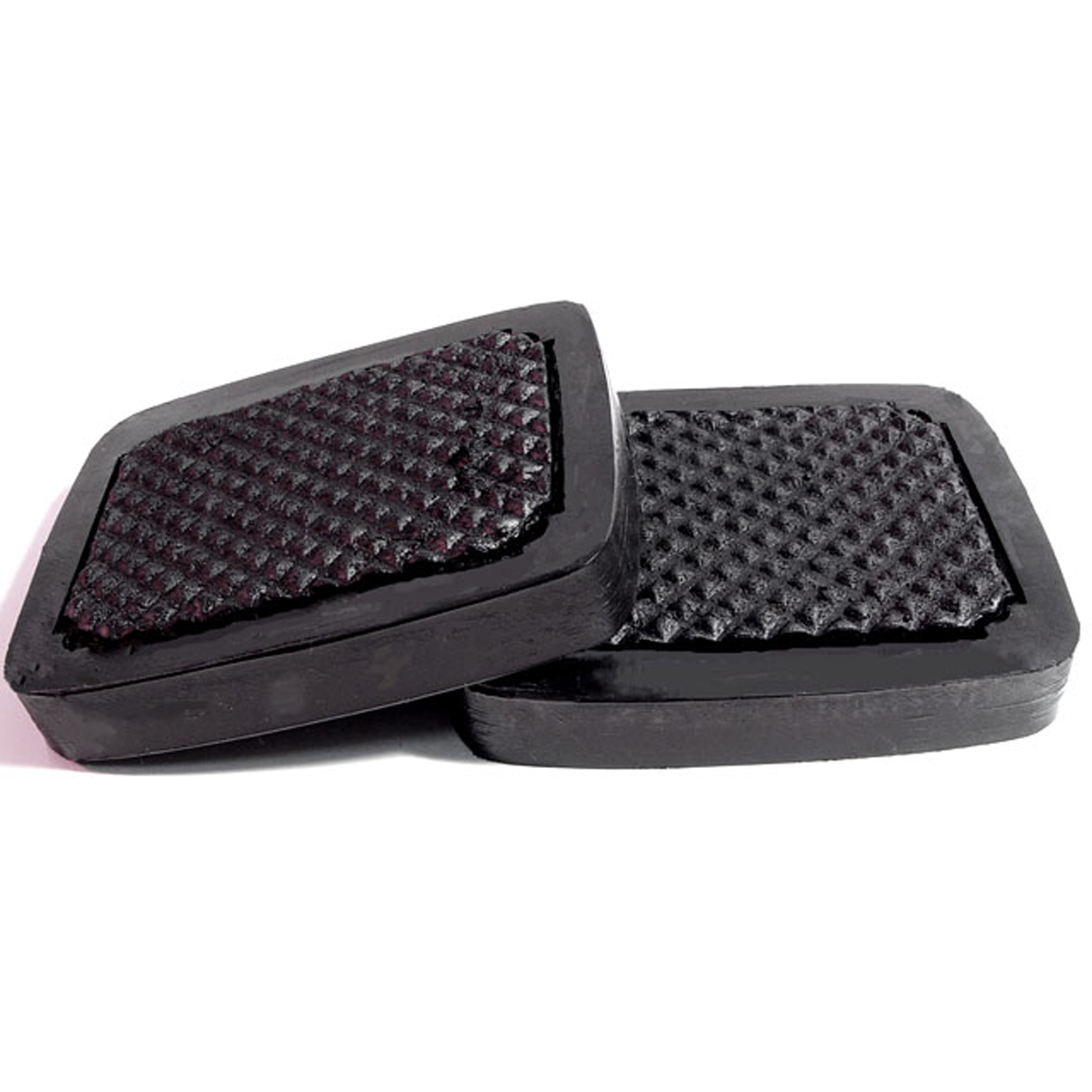 1922 Buick SERIES 22 Clutch and Brake Pedal Pads. 2-3/4" wide X 3-3/8" long-CB 12Clutch and Brake Pedal Pads. 2-3/4" wide X 3-3/8" long. Pair
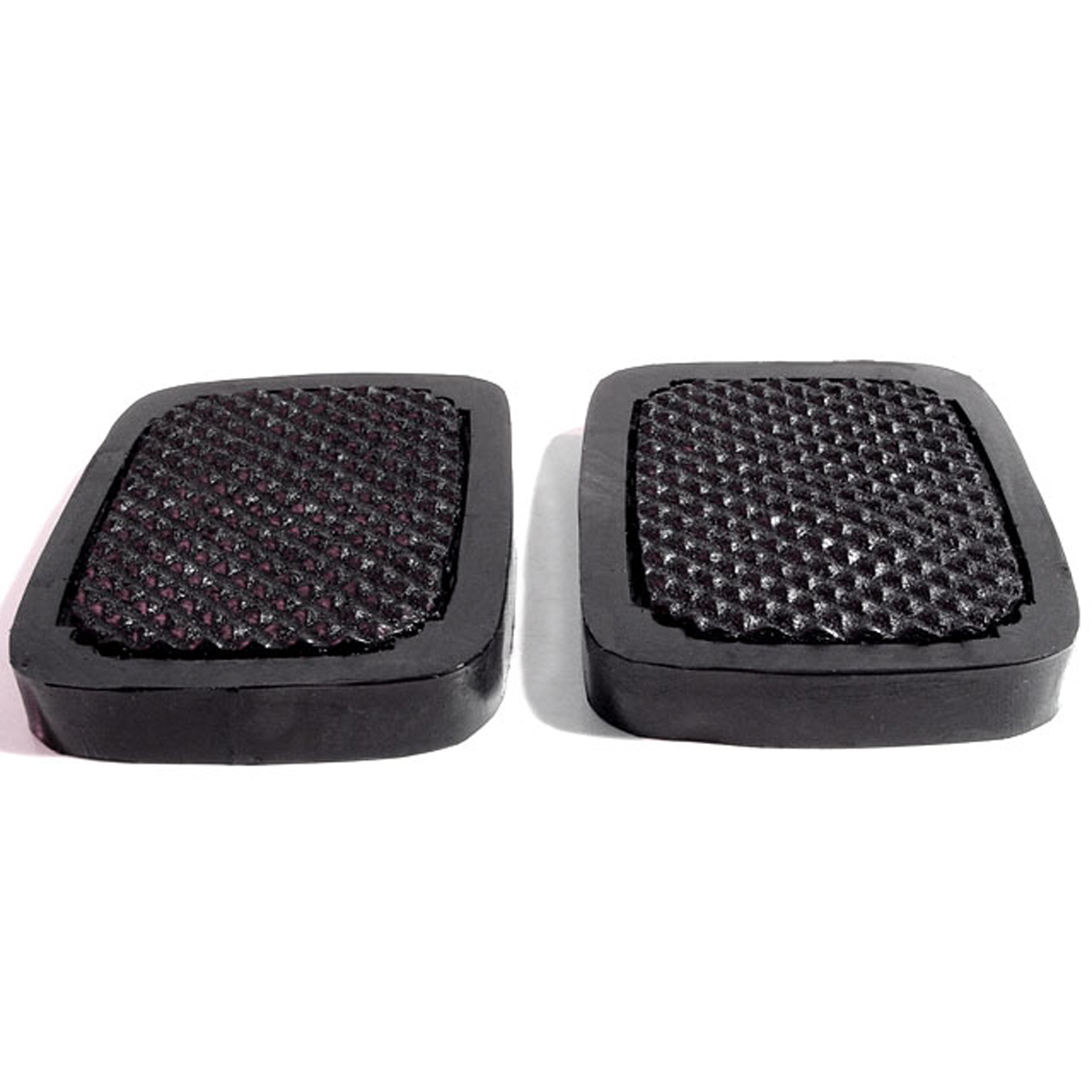 1922 Buick SERIES 22 Clutch and Brake Pedal Pads. 2-3/4" wide X 3-3/4" long-CB 13Clutch and Brake Pedal Pads. 2-3/4" wide X 3-3/4" long. Pair
Why Choose Metro?
For over 100 years, Metro Moulded Parts has been the pinnacle of quality in classic car restoration parts. Our commitment to precision and authenticity in every component ensures a perfect fit and an OEM-level appearance.
- Expert Craftsmanship & Quality: Each part is a testament to our dedication to reliability and perfection, crafted from original designs and thoroughly tested.
- Advanced Technology: We use cutting-edge techniques to create flawless, long-lasting parts that surpass others in performance.
- SuperSoft Sponge – The Ultimate Door Seal: Not only are our door seals 30% softer than competitors', but they're also guaranteed to never leak. They effectively reduce wind and road noise, enhancing your classic car's comfort and driving experience.
- Proudly American: Our parts are a product of American craftsmanship, made in the USA with a spirit of excellence and heritage.
- Unrivaled Warranty: We back our products with a 30-year industry-leading warranty, a testament to our confidence in their quality.
Join us in preserving the legacy of classic cars with parts that are crafted for perfection, not just made.