

Image of 1923 Buick Series 40, Note: These illustrations use artistic license and may differ from actual historical models.
Performance Metrics
Fundamental Metrics
Emotional Appeal
MMP Rating
| Engine Specifications | |
|---|---|
| Engine: | 4-cylinder, in-line |
| Displacement: | 170 cubic inches |
| Horsepower: | Estimated 27-30 HP |
| Torque: | Not available |
| Compression Ratio: | Not available |
| Ignition System: | Battery and coil |
| Cooling System: | Water, thermo-siphon |
| Performance Specifications | |
| 0-60 Time: | Not available |
| 1/4 Mile Time: | Not available |
| Top Speed: | 45-50 mph |
| Transmission and Drive | |
| Drive Type: | Rear-wheel drive |
| Transmission Type: | 3-speed manual |
| Fuel and Efficiency | |
| Fuel System Type: | Carburetor |
| MPG: | Not available |
| Dimensions and Brakes | |
| Brakes: | Mechanical drum brakes |
| Wheelbase: | 118 inches |
| Weight: | 2,800 lbs |
Note: Specifications for classic cars are given to the best of our ability, considering the limited and variant data available.
1923 Buick “Series 40”: A Classic Buick With a Naming Twist
A 1923 Buick announces itself with the steady beat of a valve-in-head six and the confident, upright presence of an automobile built for serious travel. There is one important bit of model-year housekeeping, though: Buick did not use “Series 40” as its 1923 designation. Series 40 belongs to a later generation of Buicks, introduced in 1930. The 1923 cars were identified by model numbers and body styles, so this guide looks at the 1923 Buick range rather than treating “Series 40” as a confirmed 1923 model.
Buick’s roots reach back to David Dunbar Buick’s early automotive experiments, but the company’s great expansion came under William C. Durant. Buick became a cornerstone of General Motors, which Durant organized in 1908. By 1923, the marque had earned a reputation for sturdy engineering and more upscale appointments than a basic low-priced car. Its signature overhead-valve engine, then commonly called a “valve-in-head” design, was a long-running Buick distinction.
A notable point of interest is that the 1923 Buick belongs to the era when enclosed cars were becoming more attainable, even as open touring cars remained familiar sights. The choice between a breezy touring body and a weather-protecting sedan reflected a changing American car market, not simply a difference in style.
Upright Styling and Period Craftsmanship
The 1923 Buick has the formal profile typical of the period: a tall radiator, long hood, separate fenders, running boards, and a cabin set well behind the engine. Its narrow tires and high stance look delicate beside a modern car, but the overall effect is substantial. Brass-era ornament was giving way to more restrained fittings, while lamps, door handles, and the radiator shell still supplied plenty of visual character.
Open models, including touring cars and roadsters, offered the most theatrical view of the Buick’s lines. With the top folded, the car’s long hood and exposed running boards were on full display. Closed bodies such as coupes and sedans looked more formal, with a fixed roof and glass enclosure that made them more practical in poor weather.
Interior trim depended on the body and equipment level. Open cars typically used leather upholstery, while closed models could be finished in durable cloth or mohair-style materials. The cabin was functional rather than lavish by modern standards, with a large steering wheel, upright seating, straightforward instruments, and wood or wood-effect trim in some body styles. These were hand-operated machines: the driver managed the controls directly, without power assistance or electronic conveniences.
Exact factory colors varied by model, body supplier, and production details, so a single definitive 1923 palette is difficult to assign across the range. Period Buicks appeared in subdued colors such as dark blue, maroon, green, and black, often with contrasting trim or pinstriping. Dark shades were especially popular because they suited the car’s formal appearance and were practical to maintain.
Buick offered a range of body styles during the period, including touring cars, roadsters, coupes, and sedans. Touring models were among the most recognizable choices, with room for passengers and a folding top for fair-weather drives. Closed sedans appealed to buyers seeking greater comfort and protection, while two-seat roadsters brought a sportier, more personal character.
Why the 1923 Buick Mattered
The 1923 Buick’s significance lies less in a single revolutionary feature than in the way it carried Buick’s engineering reputation into a rapidly changing market. The company’s overhead-valve six-cylinder layout was a meaningful technical selling point. Compared with the side-valve engines common in many cars of the era, Buick’s valve-in-head arrangement helped establish a reputation for breathing efficiency and strong performance for its class.
Buick also occupied an appealing middle ground. It was not the cheapest transportation on the road, but it offered more refinement and engineering distinction than many entry-level cars. That position helped define Buick as a quality-conscious mainstream marque, a role it would maintain for decades. The 1923 models are therefore part of a broader story: the rise of the dependable, well-equipped car for buyers who wanted more than bare-bones transport.
It is important not to credit the 1923 Buick with features that arrived later. In particular, the “Series 40” label is associated with later Buicks, not this model year. Correcting that terminology helps collectors and researchers avoid mixing specifications, body styles, and production figures from different generations.
Six-Cylinder Power and Period Road Manners
Specifications varied across the 1923 Buick range. Many models used a six-cylinder valve-in-head engine of roughly 242 cubic inches, with horsepower figures commonly falling in the approximate 45-to-60-horsepower range depending on the specific model and rating method. A manual transmission and rear-wheel drive were standard characteristics of the era. Individual cars may differ, so a surviving vehicle’s engine number and factory literature are the best guides to its exact specification.
A reliable, independently documented 0-to-60-mph figure is not generally available for every 1923 Buick body and engine combination. More importantly, 60 mph was not a routine cruising target for many cars of the period. A healthy example might reach roughly 50 to 55 mph under favorable conditions, though actual speed depends on gearing, condition, tires, load, and road surface. Acceleration to 60 mph would be slow, and some versions may not comfortably reach that speed at all.
On a smooth road, the Buick’s long-wheelbase proportions and substantial chassis give it a composed, rolling feel. Over broken pavement, the solid axles and period suspension transmit more movement than a modern car, and the tall body can lean noticeably through corners. On winding roads, it rewards measured steering inputs rather than quick corrections. Crosswinds can catch the upright body, while narrow tires and mechanical controls call for anticipation and a generous following distance.
From behind the wheel, the experience is hands-on. The engine has a steady, mechanical six-cylinder sound, accompanied by tire noise, wind, and the reassuring clatter of old-fashioned controls. Steering is unassisted, braking requires more planning than in a modern vehicle, and shifting may demand careful timing. The pleasure is not effortless speed. It is the direct connection between driver, machine, and road.
Living With a 1923 Buick
Today, most 1923 Buicks are used as touring cars, show vehicles, museum pieces, or participants in vintage motoring events. A carefully maintained example can make short local drives and club outings, but regular modern traffic is a poor match for its modest pace, limited braking, and lack of contemporary safety equipment.
Maintenance is approachable for an experienced hobby mechanic, especially compared with later cars filled with electronics. Routine work involves lubrication, ignition adjustment, carburetor tuning, cooling-system care, and attention to the transmission and brakes. The challenge is often not the basic mechanical design but finding correct parts, identifying the exact model, and locating specialists familiar with early Buick components. Originality can also complicate repairs, since owners may prefer period-correct parts over modern substitutions.
Reliability depends heavily on restoration quality and regular upkeep. A sound engine and chassis can be durable, but a century-old car may hide worn bearings, tired wiring, cracked hoses, or previous repairs that need attention. A pre-purchase inspection by someone knowledgeable about brass- and nickel-era cars is money well spent.
Buick Trivia and Common Misconceptions
The most useful trivia for this particular car is also the easiest detail to get wrong: “1923 Buick Series 40” is not a historically accurate model designation. Series 40 is a later Buick name. When researching a 1923 example, owners should use the car’s model number, body style, engine details, and serial information rather than relying on the Series 40 label.
There is no widely recognized speed, endurance, or sales record uniquely tied to a 1923 Buick model. Nor is there a single famous celebrity association that defines the car’s story. Its broader historical importance comes from Buick’s place in General Motors and the brand’s long-standing use of overhead-valve engines, rather than from one headline-grabbing event.
Common criticisms are fair: the car is slow by modern standards, demands frequent attention, and offers little protection in a collision. Its mechanical brakes and unassisted steering require adaptation, and parts availability can be uneven. Those drawbacks are part of the ownership calculation, not surprises to discover after purchase.
Collector Values and Availability
Values vary substantially with body style, restoration quality, originality, and documentation. As a broad present-day estimate, a project or incomplete car might fall around $10,000 to $25,000. A usable driver or older restoration may bring roughly $25,000 to $50,000, while a high-quality, correctly restored touring car or roadster can reach approximately $50,000 to $90,000 or more. Exceptional examples and especially desirable body styles can exceed that range, while a less sought-after or heavily altered car may sell for less.
These are guide ranges, not a formal appraisal. Recent comparable sales, the exact model, and the condition of the engine, woodwork, upholstery, and chassis all matter. Because the “Series 40” description does not identify a valid 1923 model, buyers should confirm the car’s identity before comparing it with listings or auction results.
A precise production total for a “1923 Series 40” cannot be given because that model designation did not exist that year. Buick produced cars in substantial numbers in 1923, likely around 200,000 across its entire range as a broad estimate, but that figure should not be mistaken for production of one body style or model. Today, early Buicks are available through specialist dealers, auctions, and marque clubs, but correctly restored examples are far less common than the original production volume might suggest.
Well-preserved early Buicks have generally benefited from steady interest among brass- and nickel-era collectors, though values depend more on condition and body style than on a simple year-by-year price trend. The market is specialized, and restoration costs can exceed the eventual resale value. Buyers should choose a car they genuinely want to maintain and drive, rather than treating appreciation as guaranteed.
A Buick From the Threshold of Modern Motoring
The 1923 Buick combines upright prewar styling, hands-on mechanical character, and the overhead-valve engineering that helped define the marque. It represents a time when closed cars were gaining ground, yet touring models still embodied the romance of open-air motoring. Correctly identified, it is not a Series 40, but it remains an important Buick from a formative chapter in American automotive history.
Drive one at its own pace and the appeal becomes clear: this is not a car built to disappear into traffic, but a machine that makes every mile feel like an event.
1923 Buick Series 40 Catalog of Parts
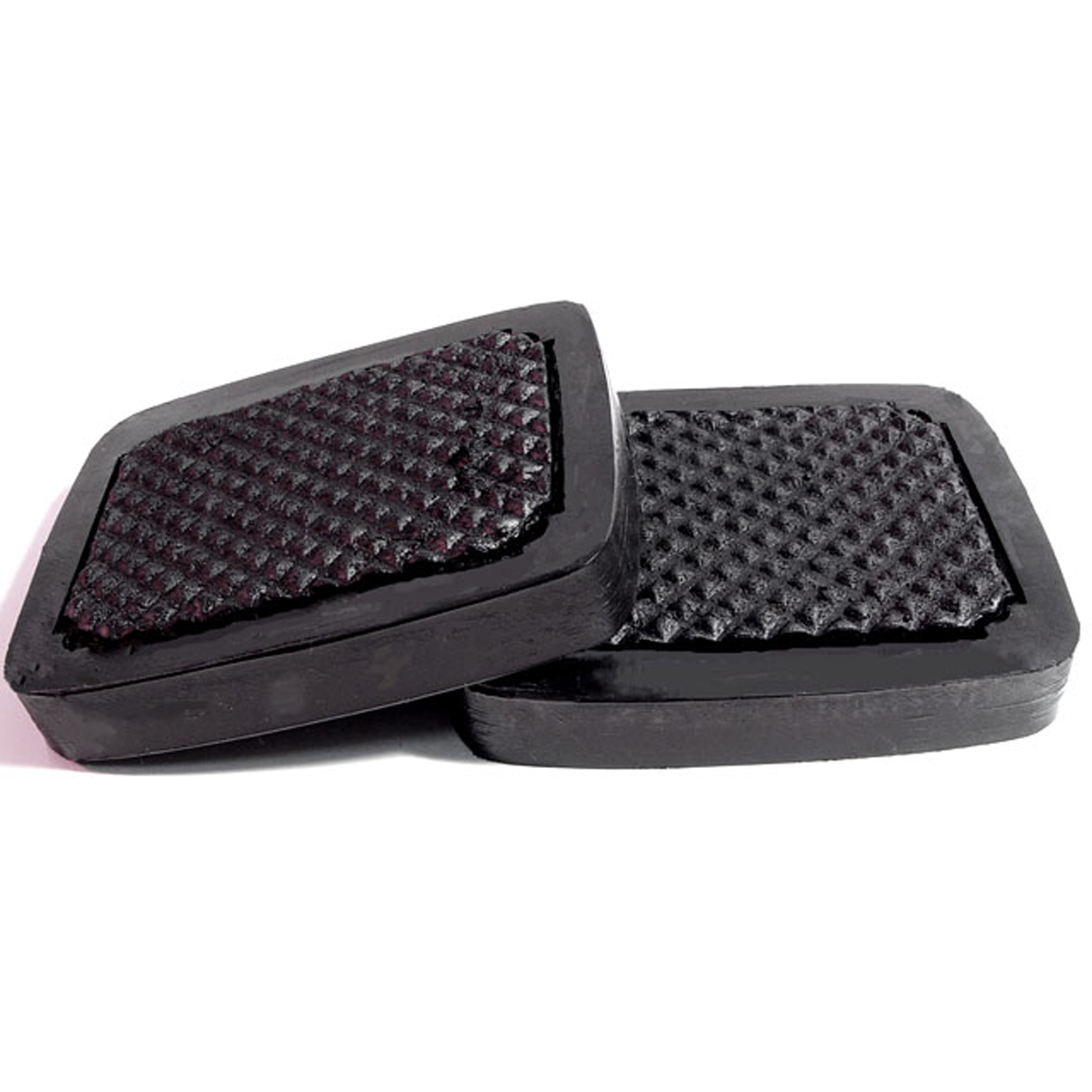 1923 Buick Series 40 Clutch and Brake Pedal Pads. 2-3/4" wide X 3-3/8" long-CB 12Clutch and Brake Pedal Pads. 2-3/4" wide X 3-3/8" long. Pair
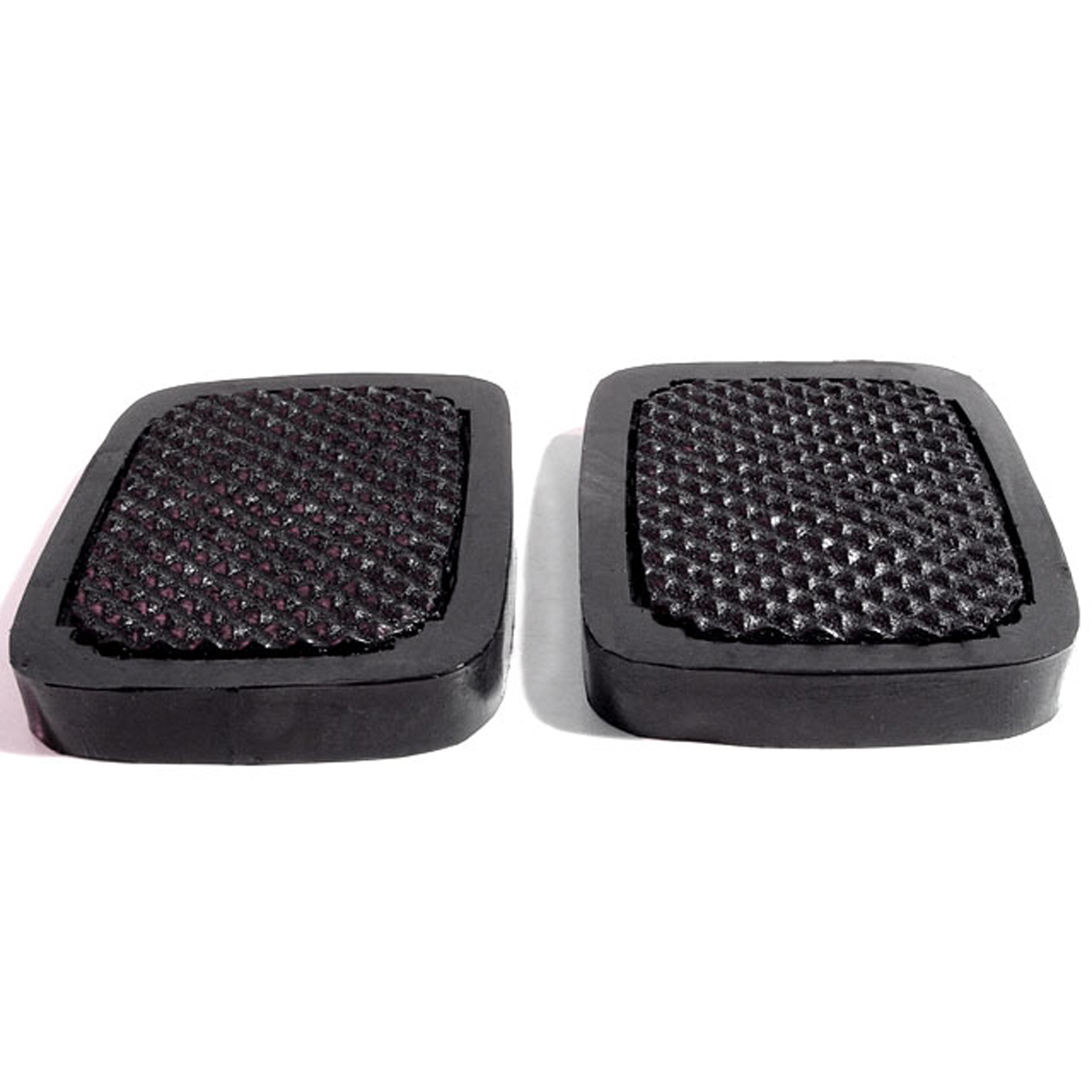 1923 Buick Series 40 Clutch and Brake Pedal Pads. 2-3/4" wide X 3-3/4" long-CB 13Clutch and Brake Pedal Pads. 2-3/4" wide X 3-3/4" long. Pair
Why Choose Metro?
For over 100 years, Metro Moulded Parts has been the pinnacle of quality in classic car restoration parts. Our commitment to precision and authenticity in every component ensures a perfect fit and an OEM-level appearance.
- Expert Craftsmanship & Quality: Each part is a testament to our dedication to reliability and perfection, crafted from original designs and thoroughly tested.
- Advanced Technology: We use cutting-edge techniques to create flawless, long-lasting parts that surpass others in performance.
- SuperSoft Sponge – The Ultimate Door Seal: Not only are our door seals 30% softer than competitors', but they're also guaranteed to never leak. They effectively reduce wind and road noise, enhancing your classic car's comfort and driving experience.
- Proudly American: Our parts are a product of American craftsmanship, made in the USA with a spirit of excellence and heritage.
- Unrivaled Warranty: We back our products with a 30-year industry-leading warranty, a testament to our confidence in their quality.
Join us in preserving the legacy of classic cars with parts that are crafted for perfection, not just made.