

Image of 1931 Buick Series 50, Note: These illustrations use artistic license and may differ from actual historical models.
Performance Metrics
Fundamental Metrics
Emotional Appeal
MMP Rating
| Engine Specifications | |
|---|---|
| Engine: | Straight-8 |
| Displacement: | 220.7 cubic inches |
| Horsepower: | Estimated 77-90 HP |
| Torque: | Not available |
| Compression Ratio: | Not available |
| Ignition System: | Distributor and coil |
| Cooling System: | Water-cooled |
| Performance Specifications | |
| 0-60 Time: | Not available |
| 1/4 Mile Time: | Not available |
| Top Speed: | 60-70 mph |
| Transmission and Drive | |
| Drive Type: | Rear-wheel drive |
| Transmission Type: | 3-speed manual |
| Fuel and Efficiency | |
| Fuel System Type: | Carburetor |
| MPG: | Not available |
| Dimensions and Brakes | |
| Brakes: | Mechanical drum brakes |
| Wheelbase: | 114 inches |
| Weight: | Estimated 3,200-3,500 lbs |
Note: Specifications for classic cars are given to the best of our ability, considering the limited and variant data available.
1931 Buick Series 50: Buick’s First Straight-Eight Era
The 1931 Buick Series 50 brought a new kind of smoothness to the American road: Buick’s first production straight-eight engine. Built by the Buick Motor Company, then part of General Motors, the Series 50 paired that landmark powerplant with handsome coachwork and the substantial feel buyers expected from a Buick. It sat in the middle of the company’s 1931 range, offering more refinement than an economy car without the price and size of Buick’s top models.
The timing was remarkable. The United States was in the grip of the Great Depression, and carmakers had to persuade customers that a new automobile was worth the expense. Buick answered with engineering and presentation. The Series 50 was not a stripped-down transport appliance. It was a well-finished car with an overhead-valve engine, a long hood, and the quiet, even delivery of eight cylinders working in line.
Its most notable historical distinction is also easy to miss at first glance: 1931 marked the start of Buick’s straight-eight era. The layout helped give the brand a more sophisticated identity and would remain central to Buick power for decades.
Classic Buick Styling and Coachwork
The Series 50 has the proportions that make early-1930s cars so appealing. Its tall, upright radiator leads into a long hood, while sweeping front fenders flow toward running boards and substantial rear fenders. The upright windshield and narrow glass give the cabin a formal appearance. Buick’s bright radiator trim, headlamps, and exterior handles provide carefully placed accents rather than overwhelming the body with decoration.
Inside, the Series 50 was designed to feel like a proper automobile, not merely a means of getting from one town to another. Buyers could expect a broad dashboard, clear period instrumentation, comfortable upholstery, and quality trim appropriate to Buick’s position in the market. Depending on body style and specification, interiors used cloth or other upholstery materials, with wood-grain finishes and metal details adding to the cabin’s polished look. Today, original upholstery and trim condition can make a major difference to a restoration’s cost.
Factory paint choices varied by body and production details. Period Buicks were offered in rich, restrained colors such as dark blue, green, maroon, brown, and black, with contrasting trim or body accents available on some combinations. Darker colors suit the car’s formal lines, while two-tone treatments can make the fenders and beltline stand out. Buyers restoring a car should check its original paint and trim records where available rather than assume every color combination was offered on every body.
Buick offered the Series 50 in several closed and open body styles. The range included sedans and coupe variations, with availability depending on the specific catalog offering. The four-door sedan is among the most recognizable and practical forms today, while coupes have a sportier profile. Open models are especially eye-catching, but are generally less common and can be more expensive to restore because of their tops, bows, and weather equipment.
Engineering That Set the Series 50 Apart
The Series 50’s 220.7-cubic-inch overhead-valve inline-eight produced about 77 horsepower. Buick already had a reputation for its “valve-in-head” engine design, and the new straight-eight extended that engineering story with a longer, smoother-running layout. Compared with a typical four- or six-cylinder engine of the day, an inline-eight could deliver power with less vibration and a more effortless feel at cruising speed.
Power went to the rear wheels through a three-speed manual transmission. The car used conventional mechanical brakes, drum brakes at all four wheels, and a 6-volt electrical system, all typical of the period. There was no modern safety net: no power steering, anti-lock brakes, or electronic stability control. The driver did the work, and the car’s substantial construction demanded deliberate inputs.
Buick’s styling and engineering also reflected a broader change in the industry. Automobiles were becoming more carefully styled products, not just functional machines. General Motors’ growing attention to coordinated design helped create cars with a more unified appearance, and the Series 50’s balanced proportions show how manufacturers were refining the visual language of the automobile.
Performance and Road Manners
Exact performance varied with body style, gearing, mechanical condition, and passenger or luggage load. As a broad period-car estimate, a sound Series 50 could reach roughly 65 to 70 mph, with a 0-to-60-mph time in the neighborhood of 25 to 30 seconds. These are estimates rather than guaranteed factory test figures. A 95-year-old car with worn compression, tired ignition components, or incorrect gearing may be considerably slower.
On a smooth road, the straight-eight is the star. It produces a measured, even exhaust note and builds speed without the sharp, busy sound associated with smaller engines. The long wheelbase and substantial chassis give the Buick a planted ride, though its suspension cannot erase every bump. Broken pavement and sharp-edged potholes are felt through the body, and period tires require more care than modern radial rubber.
On winding roads, the Series 50 rewards a calm driving style. Its steering is unassisted, its brakes need more planning than a modern car’s, and its tall body leans through corners. The driver works the three-speed gearbox and anticipates stops well in advance. This is not a sports sedan, but it can be a relaxed touring car when driven at sensible speeds. The experience is as much about the mechanical rhythm, engine sound, and commanding view over the hood as it is about reaching a destination quickly.
Living With a 1931 Buick
Today, most Series 50s are used for touring, local events, museum displays, and car shows rather than daily transportation. A well-sorted example can cover scenic roads and participate in antique-car events, but it needs to be driven with modern traffic in mind. Its speed, braking distance, lighting, and visibility are all products of another era.
The mechanical layout is relatively straightforward compared with a modern vehicle. An experienced vintage-car owner or mechanic can understand the engine, transmission, and chassis without specialized electronic tools. Routine work still requires period knowledge, correct adjustment, and suitable parts. Brake service, ignition tuning, cooling-system maintenance, and lubrication are especially important. Replacement parts and specialist help are available through vintage Buick and prewar-car networks, but scarce trim, body panels, and restoration-quality interior materials can be harder to source.
Reliability depends heavily on maintenance and restoration quality. Age alone does not make a car unreliable, but neglected fuel systems, dried seals, old wiring, and overheating can quickly turn a drive into a roadside repair. Before buying, inspect the engine for evidence of overheating or poor rebuild work, check the frame and body for corrosion, and test the brakes carefully. A car that has been restored thoughtfully is usually a much better buy than one that merely shines in photographs.
1931 Buick Facts and Common Criticisms
The Series 50’s most important piece of trivia is its engine: it was part of Buick’s first model-year range powered by straight-eights. That change gave Buick a clear talking point at a time when smoothness and refinement were becoming important selling points. The Series 50 also shows how a mid-range model could carry substantial engineering and finish rather than simply serving as a basic step between economy cars and luxury flagships.
There is no widely recognized Series 50 speed, endurance, or sales record that defines the model. Nor is there a reliable, commonly documented celebrity-ownership story that should be treated as a standard part of its history. Its significance is better understood through Buick’s engineering shift and the car’s place in the company’s Depression-era lineup than through a single famous owner or headline-grabbing event.
Common criticisms are practical ones. The car is slow by modern standards, braking requires anticipation, and the mechanical brakes demand careful maintenance. Owners may also find that trim, upholstery, and body restoration cost more than expected. For some drivers, the weight and size make tight streets and parking awkward. Those compromises are part of the character, but they should be understood before purchase.
Collector Value and Availability
Exact production totals for an individual Series 50 body style can be difficult to pin down across surviving records. A reasonable working estimate is roughly 40,000 to 50,000 Series 50 cars produced for 1931, though the number of survivors is only a fraction of that. This is a model-level estimate, not a claim that every body style was made in equal numbers. Closed cars are more likely to appear on the market than desirable open models, and complete, original examples are increasingly hard to find.
As a broad 2026 collector-market guide, a project car or incomplete example might sell for around $5,000 to $12,000. A running driver or older restoration could fall in the $12,000 to $25,000 range, while a strong, well-restored sedan may bring roughly $25,000 to $40,000. A rare open body in excellent condition could exceed $40,000, with exceptional cars potentially reaching $60,000 or more. These are estimates, not appraisals; body style, originality, provenance, restoration quality, and local market conditions have a major effect on price.
Values for prewar cars have generally been selective rather than uniformly rising. Exceptional, correct restorations and rare body styles can hold their appeal, while ordinary sedans may be slow to appreciate because the buyer pool is smaller and restoration costs are high. The best financial choice is often the most complete car a buyer can afford, especially one with documented work and hard-to-find parts already in place.
Why the 1931 Buick Series 50 Still Matters
The 1931 Buick Series 50 combines handsome early-1930s styling, a substantial cabin, and the smooth character of Buick’s first straight-eight powertrain. It was built during one of the most difficult periods in American economic history, yet it represented a confident investment in engineering and design. It is not quick or effortless by modern standards, and keeping one in top condition takes patience, but that is part of its appeal.
For collectors, the Series 50 is a rewarding way to experience Buick’s transition into the straight-eight era. For anyone drawn to prewar motoring, it offers something more memorable than a static display: the steady burble of an eight-cylinder engine, the weight of the controls, and a glimpse of how Buick made refinement part of its identity.
1931 Buick Series 50 Catalog of Parts
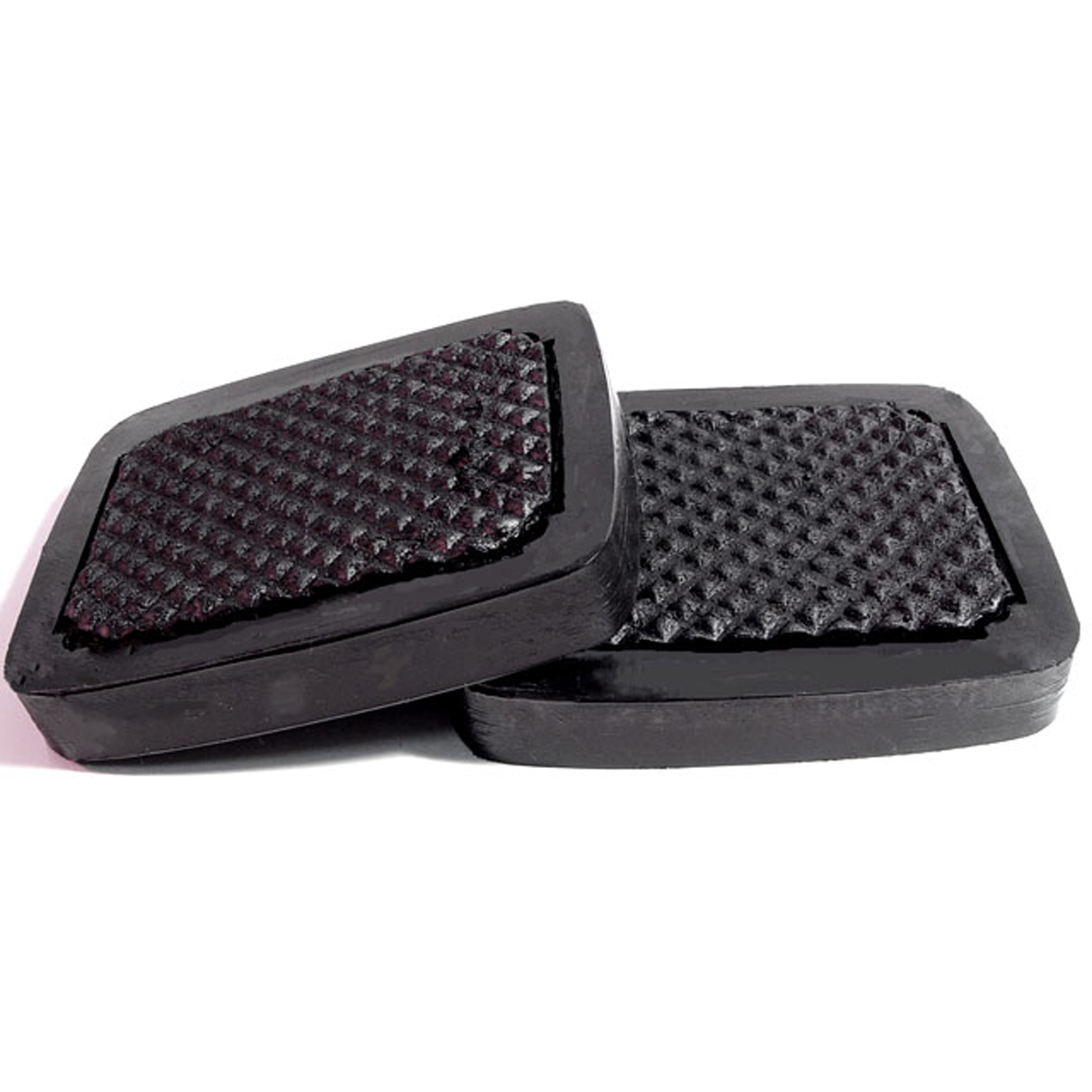 1931 Buick Series 50 Clutch and Brake Pedal Pads. 2-3/4" wide X 3-3/8" long-CB 12Clutch and Brake Pedal Pads. 2-3/4" wide X 3-3/8" long. Pair
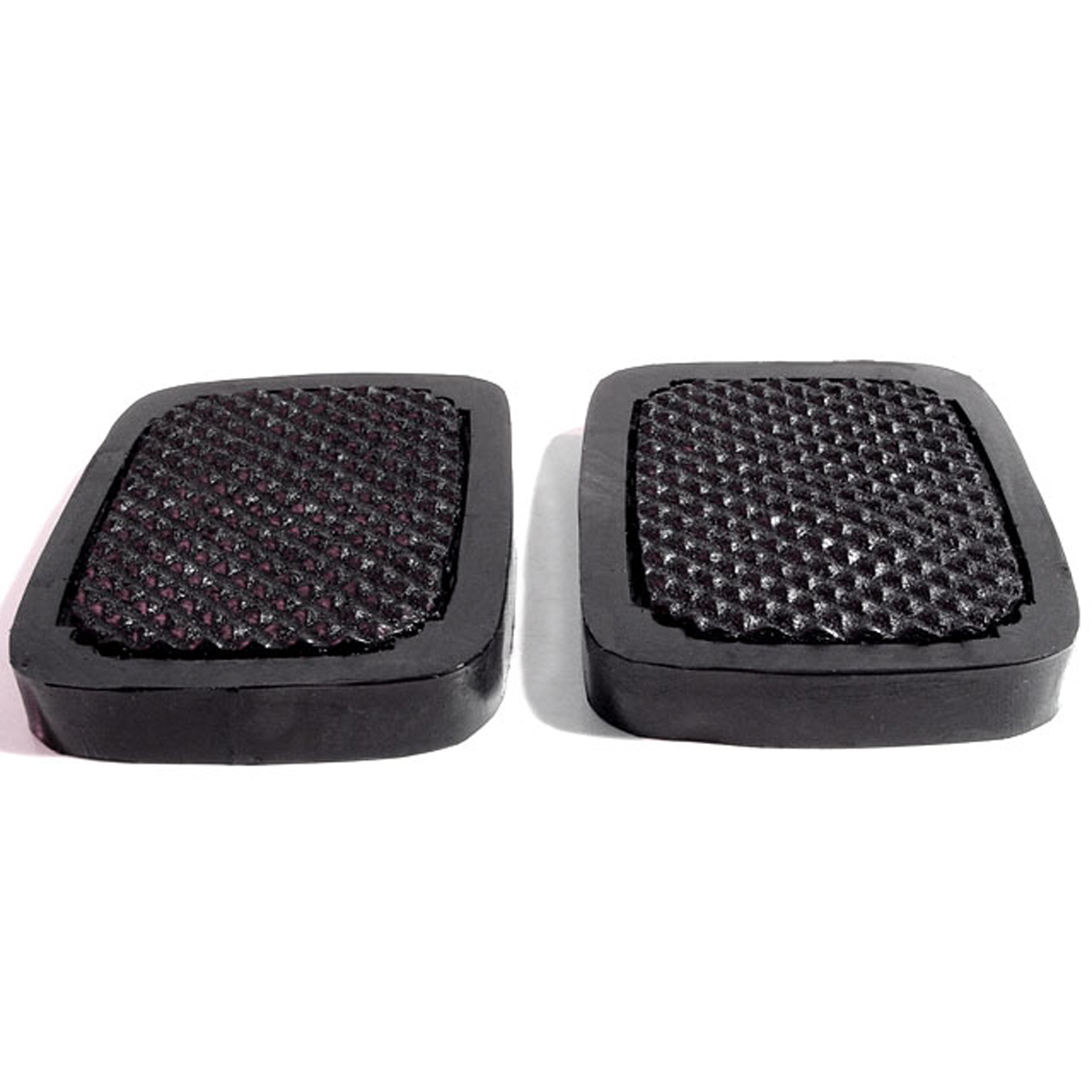 1931 Buick Series 50 Clutch and Brake Pedal Pads. 2-3/4" wide X 3-3/4" long-CB 13Clutch and Brake Pedal Pads. 2-3/4" wide X 3-3/4" long. Pair
 1931 Buick Series 50 Door Bumper. 1-7/16" high X 1-9/16" wide X 9/16" thick-DB 7Door Bumper. 1-7/16" high X 1-9/16" wide X 9/16" thick. Each
 1931 Buick Series 50 Side window seal. Dense rubber. No metal core. 1 in-LP 95-ASide window seal. Dense rubber. No metal core. 1 in. W x 5/8 in. H. Per foot.
 1931 Buick Series 50 Door Handle Ferrule Grommet. I.D. 11/16", O.D. 1-3/16"-MP 546-IDoor Handle Ferrule Grommet. I.D. 11/16", O.D. 1-3/16". Each
 1931 Buick Series 50 Door Bumper. 1" diameter X 1/4" thick Each-SB 60Door Bumper. 1" diameter X 1/4" thick Each
 1931 Buick Series 50 Flexible Rubber Window Channel-WC 32-14Flexible Rubber Window Channel. For Fisher Closed Bodies, except those using a stainless bead type. Used on side windows. 13/16" outer width X 6/16" outer depth, with a 5/16" inner channel width X 14" long. Each
 1931 Buick Series 50 Fender Bolts. For use with Fender Bolt Washers; WF 3001-WF 3000Fender Bolts. For use with Fender Bolt Washers; WF 3001. Zinc Chromate plated, high strength. 1" X 5/16". Set of 25
 1931 Buick Series 50 Fender Bolt Washers. For use with Fender Bolts; WF 3000-WF 3001Fender Bolt Washers. For use with Fender Bolts; WF 3000. High quality, cadmium plated. 1-1/4" O.D., 3/8" I.D. Set of 25
Why Choose Metro?
For over 100 years, Metro Moulded Parts has been the pinnacle of quality in classic car restoration parts. Our commitment to precision and authenticity in every component ensures a perfect fit and an OEM-level appearance.
- Expert Craftsmanship & Quality: Each part is a testament to our dedication to reliability and perfection, crafted from original designs and thoroughly tested.
- Advanced Technology: We use cutting-edge techniques to create flawless, long-lasting parts that surpass others in performance.
- SuperSoft Sponge – The Ultimate Door Seal: Not only are our door seals 30% softer than competitors', but they're also guaranteed to never leak. They effectively reduce wind and road noise, enhancing your classic car's comfort and driving experience.
- Proudly American: Our parts are a product of American craftsmanship, made in the USA with a spirit of excellence and heritage.
- Unrivaled Warranty: We back our products with a 30-year industry-leading warranty, a testament to our confidence in their quality.
Join us in preserving the legacy of classic cars with parts that are crafted for perfection, not just made.