

Image of 1931 Buick Series 80, Note: These illustrations use artistic license and may differ from actual historical models.
Performance Metrics
Fundamental Metrics
Emotional Appeal
MMP Rating
| Engine Specifications | |
|---|---|
| Engine: | Straight 8 |
| Displacement: | 344.8 cu in (5.7 L) |
| Horsepower: | Estimated 104 HP |
| Torque: | Not available |
| Compression Ratio: | Not available |
| Ignition System: | Battery and coil |
| Cooling System: | Water |
| Performance Specifications | |
| 0-60 Time: | Not available |
| 1/4 Mile Time: | Not available |
| Top Speed: | 80 mph |
| Transmission and Drive | |
| Drive Type: | Rear wheel drive |
| Transmission Type: | 3-speed manual |
| Fuel and Efficiency | |
| Fuel System Type: | Carburetor |
| MPG: | Not available |
| Dimensions and Brakes | |
| Brakes: | Mechanical drum brakes |
| Wheelbase: | 128 inches |
| Weight: | 4,600 lbs |
Note: Specifications for classic cars are given to the best of our ability, considering the limited and variant data available.
1931 Buick Series 80: A Big-Eight Buick from a Hard Year
The 1931 Buick Series 80 paired a long, imposing profile with one of Buick’s largest straight-eight engines, creating a luxury-minded American car built for the open road. Buick was a General Motors division by then, and the Series 80 sat above the company’s more affordable offerings as a spacious, substantial automobile for buyers who valued refinement and power.
The timing gave the car a striking contrast. The Great Depression was beginning to reshape American life, yet Buick continued to offer vehicles with generous proportions, elaborate appointments, and advanced-for-the-era engineering. A notable detail is that the Series 80’s overhead-valve straight-eight represented Buick’s commitment to breathing and smoothness, rather than simply relying on engine size. It delivered the quiet, steady character buyers expected from a premium car of the period.
Long Hood, Fine Details, and Formal Style
The Series 80 has the classic prewar Buick silhouette: a tall, upright radiator grille, long hood, sweeping front fenders, and a passenger compartment set well back from the nose. Its substantial wheelbase gave the body a stretched, stately stance. Depending on the body style and equipment, details could include bright exterior trim, wire wheels, wide running boards, and spare tires mounted at the sides of the hood. The result was formal without being plain, and imposing without the monumental scale of the most expensive cars of the period.
Inside, the Series 80 emphasized comfort and craftsmanship. Upholstery materials and trim varied with body style and specification, but buyers could expect a carefully finished cabin with broad seating, wood or wood-grain accents, substantial door panels, and a detailed instrument panel. Closed models offered welcome protection from weather and road dust, while open cars gave passengers a more direct connection to the scenery. These were not modern luxury interiors with climate control or soft-touch materials. Their appeal lies in the quality of the period materials and the hand-finished character of the cabin.
Factory paint choices depended on the body and production specification. Dark greens, blues, maroons, and black were among the colors associated with cars of the era, while some models could be ordered with contrasting or two-tone treatments. A deep, understated color tends to suit the Series 80 especially well, highlighting its long fenders and brightwork without overwhelming its formal lines. Exact original colors should be confirmed against factory literature or surviving paint evidence for the specific car.
Series 80 Body Styles and Equipment
Buick offered the Series 80 in several body configurations during the 1931 model year. The range included closed cars such as sedans and coupes, alongside open styles that could include a phaeton or convertible-type model, depending on the exact catalogue and market. Seating capacity, rear-seat layout, and trim could vary. The four-door sedan is among the most recognizable choices today, while coupes and open cars often attract extra attention because they are less commonly encountered.
As with many early-1930s cars, a model’s exact body name and equipment matter. A “coupe” could describe more than one seating arrangement, and options such as spare-wheel placement or interior trim might differ. Buyers considering a restoration should verify the body style using the car’s serial and body tags, period sales literature, and marque-specific records where available.
Engineering in the Early Thirties
The Series 80’s defining mechanical feature was its 344.8-cubic-inch overhead-valve inline-eight. Period specifications commonly list output at roughly 104 horsepower, although figures can vary by source and rating method. The straight-eight layout helped deliver smooth power, while overhead valves supported efficient breathing for the time. Buick had a long history with overhead-valve engines, and the Series 80 carried that engineering identity into a decade when many competitors still relied on less sophisticated valve arrangements.
Power went through a manual transmission, with three forward speeds typical of the period. The car also used 6-volt electrical equipment and mechanical brakes. Those details are important to modern owners: the Series 80 has no power steering, no power brakes, and none of the electronic aids drivers take for granted today. Its appeal is mechanical and direct, with systems that can be understood and serviced by a knowledgeable vintage-car mechanic.
Buick’s contribution was not a single feature that transformed the entire industry. Rather, the Series 80 demonstrated how a mainstream luxury division could combine a smooth eight-cylinder engine, substantial road manners, and well-finished bodies at a level below the most expensive custom-built cars. Its restrained, upright styling also captures a transition in American design: cars were becoming more streamlined, but they had not yet abandoned the formal radiator, separate fenders, and running boards that defined the prewar look.
Performance and Road Manners
With about 104 horsepower moving a heavy car, the Series 80 was brisk by early-1930s standards but not quick by modern ones. Published performance figures are not consistent, and results depend on body style, gearing, condition, and test method. A healthy example may reach roughly 70 to 80 mph under favorable conditions. A reasonable modern estimate for 0-to-60-mph acceleration is around 20 to 25 seconds, but that should be treated as an approximation rather than a factory-certified figure.
On a smooth road, the Series 80 feels composed and substantial. Its long wheelbase helps it settle into a steady cruise, and the straight-eight is known for a smooth, even delivery rather than a sharp burst of power. Over broken pavement, the suspension absorbs bumps in the softer, more deliberate manner of a prewar automobile. The body can move and pitch more than drivers accustomed to modern cars expect, especially over repeated undulations.
On winding roads, the car rewards a relaxed driving style. Its size, period tires, steering geometry, and lack of power assistance call for advance planning and measured inputs. The driver does more work than in a modern sedan, particularly at low speed. Mechanical brakes require a different feel and more stopping distance than contemporary hydraulic systems. The experience is best described as steady and theatrical: the engine hums beneath the long hood, the controls have weight, and the driver feels closely connected to the machine.
What Ownership Is Really Like
A 1931 Buick Series 80 is most at home as a touring car, show vehicle, or carefully used weekend classic. It can cover distance at a relaxed pace when properly maintained, but it is rarely a sensible daily driver in modern traffic. Slow acceleration, period braking, limited lighting, and the scarcity of some replacement parts all argue for choosing routes and conditions thoughtfully.
Routine work is approachable for an owner with mechanical experience. Ignition, carburetion, lubrication, and basic chassis service follow understandable principles, and the car does not depend on electronic diagnostics. However, “simple” does not always mean easy. Parts for the straight-eight, brakes, cooling system, body trim, and interior may require specialist suppliers, careful rebuilding, or patient searching. A complete, running car is usually a better starting point than a cheap project with missing components.
Reliability depends heavily on upkeep. Cooling-system condition is especially important on a large prewar engine, as are sound fuel lines, correct ignition setup, good tires, and properly adjusted brakes. Before regular road use, owners should have the entire braking system inspected rather than assuming that old components are safe because they still function.
Buick Series 80 Facts and Myths
The Series 80 is a representative example of Buick’s premium engineering during the early Depression, but it is not generally known for holding a major land-speed or endurance record. Nor is there a widely documented celebrity ownership story that defines the model. Its strongest claim to interest is more grounded: it shows what a well-equipped American eight-cylinder car looked and felt like just as the market was entering a difficult decade.
One common criticism is that the car is large, thirsty, and demanding to drive by modern standards. That is fair. Fuel economy is modest, and the mechanical brakes and heavy steering require attention. The counterpoint is that those traits are part of the period experience, not defects that can be judged by modern-car expectations. For collectors, the larger practical concern is often condition and completeness, especially the availability of correct trim and body-specific parts.
1931 Buick Series 80 Values and Rarity
Exact production figures for the Series 80 are not consistently reported in readily available sources, so any model-level total should be treated as an estimate. Buick’s overall 1931 production was in the six-figure range, spread across several series. A reasonable broad estimate for Series 80 production is somewhere in the low tens of thousands, perhaps roughly 10,000 to 20,000 cars, but that is not a verified factory total. Survival is a different matter: complete, roadworthy examples are now uncommon, and some body styles are much harder to find than others.
As a broad U.S. market estimate for 2026, a project car may bring roughly $10,000 to $20,000, while a sound driver-quality example could fall around $20,000 to $40,000. A well-restored sedan or coupe might sell for approximately $40,000 to $70,000, with especially desirable open cars or exceptional restorations potentially exceeding that range. These are working estimates, not appraisals. Condition, authenticity, body style, restoration quality, and recent auction results can move a price substantially.
Values for prewar cars tend to be selective rather than uniformly rising. The best-preserved and most desirable examples remain attractive to collectors, but large sedans can be slower to sell than open cars or sporting models. Over the long term, the Series 80 is best viewed as a preservation-minded purchase, not a guaranteed investment. A documented, correctly restored car is generally easier to market than a modified or incomplete one.
Why the 1931 Buick Series 80 Still Matters
The 1931 Buick Series 80 brought together a smooth 344.8-cubic-inch straight-eight, handsome prewar proportions, and the substantial feel of a premium American car. It was not a mass-market revolution or a record-setting speed machine. Its significance lies in the way it represents Buick’s engineering ambitions and the confident, formal style of an era just before automotive design changed dramatically.
For collectors, it offers more than a striking profile. It is a rolling lesson in early-1930s engineering, craftsmanship, and road culture. See one parked beneath its tall grille and sweeping fenders, and it is easy to understand the Series 80’s enduring appeal: this Buick was built to make every journey feel like an occasion.
1931 Buick Series 80 Catalog of Parts
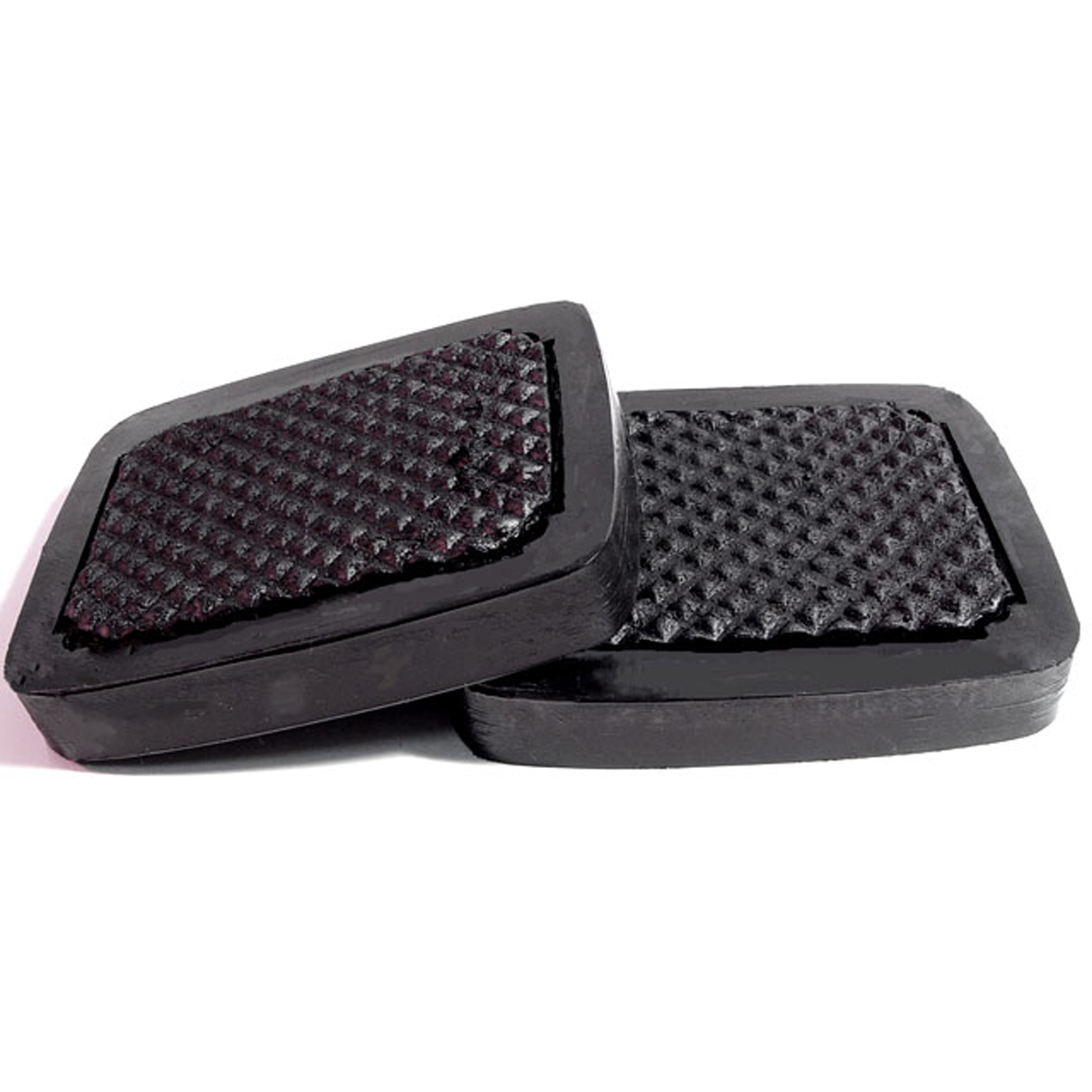 1931 Buick Series 80 Clutch and Brake Pedal Pads. 2-3/4" wide X 3-3/8" long-CB 12Clutch and Brake Pedal Pads. 2-3/4" wide X 3-3/8" long. Pair
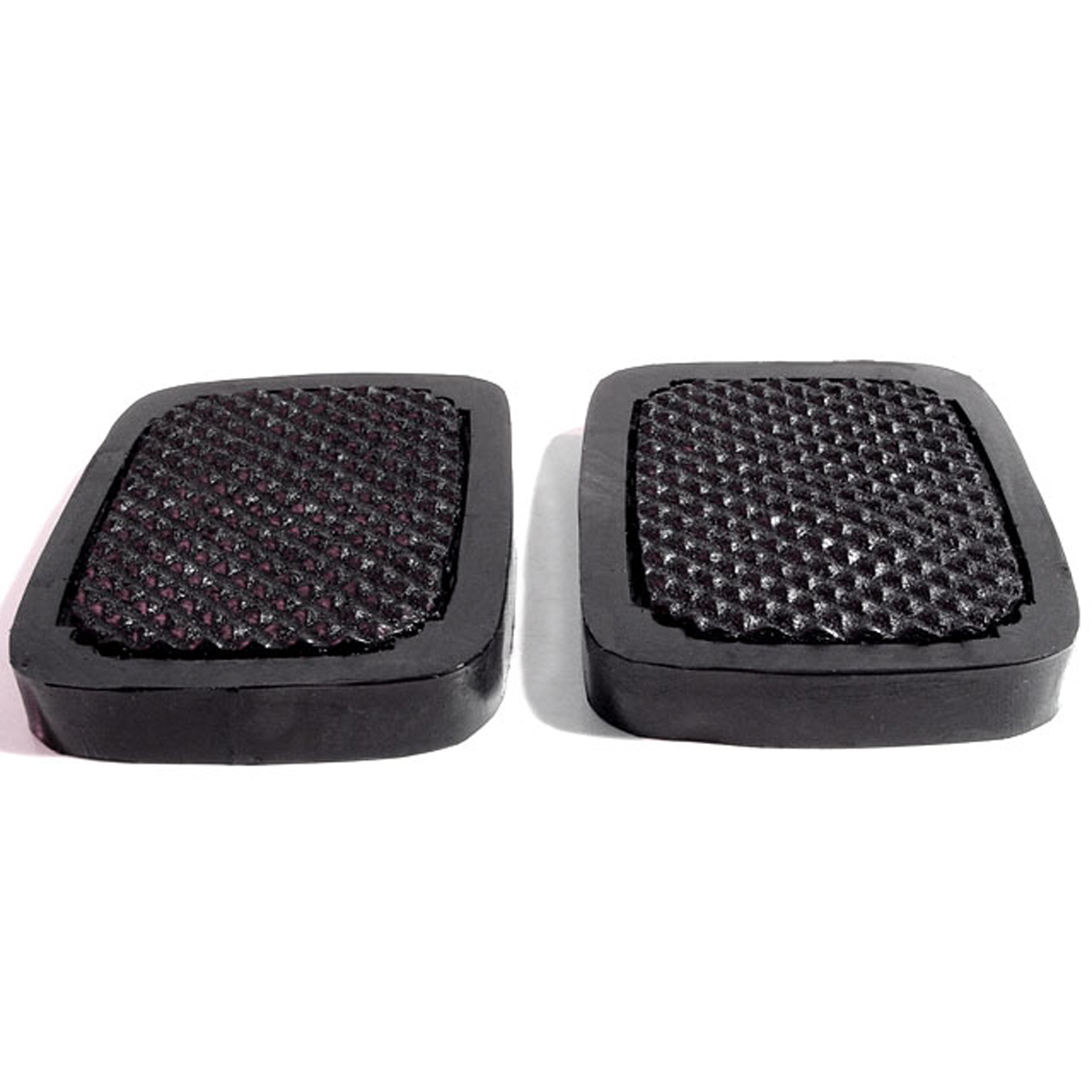 1931 Buick Series 80 Clutch and Brake Pedal Pads. 2-3/4" wide X 3-3/4" long-CB 13Clutch and Brake Pedal Pads. 2-3/4" wide X 3-3/4" long. Pair
 1931 Buick Series 80 Door Bumper. 1-7/16" high X 1-9/16" wide X 9/16" thick-DB 7Door Bumper. 1-7/16" high X 1-9/16" wide X 9/16" thick. Each
 1931 Buick Series 80 Side window seal. Dense rubber. No metal core. 1 in-LP 95-ASide window seal. Dense rubber. No metal core. 1 in. W x 5/8 in. H. Per foot.
 1931 Buick Series 80 Door Handle Ferrule Grommet. I.D. 11/16", O.D. 1-3/16"-MP 546-IDoor Handle Ferrule Grommet. I.D. 11/16", O.D. 1-3/16". Each
 1931 Buick Series 80 Door Bumper. 1" diameter X 1/4" thick Each-SB 60Door Bumper. 1" diameter X 1/4" thick Each
 1931 Buick Series 80 Flexible Rubber Window Channel-WC 32-14Flexible Rubber Window Channel. For Fisher Closed Bodies, except those using a stainless bead type. Used on side windows. 13/16" outer width X 6/16" outer depth, with a 5/16" inner channel width X 14" long. Each
 1931 Buick Series 80 Fender Bolts. For use with Fender Bolt Washers; WF 3001-WF 3000Fender Bolts. For use with Fender Bolt Washers; WF 3001. Zinc Chromate plated, high strength. 1" X 5/16". Set of 25
 1931 Buick Series 80 Fender Bolt Washers. For use with Fender Bolts; WF 3000-WF 3001Fender Bolt Washers. For use with Fender Bolts; WF 3000. High quality, cadmium plated. 1-1/4" O.D., 3/8" I.D. Set of 25
Why Choose Metro?
For over 100 years, Metro Moulded Parts has been the pinnacle of quality in classic car restoration parts. Our commitment to precision and authenticity in every component ensures a perfect fit and an OEM-level appearance.
- Expert Craftsmanship & Quality: Each part is a testament to our dedication to reliability and perfection, crafted from original designs and thoroughly tested.
- Advanced Technology: We use cutting-edge techniques to create flawless, long-lasting parts that surpass others in performance.
- SuperSoft Sponge – The Ultimate Door Seal: Not only are our door seals 30% softer than competitors', but they're also guaranteed to never leak. They effectively reduce wind and road noise, enhancing your classic car's comfort and driving experience.
- Proudly American: Our parts are a product of American craftsmanship, made in the USA with a spirit of excellence and heritage.
- Unrivaled Warranty: We back our products with a 30-year industry-leading warranty, a testament to our confidence in their quality.
Join us in preserving the legacy of classic cars with parts that are crafted for perfection, not just made.