

Image of 1932 Buick Series 50, Note: These illustrations use artistic license and may differ from actual historical models.
Performance Metrics
Fundamental Metrics
Emotional Appeal
MMP Rating
| Engine Specifications | |
|---|---|
| Engine: | Straight-8 |
| Displacement: | 230 cubic inches |
| Horsepower: | Estimated 77-90 HP |
| Torque: | Information not available |
| Compression Ratio: | 5.2:1 |
| Ignition System: | Distributor and coil |
| Cooling System: | Water-cooled |
| Performance Specifications | |
| 0-60 Time: | Information not available |
| 1/4 Mile Time: | Information not available |
| Top Speed: | 75 mph |
| Transmission and Drive | |
| Drive Type: | Rear-wheel drive |
| Transmission Type: | 3-speed manual |
| Fuel and Efficiency | |
| Fuel System Type: | Carburetor |
| MPG: | Information not available |
| Dimensions and Brakes | |
| Brakes: | Mechanical drum brakes |
| Wheelbase: | 114 inches |
| Weight: | 3,400 lbs |
Note: Specifications for classic cars are given to the best of our ability, considering the limited and variant data available.
1932 Buick Series 50: A Straight-Eight Buick for the Depression Era
The 1932 Buick Series 50 paired the presence of a full-size American luxury car with the more accessible price and proportions of Buick’s mid-range offering. Built by the Buick Motor Company, then part of General Motors, it arrived during the Great Depression, when automakers had to make every sale count. Its recipe was reassuringly substantial: elegant coachwork, a smooth overhead-valve straight-eight engine, and the kind of long-distance comfort that helped Buick stand apart from ordinary transport.
The Series 50 was part of Buick’s four-tier 1932 range, positioned below the larger Series 60, 80, and 90 models. It was not one single body style but a family of cars sharing a chassis and powertrain. One intriguing detail is that even this less expensive Buick used a straight-eight, an engine layout commonly associated with more prestigious cars. In an era when many competitors still relied on six-cylinder engines, that gave the Series 50 a distinctly upscale character.
Exterior Design and Body Styles
The Series 50 wore the formal, carefully balanced look that defined early-1930s Buick design. A tall, upright radiator grille anchored the front, flanked by prominent headlamps and a long hood. Flowing front fenders covered the tops of the wheels, while running boards connected the front and rear bodywork. Bright trim, sweeping lines, and Buick’s recognizable proportions made the car look substantial without the imposing scale of the marque’s most expensive models.
Buick offered the Series 50 in several closed and open configurations. Depending on the catalog and body availability, buyers could choose from sedans, coupes, and convertible-style models. Two-door coupes had a sporty, personal-car appeal, while four-door sedans were the practical choice for families and business use. Open cars are especially eye-catching today, but a well-preserved sedan or coupe captures the Series 50’s essential character just as well.
Color choices varied by body style and production details. Buyers could select dark, dignified finishes such as black, deep blue, green, or maroon, with some combinations offering contrasting colors or trim. Period-appropriate dark shades suit the car’s formal lines, while a two-tone treatment can bring out the shape of the fenders and body panels. Exact factory color names should be checked against the car’s paint documentation, as palettes differed across models and years.
Cabin Materials and 1932 Technology
Inside, the Series 50 was designed for comfortable travel rather than sporting minimalism. The broad bench seats were typically upholstered in durable cloth or other period-appropriate trim, and the dashboard combined painted or finished surfaces with clear, centrally placed instruments. Wood-grain finishes and bright metal details added visual warmth. Materials and trim varied with body style and specification, so surviving cars can differ noticeably in their interiors.
Buick’s straight-eight was a major selling point, but the car’s engineering extended beyond its engine. It used a three-speed manual transmission, a conventional rear-wheel-drive layout, and four-wheel drum brakes. A 6-volt electrical system was standard for the period. Options and equipment could vary, but buyers could also encounter early-1930s conveniences such as a radio or heater, features that made a long trip more pleasant in a car that was already more sophisticated than basic transportation.
One period feature associated with cars of this era was free-wheeling, which allowed the car to coast with reduced engine braking under certain conditions. Equipment availability depended on specification, so it is best to verify any unusual feature on an individual car rather than assume every Series 50 had it.
Why the Series 50 Mattered
The Series 50 helped bring Buick’s eight-cylinder refinement to a broader group of buyers. Its overhead-valve straight-eight delivered a smoother, more effortless character than many six-cylinder rivals, while the car’s proportions and trim retained a premium appearance. Buick was not trying to build an inexpensive economy car. It offered a substantial step up in comfort and engineering for customers who wanted prestige without moving to the company’s largest and costliest models.
The model also reflects an important shift in automotive design. By 1932, cars were becoming more visually integrated: fenders, lamps, running boards, and bodywork were being shaped into a more cohesive whole. The Series 50 still had the upright stance and separate elements of a prewar car, but its flowing fenders and carefully coordinated trim pointed toward the more streamlined styling that would follow. Its influence is best understood as part of Buick’s broader contribution to refined American touring cars, rather than as a single revolutionary design.
Engine, Speed, and Road Manners
The Series 50’s straight-eight displaced about 230 cubic inches and produced approximately 82 horsepower. Buick’s valve-in-head design placed the valves above the combustion chambers, a layout the company had long promoted for breathing and performance. Power reached the rear wheels through a three-speed manual gearbox.
Period performance figures vary with body style, condition, gearing, and road conditions. A healthy Series 50 is commonly estimated to reach roughly 70 to 75 mph, with acceleration from 0 to 60 mph taking around 25 to 30 seconds. Those are modern estimates, not a promise of performance from every surviving car. Its strengths were smooth, steady progress and relaxed cruising, not rapid acceleration or modern traffic-light sprints.
On the road, the long wheelbase and substantial chassis help the Buick settle over ordinary bumps. The steering is heavier and less precise than a modern car’s, and the body can lean through winding roads, so a measured driving style suits it best. The straight-eight’s muted mechanical note, the gear lever’s deliberate movement, and the broad, cushioned ride all make the experience feel unhurried. In a well-maintained example, the engine’s smoothness is one of the car’s most memorable qualities.
Owning and Maintaining a 1932 Buick
Today, the Series 50 is best suited to touring, club events, museum displays, and weekend drives. It can be driven regularly by an owner prepared to maintain it, but it is not an effortless modern daily driver. Its size, slower acceleration, period brakes, and lack of contemporary safety equipment call for defensive driving and sensible route planning.
Routine work is straightforward for an experienced home mechanic: ignition service, lubrication, carburetor adjustment, and brake maintenance are all familiar jobs for vintage-car specialists. The main challenge is not necessarily mechanical complexity but the age of the components and the availability of correct parts. Engine and chassis pieces may be obtainable through Buick clubs and vintage-parts suppliers, while body trim, glass, upholstery details, and model-specific hardware can take more searching. A pre-purchase inspection should pay close attention to rust, wood or structural components where used, engine condition, cooling, and brake operation.
Rare Details, Trivia, and Common Complaints
The Series 50’s straight-eight is its standout talking point: it gave a mid-range Buick the smoothness and refinement many buyers associated with more expensive machinery. The car is also a useful snapshot of the Depression-era market. Buick continued to offer substantial, well-equipped automobiles even as economic hardship sharply reduced demand across the industry.
There is no widely recognized Series 50 speed or endurance record that defines the model, and it was not primarily a racing car. Its reputation rests on comfort, engineering, and Buick’s place in the American luxury market. Nor is there a famous celebrity connection that reliably distinguishes the model as a whole; individual cars may have notable ownership histories, but those stories need to be verified through documentation.
Common criticisms are predictable for a car nearly a century old. It is heavy, slow by modern standards, thirsty compared with contemporary vehicles, and less agile on tight roads. Restoring a car with missing trim or deteriorated bodywork can become expensive. Those drawbacks are balanced by its smooth engine, distinctive prewar styling, and the engaging, hands-on experience of driving a substantial 1930s automobile.
Collector Values and Rarity
Exact Series 50 production totals are not consistently reported in readily available summaries. Buick built roughly 41,800 cars across its full 1932 range, and a reasonable working estimate for Series 50 production is approximately 12,000 to 18,000 cars. That is an estimate, not a confirmed model-by-model count. The number surviving in usable condition is far smaller, and open body styles or cars retaining unusual original details can be particularly difficult to find.
As a broad U.S. market guide, a project car might fall around $10,000 to $20,000, while a presentable driver could bring roughly $25,000 to $45,000. A high-quality restoration may range from about $45,000 to $85,000, with rare open models or exceptional, documented examples potentially exceeding that range. Actual prices depend heavily on body style, originality, restoration quality, provenance, and the condition of the engine and chassis.
Values for sound prewar cars have generally been supported by their scarcity and visual appeal, but the market is selective. Exceptional examples can command strong prices, while cars needing extensive restoration may be difficult to sell for anything close to the cost of the work. Buyers should compare recent sales of the same body style and condition rather than rely on asking prices alone.
The Lasting Appeal of the 1932 Buick Series 50
The 1932 Buick Series 50 brought together a smooth straight-eight, elegant bodywork, and comfortable touring manners at a point when the American auto industry faced extraordinary economic pressure. It was not the fastest car of its day or the rarest Buick, but it offered a compelling balance of refinement and accessibility. Nearly a century later, its appeal is easy to understand: the Series 50 feels like a genuine piece of prewar motoring, with the craftsmanship, presence, and unhurried character to make every drive an occasion.
1932 Buick Series 50 Catalog of Parts
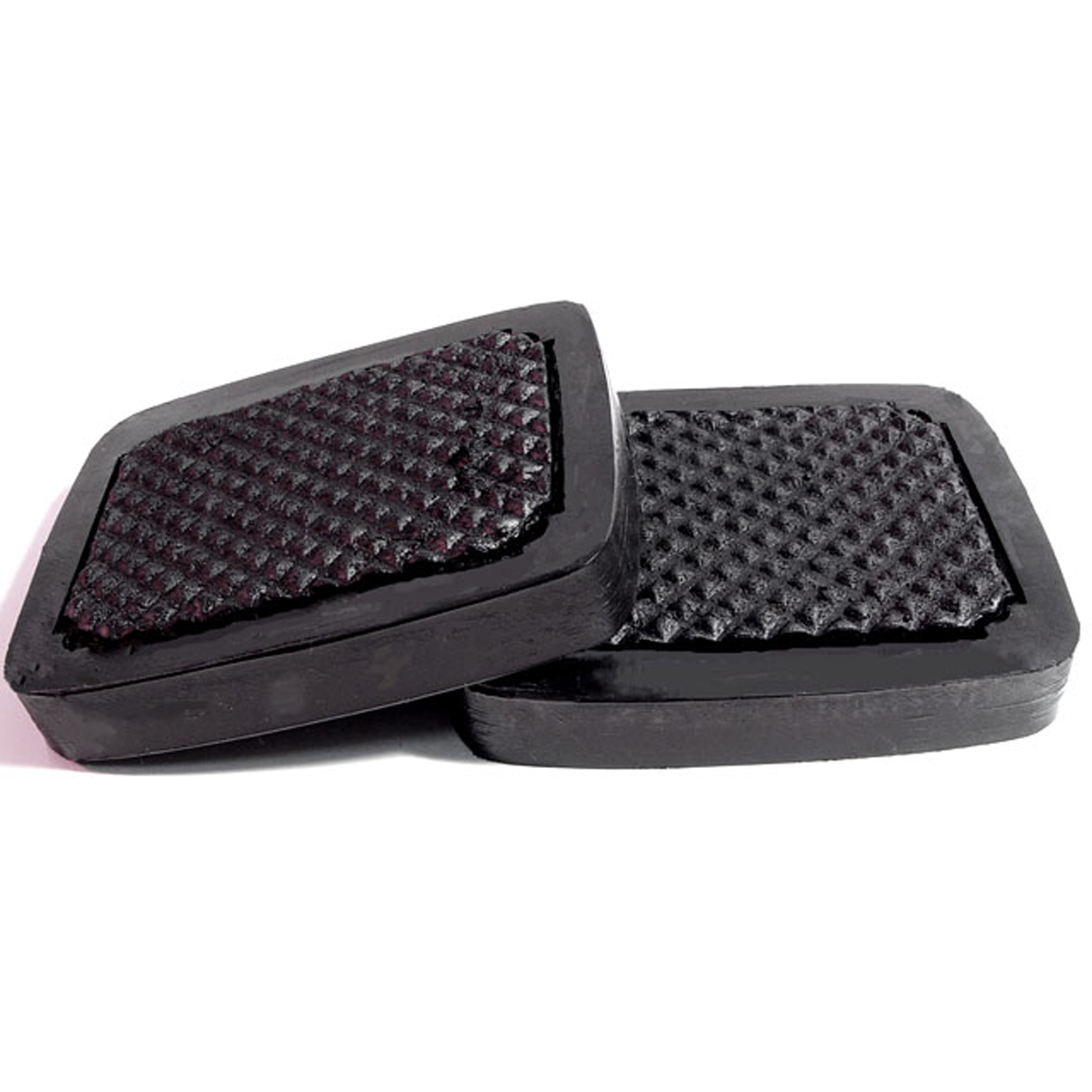 1932 Buick Series 50 Clutch and Brake Pedal Pads. 2-3/4" wide X 3-3/8" long-CB 12Clutch and Brake Pedal Pads. 2-3/4" wide X 3-3/8" long. Pair
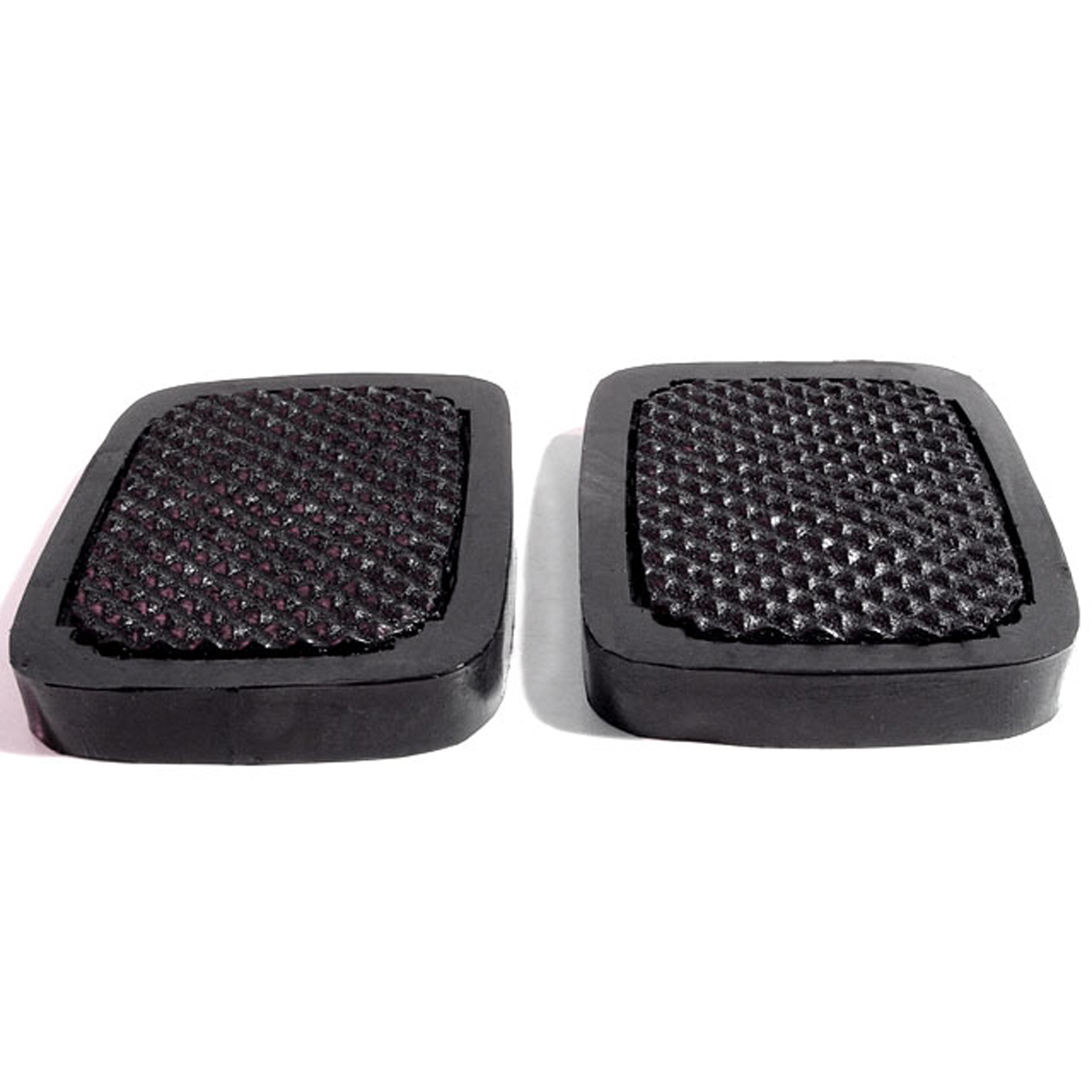 1932 Buick Series 50 Clutch and Brake Pedal Pads. 2-3/4" wide X 3-3/4" long-CB 13Clutch and Brake Pedal Pads. 2-3/4" wide X 3-3/4" long. Pair
 1932 Buick Series 50 Door Bumper. 1-7/16" high X 1-9/16" wide X 9/16" thick-DB 7Door Bumper. 1-7/16" high X 1-9/16" wide X 9/16" thick. Each
 1932 Buick Series 50 Side window seal. Dense rubber. No metal core. 1 in-LP 95-ASide window seal. Dense rubber. No metal core. 1 in. W x 5/8 in. H. Per foot.
 1932 Buick Series 50 Park Light Pads. 1-1/2" wide X 4-1/2" long. Pair-MP 120Park Light Pads. 1-1/2" wide X 4-1/2" long. Pair
 1932 Buick Series 50 Tail-light Pads. 2-1/2" wide X 4-1/8" long. Pair-MP 130Tail-light Pads. 2-1/2" wide X 4-1/8" long. Pair
 1932 Buick Series 50 Headlight (Upper) Pads. 2-1/2" wide X 4-5/8" long. Pair-MP 131-AHeadlight (Upper) Pads. 2-1/2" wide X 4-5/8" long. Pair
 1932 Buick Series 50 Headlight (Lower) Pads. 2-1/4" wide X 4-3/4" long. Pair-MP 131-BHeadlight (Lower) Pads. 2-1/4" wide X 4-3/4" long. Pair
 1932 Buick Series 50 Windshield Wiper Transmission Pad-MP 134-CWindshield Wiper Transmission Pad. 2-1/8" wide X 2-3/8" long. Each
 1932 Buick Series 50 Wiper Arm Pad. 1" wide X 2-7/8" long. Each-MP 134-DWiper Arm Pad. 1" wide X 2-7/8" long. Each
 1932 Buick Series 50 Trunk Lock Pads. 1-5/8" wide X 6-3/8" long. Set-MP 336-CTrunk Lock Pads. 1-5/8" wide X 6-3/8" long. Set
 1932 Buick Series 50 Door Handle Ferrule Grommet. I.D. 11/16", O.D. 1-3/16"-MP 546-IDoor Handle Ferrule Grommet. I.D. 11/16", O.D. 1-3/16". Each
 1932 Buick Series 50 Booster Brake Diaphragm. 7-1/2" O.D., 3" I.D., 1-7/8" deep-RP 32Booster Brake Diaphragm. 7-1/2" O.D., 3" I.D., 1-7/8" deep. Each
 1932 Buick Series 50 Door Bumper. 1" diameter X 1/4" thick Each-SB 60Door Bumper. 1" diameter X 1/4" thick Each
 1932 Buick Series 50 Flexible Rubber Window Channel-WC 32-14Flexible Rubber Window Channel. For Fisher Closed Bodies, except those using a stainless bead type. Used on side windows. 13/16" outer width X 6/16" outer depth, with a 5/16" inner channel width X 14" long. Each
 1932 Buick Series 50 Fender Bolts. For use with Fender Bolt Washers; WF 3001-WF 3000Fender Bolts. For use with Fender Bolt Washers; WF 3001. Zinc Chromate plated, high strength. 1" X 5/16". Set of 25
 1932 Buick Series 50 Fender Bolt Washers. For use with Fender Bolts; WF 3000-WF 3001Fender Bolt Washers. For use with Fender Bolts; WF 3000. High quality, cadmium plated. 1-1/4" O.D., 3/8" I.D. Set of 25
Why Choose Metro?
For over 100 years, Metro Moulded Parts has been the pinnacle of quality in classic car restoration parts. Our commitment to precision and authenticity in every component ensures a perfect fit and an OEM-level appearance.
- Expert Craftsmanship & Quality: Each part is a testament to our dedication to reliability and perfection, crafted from original designs and thoroughly tested.
- Advanced Technology: We use cutting-edge techniques to create flawless, long-lasting parts that surpass others in performance.
- SuperSoft Sponge – The Ultimate Door Seal: Not only are our door seals 30% softer than competitors', but they're also guaranteed to never leak. They effectively reduce wind and road noise, enhancing your classic car's comfort and driving experience.
- Proudly American: Our parts are a product of American craftsmanship, made in the USA with a spirit of excellence and heritage.
- Unrivaled Warranty: We back our products with a 30-year industry-leading warranty, a testament to our confidence in their quality.
Join us in preserving the legacy of classic cars with parts that are crafted for perfection, not just made.