

Image of 1934 Buick Series 40, Note: These illustrations use artistic license and may differ from actual historical models.
Performance Metrics
Fundamental Metrics
Emotional Appeal
MMP Rating
| Engine Specifications | |
|---|---|
| Engine: | Straight-8 |
| Displacement: | 233 cu in (3.8 L) |
| Horsepower: | 93 hp |
| Torque: | Not available |
| Compression Ratio: | Not available |
| Ignition System: | Battery and coil |
| Cooling System: | Water |
| Performance Specifications | |
| 0-60 Time: | Not available |
| 1/4 Mile Time: | Not available |
| Top Speed: | 80 mph |
| Transmission and Drive | |
| Drive Type: | Rear wheel drive |
| Transmission Type: | 3-speed manual |
| Fuel and Efficiency | |
| Fuel System Type: | Carburetor |
| MPG: | Not available |
| Dimensions and Brakes | |
| Brakes: | Mechanical drum |
| Wheelbase: | 119 in (3,023 mm) |
| Weight: | 3,570 lbs |
Note: Specifications for classic cars are given to the best of our ability, considering the limited and variant data available.
The 1934 Buick Series 40 gave Depression-era drivers something increasingly rare: the smoothness of a straight-eight engine in a comparatively accessible Buick. Handsome, substantial, and more advanced beneath its flowing bodywork than its conservative image suggests, the Series 40 is a compelling prewar classic with real engineering character.
1934 Buick Series 40 Overview
Built by Buick, a division of General Motors, the Series 40 was the marque’s entry-level line for 1934. “Entry-level” is relative: it was still a full-sized, carefully finished automobile, and it came with an eight-cylinder engine at a time when many affordable cars relied on four- or six-cylinder power.
For 1934, Buick offered a 233-cubic-inch overhead-valve inline-eight in the Series 40, rated at approximately 93 horsepower. The model sat below larger, more expensive Buicks in the company’s range, but shared the brand’s emphasis on smooth power, solid construction, and a comfortable ride.
The year also found the American auto industry working its way through the Great Depression. Buyers wanted value, but they still responded to style and refinement. The Series 40 answered with a long hood, a substantial grille, and the reassuring presence of a well-built Buick. One particularly intriguing detail is that this entry-level model used a straight-eight, an engine layout more commonly associated with premium cars.
Streamlined Buick Styling
The 1934 Series 40 had the elegant proportions typical of the period, but its lines were beginning to move away from the upright, boxy look of earlier cars. The hood stretched forward to a prominent, upright grille, while gently sloping fenders framed the wheels. Sweeping body contours and a more rakish windshield gave the car a sense of forward motion even when parked.
Chrome brightwork was used to emphasize the grille, lamps, bumpers, and other exterior details without overwhelming the design. From the side, the long hood and curved fenders make the car look more substantial than its position at the lower end of Buick’s range might suggest. A well-preserved example has the unmistakable prewar profile: tall, formal, and beautifully balanced.
Body styles varied by model and market, but Series 40 buyers could choose among closed sedans and coupes, with open or convertible-style versions also offered in the range. Sedans suited family and business use, while the coupe offered a sportier, more personal look. The exact names and availability of particular bodies can differ across catalogs and surviving cars, so buyers researching a specific example should verify its original model designation.
Cabin Materials and Features
Inside, the Series 40 was designed for comfort rather than minimalism. The cabin was roomy by contemporary standards, with a broad bench seat, a large steering wheel, and clear, straightforward instrumentation. Depending on body style and trim, upholstery could include durable cloth or richer materials such as mohair or leather. Woodgrain-style trim and polished metal details helped give the dashboard a finished appearance.
Buick’s focus was on making the car feel solid and quiet. The doors, seating, and trim were intended to withstand regular use, not merely look attractive in a showroom. Still, a 1934 interior is a product of its time: there is no modern climate control, sound insulation, or adjustable seating in the contemporary sense. Its appeal lies in the craftsmanship and period atmosphere, not modern convenience.
Exterior paint choices depended on body and trim combinations. Dark shades such as black, maroon, blue, and green suited the car’s formal character, while lighter colors could make its flowing body lines stand out. Original color availability should be checked against period Buick paint records, since palettes and combinations varied across models and production details.
Engineering Ahead of Its Time
The Series 40’s most important mechanical feature was its overhead-valve straight-eight. Its eight cylinders delivered smoother, more continuous power than a typical four-cylinder engine, and the overhead-valve layout helped Buick build a reputation for responsive performance. Power went through a manual transmission, generally a three-speed unit, to the rear wheels.
Another notable development associated with Buick and other GM cars of this period was independent front suspension, often described as “Knee-Action.” Instead of linking both front wheels through a single solid axle, the system allowed each wheel to respond more independently to the road. That helped reduce the jolt transmitted through the chassis when one wheel encountered a bump.
The Series 40 also had hydraulic brakes, a major everyday safety and control feature compared with older mechanical systems. Together, the engine, suspension, and brakes made the car feel more modern than its upright styling might suggest.
Historical Significance
The 1934 Buick Series 40 matters because it brought upscale mechanical character to the more attainable end of Buick’s lineup. Buyers did not need to step up to the company’s largest models to enjoy the smoothness of an eight-cylinder engine. That distinction helped Buick occupy an appealing middle ground between mass-market cars and more expensive luxury marques.
Its engineering also reflects a broader change in American car design. Independent front suspension was still unusual, and its use signaled a growing interest in ride comfort and road control rather than simply building a sturdy chassis. The Series 40 was not a radical styling landmark, but it was part of the industry’s move toward cars that were smoother, more comfortable, and easier to drive over imperfect roads.
Buick’s lasting influence came from this combination of refinement and practicality. The Series 40 was less extravagant than a flagship luxury car, yet it carried much of the same brand identity: a smooth straight-eight, substantial construction, and an emphasis on comfort.
Performance and Road Manners
With about 93 horsepower moving a sizeable prewar car, the Series 40 was built for relaxed travel rather than quick acceleration. Period performance figures vary with body style, gearing, condition, and test method. As a reasonable modern estimate, a healthy car may reach 60 mph in roughly 22 to 28 seconds and achieve a top speed in the neighborhood of 70 to 80 mph. These are estimates, not guaranteed specifications for every surviving car.
On a smooth road, the eight-cylinder engine delivers its power with a steady, subdued rhythm. The sound is less of a sharp mechanical bark than a low, even hum, especially at cruising speed. The long wheelbase and soft suspension help the Buick settle into a comfortable pace, while independent front suspension can take the edge off uneven pavement.
On winding roads, the Series 40 asks for a measured driving style. Its steering is slower and heavier than modern power-assisted systems, and the car’s height and weight encourage smooth inputs rather than abrupt cornering. In crosswinds, a tall, relatively narrow-bodied car can require attention at the wheel. The best experience comes from anticipating turns, leaving extra braking distance, and letting the Buick move at its own dignified pace.
For its era, the result was a comfortable touring car, not a sports sedan. The driver operates a clutch, manual gearbox, and large steering wheel, all of which make the experience engaging. It rewards a light touch and a little mechanical sympathy.
Owning and Maintaining a Series 40
Today, a 1934 Buick Series 40 is most often used for club events, local shows, touring, and occasional pleasure drives. It can be driven on suitable roads, but it is not a practical modern daily driver. Its age, braking distances, lack of contemporary safety equipment, and need for regular attention make careful use essential.
The straight-eight is mechanically understandable to a capable vintage-car mechanic, and many routine jobs are straightforward in principle. In practice, parts availability and the condition of the individual car matter enormously. Engine, transmission, brake, and suspension work can require specialist knowledge, while body and trim pieces may be difficult or costly to source. Before buying, inspect the frame, rust-prone body areas, cooling system, electrical components, and the operation of the brakes and suspension.
Reliability depends less on the badge than on how well the car has been maintained. A properly sorted Buick can be a rewarding touring car, but an unrestored example may need substantial recommissioning before it is safe to drive. A prospective owner should budget for ongoing maintenance and avoid assuming that a car is roadworthy simply because it starts and moves.
Buick Series 40 Facts
The Series 40’s eight-cylinder engine is one of its best conversation starters: this was Buick’s more accessible line, yet it still offered the smoothness of an inline-eight. That blend of refinement and relative affordability is central to the car’s appeal.
The model is not generally known for a single speed record, endurance feat, or celebrity association. Its significance is more representative than record-breaking: it shows how mainstream American manufacturers were bringing improved ride technology and more sophisticated powertrains to a wider range of buyers during the 1930s.
Common criticisms are familiar to anyone considering a prewar car. The Series 40 is slow by modern standards, its steering and brakes demand more effort and anticipation, and restoration can be expensive when trim or body parts are missing. Its relatively restrained styling may also be less immediately dramatic than that of a larger luxury car. For enthusiasts who value mechanical character and graceful proportions, those drawbacks are part of the experience rather than deal breakers.
Collector Value and Rarity
Exact production figures for individual 1934 Series 40 body styles are not easy to establish from general reference sources. A reasonable working estimate is that Buick produced roughly 30,000 to 40,000 Series 40 cars for the model year, though the true total depends on how model and body-style records are grouped. The number of surviving examples is much smaller, and condition varies widely.
In the current U.S. collector market, a project car may sell for roughly $8,000 to $18,000, depending on completeness and rust. A usable driver or older restoration might fall around $20,000 to $40,000. A high-quality restoration, especially in a desirable or open body style, could bring approximately $45,000 to $75,000 or more. These are broad estimates; provenance, originality, mechanical condition, and body style can move a car well outside the ranges.
Values for prewar cars tend to be selective. Exceptional examples with documented history and correct restoration can hold strong appeal, while ordinary sedans may be harder to sell than striking coupes or convertibles. The Series 40 is best viewed as a potentially appreciating collectible with a relatively steady enthusiast market, not a guaranteed short-term investment. Restoration costs can also exceed the value of a finished car, so buying the best example you can afford is often the wiser route.
Why the 1934 Buick Series 40 Endures
The 1934 Buick Series 40 combined a smooth overhead-valve straight-eight, comfortable road manners, period-correct elegance, and emerging suspension technology in a package below Buick’s top models. It was neither a bare-bones economy car nor an extravagant flagship. Instead, it offered a compelling middle ground for drivers who wanted refinement without stepping all the way into luxury-car territory.
Nearly a century later, its appeal is easy to understand. The Series 40 carries the sound and presence of a classic Buick while illustrating a turning point in American automotive engineering. It is a reminder that even an “entry-level” car could be built with ambition, and that is what makes this 1934 Buick worth remembering.
1934 Buick Series 40 Catalog of Parts
 1934 Buick Series 40 Clutch and Brake Pedal Pads. 2" wide X 3" long. Pair-CB 15Clutch and Brake Pedal Pads. 2" wide X 3" long. Pair
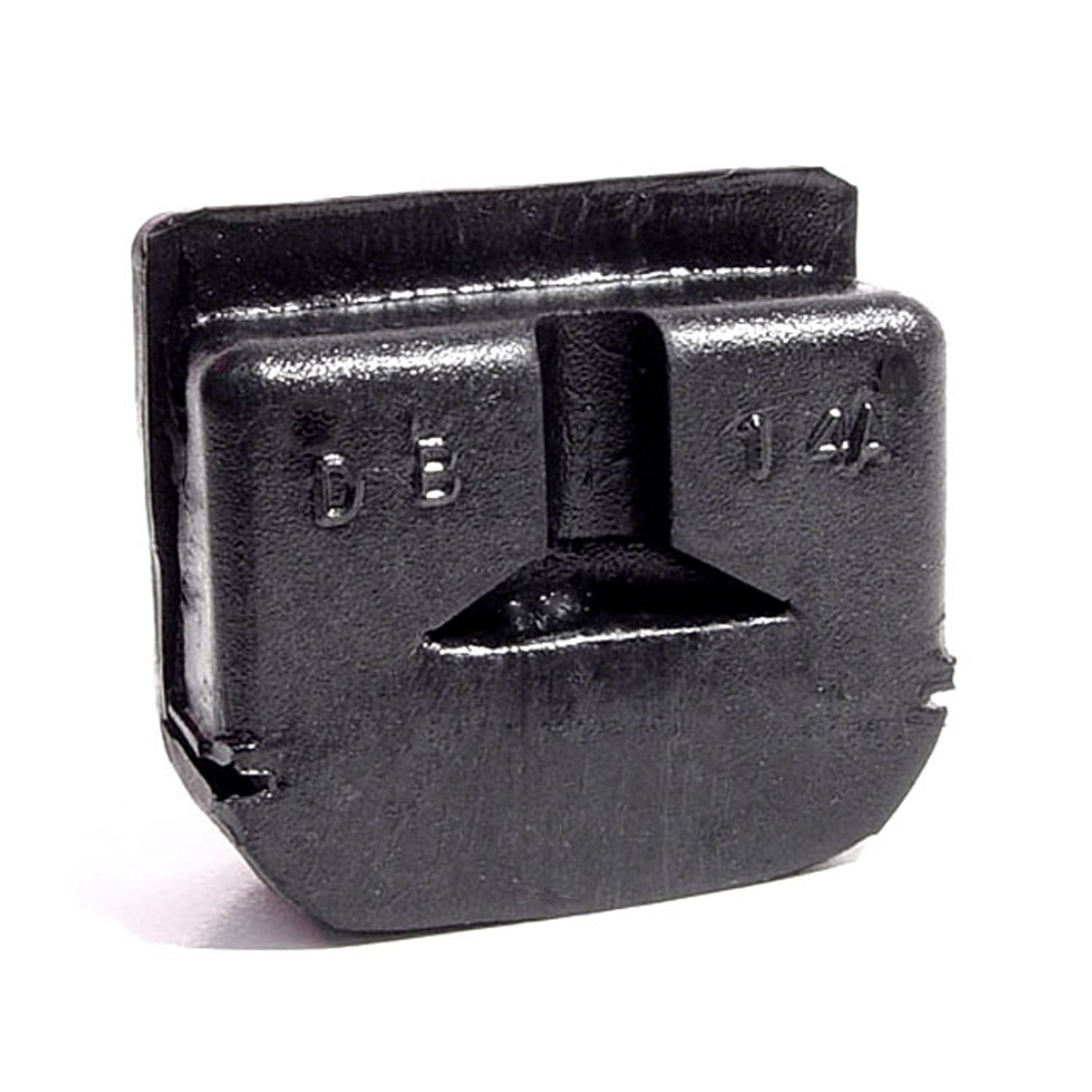 1934 Buick Series 40 Door Bumper. Exact reproduction-DB 14-ADoor Bumper. Exact reproduction. 1-3/16" high X 1-9/16" wide X 9/16" thick. Each
 1934 Buick Series 40 Upper Door Hinge Post Bumper. Held by screw-DB 60-AUpper Door Hinge Post Bumper. Held by screw. 7/8" diameter X 1/8" thick. Each
 1934 Buick Series 40 Gas Filler Grommet. 2-1/4" I.D., 4-3/4" O.D. Each-GF 9Gas Filler Grommet. 2-1/4" I.D., 4-3/4" O.D. Each
 1934 Buick Series 40 Windshield and Rear Window Seal-LP 30Windshield and Rear Window Seal. For cars without chrome garnish. Sold by the foot
 1934 Buick Series 40 Motor Mounts. 2" O.D., 9/16" I.D. Pair-MM 23Motor Mounts. 2" O.D., 9/16" I.D. Pair
 1934 Buick Series 40 Front Motor Mounts. 3-1/2", 1-7/8", 1/2" I.D. Pair-MM 24Front Motor Mounts. 3-1/2", 1-7/8", 1/2" I.D. Pair
 1934 Buick Series 40 Headlight (Upper) Pads. 2-1/2" wide X 4-5/8" long. Pair-MP 131-AHeadlight (Upper) Pads. 2-1/2" wide X 4-5/8" long. Pair
 1934 Buick Series 40 Headlight (Lower) Pads. 2-1/4" wide X 4-3/4" long. Pair-MP 131-BHeadlight (Lower) Pads. 2-1/4" wide X 4-3/4" long. Pair
 1934 Buick Series 40 Windshield Wiper Transmission Pad-MP 134-CWindshield Wiper Transmission Pad. 2-1/8" wide X 2-3/8" long. Each
 1934 Buick Series 40 Wiper Arm Pad. 1" wide X 2-7/8" long. Each-MP 134-DWiper Arm Pad. 1" wide X 2-7/8" long. Each
 1934 Buick Series 40 Headlight Pads. 3-5/8" wide X 6-3/4" long. Pair R&L-MP 170Headlight Pads. 3-5/8" wide X 6-3/4" long. Pair R&L
 1934 Buick Series 40 Tail-light Pads. 2-5/8" wide X 6" long. Pair-MP 180Tail-light Pads. 2-5/8" wide X 6" long. Pair
 1934 Buick Series 40 Trunk Lock Pads. 1-5/8" wide X 6-3/8" long. Set-MP 336-CTrunk Lock Pads. 1-5/8" wide X 6-3/8" long. Set
 1934 Buick Series 40 Door Handle Ferrule Grommet. I.D. 11/16", O.D. 1-3/16"-MP 546-IDoor Handle Ferrule Grommet. I.D. 11/16", O.D. 1-3/16". Each
 1934 Buick Series 40 Running Board Covers-RB 1700Running Board Covers. Each is made in one piece: 13-5/8" X 47-1/2" X 9-3/4". Perfect copies of original. Pair
 1934 Buick Series 40 Cowl Vent Seal-RP 100-CCowl Vent Seal. 47" long piece of black, skin-covered sponge. End is 3/8" wide X 5/16" high. Each
 1934 Buick Series 40 Shift Boot. Black. 2-15/16" X 2-13/16" at base. Each-RP 33-EShift Boot. Black. 2-15/16" X 2-13/16" at base. Each
 1934 Buick Series 40 Door Bumper. 1" diameter X 1/4" thick Each-SB 60Door Bumper. 1" diameter X 1/4" thick Each
 1934 Buick Series 40 Spare Tire Mount Bumper. 5/8" square. Each-SB 80Spare Tire Mount Bumper. 5/8" square. Each
 1934 Buick Series 40 Steering Column to Floor Plate Pad-SC 28Steering Column to Floor Plate Pad. Black (also in Brown #SC 29). Each
 1934 Buick Series 40 Steering Column to Floor Plate Pad-SC 29Steering Column to Floor Plate Pad. Brown (also in Black #SC 28). Each
 1934 Buick Series 40 Vertical Seal for Vent Window. Each is 17" long. Pair-VS 2Vertical Seal for Vent Window. Each is 17" long. Pair
 1934 Buick Series 40 Vulcanized Windshield Seal-VWS 7310Vulcanized Windshield Seal. For all closed models (does not fit convertible). Each
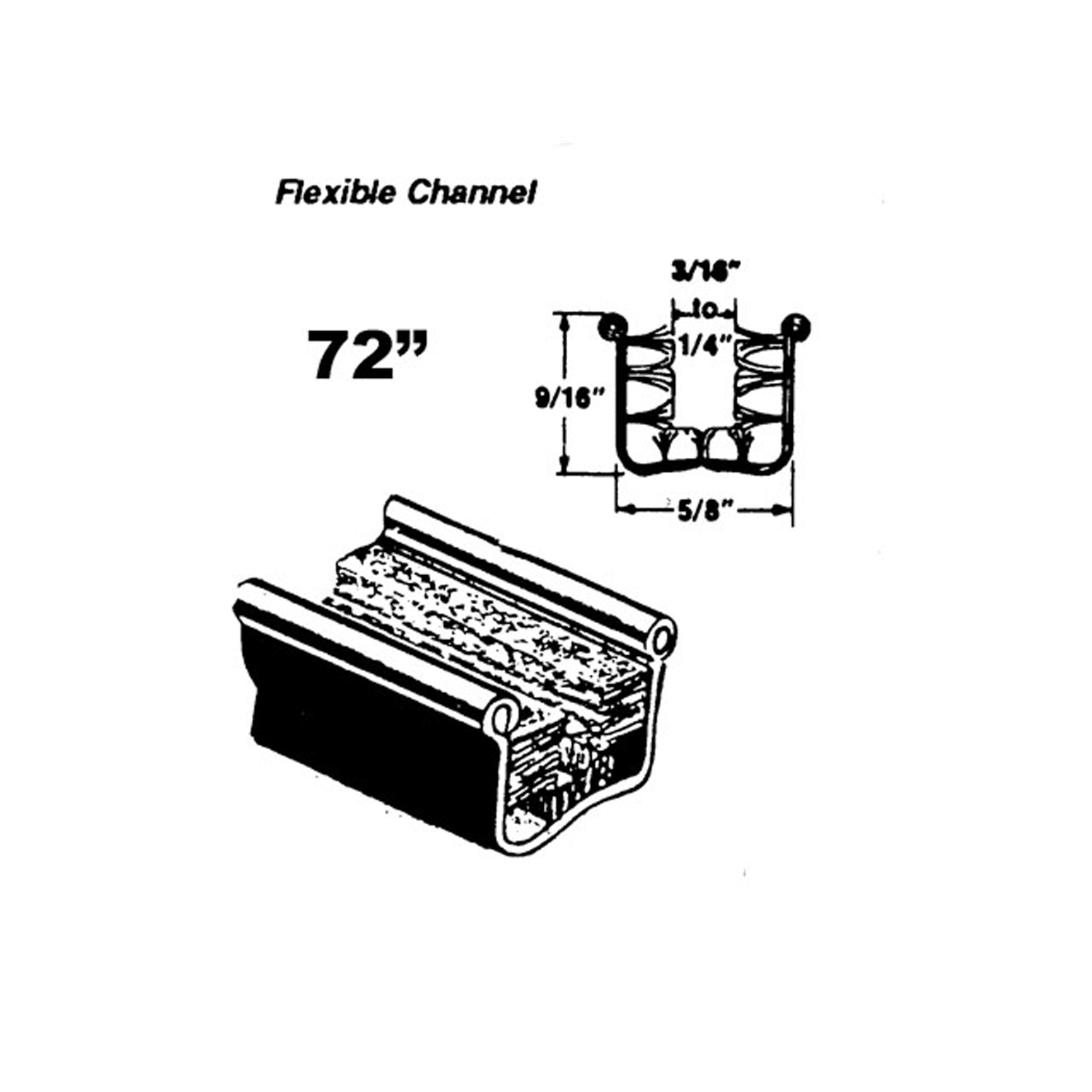 1934 Buick Series 40 Flexible glass-run channel-WC 11-72Flexible glass-run channel. Mohair lined, cloth covered with stainless steel bead. Used on side windows. 72 in. long. Each. NOTE: $20 special shipping charge applies for domestic orders. Call or email for overseas shipping costs. Part can be sectioned in two equal lengths to reduce overseas shipping costs.
 1934 Buick Series 40 Rigid division-bar channel. Made with stainless steel bead-WC 2-72Rigid division-bar channel. Made with stainless steel bead. 72 in. long. Each. NOTE: $20 special shipping charge applies for domestic orders. Call or email for overseas shipping costs. Part can be sectioned into two equal lengths to reduce overseas shipping costs.
 1934 Buick Series 40 Flexible Rubber Window Channel-WC 32-14Flexible Rubber Window Channel. For Fisher Closed Bodies, except those using a stainless bead type. Used on side windows. 13/16" outer width X 6/16" outer depth, with a 5/16" inner channel width X 14" long. Each
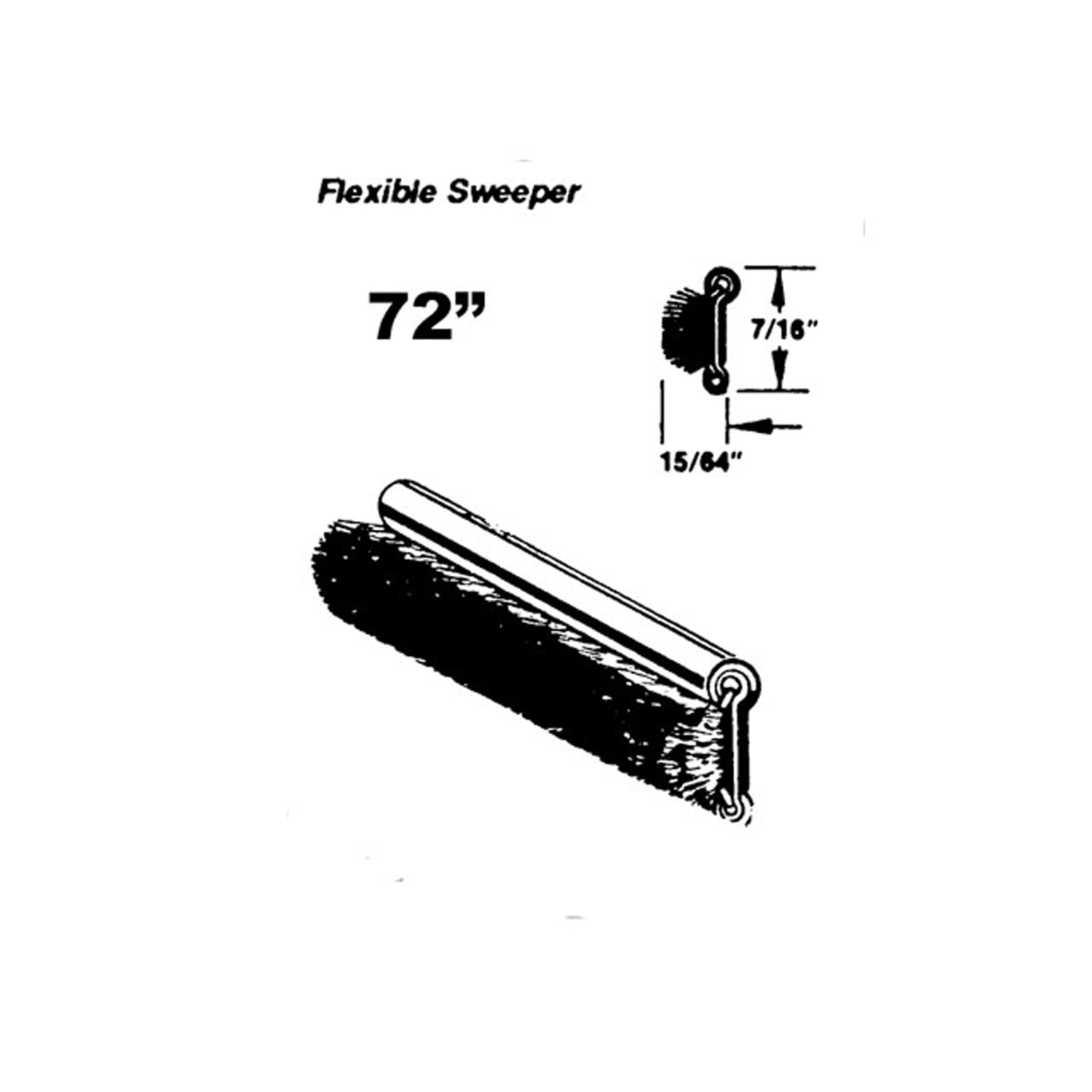 1934 Buick Series 40 Flexible sweeper. Made with stainless steel bead-WC 8-72Flexible sweeper. Made with stainless steel bead. Used on inner and outer beltlines. Also forms easily for use with sliding quarter windows. 72 in. long. Each. NOTE: $20 special shipping charge applies for domestic orders. Call or email for overseas shipping costs. Part can be sectioned into two equal lengths to reduce overseas shipping costs.
 1934 Buick Series 40 Fender Bolts. For use with Fender Bolt Washers; WF 3001-WF 3000Fender Bolts. For use with Fender Bolt Washers; WF 3001. Zinc Chromate plated, high strength. 1" X 5/16". Set of 25
 1934 Buick Series 40 Fender Bolt Washers. For use with Fender Bolts; WF 3000-WF 3001Fender Bolt Washers. For use with Fender Bolts; WF 3000. High quality, cadmium plated. 1-1/4" O.D., 3/8" I.D. Set of 25
 1934 Buick Series 40 Front Vent Window Seals. Does not fit Convertible-WR 7317Front Vent Window Seals. Does not fit Convertible. Pair R&L
Why Choose Metro?
For over 100 years, Metro Moulded Parts has been the pinnacle of quality in classic car restoration parts. Our commitment to precision and authenticity in every component ensures a perfect fit and an OEM-level appearance.
- Expert Craftsmanship & Quality: Each part is a testament to our dedication to reliability and perfection, crafted from original designs and thoroughly tested.
- Advanced Technology: We use cutting-edge techniques to create flawless, long-lasting parts that surpass others in performance.
- SuperSoft Sponge – The Ultimate Door Seal: Not only are our door seals 30% softer than competitors', but they're also guaranteed to never leak. They effectively reduce wind and road noise, enhancing your classic car's comfort and driving experience.
- Proudly American: Our parts are a product of American craftsmanship, made in the USA with a spirit of excellence and heritage.
- Unrivaled Warranty: We back our products with a 30-year industry-leading warranty, a testament to our confidence in their quality.
Join us in preserving the legacy of classic cars with parts that are crafted for perfection, not just made.