

Image of 1934 Buick Series 90, Note: These illustrations use artistic license and may differ from actual historical models.
Performance Metrics
Fundamental Metrics
Emotional Appeal
MMP Rating
| Engine Specifications | |
|---|---|
| Engine: | Straight 8 |
| Displacement: | 344.8 cu in (5.7 L) |
| Horsepower: | Estimated 104-113 hp |
| Torque: | Not available |
| Compression Ratio: | Not available |
| Ignition System: | Battery and coil |
| Cooling System: | Water |
| Performance Specifications | |
| 0-60 Time: | Not available |
| 1/4 Mile Time: | Not available |
| Top Speed: | Estimated 85-90 mph |
| Transmission and Drive | |
| Drive Type: | Rear wheel drive |
| Transmission Type: | 3-speed manual |
| Fuel and Efficiency | |
| Fuel System Type: | Carburetor |
| MPG: | Not available |
| Dimensions and Brakes | |
| Brakes: | Mechanical drum brakes |
| Wheelbase: | 128-138 inches |
| Weight: | Estimated 4,500-5,000 lbs |
Note: Specifications for classic cars are given to the best of our ability, considering the limited and variant data available.
1934 Buick Series 90: Buick’s Depression-Era Flagship
The 1934 Buick Series 90 was built to make a statement: even in the depths of the Great Depression, Buick could deliver a full-size luxury car with imposing style, a smooth straight-eight engine, and room for a well-dressed family or business party. Made by Buick, then a major division of General Motors, the Series 90 sat at the top of the company’s passenger-car range.
Buick had earned a reputation for sturdy engineering and strong performance, and its overhead-valve engines helped distinguish the marque from many rivals. The Series 90 carried that reputation into the luxury class. One notable detail is that Buick adopted independent “Knee-Action” front suspension for 1934, a significant change from the solid front axles still common on cars of the era. It helped give the big Buick a more composed ride over rough roads.
Streamlined Styling and Formal Elegance
The Series 90 wore the confident, upright proportions expected of a 1930s luxury car, but its design also reflected the period’s gradual move toward smoother, more integrated forms. A tall, prominent radiator grille anchored the front end. Long hood panels, sweeping fenders, and running boards gave the car a substantial profile, while hood louvers and bright trim added visual detail. Many examples also carried side-mounted spare tires, an unmistakable luxury-car touch that lengthened the already impressive silhouette.
Inside, the Series 90 offered the scale and finish expected from Buick’s flagship range. Buyers could expect broad bench seating, substantial door trim, polished hardware, and a carefully finished dashboard. Depending on the body and equipment, upholstery could include high-quality cloth or leather. The cabin was designed for comfort and formality rather than sporty minimalism, with generous space for passengers and luggage.
Factory paint and trim combinations varied by body style and ordering choices. Dark, dignified colors such as black, maroon, deep green, and blue suited the car’s formal character, often paired with contrasting interior materials and bright exterior trim. Exact combinations should be checked against period Buick color and trim records, since availability could differ across the model range.
Body Styles and Equipment
The Series 90 range included large closed-body styles, with formal sedans, extended-capacity passenger cars, and limousine-type configurations among the offerings. The larger bodies could accommodate extra passengers, making them useful for family travel, hotel transport, or chauffeur service. The four-door sedan is among the most recognizable versions today, while limousine and seven-passenger configurations have particular appeal to collectors who prize the period’s grand-car atmosphere.
Equipment reflected the transition from early motoring toward more comfortable, modern travel. The Series 90 combined a three-speed manual transmission with Buick’s smooth straight-eight power and hydraulic braking. Its independent front suspension was the headline chassis innovation: instead of allowing bumps on one front wheel to disturb the other as much, the system helped the car absorb uneven surfaces with greater composure.
Why the Series 90 Mattered
The 1934 Series 90 illustrates how Buick balanced traditional luxury with changing automotive engineering. Its long hood and formal bodywork still announced wealth and status, but its suspension showed that comfort was becoming a matter of chassis design as well as soft upholstery and generous wheelbase. Independent front suspension was not exclusive to Buick, yet its use on a full-size Buick helped make improved ride quality a visible part of the brand’s engineering story.
The Series 90 also stood apart from less expensive cars through its scale, finish, and straight-eight refinement. Buick occupied a useful position in the market: it offered prestige and substantial engineering without reaching the cost of the most exclusive custom-built marques. That combination helped establish the brand’s identity as a maker of durable, comfortable, technically ambitious cars.
Straight-Eight Power and Road Manners
Power came from a large Buick overhead-valve inline-eight. Published specifications can vary by source and configuration, but Series 90 engines are generally listed at about 344 cubic inches, producing roughly 116 horsepower. That output gave the car strong period performance, especially for a luxury vehicle carrying a heavy body and full passenger load.
A precise factory 0-to-60 mph figure is not consistently documented. Based on the engine output, gearing, and substantial weight, a figure in the neighborhood of 20 to 25 seconds is a reasonable modern estimate, not a guaranteed specification. Top speed was likely around 85 to 90 mph under suitable conditions, although a car of this age should not be driven at those speeds without careful mechanical inspection and appropriate tires.
On the road, the Series 90 feels substantial and deliberate. The straight-eight delivers a smooth, low-frequency rumble rather than the sharper beat of a smaller engine. The manual transmission asks for a measured hand, and the car’s size rewards planning ahead, particularly when parking or navigating tight streets. Its independent front suspension could soften broken pavement compared with a conventional solid-axle setup, while the long wheelbase helped the car settle into a steady highway rhythm.
On winding roads, the Buick is best driven with smooth inputs. Its steering and braking are from a very different era, and its mass is always part of the experience. The reward is a calm, stately ride rather than modern-car agility. Rough roads reveal the advantage of the front suspension, but worn bushings, tired springs, or incorrect tire pressures can quickly undermine that comfort.
Living With a 1934 Buick
Today, most Series 90s are enjoyed as show cars, touring cars, or occasional-use collectibles rather than daily transportation. A well-sorted example can participate in vintage motoring events and relaxed club tours, but regular use requires attention to age-related systems, including brakes, cooling, electrical connections, tires, and fuel delivery.
Mechanical work is approachable for an experienced vintage-car owner, but the car is not necessarily easy for a beginner to maintain. The straight-eight is robust when properly serviced, yet its size and age make some repairs more involved than work on a later, more common vehicle. Parts availability is generally better for routine consumables than for rare body trim, model-specific interior pieces, or major components unique to the Series 90. A pre-purchase inspection by a mechanic familiar with prewar Buicks is a smart investment.
Interesting Facts and Common Criticisms
The Series 90’s straight-eight belongs to a long Buick tradition of overhead-valve inline engines, a layout that helped the marque build a reputation for smooth, durable power. Its formal, spacious body styles also show how luxury cars served several roles in the 1930s, from private family transportation to chauffeur-driven hotel or business service.
There is no widely recognized speed, endurance, or sales record specifically associated with the 1934 Series 90. Its significance is better understood through its engineering and position in Buick’s lineup than through a single headline-grabbing achievement. It is also important not to confuse the Series 90 with later Buick model names such as Roadmaster or Limited, which became part of the brand’s lineup in subsequent years.
Common criticisms are familiar to anyone driving a prewar luxury car: the Buick is large, heavy, thirsty by modern standards, and equipped with braking and steering that require more anticipation than a contemporary vehicle. Its value is not in modern convenience. It is in the smooth engine, commanding presence, and direct connection to an era when a long, carefully finished automobile represented the height of American comfort.
Collector Value and Availability
Surviving Series 90s are uncommon, and the best examples can be difficult to find. Buick production records and surviving registry information do not always make it easy to establish a precise total for each body style. A reasonable working estimate is that production was in the low thousands, perhaps around 1,500 to 2,500 cars, with some body styles substantially rarer than others. That is an estimate rather than a verified production count.
As a broad U.S. market guide, a project car may sell for roughly $15,000 to $30,000, depending on completeness and condition. A usable, presentable example might fall around $30,000 to $60,000, while a high-quality restoration or especially desirable limousine-style car could reach approximately $60,000 to $100,000 or more. Exceptional provenance, correctness, and restoration quality can move a price beyond those ranges; neglected mechanical condition can pull it down sharply.
Values for prewar classics tend to be selective rather than uniformly rising. Well-restored, documented cars with attractive body styles remain the most desirable, while projects can be expensive to complete because specialized labor and trim parts are costly. The Series 90’s rarity supports collector interest, but buyers should judge each car on condition, authenticity, and service history rather than assuming rarity alone guarantees appreciation.
A Buick Built for Presence
The 1934 Buick Series 90 combined a powerful overhead-valve straight-eight, newly advanced front suspension, expansive passenger space, and unmistakable prewar styling. It was a luxury car shaped by its time, yet its focus on ride comfort and engineering gave it more substance than mere ornament. For today’s collector, the Series 90 is a rolling reminder that Buick’s ambitions reached well beyond practical transportation, and that a great automobile can make an impression long after its original roads have changed.
1934 Buick Series 90 Catalog of Parts
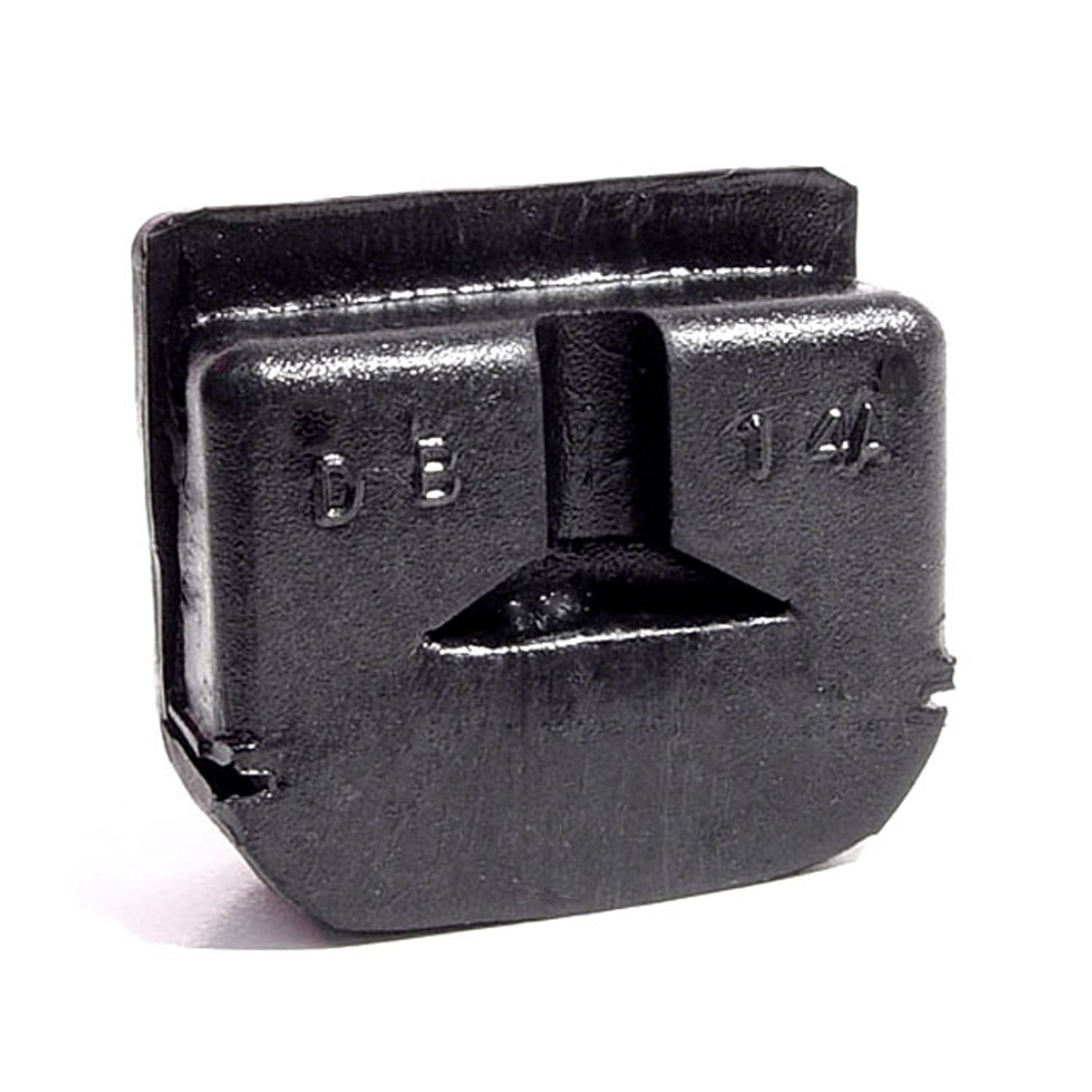 1934 Buick Series 90 Door Bumper. Exact reproduction-DB 14-ADoor Bumper. Exact reproduction. 1-3/16" high X 1-9/16" wide X 9/16" thick. Each
 1934 Buick Series 90 Upper Door Hinge Post Bumper. Held by screw-DB 60-AUpper Door Hinge Post Bumper. Held by screw. 7/8" diameter X 1/8" thick. Each
 1934 Buick Series 90 Gas Filler Grommet. 2-1/4" I.D., 4-3/4" O.D. Each-GF 9Gas Filler Grommet. 2-1/4" I.D., 4-3/4" O.D. Each
 1934 Buick Series 90 Motor Mounts. 2" O.D., 9/16" I.D. Pair-MM 23Motor Mounts. 2" O.D., 9/16" I.D. Pair
 1934 Buick Series 90 Headlight (Upper) Pads. 2-1/2" wide X 4-5/8" long. Pair-MP 131-AHeadlight (Upper) Pads. 2-1/2" wide X 4-5/8" long. Pair
 1934 Buick Series 90 Headlight (Lower) Pads. 2-1/4" wide X 4-3/4" long. Pair-MP 131-BHeadlight (Lower) Pads. 2-1/4" wide X 4-3/4" long. Pair
 1934 Buick Series 90 Windshield Wiper Transmission Pad-MP 134-CWindshield Wiper Transmission Pad. 2-1/8" wide X 2-3/8" long. Each
 1934 Buick Series 90 Wiper Arm Pad. 1" wide X 2-7/8" long. Each-MP 134-DWiper Arm Pad. 1" wide X 2-7/8" long. Each
 1934 Buick Series 90 Headlight Pads. 3-5/8" wide X 6-3/4" long. Pair R&L-MP 170Headlight Pads. 3-5/8" wide X 6-3/4" long. Pair R&L
 1934 Buick Series 90 Tail-light Pads. 2-5/8" wide X 6" long. Pair-MP 180Tail-light Pads. 2-5/8" wide X 6" long. Pair
 1934 Buick Series 90 Trunk Lock Pads. 1-5/8" wide X 6-3/8" long. Set-MP 336-CTrunk Lock Pads. 1-5/8" wide X 6-3/8" long. Set
 1934 Buick Series 90 Door Handle Ferrule Grommet. I.D. 11/16", O.D. 1-3/16"-MP 546-IDoor Handle Ferrule Grommet. I.D. 11/16", O.D. 1-3/16". Each
 1934 Buick Series 90 Cowl Vent Seal-RP 100-CCowl Vent Seal. 47" long piece of black, skin-covered sponge. End is 3/8" wide X 5/16" high. Each
 1934 Buick Series 90 Door Bumper. 1" diameter X 1/4" thick Each-SB 60Door Bumper. 1" diameter X 1/4" thick Each
 1934 Buick Series 90 Spare Tire Mount Bumper. 5/8" square. Each-SB 80Spare Tire Mount Bumper. 5/8" square. Each
 1934 Buick Series 90 Steering Column to Floor Plate Pad-SC 28Steering Column to Floor Plate Pad. Black (also in Brown #SC 29). Each
 1934 Buick Series 90 Steering Column to Floor Plate Pad-SC 29Steering Column to Floor Plate Pad. Brown (also in Black #SC 28). Each
 1934 Buick Series 90 Vertical Seal for Vent Window. Each is 17" long. Pair-VS 2Vertical Seal for Vent Window. Each is 17" long. Pair
 1934 Buick Series 90 Flexible glass-run channel-WC 11-72Flexible glass-run channel. Mohair lined, cloth covered with stainless steel bead. Used on side windows. 72 in. long. Each. NOTE: $20 special shipping charge applies for domestic orders. Call or email for overseas shipping costs. Part can be sectioned in two equal lengths to reduce overseas shipping costs.
 1934 Buick Series 90 Rigid division-bar channel. Made with stainless steel bead-WC 2-72Rigid division-bar channel. Made with stainless steel bead. 72 in. long. Each. NOTE: $20 special shipping charge applies for domestic orders. Call or email for overseas shipping costs. Part can be sectioned into two equal lengths to reduce overseas shipping costs.
 1934 Buick Series 90 Flexible Rubber Window Channel-WC 32-14Flexible Rubber Window Channel. For Fisher Closed Bodies, except those using a stainless bead type. Used on side windows. 13/16" outer width X 6/16" outer depth, with a 5/16" inner channel width X 14" long. Each
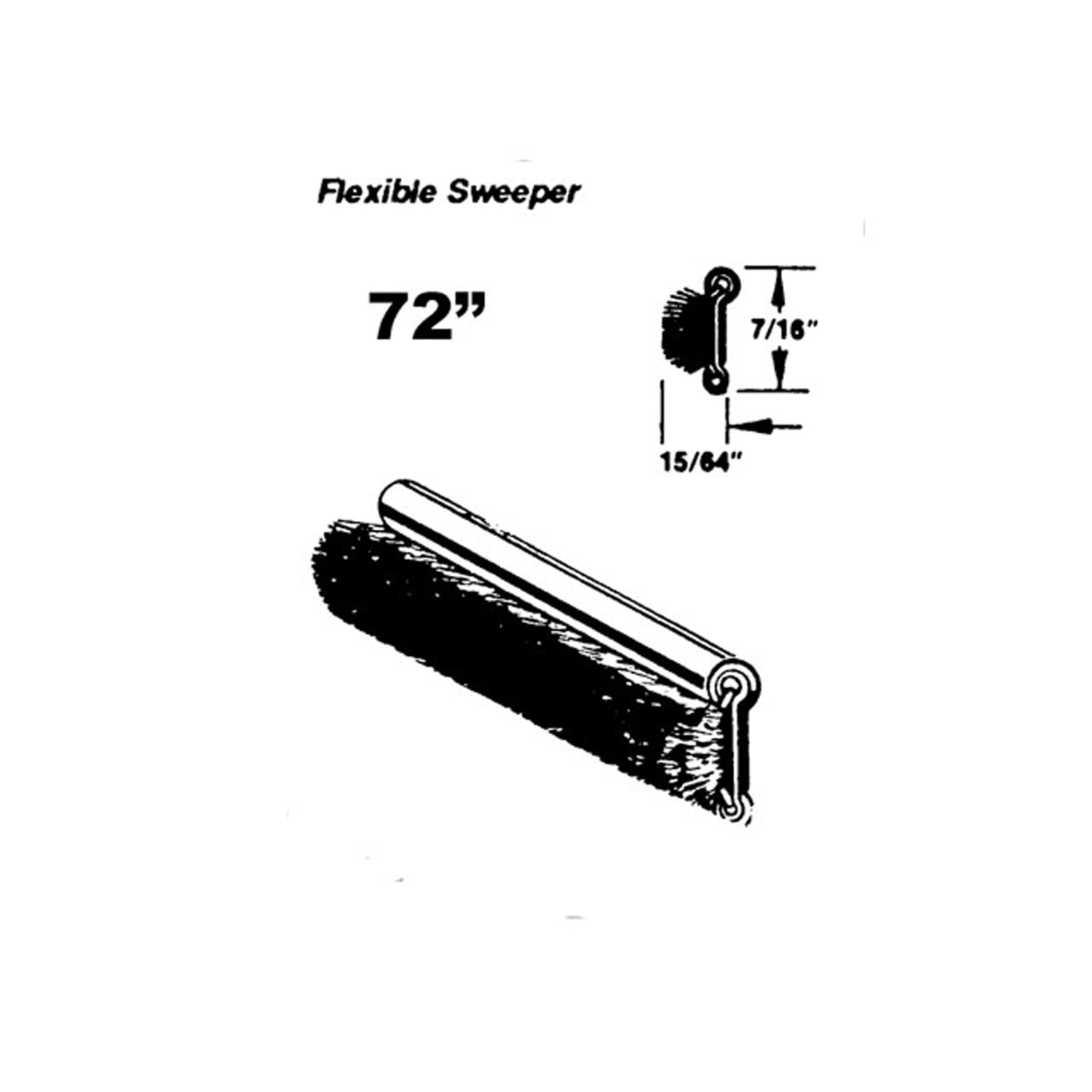 1934 Buick Series 90 Flexible sweeper. Made with stainless steel bead-WC 8-72Flexible sweeper. Made with stainless steel bead. Used on inner and outer beltlines. Also forms easily for use with sliding quarter windows. 72 in. long. Each. NOTE: $20 special shipping charge applies for domestic orders. Call or email for overseas shipping costs. Part can be sectioned into two equal lengths to reduce overseas shipping costs.
 1934 Buick Series 90 Fender Bolts. For use with Fender Bolt Washers; WF 3001-WF 3000Fender Bolts. For use with Fender Bolt Washers; WF 3001. Zinc Chromate plated, high strength. 1" X 5/16". Set of 25
 1934 Buick Series 90 Fender Bolt Washers. For use with Fender Bolts; WF 3000-WF 3001Fender Bolt Washers. For use with Fender Bolts; WF 3000. High quality, cadmium plated. 1-1/4" O.D., 3/8" I.D. Set of 25
 1934 Buick Series 90 Front Vent Window Seals. Does not fit Convertible-WR 7317Front Vent Window Seals. Does not fit Convertible. Pair R&L
Why Choose Metro?
For over 100 years, Metro Moulded Parts has been the pinnacle of quality in classic car restoration parts. Our commitment to precision and authenticity in every component ensures a perfect fit and an OEM-level appearance.
- Expert Craftsmanship & Quality: Each part is a testament to our dedication to reliability and perfection, crafted from original designs and thoroughly tested.
- Advanced Technology: We use cutting-edge techniques to create flawless, long-lasting parts that surpass others in performance.
- SuperSoft Sponge – The Ultimate Door Seal: Not only are our door seals 30% softer than competitors', but they're also guaranteed to never leak. They effectively reduce wind and road noise, enhancing your classic car's comfort and driving experience.
- Proudly American: Our parts are a product of American craftsmanship, made in the USA with a spirit of excellence and heritage.
- Unrivaled Warranty: We back our products with a 30-year industry-leading warranty, a testament to our confidence in their quality.
Join us in preserving the legacy of classic cars with parts that are crafted for perfection, not just made.