

Image of 1935 Buick Series 50, Note: These illustrations use artistic license and may differ from actual historical models.
Performance Metrics
Fundamental Metrics
Emotional Appeal
MMP Rating
| Engine Specifications | |
|---|---|
| Engine: | Straight-8 |
| Displacement: | 278.1 cu in (4,560 cc) |
| Horsepower: | Estimated 93-100 hp |
| Torque: | Not available |
| Compression Ratio: | Not available |
| Ignition System: | Battery and coil |
| Cooling System: | Water |
| Performance Specifications | |
| 0-60 Time: | Not available |
| 1/4 Mile Time: | Not available |
| Top Speed: | 80-85 mph |
| Transmission and Drive | |
| Drive Type: | Rear-wheel drive |
| Transmission Type: | 3-speed manual |
| Fuel and Efficiency | |
| Fuel System Type: | Carburetor |
| MPG: | Not available |
| Dimensions and Brakes | |
| Brakes: | Mechanical drum |
| Wheelbase: | 119 in (3,023 mm) |
| Weight: | 3,600-3,800 lbs |
Note: Specifications for classic cars are given to the best of our ability, considering the limited and variant data available.
1935 Buick Series 50: A Refined American Straight-Eight
The 1935 Buick Series 50 was built for drivers who wanted the size and smoothness of a full-bodied American car without stepping up to Buick’s most expensive models. Made by Buick, a General Motors division, it paired flowing mid-1930s styling with a substantial straight-eight engine and the comfort expected of a premium automobile.
The Series 50 sat within Buick’s multi-tier 1935 range, above the smaller Series 40 and below larger, more luxurious lines. It belongs to a period when automakers were moving away from the upright, boxlike shapes of the early 1930s and embracing lower, more streamlined bodies. One intriguing detail is that Buick’s series numbers described distinct levels of size and price, not engine-cylinder counts. Every 1935 Series 50 had an inline eight-cylinder engine.
Streamlined Buick Design
The Series 50 wore the confident look of a mid-1930s Buick: a tall, prominent grille, long hood, rounded front fenders, and a passenger compartment that flowed into the rear bodywork. Its headlamps sat on the front fenders, while bright trim and carefully shaped body contours supplied visual polish without relying on the heavy ornamentation seen on some earlier cars. The result was still unmistakably a large prewar automobile, but it looked more composed and modern than the upright cars it replaced.
Inside, the Series 50 offered a roomy cabin trimmed with the fabrics, carpeting, and polished metal or wood-look details typical of a well-equipped car of its era. Upholstery and trim varied by body style and specification. The dashboard was arranged around clear, period-style gauges, with a broad steering wheel and a column-mounted gearshift on many examples. Compared with a modern car, the cabin is simple, but its generous seating and formal finish made it a comfortable place to spend a long day on the road.
Factory paint and trim combinations varied, and the precise palette depended on the body style and production details. Buyers could choose from subdued dark shades as well as brighter colors, often combined with contrasting interior materials or pinstriping. Deep blue, maroon, black, and green are among the kinds of period colors collectors associate with prewar Buicks, but an individual car’s original paint should be confirmed using its factory records or surviving documentation.
Body Styles and Equipment
Buick offered the Series 50 in several closed and open body configurations. Depending on the catalog and coachwork, buyers could find sedan and coupe forms, as well as more sporting open styles such as a convertible or phaeton. Exact availability and naming can differ across surviving references, so it is worth checking the body plate and original sales literature when identifying a particular car.
The four-door sedan is a practical and recognizable choice today, with enough space for passengers and luggage. Coupes have a more personal, sporting character, while open cars are typically the most visually dramatic and sought-after examples. As with other cars of the period, special coachwork or uncommon configurations can command a premium, but condition and authenticity matter more than body style alone.
For its time, the Series 50 brought together several useful technologies: a smooth inline-eight, a conventional three-speed manual transmission, and hydraulic brakes. Buick’s engineering emphasis was on quiet, controlled travel rather than sporting performance. Equipment details can vary by build date and body, so restored cars should be judged by their actual specification rather than by a generic model description.
Why the 1935 Series 50 Matters
The Series 50 captures Buick’s role as a middle-to-upper-market American marque. It offered more refinement and presence than an entry-level car, while remaining below Buick’s largest and most costly models. That position helped make Buick appealing to buyers who wanted prestige and comfort without paying for the top of the range.
Its significance is not that it introduced a single technology that transformed the industry. Instead, the Series 50 represents the broader evolution of the 1930s automobile: more integrated body styling, improved ride comfort, dependable hydraulic braking, and increasingly polished mass-production engineering. Buick’s straight-eight engines also helped establish the brand’s reputation for smoothness, a quality that remained central to its identity for decades.
Against many contemporaries, the Series 50 stood out for its combination of a substantial engine, spacious body, and restrained luxury. It was not an exotic sports car or a custom-built limousine. It was a well-engineered American road car designed to make distance feel less tiring.
Straight-Eight Performance and Road Manners
The 1935 Series 50 used a Buick inline-eight displacing approximately 278 cubic inches, with output commonly listed at about 100 horsepower. Exact figures can vary by reference and specification. Power went to the rear wheels through a three-speed manual gearbox, giving the car the relaxed, low-revving character typical of a large 1930s straight-eight.
Period road-test figures are not as consistent as modern instrumented measurements. A sound, correctly tuned example may reach roughly 80 to 85 mph, while 0-to-60 mph acceleration is likely in the neighborhood of 20 to 25 seconds. Those are useful ballpark estimates, not guaranteed factory figures. Today, the car feels strongest when cruising steadily rather than sprinting away from a stop.
On rough pavement, the Series 50’s long wheelbase and substantial weight help it settle into a comfortable, measured ride. It will not isolate occupants as completely as a modern luxury car, and worn suspension components can make it feel loose or unsettled. On winding roads, expect deliberate steering and noticeable body movement rather than sports-car precision. A driver who plans ahead and keeps a smooth pace will get the best from it.
The straight-eight’s sound is part of the appeal: a soft mechanical hum at idle that builds into a smooth, even growl under load. The steering, pedals, and gearshift require more physical input than a contemporary vehicle, and the driver must pay close attention to traffic and braking distances. In return, the car delivers a direct, unfiltered sense of motoring that newer vehicles largely conceal.
Living With a Prewar Buick
Most 1935 Series 50s are now used as show cars, touring cars, or occasional weekend drivers rather than daily transportation. A well-maintained example can still handle local drives and club tours, but its age makes regular inspection essential. Tires, hoses, wiring, cooling-system components, brakes, and fuel lines all deserve careful attention before a long trip.
The straight-eight is mechanically understandable to an experienced vintage-car mechanic, and many routine jobs do not require modern diagnostic equipment. That does not mean every repair is easy for a first-time owner. Parts availability is generally better for common service items than for model-specific trim, body panels, or rare interior pieces. Restoring a neglected car can become expensive, particularly if its wood, metal, or upholstery needs extensive work.
Reliability depends heavily on maintenance and restoration quality. A car that has been stored for years may need its fuel system, cooling system, brakes, and electrical connections recommissioned before it is safe to drive. An inspection by a mechanic familiar with prewar Buicks is a smart step before purchase.
1935 Buick Facts and Myths
The Series 50’s straight-eight layout is a worthwhile piece of trivia in itself. Inline-eight engines were prized for their smoothness, but their length required a substantial engine bay. Buick used that configuration to give its cars a quiet, refined character at a time when many buyers judged a premium automobile by how effortlessly it covered the miles.
There is no single widely recognized speed or endurance record associated specifically with the 1935 Series 50, and it is better not to attach a famous-race claim to the model without documentation. Nor is there a universally documented celebrity-owned Series 50 that defines its story. Individual cars may have notable histories, but those should be supported by ownership records or period evidence.
A common criticism is that the Series 50 is large, heavy, and slow by modern standards. That is fair if it is judged as a current daily driver. Its brakes, steering, acceleration, and safety equipment reflect 1935, not today. Collectors value it for its design, engineering, and period driving experience, not for modern performance or convenience.
Collector Value and Availability
Exact Series 50 production totals are difficult to state confidently across all body styles and catalog variations. A reasonable working estimate is roughly 30,000 to 40,000 cars, but that should be treated as an informed approximation rather than a definitive factory total. The number of surviving cars is much smaller, and open body styles or unusual configurations are less frequently encountered than sedans.
In the current collector market, a project car may sell for roughly $10,000 to $20,000, depending on completeness and condition. A sound driver or presentable restoration might bring about $25,000 to $50,000. Exceptional restorations, rare open models, or cars with strong provenance can exceed that range, sometimes reaching $60,000 to $100,000 or more. These are broad U.S. market estimates, not appraisals; body style, originality, restoration quality, and documentation can shift the price substantially.
Values for prewar cars tend to be selective rather than uniformly rising. Top-quality, authentic examples remain the most desirable, while cars needing major restoration can be difficult to sell at a price that reflects the cost of the work. The Series 50’s appeal is steady among enthusiasts, but buyers should prioritize condition and history over assumptions that every old Buick is automatically appreciating.
A Buick Built for the Long Road
The 1935 Buick Series 50 combines streamlined prewar styling, a smooth straight-eight, roomy accommodation, and the substantial feel of a premium American car. It was not the fastest or most technically radical automobile of its day. Its strength was balance: enough power and refinement for comfortable touring, with the craftsmanship and presence that made Buick a respected name.
For today’s collector, the Series 50 is a rewarding window into an era when a long hood, a quiet eight-cylinder engine, and a well-appointed cabin signaled genuine sophistication. Take care of one, and every drive becomes a reminder that comfort and character can be just as memorable as outright speed.
1935 Buick Series 50 Catalog of Parts
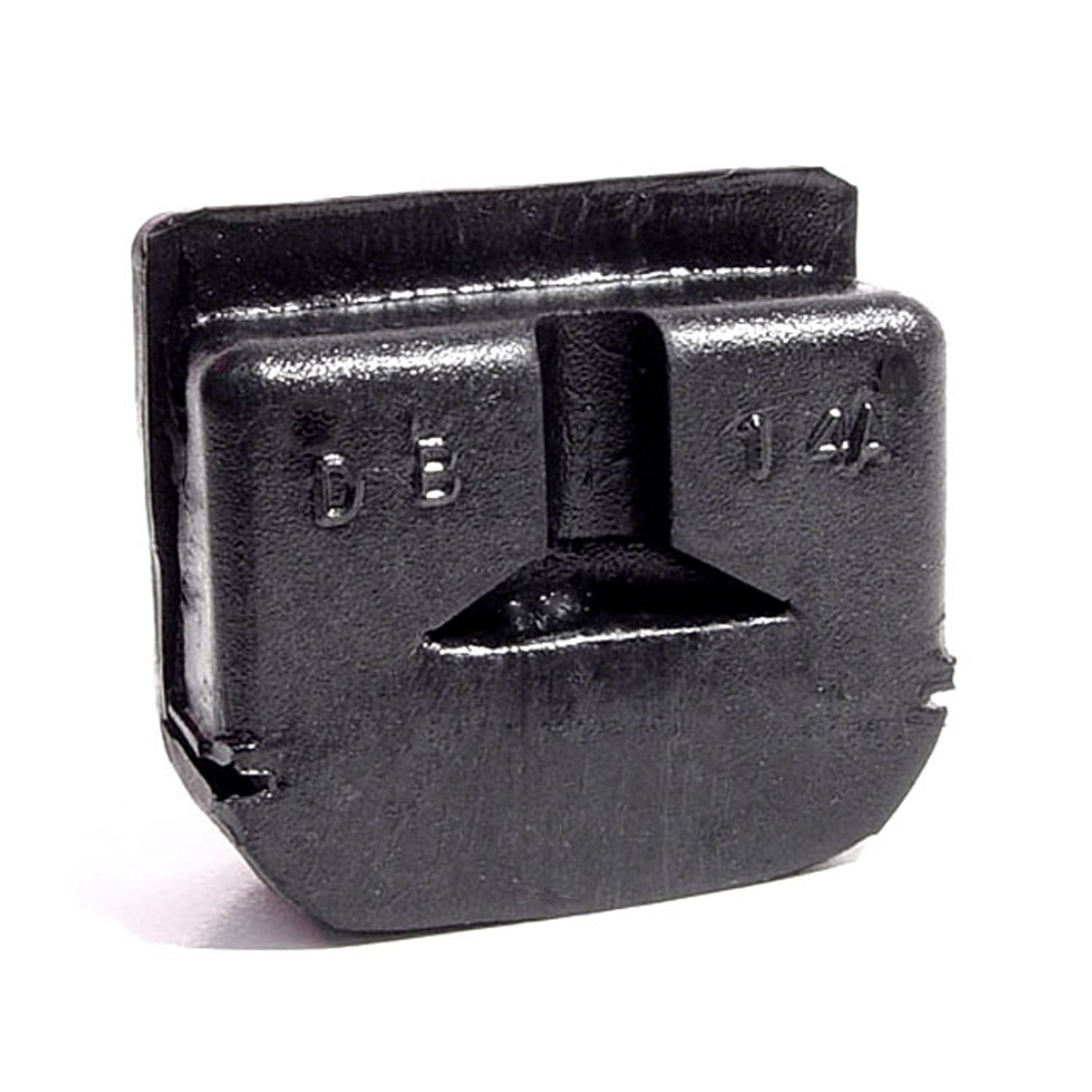 1935 Buick Series 50 Door Bumper. Exact reproduction-DB 14-ADoor Bumper. Exact reproduction. 1-3/16" high X 1-9/16" wide X 9/16" thick. Each
 1935 Buick Series 50 Upper Door Hinge Post Bumper. Held by screw-DB 60-AUpper Door Hinge Post Bumper. Held by screw. 7/8" diameter X 1/8" thick. Each
 1935 Buick Series 50 Inner and Outer Center Division Bar Seals-DP 20Inner and Outer Center Division Bar Seals. Each piece 14-1/4" long. Set
 1935 Buick Series 50 Gas Filler Grommet. 2-1/4" I.D., 4-3/4" O.D. Each-GF 9Gas Filler Grommet. 2-1/4" I.D., 4-3/4" O.D. Each
 1935 Buick Series 50 Rear Hood Corners. 1-1/4" wide. Pair-HC 29Rear Hood Corners. 1-1/4" wide. Pair
 1935 Buick Series 50 Motor Mounts. 2" O.D., 9/16" I.D. Pair-MM 23Motor Mounts. 2" O.D., 9/16" I.D. Pair
 1935 Buick Series 50 Tail-light Pads. 2-3/8" wide X 5-5/8" long. Pair-MP 135Tail-light Pads. 2-3/8" wide X 5-5/8" long. Pair
 1935 Buick Series 50 Park Light Pads. Fits 1-1/16" wide metal-MP 136Park Light Pads. Fits 1-1/16" wide metal. 1-1/2" wide X 10-1/4" long. Pair
 1935 Buick Series 50 Park Light Pads. Fits 7/8" wide metal-MP 137Park Light Pads. Fits 7/8" wide metal. 1-1/8" wide X 10-1/4" long. Pair
 1935 Buick Series 50 Park Light Pads. Fits 1-1/8" metal-MP 143Park Light Pads. Fits 1-1/8" metal. 1-1/2 wide X 9-3/8" long. Pair
 1935 Buick Series 50 Headlight Pads. 3-1/4" wide X 5-1/2" long. Pair-MP 336Headlight Pads. 3-1/4" wide X 5-1/2" long. Pair
 1935 Buick Series 50 Door Handle Ferrule Grommet. I.D. 11/16", O.D. 1-3/16"-MP 546-IDoor Handle Ferrule Grommet. I.D. 11/16", O.D. 1-3/16". Each
 1935 Buick Series 50 Door Lock Knob. Brown. 1/2" diameter X 1" long X 1/8" hole-RP 303Door Lock Knob. Brown. 1/2" diameter X 1" long X 1/8" hole. Each
 1935 Buick Series 50 Door Bumper. 1" diameter X 1/4" thick Each-SB 60Door Bumper. 1" diameter X 1/4" thick Each
 1935 Buick Series 50 Spare Tire Mount Bumper. 5/8" square. Each-SB 80Spare Tire Mount Bumper. 5/8" square. Each
 1935 Buick Series 50 Steering Column to Floor Plate Pad-SC 28Steering Column to Floor Plate Pad. Black (also in Brown #SC 29). Each
 1935 Buick Series 50 Steering Column to Floor Plate Pad-SC 29Steering Column to Floor Plate Pad. Brown (also in Black #SC 28). Each
 1935 Buick Series 50 Vertical Seal for Vent Window. Each is 17" long. Pair-VS 2Vertical Seal for Vent Window. Each is 17" long. Pair
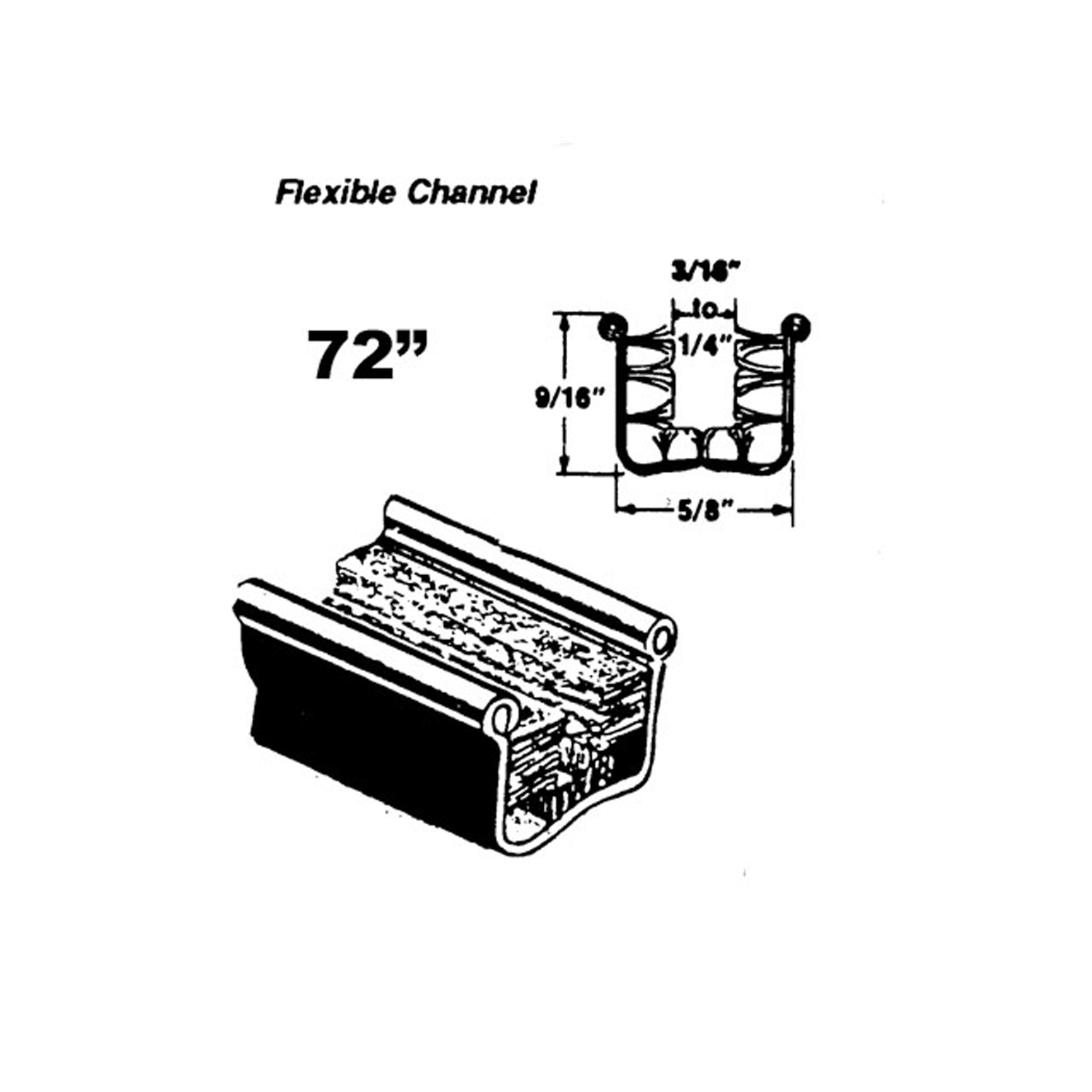 1935 Buick Series 50 Flexible glass-run channel-WC 11-72Flexible glass-run channel. Mohair lined, cloth covered with stainless steel bead. Used on side windows. 72 in. long. Each. NOTE: $20 special shipping charge applies for domestic orders. Call or email for overseas shipping costs. Part can be sectioned in two equal lengths to reduce overseas shipping costs.
 1935 Buick Series 50 Rigid division-bar channel. Made with stainless steel bead-WC 2-72Rigid division-bar channel. Made with stainless steel bead. 72 in. long. Each. NOTE: $20 special shipping charge applies for domestic orders. Call or email for overseas shipping costs. Part can be sectioned into two equal lengths to reduce overseas shipping costs.
 1935 Buick Series 50 Flexible Rubber Window Channel-WC 32-14Flexible Rubber Window Channel. For Fisher Closed Bodies, except those using a stainless bead type. Used on side windows. 13/16" outer width X 6/16" outer depth, with a 5/16" inner channel width X 14" long. Each
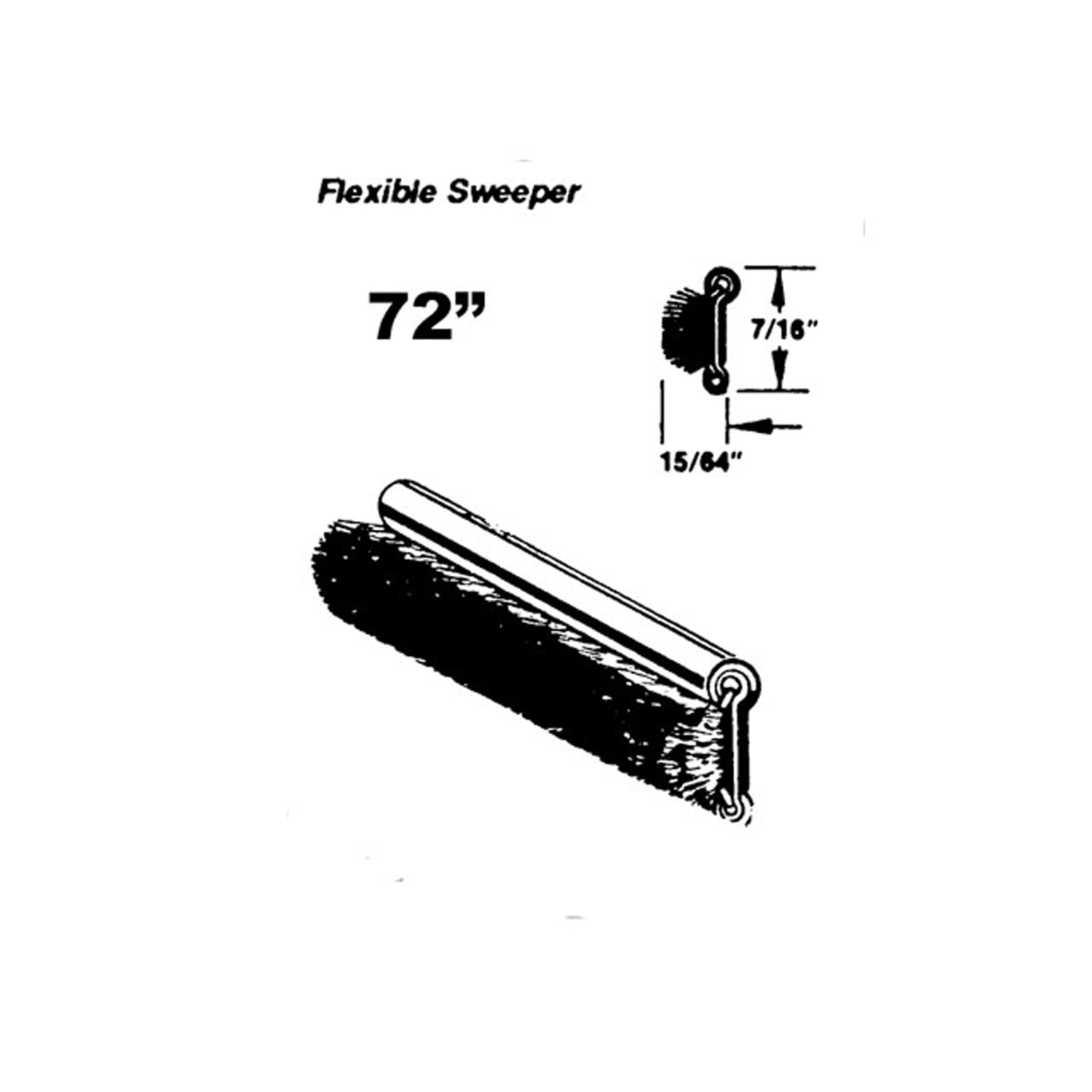 1935 Buick Series 50 Flexible sweeper. Made with stainless steel bead-WC 8-72Flexible sweeper. Made with stainless steel bead. Used on inner and outer beltlines. Also forms easily for use with sliding quarter windows. 72 in. long. Each. NOTE: $20 special shipping charge applies for domestic orders. Call or email for overseas shipping costs. Part can be sectioned into two equal lengths to reduce overseas shipping costs.
 1935 Buick Series 50 Fender Bolts. For use with Fender Bolt Washers; WF 3001-WF 3000Fender Bolts. For use with Fender Bolt Washers; WF 3001. Zinc Chromate plated, high strength. 1" X 5/16". Set of 25
 1935 Buick Series 50 Fender Bolt Washers. For use with Fender Bolts; WF 3000-WF 3001Fender Bolt Washers. For use with Fender Bolts; WF 3000. High quality, cadmium plated. 1-1/4" O.D., 3/8" I.D. Set of 25
 1935 Buick Series 50 Front Vent Window Seals. Does not fit Convertible-WR 7317Front Vent Window Seals. Does not fit Convertible. Pair R&L
Why Choose Metro?
For over 100 years, Metro Moulded Parts has been the pinnacle of quality in classic car restoration parts. Our commitment to precision and authenticity in every component ensures a perfect fit and an OEM-level appearance.
- Expert Craftsmanship & Quality: Each part is a testament to our dedication to reliability and perfection, crafted from original designs and thoroughly tested.
- Advanced Technology: We use cutting-edge techniques to create flawless, long-lasting parts that surpass others in performance.
- SuperSoft Sponge – The Ultimate Door Seal: Not only are our door seals 30% softer than competitors', but they're also guaranteed to never leak. They effectively reduce wind and road noise, enhancing your classic car's comfort and driving experience.
- Proudly American: Our parts are a product of American craftsmanship, made in the USA with a spirit of excellence and heritage.
- Unrivaled Warranty: We back our products with a 30-year industry-leading warranty, a testament to our confidence in their quality.
Join us in preserving the legacy of classic cars with parts that are crafted for perfection, not just made.