

Image of 1935 Buick Series 60, Note: These illustrations use artistic license and may differ from actual historical models.
Performance Metrics
Fundamental Metrics
Emotional Appeal
MMP Rating
| Engine Specifications | |
|---|---|
| Engine: | Straight-8 |
| Displacement: | 278 cu in (4.6 L) |
| Horsepower: | 93-100 hp |
| Torque: | Not available |
| Compression Ratio: | Not available |
| Ignition System: | Battery and coil |
| Cooling System: | Water |
| Performance Specifications | |
| 0-60 Time: | Not available |
| 1/4 Mile Time: | Not available |
| Top Speed: | 80-85 mph |
| Transmission and Drive | |
| Drive Type: | Rear wheel drive |
| Transmission Type: | 3-speed manual |
| Fuel and Efficiency | |
| Fuel System Type: | Carburetor |
| MPG: | Not available |
| Dimensions and Brakes | |
| Brakes: | Mechanical drum |
| Wheelbase: | 128 in (3,251 mm) |
| Weight: | 3,900 lbs |
Note: Specifications for classic cars are given to the best of our ability, considering the limited and variant data available.
1935 Buick Series 60: The Eight-Cylinder Buick Before the Century
The 1935 Buick Series 60 brought the smooth, confident character of Buick’s straight-eight power to a handsome mid-priced car, and it helped set the stage for one of the brand’s most famous names. Built by the Buick Motor Company, then part of General Motors, the Series 60 sat above the more modest Series 40 and below Buick’s larger, more expensive models. Its blend of refinement, room, and road-going strength made it a compelling choice for buyers who wanted an upscale American car without stepping into the top of the market.
One detail gives the 1935 Series 60 a special place in Buick history: it was the direct predecessor to the Century. In 1936, Buick paired the Series 60’s relatively compact body with the larger engine from the Series 80. The resulting car became known as the Century, a name associated with its ability to approach 100 mph. The 1935 Series 60 is therefore more than a stylish prewar Buick. It is the last chapter before a celebrated performance-minded model arrived.
Streamlined Style and Buick Craftsmanship
Buick’s 1935 design balanced traditional luxury-car presence with the smoother forms that were becoming popular in the mid-1930s. The Series 60 wore a tall, upright grille with closely spaced vertical bars, a long hood, and rounded front fenders that flowed back toward the body. Separate headlamps sat on the fenders, while the sweeping lines and carefully shaped trim gave the car a more unified look than earlier, boxier designs. Its proportions still feel formal, but the curves make it look ready to move.
Body details varied by model, yet many examples feature bright exterior trim, generous running boards, and a rear-mounted spare tire. The overall impression is substantial rather than flashy. Buick’s styling gave the Series 60 a clear identity on the road without relying on the dramatic ornamentation found on some of the most expensive cars of the era.
Inside, the cabin was designed for comfortable touring. Depending on body style and equipment, buyers could find broadcloth or mohair upholstery, with leather used on some open or higher-trim configurations. The dashboard typically combined a clear instrument layout with woodgrain-style finishes and bright accents. The materials and detailing reflected Buick’s position as a near-luxury make, although exact upholstery and trim depended on the particular car and its original order.
Period paint choices included a range of solid colors, from dark, conservative shades to lighter and more expressive options. Two-tone treatments could make the flowing fenders and body lines stand out, but colors and combinations varied by model year, body style, and factory availability. Restored cars today may wear attractive period-inspired colors that are not necessarily their original factory finishes, so buyers should verify paint history when authenticity matters.
Body Styles and Equipment
The Series 60 was offered in several closed and open body styles, including sedan and coupe configurations. Exact offerings could vary across the model range and production run. Closed sedans suited families and long-distance travel, while coupes offered a sportier profile. Open cars, where available, are especially eye-catching today, though they are generally harder to find and can command a premium when well restored.
For many buyers, the four-door sedan best captured the Series 60’s purpose: comfortable, practical transportation with an upscale feel. The coupe is arguably the more visually distinctive choice for collectors who want the car’s long hood and sweeping fenders to take center stage. As with any prewar Buick, confirm the body style and factory configuration through period records, identification numbers, and specialist references rather than relying on appearance alone.
Engineering That Bridged Two Eras
At the heart of the 1935 Series 60 was Buick’s overhead-valve straight-eight engine, generally listed at about 278 cubic inches and 100 horsepower. The inline-eight layout was prized for its smooth delivery, and Buick had spent years developing the reputation of its engines for quiet, steady power. A three-speed manual transmission sent power to the rear wheels, while hydraulic brakes provided more consistent stopping than the older mechanical systems still associated with some early cars.
The Series 60’s significance lies partly in how it brought Buick engineering to a broad audience. Its eight-cylinder engine offered more refinement than the six-cylinder powerplants common in many cars of the time, while its price and size kept it more accessible than the biggest luxury models. Buick’s approach was not to create a stripped-down sports car. Instead, it delivered a well-equipped touring automobile with enough power to travel confidently on the roads of its day.
The model also represents a useful point in the evolution of American car design. Streamlined bodywork was becoming more important, but cars still retained separate fenders, running boards, upright grilles, and formal cabins. The 1935 Buick Series 60 brings those two design eras together. Its successor, the Century, would make the relationship between a lighter body and a larger engine even more famous.
Straight-Eight Performance and Road Manners
With roughly 100 horsepower moving a substantial car, the Series 60 was built for smooth progress rather than quick acceleration. Period road-test figures are not consistent by modern standards, and performance depends on body style, condition, gearing, and the accuracy of the speedometer. A reasonable modern estimate for a healthy example is a top speed in the neighborhood of 80 to 90 mph, with a 0-to-60-mph time likely taking around 20 to 25 seconds. These are estimates, not guaranteed factory-test figures.
On a smooth road, the long-wheelbase Buick feels composed and unhurried. Its straight-eight produces a subdued, even note, with a gentle mechanical hum that rises as the engine works harder. The three-speed gearbox requires deliberate shifts by modern standards, and the driver needs to plan overtakes rather than expect instant acceleration. The steering and controls also demand more effort and attention than those of a contemporary car.
On bumps and broken pavement, the car’s mass and period suspension give it a distinctly old-fashioned ride. It can absorb ordinary road imperfections with a soft, rolling motion, but sharp impacts and rutted surfaces remind the driver that this is a nearly century-old chassis. On winding roads, the Series 60 rewards smooth inputs. Its size, high seating position, and period tires make fast cornering a poor match for its character. In crosswinds, the broad body can feel more affected than a modern sedan, so a steady hand is part of the experience.
Living With a 1935 Buick
Today, most Series 60s are collector cars, show vehicles, or occasional-use tourers rather than everyday transportation. A well-sorted example can take part in vintage-car rallies and local events, but frequent modern-traffic use calls for careful preparation. Braking distances, lighting, tire construction, visibility, and cruising speeds all differ from what drivers expect in a new vehicle.
Routine servicing is manageable for an owner with mechanical experience, suitable tools, and access to parts information. The straightforward engine layout is one of the car’s practical strengths, but age brings complications: worn bearings, tired wiring, fuel-system problems, cooling issues, and deterioration in the brakes or suspension can turn a simple drive into a repair project. Rebuilding a straight-eight or sourcing correct trim and body parts can be costly, and some components require specialist knowledge.
Reliability depends far more on restoration quality and maintenance than on the Buick badge alone. Before buying, inspect the engine for oil pressure and unusual noises, check the cooling system under load, examine the frame and body for corrosion or old repairs, and test the brakes carefully. A car with documented mechanical work is often a better touring choice than a more polished example with uncertain systems.
Facts, Myths, and Common Criticisms
The most memorable piece of Series 60 trivia is its connection to the 1936 Buick Century. Buick combined the Series 60’s body with the larger 320-cubic-inch engine used in the Series 80, creating a faster car and giving it a name that alluded to 100 mph. That formula helped establish the Century as a performance-oriented Buick, and the 1935 model is an important part of the story behind it.
There is no widely recognized speed, endurance, or sales record specific to the 1935 Series 60. Nor should every surviving car be assumed to have a famous owner or special-edition history. Its appeal is more grounded: a refined Buick straight-eight, attractive prewar styling, and a direct connection to a landmark model that followed one year later.
Common criticisms are typical of cars from the period. The Series 60 is heavy, slow by modern standards, and not especially easy to use in dense traffic. Parts availability is less convenient than for later classics, and a restoration can quickly exceed the cost of the car itself. On the other hand, those limitations are part of what makes the driving experience distinctive. The Buick asks its driver to slow down, anticipate, and enjoy the journey.
Collector Values and Rarity
Production totals for individual 1935 Series 60 body styles are not always easy to confirm from commonly available references. As a broad, explicitly estimated guide, total Series 60 production may have been in the range of roughly 20,000 to 30,000 cars across body styles. That is a working estimate rather than a verified factory total. Surviving examples are far fewer, and open cars or unusual configurations are generally scarcer than standard sedans.
As of 2026, a rough U.S. market range might run from about $10,000 to $20,000 for a project or incomplete car, $25,000 to $45,000 for a usable driver, and $50,000 to $85,000 for a strong restoration. Exceptional, highly original, or rare-bodied examples can exceed $100,000, while cars needing extensive work may sell for less. These figures are broad estimates: condition, provenance, body style, originality, and the quality of the mechanical restoration make a major difference.
The Series 60 is a specialist classic rather than a high-volume investment darling. Its prices have generally been supported by its styling and Buick heritage, but top values are limited by the costs of restoration and a smaller buyer pool than for the most famous prewar marques. Well-presented examples may appreciate gradually, especially when rare and correctly restored, but buyers should prioritize condition and enjoyment over expectations of a guaranteed financial return.
Why the 1935 Buick Series 60 Still Matters
The 1935 Buick Series 60 combines a smooth overhead-valve straight-eight, formal yet flowing styling, and the comfort Buick buyers expected in a quality American car. It stands out as an accomplished touring automobile in its own right, but its historical importance reaches beyond its model year: the Series 60’s body became the foundation for the 1936 Century, one of Buick’s defining performance names.
For today’s collector, the Series 60 offers a satisfying way into prewar motoring, provided the car is chosen and maintained with care. It is not a modern-speed machine, and it does not pretend to be one. Its reward is the steady rhythm of the straight-eight, the presence of its long hood on the road, and the feeling of driving a Buick at the moment its next great chapter was about to begin.
1935 Buick Series 60 Catalog of Parts
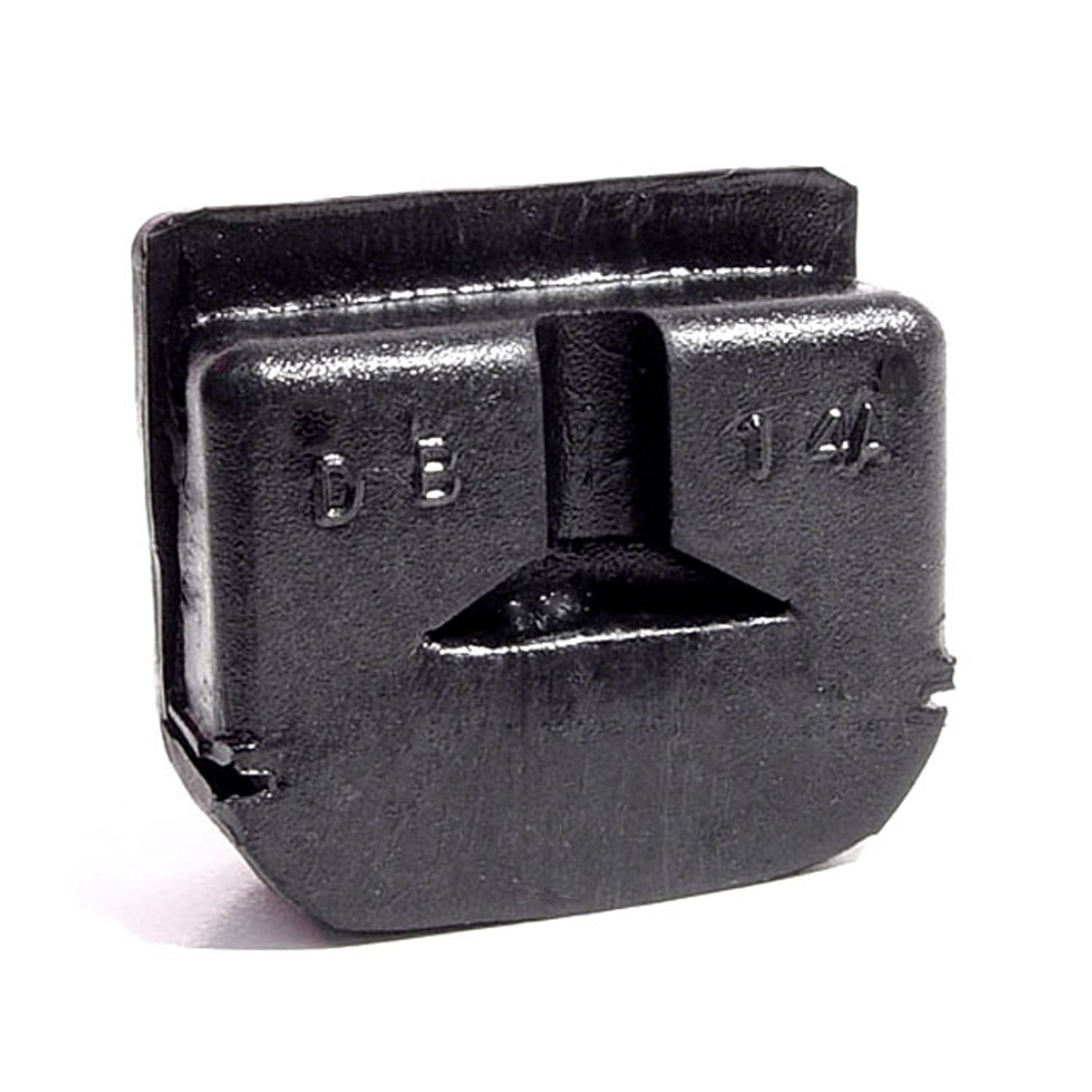 1935 Buick Series 60 Door Bumper. Exact reproduction-DB 14-ADoor Bumper. Exact reproduction. 1-3/16" high X 1-9/16" wide X 9/16" thick. Each
 1935 Buick Series 60 Upper Door Hinge Post Bumper. Held by screw-DB 60-AUpper Door Hinge Post Bumper. Held by screw. 7/8" diameter X 1/8" thick. Each
 1935 Buick Series 60 Inner and Outer Center Division Bar Seals-DP 20Inner and Outer Center Division Bar Seals. Each piece 14-1/4" long. Set
 1935 Buick Series 60 Gas Filler Grommet. 2-1/4" I.D., 4-3/4" O.D. Each-GF 9Gas Filler Grommet. 2-1/4" I.D., 4-3/4" O.D. Each
 1935 Buick Series 60 Rear Hood Corners. 1-1/4" wide. Pair-HC 29Rear Hood Corners. 1-1/4" wide. Pair
 1935 Buick Series 60 Motor Mounts. 2" O.D., 9/16" I.D. Pair-MM 23Motor Mounts. 2" O.D., 9/16" I.D. Pair
 1935 Buick Series 60 Tail-light Pads. 2-3/8" wide X 5-5/8" long. Pair-MP 135Tail-light Pads. 2-3/8" wide X 5-5/8" long. Pair
 1935 Buick Series 60 Park Light Pads. Fits 1-1/16" wide metal-MP 136Park Light Pads. Fits 1-1/16" wide metal. 1-1/2" wide X 10-1/4" long. Pair
 1935 Buick Series 60 Park Light Pads. Fits 7/8" wide metal-MP 137Park Light Pads. Fits 7/8" wide metal. 1-1/8" wide X 10-1/4" long. Pair
 1935 Buick Series 60 Park Light Pads. Fits 1-1/8" metal-MP 143Park Light Pads. Fits 1-1/8" metal. 1-1/2 wide X 9-3/8" long. Pair
 1935 Buick Series 60 Headlight Pads. 3-1/4" wide X 5-1/2" long. Pair-MP 336Headlight Pads. 3-1/4" wide X 5-1/2" long. Pair
 1935 Buick Series 60 Door Handle Ferrule Grommet. I.D. 11/16", O.D. 1-3/16"-MP 546-IDoor Handle Ferrule Grommet. I.D. 11/16", O.D. 1-3/16". Each
 1935 Buick Series 60 Door Lock Knob. Brown. 1/2" diameter X 1" long X 1/8" hole-RP 303Door Lock Knob. Brown. 1/2" diameter X 1" long X 1/8" hole. Each
 1935 Buick Series 60 Shift Boot. Black. 2-15/16" X 2-13/16" at base. Each-RP 33-EShift Boot. Black. 2-15/16" X 2-13/16" at base. Each
 1935 Buick Series 60 Door Bumper. 1" diameter X 1/4" thick Each-SB 60Door Bumper. 1" diameter X 1/4" thick Each
 1935 Buick Series 60 Spare Tire Mount Bumper. 5/8" square. Each-SB 80Spare Tire Mount Bumper. 5/8" square. Each
 1935 Buick Series 60 Steering Column to Floor Plate Pad-SC 28Steering Column to Floor Plate Pad. Black (also in Brown #SC 29). Each
 1935 Buick Series 60 Steering Column to Floor Plate Pad-SC 29Steering Column to Floor Plate Pad. Brown (also in Black #SC 28). Each
 1935 Buick Series 60 Vertical Seal for Vent Window. Each is 17" long. Pair-VS 2Vertical Seal for Vent Window. Each is 17" long. Pair
 1935 Buick Series 60 Flexible glass-run channel-WC 11-72Flexible glass-run channel. Mohair lined, cloth covered with stainless steel bead. Used on side windows. 72 in. long. Each. NOTE: $20 special shipping charge applies for domestic orders. Call or email for overseas shipping costs. Part can be sectioned in two equal lengths to reduce overseas shipping costs.
 1935 Buick Series 60 Rigid division-bar channel. Made with stainless steel bead-WC 2-72Rigid division-bar channel. Made with stainless steel bead. 72 in. long. Each. NOTE: $20 special shipping charge applies for domestic orders. Call or email for overseas shipping costs. Part can be sectioned into two equal lengths to reduce overseas shipping costs.
 1935 Buick Series 60 Flexible Rubber Window Channel-WC 32-14Flexible Rubber Window Channel. For Fisher Closed Bodies, except those using a stainless bead type. Used on side windows. 13/16" outer width X 6/16" outer depth, with a 5/16" inner channel width X 14" long. Each
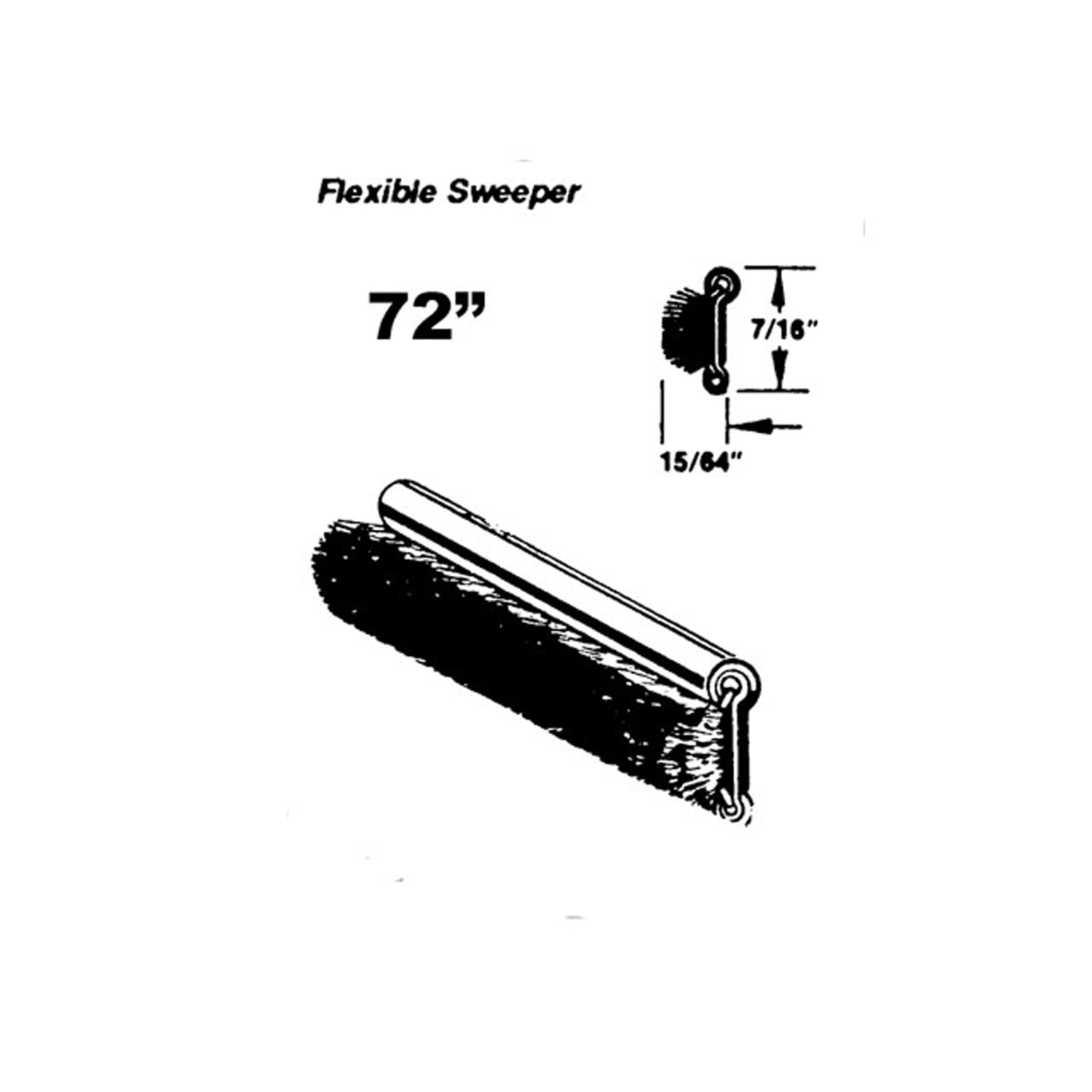 1935 Buick Series 60 Flexible sweeper. Made with stainless steel bead-WC 8-72Flexible sweeper. Made with stainless steel bead. Used on inner and outer beltlines. Also forms easily for use with sliding quarter windows. 72 in. long. Each. NOTE: $20 special shipping charge applies for domestic orders. Call or email for overseas shipping costs. Part can be sectioned into two equal lengths to reduce overseas shipping costs.
 1935 Buick Series 60 Fender Bolts. For use with Fender Bolt Washers; WF 3001-WF 3000Fender Bolts. For use with Fender Bolt Washers; WF 3001. Zinc Chromate plated, high strength. 1" X 5/16". Set of 25
 1935 Buick Series 60 Fender Bolt Washers. For use with Fender Bolts; WF 3000-WF 3001Fender Bolt Washers. For use with Fender Bolts; WF 3000. High quality, cadmium plated. 1-1/4" O.D., 3/8" I.D. Set of 25
 1935 Buick Series 60 Front Vent Window Seals, for 4-Doors. Pair R&L-WR 7304Front Vent Window Seals, for 4-Doors. Pair R&L
 1935 Buick Series 60 Rear Vent Window Seals, for 4-Door Sedans-WR 7304-RRear Vent Window Seals, for 4-Door Sedans. Each side has piece 41" long and 21-1/4" long. 4-Piece Set.
 1935 Buick Series 60 Front Vent Window Seals. Does not fit Convertible-WR 7317Front Vent Window Seals. Does not fit Convertible. Pair R&L
Why Choose Metro?
For over 100 years, Metro Moulded Parts has been the pinnacle of quality in classic car restoration parts. Our commitment to precision and authenticity in every component ensures a perfect fit and an OEM-level appearance.
- Expert Craftsmanship & Quality: Each part is a testament to our dedication to reliability and perfection, crafted from original designs and thoroughly tested.
- Advanced Technology: We use cutting-edge techniques to create flawless, long-lasting parts that surpass others in performance.
- SuperSoft Sponge – The Ultimate Door Seal: Not only are our door seals 30% softer than competitors', but they're also guaranteed to never leak. They effectively reduce wind and road noise, enhancing your classic car's comfort and driving experience.
- Proudly American: Our parts are a product of American craftsmanship, made in the USA with a spirit of excellence and heritage.
- Unrivaled Warranty: We back our products with a 30-year industry-leading warranty, a testament to our confidence in their quality.
Join us in preserving the legacy of classic cars with parts that are crafted for perfection, not just made.