

Image of 1936 Buick Roadmaster Series 80, Note: These illustrations use artistic license and may differ from actual historical models.
Performance Metrics
Fundamental Metrics
Emotional Appeal
MMP Rating
| Engine Specifications | |
|---|---|
| Engine: | Straight 8 |
| Displacement: | 320.2 cu in (5.2 L) |
| Horsepower: | Estimated 120-130 HP |
| Torque: | Not available |
| Compression Ratio: | 6.1:1 |
| Ignition System: | Battery and coil |
| Cooling System: | Water-cooled |
| Performance Specifications | |
| 0-60 Time: | Not available |
| 1/4 Mile Time: | Not available |
| Top Speed: | 85 mph |
| Transmission and Drive | |
| Drive Type: | Rear-wheel drive |
| Transmission Type: | 3-speed manual |
| Fuel and Efficiency | |
| Fuel System Type: | Carburetor |
| MPG: | Not available |
| Dimensions and Brakes | |
| Brakes: | Mechanical drum brakes |
| Wheelbase: | 131 in (3,327 mm) |
| Weight: | 4,600 lbs |
Note: Specifications for classic cars are given to the best of our ability, considering the limited and variant data available.
1936 Buick Roadmaster: Buick’s New Flagship
The 1936 Buick Roadmaster arrived with the presence of a locomotive and the polish of a luxury car, introducing a name that would become one of Buick’s most enduring badges. Built by the Buick Motor Company, a cornerstone of General Motors, the Series 80 sat near the top of Buick’s range, below the even larger Series 90 Limited. It combined a substantial straight-eight engine, a long wheelbase, and fresh styling aimed at buyers who wanted prestige without stepping up to a Cadillac.
The Roadmaster name was new for 1936, but Buick was already an established American manufacturer. Founded by David Dunbar Buick and incorporated into General Motors in 1908, the company had built a reputation for well-engineered cars. The new Series 80 helped Buick strengthen that reputation during the recovery from the Great Depression, when buyers were again considering premium automobiles but still wanted value for their money.
One intriguing detail is that “Roadmaster” was not a one-year experiment. The name remained part of Buick’s identity for decades, with later generations returning in the postwar years and again in the 1990s. The 1936 car was where that long-running story began.
Art Deco Buick Styling and Cabin
The Roadmaster’s shape balanced the upright formality of an older luxury car with the smoother, more modern look of the mid-1930s. A tall, bright-finished grille anchored the nose, while long front fenders flowed back toward the passenger compartment. Separate headlamps sat prominently on the fenders, and running boards emphasized the car’s considerable length. Buick’s restrained chrome trim added shine without overwhelming the broad, sculpted body.
Inside, the Roadmaster was designed for comfortable long-distance travel. Depending on body style and trim, buyers could find broadcloth or mohair upholstery in closed cars, with leather used in some open-car configurations. The cabin featured a wide bench seat, a substantial dashboard, and clear, period-style instrumentation. Woodgrain-finished trim and bright details gave the interior a more formal air than a basic family sedan, though exact materials and appointments varied with the body and equipment ordered.
Factory paint choices changed by body style and production details, but period Buick colors included dark greens, blues, maroons, grays, and black. Deep, conservative shades suited the Roadmaster’s upscale character, while two-tone treatments on some configurations could make the long body appear even more distinctive. Original paint charts are useful when authenticity matters, since a car’s available colors could depend on its particular model and build.
Roadmaster body styles included closed sedans and coupe configurations, along with an open convertible phaeton. The four-door sedan is a recognizable and relatively practical expression of the Series 80, while the convertible phaeton is among the most visually dramatic. Body-style names and production totals can vary among reference sources, so collectors should check the specific body code and chassis details when identifying a car.
Engineering Ahead of the Curve
The Roadmaster’s headline feature was its 320.2-cubic-inch overhead-valve inline-eight. Buick rated the engine at about 120 horsepower, giving the Series 80 the power expected of a full-size premium car. A three-speed manual transmission sent power to the rear wheels. The straight-eight layout was smooth by the standards of the period, and its long, even firing sequence helped make the car feel composed at cruising speed.
For 1936, Buick also adopted hydraulic brakes across its passenger-car line, a significant improvement over the mechanical braking systems still found on many older cars. The Roadmaster’s enclosed steel body reflected the industry’s movement toward greater rigidity and passenger protection. Buick engineering also included independent front suspension, helping the large car ride more comfortably over uneven roads than a simple solid-front-axle setup.
These features did not make the Roadmaster a modern car in the present-day sense. It still had a manual gearbox, unassisted steering, and period tires and brakes. But its combination of a powerful overhead-valve engine, hydraulic braking, and more advanced front suspension made it a notably well-equipped American automobile for 1936.
Roadmaster’s Place in Buick History
The Series 80 stood out from many contemporaries by pairing near-luxury scale and equipment with Buick’s reputation for engineering and comparatively attainable pricing. Its long hood and large straight-eight announced status, while its body and chassis reflected a broader shift toward more integrated, modern-looking cars. It was not simply a dressed-up economy model: the Roadmaster had its own substantial mechanical package and a clear place in Buick’s hierarchy.
Its influence was also lasting in a more direct way. The Roadmaster name became shorthand for Buick’s larger, more prestigious offerings, surviving changes in styling, technology, and consumer taste. The 1936 model helped establish the character associated with that badge: generous proportions, smooth power, and comfort suited to covering distance. It represents a transition point between prewar upright luxury and the more streamlined American cars that followed.
Performance and Driving Feel
With roughly 120 horsepower moving a heavy car, the Roadmaster delivered relaxed rather than sports-car performance. Period specifications and modern estimates vary, but a healthy example is generally described as capable of about 85 to 90 mph at the top end. Acceleration from 0 to 60 mph is often estimated at roughly 17 to 20 seconds, depending on body style, mechanical condition, gearing, and test method. These are best treated as approximate figures, not guaranteed results for every surviving car.
On the road, the straight-eight is known for its smooth, low-frequency rumble. The engine’s sound is more mellow than aggressive, and the three-speed manual asks the driver to plan shifts rather than rush through them. With no power steering, low-speed turns require effort, especially when the car is stationary. At a steady cruise, however, the Roadmaster feels calm and substantial.
The long wheelbase and independent front suspension help it absorb ordinary road bumps with a measured, floating ride. On winding roads, its size and weight are always apparent: the steering is slower than a modern car’s, and quick direction changes are not its specialty. In crosswinds, the broad body can move around more than a contemporary driver might expect. The best approach is smooth inputs, sensible speeds, and plenty of room to brake.
Living With a 1936 Roadmaster
Today, most Roadmasters are enjoyed as show cars, touring cars, and weekend classics rather than everyday transportation. Their roomy cabins and relaxed cruising manners make them appealing for local events and vintage-car tours, while their imposing presence draws attention at shows. A well-sorted example can cover distance, but it is best driven with an understanding of its age and limitations.
The mechanical layout is straightforward compared with modern vehicles, and many routine jobs can be handled by an experienced home mechanic. The inline-eight is accessible, and the car does not rely on electronic control systems. However, its age, size, and specialized parts can make restoration work expensive. Brake hydraulics, cooling-system condition, electrical wiring, fuel delivery, tires, and the integrity of the frame and body deserve careful inspection.
Parts support is generally available through classic Buick specialists and vintage-parts suppliers, but not every component is easy to find. Body trim, correct interior materials, and some model-specific pieces may take patience and expense to source. A buyer should prioritize a complete, well-maintained car over a bargain project unless a full restoration is part of the plan.
Facts, Rarity, and Common Complaints
The Roadmaster’s most notable claim to fame is its first-year status: a 1936 Series 80 is the model that introduced the name. The badge would later return in multiple eras, giving this first generation a special place in Buick history. The Roadmaster was not built as a racing car, and it is not generally known for a headline speed or endurance record. Its achievement was bringing substantial power and comfort to a broad luxury-minded audience.
Production figures commonly cited for the 1936 Series 80 are around 16,000 cars across the range, though totals can differ by source and by how body variants are counted. That makes the Roadmaster uncommon today, but not impossibly rare. The four-door sedans are generally easier to encounter than the more distinctive open phaetons, which tend to attract stronger collector interest.
Common criticisms are tied to the car’s age rather than a single notorious flaw. Owners must contend with unassisted steering, drum brakes, modest acceleration by modern standards, and the constant maintenance demands of an almost 90-year-old vehicle. Fuel economy is also poor compared with modern cars. A neglected example can require extensive work, so condition and documentation matter far more than a seller’s description of how well it “runs.”
1936 Buick Roadmaster Values
Collector values vary widely with body style, originality, restoration quality, and mechanical condition. As a broad 2026 estimate, a project or rough driver might fall around $10,000 to $25,000. A sound, usable sedan may bring roughly $25,000 to $50,000, while a high-quality restoration can reach approximately $50,000 to $85,000 or more. Desirable open body styles, especially a well-presented convertible phaeton, may exceed those figures and can approach or surpass $100,000 in exceptional cases.
These are general market ranges, not appraisals. A highly original car with documented history can be more attractive than a flashy restoration with incorrect details, while a rare body style can command a premium if it is correctly identified and in excellent condition. Auction results also depend on location, timing, and the quality of the car’s presentation.
The Roadmaster’s long-term appeal is supported by its first-year significance, classic straight-eight character, and distinctive prewar styling. Values for the best examples have generally held up better than those of ordinary vintage sedans, though the market is selective and not every car appreciates at the same rate. Restoration costs can easily exceed the value of a less-desirable project, so buying the best example you can afford is usually the wiser collector strategy.
Why the 1936 Roadmaster Still Matters
The 1936 Buick Roadmaster Series 80 marked the beginning of a celebrated name and captured Buick at an important moment in American automotive history. Its long, elegant body, smooth 320.2-cubic-inch straight-eight, hydraulic brakes, and comfortable suspension made it a sophisticated choice for its time. It was large and deliberate rather than quick or nimble, but that was precisely the point: the Roadmaster was built to make distance feel effortless.
Nearly a century later, it remains an engaging piece of Buick history and a memorable example of prewar American luxury. The Roadmaster does not merely wear an important name. It is the car that gave that name its first meaning.
1936 Buick Roadmaster Series 80 Catalog of Parts
 1936 Buick Roadmaster Series 80 Front Bumper Arm Grommets-BG 15-AFront Bumper Arm Grommets. 2-1/8" wide X 3-3/4" long, with 1-1/2" long inner slot. Pair
 1936 Buick Roadmaster Series 80 Rear Bumper Arm Grommets. For round bumper pads-BG 59Rear Bumper Arm Grommets. For round bumper pads. 3-5/8" wide X 3-9/16" long, with 1-7/16" I.D. Pair
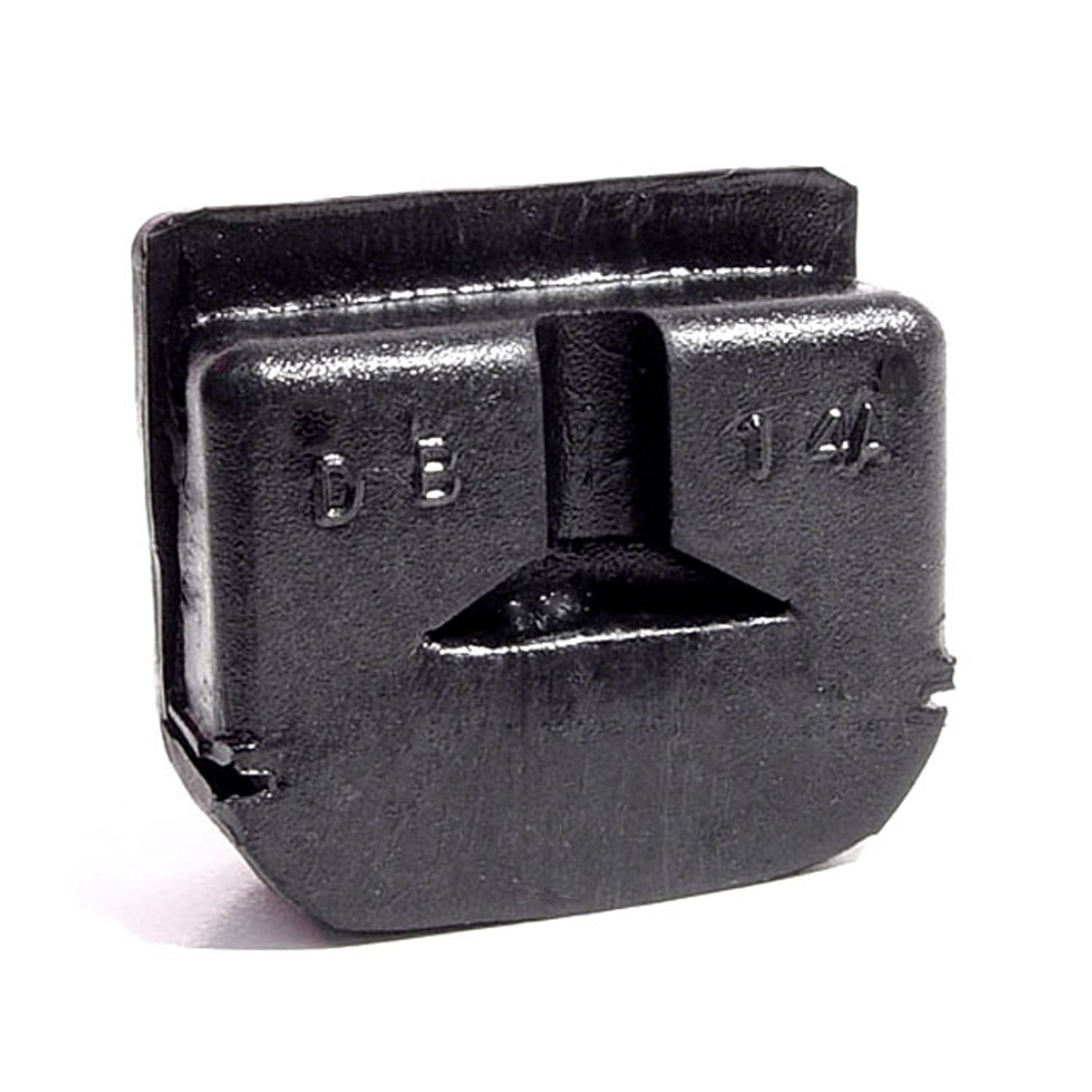 1936 Buick Roadmaster Series 80 Door Bumper. Exact reproduction-DB 14-ADoor Bumper. Exact reproduction. 1-3/16" high X 1-9/16" wide X 9/16" thick. Each
 1936 Buick Roadmaster Series 80 Upper Door Hinge Post Bumper. Held by screw-DB 60-AUpper Door Hinge Post Bumper. Held by screw. 7/8" diameter X 1/8" thick. Each
 1936 Buick Roadmaster Series 80 Inner and Outer Center Division Bar Seals-DP 20Inner and Outer Center Division Bar Seals. Each piece 14-1/4" long. Set
 1936 Buick Roadmaster Series 80 Gas filler grommet. Fits all models '36 Buick-GF 25Gas filler grommet. Fits all models '36 Buick. Fits '37 Buick Series 80/90. 2-1/8 in. ID; 4 in. OD. Dense black rubber. Each.
 1936 Buick Roadmaster Series 80 Rear Hood Corners. 1-1/4" wide. Pair-HC 29Rear Hood Corners. 1-1/4" wide. Pair
 1936 Buick Roadmaster Series 80 Trunk Seal. Sponge rubber. Sold by the foot.-LP 96-/FTTrunk Seal. Sponge rubber. Sold by the foot.
 1936 Buick Roadmaster Series 80 Motor Mounts. 2" O.D., 9/16" I.D. Pair-MM 23Motor Mounts. 2" O.D., 9/16" I.D. Pair
 1936 Buick Roadmaster Series 80 Front Motor Mounts. 3-1/2", 1-7/8", 1/2" I.D. Pair-MM 24Front Motor Mounts. 3-1/2", 1-7/8", 1/2" I.D. Pair
 1936 Buick Roadmaster Series 80 Tail-light Pads. 2-3/8" wide X 5-5/8" long. Pair-MP 135Tail-light Pads. 2-3/8" wide X 5-5/8" long. Pair
 1936 Buick Roadmaster Series 80 License Light Pad. 2-3/8" wide X 2-3/4" long. Each-MP 135-BLicense Light Pad. 2-3/8" wide X 2-3/4" long. Each
 1936 Buick Roadmaster Series 80 Park Light Pads. Fits 1-1/16" wide metal-MP 136Park Light Pads. Fits 1-1/16" wide metal. 1-1/2" wide X 10-1/4" long. Pair
 1936 Buick Roadmaster Series 80 Park Light Pads. Fits 7/8" wide metal-MP 137Park Light Pads. Fits 7/8" wide metal. 1-1/8" wide X 10-1/4" long. Pair
 1936 Buick Roadmaster Series 80 Park Light Pads. Fits 1-1/8" metal-MP 143Park Light Pads. Fits 1-1/8" metal. 1-1/2 wide X 9-3/8" long. Pair
 1936 Buick Roadmaster Series 80 Headlight Pads. 3" wide X 8-5/8" long. Pair-MP 190Headlight Pads. 3" wide X 8-5/8" long. Pair
 1936 Buick Roadmaster Series 80 Tail-light Pads. 2" wide X 5-3/8" long. Pair-MP 200Tail-light Pads. 2" wide X 5-3/8" long. Pair
 1936 Buick Roadmaster Series 80 Rumble Seat Step-Plate Pad. 3-1/4" wide X 5" long. Each-MP 311Rumble Seat Step-Plate Pad. 3-1/4" wide X 5" long. Each
 1936 Buick Roadmaster Series 80 Door Handle Ferrule Grommet. I.D. 11/16", O.D. 1-3/16"-MP 546-IDoor Handle Ferrule Grommet. I.D. 11/16", O.D. 1-3/16". Each
 1936 Buick Roadmaster Series 80 Windshield Wiper Transmission Pad-MP 546-YWindshield Wiper Transmission Pad. 2-1/2" wide X 1-1/4" long. Each
 1936 Buick Roadmaster Series 80 Cowl Vent Seal. 3-1/4" wide X 15-5/8" long. Each-RP 100-JCowl Vent Seal. 3-1/4" wide X 15-5/8" long. Each
 1936 Buick Roadmaster Series 80 Door Lock Knob. Brown. 1/2" diameter X 1" long X 1/8" hole-RP 303Door Lock Knob. Brown. 1/2" diameter X 1" long X 1/8" hole. Each
 1936 Buick Roadmaster Series 80 Door Bumper. 1" diameter X 1/4" thick Each-SB 60Door Bumper. 1" diameter X 1/4" thick Each
 1936 Buick Roadmaster Series 80 Spare Tire Mount Bumper. 5/8" square. Each-SB 80Spare Tire Mount Bumper. 5/8" square. Each
 1936 Buick Roadmaster Series 80 Firewall grommet for headlight and tail-light wires-SM 34Firewall grommet for headlight and tail-light wires. Fits 11/16" hole. 5/16" I.D., 15/16" O.D. Each
 1936 Buick Roadmaster Series 80 Trunk Seal for Coupes and Convertibles Only-TK 58-B/18Trunk Seal for Coupes and Convertibles Only. 1" wide X 1/2" thick. Each
 1936 Buick Roadmaster Series 80 Trunk Seal, for Sedans. Each-TK 96-15Trunk Seal, for Sedans. Each
 1936 Buick Roadmaster Series 80 Vertical Seal for Vent Window. Each is 17" long. Pair-VS 2Vertical Seal for Vent Window. Each is 17" long. Pair
 1936 Buick Roadmaster Series 80 Flexible glass-run channel-WC 11-72Flexible glass-run channel. Mohair lined, cloth covered with stainless steel bead. Used on side windows. 72 in. long. Each. NOTE: $20 special shipping charge applies for domestic orders. Call or email for overseas shipping costs. Part can be sectioned in two equal lengths to reduce overseas shipping costs.
 1936 Buick Roadmaster Series 80 Rigid division-bar channel. Made with stainless steel bead-WC 2-72Rigid division-bar channel. Made with stainless steel bead. 72 in. long. Each. NOTE: $20 special shipping charge applies for domestic orders. Call or email for overseas shipping costs. Part can be sectioned into two equal lengths to reduce overseas shipping costs.
 1936 Buick Roadmaster Series 80 Flexible Rubber Window Channel-WC 32-14Flexible Rubber Window Channel. For Fisher Closed Bodies, except those using a stainless bead type. Used on side windows. 13/16" outer width X 6/16" outer depth, with a 5/16" inner channel width X 14" long. Each
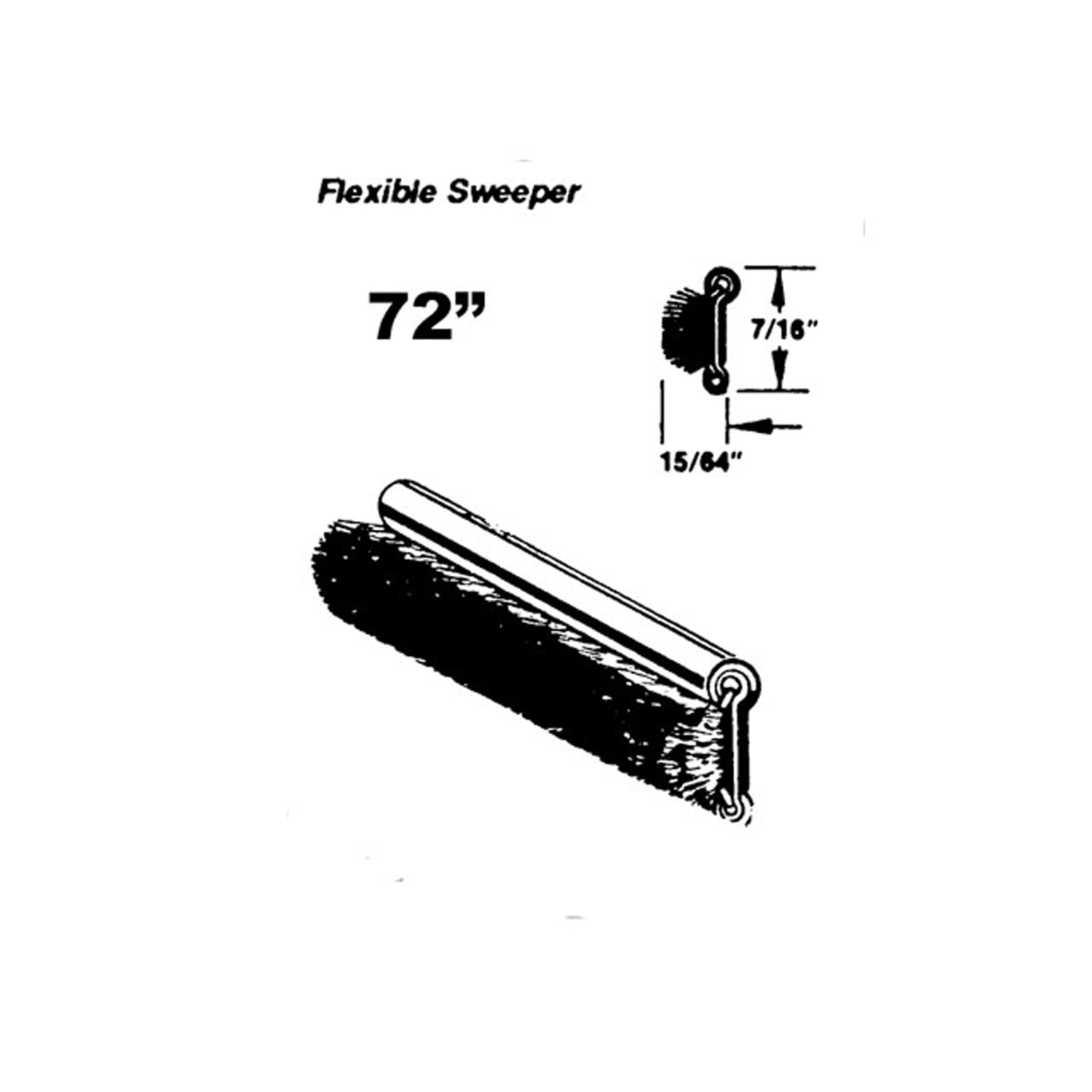 1936 Buick Roadmaster Series 80 Flexible sweeper. Made with stainless steel bead-WC 8-72Flexible sweeper. Made with stainless steel bead. Used on inner and outer beltlines. Also forms easily for use with sliding quarter windows. 72 in. long. Each. NOTE: $20 special shipping charge applies for domestic orders. Call or email for overseas shipping costs. Part can be sectioned into two equal lengths to reduce overseas shipping costs.
 1936 Buick Roadmaster Series 80 Fender Bolts. For use with Fender Bolt Washers; WF 3001-WF 3000Fender Bolts. For use with Fender Bolt Washers; WF 3001. Zinc Chromate plated, high strength. 1" X 5/16". Set of 25
 1936 Buick Roadmaster Series 80 Fender Bolt Washers. For use with Fender Bolts; WF 3000-WF 3001Fender Bolt Washers. For use with Fender Bolts; WF 3000. High quality, cadmium plated. 1-1/4" O.D., 3/8" I.D. Set of 25
 1936 Buick Roadmaster Series 80 Front Vent Window Seals. Does not fit Convertible-WR 7317Front Vent Window Seals. Does not fit Convertible. Pair R&L
Why Choose Metro?
For over 100 years, Metro Moulded Parts has been the pinnacle of quality in classic car restoration parts. Our commitment to precision and authenticity in every component ensures a perfect fit and an OEM-level appearance.
- Expert Craftsmanship & Quality: Each part is a testament to our dedication to reliability and perfection, crafted from original designs and thoroughly tested.
- Advanced Technology: We use cutting-edge techniques to create flawless, long-lasting parts that surpass others in performance.
- SuperSoft Sponge – The Ultimate Door Seal: Not only are our door seals 30% softer than competitors', but they're also guaranteed to never leak. They effectively reduce wind and road noise, enhancing your classic car's comfort and driving experience.
- Proudly American: Our parts are a product of American craftsmanship, made in the USA with a spirit of excellence and heritage.
- Unrivaled Warranty: We back our products with a 30-year industry-leading warranty, a testament to our confidence in their quality.
Join us in preserving the legacy of classic cars with parts that are crafted for perfection, not just made.