

Image of 1937 Buick Special 40, Note: These illustrations use artistic license and may differ from actual historical models.
Performance Metrics
Fundamental Metrics
Emotional Appeal
MMP Rating
| Engine Specifications | |
|---|---|
| Engine: | Straight 8 |
| Displacement: | 248 cu in (4.1 L) |
| Horsepower: | 100-105 hp |
| Torque: | Estimated 200 lb-ft |
| Compression Ratio: | 6.15:1 |
| Ignition System: | Battery and coil |
| Cooling System: | Water-cooled |
| Performance Specifications | |
| 0-60 Time: | Estimated 15-20 seconds |
| 1/4 Mile Time: | Not available |
| Top Speed: | 80-85 mph |
| Transmission and Drive | |
| Drive Type: | Rear-wheel drive |
| Transmission Type: | 3-speed manual |
| Fuel and Efficiency | |
| Fuel System Type: | Carburetor |
| MPG: | Estimated 10-15 mpg |
| Dimensions and Brakes | |
| Brakes: | Hydraulic drum brakes |
| Wheelbase: | 122 inches |
| Weight: | 3,400 lbs |
Note: Specifications for classic cars are given to the best of our ability, considering the limited and variant data available.
1937 Buick Special 40: The Straight-Eight That Made Buick Feel Within Reach
The 1937 Buick Special 40 brought the presence of a big American luxury car to buyers who wanted Buick style without paying for the marque’s more expensive models. Built by Buick, a division of General Motors, the Special combined a smooth straight-eight engine, handsome new bodywork, and a more accessible price. It was an important part of Buick’s lineup during a decade when the brand was building a reputation for quality and engineering.
For 1937, Buick gave its cars a thoroughly updated look, with lower, wider proportions and a more streamlined profile. The Special sat at the entry point of the Buick range, but “entry-level” did not mean small or simple. It was a substantial car with an eight-cylinder engine, a comfortable cabin, and the kind of polished detailing that helped distinguish Buick from many mass-market rivals.
One appealing fact for modern enthusiasts is that the Special delivered Buick’s signature straight-eight character at a comparatively attainable price. In an era when many affordable cars relied on six-cylinder engines, the Special’s eight-cylinder layout gave it a notably smooth, unhurried feel.
Streamlined Buick Styling and a Welcoming Cabin
The 1937 Special’s front end is its most recognizable feature. A prominent vertical-bar grille gives the nose a formal, upright look, while the headlamps sit neatly in the front-fender forms. The hood stretches back toward a gently curved windshield, and the fenders flow into the body rather than appearing as separate, slab-sided shapes. The result is a car that looks substantial without seeming clumsy.
Buick offered the Special in several body styles, including coupes and two- and four-door sedans, with open or convertible-style models available in the broader range. Exact names and availability could vary by configuration and market. The four-door sedan was a practical and popular choice, while the coupe offered a sportier profile. Open models are especially eye-catching today because they are less commonly encountered and have strong collector appeal.
Inside, the Special was designed for comfort on long journeys. Depending on the body style and trim, occupants found broadcloth or other durable upholstery, a generously sized bench seat, and a clear instrument panel with prominent round gauges. Materials and trim were appropriate to a mid-priced Buick: more carefully finished than a basic economy car, though not as lavish as the upper Buick series. Upholstery, trim, and colors could vary with the body and factory options.
Paint choices also depended on the particular body and production configuration. Period Buicks appeared in a range of dark and lighter colors, including shades of blue, green, gray, and maroon, as well as black. Two-tone treatments could add extra visual interest on certain configurations. Original paint codes and surviving factory records are worth checking when judging a specific car, since restorations do not always reflect the original palette.
For its time, the Special offered useful everyday technology rather than modern convenience. Its straight-eight engine, three-speed manual transmission, hydraulic brakes, electric starting, and independent front suspension represented a capable package for a family car of the late 1930s. Buick’s suspension design helped improve comfort and control over the rigid-front-axle arrangements still found on many cars of the period.
Why the Special 40 Mattered
The 1937 Buick Special helped define Buick’s place between mainstream makes and pricier luxury cars. It gave buyers a more refined alternative to an ordinary family sedan, but it remained less expensive than Buick’s larger and better-equipped models. That balance was central to Buick’s identity: solid engineering, an upscale image, and a price that reached beyond the wealthiest motorists.
Its design also reflected the industry’s move toward more integrated, aerodynamic-looking bodies. The Special was not a radical streamliner, but its flowing fenders, sloped contours, and carefully shaped front end looked more modern than the boxier cars of only a few years earlier. Buick’s use of independent front suspension was another meaningful distinction, helping the car ride and steer with greater composure on uneven roads.
The Special’s lasting appeal comes from this combination of accessible luxury and mechanical character. It was not a sports car, and it did not aim to be one. Instead, it offered a quiet, smooth, well-appointed driving experience that helped establish the template for the American mid-priced car.
Eight-Cylinder Power and Road Manners
Power came from a 248-cubic-inch, valve-in-head inline-eight. Period specifications are commonly listed at about 100 horsepower, though figures can vary with the exact engine and rating method. A three-speed manual transmission sent power to the rear wheels. The straight-eight’s long, even firing order was a key part of its appeal: it delivered power smoothly and suited the Special’s relaxed touring character.
There is no single dependable factory 0-to-60 mph figure that applies to every surviving 1937 Special. Based on the car’s output, weight, gearing, and period performance, a rough estimate is around 20 to 25 seconds. Top speed is generally estimated in the neighborhood of 80 mph, depending on condition and gearing. These are period-car estimates, not guarantees for a particular example. A car’s engine health, tires, brakes, and restoration quality matter far more than a number on paper.
On a smooth road, the Special feels composed and substantial. The front suspension helps take the edge off bumps, while the long wheelbase and generous body give the car a steady ride. On broken pavement, it still moves and floats more than a modern car, and the driver needs to anticipate dips and rough patches. On winding roads, the Special rewards smooth inputs rather than hurried cornering. Its size, weight, and tall tires make it better suited to sweeping curves than sharp, fast direction changes.
From behind the wheel, the experience is tactile and pleasantly mechanical. The straight-eight produces a subdued, even rumble rather than a sharp, high-revving note. Steering and braking require more effort and planning than in a modern vehicle, and the manual gearbox encourages deliberate shifts. The reward is a calm, rhythmic drive that feels distinctly of the prewar era.
Owning and Maintaining a 1937 Buick
Today, most Special 40s are used as show cars, weekend cruisers, and participants in vintage-car tours. Some are driven regularly by owners who enjoy maintaining an older vehicle, but the Special is not an effortless modern daily driver. It lacks contemporary safety equipment, climate control, and the traffic performance expected from a current car.
Mechanical work is approachable for an experienced home mechanic, especially routine service on the engine, ignition, brakes, and drivetrain. The straight-eight is robust when properly maintained, and many service procedures are straightforward by classic-car standards. However, age brings its own challenges. Parts may require specialist suppliers, original components can be hard to locate, and a neglected engine or worn suspension can turn a simple repair into a substantial project.
Before buying, inspect the frame and body for rust, check the engine for oil pressure and cooling problems, and test the transmission, clutch, brakes, and steering carefully. Wood, upholstery, brightwork, and correct trim can add significantly to restoration costs. A car that runs well is not necessarily roadworthy, so the braking system, tires, fuel lines, and electrical wiring deserve close attention.
1937 Buick Special Facts and Reputation
The Special’s most important distinction was not a racing record or a one-off celebrity connection. It was the fact that Buick’s least expensive series still offered an eight-cylinder engine and a notably refined ride. That positioning helped the model stand apart from many competing cars in its price class.
Production estimates for the 1937 Special 40 are often placed roughly in the 125,000 to 130,000 range across the series, though exact totals can differ among historical sources and body-style breakdowns. That makes the model far from a one-of-a-kind rarity. The more collectible examples are specific body styles, especially open cars, along with vehicles that retain unusual original equipment or especially well-documented histories.
Common criticisms are much the same as those made of many prewar cars. The Special is heavy, its acceleration is modest by modern standards, and driving it demands more attention than driving a newer vehicle. Parts availability and restoration costs can also frustrate owners. Its size and weight are part of the charm, but they are not ideal for crowded streets or long periods in modern stop-and-go traffic.
Collector Values and Market Outlook
Values depend heavily on body style, originality, condition, and the quality of any restoration. As a broad present-day estimate, a project or rough driver may fall around $8,000 to $18,000. A sound, usable sedan or coupe could bring roughly $18,000 to $35,000, while a high-quality restoration may reach $35,000 to $55,000 or more. A particularly desirable open model in excellent condition can exceed that range, with exceptional examples potentially reaching $60,000 to $75,000 or higher.
These figures are general estimates rather than a formal appraisal. A beautifully restored car can still be worth less than its restoration cost, while a rare body style, strong documentation, and correct details may attract a premium. Prices for prewar cars tend to move more selectively than those for widely popular postwar classics. The Special is best viewed as a steady enthusiast market: good examples remain desirable, but condition and body style matter more than speculation.
Availability is reasonable compared with genuinely rare prewar automobiles, thanks to the Special’s substantial production. Still, finding a complete, well-preserved car can take patience. Restored examples are easier to enjoy immediately, while original cars can be more compelling to collectors but may require careful preservation and mechanical recommissioning.
A Buick Built for Smooth, Confident Miles
The 1937 Buick Special 40 brought together streamlined styling, an impressive straight-eight, a comfortable interior, and engineering that made it a strong long-distance car for its era. It was not the fastest Buick, nor the most luxurious, but it delivered a distinctive blend of refinement and value that helped strengthen Buick’s position in the American market.
For collectors, the Special offers more than attractive prewar lines. It captures a moment when automakers were making cars more comfortable, more modern, and more accessible without giving up the mechanical character that makes a vintage Buick memorable. Drive one at its own pace, and its appeal becomes clear: the 1937 Special is a graceful reminder that the road to American luxury did not always begin at the top of the price list.
1937 Buick Special 40 Catalog of Parts
 1937 Buick Special 40 Rear Bumper Arm Grommets-BG 15Rear Bumper Arm Grommets. 2-7/8" wide X 4-3/8" long, with 1-3/4" long inner slot. Pair
 1937 Buick Special 40 Front Bumper Arm Grommets-BG 16Front Bumper Arm Grommets. 3-1/4" wide X 5" long, with 1-11/16" long inner slot. Pair
 1937 Buick Special 40 Clutch and Brake Pedal Pads. 2" wide X 3" long. Pair-CB 15Clutch and Brake Pedal Pads. 2" wide X 3" long. Pair
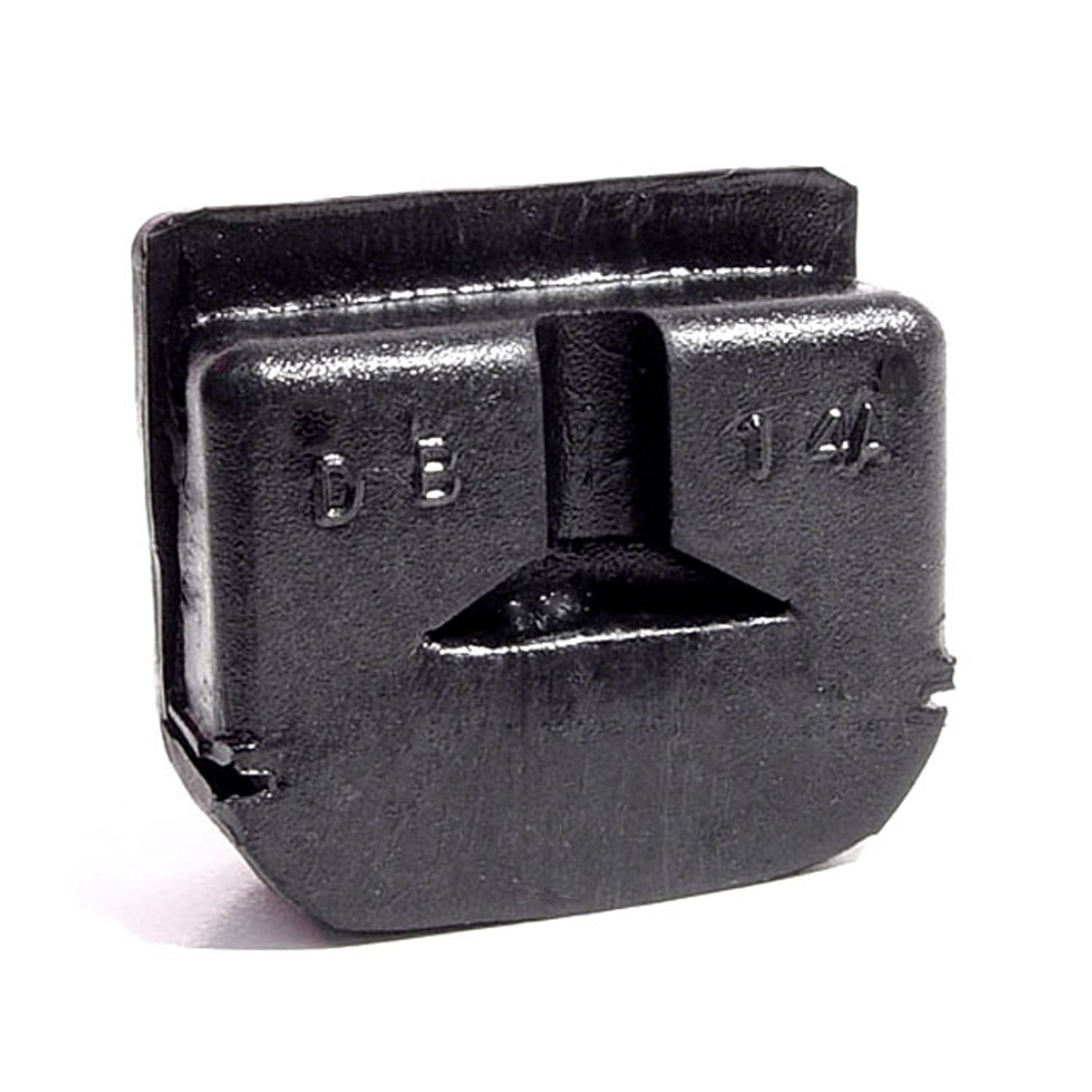 1937 Buick Special 40 Door Bumper. Exact reproduction-DB 14-ADoor Bumper. Exact reproduction. 1-3/16" high X 1-9/16" wide X 9/16" thick. Each
 1937 Buick Special 40 Upper Door Hinge Post Bumper. Held by screw-DB 60-AUpper Door Hinge Post Bumper. Held by screw. 7/8" diameter X 1/8" thick. Each
 1937 Buick Special 40 Windshield Center Post Gasket Outer Garnish Molding Retainer-DP 18Windshield Center Post Gasket Outer Garnish Molding Retainer. Made with threaded steel core like original, 13-1/2" long. Includes 13" flat rubber strip. Set
 1937 Buick Special 40 Gas filler grommet-GF 27Gas filler grommet. Fits some models of Buick, Oldsmobile and Pontiac. Check dimensions and part image. 2 in. ID; 3-5/8 in. OD. Dense black rubber. Each.
 1937 Buick Special 40 Door and Hood Bumper. 1" diameter X 7/8" thick. Each-HF 16Door and Hood Bumper. 1" diameter X 7/8" thick. Each
 1937 Buick Special 40 Windshield and Rear Window Channel. Used with 1/4" glass-LP 105Windshield and Rear Window Channel. Used with 1/4" glass. Fits some models. Sold by the foot
 1937 Buick Special 40 Trunk Seal. Sponge rubber. Sold by the foot.-LP 96-/FTTrunk Seal. Sponge rubber. Sold by the foot.
 1937 Buick Special 40 Motor Mounts. 2" O.D., 9/16" I.D. Pair-MM 23Motor Mounts. 2" O.D., 9/16" I.D. Pair
 1937 Buick Special 40 Front Motor Mounts. 3-1/2", 1-7/8", 1/2" I.D. Pair-MM 24Front Motor Mounts. 3-1/2", 1-7/8", 1/2" I.D. Pair
 1937 Buick Special 40 Park Light Pads. Fits 1-1/16" wide metal-MP 136Park Light Pads. Fits 1-1/16" wide metal. 1-1/2" wide X 10-1/4" long. Pair
 1937 Buick Special 40 Park Light Pads. Fits 7/8" wide metal-MP 137Park Light Pads. Fits 7/8" wide metal. 1-1/8" wide X 10-1/4" long. Pair
 1937 Buick Special 40 Park Light Pads. Fits 1-1/8" metal-MP 143Park Light Pads. Fits 1-1/8" metal. 1-1/2 wide X 9-3/8" long. Pair
 1937 Buick Special 40 Tail-light Pads. 3-1/8" wide X 7-1/2" long. Pair-MP 210Tail-light Pads. 3-1/8" wide X 7-1/2" long. Pair
 1937 Buick Special 40 Trunk Light Pad. 3-7/8" wide X 16" long. Each-MP 220Trunk Light Pad. 3-7/8" wide X 16" long. Each
 1937 Buick Special 40 Trunk Light Pad. For Slant-Back-MP 230Trunk Light Pad. For Slant-Back. 4-7/8" wide X 16-3/8" long. Each
 1937 Buick Special 40 Windshield Wiper Transmission Pad-MP 280-AWindshield Wiper Transmission Pad. 1-3/4" wide X 2-1/4" long. Each
 1937 Buick Special 40 Trunk Hinge Pads. 1-5/8" wide X 8-3/8" long. 4-Piece Set-MP 335-BTrunk Hinge Pads. 1-5/8" wide X 8-3/8" long. 4-Piece Set
 1937 Buick Special 40 Door Handle Ferrule Grommet. I.D. 11/16", O.D. 1-3/16"-MP 546-IDoor Handle Ferrule Grommet. I.D. 11/16", O.D. 1-3/16". Each
 1937 Buick Special 40 Cowl Vent Seal. 3" wide at side X 15-3/4" long. Each-RP 100-BCowl Vent Seal. 3" wide at side X 15-3/4" long. Each
 1937 Buick Special 40 Door Lock Knob. Brown. 1/2" diameter X 1" long X 1/8" hole-RP 303Door Lock Knob. Brown. 1/2" diameter X 1" long X 1/8" hole. Each
 1937 Buick Special 40 Sun Visor End Tube Plug. Black. Each-RP 303-DSun Visor End Tube Plug. Black. Each
 1937 Buick Special 40 Shift Boot. Black. 2-15/16" X 2-13/16" at base. Each-RP 33-EShift Boot. Black. 2-15/16" X 2-13/16" at base. Each
 1937 Buick Special 40 Door Bumper. 1" diameter X 1/4" thick Each-SB 60Door Bumper. 1" diameter X 1/4" thick Each
 1937 Buick Special 40 Wire Harness Grommet. Each-SM 3Wire Harness Grommet. Each
 1937 Buick Special 40 Wire Harness / Firewall Grommet. Each-SM 31Wire Harness / Firewall Grommet. Each
 1937 Buick Special 40 Firewall Grommets, for thermostat, oil, throttle, choke-SM 32Firewall Grommets, for thermostat, oil, throttle, choke, vacuum and speedometer. 1-1/8" O.D., 1/4 I.D. 2-1/8" long X 1-1/8" wide. Set
 1937 Buick Special 40 Firewall Grommet for Thermostadt, Oil throttle, Choke-SM 32-BFirewall Grommet for Thermostadt, Oil throttle, Choke, Vacuum and Speedometer. Fits 3/4" hole. 1/4" I.D., 1-1/4" O.D. Each
 1937 Buick Special 40 Ignition cable grommet. 2 in. OD x 1/2 in. ID fits a 1.5 in-SM 33Ignition cable grommet. 2 in. OD x 1/2 in. ID fits a 1.5 in. hole. Each.
 1937 Buick Special 40 Firewall grommet for headlight and tail-light wires-SM 34Firewall grommet for headlight and tail-light wires. Fits 11/16" hole. 5/16" I.D., 15/16" O.D. Each
 1937 Buick Special 40 Wire Harness Grommet-SM 38Wire Harness Grommet. For speedometer cable through toe board. Replaces OEM #594341. Each
 1937 Buick Special 40 Special Purpose Grommet-SM 68Special Purpose Grommet. For headlight wire loom through body. Each
 1937 Buick Special 40 Trunk Seal for Coupes and Convertibles Only-TK 58-B/18Trunk Seal for Coupes and Convertibles Only. 1" wide X 1/2" thick. Each
 1937 Buick Special 40 Trunk Seal, for Sedans. Each-TK 96-15Trunk Seal, for Sedans. Each
 1937 Buick Special 40 Vulcanized Fixed Quarter Window Seals. Pair-VQT 1900Vulcanized Fixed Quarter Window Seals. Pair
 1937 Buick Special 40 Vertical Seal for Vent Window. Each is 17" long. Pair-VS 2Vertical Seal for Vent Window. Each is 17" long. Pair
 1937 Buick Special 40 Vulcanized Rear Windshield Seal-VWS 1901-RVulcanized Rear Windshield Seal. For models without reveal molding. 2-Piece Set
 1937 Buick Special 40 Vulcanized Windshield Seal, for Convertibles-VWS 7302Vulcanized Windshield Seal, for Convertibles. For cars without chrome garnish. Each
 1937 Buick Special 40 Vulcanized Windshield Seal-VWS 7303Vulcanized Windshield Seal. For all models without chrome garnish, except convertibles. Each
 1937 Buick Special 40 Flexible glass-run channel-WC 11-72Flexible glass-run channel. Mohair lined, cloth covered with stainless steel bead. Used on side windows. 72 in. long. Each. NOTE: $20 special shipping charge applies for domestic orders. Call or email for overseas shipping costs. Part can be sectioned in two equal lengths to reduce overseas shipping costs.
 1937 Buick Special 40 Rigid division-bar channel. Made with stainless steel bead-WC 2-72Rigid division-bar channel. Made with stainless steel bead. 72 in. long. Each. NOTE: $20 special shipping charge applies for domestic orders. Call or email for overseas shipping costs. Part can be sectioned into two equal lengths to reduce overseas shipping costs.
 1937 Buick Special 40 Flexible Rubber Window Channel-WC 32-14Flexible Rubber Window Channel. For Fisher Closed Bodies, except those using a stainless bead type. Used on side windows. 13/16" outer width X 6/16" outer depth, with a 5/16" inner channel width X 14" long. Each
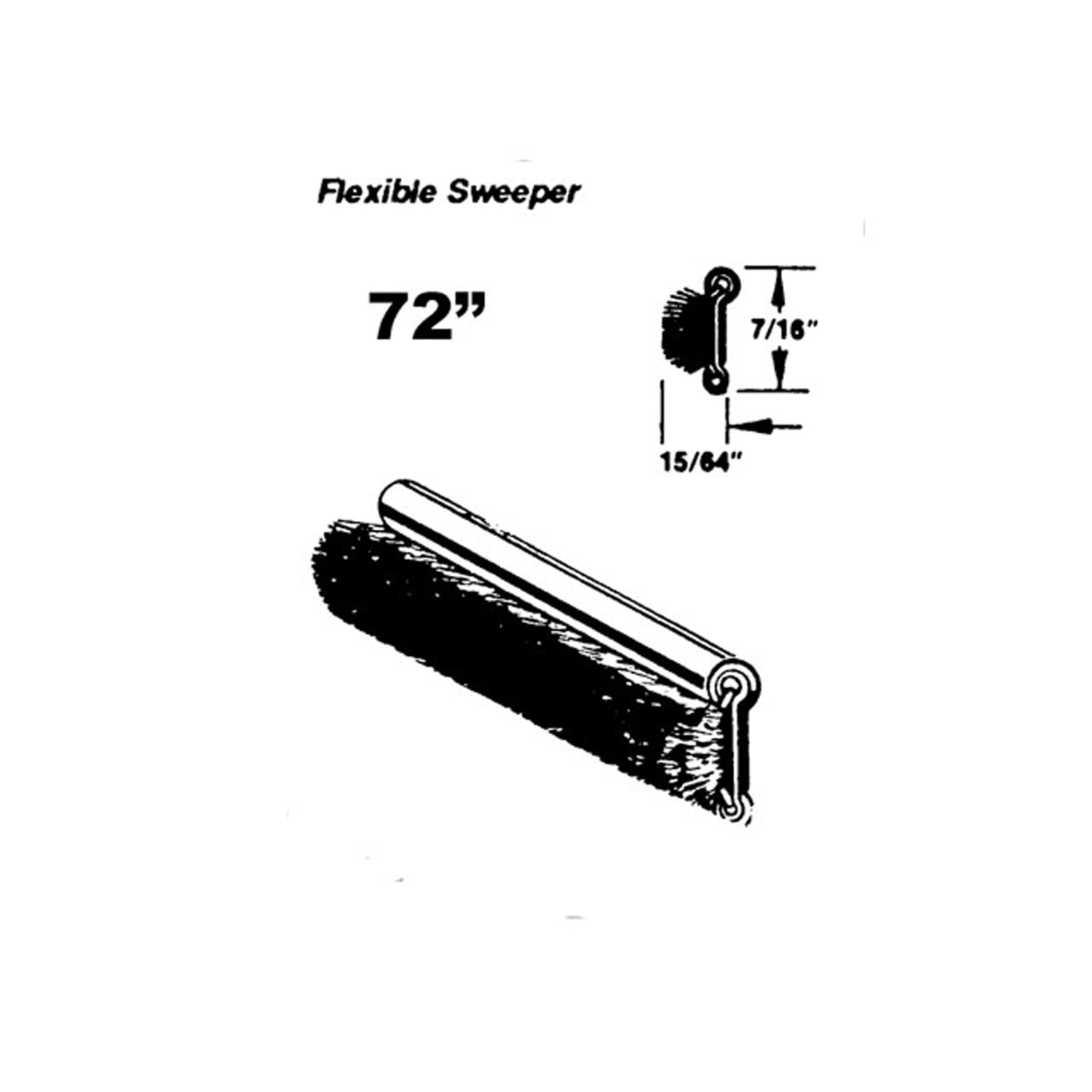 1937 Buick Special 40 Flexible sweeper. Made with stainless steel bead-WC 8-72Flexible sweeper. Made with stainless steel bead. Used on inner and outer beltlines. Also forms easily for use with sliding quarter windows. 72 in. long. Each. NOTE: $20 special shipping charge applies for domestic orders. Call or email for overseas shipping costs. Part can be sectioned into two equal lengths to reduce overseas shipping costs.
 1937 Buick Special 40 Fender Bolts. For use with Fender Bolt Washers; WF 3001-WF 3000Fender Bolts. For use with Fender Bolt Washers; WF 3001. Zinc Chromate plated, high strength. 1" X 5/16". Set of 25
 1937 Buick Special 40 Fender Bolt Washers. For use with Fender Bolts; WF 3000-WF 3001Fender Bolt Washers. For use with Fender Bolts; WF 3000. High quality, cadmium plated. 1-1/4" O.D., 3/8" I.D. Set of 25
 1937 Buick Special 40 Front vent window seals. Exact fit. Does not fit convertible-WR 7302Front vent window seals. Exact fit. Does not fit convertible. Pair. R&L.
 1937 Buick Special 40 Rear vent window seals. For 4-door touring sedans. Pair-WR 7302-RRear vent window seals. For 4-door touring sedans. Pair. R&L.
 1937 Buick Special 40 Front Vent Window Seals, for Convertibles. Pair R&L-WR 7311Front Vent Window Seals, for Convertibles. Pair R&L
 1937 Buick Special 40 Front Suspension Bumper. For lower arm. 2-1/8" high-XB 30Front Suspension Bumper. For lower arm. 2-1/8" high. Each
Why Choose Metro?
For over 100 years, Metro Moulded Parts has been the pinnacle of quality in classic car restoration parts. Our commitment to precision and authenticity in every component ensures a perfect fit and an OEM-level appearance.
- Expert Craftsmanship & Quality: Each part is a testament to our dedication to reliability and perfection, crafted from original designs and thoroughly tested.
- Advanced Technology: We use cutting-edge techniques to create flawless, long-lasting parts that surpass others in performance.
- SuperSoft Sponge – The Ultimate Door Seal: Not only are our door seals 30% softer than competitors', but they're also guaranteed to never leak. They effectively reduce wind and road noise, enhancing your classic car's comfort and driving experience.
- Proudly American: Our parts are a product of American craftsmanship, made in the USA with a spirit of excellence and heritage.
- Unrivaled Warranty: We back our products with a 30-year industry-leading warranty, a testament to our confidence in their quality.
Join us in preserving the legacy of classic cars with parts that are crafted for perfection, not just made.