

Image of 1940 Buick Roadmaster Series 70, Note: These illustrations use artistic license and may differ from actual historical models.
Performance Metrics
Fundamental Metrics
Emotional Appeal
MMP Rating
| Engine Specifications | |
|---|---|
| Engine Options: | Straight 8 |
| Displacement Range: | 320.2 cu in (5.2 L) |
| Horsepower Range: | 141 HP |
| Torque: | 269 lb-ft |
| Compression Ratio: | 6.6:1 |
| Ignition System: | Battery Ignition |
| Cooling System: | Liquid Cooled |
| Performance Specifications | |
| 0-60 Time: | Estimated 15 seconds |
| 1/4 Mile Time: | Not available |
| Top Speed: | 90 mph |
| Transmission and Drive | |
| Drive Type: | Rear Wheel Drive |
| Transmission Type: | 3-speed manual |
| Fuel and Efficiency | |
| Fuel System Type: | Carburetor |
| MPG: | Estimated 10-12 MPG |
| Dimensions and Brakes | |
| Brakes: | Drum Brakes |
| Wheelbase: | 133 inches |
| Weight: | 4,000 lbs |
Note: Specifications for classic cars are given to the best of our ability, considering the limited and variant data available.
1940 Buick Roadmaster Series 70: Buick’s Prewar Flagship
The 1940 Buick Roadmaster Series 70 brought big-car presence and genuinely modern engineering together in one polished package. Built by Buick, a division of General Motors, the Roadmaster sat near the top of the company’s range, above the Special, Super, and Century. It was aimed at drivers who wanted a substantial, well-appointed American automobile with the power and refinement to cover long distances in comfort.
Its timing gives it a special place in Buick history. The Roadmaster was a prewar luxury car built just before World War II redirected American factories toward military production. One intriguing detail is that Buick’s 1940 lineup included the newly introduced Super, while the Roadmaster remained the marque’s largest and most prestigious regular-production car. Its long hood, broad cabin, and confident styling made its status unmistakable.
Roadmaster Styling: Broad Shoulders and a Bold Grille
Buick’s 1940 design looked more integrated and streamlined than the upright cars of the early 1930s. The front end was dominated by a substantial, vertically accented grille, framed by rounded front fenders. Headlamps were set into the fenders rather than perched separately beside the hood, giving the nose a cleaner, more modern appearance. A long bonnet, bright trim, and sculpted fender lines added visual weight without making the car look clumsy.
Many Roadmasters were fitted with running boards, a feature that still linked the car to older styling conventions. Yet the body’s overall proportions were moving toward the smoother, more unified forms that would define American cars in the postwar years. The Roadmaster’s substantial wheelbase and broad stance also helped distinguish it from smaller Buicks.
A Comfortable Cabin with Buick-Level Finish
Inside, the Roadmaster was designed for relaxed touring rather than stripped-down utility. Depending on body style and specification, passengers found wide seating, generous legroom, quality cloth upholstery, carefully finished trim, and a substantial dashboard with clear instrumentation. Woodgrain-style accents and bright detailing added a formal touch, while the roomy cabin made the car comfortable for family travel or business trips.
Buyers could equip their cars with period conveniences such as a radio and heater, though equipment varied by car and market. Buick also offered accessories and trim choices that let owners personalize the cabin. Materials and construction were a selling point: this was a premium Buick, built to feel more substantial than an economy-minded family sedan.
Body Styles and Period Colors
Roadmaster buyers could choose from several body configurations, with availability varying by model designation. The range included practical closed-body sedans as well as more stylish two-door models, and Buick offered open-car choices such as convertible forms. The four-door sedan was a natural choice for owners who prioritized passenger space and everyday usability. For collectors, the open Roadmaster and sleek two-door versions tend to draw the most attention because they combine the car’s imposing proportions with a more distinctive profile.
Factory paint selections changed over time and could vary by catalog and production details. Period Buick colors included restrained dark shades alongside blues, greens, grays, and lighter tones. Black and deep, formal colors suited the Roadmaster’s executive character, while brighter colors could bring out the curves of its fenders and grille. When evaluating a restored car, check its paint code and documentation rather than assuming a color is original based on appearance alone.
Engineering Ahead of Its Time
Power came from Buick’s large 320.2-cubic-inch inline-eight, rated at about 141 horsepower. The engine was paired with a three-speed manual transmission, typically with synchromesh action, and Buick’s smooth-running straight-eight design gave the Roadmaster the relaxed torque expected of a luxury car. It was not a high-revving sports engine. Its strength was steady, quiet pulling power.
Buick had also invested in independent front suspension, introduced on its cars earlier in the decade. That setup helped the front wheels respond more independently to bumps than a traditional solid front axle. The Roadmaster combined it with a sturdy frame and a conventional rear-drive layout, producing a car that felt advanced for its period while remaining mechanically familiar to a competent mechanic.
It is worth separating 1940 technology from later Buick innovations. The famous Dynaflow automatic transmission did not arrive until after the war, in 1948. A 1940 Roadmaster was a manual-transmission car, so its driver had to operate the clutch and shift gears.
Performance and the Roadmaster Driving Feel
With roughly 141 horsepower, the Roadmaster had strong performance for a full-size luxury car of its day. Period gearing, vehicle condition, body style, and passenger load all affect the numbers, but a healthy example may reach approximately 85 to 95 mph. A reasonable estimate for 0-to-60-mph acceleration is around 16 to 19 seconds. These are period-car estimates, not modern instrumented-test figures, and an original car should not be pushed to its limits without first checking its mechanical condition.
On the road, the inline-eight delivers a deep, even hum that becomes more noticeable under acceleration but is generally smoother than the sound of many smaller engines. The long wheelbase helps the car settle over ordinary road imperfections, while its weight and soft suspension favor comfort over quick responses. On a winding road, the Roadmaster asks for deliberate steering and measured cornering. It can manage a crosswind or uneven pavement, but its size and age mean it does not feel like a modern car with power steering, disc brakes, or contemporary tires.
The driving experience is part of the appeal: a large steering wheel, a manual gear change, and a broad view over the hood put the driver in direct contact with the machine. The car feels most at home on an open highway, moving at a comfortable cruising pace rather than darting through traffic.
What the Roadmaster Contributed to Buick Design
The Series 70 showed how a luxury car could retain traditional American size while adopting a more unified, streamlined body. Its fender-integrated headlamps, smoother contours, and carefully balanced proportions helped move Buick away from the more separate, upright forms of earlier decades. The Roadmaster did not invent streamlined automotive design, but it translated that design direction into a prestigious, usable Buick.
Its engineering also reflected an important shift in expectations. Independent front suspension and a powerful straight-eight helped make comfort and performance partners rather than opposites. Against many contemporaries, the Roadmaster stood out for its combination of room, smoothness, and upscale finish. Its influence is best understood as part of Buick’s broader evolution toward quieter, more comfortable, and more integrated automobiles.
Ownership, Maintenance, and Reliability
Today, a 1940 Roadmaster is most commonly enjoyed as a show car, touring car, or weekend classic. A carefully maintained example can make local outings and club events, but using one as a daily driver is less practical. Its fuel economy, size, vintage braking and lighting systems, and limited protection by modern standards all call for realistic expectations.
The straight-eight is generally serviceable for a specialist or an experienced hobbyist, and its basic mechanical layout is understandable by classic-car standards. The challenge is often less about complicated electronics and more about finding correct parts, sourcing trim, and undoing decades of wear or improvised repairs. Before buying, inspect the frame and body for corrosion, check the engine’s oil pressure and cooling system, test the clutch and transmission, and examine the brakes, wiring, and suspension. A pre-purchase inspection by a mechanic familiar with prewar Buicks is money well spent.
Roadmaster Trivia and Common Criticisms
The 1940 Roadmaster belongs to the last generation of Buicks built before wartime production reshaped the American auto industry. Buick passenger-car production stopped during the war years, making prewar cars like this a tangible link to the industry’s transition. The Roadmaster is not especially known for a single speed or endurance record; its reputation rests more on comfort, size, and Buick’s engineering than on competition success.
There is no single celebrity ownership story that defines the model. Its period appeal was broader: it suited well-to-do families and professionals who wanted an imposing American car. Common criticisms today are practical ones. The Roadmaster is heavy, thirsty by modern standards, and less nimble than smaller classics. Its vintage brakes and steering also demand more attention from the driver than modern systems do.
Collector Values and Availability
A reasonable production estimate for 1940 Roadmasters is roughly 18,000 cars across the Series 70 range, though published totals can vary depending on how model and body-style figures are grouped. That makes the Roadmaster uncommon today, but not impossibly rare. Closed-body cars appear more often than the most desirable open and specialty versions, and original trim, sound structure, and documented restoration history can make a major difference in value.
As a broad 2026 market estimate, a project or rough-running sedan might sell for about $10,000 to $20,000. A usable driver could fall around $20,000 to $35,000, while a very good restored sedan may bring roughly $35,000 to $55,000. Desirable convertibles and especially well-restored examples can reach approximately $60,000 to $100,000 or more. These are general ranges, not appraisals: condition, body style, originality, provenance, and the quality of the restoration matter greatly.
Values for prewar classics tend to be selective rather than uniformly rising. Exceptional cars with strong documentation remain appealing, but restoration costs can exceed the market value of an ordinary sedan. Buyers should focus on condition and the quality of the work, not simply on the idea that every old luxury car will appreciate.
Why the 1940 Roadmaster Still Matters
The 1940 Buick Roadmaster Series 70 combined a smooth straight-eight, independent front suspension, generous passenger space, and distinctive prewar styling in a car built for comfortable travel. It was large and formal, yet more streamlined than the older cars it followed. Today, its best examples reward careful owners with an engaging glimpse of Buick at the height of its prewar confidence. The Roadmaster’s real legacy is not just its size or its chrome, but the way it made American luxury feel both powerful and ready for the modern road.
1940 Buick Roadmaster Series 70 Catalog of Parts
 1940 Buick Roadmaster Series 70 Accelerator Pedal Pad. Made with steel core like original-AP 29-CAccelerator Pedal Pad. Made with steel core like original. 2-1/8" X 8-1/2". Black. Each
 1940 Buick Roadmaster Series 70 Transmission Vacuum Shift Grommet. Used on rear side-BC 40Transmission Vacuum Shift Grommet. Used on rear side. 1-1/2" O.D., 3/8" I.D., 3/8" Thick. Each
 1940 Buick Roadmaster Series 70 Rear Bumper Arm Grommets-BG 15Rear Bumper Arm Grommets. 2-7/8" wide X 4-3/8" long, with 1-3/4" long inner slot. Pair
 1940 Buick Roadmaster Series 70 Front Bumper Arm Grommets-BG 33Front Bumper Arm Grommets. 2-1/2" wide X 5-3/8" long, with 1-7/8" long inner slot. Pair
 1940 Buick Roadmaster Series 70 Front Bumper Arm Grommets-BG 34Front Bumper Arm Grommets. 2-7/8" wide X 5-1/2" long, with 1-13/16" long inner slot. Pair
 1940 Buick Roadmaster Series 70 Rear Bumper Arm Grommets-BG 40Rear Bumper Arm Grommets. 2-3/4" wide X 4-3/4" long, with 1-1/2" long inner slot. Pair
 1940 Buick Roadmaster Series 70 Stabilizer Bar Bushings-BN 106Stabilizer Bar Bushings. 1-3/4" long X 1-1/2" wide X 1-1/2" high, 10/16" I.D. Pair
 1940 Buick Roadmaster Series 70 Lower Inner "A" Frame Shaft Seal. 1-1/8" O.D., 5/16" thick-BN 23-ALower Inner "A" Frame Shaft Seal. 1-1/8" O.D., 5/16" thick. Each
 1940 Buick Roadmaster Series 70 Stabilizer Bar Bushing. For rear axel anti-sway rod ends-BN 34-BStabilizer Bar Bushing. For rear axel anti-sway rod ends. Four used per car. 1-5/16" O.D., 3/4" long, with 5/8" I.D. Each
 1940 Buick Roadmaster Series 70 Clutch and Brake Pedal Pads. 2" wide X 3" long. Pair-CB 15Clutch and Brake Pedal Pads. 2" wide X 3" long. Pair
 1940 Buick Roadmaster Series 70 Upper Door Hinge Post Bumper. Held by screw-DB 60-AUpper Door Hinge Post Bumper. Held by screw. 7/8" diameter X 1/8" thick. Each
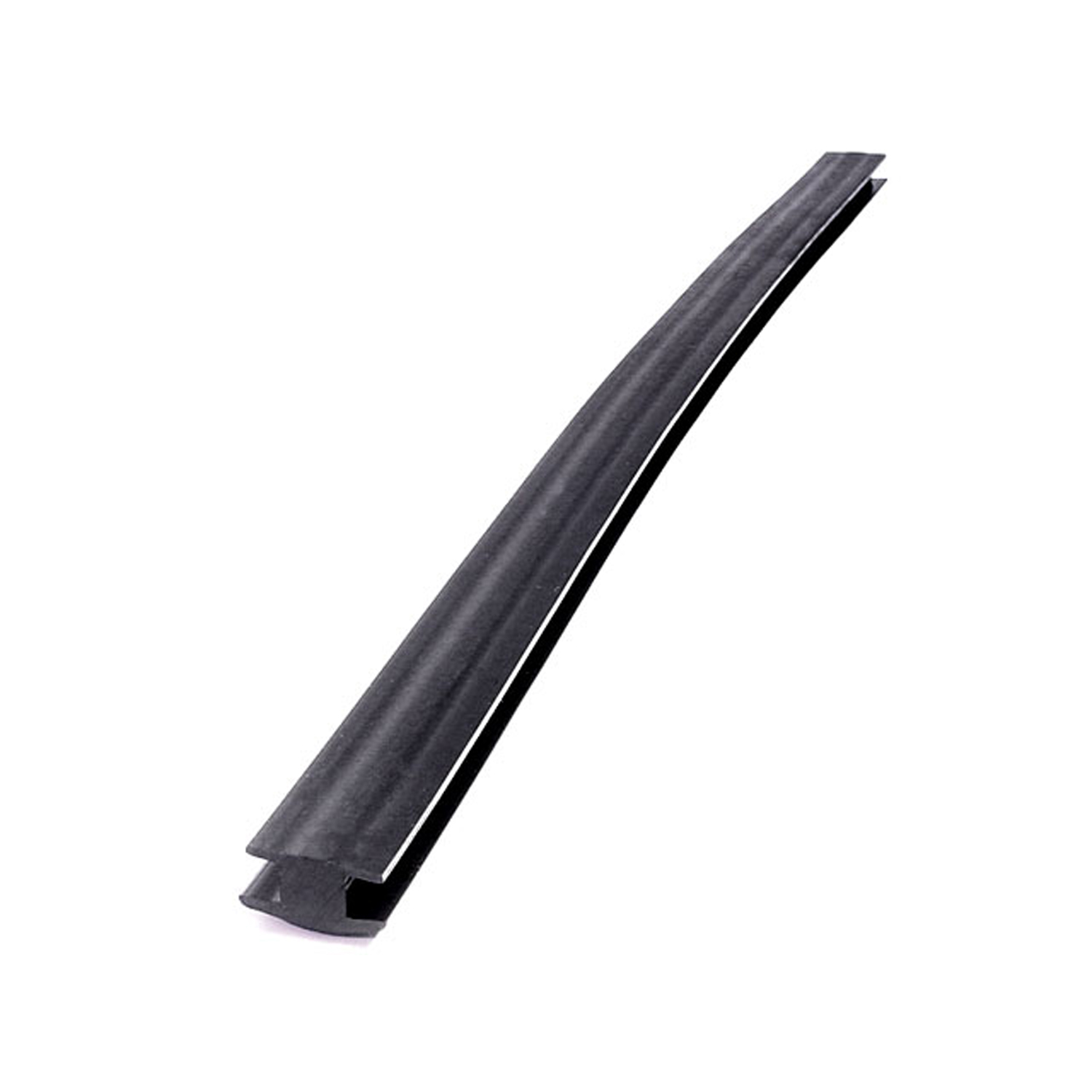 1940 Buick Roadmaster Series 70 Windshield Center Bar Gasket. 20" long. Each-DP 12Windshield Center Bar Gasket. 20" long. Each
 1940 Buick Roadmaster Series 70 Gravel Shields. Flat without metal backing plates-FS 25Gravel Shields. Flat without metal backing plates. Apply with contact cement. 16" long X 9" wide at top and 7-1/2" wide at bottom. Pair
 1940 Buick Roadmaster Series 70 Gravel Shields and Narrow Body Section Gravel Shields-FS 25-26Gravel Shields and Narrow Body Section Gravel Shields. Gravel Shields: 16" long X 8-1/2" wide at top and 6-1/2" wide at bottom. Narrow Body Section: 14" long, with beaded edge extending 1" along top and bottom. Complete 4-piece set
 1940 Buick Roadmaster Series 70 Narrow Body Section Gravel Shields-FS 26Narrow Body Section Gravel Shields. This part used on most models. 14" long, with beaded edge extending 1" along top and bottom. Pair
 1940 Buick Roadmaster Series 70 Hood Rest Pad Bumper. Metal core, tab held-HC 31-AHood Rest Pad Bumper. Metal core, tab held. Four to twelve used per car. 1-1/4" between tabs. Each
 1940 Buick Roadmaster Series 70 Door and Hood Bumper. 1" diameter X 7/8" thick. Each-HF 16Door and Hood Bumper. 1" diameter X 7/8" thick. Each
 1940 Buick Roadmaster Series 70 Trim Ring Lens Seals. Rubber. 7-3/4" O.D., 7-1/8" I.D-HR 10Trim Ring Lens Seals. Rubber. 7-3/4" O.D., 7-1/8" I.D. Pair
 1940 Buick Roadmaster Series 70 Headlight Assembly Housing Pad. 8-3/8" O.D. Pair-HR 7Headlight Assembly Housing Pad. 8-3/8" O.D. Pair
 1940 Buick Roadmaster Series 70 Windshield and Rear Window Channel. Used with 1/4" glass-LP 105Windshield and Rear Window Channel. Used with 1/4" glass. Fits some models. Sold by the foot
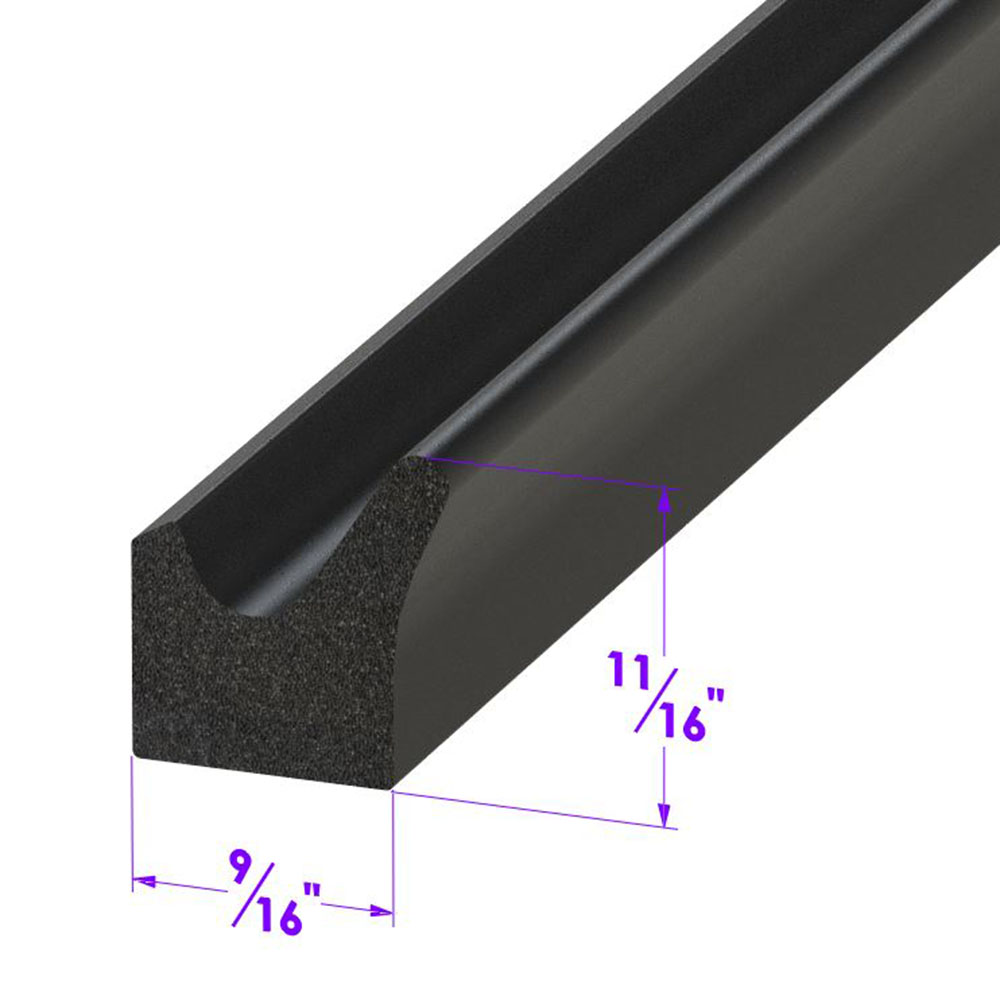 1940 Buick Roadmaster Series 70 Door side seal. Same as LP 40-A, but for a heavier seal-LP 40Door side seal. Same as LP 40-A, but for a heavier seal. Fits many domestic passenger cars and trucks. Used in Cobra kit cars as trunk weatherstrip. Per foot.
 1940 Buick Roadmaster Series 70 Door side seal. Same as LP 40, but for a lighter seal-LP 40-ADoor side seal. Same as LP 40, but for a lighter seal. Fits many domestic passenger cars and trucks. Universal seal for street rods and customs. Used in Cobra kit cars as door weatherstrip. Per foot.
 1940 Buick Roadmaster Series 70 Trunk Seal. Sponge rubber. Sold by the foot.-LP 96-/FTTrunk Seal. Sponge rubber. Sold by the foot.
 1940 Buick Roadmaster Series 70 Trunk Handle Pad. 2-1/2" wide X 7-5/8" long. Each-MP 300Trunk Handle Pad. 2-1/2" wide X 7-5/8" long. Each
 1940 Buick Roadmaster Series 70 Windshield Wiper Transmission Pad-MP 301Windshield Wiper Transmission Pad. 1-1/8" wide X 1-1/2" long. Each
 1940 Buick Roadmaster Series 70 Trunk Light Pad. 11-3/4" wide X 4-1/2" long. Each-MP 310Trunk Light Pad. 11-3/4" wide X 4-1/2" long. Each
 1940 Buick Roadmaster Series 70 Park Light Pads. 2" wide X 17-3/8" long. Pair-MP 320Park Light Pads. 2" wide X 17-3/8" long. Pair
 1940 Buick Roadmaster Series 70 Tail-light Pads. 2-1/2" wide X 6-1/4" long. Pair-MP 330Tail-light Pads. 2-1/2" wide X 6-1/4" long. Pair
 1940 Buick Roadmaster Series 70 Tail-light Pads. 2-7/8" wide X 8-5/8" long. Pair-MP 330-ATail-light Pads. 2-7/8" wide X 8-5/8" long. Pair
 1940 Buick Roadmaster Series 70 Trunk Hinge Pads. 1-1/2" wide X 10-1/4" long-MP 336-BTrunk Hinge Pads. 1-1/2" wide X 10-1/4" long. 4- Piece Set
 1940 Buick Roadmaster Series 70 Cowl Vent Seal. 3" wide at side X 15-3/4" long. Each-RP 100-BCowl Vent Seal. 3" wide at side X 15-3/4" long. Each
 1940 Buick Roadmaster Series 70 Door Lock Knob. Brown. 1/2" diameter X 1" long X 1/8" hole-RP 303Door Lock Knob. Brown. 1/2" diameter X 1" long X 1/8" hole. Each
 1940 Buick Roadmaster Series 70 Sun Visor End Tube Plug. Black. Each-RP 303-DSun Visor End Tube Plug. Black. Each
 1940 Buick Roadmaster Series 70 Floor Plug. Fits a 13/16" hole. Each-SB 28Floor Plug. Fits a 13/16" hole. Each
 1940 Buick Roadmaster Series 70 Door Bumper. 1" diameter X 1/4" thick Each-SB 60Door Bumper. 1" diameter X 1/4" thick Each
 1940 Buick Roadmaster Series 70 Floor Plug. Fits a 7/16" hole. Each-SB 63Floor Plug. Fits a 7/16" hole. Each
 1940 Buick Roadmaster Series 70 Front Door Window Adjustment Bumper Cushion-SB 70Front Door Window Adjustment Bumper Cushion. For "T" bolt in door. Four to six used per car. 11/16" X 1/4". Each
 1940 Buick Roadmaster Series 70 Speedometer Cable / Utility Grommet-SM 2Speedometer Cable / Utility Grommet. Fits 3/4" to 13/16" hole. 3/16" center hole. Each
 1940 Buick Roadmaster Series 70 Wire Harness Grommet. Each-SM 3Wire Harness Grommet. Each
 1940 Buick Roadmaster Series 70 Wire Harness / Firewall Grommet. Each-SM 31Wire Harness / Firewall Grommet. Each
 1940 Buick Roadmaster Series 70 Firewall Grommets, for thermostat, oil, throttle, choke-SM 32Firewall Grommets, for thermostat, oil, throttle, choke, vacuum and speedometer. 1-1/8" O.D., 1/4 I.D. 2-1/8" long X 1-1/8" wide. Set
 1940 Buick Roadmaster Series 70 Firewall Grommet for Thermostadt, Oil throttle, Choke-SM 32-BFirewall Grommet for Thermostadt, Oil throttle, Choke, Vacuum and Speedometer. Fits 3/4" hole. 1/4" I.D., 1-1/4" O.D. Each
 1940 Buick Roadmaster Series 70 Ignition cable grommet. 2 in. OD x 1/2 in. ID fits a 1.5 in-SM 33Ignition cable grommet. 2 in. OD x 1/2 in. ID fits a 1.5 in. hole. Each.
 1940 Buick Roadmaster Series 70 Firewall grommet for headlight and tail-light wires-SM 34Firewall grommet for headlight and tail-light wires. Fits 11/16" hole. 5/16" I.D., 15/16" O.D. Each
 1940 Buick Roadmaster Series 70 Special Purpose Grommet-SM 4Special Purpose Grommet. For firewall, fuel gauge wire, horn wire, hood latch cable and fresh air cable. Fits 1/2" hole. 1/8" center hole. Each
 1940 Buick Roadmaster Series 70 Firewall Grommet. For park brake cable. Angled hole. Fit's 1" hole-SM 40Firewall Grommet. For park brake cable. Angled hole. Fit's 1" Hole. Each
 1940 Buick Roadmaster Series 70 Speedometer Cable Firewall Grommet. Fits 1-7/8" long hole-SM 47Speedometer Cable Firewall Grommet. Fits 1-7/8" long hole. NOTE: Not used when car was factory equipped with windshield washers. (Fits some models) Each
 1940 Buick Roadmaster Series 70 Windshield Wiper Grommet. Fits 1" hole. Each-SM 56Windshield Wiper Grommet. Fits 1" hole. Each
 1940 Buick Roadmaster Series 70 Hood Cable Grommet. Fits 7/16" to 1/2" hole-SM 61Hood Cable Grommet. Fits 7/16" to 1/2" hole. 3/16" center hole. Each
 1940 Buick Roadmaster Series 70 Choke Cable Grommet. Fits 5/8" hole. 1/8" center hole-SM 62Choke Cable Grommet. Fits 5/8" hole. 1/8" center hole. Each
 1940 Buick Roadmaster Series 70 Firewall Grommet, for Convertibles. For top of vacuum hose-SM 63Firewall Grommet, for Convertibles. For top of vacuum hose. Fits 7/8" hole. 3/4" center hole. Each
 1940 Buick Roadmaster Series 70 Special Purpose Grommet-SM 68Special Purpose Grommet. For headlight wire loom through body. Each
 1940 Buick Roadmaster Series 70 Firewall and Utility Grommet. Fits 3/4" hole. 3/16" I.D-SM 8Firewall and Utility Grommet. Fits 3/4" hole. 3/16" I.D. Each
 1940 Buick Roadmaster Series 70 Trunk Seal. 18 Feet long. Each-TK 50-18Trunk Seal. 18 Feet long. Each
 1940 Buick Roadmaster Series 70 Trunk Seal for Coupes and Convertibles Only-TK 58-B/18Trunk Seal for Coupes and Convertibles Only. 1" wide X 1/2" thick. Each
 1940 Buick Roadmaster Series 70 Trunk Seal, for Sedans. Each-TK 96-15Trunk Seal, for Sedans. Each
 1940 Buick Roadmaster Series 70 Vertical Seal for Vent Window. Each is 17" long. Pair-VS 2Vertical Seal for Vent Window. Each is 17" long. Pair
 1940 Buick Roadmaster Series 70 Flexible glass-run channel-WC 11-72Flexible glass-run channel. Mohair lined, cloth covered with stainless steel bead. Used on side windows. 72 in. long. Each. NOTE: $20 special shipping charge applies for domestic orders. Call or email for overseas shipping costs. Part can be sectioned in two equal lengths to reduce overseas shipping costs.
 1940 Buick Roadmaster Series 70 Rigid division-bar channel. Made with Zinc-plated bead-WC 1-72Rigid division-bar channel. Made with Zinc-plated bead. Used on lower side windows. 72 in. long. Each. NOTE: $20 special shipping charge applies for domestic orders. Call or email for overseas shipping costs. Part can be sectioned into two equal lengths to reduce overseas shipping costs.
 1940 Buick Roadmaster Series 70 Rigid division-bar channel. Made with Zinc-plated bead-WC 1-96Rigid division-bar channel. Made with Zinc-plated bead. Used on lower side windows. 96 in. long. Each. NOTE: $20 special shipping charge applies for domestic orders. Call or email for overseas shipping costs. Part can be sectioned in two or three equal lengths to reduce overseas shipping costs.
 1940 Buick Roadmaster Series 70 Rigid division-bar channel. Made with stainless steel bead-WC 2-72Rigid division-bar channel. Made with stainless steel bead. 72 in. long. Each. NOTE: $20 special shipping charge applies for domestic orders. Call or email for overseas shipping costs. Part can be sectioned into two equal lengths to reduce overseas shipping costs.
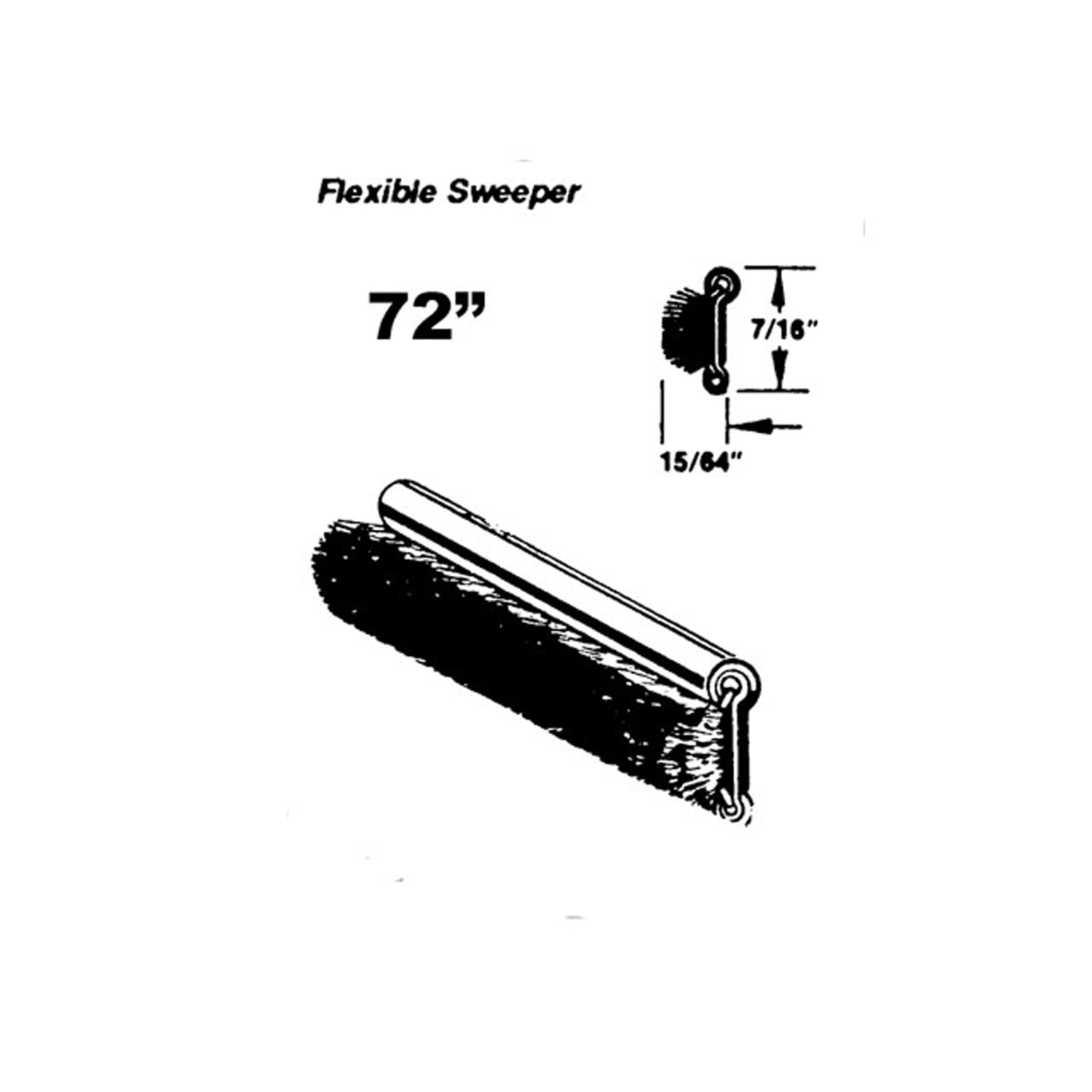 1940 Buick Roadmaster Series 70 Flexible sweeper. Made with stainless steel bead-WC 8-72Flexible sweeper. Made with stainless steel bead. Used on inner and outer beltlines. Also forms easily for use with sliding quarter windows. 72 in. long. Each. NOTE: $20 special shipping charge applies for domestic orders. Call or email for overseas shipping costs. Part can be sectioned into two equal lengths to reduce overseas shipping costs.
 1940 Buick Roadmaster Series 70 Fender Bolts. For use with Fender Bolt Washers; WF 3001-WF 3000Fender Bolts. For use with Fender Bolt Washers; WF 3001. Zinc Chromate plated, high strength. 1" X 5/16". Set of 25
 1940 Buick Roadmaster Series 70 Fender Bolt Washers. For use with Fender Bolts; WF 3000-WF 3001Fender Bolt Washers. For use with Fender Bolts; WF 3000. High quality, cadmium plated. 1-1/4" O.D., 3/8" I.D. Set of 25
 1940 Buick Roadmaster Series 70 VENT WINDOW SEAL,BUICK PONTIAC'40-41 CADILLAC OLDSMOBILE-WR 7300VENT WINDOW SEAL,BUICK PONTIAC'40-41 CADILLAC OLDSMOBILE
 1940 Buick Roadmaster Series 70 Front Vent Window Seals, for Convertibles. Pair R&L-WR 7303Front Vent Window Seals, for Convertibles. Pair R&L
 1940 Buick Roadmaster Series 70 Front Suspension Bumper. 2" high. Each-XB 18Front Suspension Bumper. 2" high. Each
 1940 Buick Roadmaster Series 70 Front Suspension Bumper. 1-5/8" high. Each-XB 23Front Suspension Bumper. 1-5/8" high. Each
 1940 Buick Roadmaster Series 70 Front Suspension Bumper. 2-7/8" high. Each-XB 25Front Suspension Bumper. 2-7/8" high. Each
 1940 Buick Roadmaster Series 70 Front Suspension Bumper. For lower arm. 2-1/8" high-XB 30Front Suspension Bumper. For lower arm. 2-1/8" high. Each
Why Choose Metro?
For over 100 years, Metro Moulded Parts has been the pinnacle of quality in classic car restoration parts. Our commitment to precision and authenticity in every component ensures a perfect fit and an OEM-level appearance.
- Expert Craftsmanship & Quality: Each part is a testament to our dedication to reliability and perfection, crafted from original designs and thoroughly tested.
- Advanced Technology: We use cutting-edge techniques to create flawless, long-lasting parts that surpass others in performance.
- SuperSoft Sponge – The Ultimate Door Seal: Not only are our door seals 30% softer than competitors', but they're also guaranteed to never leak. They effectively reduce wind and road noise, enhancing your classic car's comfort and driving experience.
- Proudly American: Our parts are a product of American craftsmanship, made in the USA with a spirit of excellence and heritage.
- Unrivaled Warranty: We back our products with a 30-year industry-leading warranty, a testament to our confidence in their quality.
Join us in preserving the legacy of classic cars with parts that are crafted for perfection, not just made.