

Image of 1942 Buick Century Series 60, Note: These illustrations use artistic license and may differ from actual historical models.
Performance Metrics
Fundamental Metrics
Emotional Appeal
MMP Rating
| Engine Specifications | |
|---|---|
| Engine: | Straight 8 |
| Displacement: | 320 cu in (5.2 L) |
| Horsepower: | Estimated 165 hp |
| Torque: | Not available |
| Compression Ratio: | 6.6:1 |
| Ignition System: | Battery and coil |
| Cooling System: | Liquid cooled |
| Performance Specifications | |
| 0-60 Time: | Not available |
| 1/4 Mile Time: | Not available |
| Top Speed: | Estimated 90 mph |
| Transmission and Drive | |
| Drive Type: | Rear wheel drive |
| Transmission Type: | 3-speed manual |
| Fuel and Efficiency | |
| Fuel System Type: | Carburetor |
| MPG: | Not available |
| Dimensions and Brakes | |
| Brakes: | Hydraulic drum brakes |
| Wheelbase: | 129 inches |
| Weight: | Estimated 3,800 lbs |
Note: Specifications for classic cars are given to the best of our ability, considering the limited and variant data available.
1942 Buick Century Series 60: The Last Prewar Hot Rod
The 1942 Buick Century Series 60 was a luxury car with the heart of a performance machine. It paired Buick’s powerful straight-eight engine with a shorter, lighter chassis than the company’s flagship models, giving it the pace that made the Century name famous. Built by the Buick Motor Division of General Motors, the 1942 model also holds a special place in history: it was among the last Buicks built before America’s factories turned to wartime production.
Buick stopped civilian car production in February 1942 as the United States redirected industrial capacity toward the war effort. That abrupt break makes the 1942 Century more than a stylish prewar automobile. It is a snapshot of a prosperous, chrome-bright era just before the country’s priorities changed overnight.
There is a fitting story behind the Century name. Buick introduced the model in 1936, combining a smaller Series 40 body with the larger, more powerful engine from the Series 80 Roadmaster. Buick promoted the result as a car capable of reaching 100 mph, an impressive claim for a full-size American automobile of the period. The 1942 Century carried that fast-car identity into its final prewar season.
Streamlined Buick Styling
The 1942 Century wore Buick’s unmistakable prewar look: a long hood, rounded fenders, a broad front grille, and generous chrome trim. Its proportions were elegant rather than delicate. The grille gave the front end a strong, upright presence, while the sweeping fenders and smoothly integrated headlamps softened the car’s substantial size. Buick’s hood ornament and brightwork added visual flair without disguising the Century’s practical, road-going character.
Inside, the Century offered the roomy cabin and polished finish expected of an upper-middle-market Buick. Depending on body style and trim, buyers could find broad cloth upholstery, carefully finished door panels, and an expansive bench seat. Convertible models used more upscale trim, including leather or leather-like upholstery depending on specification. The dashboard combined painted or wood-effect trim with clearly arranged gauges and large, period-style controls. It was comfortable and formal, but not as lavishly appointed as the top-of-the-line Roadmaster.
Technology was conventional by modern standards, but the Century benefited from Buick’s mature engineering. It had a synchromesh three-speed manual transmission, hydraulic brakes, and an overhead-valve straight-eight engine. Its suspension used independent front suspension and a live rear axle with leaf springs, a layout that balanced ride comfort with durability. Automatic transmission was not yet on the menu: Buick’s Dynaflow would arrive after the war, for the 1948 model year.
Factory color availability varied by paint and trim schedule, but period Buick palettes included deep blues, greens, grays, maroons, and more restrained black and tan tones. Dark, rich colors suit the Century’s formal styling especially well, while lighter two-tone combinations can make the rounded fenders and long profile stand out. Original paint charts and trim codes are worth checking when authenticity matters, since options could vary during a shortened production year.
Series 60 buyers could choose among several closed and open body styles, including sedans, coupes, and convertibles. Exact offerings depended on the particular body catalog and production period. The two-door Sedanette, with its flowing fastback roofline, is one of the most visually distinctive versions of the era. The convertible is especially appealing to collectors, while a four-door sedan makes for a practical example of Buick’s prewar luxury.
Why the Century Mattered
The Century’s central idea was simple and influential: put a large, high-output engine in a lighter, less expensive body. It was not a sports car in the European sense, but it gave American buyers a compelling blend of passenger-car comfort and unexpectedly strong performance. In an age when many large cars prioritized smoothness over speed, the Century had a reputation for being quick.
The 1942 model also represents the close of a chapter in American automotive design. Its flowing fenders, substantial chrome, and broad cabin belong unmistakably to the prewar period. The war interrupted that design progression, and when civilian production resumed, automakers faced new materials, manufacturing priorities, and customer expectations. The Century’s legacy continued after the war, but the 1942 car preserves the model’s original prewar character.
What set it apart from many contemporaries was not one exotic feature, but the combination of a strong engine, a more manageable chassis than Buick’s largest models, and a comfortable ride. That formula helped establish the Century as Buick’s performance-minded series, a role the name would revisit in later decades.
Straight-Eight Performance and Road Manners
The 1942 Century used Buick’s 320.2-cubic-inch overhead-valve straight-eight, rated at about 165 horsepower. This was the larger engine associated with Buick’s senior models, rather than the smaller powerplant fitted to lower-priced Buicks. Power went through a three-speed manual gearbox to the rear wheels.
Period performance figures can vary with body style, gearing, vehicle condition, and testing method. A sound example is generally estimated to reach 60 mph in roughly 14 to 17 seconds, with a top speed in the neighborhood of 95 to 100 mph. Those are best treated as approximate figures, not guaranteed results for a 1942 car today. A seventy-plus-year-old engine, modern traffic, and the condition of the brakes and tires matter far more than the original brochure’s ambitions.
On the road, the Century feels substantial and relaxed. The straight-eight delivers its power smoothly, with a mellow, even exhaust note rather than a sharp high-revving bark. The long wheelbase helps the car glide over ordinary road imperfections, though worn shocks, tired springs, or bias-ply tires can make bumps and ruts more noticeable. Steering is comparatively heavy at low speeds, and the car leans more through corners than a modern sedan. On a winding road, it rewards a measured pace and smooth inputs rather than aggressive driving.
The driving experience is part of the appeal: a broad bench seat, a large steering wheel, a long view over the hood, and a quiet engine working at low revs. The Century can feel surprisingly brisk for its size, but its drum brakes, period tires, and less precise steering call for space and anticipation. It is a fast prewar Buick, not a modern car in vintage clothing.
Living With a 1942 Century
Today, most Centuries are collector cars, show vehicles, or occasional-use tour cars rather than daily transportation. A well-sorted example can take part in local cruises and vintage events, but regular highway use requires careful attention to brakes, tires, cooling, and electrical systems. Modern traffic moves quickly, and the car’s braking distances and handling are not comparable to those of a contemporary vehicle.
Mechanical work is generally approachable for an experienced home mechanic. The straight-eight is robust and uses familiar period technology, and many routine tasks do not require specialized electronics or diagnostic equipment. The harder jobs are often finding correct parts, rebuilding worn components, and tracking down trim or body pieces specific to the 1942 model. Because the model year was cut short, some parts may be less readily available than components shared across several years.
Reliability depends heavily on maintenance and restoration quality. Cooling-system condition is important, as are the fuel system, ignition, wheel bearings, and hydraulic brakes. Before buying, check for rust in the floors, rocker areas, trunk, and lower body panels, and inspect the frame and suspension carefully. A car that starts and idles well may still need substantial work before it is safe for regular road use.
Rare-Year Trivia and Common Complaints
The defining fact about the 1942 Century is that it belongs to a very short civilian model year. Buick production ended early in 1942, and the company did not build civilian cars for the next several years. Buick’s factories shifted to wartime manufacturing, including military equipment. The Century itself was not a wartime military vehicle, but its production was directly affected by the industrial conversion.
There is no widely recognized speed or endurance record unique to the 1942 Series 60. Its claim to fame is instead the Century’s long-standing 100-mph image and its combination of Buick comfort with strong straight-eight performance. Stories of individual celebrity owners may exist, but they are not a reliable measure of the model’s importance and should be verified against documentation.
Common criticisms are familiar to owners of large prewar cars: fuel economy is modest, the steering and braking feel dated, and restoration can become expensive when rare trim or body parts are missing. The car’s size also makes tight parking and narrow roads less enjoyable. On the plus side, its conventional engineering and strong club community can make ownership more manageable than that of a rare, technically complex European classic.
Collector Values and Availability
Values vary considerably with body style, originality, condition, and the quality of any restoration. As a broad U.S. market estimate, a project or incomplete car might fall around $8,000 to $18,000. A sound, usable driver could bring roughly $20,000 to $40,000, while a well-restored sedan or coupe may reach about $40,000 to $65,000. Exceptional convertibles or unusually correct, high-quality restorations can exceed that range, sometimes reaching $70,000 to $100,000 or more. These are general estimates, not appraisals, and recent comparable sales should guide any specific purchase.
Exact model-by-model production totals are not consistently reported in readily available summaries. A reasonable working estimate is that Buick built somewhere in the range of 10,000 to 15,000 1942 Series 60 Centuries, though that figure should be treated as an approximation rather than a confirmed factory total. Surviving cars are much scarcer than the original production number suggests, especially in complete, roadworthy condition.
Market values tend to reward the most desirable body styles and the best-documented restorations. The Century is recognized by Buick enthusiasts, but it does not always command the same prices as a top-tier Roadmaster or a famous sports car. That can make it an appealing entry point into prewar American motoring. As with many collector cars, condition and originality matter more than optimistic asking prices, and a high-quality restoration is not always worth the full cost of the work.
A Buick With a Story to Tell
The 1942 Buick Century Series 60 combines a powerful straight-eight, handsome prewar styling, and a comfortable full-size chassis in a model year cut short by world events. It was quick for its class, thoughtfully engineered, and distinctive enough to earn a lasting reputation as Buick’s performance-minded luxury car.
For collectors, the Century offers more than chrome and nostalgia. It captures the moment when American motoring paused for war, leaving behind one final generation of prewar Buicks. Start the straight-eight, listen to it settle into its smooth rhythm, and the significance becomes clear: this is not just a classic Buick, but a rolling piece of automotive history.
1942 Buick Century Series 60 Catalog of Parts
 1942 Buick Century Series 60 Accelerator Pedal Pad. Made with steel core like original-AP 29-CAccelerator Pedal Pad. Made with steel core like original. 2-1/8" X 8-1/2". Black. Each
 1942 Buick Century Series 60 Transmission Vacuum Shift Grommet. Used on rear side-BC 40Transmission Vacuum Shift Grommet. Used on rear side. 1-1/2" O.D., 3/8" I.D., 3/8" Thick. Each
 1942 Buick Century Series 60 Stabilizer Bar Bushings-BN 106Stabilizer Bar Bushings. 1-3/4" long X 1-1/2" wide X 1-1/2" high, 10/16" I.D. Pair
 1942 Buick Century Series 60 Lower Inner "A" Frame Shaft Seal. 1-1/8" O.D., 5/16" thick-BN 23-ALower Inner "A" Frame Shaft Seal. 1-1/8" O.D., 5/16" thick. Each
 1942 Buick Century Series 60 Stabilizer Bar Bushing. For rear axel anti-sway rod ends-BN 34-BStabilizer Bar Bushing. For rear axel anti-sway rod ends. Four used per car. 1-5/16" O.D., 3/4" long, with 5/8" I.D. Each
 1942 Buick Century Series 60 Dyno-Flow Brake Pedal Pad. 3" wide X 3-1/2" long. Each-CB 103Dyno-Flow Brake Pedal Pad. 3" wide X 3-1/2" long. Each
 1942 Buick Century Series 60 Clutch and Brake Pedal Pads. 2" wide X 3" long. Pair-CB 15Clutch and Brake Pedal Pads. 2" wide X 3" long. Pair
 1942 Buick Century Series 60 Cowl and Hood Seal. Push-in tabs, like original-CS 8Cowl and Hood Seal. Push-in tabs, like original. 78" length finished. Each
 1942 Buick Century Series 60 Upper Door Hinge Post Bumper. Held by screw-DB 60-AUpper Door Hinge Post Bumper. Held by screw. 7/8" diameter X 1/8" thick. Each
 1942 Buick Century Series 60 Windshield Center Bar Outer Gasket Molding Retainer-DP 10Windshield Center Bar Outer Gasket Molding Retainer. Use with original steel to retain stainless steel trim to the windshield. 18 in. long. Each.
 1942 Buick Century Series 60 Windshield Center Bar Gasket-DP 11Windshield Center Bar Gasket. This seal is make with all the original
 1942 Buick Century Series 60 Auxiliary Door Seals-ELP 2000Auxiliary Door Seals. Weatherstrip for lower front corner of front door. Pair R&L
 1942 Buick Century Series 60 Auxiliary door seals-ELP 2001Auxiliary door seals. Weatherstrip for rear corners of front door. (Used for front and rear corners of rear door on some models). 5-1/2 in. 4 in. Pair. R&L.
 1942 Buick Century Series 60 Door and Hood Bumper. 1" diameter X 7/8" thick. Each-HF 16Door and Hood Bumper. 1" diameter X 7/8" thick. Each
 1942 Buick Century Series 60 Headlight Assembly Housing Pad. 8-3/8" O.D. Pair-HR 7Headlight Assembly Housing Pad. 8-3/8" O.D. Pair
 1942 Buick Century Series 60 Windshield and Rear Window Channel. Used with 1/4" glass-LP 105Windshield and Rear Window Channel. Used with 1/4" glass. Fits some models. Sold by the foot
 1942 Buick Century Series 60 Windshield Pinchweld Seal for some models w/chrome garnish-LP 106Windshield Pinchweld Seal for some models w/chrome garnish. Used with LP 105, DP 10 & DP 11 (center division bar seals)to seal and retain outer chrome garnish. Sold by the foot
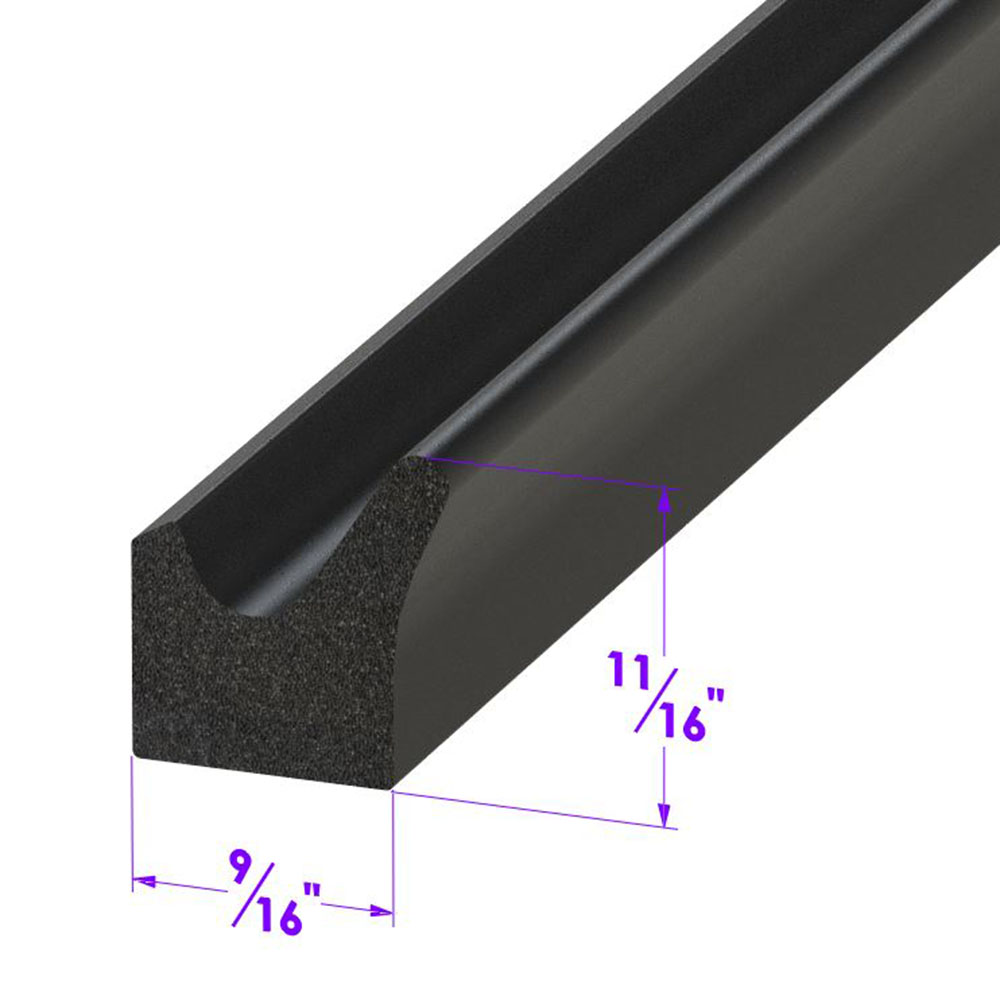 1942 Buick Century Series 60 Door side seal. Same as LP 40-A, but for a heavier seal-LP 40Door side seal. Same as LP 40-A, but for a heavier seal. Fits many domestic passenger cars and trucks. Used in Cobra kit cars as trunk weatherstrip. Per foot.
 1942 Buick Century Series 60 Door side seal. Same as LP 40, but for a lighter seal-LP 40-ADoor side seal. Same as LP 40, but for a lighter seal. Fits many domestic passenger cars and trucks. Universal seal for street rods and customs. Used in Cobra kit cars as door weatherstrip. Per foot.
 1942 Buick Century Series 60 Tail-light Pads (fits some models)-MP 332Tail-light Pads (fits some models). Overall length approximately 10". 4-3/4" wide X 10" long. Pair R&L
 1942 Buick Century Series 60 Trunk Handle Pad. 2" wide X 6-5/8" long. Each-MP 333-CTrunk Handle Pad. 2" wide X 6-5/8" long. Each
 1942 Buick Century Series 60 Sun Visor End Tube Plug. Black. Each-RP 303-DSun Visor End Tube Plug. Black. Each
 1942 Buick Century Series 60 Door Lock Knob. Made of Black rubber, self-threading-RP 304-ADoor Lock Knob. Made of Black rubber, self-threading. 1-3/8" tall with 1/8" lower I.D., 3/8" lower O.D. Each
 1942 Buick Century Series 60 Door Lock Knob. Made of Slate Blue rubber, self-threading-RP 304-CDoor Lock Knob. Made of Slate Blue rubber, self-threading. 1-3/8" tall with 1/8" lower I.D., 3/8" lower O.D. Each
 1942 Buick Century Series 60 Door Lock Knob. Made of Navy Blue rubber, self-threading-RP 304-DDoor Lock Knob. Made of Navy Blue rubber, self-threading. 1-3/8" tall with 1/8" lower I.D., 3/8" lower O.D. Each
 1942 Buick Century Series 60 Door Lock Knob. Made of Silver Blue rubber, self-threading-RP 304-EDoor Lock Knob. Made of Silver Blue rubber, self-threading. 1-3/8" tall with 1/8" lower I.D., 3/8" lower O.D. Each
 1942 Buick Century Series 60 Door Lock Knob. Made of Fawn colored rubber, self-threading-RP 304-FDoor Lock Knob. Made of Fawn colored rubber, self-threading. 1-3/8" tall with 1/8" lower I.D., 3/8" lower O.D. Each
 1942 Buick Century Series 60 Door Lock Knob. Made of Olive Green rubber, self-threading-RP 304-GDoor Lock Knob. Made of Olive Green rubber, self-threading. 1-3/8" tall with 1/8" lower I.D., 3/8" lower O.D. Each
 1942 Buick Century Series 60 Door Lock Knob. Made of Yellow rubber, self-threading-RP 304-HDoor Lock Knob. Made of Yellow rubber, self-threading. 1-3/8" tall with 1/8" lower I.D., 3/8" lower O.D. Each
 1942 Buick Century Series 60 Door Lock Knob. Made of White rubber, self-threading-RP 304-IDoor Lock Knob. Made of White rubber, self-threading. 1-3/8" tall with 1/8" lower I.D., 3/8" lower O.D. Each
 1942 Buick Century Series 60 Door Lock Knob. Made of Silver rubber, self-threading-RP 304-JDoor Lock Knob. Made of Silver rubber, self-threading. 1-3/8" tall with 1/8" lower I.D., 3/8" lower O.D. Each
 1942 Buick Century Series 60 Door Lock Knob. Made of Medium Brown rubber, self-threading-RP 304-KDoor Lock Knob. Made of Medium Brown rubber, self-threading. 1-3/8" tall with 1/8" lower I.D., 3/8" lower O.D. Each
 1942 Buick Century Series 60 Door Lock Knob. Made of Wedgwood rubber, self-threading-RP 304-LDoor Lock Knob. Made of Wedgwood rubber, self-threading. 1-3/8" tall with 1/8" lower I.D., 3/8" lower O.D. Each
 1942 Buick Century Series 60 Door Lock Knob. Made of Teal Green rubber, self-threading-RP 304-MDoor Lock Knob. Made of Teal Green rubber, self-threading. 1-3/8" tall with 1/8" lower I.D., 3/8" lower O.D. Each
 1942 Buick Century Series 60 Door Lock Knob. Made of Moss Green rubber, self-threading-RP 304-NDoor Lock Knob. Made of Moss Green rubber, self-threading. 1-3/8" tall with 1/8" lower I.D., 3/8" lower O.D. Each
 1942 Buick Century Series 60 Door Lock Knob. Made of Ember glow rubber, self-threading-RP 304-ODoor Lock Knob. Made of Ember glow rubber, self-threading. 1-3/8" tall with 1/8" lower I.D., 3/8" lower O.D. Each
 1942 Buick Century Series 60 Folding Top Weatherstrips-RR 1600Folding Top Weatherstrips. Includes right & left sides plus windshield posts. 8-Piece Set
 1942 Buick Century Series 60 Door Bumper. 1" diameter X 1/4" thick Each-SB 60Door Bumper. 1" diameter X 1/4" thick Each
 1942 Buick Century Series 60 Front Door Window Adjustment Bumper Cushion-SB 70Front Door Window Adjustment Bumper Cushion. For "T" bolt in door. Four to six used per car. 11/16" X 1/4". Each
 1942 Buick Century Series 60 Speedometer Cable / Utility Grommet-SM 2Speedometer Cable / Utility Grommet. Fits 3/4" to 13/16" hole. 3/16" center hole. Each
 1942 Buick Century Series 60 Wire Harness Grommet. Each-SM 3Wire Harness Grommet. Each
 1942 Buick Century Series 60 Ignition cable grommet. 2 in. OD x 1/2 in. ID fits a 1.5 in-SM 33Ignition cable grommet. 2 in. OD x 1/2 in. ID fits a 1.5 in. hole. Each.
 1942 Buick Century Series 60 Special Purpose Grommet-SM 4Special Purpose Grommet. For firewall, fuel gauge wire, horn wire, hood latch cable and fresh air cable. Fits 1/2" hole. 1/8" center hole. Each
 1942 Buick Century Series 60 Firewall Grommet. For park brake cable. Angled hole. Fit's 1" hole-SM 40Firewall Grommet. For park brake cable. Angled hole. Fit's 1" Hole. Each
 1942 Buick Century Series 60 Speedometer Cable Firewall Grommet. Fits 1-7/8" long hole-SM 47Speedometer Cable Firewall Grommet. Fits 1-7/8" long hole. NOTE: Not used when car was factory equipped with windshield washers. (Fits some models) Each
 1942 Buick Century Series 60 Windshield Wiper Grommet. Fits 1" hole. Each-SM 56Windshield Wiper Grommet. Fits 1" hole. Each
 1942 Buick Century Series 60 Choke Cable Grommet. Fits 5/8" hole. 1/8" center hole-SM 62Choke Cable Grommet. Fits 5/8" hole. 1/8" center hole. Each
 1942 Buick Century Series 60 Radio Fuse Boot and Wire Harness. For original radio only-SM 65-ARadio Fuse Boot and Wire Harness. For original radio only. Each
 1942 Buick Century Series 60 Special Purpose Grommet-SM 68Special Purpose Grommet. For headlight wire loom through body. Each
 1942 Buick Century Series 60 Firewall and Utility Grommet. Fits 3/4" hole. 3/16" I.D-SM 8Firewall and Utility Grommet. Fits 3/4" hole. 3/16" I.D. Each
 1942 Buick Century Series 60 Trunk Seal. 18 Feet long. Each-TK 50-18Trunk Seal. 18 Feet long. Each
 1942 Buick Century Series 60 Trunk Seal. Each-TK 56-18Trunk Seal. Each
 1942 Buick Century Series 60 Vertical Seal for Vent Window. Each is 17" long. Pair-VS 2Vertical Seal for Vent Window. Each is 17" long. Pair
 1942 Buick Century Series 60 Flexible glass-run channel-WC 11-72Flexible glass-run channel. Mohair lined, cloth covered with stainless steel bead. Used on side windows. 72 in. long. Each. NOTE: $20 special shipping charge applies for domestic orders. Call or email for overseas shipping costs. Part can be sectioned in two equal lengths to reduce overseas shipping costs.
 1942 Buick Century Series 60 Rigid division-bar channel. Made with Zinc-plated bead-WC 1-72Rigid division-bar channel. Made with Zinc-plated bead. Used on lower side windows. 72 in. long. Each. NOTE: $20 special shipping charge applies for domestic orders. Call or email for overseas shipping costs. Part can be sectioned into two equal lengths to reduce overseas shipping costs.
 1942 Buick Century Series 60 Rigid division-bar channel. Made with Zinc-plated bead-WC 1-96Rigid division-bar channel. Made with Zinc-plated bead. Used on lower side windows. 96 in. long. Each. NOTE: $20 special shipping charge applies for domestic orders. Call or email for overseas shipping costs. Part can be sectioned in two or three equal lengths to reduce overseas shipping costs.
 1942 Buick Century Series 60 Rigid division-bar channel. Made with stainless steel bead-WC 2-72Rigid division-bar channel. Made with stainless steel bead. 72 in. long. Each. NOTE: $20 special shipping charge applies for domestic orders. Call or email for overseas shipping costs. Part can be sectioned into two equal lengths to reduce overseas shipping costs.
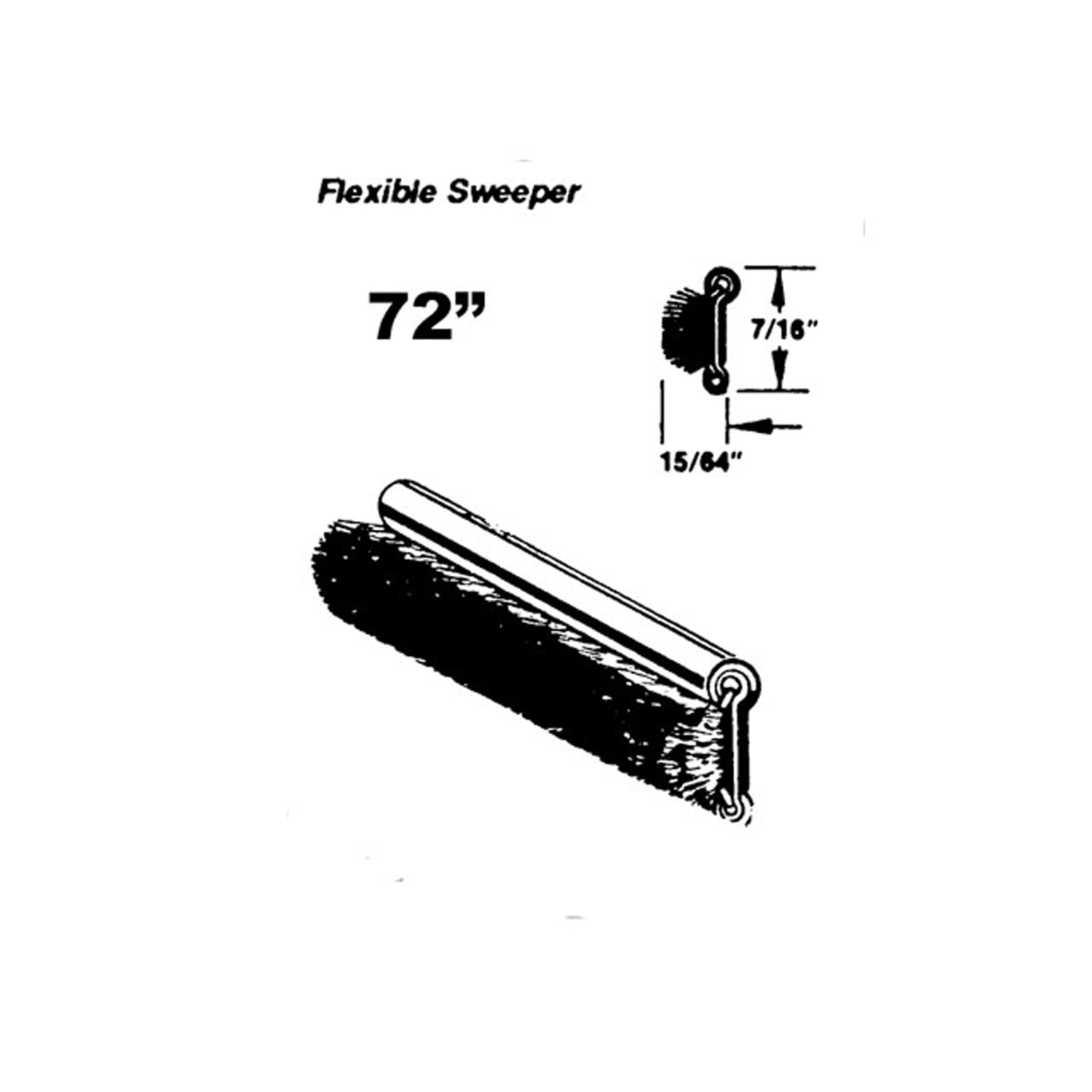 1942 Buick Century Series 60 Flexible sweeper. Made with stainless steel bead-WC 8-72Flexible sweeper. Made with stainless steel bead. Used on inner and outer beltlines. Also forms easily for use with sliding quarter windows. 72 in. long. Each. NOTE: $20 special shipping charge applies for domestic orders. Call or email for overseas shipping costs. Part can be sectioned into two equal lengths to reduce overseas shipping costs.
 1942 Buick Century Series 60 Fender Bolts. For use with Fender Bolt Washers; WF 3001-WF 3000Fender Bolts. For use with Fender Bolt Washers; WF 3001. Zinc Chromate plated, high strength. 1" X 5/16". Set of 25
 1942 Buick Century Series 60 Fender Bolt Washers. For use with Fender Bolts; WF 3000-WF 3001Fender Bolt Washers. For use with Fender Bolts; WF 3000. High quality, cadmium plated. 1-1/4" O.D., 3/8" I.D. Set of 25
 1942 Buick Century Series 60 Front Vent Window Seals. Pair R&L-WR 7321Front Vent Window Seals. Pair R&L
 1942 Buick Century Series 60 Front Suspension Bumper. 2" high. Each-XB 18Front Suspension Bumper. 2" high. Each
 1942 Buick Century Series 60 Front Suspension Bumper. 1-5/8" high. Each-XB 23Front Suspension Bumper. 1-5/8" high. Each
 1942 Buick Century Series 60 Front Suspension Bumper. 2-7/8" high. Each-XB 25Front Suspension Bumper. 2-7/8" high. Each
Why Choose Metro?
For over 100 years, Metro Moulded Parts has been the pinnacle of quality in classic car restoration parts. Our commitment to precision and authenticity in every component ensures a perfect fit and an OEM-level appearance.
- Expert Craftsmanship & Quality: Each part is a testament to our dedication to reliability and perfection, crafted from original designs and thoroughly tested.
- Advanced Technology: We use cutting-edge techniques to create flawless, long-lasting parts that surpass others in performance.
- SuperSoft Sponge – The Ultimate Door Seal: Not only are our door seals 30% softer than competitors', but they're also guaranteed to never leak. They effectively reduce wind and road noise, enhancing your classic car's comfort and driving experience.
- Proudly American: Our parts are a product of American craftsmanship, made in the USA with a spirit of excellence and heritage.
- Unrivaled Warranty: We back our products with a 30-year industry-leading warranty, a testament to our confidence in their quality.
Join us in preserving the legacy of classic cars with parts that are crafted for perfection, not just made.