

Image of 1947 Buick Series 40, Note: These illustrations use artistic license and may differ from actual historical models.
Performance Metrics
Fundamental Metrics
Emotional Appeal
MMP Rating
| Engine Specifications | |
|---|---|
| Engine: | Straight 8 |
| Displacement: | 248 cu in (4.1 L) |
| Horsepower: | 110 hp |
| Torque: | Estimated 200 lb-ft |
| Compression Ratio: | 6.5:1 |
| Ignition System: | Distributor and coil |
| Cooling System: | Liquid-cooled |
| Performance Specifications | |
| 0-60 Time: | Estimated 15 seconds |
| 1/4 Mile Time: | Not available |
| Top Speed: | 80 mph |
| Transmission and Drive | |
| Drive Type: | Rear-wheel drive |
| Transmission Type: | 3-speed manual |
| Fuel and Efficiency | |
| Fuel System Type: | Carburetor |
| MPG: | Estimated 15 mpg |
| Dimensions and Brakes | |
| Brakes: | Drum brakes |
| Wheelbase: | 124 inches |
| Weight: | 3,600 lbs |
Note: Specifications for classic cars are given to the best of our ability, considering the limited and variant data available.
1947 Buick Series 40: The Postwar Special
The 1947 Buick Series 40 brought Buick’s prewar engineering into America’s booming postwar market, combining a smooth straight-eight engine with substantial comfort and confident, chrome-rich styling. Known as the Buick Special, the Series 40 was the entry point to the brand’s 1947 lineup, below the Super and Roadmaster, but it was hardly a bare-bones car. Built by Buick, a division of General Motors, it offered the size, finish, and road presence buyers expected from a full-size American automobile.
The car arrived during a period of intense demand. Automakers were restarting production after wartime restrictions, and many early postwar cars were updated versions of designs developed before the war. The 1947 Special was one of them: familiar, proven, and desirable to customers eager to replace aging vehicles. One especially interesting detail is that the Series 40’s basic design traced back to Buick’s 1942 models, making the 1947 Special a snapshot of prewar engineering meeting postwar prosperity.
Chrome, Curves, and Buick Character
The Special’s exterior has the substantial, rounded look associated with late-1940s American cars. Its broad hood flows into rounded front fenders, while a prominent upright grille and bright horizontal trim give the nose a confident face. The chrome bumpers, hubcaps, side moldings, and hood ornament add sparkle without overwhelming the body’s smooth lines. It looks purposeful and formal, but not as imposing as the more expensive Roadmaster.
Inside, the Series 40 favors comfort and practicality. A broad front bench seat, generous glass area, and an upright driving position make the cabin feel open. Buick used durable cloth upholstery in many closed models, with more luxurious trim and leather appointments available in convertible versions. The dashboard typically featured painted or woodgrain-style trim, clear gauges, and a large steering wheel. It is not a modern luxury interior, but the materials and detailing gave the Special a distinctly upscale feel for an entry-level Buick.
Paint choices varied by body style and production availability, with period colors generally including dark and medium tones such as black, maroon, blue, green, gray, and tan. Deep, rich colors suited the car’s extensive chrome particularly well, and dark finishes remain popular with collectors today. Exact color names and combinations can differ by factory records and restoration references, so buyers seeking originality should check the body plate and model-specific documentation.
Series 40 Body Styles
Buick offered the 1947 Special in several body styles, including a four-door sedan, two-door sedanette, and convertible. Availability and model designation varied across the lineup. The sedanette, with its sloping fastback roof, is often the most visually distinctive closed-body version. Its flowing roofline gives the car a sportier profile than the conventional sedan, while the convertible is the open-air choice and one of the most sought-after Series 40s today.
The four-door sedan was the practical family favorite, offering easy access to both rows and a comfortable cabin for longer trips. The sedanette appealed to buyers who wanted a more stylish silhouette, while the convertible delivered the glamour and social appeal associated with postwar cruising. As with many classic cars, condition and originality matter more than body style alone, but open cars usually command a premium.
Engineering That Defined Buick
At the heart of the 1947 Buick Special is a 248-cubic-inch (about 4.1-liter) overhead-valve inline-eight. Buick promoted its overhead-valve layout as “valve-in-head” engineering, a design that helped distinguish the marque from competitors using flathead engines. In the Series 40, the straight-eight produced roughly 110 horsepower, delivering smooth, steady power rather than the sharp acceleration expected from a modern car.
Power went to the rear wheels through a conventional three-speed manual transmission, typically operated by a column-mounted shifter. The Special did not have Buick’s later Dynaflow automatic transmission, which arrived on selected 1948 models. Its chassis paired independent front suspension with coil springs and a solid rear axle, while hydraulic drum brakes handled stopping. This combination prioritized a cushioned ride and relaxed highway travel.
The Series 40 was not a radical styling or technology breakthrough by itself. Its significance lies in how it carried Buick’s established engineering and design language into the postwar years. The overhead-valve straight-eight, coil-spring ride, and carefully finished cabin helped establish the sort of smooth, substantial experience that Buick buyers came to expect. It also helped Buick meet the enormous demand for new cars at a time when factories were still transitioning back to civilian production.
How the 1947 Special Drives
Period performance depended on body style, gearing, condition, and load, but a sound 1947 Special is generally estimated to reach 60 mph from rest in roughly 20 seconds. Top speed is commonly estimated in the neighborhood of 85 to 90 mph. These figures should be treated as approximate rather than universal test results. The Buick was built for comfortable progress, not stoplight contests.
The straight-eight is the star of the driving experience. It produces a low, even engine note and delivers power smoothly as the car gathers speed. The three-speed manual requires deliberate shifts by modern standards, and the large steering wheel and unassisted controls make the driver feel closely connected to the car’s mechanical side. At low speeds, steering can feel heavy, especially when parking.
On ordinary roads, the suspension softens bumps and broken pavement effectively. The car feels settled on a straight highway, though its size, relatively narrow tires, and period suspension geometry mean it leans noticeably through winding corners. Strong crosswinds and uneven roads call for a steady hand. A well-maintained example can be pleasant on scenic drives, but it will not have the braking, grip, or precision of a contemporary vehicle.
Living With a Series 40
Today, most 1947 Specials are used for weekend cruising, local shows, parades, and club events rather than daily commuting. They can be driven regularly, but owners should account for their slower acceleration, drum brakes, higher fuel consumption, and lack of modern safety equipment. Seat belts, improved lighting, and carefully chosen brake upgrades are common considerations for owners who plan to use their cars on today’s roads.
Mechanical work is approachable for an owner familiar with older cars. The straight-eight is robust when properly maintained, and its basic mechanical systems are comparatively straightforward. Parts support is available through Buick and classic-car suppliers, although trim, body-specific pieces, and restoration-quality interior components can take more searching. Before buying, inspect the frame and body for rust, check the engine for oil pressure and cooling issues, and assess the transmission, brakes, and electrical system. A tidy-looking car can still need substantial work underneath.
1947 Buick Facts and Myths
The Series 40’s biggest historical distinction is its role as a familiar Buick offered during the postwar buying rush. It was not a special race model or a record-setting performance car. Its appeal was more everyday: a smooth eight-cylinder engine, a comfortable ride, and a well-appointed cabin at a lower price than Buick’s larger series.
There is no widely recognized, Series 40-specific speed or endurance record to define the 1947 model. Nor should every 1947 Buick seen in a film or period photograph be assumed to be a Special: the year’s Buick lineup included several series with similar styling. The Special’s fastback sedanette is a frequent favorite in classic-car displays because its roofline gives the car an unmistakably late-1940s profile.
A common criticism is that the car feels slow and heavy by modern standards. Its drum brakes and old-fashioned handling also require more planning than a modern driver may expect. Those are fair limitations, but they are part of the period experience. The Special’s appeal is its smooth, unhurried character, not sports-car agility.
Collector Values and Availability
Production estimates for the 1947 Series 40 are generally in the range of about 150,000 cars across its body styles. That is a broad estimate rather than a count of surviving vehicles, and individual body styles were produced in different numbers. Sedans are usually easier to find than convertibles, while complete, original cars are increasingly attractive to collectors looking for a usable restoration candidate.
As a general U.S. market guide, a project car may sell for roughly $8,000 to $15,000, depending on completeness and rust. A running driver or presentable older restoration might fall around $15,000 to $30,000. High-quality restorations can reach approximately $30,000 to $50,000, while an especially appealing convertible can exceed that range, sometimes reaching $50,000 to $80,000 or more. These are broad estimates, not guaranteed sale prices; location, originality, documentation, and restoration quality make a major difference.
Values tend to reward condition and desirable body styles rather than simply rising with age. A sound, well-documented convertible is likely to attract more interest than a rough sedan, but the market for full-size postwar cars can be selective. For buyers, that can mean good value compared with more famous prewar classics. For sellers, a careful restoration and clear records are often more persuasive than expensive cosmetic changes that reduce originality.
Why the 1947 Buick Special Still Matters
The 1947 Buick Series 40 is a handsome bridge between two eras: a prewar design refreshed for a country ready to get back on the road. Its straight-eight engine, cushioned ride, generous cabin, and distinctive sedanette styling capture Buick’s idea of attainable refinement. It may not be fast or modern, but it offers something more enduring: an unmistakable sense of postwar optimism, delivered one smooth mile at a time.
1947 Buick Series 40 Catalog of Parts
 1947 Buick Series 40 Accelerator Pedal Pad. 2-3/8" X 8-1/2". Each-AP 29Accelerator Pedal Pad. 2-3/8" X 8-1/2". Each
 1947 Buick Series 40 Accelerator Pedal Pad. Made with steel core like original-AP 29-CAccelerator Pedal Pad. Made with steel core like original. 2-1/8" X 8-1/2". Black. Each
 1947 Buick Series 40 Transmission Vacuum Shift Grommet. Used on rear side-BC 40Transmission Vacuum Shift Grommet. Used on rear side. 1-1/2" O.D., 3/8" I.D., 3/8" Thick. Each
 1947 Buick Series 40 Stabilizer Bar Bushings-BN 106Stabilizer Bar Bushings. 1-3/4" long X 1-1/2" wide X 1-1/2" high, 10/16" I.D. Pair
 1947 Buick Series 40 Lower Inner "A" Frame Shaft Seal. 1-1/8" O.D., 5/16" thick-BN 23-ALower Inner "A" Frame Shaft Seal. 1-1/8" O.D., 5/16" thick. Each
 1947 Buick Series 40 Stabilizer Bar Bushing. For rear axel anti-sway rod ends-BN 34-BStabilizer Bar Bushing. For rear axel anti-sway rod ends. Four used per car. 1-5/16" O.D., 3/4" long, with 5/8" I.D. Each
 1947 Buick Series 40 Dyno-Flow Brake Pedal Pad. 3" wide X 3-1/2" long. Each-CB 103Dyno-Flow Brake Pedal Pad. 3" wide X 3-1/2" long. Each
 1947 Buick Series 40 Clutch and Brake Pedal Pads. 2" wide X 3" long. Pair-CB 15Clutch and Brake Pedal Pads. 2" wide X 3" long. Pair
 1947 Buick Series 40 Cowl and Hood Seal. Push-in tabs, like original-CS 8Cowl and Hood Seal. Push-in tabs, like original. 78" length finished. Each
 1947 Buick Series 40 Upper Door Hinge Post Bumper. Held by screw-DB 60-AUpper Door Hinge Post Bumper. Held by screw. 7/8" diameter X 1/8" thick. Each
 1947 Buick Series 40 Windshield Center Bar Outer Gasket Molding Retainer-DP 10Windshield Center Bar Outer Gasket Molding Retainer. Use with original steel to retain stainless steel trim to the windshield. 18 in. long. Each.
 1947 Buick Series 40 Windshield Center Bar Gasket-DP 11Windshield Center Bar Gasket. This seal is make with all the original
 1947 Buick Series 40 Auxiliary Door Seals-ELP 2000Auxiliary Door Seals. Weatherstrip for lower front corner of front door. Pair R&L
 1947 Buick Series 40 Door and Hood Bumper. 1" diameter X 7/8" thick. Each-HF 16Door and Hood Bumper. 1" diameter X 7/8" thick. Each
 1947 Buick Series 40 Headlight Assembly Housing Pad. 8-3/8" O.D. Pair-HR 7Headlight Assembly Housing Pad. 8-3/8" O.D. Pair
 1947 Buick Series 40 Windshield and Rear Window Channel. Used with 1/4" glass-LP 105Windshield and Rear Window Channel. Used with 1/4" glass. Fits some models. Sold by the foot
 1947 Buick Series 40 Windshield Pinchweld Seal for some models w/chrome garnish-LP 106Windshield Pinchweld Seal for some models w/chrome garnish. Used with LP 105, DP 10 & DP 11 (center division bar seals)to seal and retain outer chrome garnish. Sold by the foot
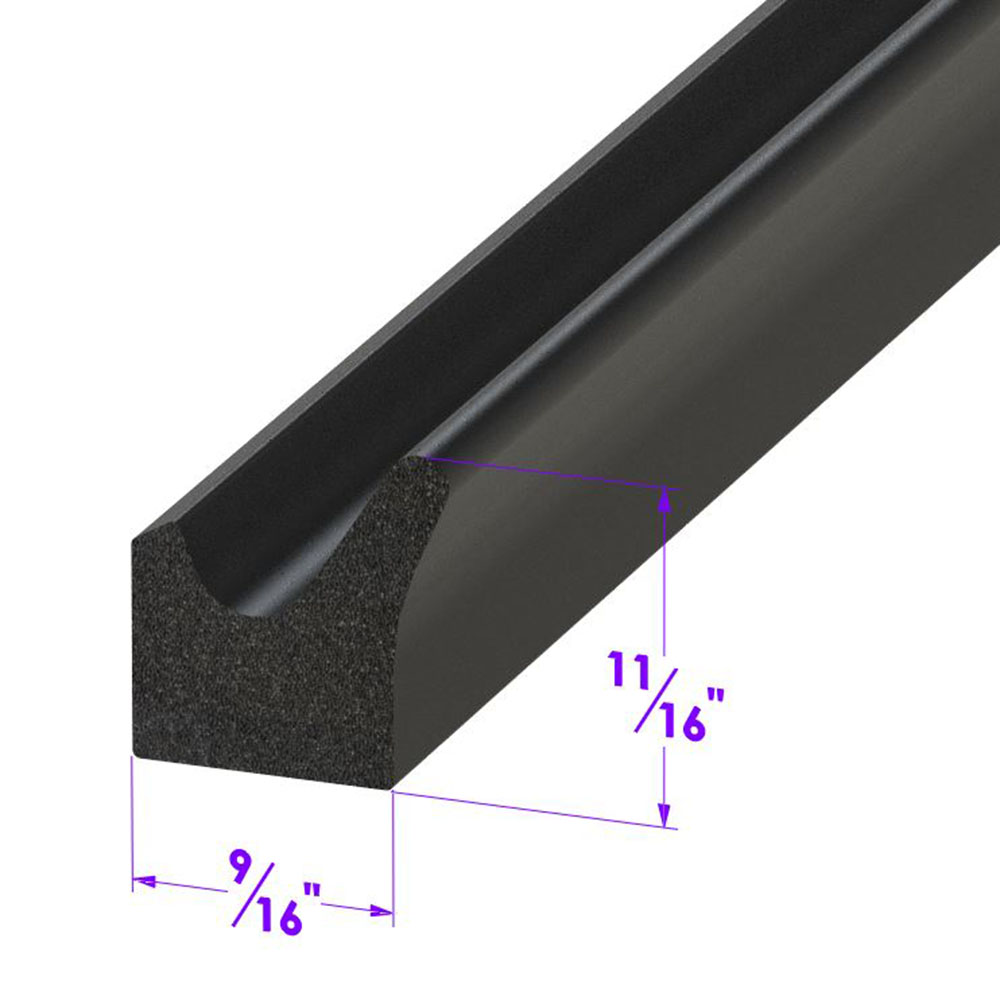 1947 Buick Series 40 Door side seal. Same as LP 40-A, but for a heavier seal-LP 40Door side seal. Same as LP 40-A, but for a heavier seal. Fits many domestic passenger cars and trucks. Used in Cobra kit cars as trunk weatherstrip. Per foot.
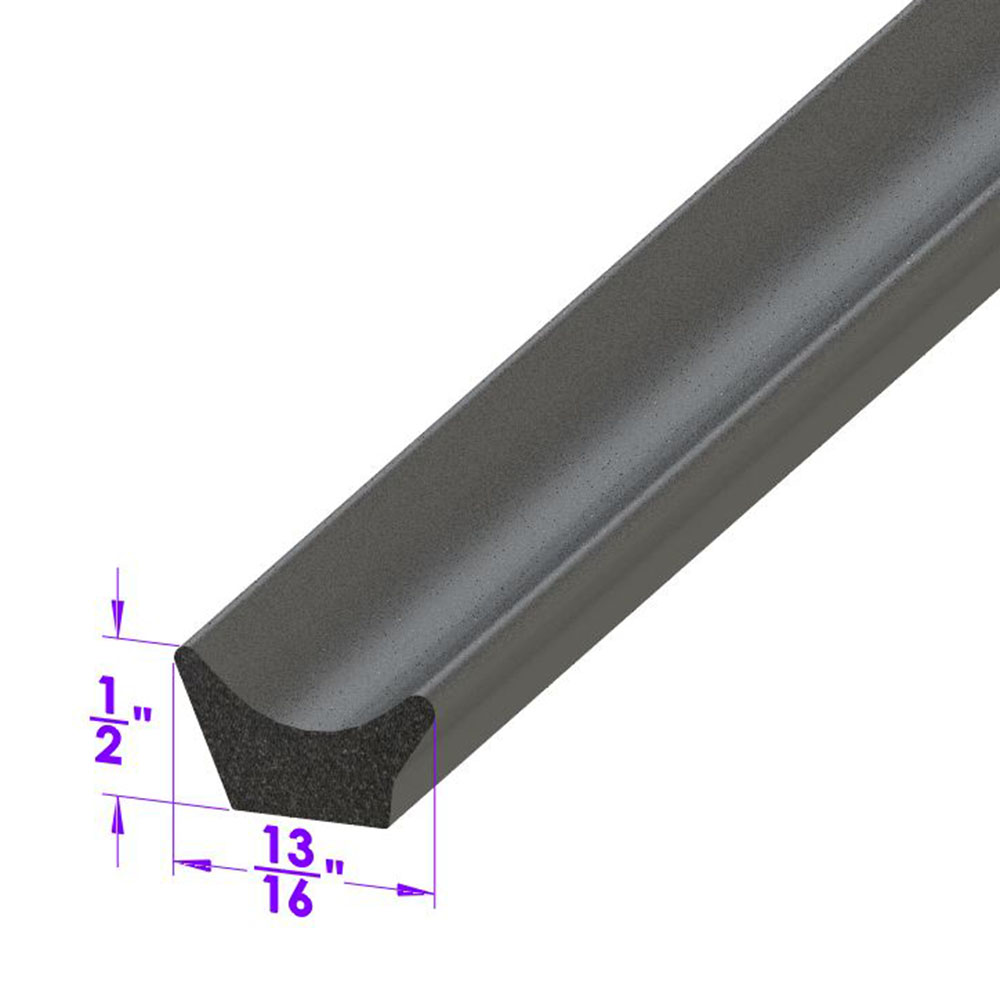 1947 Buick Series 40 Door side seal. Same as LP 40, but for a lighter seal-LP 40-ADoor side seal. Same as LP 40, but for a lighter seal. Fits many domestic passenger cars and trucks. Universal seal for street rods and customs. Used in Cobra kit cars as door weatherstrip. Per foot.
 1947 Buick Series 40 Tail-light Pads (fits some models)-MP 332Tail-light Pads (fits some models). Overall length approximately 10". 4-3/4" wide X 10" long. Pair R&L
 1947 Buick Series 40 Tail-light Pads. 3-1/4" wide X 9" long. Pair-MP 333-ATail-light Pads. 3-1/4" wide X 9" long. Pair
 1947 Buick Series 40 Door Lock Knob. Made of Black rubber, self-threading-RP 304-ADoor Lock Knob. Made of Black rubber, self-threading. 1-3/8" tall with 1/8" lower I.D., 3/8" lower O.D. Each
 1947 Buick Series 40 Door Lock Knob. Made of Slate Blue rubber, self-threading-RP 304-CDoor Lock Knob. Made of Slate Blue rubber, self-threading. 1-3/8" tall with 1/8" lower I.D., 3/8" lower O.D. Each
 1947 Buick Series 40 Door Lock Knob. Made of Navy Blue rubber, self-threading-RP 304-DDoor Lock Knob. Made of Navy Blue rubber, self-threading. 1-3/8" tall with 1/8" lower I.D., 3/8" lower O.D. Each
 1947 Buick Series 40 Door Lock Knob. Made of Silver Blue rubber, self-threading-RP 304-EDoor Lock Knob. Made of Silver Blue rubber, self-threading. 1-3/8" tall with 1/8" lower I.D., 3/8" lower O.D. Each
 1947 Buick Series 40 Door Lock Knob. Made of Fawn colored rubber, self-threading-RP 304-FDoor Lock Knob. Made of Fawn colored rubber, self-threading. 1-3/8" tall with 1/8" lower I.D., 3/8" lower O.D. Each
 1947 Buick Series 40 Door Lock Knob. Made of Olive Green rubber, self-threading-RP 304-GDoor Lock Knob. Made of Olive Green rubber, self-threading. 1-3/8" tall with 1/8" lower I.D., 3/8" lower O.D. Each
 1947 Buick Series 40 Door Lock Knob. Made of Yellow rubber, self-threading-RP 304-HDoor Lock Knob. Made of Yellow rubber, self-threading. 1-3/8" tall with 1/8" lower I.D., 3/8" lower O.D. Each
 1947 Buick Series 40 Door Lock Knob. Made of White rubber, self-threading-RP 304-IDoor Lock Knob. Made of White rubber, self-threading. 1-3/8" tall with 1/8" lower I.D., 3/8" lower O.D. Each
 1947 Buick Series 40 Door Lock Knob. Made of Silver rubber, self-threading-RP 304-JDoor Lock Knob. Made of Silver rubber, self-threading. 1-3/8" tall with 1/8" lower I.D., 3/8" lower O.D. Each
 1947 Buick Series 40 Door Lock Knob. Made of Medium Brown rubber, self-threading-RP 304-KDoor Lock Knob. Made of Medium Brown rubber, self-threading. 1-3/8" tall with 1/8" lower I.D., 3/8" lower O.D. Each
 1947 Buick Series 40 Door Lock Knob. Made of Wedgwood rubber, self-threading-RP 304-LDoor Lock Knob. Made of Wedgwood rubber, self-threading. 1-3/8" tall with 1/8" lower I.D., 3/8" lower O.D. Each
 1947 Buick Series 40 Door Lock Knob. Made of Teal Green rubber, self-threading-RP 304-MDoor Lock Knob. Made of Teal Green rubber, self-threading. 1-3/8" tall with 1/8" lower I.D., 3/8" lower O.D. Each
 1947 Buick Series 40 Door Lock Knob. Made of Moss Green rubber, self-threading-RP 304-NDoor Lock Knob. Made of Moss Green rubber, self-threading. 1-3/8" tall with 1/8" lower I.D., 3/8" lower O.D. Each
 1947 Buick Series 40 Door Lock Knob. Made of Ember glow rubber, self-threading-RP 304-ODoor Lock Knob. Made of Ember glow rubber, self-threading. 1-3/8" tall with 1/8" lower I.D., 3/8" lower O.D. Each
 1947 Buick Series 40 Hydro-Electric Power Unit Mounting Cushion-RP 700Hydro-Electric Power Unit Mounting Cushion. Two to three used per car. 1" O.D. X 3/4" high rubber with 1/4 x 20 x 3/4" Studs. Replaces OEM #4149788. Each
 1947 Buick Series 40 Folding Top Weatherstrips-RR 1600Folding Top Weatherstrips. Includes right & left sides plus windshield posts. 8-Piece Set
 1947 Buick Series 40 Seat Bumper. Black. 3-5/16" long X 13/16" wide. Pair-SB 200Seat Bumper. Black. 3-5/16" long X 13/16" wide. Pair
 1947 Buick Series 40 Seat Bumper. Brown. 35/16" long X 13/16" wide. Pair-SB 200-ASeat Bumper. Brown. 35/16" long X 13/16" wide. Pair
 1947 Buick Series 40 Front Door Window Adjustment Bumper Cushion-SB 70Front Door Window Adjustment Bumper Cushion. For "T" bolt in door. Four to six used per car. 11/16" X 1/4". Each
 1947 Buick Series 40 Speedometer Cable / Utility Grommet-SM 2Speedometer Cable / Utility Grommet. Fits 3/4" to 13/16" hole. 3/16" center hole. Each
 1947 Buick Series 40 Wire Harness Grommet. Each-SM 3Wire Harness Grommet. Each
 1947 Buick Series 40 Ignition cable grommet. 2 in. OD x 1/2 in. ID fits a 1.5 in-SM 33Ignition cable grommet. 2 in. OD x 1/2 in. ID fits a 1.5 in. hole. Each.
 1947 Buick Series 40 Special Purpose Grommet-SM 4Special Purpose Grommet. For firewall, fuel gauge wire, horn wire, hood latch cable and fresh air cable. Fits 1/2" hole. 1/8" center hole. Each
 1947 Buick Series 40 Firewall Grommet. For park brake cable. Angled hole. Fit's 1" hole-SM 40Firewall Grommet. For park brake cable. Angled hole. Fit's 1" Hole. Each
 1947 Buick Series 40 Speedometer Cable Firewall Grommet. Fits 1-7/8" long hole-SM 47Speedometer Cable Firewall Grommet. Fits 1-7/8" long hole. NOTE: Not used when car was factory equipped with windshield washers. (Fits some models) Each
 1947 Buick Series 40 Windshield Wiper Grommet. Fits 1" hole. Each-SM 56Windshield Wiper Grommet. Fits 1" hole. Each
 1947 Buick Series 40 Choke Cable Grommet. Fits 5/8" hole. 1/8" center hole-SM 62Choke Cable Grommet. Fits 5/8" hole. 1/8" center hole. Each
 1947 Buick Series 40 Radio Fuse Boot and Wire Harness. For original radio only-SM 65-ARadio Fuse Boot and Wire Harness. For original radio only. Each
 1947 Buick Series 40 Special Purpose Grommet-SM 68Special Purpose Grommet. For headlight wire loom through body. Each
 1947 Buick Series 40 Firewall and Utility Grommet. Fits 3/4" hole. 3/16" I.D-SM 8Firewall and Utility Grommet. Fits 3/4" hole. 3/16" I.D. Each
 1947 Buick Series 40 Trunk Seal. 18 Feet long. Each-TK 50-18Trunk Seal. 18 Feet long. Each
 1947 Buick Series 40 Trunk Seal. Each-TK 56-18Trunk Seal. Each
 1947 Buick Series 40 Vertical Seal for Vent Window. Each is 17" long. Pair-VS 2Vertical Seal for Vent Window. Each is 17" long. Pair
 1947 Buick Series 40 Flexible glass-run channel-WC 11-72Flexible glass-run channel. Mohair lined, cloth covered with stainless steel bead. Used on side windows. 72 in. long. Each. NOTE: $20 special shipping charge applies for domestic orders. Call or email for overseas shipping costs. Part can be sectioned in two equal lengths to reduce overseas shipping costs.
 1947 Buick Series 40 Rigid division-bar channel. Made with Zinc-plated bead-WC 1-72Rigid division-bar channel. Made with Zinc-plated bead. Used on lower side windows. 72 in. long. Each. NOTE: $20 special shipping charge applies for domestic orders. Call or email for overseas shipping costs. Part can be sectioned into two equal lengths to reduce overseas shipping costs.
 1947 Buick Series 40 Rigid division-bar channel. Made with Zinc-plated bead-WC 1-96Rigid division-bar channel. Made with Zinc-plated bead. Used on lower side windows. 96 in. long. Each. NOTE: $20 special shipping charge applies for domestic orders. Call or email for overseas shipping costs. Part can be sectioned in two or three equal lengths to reduce overseas shipping costs.
 1947 Buick Series 40 Rigid division-bar channel. Made with stainless steel bead-WC 2-72Rigid division-bar channel. Made with stainless steel bead. 72 in. long. Each. NOTE: $20 special shipping charge applies for domestic orders. Call or email for overseas shipping costs. Part can be sectioned into two equal lengths to reduce overseas shipping costs.
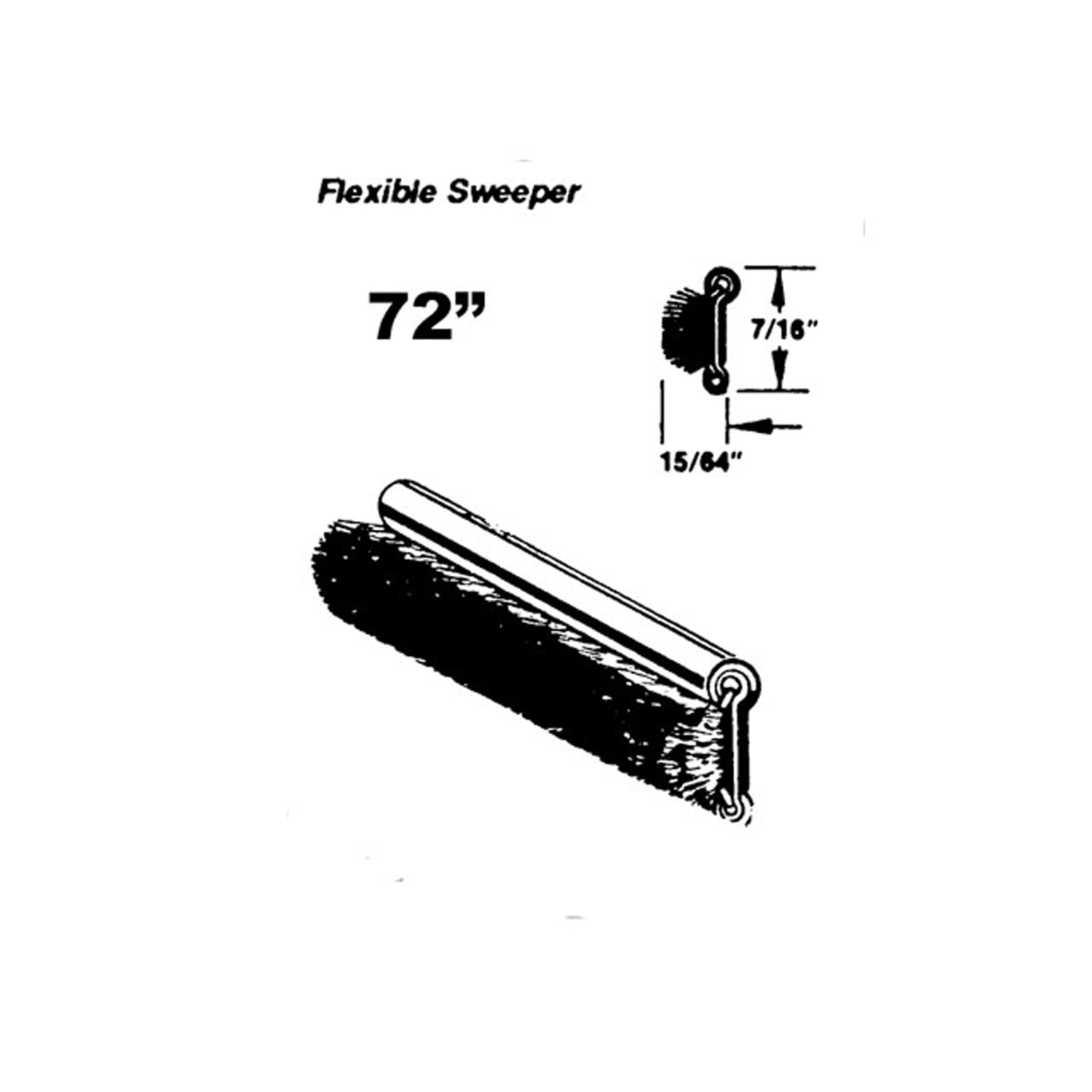 1947 Buick Series 40 Flexible sweeper. Made with stainless steel bead-WC 8-72Flexible sweeper. Made with stainless steel bead. Used on inner and outer beltlines. Also forms easily for use with sliding quarter windows. 72 in. long. Each. NOTE: $20 special shipping charge applies for domestic orders. Call or email for overseas shipping costs. Part can be sectioned into two equal lengths to reduce overseas shipping costs.
 1947 Buick Series 40 Fender Bolts. For use with Fender Bolt Washers; WF 3001-WF 3000Fender Bolts. For use with Fender Bolt Washers; WF 3001. Zinc Chromate plated, high strength. 1" X 5/16". Set of 25
 1947 Buick Series 40 Fender Bolt Washers. For use with Fender Bolts; WF 3000-WF 3001Fender Bolt Washers. For use with Fender Bolts; WF 3000. High quality, cadmium plated. 1-1/4" O.D., 3/8" I.D. Set of 25
 1947 Buick Series 40 Front Vent Window Seals. Pair R&L-WR 7321Front Vent Window Seals. Pair R&L
 1947 Buick Series 40 Front Suspension Bumper. 2" high. Each-XB 18Front Suspension Bumper. 2" high. Each
 1947 Buick Series 40 Front Suspension Bumper. 1-5/8" high. Each-XB 23Front Suspension Bumper. 1-5/8" high. Each
 1947 Buick Series 40 Front Suspension Bumper. 2-7/8" high. Each-XB 25Front Suspension Bumper. 2-7/8" high. Each
Why Choose Metro?
For over 100 years, Metro Moulded Parts has been the pinnacle of quality in classic car restoration parts. Our commitment to precision and authenticity in every component ensures a perfect fit and an OEM-level appearance.
- Expert Craftsmanship & Quality: Each part is a testament to our dedication to reliability and perfection, crafted from original designs and thoroughly tested.
- Advanced Technology: We use cutting-edge techniques to create flawless, long-lasting parts that surpass others in performance.
- SuperSoft Sponge – The Ultimate Door Seal: Not only are our door seals 30% softer than competitors', but they're also guaranteed to never leak. They effectively reduce wind and road noise, enhancing your classic car's comfort and driving experience.
- Proudly American: Our parts are a product of American craftsmanship, made in the USA with a spirit of excellence and heritage.
- Unrivaled Warranty: We back our products with a 30-year industry-leading warranty, a testament to our confidence in their quality.
Join us in preserving the legacy of classic cars with parts that are crafted for perfection, not just made.